The Abby Aldrich Rockefeller Folk Art Museum’s exhibition Navajo Weavings: Tradition and Trade, featuring 26 Navajo textiles, was so well received, they decided to continue the celebration. In Navajo Weavings: Adapting Traditions, American folk-art collectors and enthusiasts Pat and Rex Lucke, have generously loaned six additional Navajo weavings that span 100 years, highlighting the talents of an all-female collection.
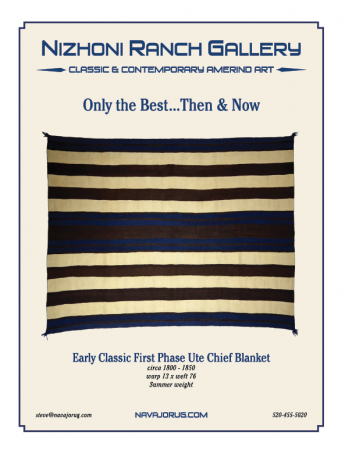
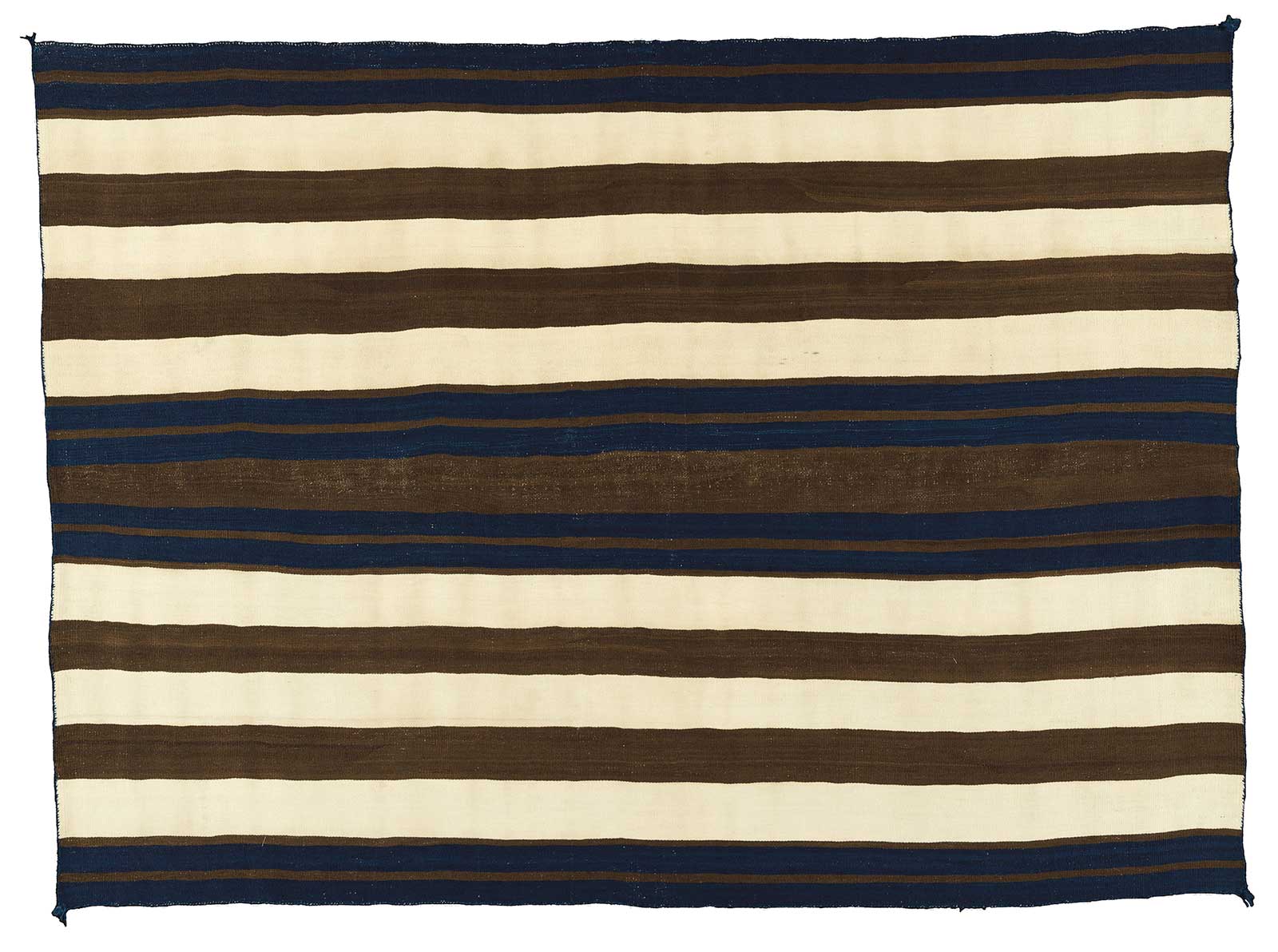 The Navajo Nation, Chief’s Blanket (classic first phase), 1840-1860, Native handspun wool with undyed natural shades and indigo, 53 x 72”. The Lucke Collection, T015-2021, 1. Photo courtesy of The Lucke Collection/The Art Museums of Colonial Williamsburg.
“[The first exhibition] reached so many people,” says Kim Smith Ivey, senior curator of textiles, “and they were very interested in this form of art. So, with the six new pieces, we were excited about the possibility of exhibiting artwork that we rarely get to show…highly skilled Navajo weavers adapted and modified their traditional textiles from the world around them to meet the demands of a modern market and trade. With bold designs and brilliant colors, simple everyday objects like trains, livestock and soda bottles were transformed into works of woven art.”
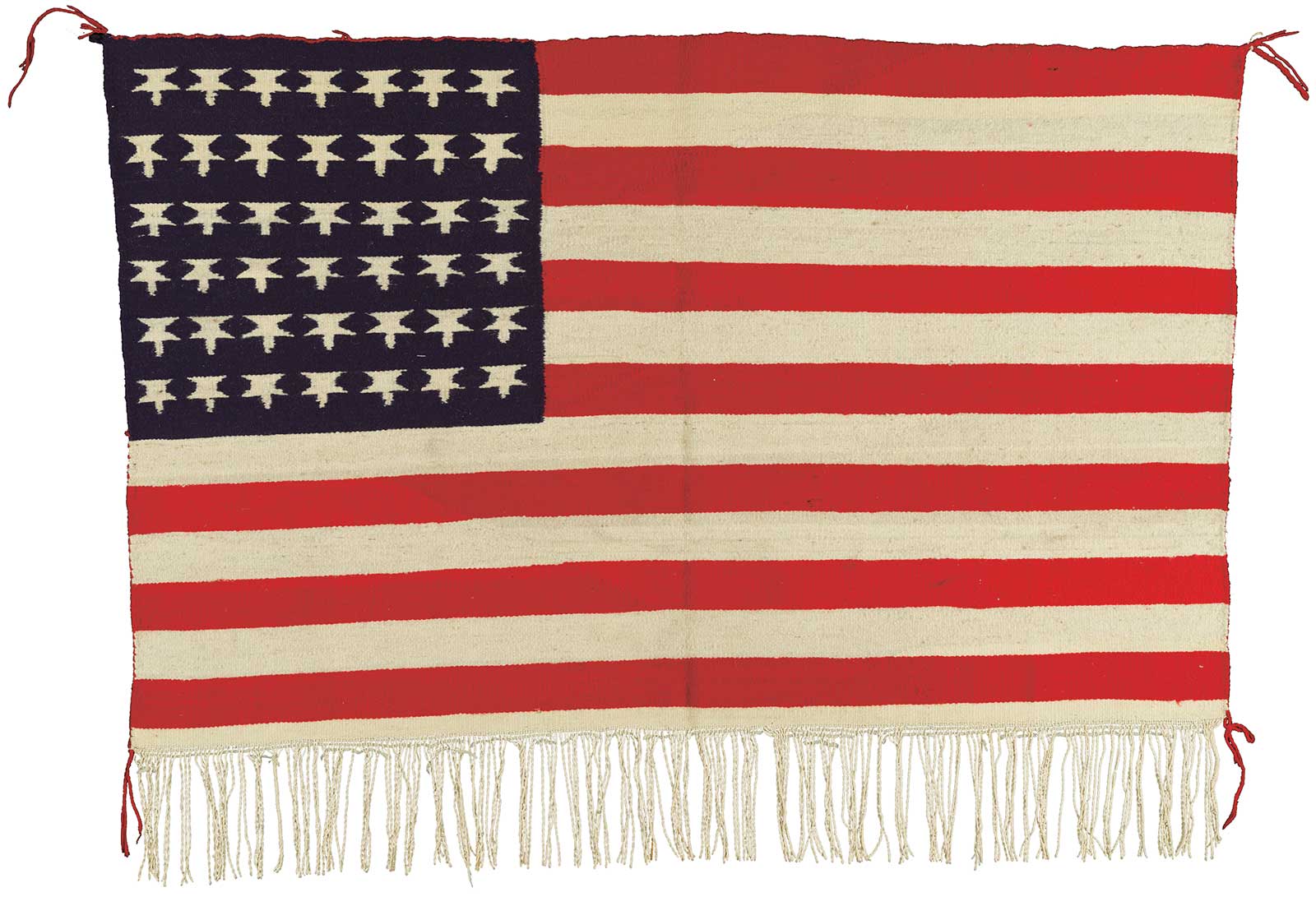 The Navajo Nation, American Flag, 1900-1910, Germantown wool wefts and cotton warps with aniline dyes, 29 x 45”. The Lucke Collection, T015-2021, 2. Photo courtesy of The Lucke Collection/The Art Museums of Colonial Williamsburg.
The earliest piece in the collection is a chief’s blanket, estimated between 1840-1860, depicting traditional, classic horizontal stripes. This piece, made of handspun Churro wool, is quite rare. Since most chief’s blankets were meant to be used, so many did not survive their utilitarian purpose. “It would have been worn or draped around your shoulders for warmth,” Ivey explains. “And the term ‘chief’s blanket’ was coined by traders, trying to make them more marketable and to raise their status.”
Moving forward we also see weavings such as American Flag from 1900 to 1910. “Although the American flag was favored by customers to whom the Diné sold their handwork,” the museum notes, “it rarely appears as a true rendering on Navajo weavings. As flags were displayed on government buildings, both the buildings themselves as well as the flags became symbolic of U.S. power and authority on Navajo land. The weavers, therefore, would have adapted the flag to suit their needs, sometimes altering the rectangular shape, changing the number of stars or substituting them with flowers or anchors to create an entirely different motif.”
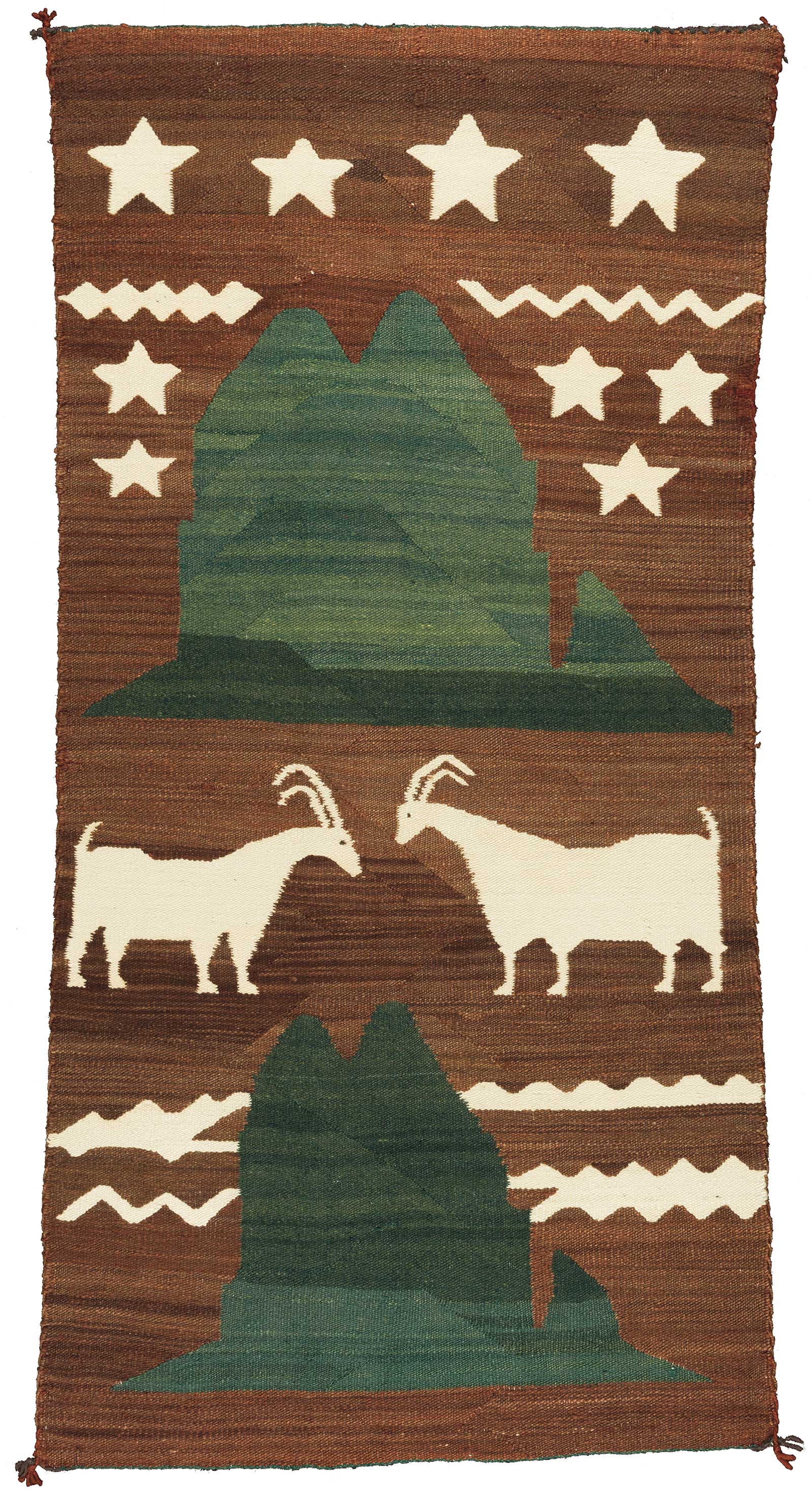
The Navajo Nation, Shiprock Pictorial, ca. 1920, Native handspun wool wefts and cotton warps with vegetable dyes, 62 x 31”. The Lucke Collection, T015-2021, 5. Photo courtesy of The Lucke Collection/The Art Museums of Colonial Williamsburg.
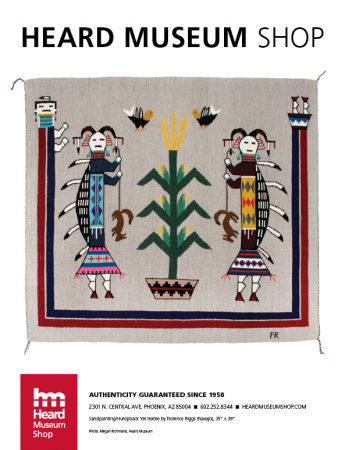
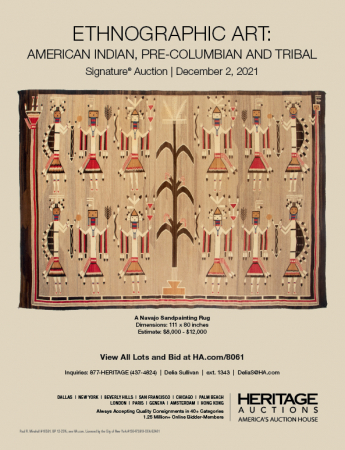
This piece also illustrates a time when weavers were using imported materials, with the advent of the railroad. “They would bring in Germantown yarns from Germantown, Pennsylvania,” says Ivey. It was considered high quality and was commercially spun wool, dyed with synthetic dyes. “However, from the 1920s onward, there was a movement to return to more natural fibers,” Ivey continues.” This consisted of weavers using wool from Native Churro sheep and for dyes, utilizing vegetable and plant techniques.
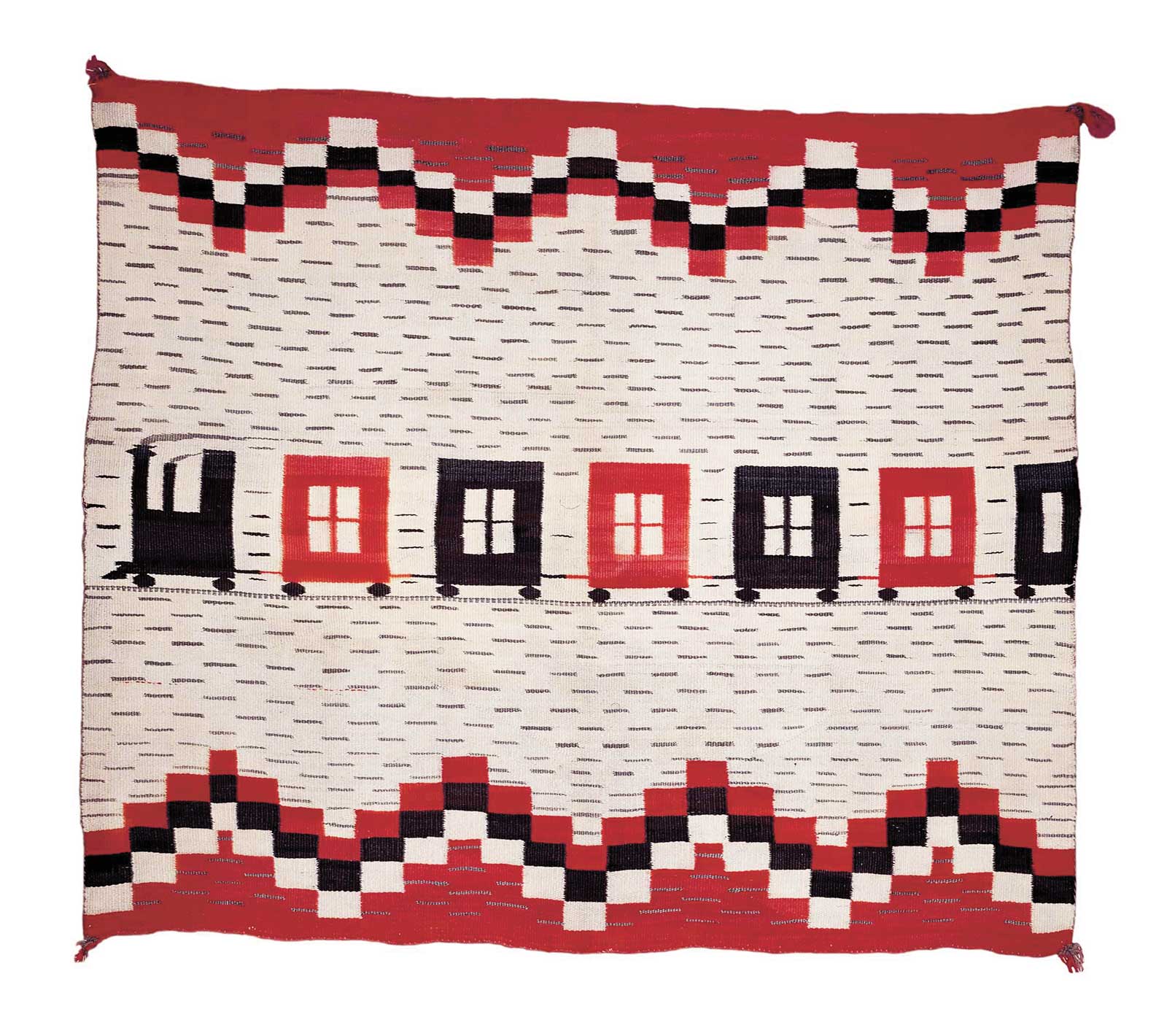 The Navajo Nation, Red Train, 1890-1915, wool with aniline dyes, 56 x 66”. The Lucke Collection, T015-2021, 4. Photo courtesy of The Lucke Collection/The Art Museums of Colonial Williamsburg.
This return to the original ways can be seen in exhibition piece Shiprock Pictorial, from around 1920, depicting a spiritual place and landmark that the Navajo call Tsé Bit’ a’í.
Adapting Traditions is a powerful showing of female weavers, that coincides with stories of history. “These are all anonymous, female weavers who are highly skilled and adapting to their traditional textiles,” says Ivey. “They take inspiration from the world around them, and tell a really compelling story of change, adaptation and survival of the Navajo people.”
Through December 2022
Navajo Weavings: Adapting Traditions
Abby Aldrich Rockefeller Folk Art Museum
301 S. Nassau Street, Williamsburg, VA 23185
(888) 965-7254, www.colonialwilliamsburg.org
Powered by Froala Editor