Recently I was scrolling through my social media feed and came across a news article with the headline, “It’s time to see Native women.” I clicked on the link and read through the poignant words of Peggy Flanagan, a member of the White Earth Band of Ojibwe and Minnesota’s 50th lieutenant governor. The article concluded with the following statement: “My daughter and every Native girl deserve to grow up feeling seen, heard, valued and safe as their full Indigenous selves. We are worth protecting. Native women have always been here, are still here and will continue to be here. It is time to see us. It is time to act.”
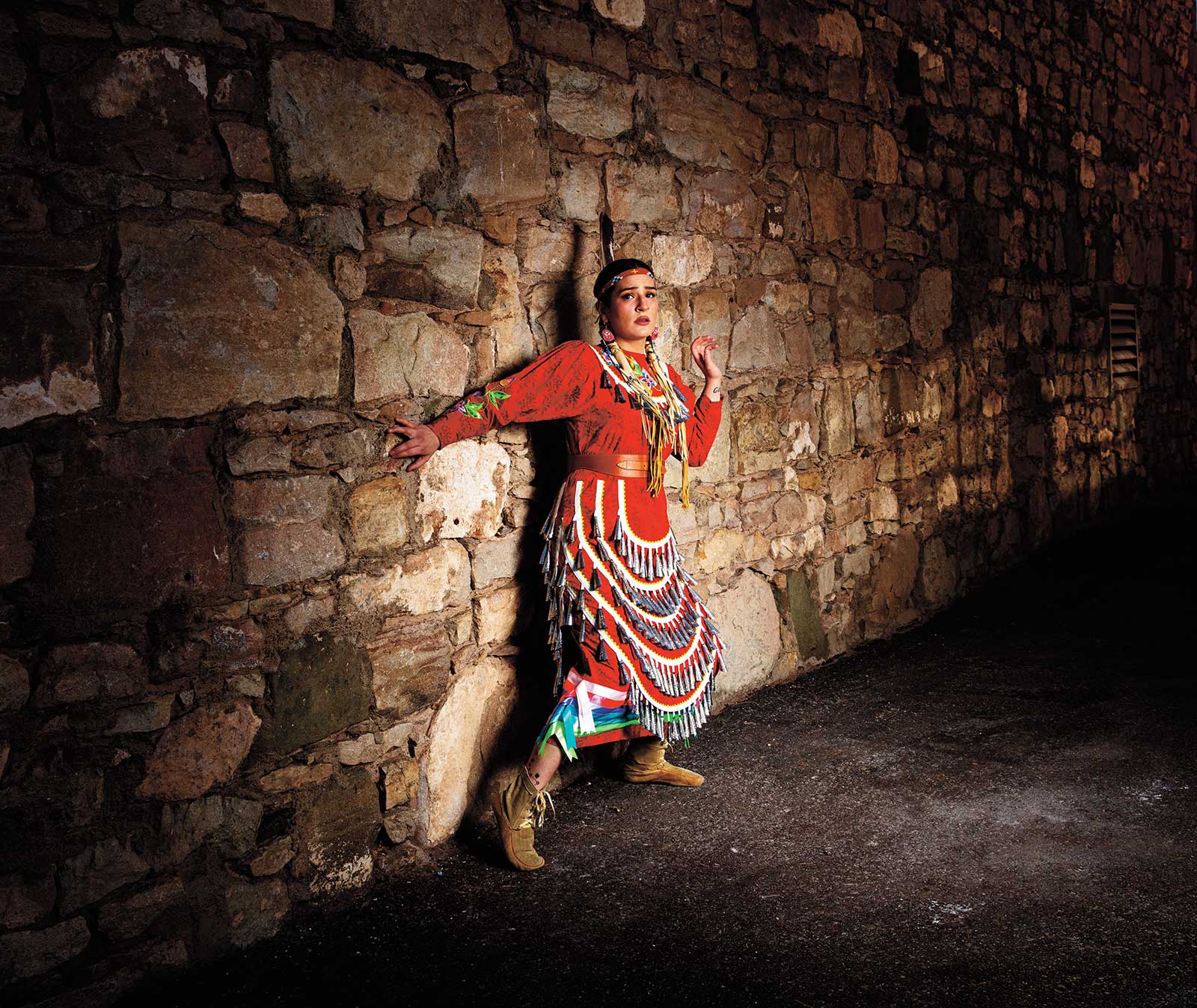 Dans L’Ombre (In Shadows), 2021, archival pigment photograph, 40 x 47"
In that moment, Cara Romero’s photograph Naomi immediately came to mind. When I was asked to contribute an article to this publication, I knew that I wanted to write about Cara Romero and her work. Yet, for weeks, it has seemed nearly impossible to articulate the impact that Cara’s work has had on my identity as a Samala Chumash woman. When I read this article written by Flanagan, I realized that was it—Cara’s work makes me feel “seen, heard, valued and safe as [my] full Indigenous [self].”
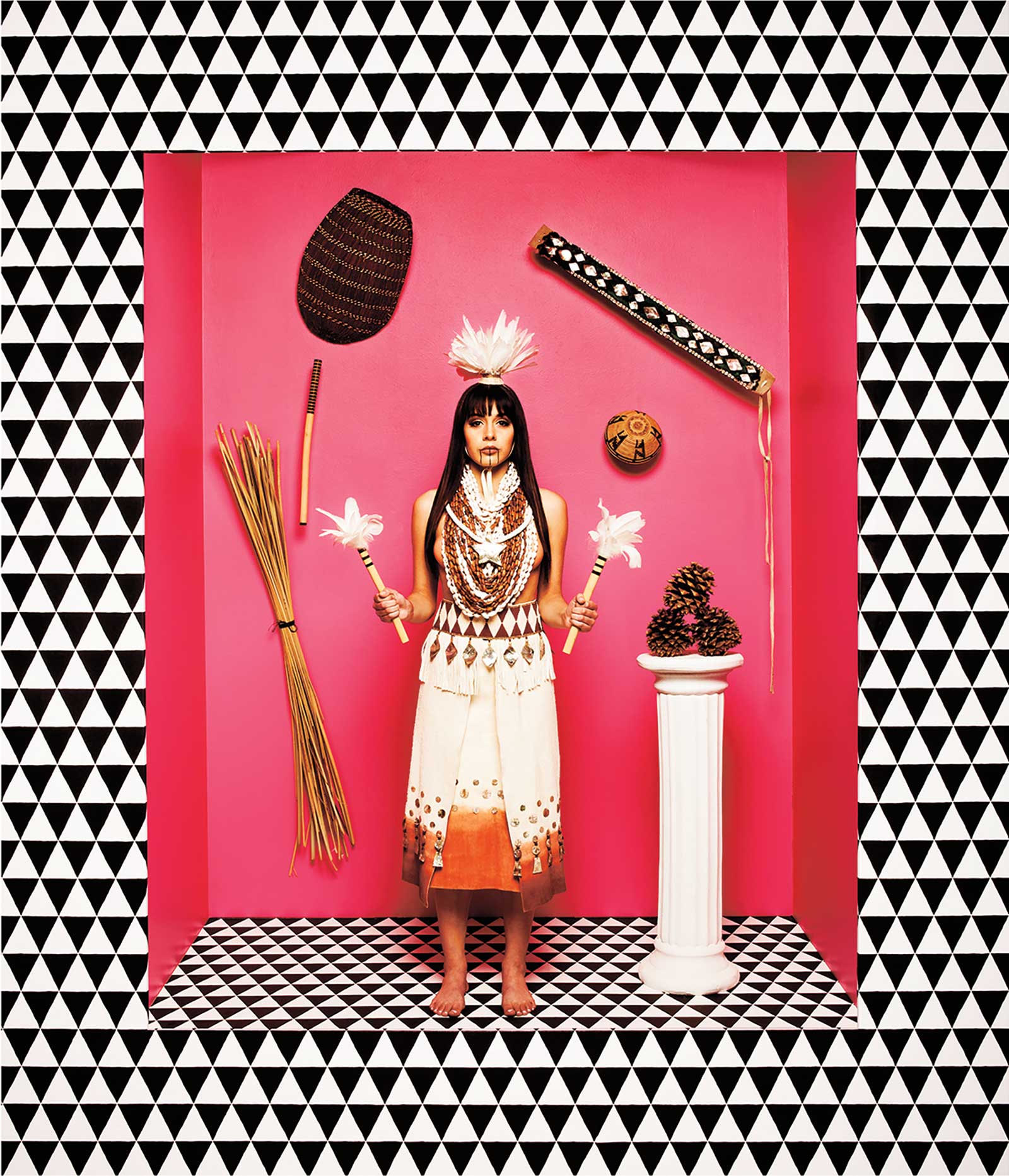 Naomi, 2017, archival pigment photograph, 49 x 40"
Throughout my childhood I went on several school fieldtrips to the local natural history museum. I was always excited for these trips because the museum had a hall that was dedicated to my community. Growing up I never felt “Native enough.” I never saw myself in any of the depictions of Native people on TV or in movies. California Natives just seemed so invisible to non-Native people, even on our own homelands. I guess I hoped that these trips to the museum would validate some part of myself or correct some of the misconceptions that my young classmates held about my community and maybe they would stop asking me about teepees and casinos.
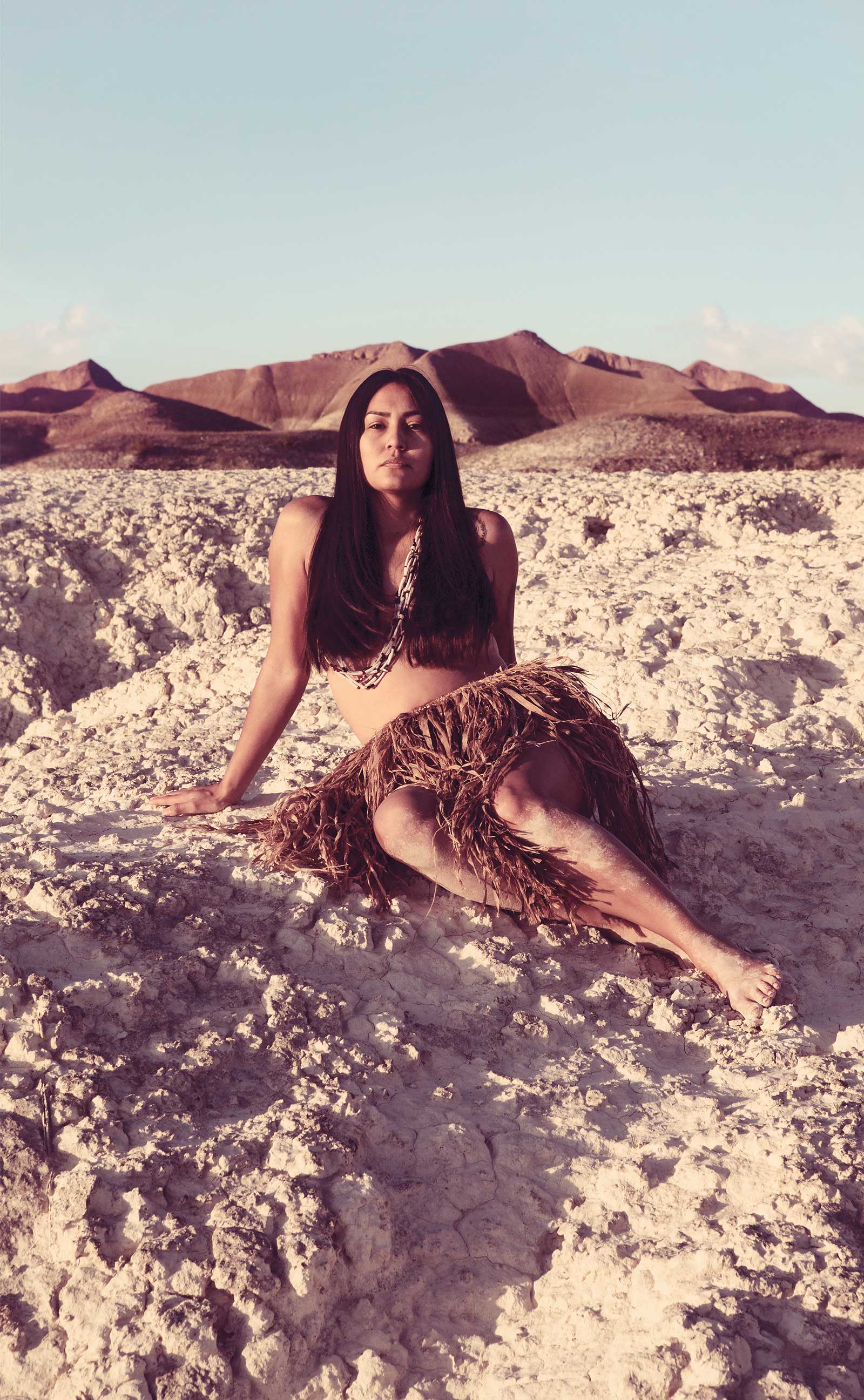 Sheridan, 2017, archival pigment photograph, 50 x 31"
Time after time I found myself staring into the dioramas at the museum, hoping for some sort of magical connection, but I never saw myself in the faces of the mannequins that were meant to represent my people. I saw elements of my culture, but our tools and baskets were displayed as relics, and the hall seemed to depict a people of the distant past—so still and lifeless. These experiences are the reason I decided to pursue a career in the museum field. Eventually I learned that it was not my identity that was inadequate, it was the museum representations that failed to depict the beauty and complexity of Chumash people.
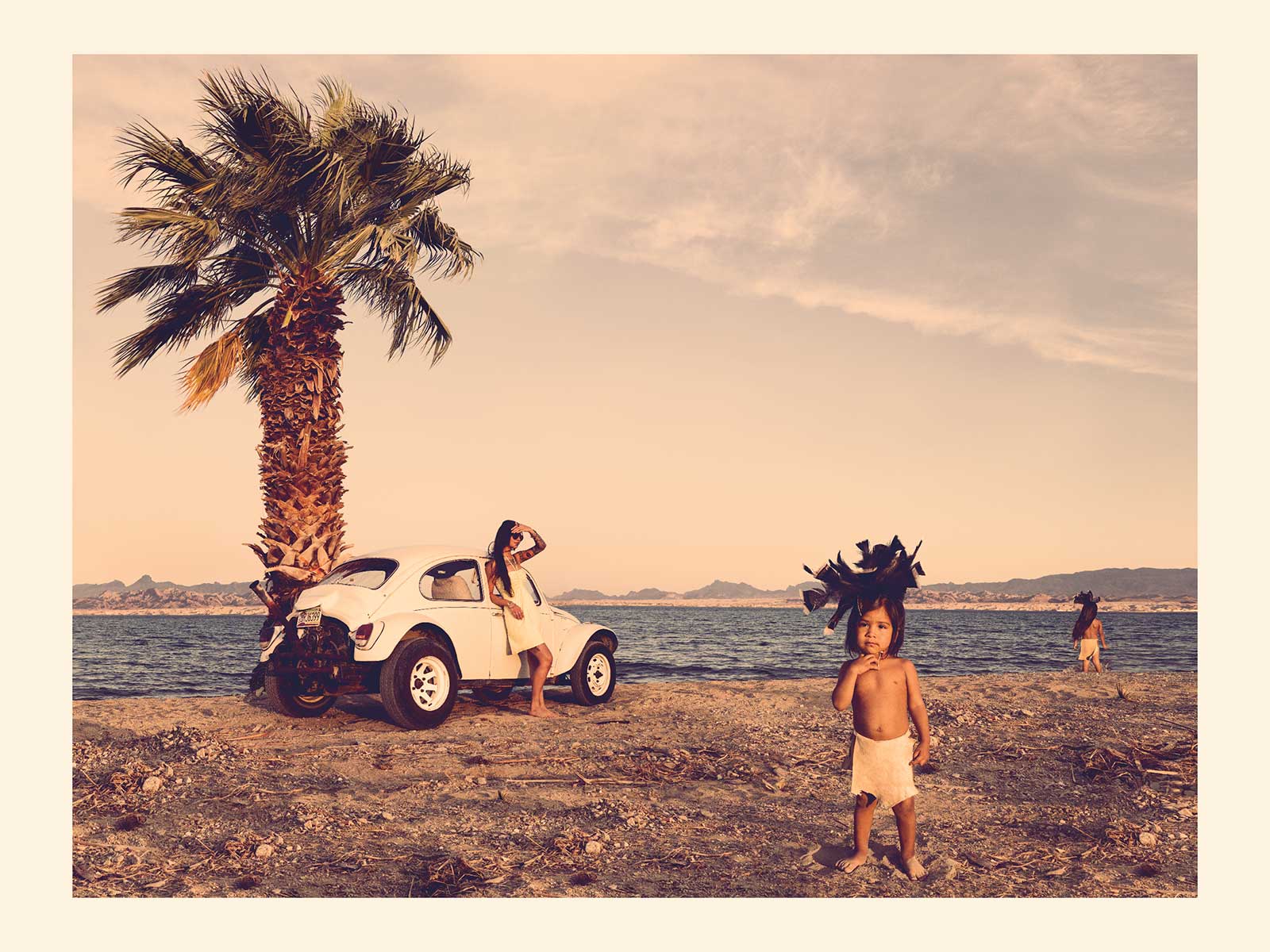 Jackrabbit & Cottontail, 2017, archival pigment photograph, 36 x 48"
I remember the first time I saw Naomi—beautifully adorned in our traditional tattoos, jewelry and regalia—I immediately recognized her as a relative. I know the First American Girl series is meant to be a commentary on Barbies and other mass-produced dolls that are created to represent Native people, but I can’t help but see these photographs in direct conversation with all the harmful museum dioramas I’ve collected in my memory throughout my life. In contrast with the dusty and still mannequins in the natural history museum, Naomi is dynamic and full of life. The objects around her are clearly of personal importance and utilized within an ongoing living culture.
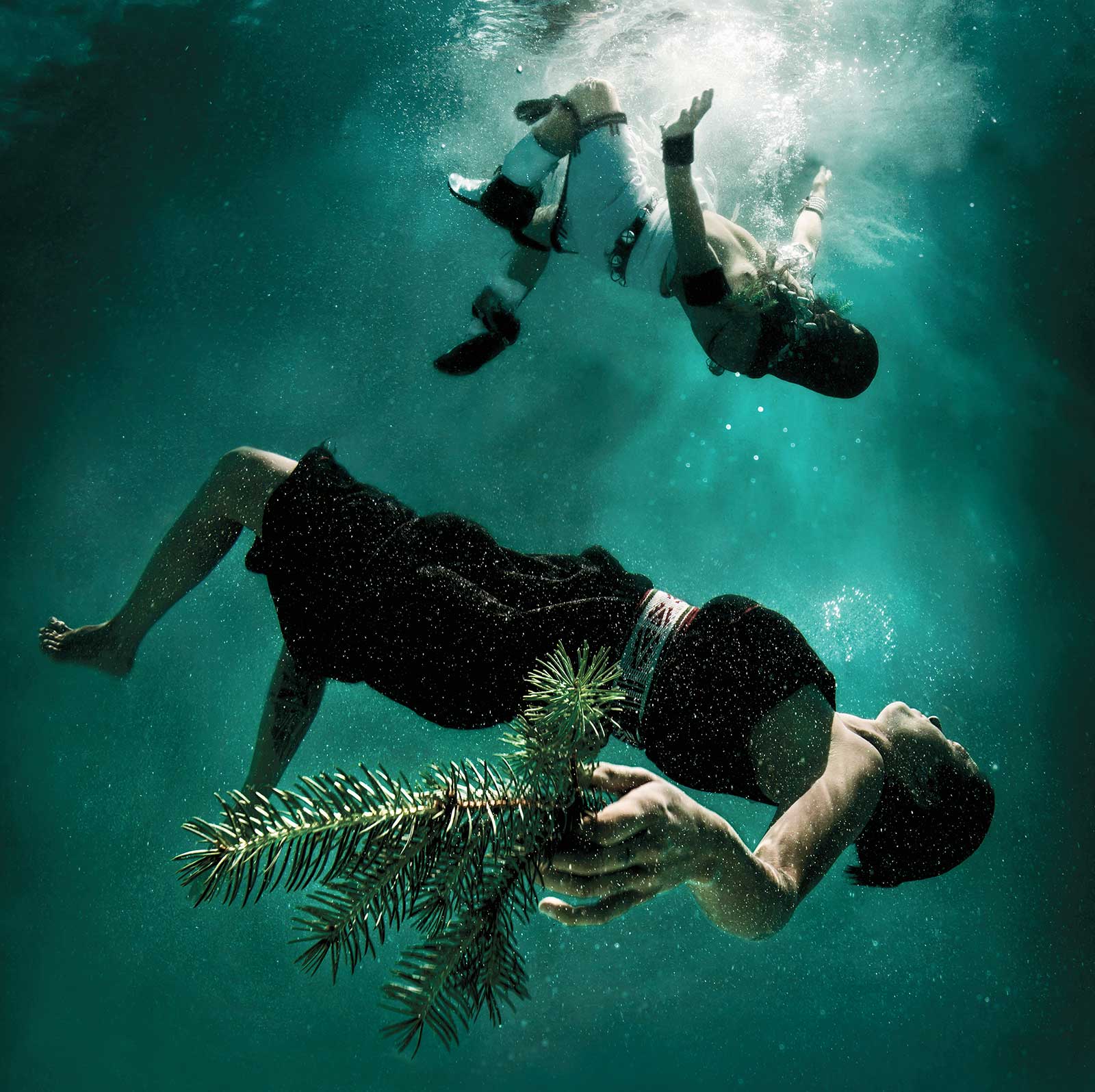 Water Memory, 2015, archival pigment photograph, 30 x 30"
Something else that I love about Cara’s work is her ability to capture time. As Native people we exist beyond Western conceptions of time—connecting with our past, present and future simultaneously. So many museums stratify Native people based on time—for some reason the “traditional” is always separated from the “contemporary.” Yet, for many if not most Native people, it is impossible to separate who we are from who we were or who we hope to become. In many of her photographs, she successfully articulates this fluidity of time, with something as simple as a pair of sunglasses or a VW Bug. To me, this is a visual depiction of survivance—her photographs communicate that we have always been here, we’re still here, and we will continue to be here.
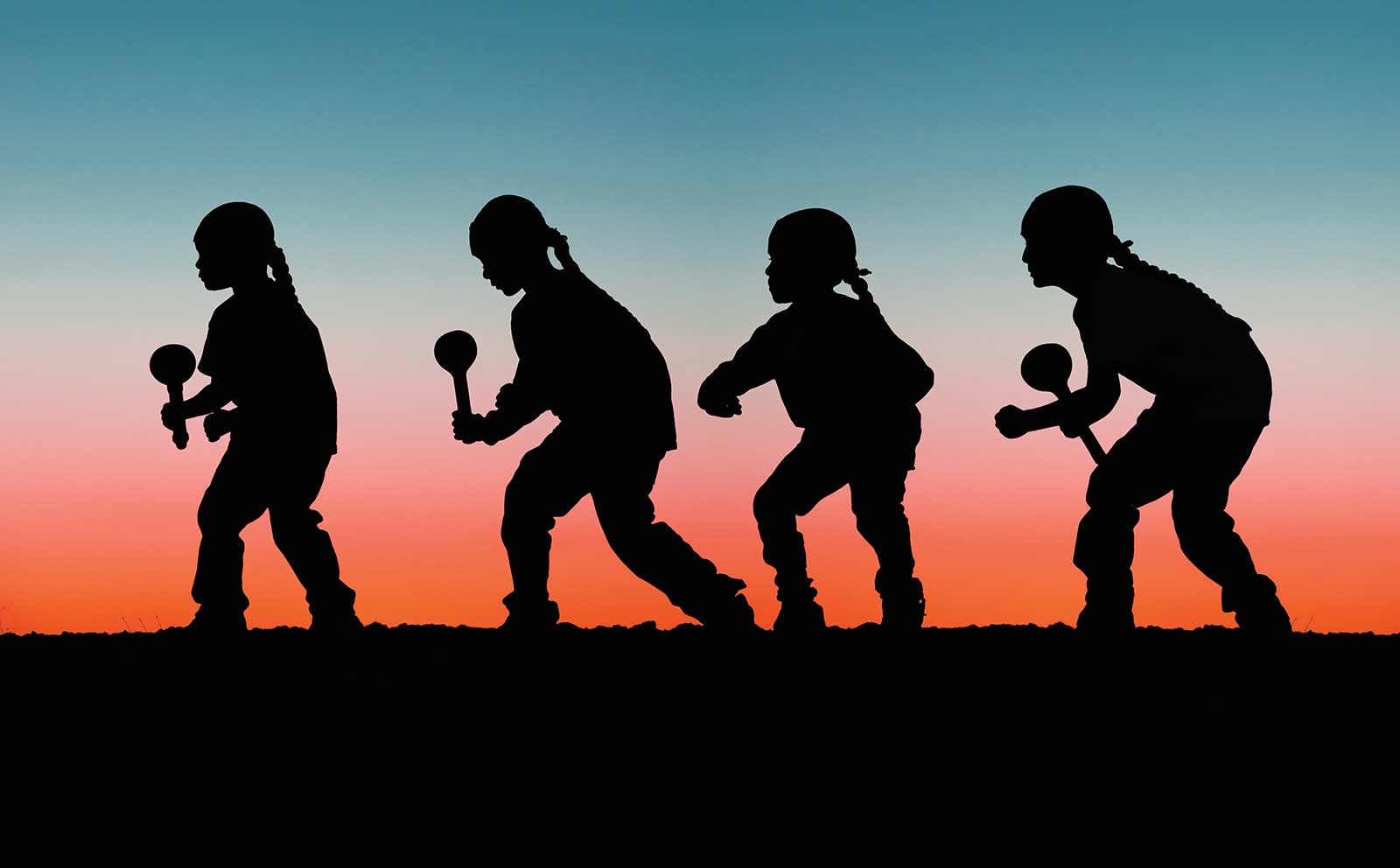 Puha (The Path), 2020, archival pigment photograph, 31 x 50"
Overall, the element of Cara’s photography that has had the greatest impact on my identity is the depiction of Indigenous feminine strength. Throughout her photography, we see countless depictions of Native women confidently perpetuating their culture. Just looking at Sheridan, I feel empowered as a Native woman. These are the depictions that I was missing throughout my childhood, but they are so important for our Native youth, and I am grateful for their existence.
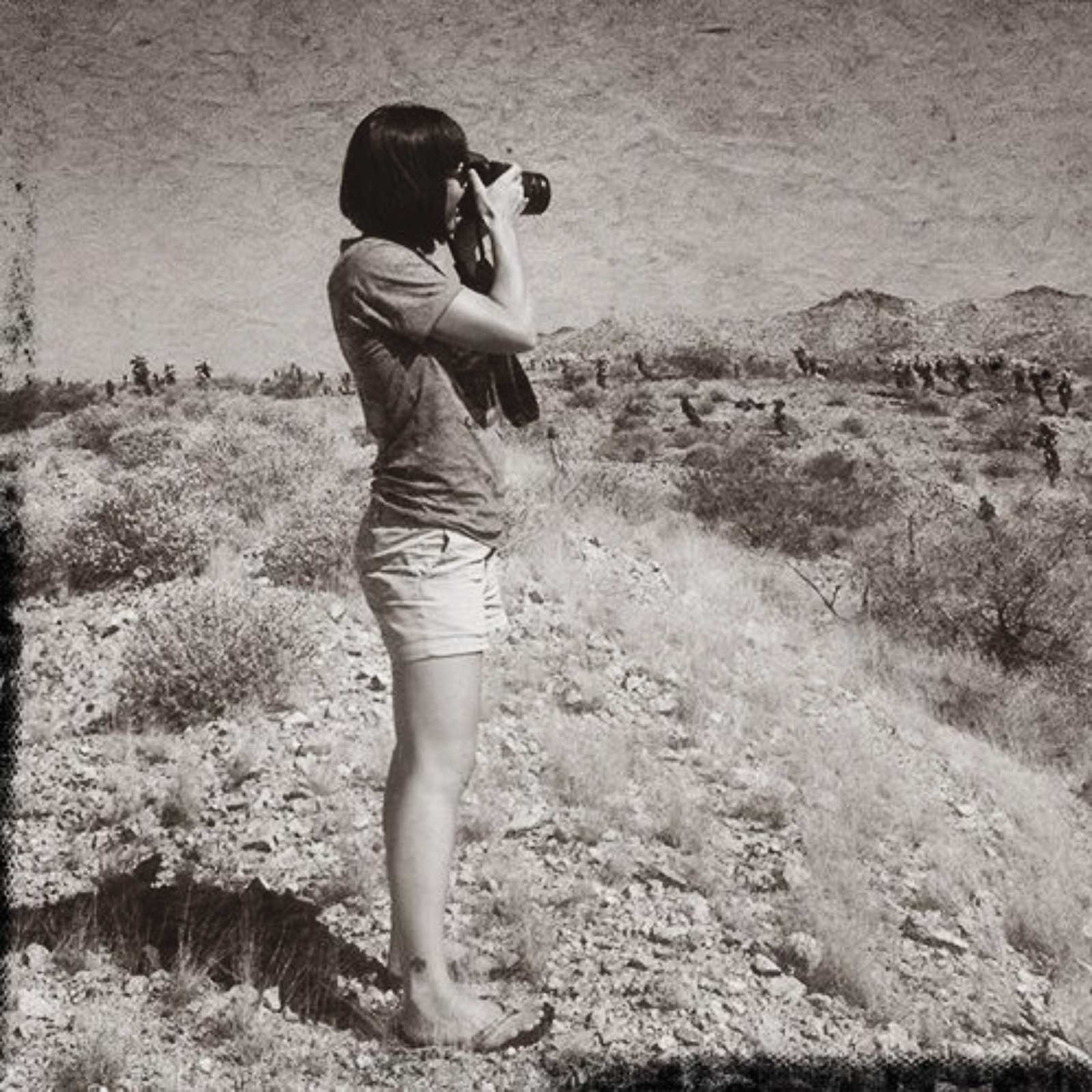 Photographer Cara Romero
I recently read a quote from Cara that said: “From a very young age, Chemehuevi women are taught that their innate strength as a woman and life giver is all-powerful, maybe sometimes even supernatural, and we are respected as equals in Chemehuevi society. We hold power in government and historically in battle. This unique perspective shows up throughout my art. It is always my intention to visualize this inherent Chemehuevi belief in the all-powerful, supernatural strength of women.”
This perspective is evident in her photography, and it is transmissible. Cara’s work not only helps our society to see Native women, but it makes Native women feel seen.
Powered by Froala Editor