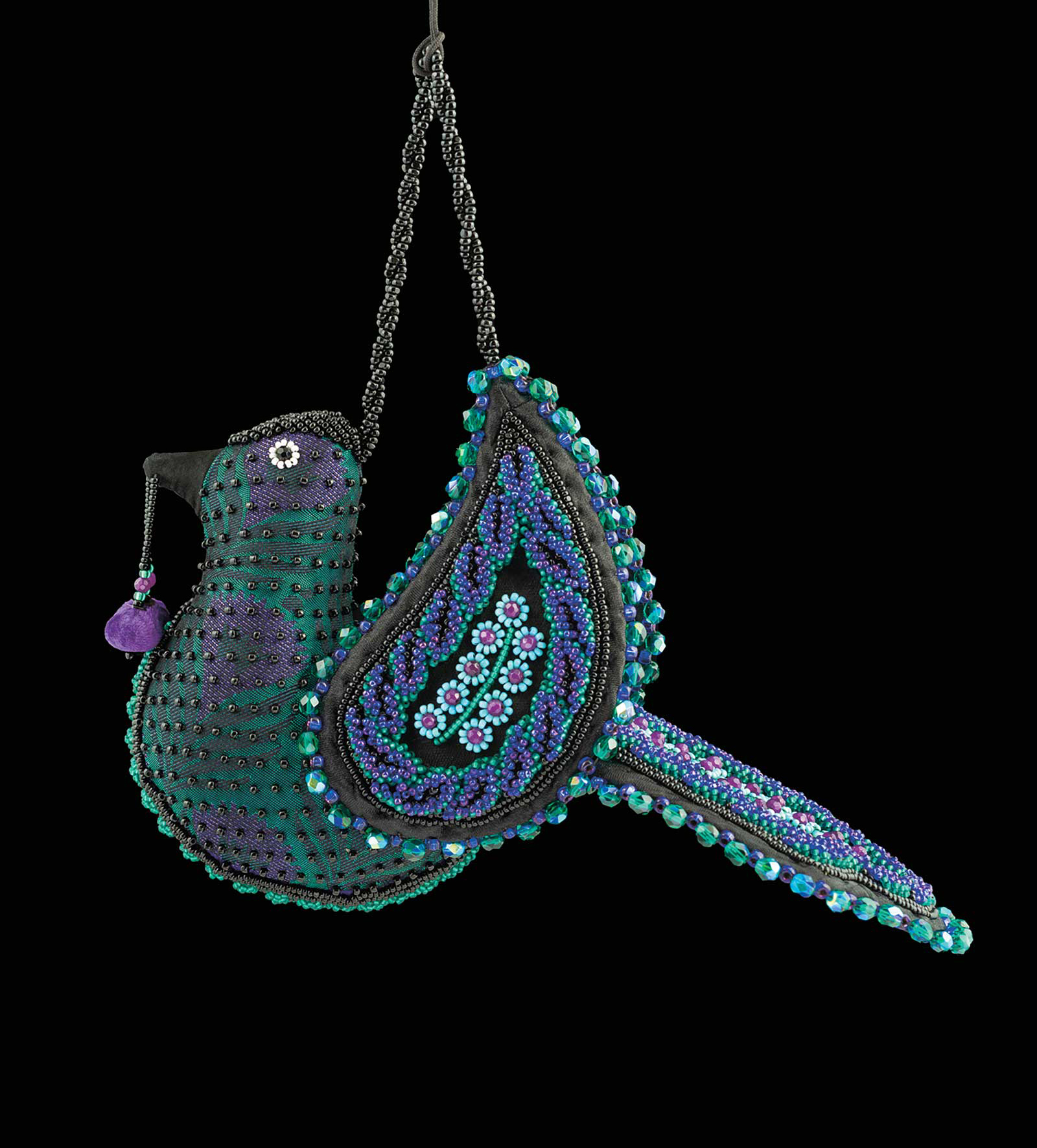
 Grant Jonathan (Tuscarora), Resilience, 2021, Tuscarora beaded bird whimsey, glass seedbeads, silk fabrics, satin bias tape and saw dust stuffing, 10½ x 6½ x 3½". Photo by Kitty Leaken.
“For Native People, art objects are not simply artifacts or pieces of abstraction. They are the embodiment of ancestral origins and often theological markers of action, phenomenon and explicit record.”
—Bruce Bernstein, former SWAIA executive director
The first Southwest Indian Fair and Arts and Crafts Exhibition was held September 4, 1922, at the National Guard Armory on Washington, now the home to the New Mexico Military Museum in downtown Santa Fe. A showcase of the skill and creativity of Pueblo pottery, Diné textiles, basketry and paintings and drawings—much from the local Indian schools. The new fair also included Plains beadwork from the Fort Peck Reservation in Montana. Horse tack and headstalls, dresses, moccasins, buckskin shirts and vests adorned the walls set up between tables of high-polished, black-on-black and polychrome pottery. The seed beads and quillwork were masterfully adorned on the functional objects, executed as an evolutionary testament to the creativity and change only seen in a cultural identity that was also growing and adapting to a changing physical and artistic environment. Garnering the Albert Hall grand prize trophy for Best Exhibit, the art pieces were a testament to a pictorial narrative of Plains Indian life, and forever laid a foundation at the premiere Native fine art event this nation has ever seen, today’s Santa Fe Indian Market.
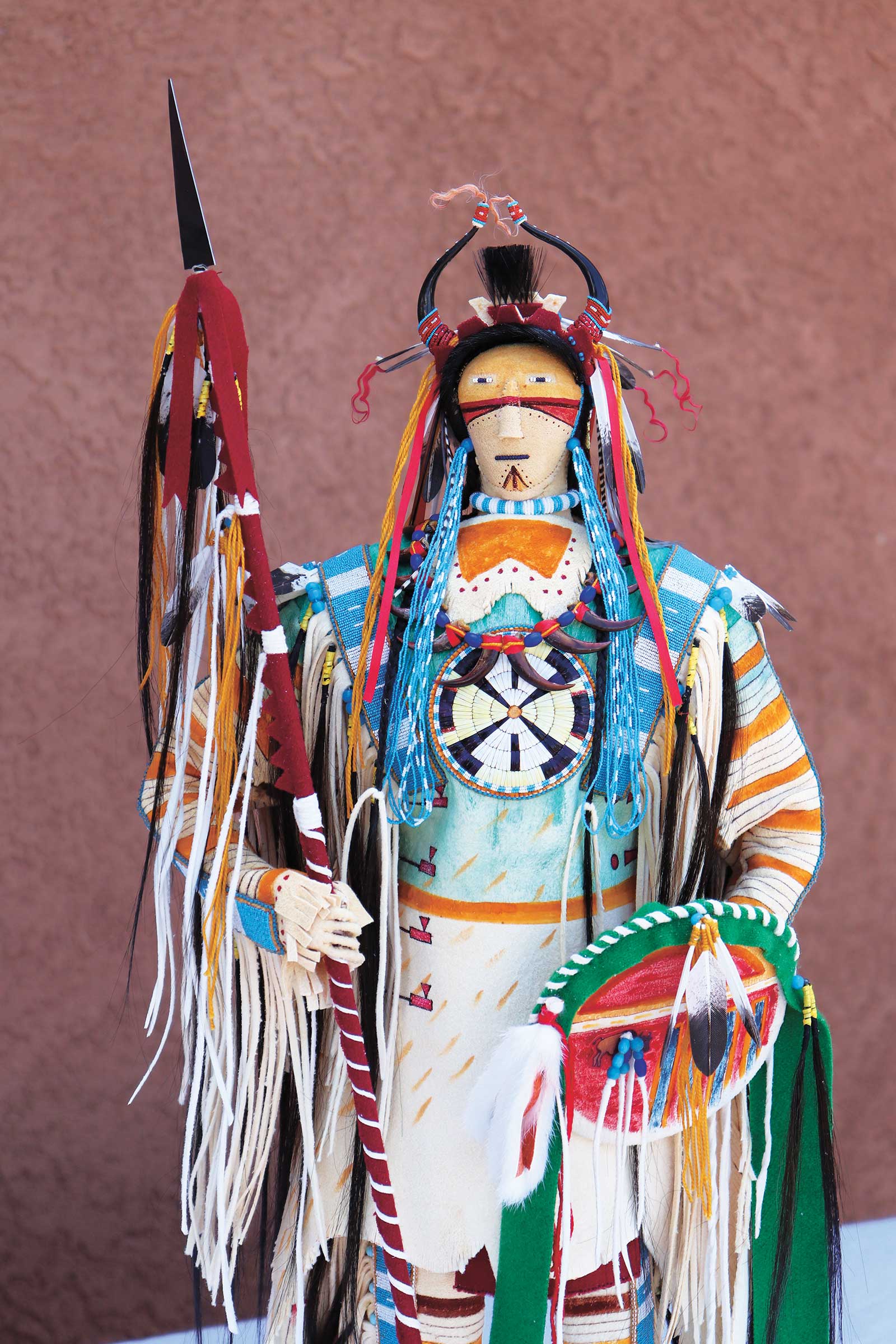 Juanita Growing Thunder Fogarty (Assiniboine and Sioux Tribes of the Fort Peck Indian Reservation, Montana), Hohe Warrior, 2019, soft sculpture in collaboration with Joyce Growing Thunder, 24 x 10”
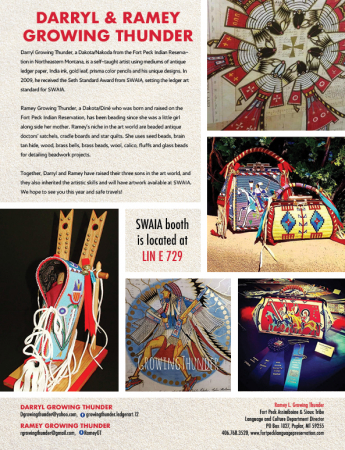
Almost 100 years later, the Santa Fe Indian Market is the largest celebration of Native fine art in the country. Beadwork, quillwork and diverse arts are showcased side-by-side with every other visual medium imaginable. The journey to mastering these art forms is often generational. Juanita Growing Thunder Fogarty, Assiniboine Sioux from the Fort Peck Reservation in Montana, learned by watching her mother, accomplished beadworker and quillworker Joyce Growing Thunder, a three-time Best of Show winner at Indian Market. Tradition dictates that Juanita couldn’t take up quillworking until she had quillworking dreams of her own. “I knew how to quill before I ever began to quill myself,” she states. Juanita recounts watching her mother work and even today, works with her mother every day. She says, “We can go back seven generations of women that bead and quill, my mother and I still work and collaborate together.” Now a grandmother herself, she teaches her daughter and granddaughter as she was once taught. She is grateful for the connection to her ancestors that are seen in the traditional designs. “Art is bigger than us and our cultural ways are greater than singular artists,” says Jaunita. “Beadwork and quillwork are a way to remember our ancestors and what they have done.”
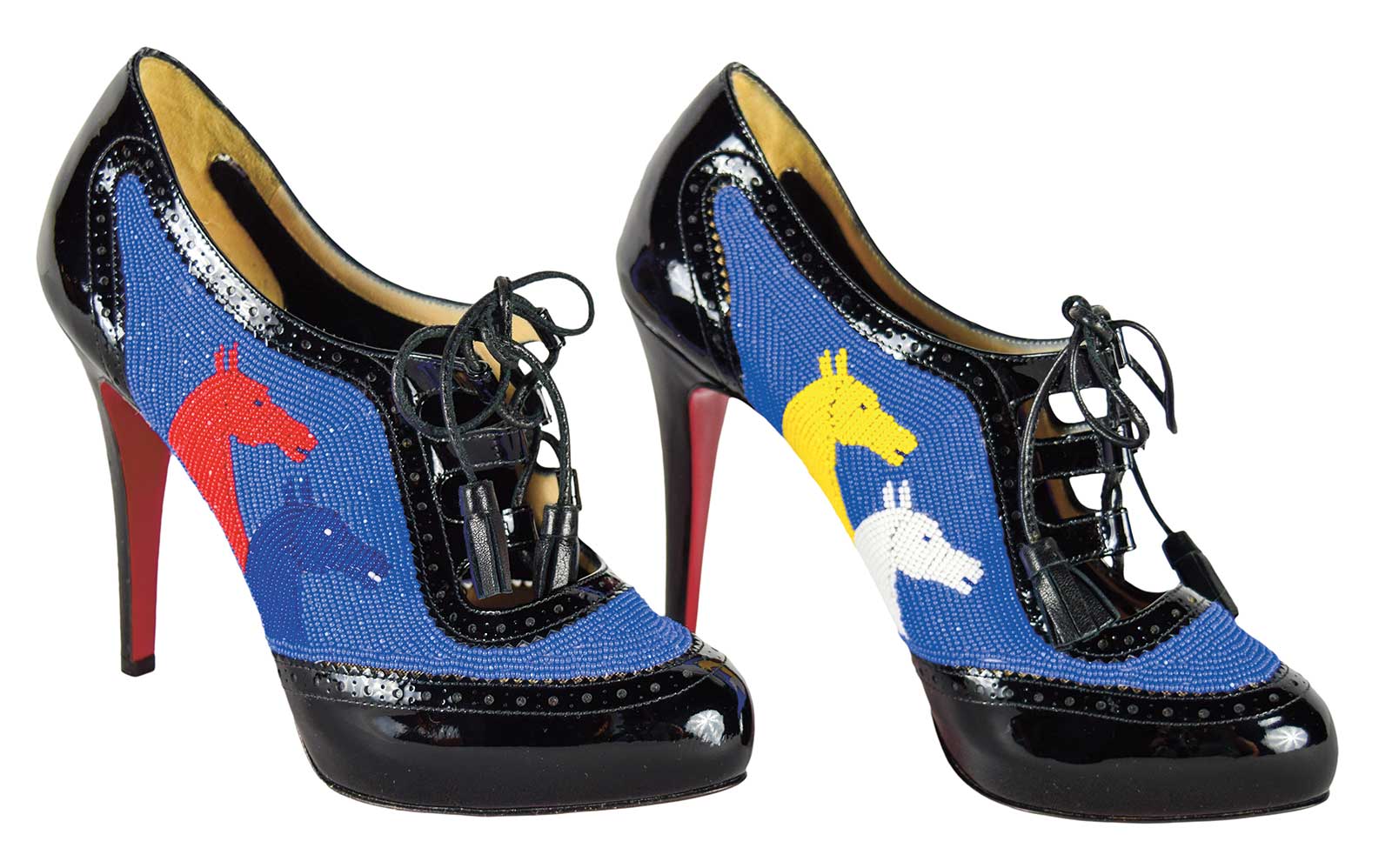 Emil Her Many Horses (Oglala Lakota), Four Directions Shoes, 2019, size-13 cut beads, Christian Louboutin shoes
The glass seed beads that have made their way across oceans to become part of our cultural heritage now come in hundreds of colors and facet styles. For Grant Jonathon, Bear Clan of the Tuscarora in Western New York, raised beadwork has long been appreciated by tourists to Niagara Falls, a mere 7 miles near his reservation. Also learning from his mother, and later Rosemary Hill and four other “Maestros,” Grant credits their strict attention to stitch perfection as offering him a mastery of techniques that he in turn shares with his community and others. He says, “I feel it’s my calling to educate others about Iroquois beadwork, to bring visibility to it and let people know it’s still here.” As part of his preservation of the art form, Grant has amassed a collection of 2,200 Tuscarora beaded pieces; he can study them, research them and catalog these tribal treasures for the benefit of his community and nation. Beadworker, quillworker and curator at the National Museum of the American Indian, Emil Her Many Horses (Oglala Lakota) also turns to historical pieces and design elements for his work.
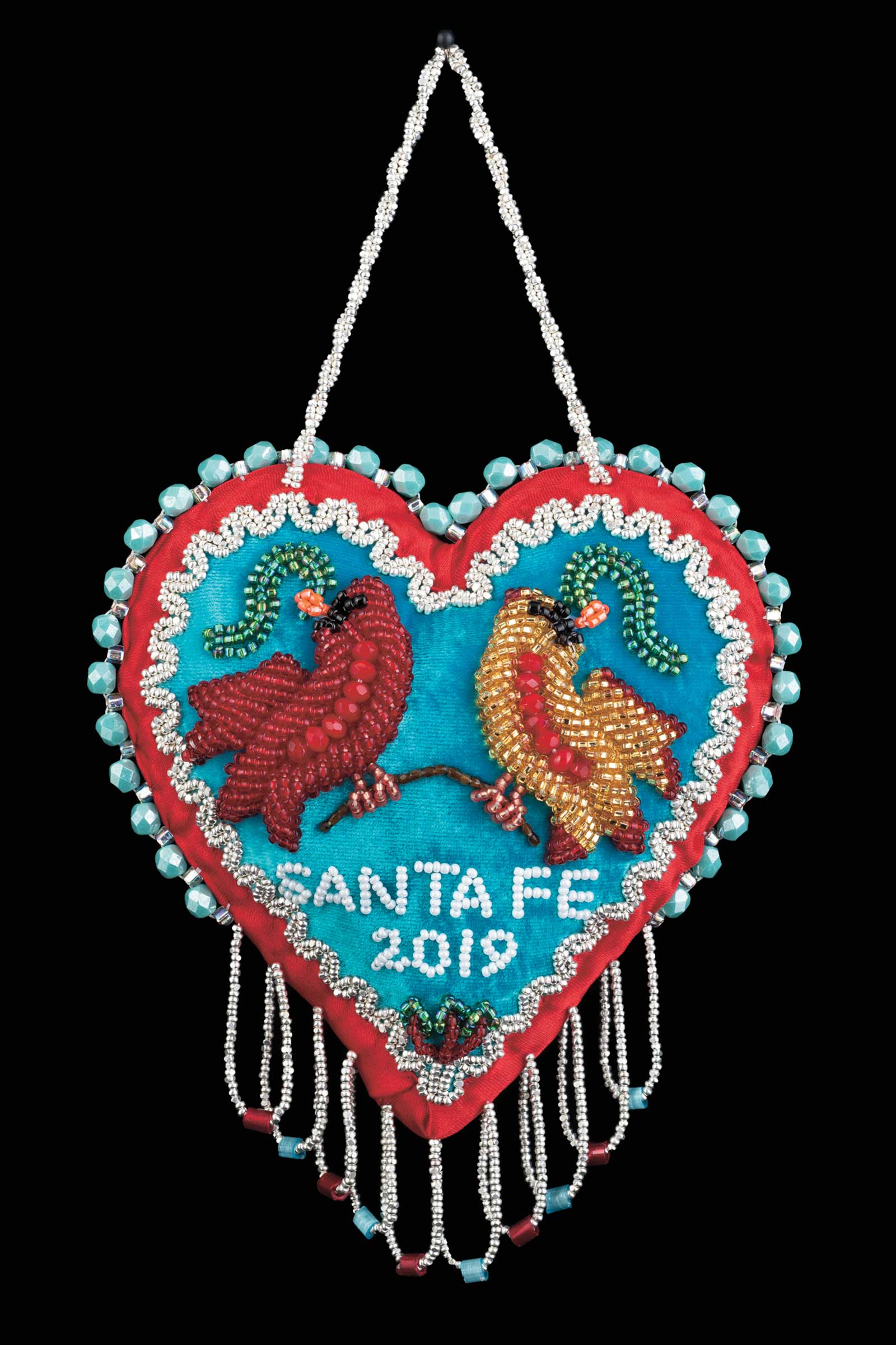 Grant Jonathan (Tuscarora), Santa Fe Heart with Cardinals, Tuscarora beaded heart pincushion for 2019 Santa Fe Indian Market, glass seedbeads, silk fabrics, bias tape and sawdust stuffing, 9½ x 5½ x 1½". Photo by Kitty Leaken.
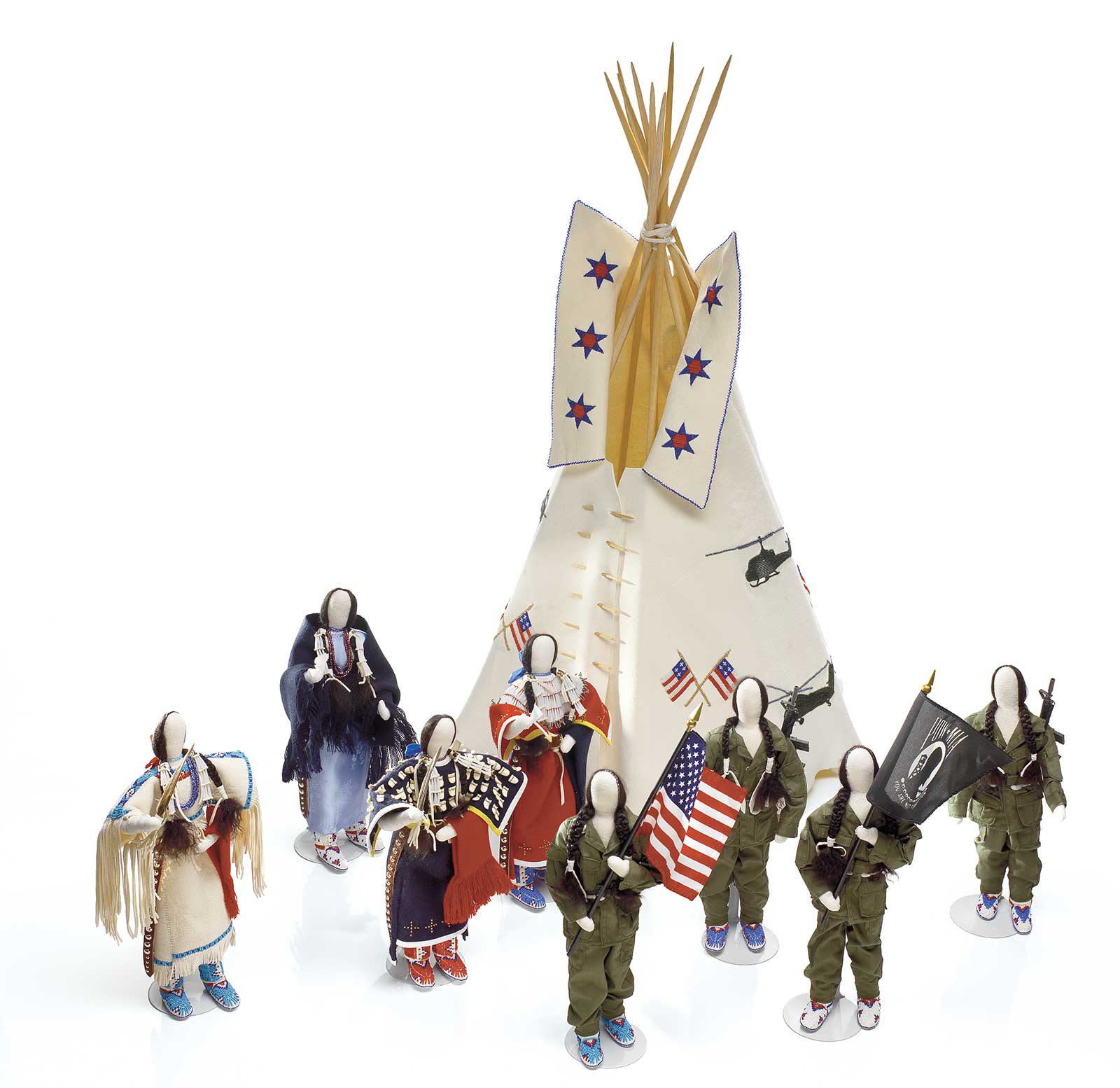 Emil Her Many Horses (Oglala Lakota), Honoring Our Lakota Vietnam Veterans, 2002, doll tableau, deerhide, glass beads, cotton cloth, wool cloth, synthetic fabric, wood and feathers, 44½ x 26”. National Museum of the American Indian, purchase from the artist, 2003. 26/604.
The grandson of Grace Pourier, he remembers pouring through a book of Eastern Sioux Florals that his grandmother, Josephine Pourier once owned. Emil fondly recalls that as a young man, his brother Chico had received a new Monte Carlo and beaded outfit for graduation and he and Emil traveled the powwow circuit, seeing different beadwork styles and designs. Emil however always found himself returning to his florals. His business administration degree eventually led to a museum director position and it was this access to the collection, other artists, scholars and tourists that led to a deeper appreciation of his tribal art form. When asked what he loves most about his art, he states, “It’s when people appreciate the pieces.” One particular piece, Honoring our Lakota Vietnam Veterans, was a series of traditional dolls, dressed in camouflage fatigues, berets and boots standing next to a tipi with beaded Plains narratives including Huey helicopters. Women in elaborate dresses welcomed these veterans home with song and ceremony. At its debut, a Veterans Affairs officer studied the piece closely and lovingly commented about how much her Native veteran clients would love the honor. Another veteran of the Korean War returned repeatedly to study the piece, and emotionally thanked Emil for remembering their sacrifice and service. It is this shared connection between artist and those who experience the narrative that can often be the most powerful of moments.
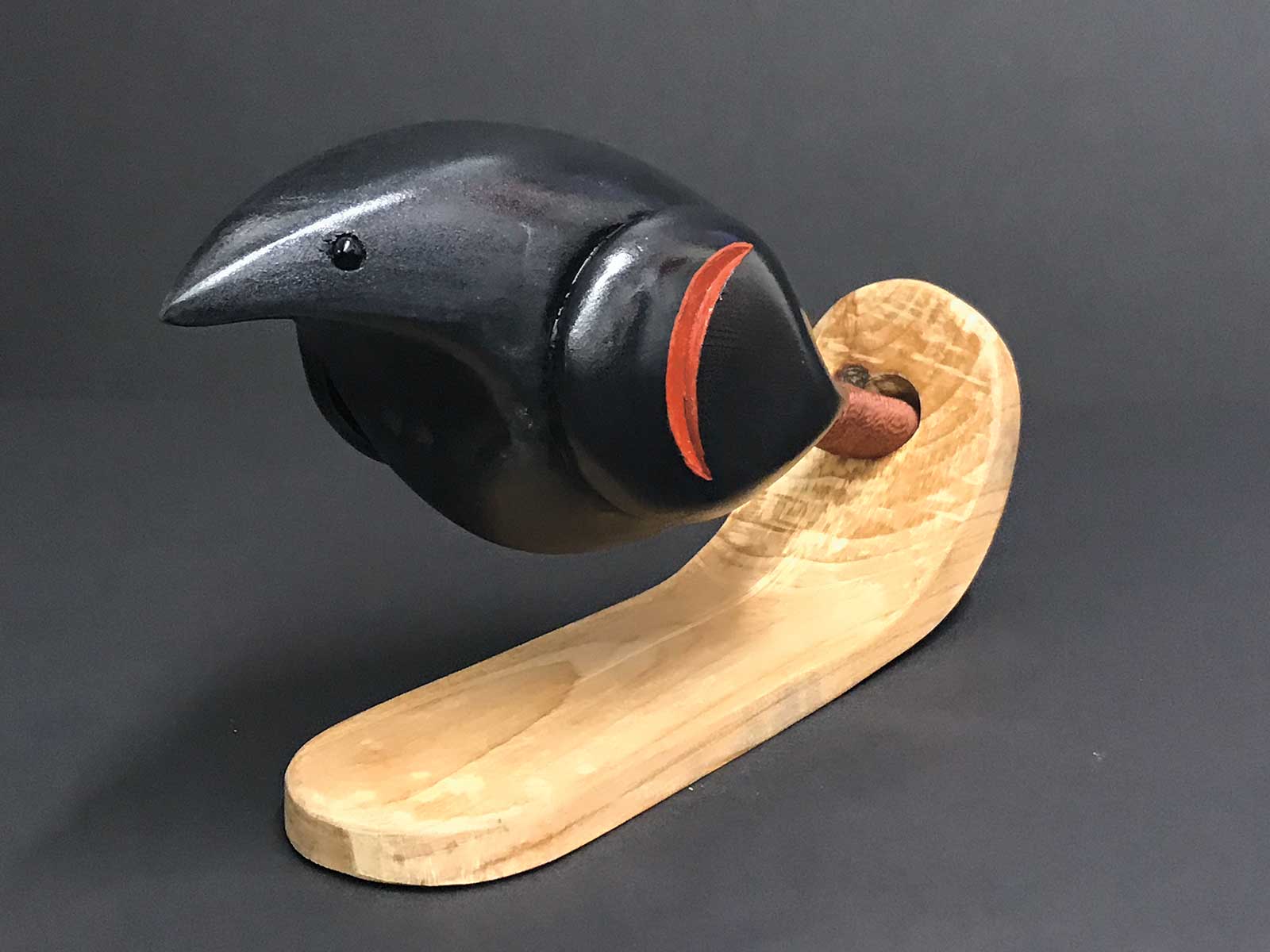 Peter Boome (Upper Skagit), Red-winged black bird rattle
“Being an artist has made me a better parent,” states Peter Boome, an Upper Skagit tribal member from Washington state. The pandemic has presented plenty of challenges and collective suffering, and despite significant loss, Peter is glad for the increased time to process the life changes his family has endured. Since the start of his art career, he has always been accompanied by at least one of his four children. Art shows were a chance to connect and grow with his children, surround them with art and creatives, his extended friends and family circle. “I don’t really re-create historical pieces” he states of his diverse art forms, which includes carved rattles and stands. “I love my family stories, cultural and traditional stories—and I love to narrate them. I’m inspired by life, being a father and how we are figuring our way through the world as Indigenous persons. I’m interested in illustrating the idea of life and how I can best illustrate these thoughts and emotions.” His carvings often reflect his translations of these concepts into physical, cultural ideas.
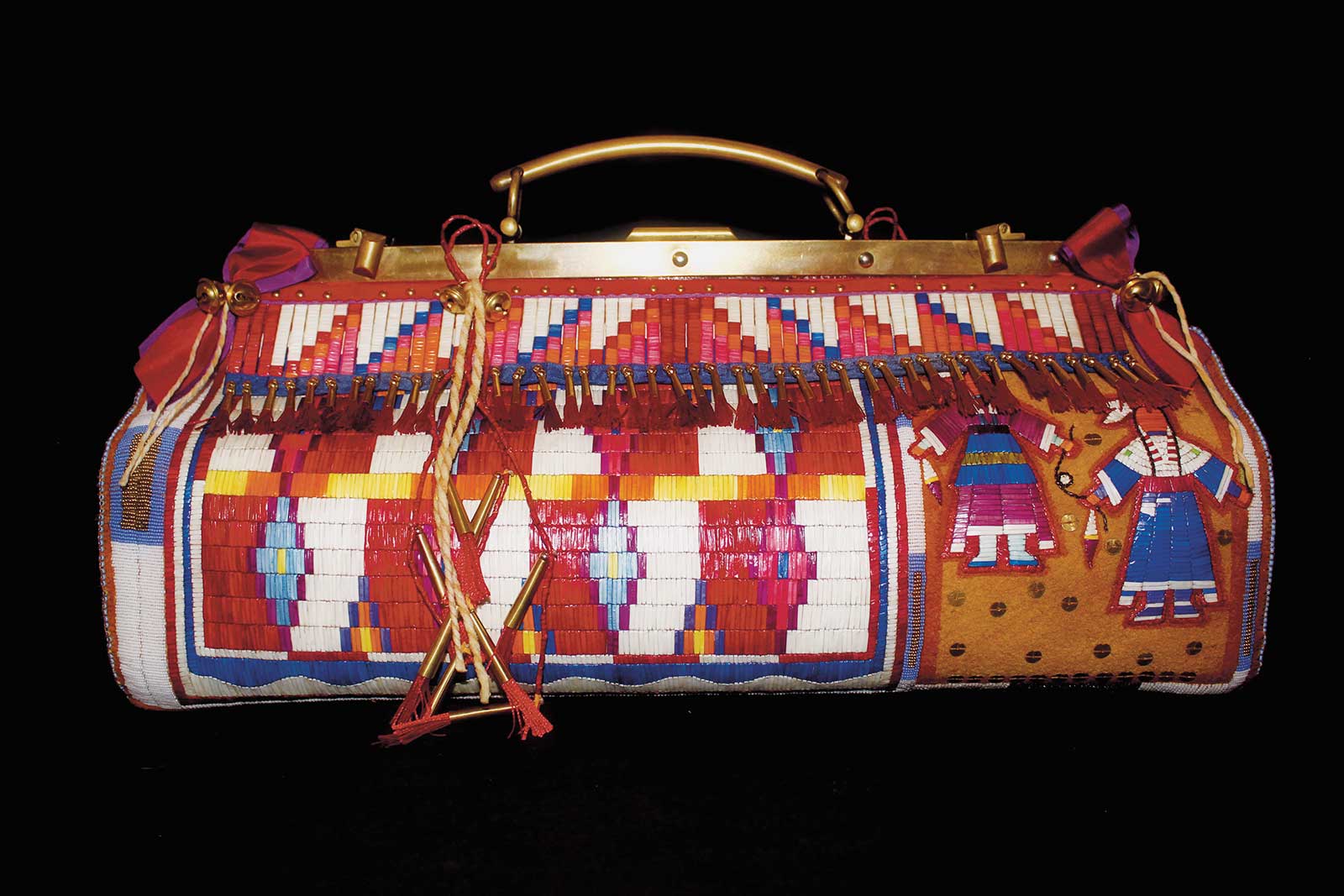 Juanita Growing Thunder Fogarty (Assiniboine and Sioux Tribes of the Fort Peck Indian Reservation, Montana), quilled doctors bag, 2017, 18 x 18 x 8"
A testament to the cultural identity of these artists, their works reflect a culture as vibrant as the colors in their traditional and contemporary expressions. Technical mastery is seen, and perhaps more importantly, felt in every stitch and every bead. Perhaps Emil expressed it best in stating, “Art has guided my life and career. I attend shows to be around other Native artists. I am inspired by their work and what they are creating.” As Native people, we truly are contemporary people inspired by our evolving traditions and cultures and despite the use of new materials, the continuation of creating art through beadwork, quillwork and diverse art forms is truly a direct connection to our relatives and collective past.
Powered by Froala Editor