Many Native American artists working today create responses to present-day situations and events through culturally relevant ideas that have endured the long histories of Indigenous peoples. The Santa Fe Indian Market artists Leslie A. Deer, Tom Farris, Jessa Rae Growing Thunder, Bobby C. Martin, Tyra Shackleford, Bryan Waytula and Holly Wilson are artists who work for cultural preservation and respond to contemporary issues through their modern bodies of work. Their art forms range in scale, material and function, but they all present commonalities to our tribal communities’ needs for preservation through their arts practices.
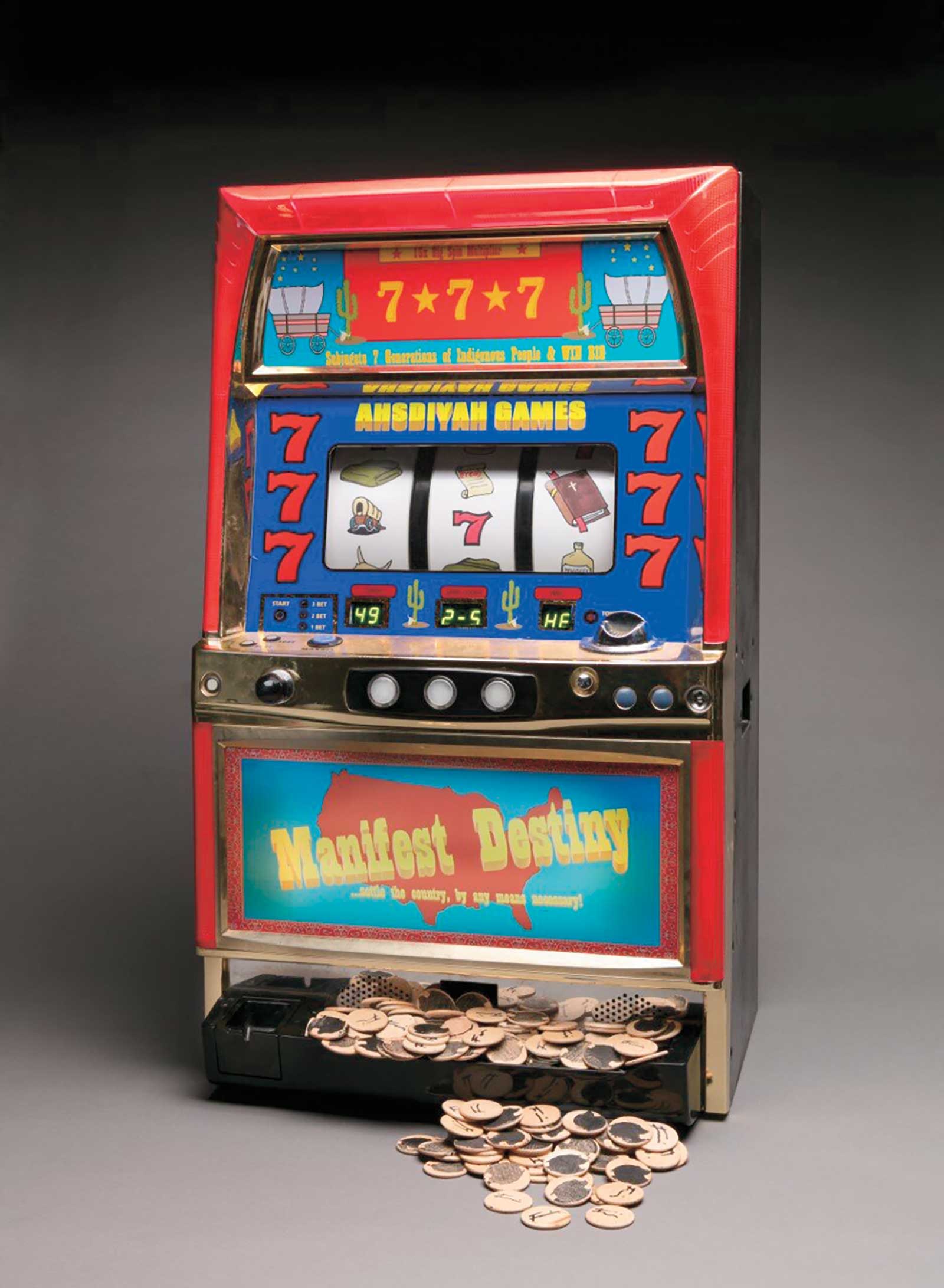 Tom Farris (Otoe-Missouria/Cherokee), Tools of the Trade, repurposed slot machine. Opposite Page: Bryan Waytula (Cherokee), Medicine Man, acrylic, enamel, ink, ledger paper on canvas, 48 x 36"
Leslie A. Deer is from the Mvskoke (Creek) Nation of Oklahoma. Her work for the Santa Fe Indian Market is in the textiles category. “We are descendants of the Moundbuilder Culture from the Southeast—from Georgia and Alabama—so these designs are not something that should be left in the past forever…it’s part of my responsibility to reach back and pull them forward: to bring them into the present day and modernize them. As part of my Mvskoke tribal community, I want to ensure these designs survive for future generations to learn from, remember, absorb and pass on,” Deer says. “It’s really kind of like bringing our ancestors with us wherever we are—in the present, and in the future. We hold space for them and bring them forward with us.” Deer is working on a collection inspired by Southeast beadwork for the summer of this year.
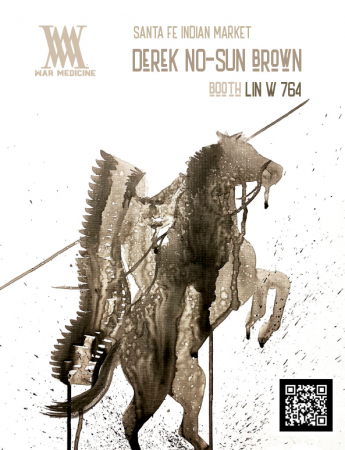
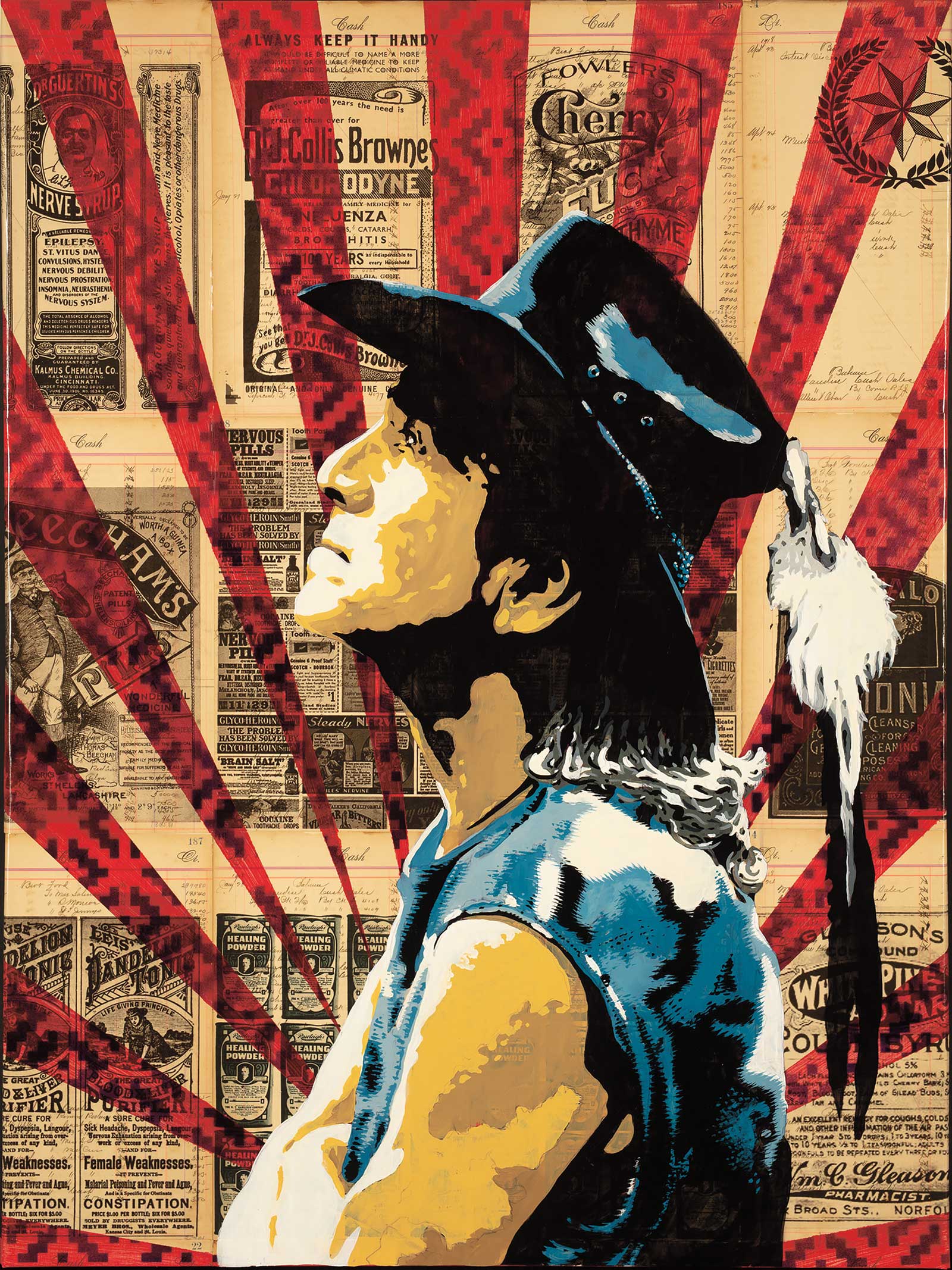 Bryan Waytula (Cherokee), Medicine Man, acrylic, enamel, ink, ledger paper on canvas, 48 x 36"
Tom Farris is from the Cherokee Nation and Otoe-Missouria tribes. His multidisciplinary work for the Santa Fe Indian Market is in the diverse arts and painting categories. Farris’ contemporary pieces reflect the humorous storytelling of Native American culture through his Pop Art-style of work both in two-dimensional and three-dimensional pieces. One of his more well-known pieces, titled Tools of the Trade, won the 2019 Bernard Ewell Innovation Award. This piece was mechanically and aesthetically reconstructed to be a usable machine. “It is a functional slot machine, the theme of which is ‘Manifest Destiny…Settle the Country by Any Means Necessary.’ All the images on the reels feature methods by which land was taken from Natives—whiskey, treaties, religion, diseased blankets, the decimation of the bison and westward expansion,” Farris says of the work. “While everything inside the game is how land was stolen, the game itself is how tribes are taking their land back through tribal gaming. The ultimate point of this piece is that there are no winners in this game, which is why it dispenses wooden nickels.” Farris is creating several new pieces for this summer, with one titled Bepsi. It’s an acrylic on canvas piece with the word “Bepsi” replacing the original logo of the soda bottlecap. This highly graphic piece is reflective of the vernacular that has come from Native American communities today.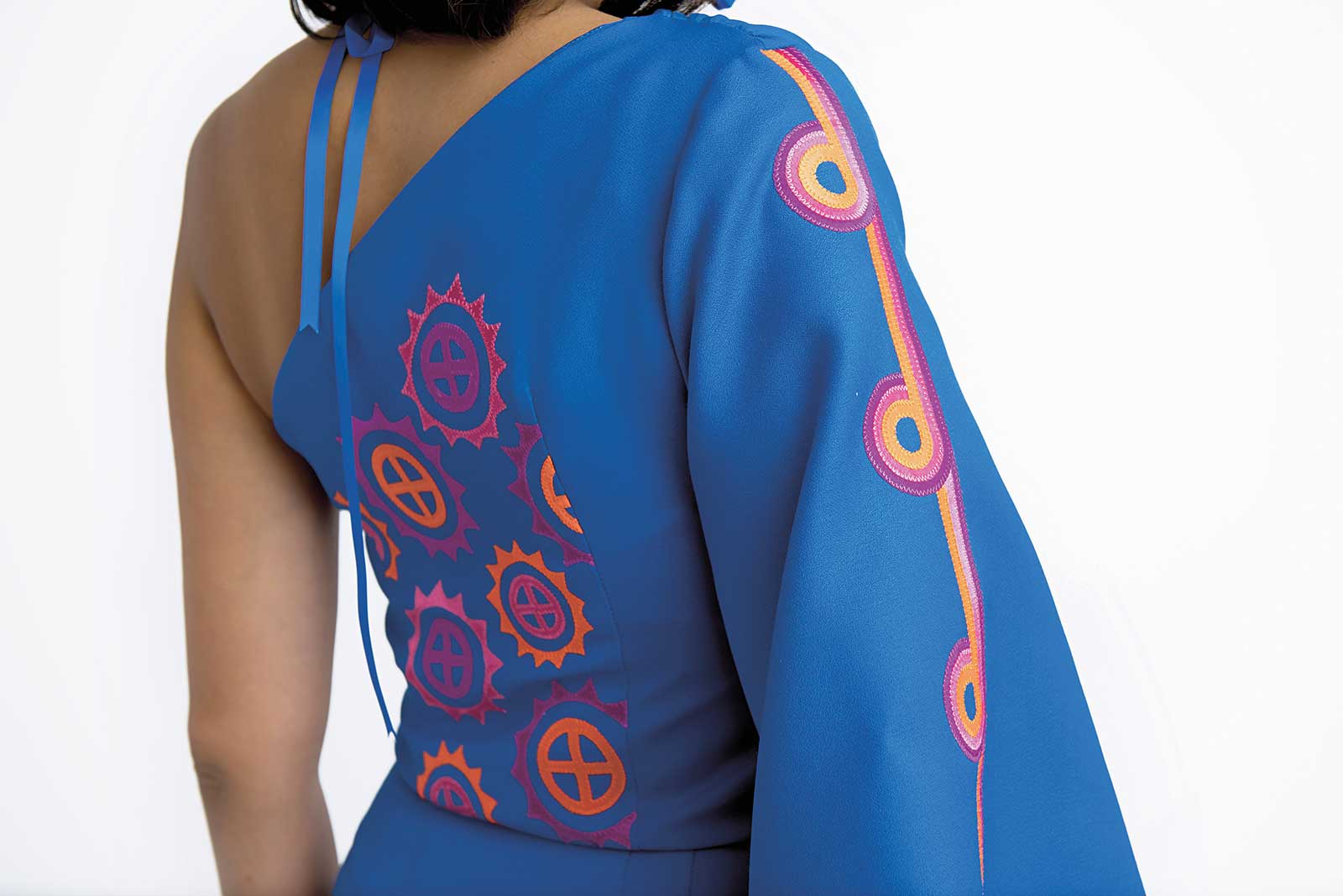 Leslie Deer (Mvskoke (Creek)), Resilient Blu, 100 percent wool crepe, satin applique, women’s size 6. Photo Credit: Christy Nicole Photography.
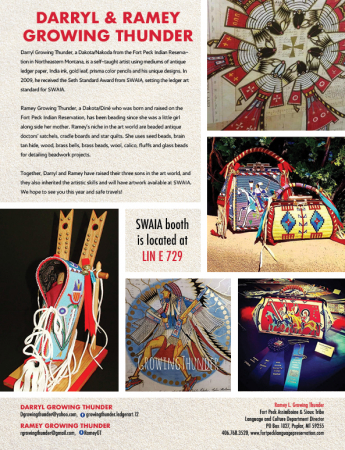
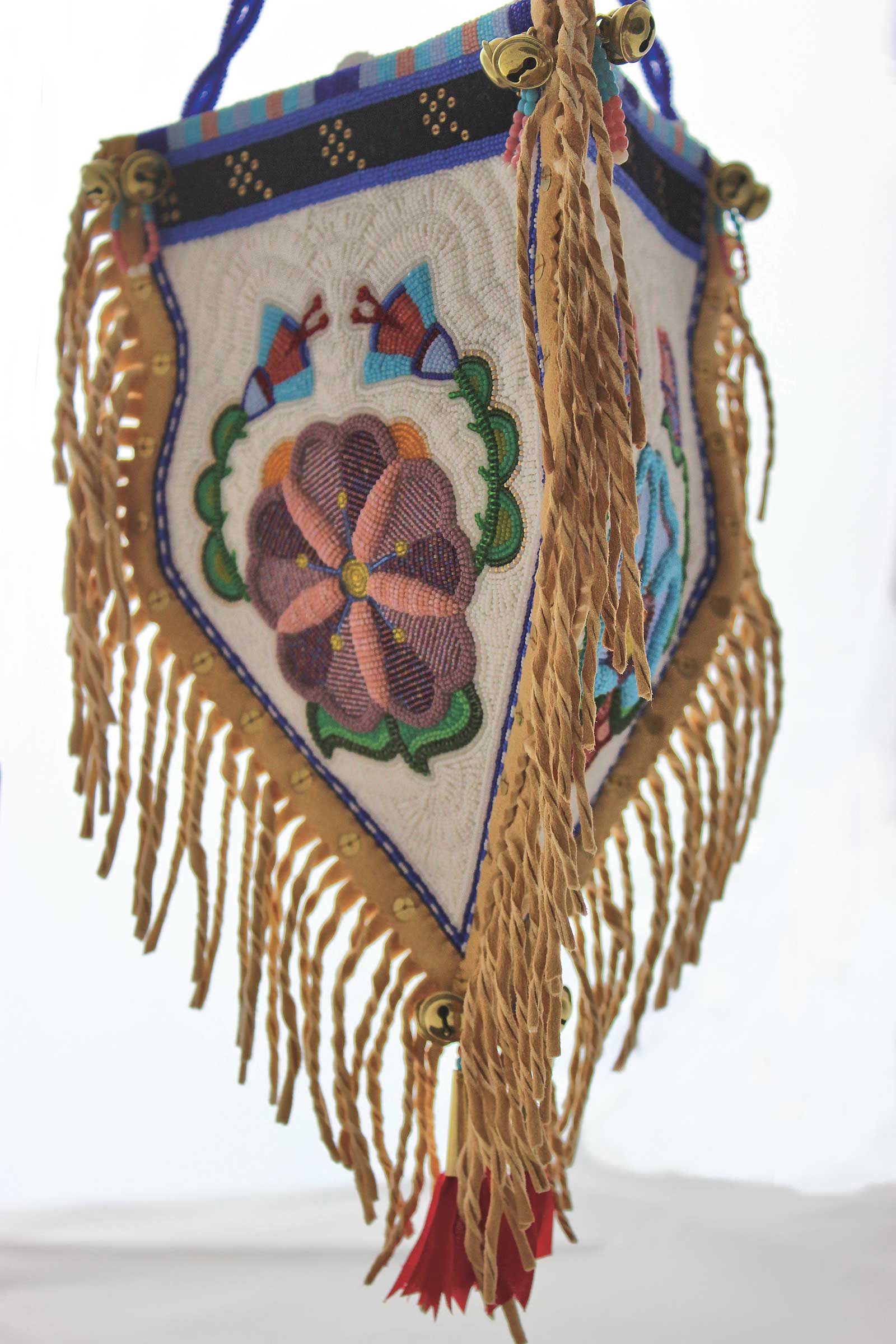 Jessa Rae Growing Thunder (Dakota/Nakoda), Wanaca, beadwork, 17 x 9 x 9"
Jessa Rae Growing Thunder comes from Bald Water Place. She is Dakota and Nakoda, from the Buffalo Nation. Growing Thunder and her family create in the beadwork and quillwork category. She is also known for her time serving as Miss Indian World in 2012 to 2013, with her focus on promotion of cultural preservation programs. “As a young Indigenous woman, I carry the responsibilities of living a good life that promises a future for our traditional knowledges,” Growing Thunder says. “At the foundation of my community work are the knowledges and gifts that my unci and ina have given me as a beadworker and quillworker. No matter what every day brings, whether it is writing my dissertation, teaching university students, instructing museum workshops, I end the day doing exactly what my grandmothers have done before me; at the end of every day, after my daughter goes to sleep, I pick up my needle and thread.” This year she is working on collaborative work with her mother, Juanita Growing Thunder Fogarty, in which they’re commenting on contemporary Indigenous experiences and how traditional arts can help express these realities. The floral bag is titled Wanaca, and the military bag is titled Campaign Medals.
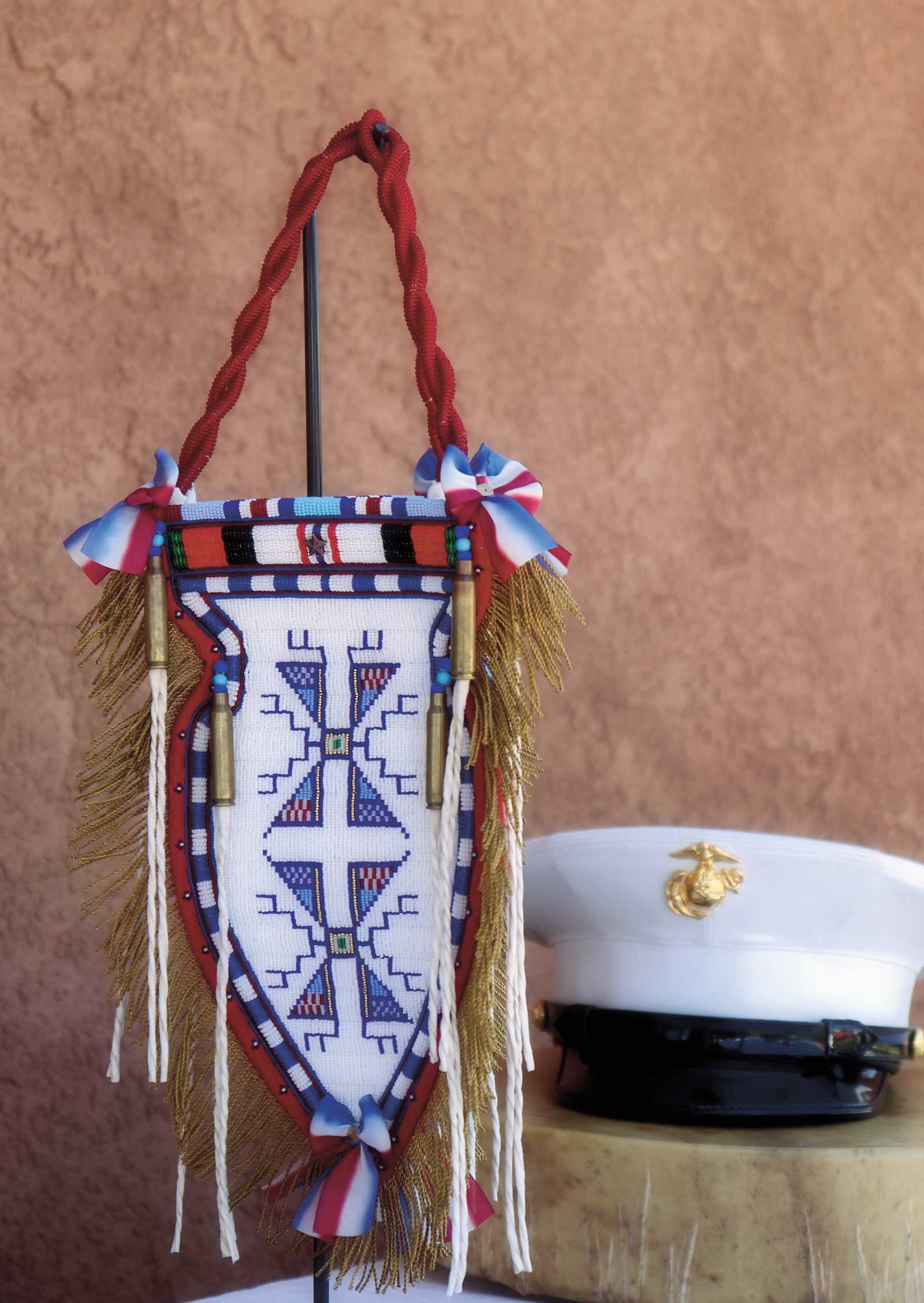 Jessa Rae Growing Thunder (Dakota/Nakoda), Campaign Medals (military bag), 18 x 8 x 8"
Bobby C. Martin is a citizen of Mvskoke (Creek) Nation and is an artist in the painting, drawing and graphics category. Martin works with his own Mvskoke family historical imagery as the focus of his work. He pushes the printmaking and drawing elements beyond their traditional forms to create rich layers of conceptual and visual content for viewers. “The images provide a connection with my past, a way to remember and honor the generations that have come before—a way to commemorate our unique family heritage,” Martin says. “And, while the photographs have very personal meanings for me as the artist, I have also come to realize that there is an almost universal recognition of a sense of history and identity among the viewers of my work, evoking memories of their own family’s past. My work has always contained a political undercurrent, but more recently I realize that I have the responsibility to tell my own story as a mixed-blood Native person in an increasingly fractious U.S. culture. This has led to deeper explorations into identity politics and how that plays out in everyday Indian communities like the ones where I grew up in northeastern Oklahoma.” The artist’s piece, At Haskell #2, is a new etching, aquatint and drypoint piece that he will have in his Santa Fe Indian Market booth.
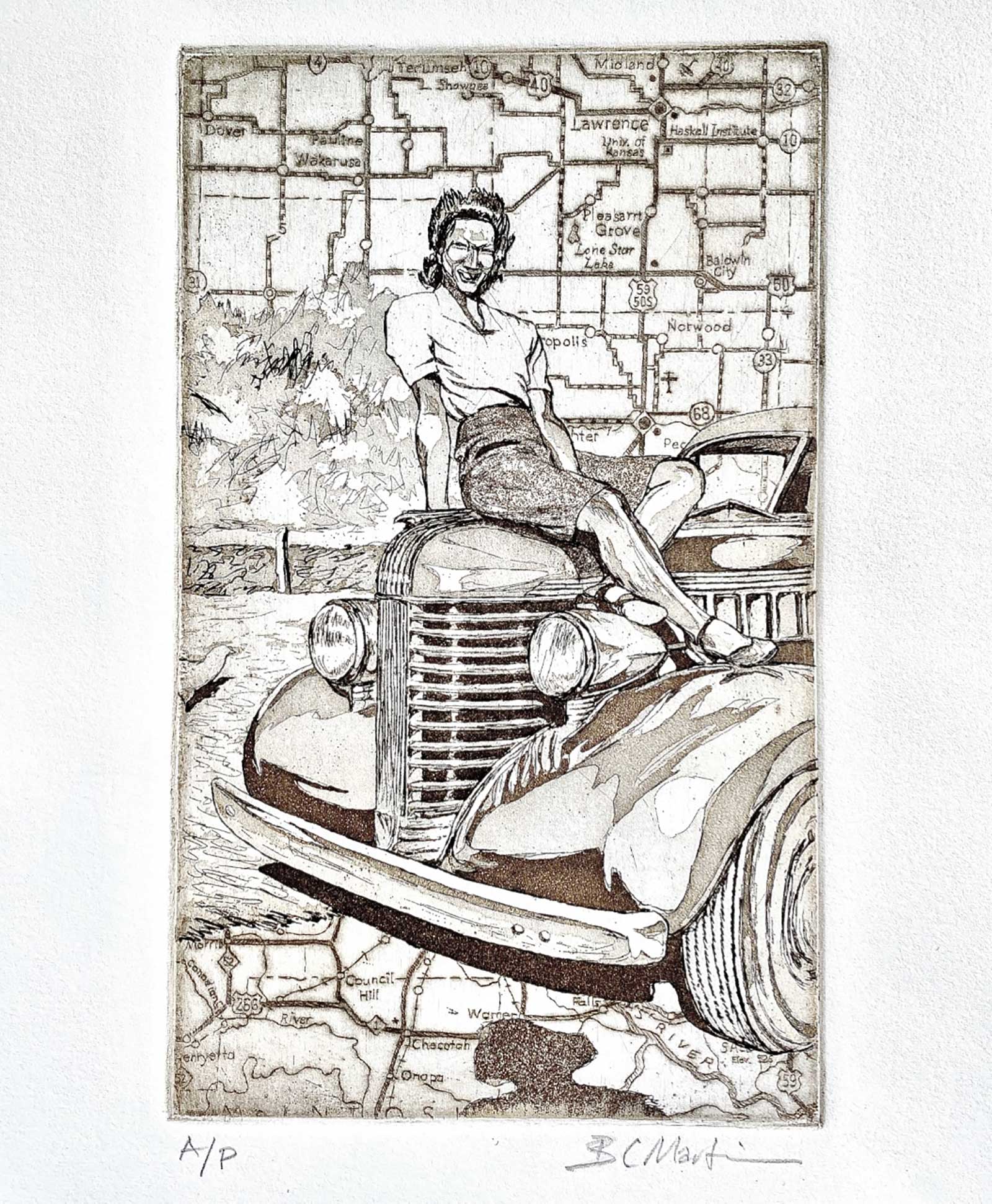 Bobby C. Martin (Mvskoke (Creek)), At Haskell #2, etching, aquatint and dry point, 9¼ x 5½"
Tyra Shackleford is a citizen of the Chickasaw Nation and her work is in the textile category, in which her work mixes traditional techniques with her own creative inspiration as she creates modern pieces that convey a message about her culture. Shackleford says, “The main influences upon my work are my Chickasaw culture, Mississippian history and the Native community. I specialize in hand-weaving techniques that date back thousands of years and push the boundaries of the techniques to create modern pieces.
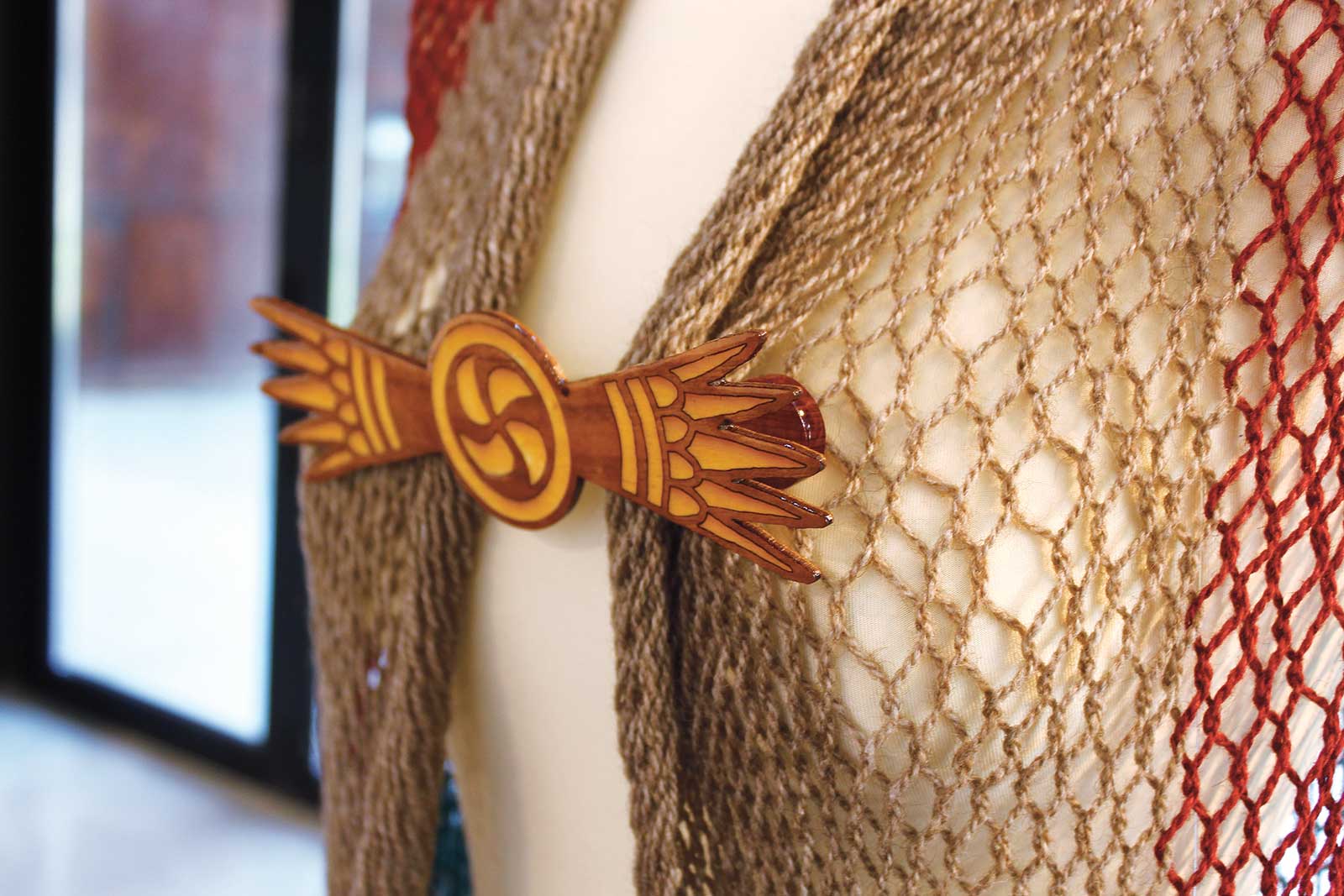 Tyra Shackleford (Chickasaw), Crayfish, spang hand-woven shawl, 60"
I also work in beadwork, quillwork and jewelry. My work expresses my Indigenous perspective and provides a present-day Native narrative.” She will be working on quillwork and a shawl for the summer market.
Bryan Waytula is a citizen of the Cherokee Nation, and his work is in the drawing, painting and graphics category. He creates highly developed photorealistic images in his work through multiple mediums. Waytula will be sharing a booth with his mother, Vivian Cottrell, who is a Cherokee Treasure in basketry.
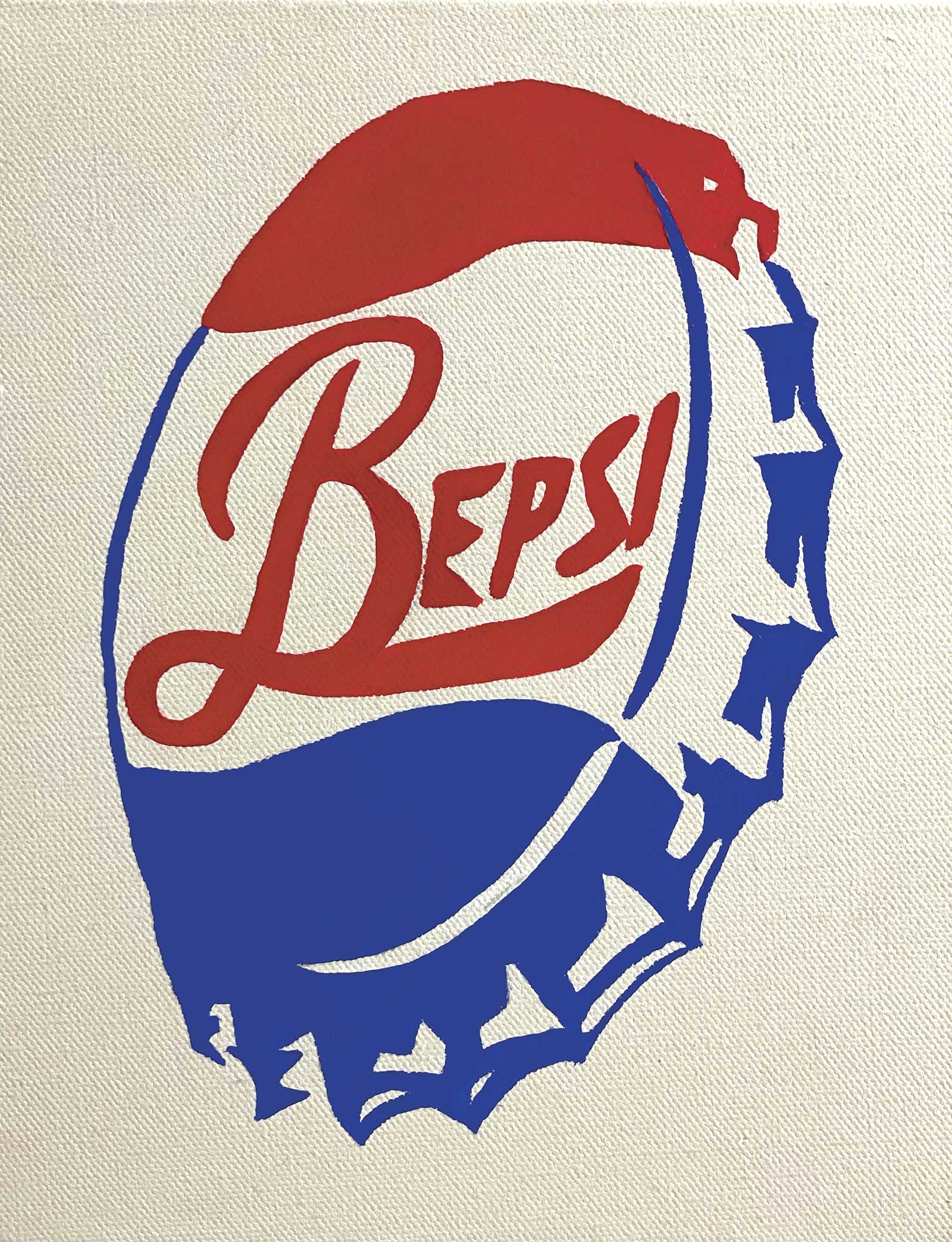 Tom Farris (Otoe-Missouria/Cherokee), Bepsi, acrylic on canvas, 12 x 12"
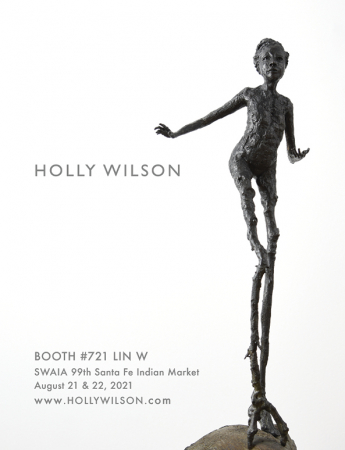
Holly Wilson is from the Delaware and Cherokee Nations, and her work will be in the sculpture, jewelry, painting and drawing categories. Wilson, who in 2017 won the SWAIA Discovery Fellowship, describes the intent of her work by saying, “Narrative is central to my work. I am interested in stories—the stories of my parents, my ancestors, my family, my community. I am a storyteller; through my work, I weave together the threads of these various narratives to create a tapestry that tells stories that are sacred and precious, personal and universal, powerful and at times volatile. Telling them brings to life things sometimes kept secret, hidden, and not permitted to be said because they challenge the status quo or reveal realities that neither side wants said.”
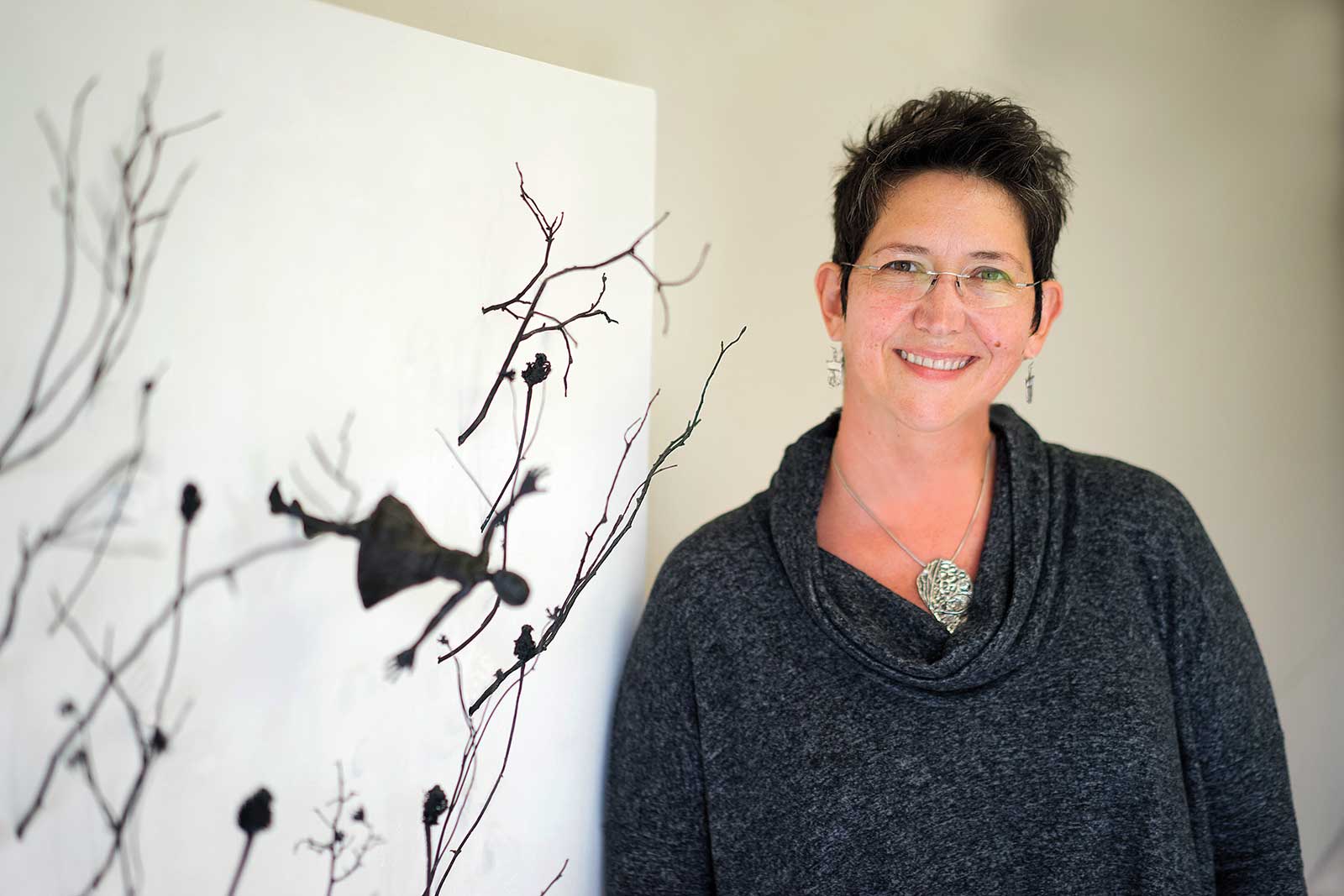 Holly Wilson (Delaware/Cherokee) with one of her sculptural works. Courtesy the artist.
Native American art is contemporary art. All of these artists are inviting viewers to look beyond just the aesthetics of their art, but to see the responses the art is giving them to current and past events. Their artworks will be seen by future generations for discussions on the happenings of our world today.
Powered by Froala Editor