In the early morning hours, a large crew sets up an 80-foot-long runway flanked by hundreds of chairs. Lighting is adjusted, music and sound is tested, walls and curtains are erected to hide the backstage from the front, and by the afternoon the Santa Fe Community Convention Center will be fully transformed into the host space for another one of SWAIA’s extraordinary fashion shows.
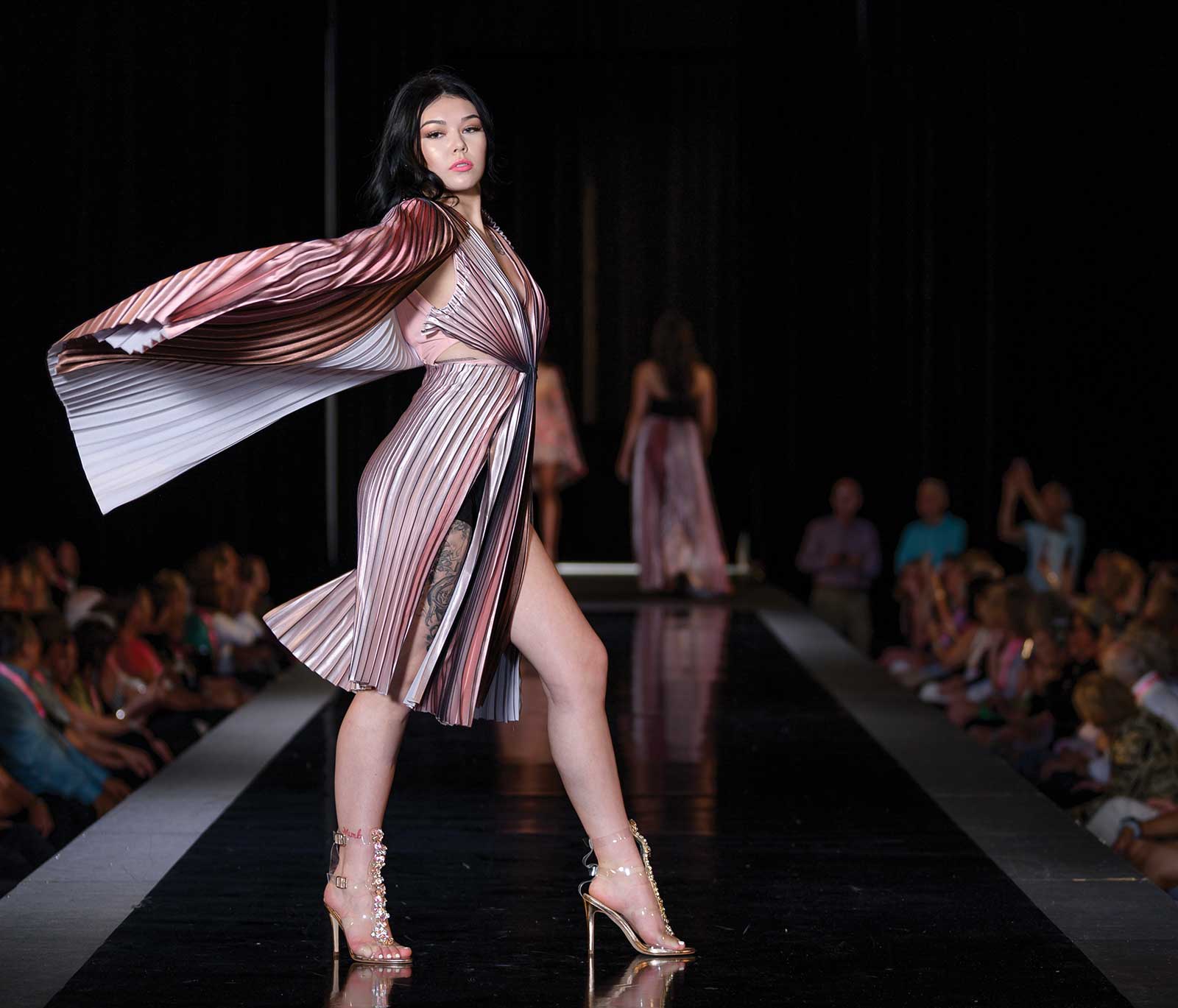 Designer: Lesley Hampton (Anishinaabe/Mohawk) / 2019 SWAIA Fashion Runway
In 2019, SWAIA Fashion hosted its largest production. The epic runway event, produced annually by Amber-Dawn Bear Robe (Siksika Nation), boasted more than a dozen invited designers, who jumped at the opportunity to challenge themselves and create elaborate collections of extravagant pieces that would thrill the 900-plus audience members. Backstage, more than 100 models cycled through hair and makeup and last-minute fittings and adjustments. Out front, people lined up around the block for standing room admission since tickets sold out days before.
The show had grown so large that a well-known artist quipped, “I heard there was an art market at the fashion show.”
Fashion at the Santa Fe Indian Market has always been present, not only through the Native American Clothing Contest, which features regalia and traditional tribal attire alongside fashionable gowns, but also in the outfits and accessories of the participating artists and supporters of Native American art.
Santa Fe Indian Market was a time to show off your best gear, and biggest turquoise.
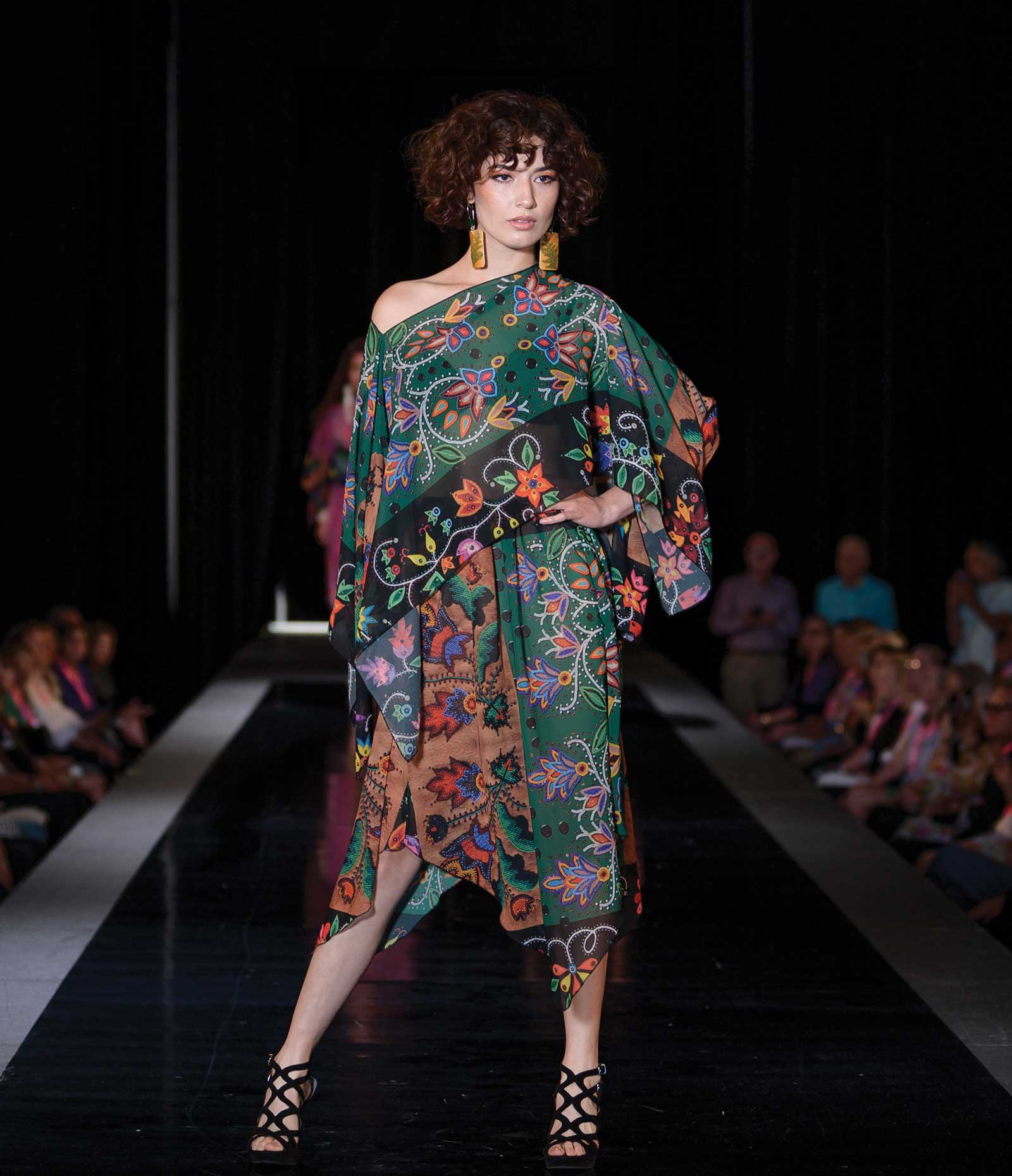 Designer: Delina White (Minnesota Chippewa Tribe) / 2019 SWAIA Fashion Runway
It only made sense that SWAIA would want to develop a platform to embrace the sartorial creativity occurring in so many different pockets throughout Indian country and beyond.
Thus, in 2014, SWAIA Fashion events launched organically out of a need and a desire to showcase designers and their collections in an organized way other than the Clothing Contest.
For the first years, SWAIA Fashion events were held outdoors. For example, in 2015 the runway show took place at Cathedral Park. The models were ushered over to the park in the back of a U-Haul storage truck from SWAIA headquarters (I rode with) where their hair and makeup was prepped on the front lawn.
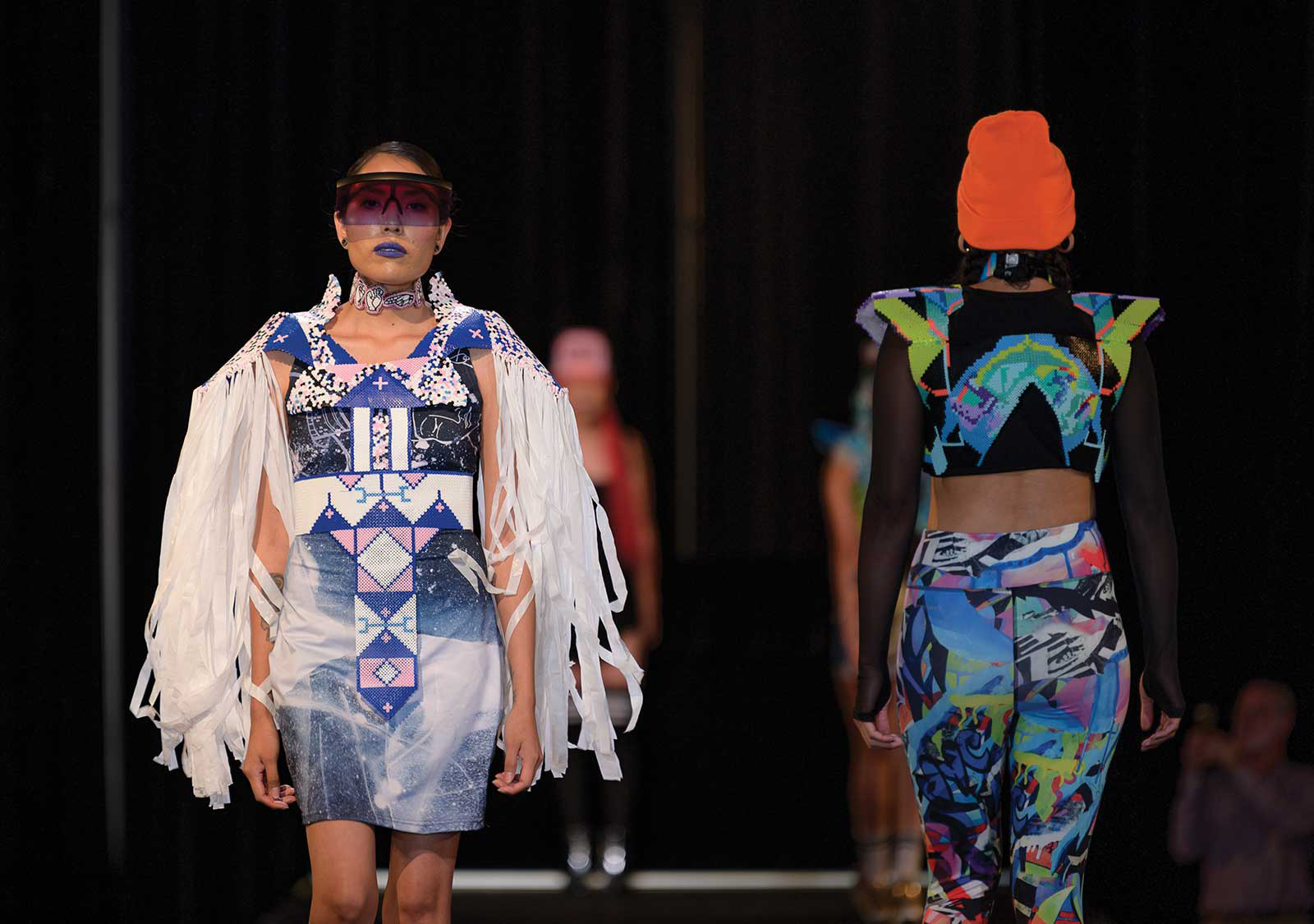 Designer: Catherine Blackburn (Dene/English River First Nation), New Age Warrior’s Collection / 2019 SWAIA Fashion Runway. Photos courtesy Amber-Dawn Bear Robe / SWAIA
The rows of seats were packed. Folks standing in the back could barely see through the amassed crowd. Photographers frequently (and boldly) stepped out onto the sidewalk runway in front of the models to capture photos of the designs.
The explosive popularity of the event was underestimated, and it was clear that the show had to be moved to a larger venue.
You see, the field of Native American fashion had grown so quickly in just a few short years that the space to present it needed to grow as well.
Thankfully, Bear Robe, a whip-smart and bold woman with a vision, was there to give SWAIA Fashion the platform it deserved. Bear Robe is a curator and art historian with extensive experience working with museums, galleries and organizations in both the United States and Canada.
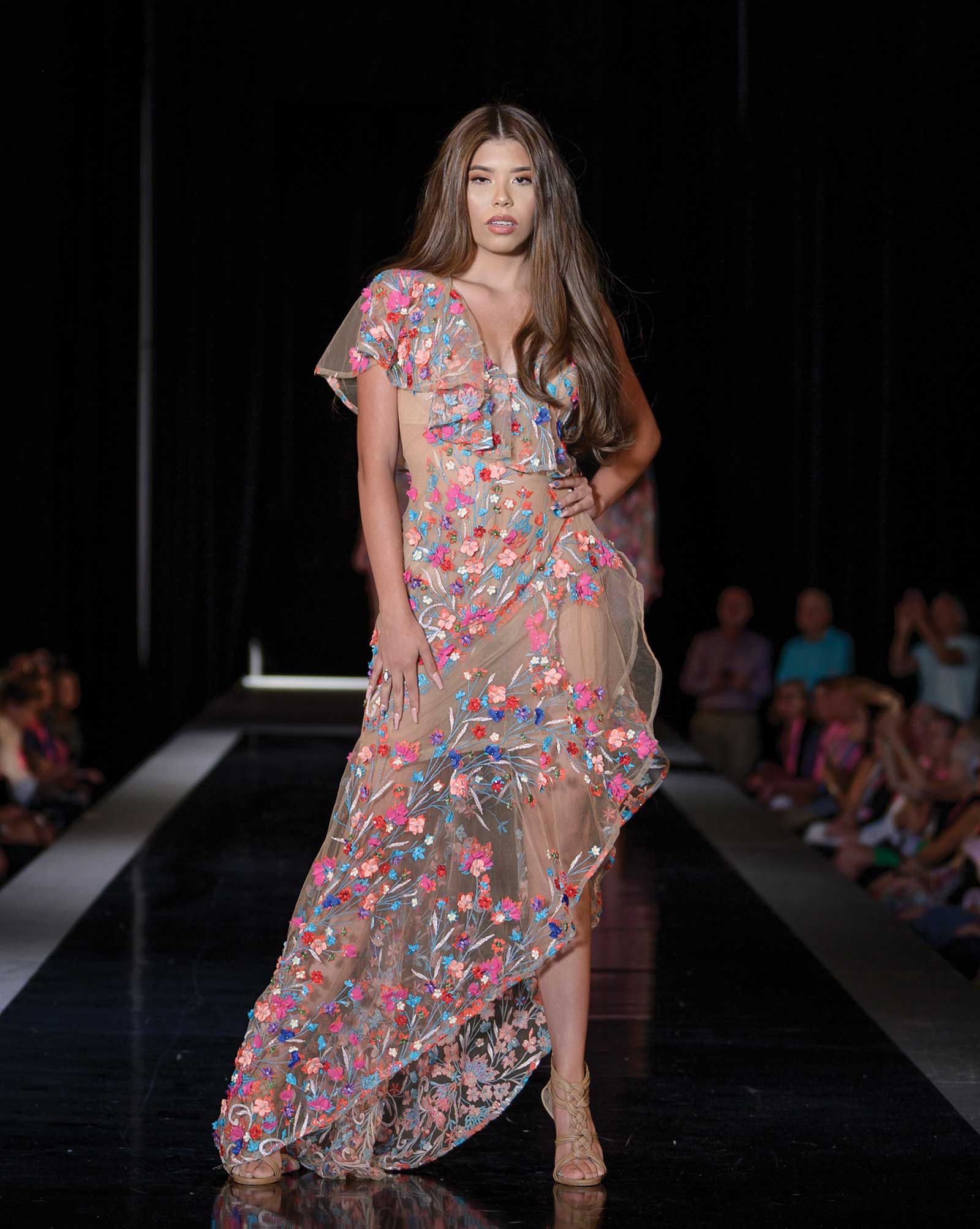 Designer: Lesley Hampton (Anishinaabe/Mohawk) / 2019 SWAIA Fashion Runway
Her curatorial prowess keeps the event relevant and exciting, never dull nor repetitive.
Last year, due to the pandemic, the event featured just one key designer, Orlando Dugi, whose work is intricate and luxe and perfect for the virtual presentation required.
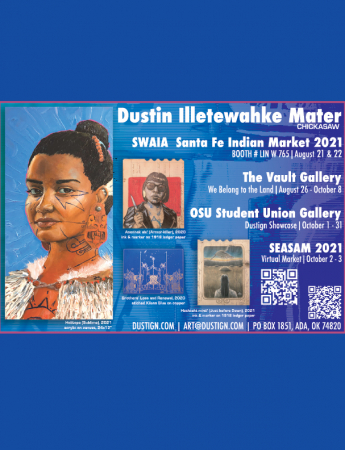
In tune with the broader sense of “gradual reopening,” this year’s fashion show will be pared down slightly, but still pack a lot of punch. The four designers selected for the 2021 runway include Pamela Baker, Lauren Good Day, Jamie Okuma and Dugi.
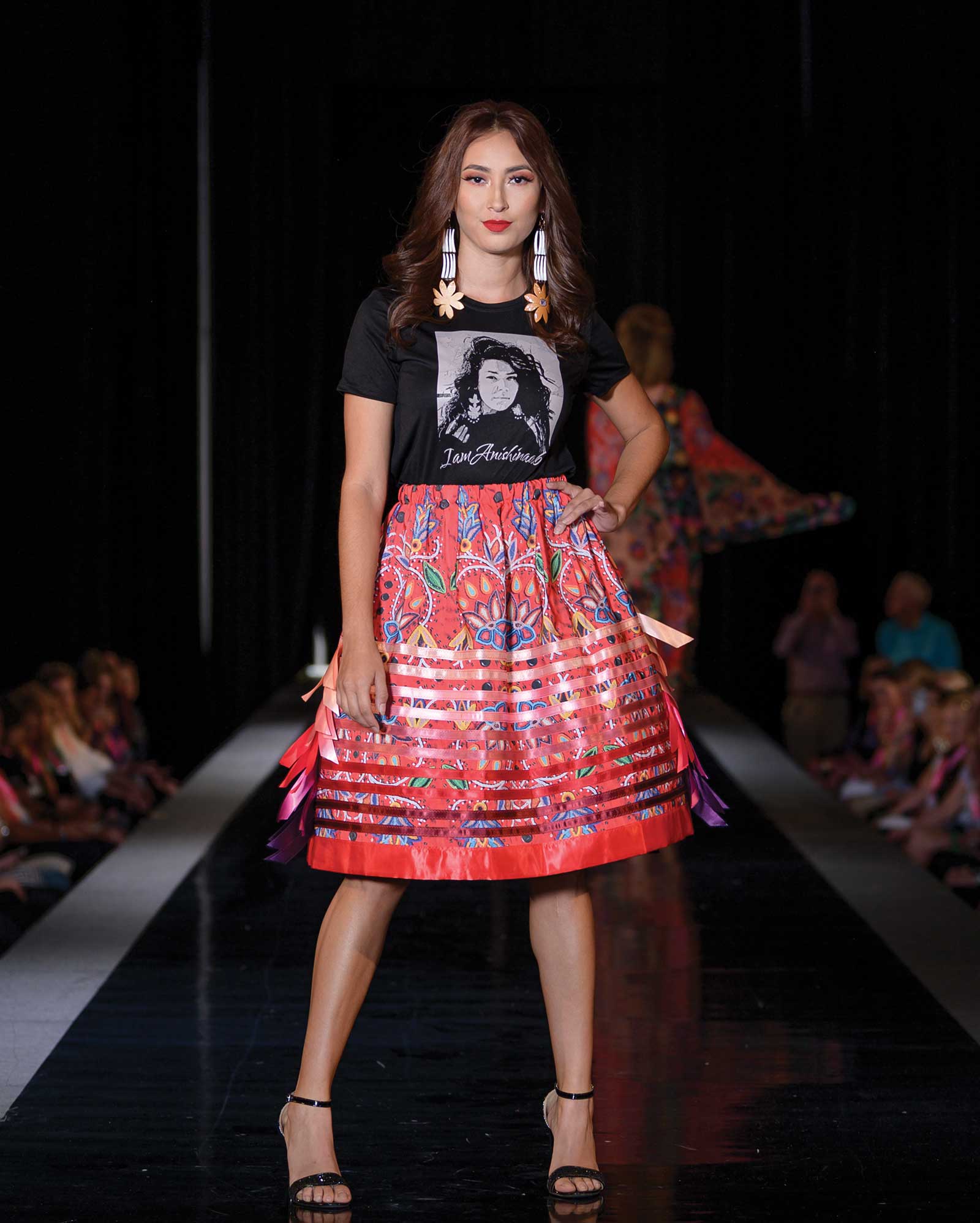 Designer: Delina White (Minnesota Chippewa Tribe) / 2019 SWAIA Fashion Runway
Hailing from the Squamish and Kwakwaka’wakw Nations, Baker’s elegant formal attire adds a touch of Northwest Coast culture to each piece. We can expect bright fashion that celebrates the power of women from Good Day (Arikara/Hidatsa/Blackfeet/Cree). A crowd favorite, Luiseño and Shoshone Bannock artist JOkuma’s bold and daring fashion always delights us in unexpected ways, while Dugi (Diné) promises to bring enchanting, romantic and regal gowns. In total, over 80 looks will grace the runway.
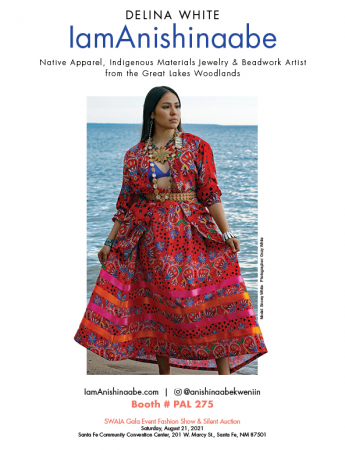
Additionally, SWAIA Fashion is hosting a new, intimate showcase for the annual gala on Saturday. This event allows SWAIA Fashion the opportunity to highlight garments in different ways, and the featured artists include Delina White of I Am Anishinaabe, Yolonda Skelton, and Loren and Valentina Aragon of ACONAV.
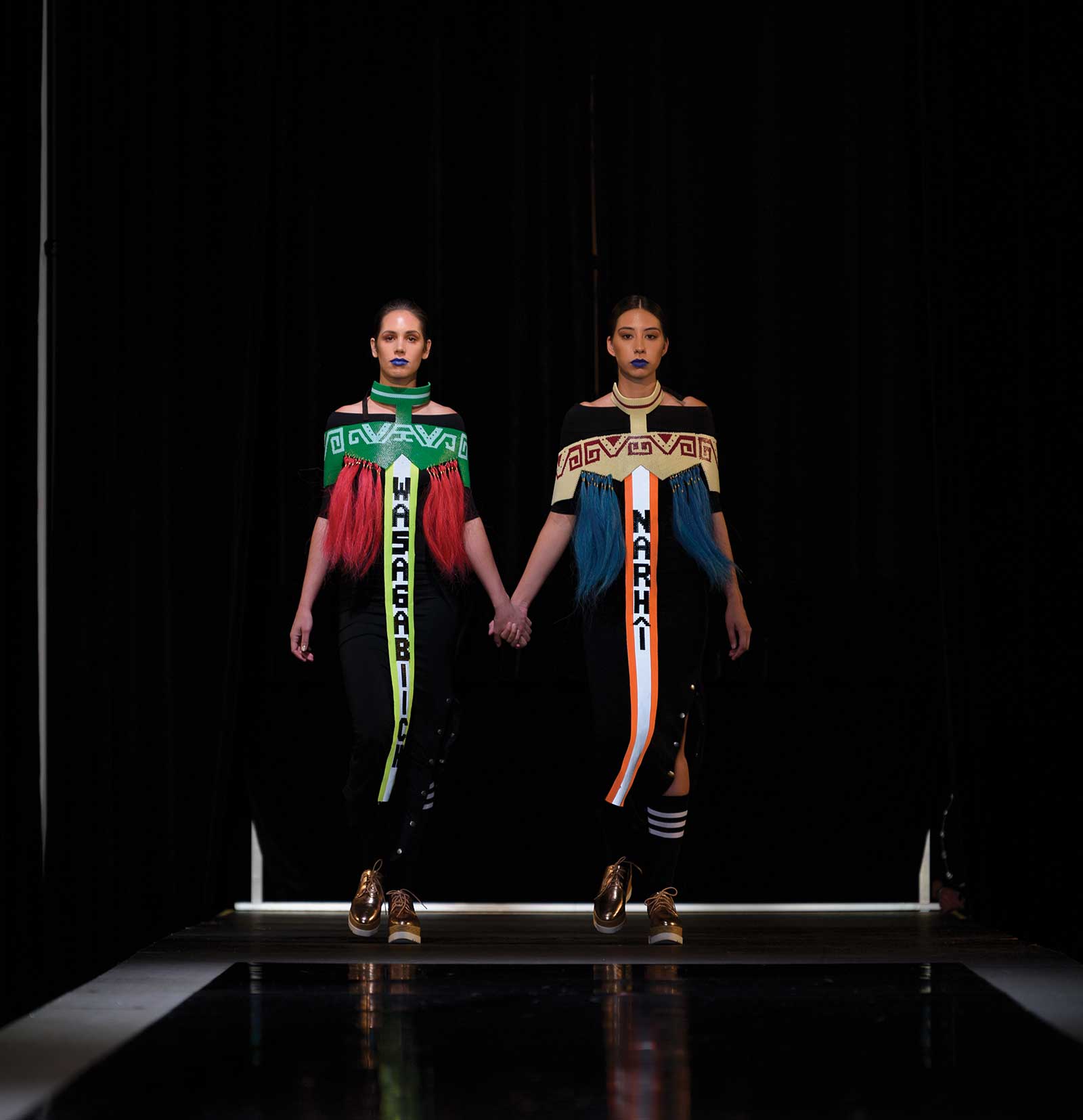 Designer: Catherine Blackburn (Dene/English River First Nation), New Age Warrior’s Collection / 2019 SWAIA Fashion Runway
The colorful garments of White (Minnesota Chippewa Tribe/Leech Lake Band of Ojibwe) are inspired by fancy and elaborate woodlands floral beadwork, while Skelton (Gitxsan Nation) draws inspiration from fusing aspects of Northwest Coast regalia into contemporary fashion. Loren (Acoma) and Valentina (Navajo) Aragon bring Southwest flair with bold geometric patterns and designs inspired by the high desert environment.
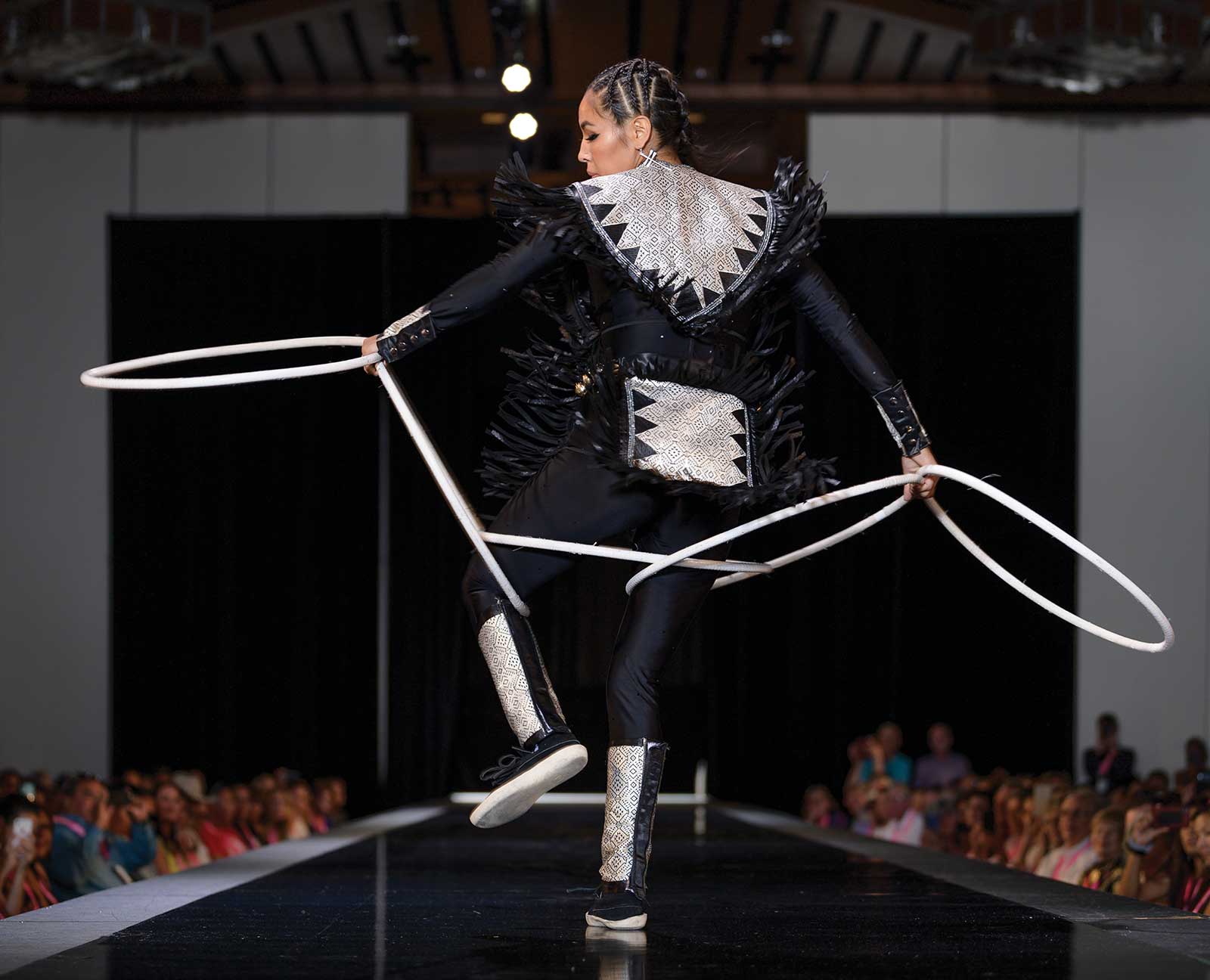 ShanDien LaRance (Ohkay Owingeh) / 2019 SWAIA Fashion Runway
Next year, in 2022, SWAIA will celebrate its 100-year anniversary. Hinting at what we can expect for that fashion event, Bear Robe has announced a new partnership this year between SWAIA Fashion, Indigenous Fashion Week Toronto, Vancouver Indigenous Fashion Week, and the newly established Supernaturals Modeling Agency.
Working together, the four organizations aim to strengthen the international impact and visibility of North American Indigenous fashion design. The new alliance between these powerhouse organizations signifies the enthusiasm for and continued expansion of Native art and fashion.
Exciting things are on the horizon. Don’t miss out on this year’s fashion events.
Powered by Froala Editor