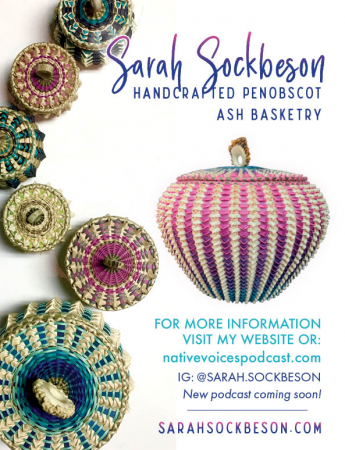

Originally, dating back some 8,000 years ago, basketry in Native American culture was meant for functional, resourceful purposes, such as collecting food and water, and storing supplies. Each basket was weaved with specific patterns, knots and materials to achieve its ultimate purpose. Materials also ranged per tribe, with Northwestern tribes utilizing their native swamp grass and cedar bark, Southeastern tribes creating with pine needles and rivercane, and Northeastern tribes pounding, cutting, splitting and stripping from their regional ash trees.
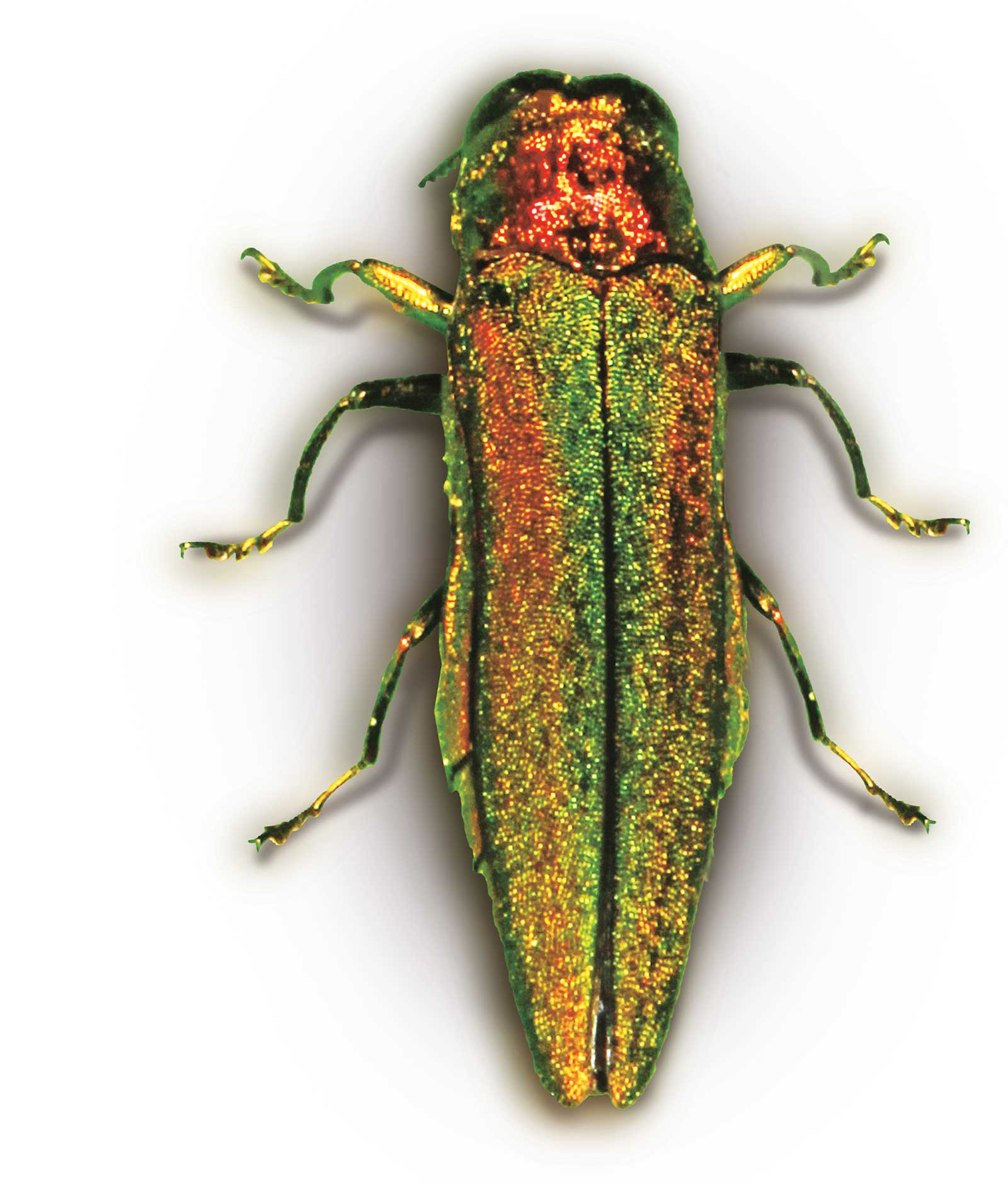 Close up of the emerald ash borer beetle. Photo courtesy of Judy Gallagher.
While basketry, indeed, had utilitarian origins, it was also an art form; not only a way of life for Native American tribes, but life itself. With such deep, traditional roots, it’s no wonder that when materials are under attack, such as the case with the invasive emerald ash borer beetle feeding off of the ash trees in the Northeastern forests of the United States, it poses devastating consequences for Northeastern tribes.
“I have not considered the use of other materials to weave baskets because of the significance that black/brown ash embodies for the Wabanaki people,” explains basketry artist Deborah Gabriel Brooks (Passamaquoddy), “and because my joy in making baskets includes fond memories of my childhood, where ash basket weaving was a family tradition. Also important, the traditional significance of black/brown ash is connected to a Passamaquoddy creation legend…This narrative is deeply embedded into our culture and tradition to support the foundations of our Native identity.”

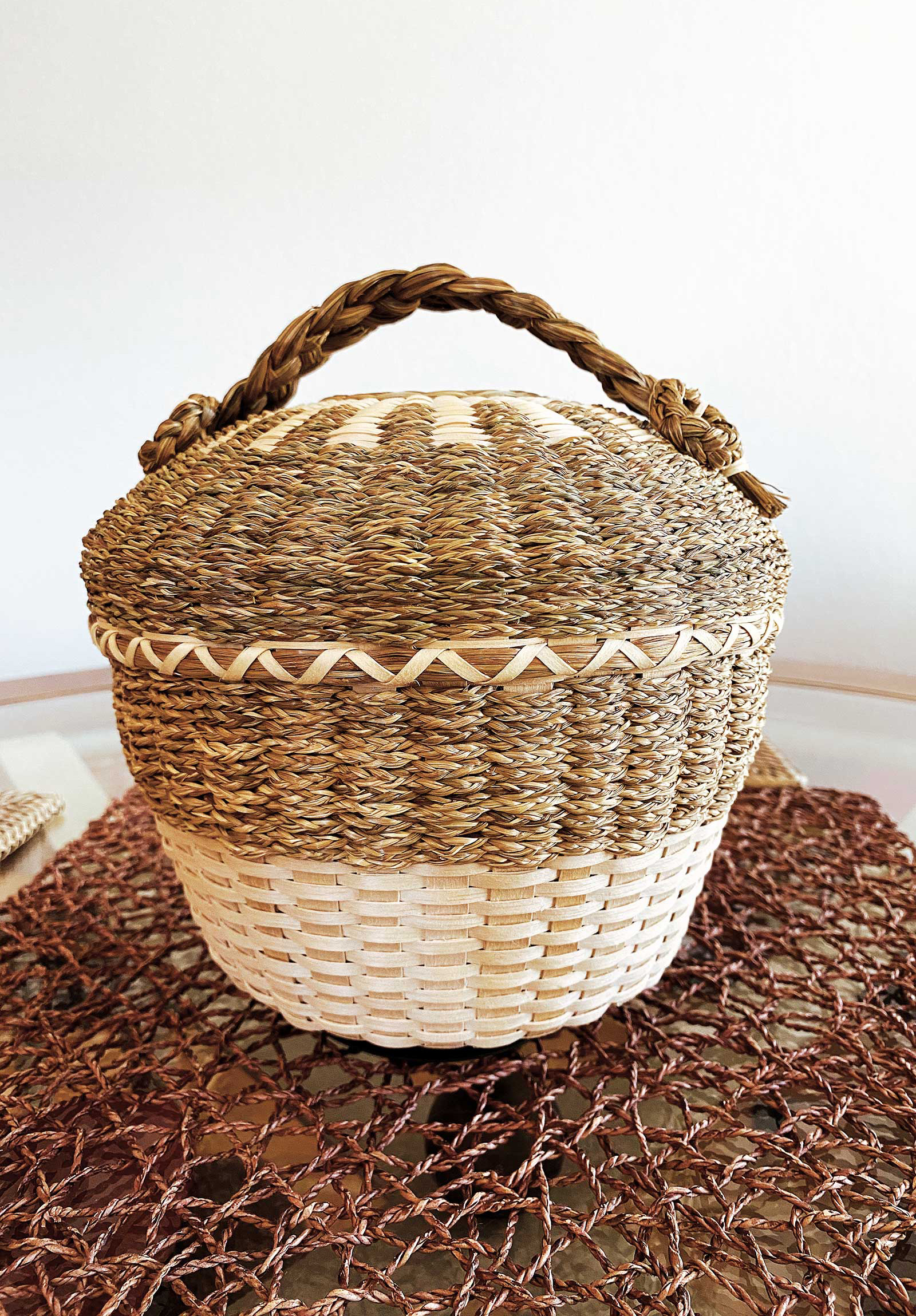 Deborah Gabriel Brooks (Passamaquoddy), Traditional Wabanaki Workbasket, hand braided sweetgrass and brown ash wood splints, 7½ x 8"
These beetles, suspected to have entered the country on shipments from China, and first landing in Detroit, is greatly disrupting the traditional ecosystem that exists between the tribes of the Northeast and the ash trees they feed on. According to the Arbor Day Foundation (www.arborday.org), “The emerald ash borer has destroyed 40 million ash trees in Michigan alone and tens of millions throughout other states and Canada. Small trees can die as soon as one to two years after infestation, while larger infested trees can survive for three to four years. Heavy infestations of larval borers speed up the devastation of formerly healthy trees.”
While the adult beetle merely feeds on the leaves of the tree, the real culprit is the larvae. “[They] bore into the ash tree and feed under the bark, leaving tracks visible underneath. The feeding disrupts the tree’s ability to transport water and nutrients, resulting in dieback and bark splitting,” according to Arbor Day. Not only does it disrupt the life of the tree, but the process in which basketry artists have cultivated their supplies for generations.
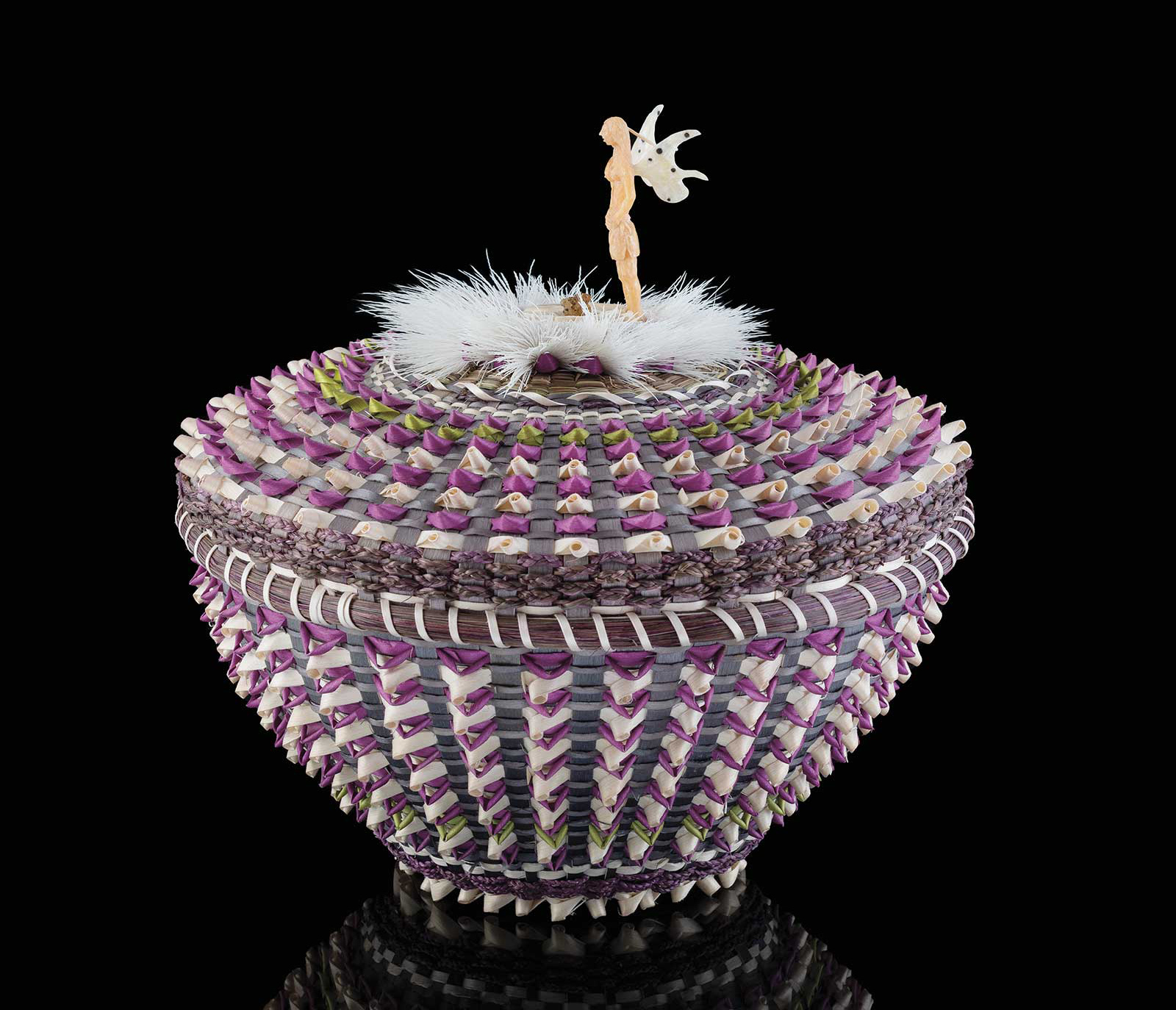 Ronni-Leigh Goeman (Onondaga), Gift of the Little People, basket; black ash, sweet grass, moose hair, 8 x 10.” Sculpture by Stonehorse Goeman (Tonawanda Seneca); fossilized ivory. Photo by Kitty Leaken.
“It isn’t the bark that's the primary part of black ash baskets,” says artist Ronni-Leigh Goeman (Onondaga), “it’s the annual rings, the entire tree. Once the tree has been harvested, there’s the arduous task of getting the wood from the tree. The process involves pounding the tree to release the annual rings into strips several feet long. Once the strips of annual rings are removed, the process of making splint begins. The process includes soaking and using a knife to remove the sticky residue and then very carefully using the knife to split or pull the fibers apart several times to get thin workable splint. For the fancy, intricate baskets, the splint must be almost as thin as paper.”
As a result of the invasive infestation, artists are now having to conserve their ash supply as much as possible. Artist Theresa Secord (Penobscot Nation) adds, “My baskets are getting smaller and more expensive. Also, I’m using a third material in my baskets, in addition to the ash and sweet grass. Cedar bark provides a nice aesthetic, an additional texture and even an aromatherapeutic aspect.”
While the USDA is putting forth an effort in quarantining areas of infestation, and attempting to collect ash seeds to replant when the borer issue is contained, the outlook is grim. “The issue as I see it,” says Goeman, “is that due to the lengthy process to plant and regrow to harvest will take many years and many basket makers will not be here to teach the process to the next generation… [However], Native people are very resilient and I’m sure that some will look for alternative materials to keep the tradition going, but, black ash basket culture as we know it will change.”
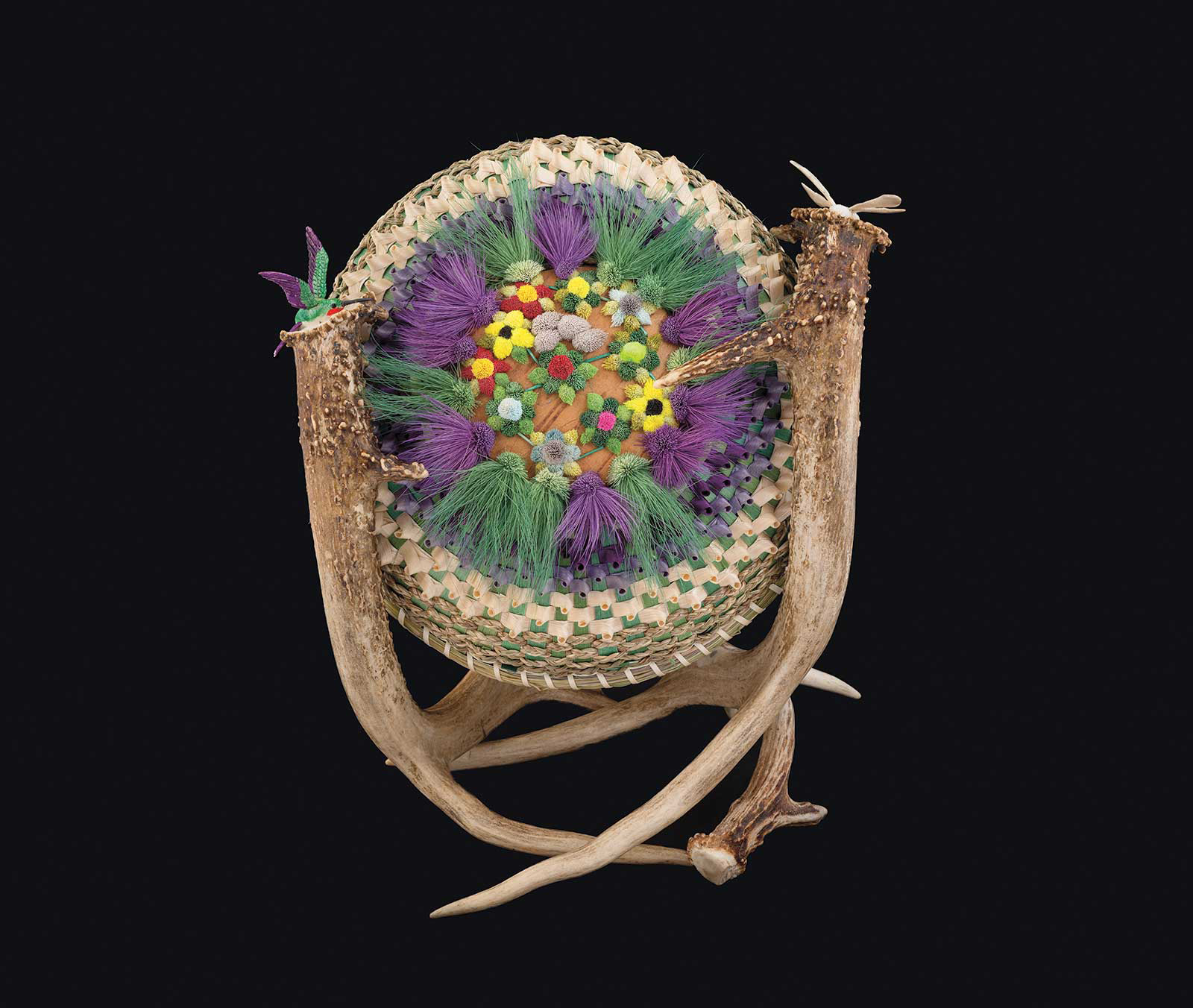 Ronni-Leigh Goeman (Onondaga), The Duel, basket; black ash, sweet grass, moose hair. Sculpture by Stonehorse Goeman (Tonawanda Seneca); bee and bird are made of moose antler, and stand is white-tailed deer. Photo by Kitty Leaken.
In a further last-ditch effort for optimism, Secord states, “The foresters tell us that there are isolated pockets of ash tree habitat that will survive. In Maine, we don’t have large contiguous forests of ash, so the beetle does not transmit easily. Also, there are 10.5 million acres of heavily forested, unorganized territory where few people live and with few roads, where people cannot easily transport the beetle by moving firewood. This remoteness and isolation will be in our favor and therefore, some trees will continue to live and provide basketry material for our Indigenous weavers.”
Despite harrowing obstacles, the legacy and tradition of the ash tree in basket making will live on through the Native people of the Northeastern United States. Their strength, resilience and spirit has seen them through many troubled times in the past, and through them, despite what may happen, the ash tree remains a part of their being, their origin story.
Powered by Froala Editor