

Jason Brown is a man of many talents. His passion for creativity, his dual Wabanaki/Penobscot and Swedish heritage, as well as his home state of Maine play a part in everything he does. “The style of artwork we do as Decontie & Brown is based on our Wabanaki aesthetic. What I love about our culture up here in Maine and the Maritimes is that it has this really unique quality to it, and it’s really informed by where we live, our natural surroundings,” says Brown. “What I love about our work is that it doesn’t fit into any sort of box. We’re able to share beautiful designs our ancestors came up with that are [less often seen, and] a lot of it is informed by traditional Wabanaki/Penobscot beadwork.” The artist comes from a long line of weavers, but as a jeweler, he finds his own ways to incorporate weavings into his jewelry, like a metal coffin with woven designs fused into it. Brown is one half of Decontie & Brown alongside his wife Donna Decontie-Brown—they’ve known each other since the age of 5—and together they create everything from elaborate jewelry to music boxes and clothing design.
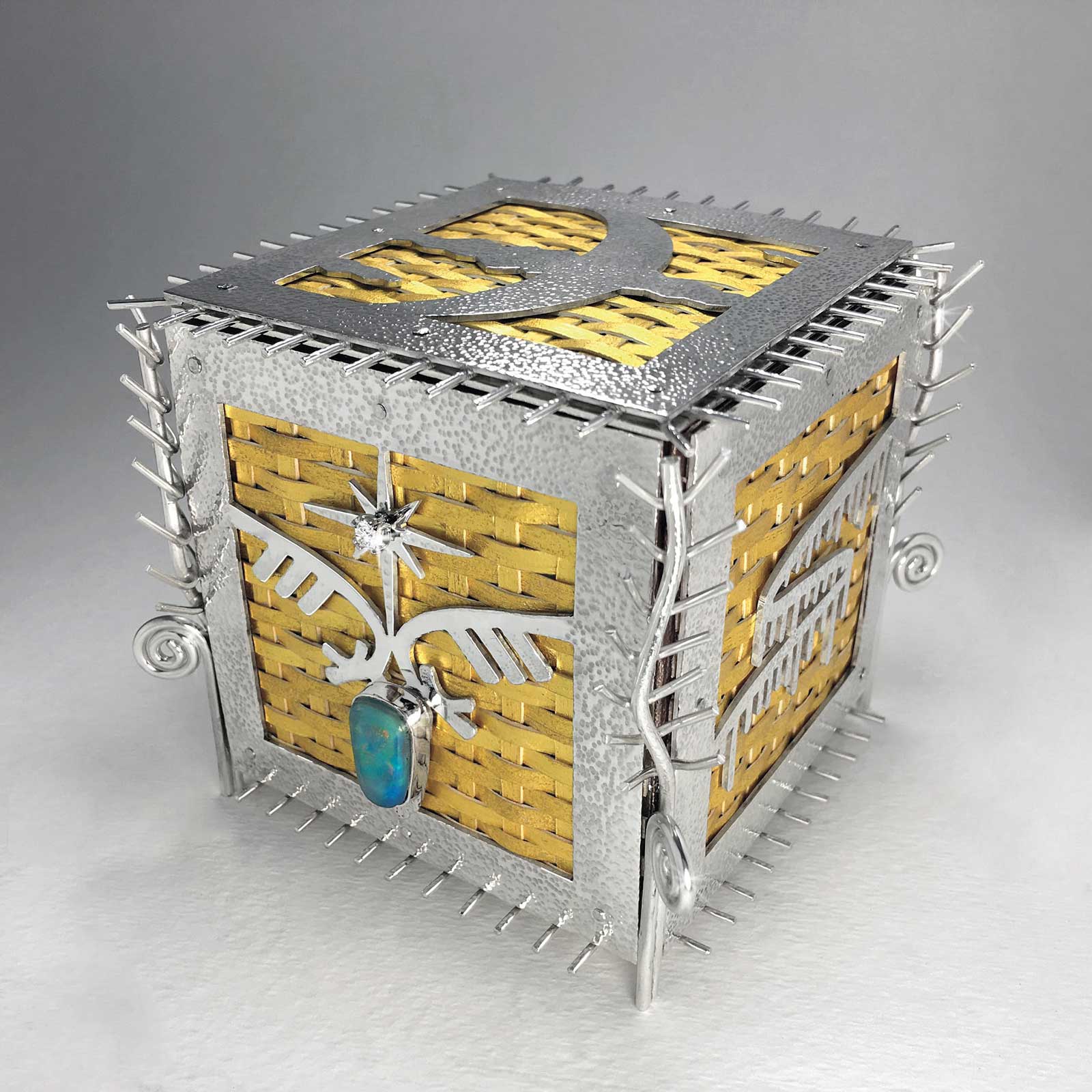 Borealis Caribou Music Box by Decontie & Brown that won Best of Class for Open Standards at the 2020 Heard Museum Guild Indian Fair & Market. This creation is the first ever Native American jeweled box where Brown not only hand crafted the box but also composed, performs and sings the original song it plays.
The couple began with jewelry, Brown explains, which naturally led to exploration in clothing design, and as their art evolved they started to gain notoriety for their work in fashion. In 2019, they opened the Santa Fe Indian Market Fashion Show. “When we started doing runway shows, the outfits we created, the overall show had a tribal story or representation of something meaningful in our culture,” Brown recalls. Further amplifying this celebration of his culture, Brown decided to start making custom runway music to go with the fashion shows. “Modern beats with traditional chanting and traditional notes,” Brown describes of his sound. “That’s really how the music evolved. We were doing music as Decontie & Brown, we were doing it on the runway.”
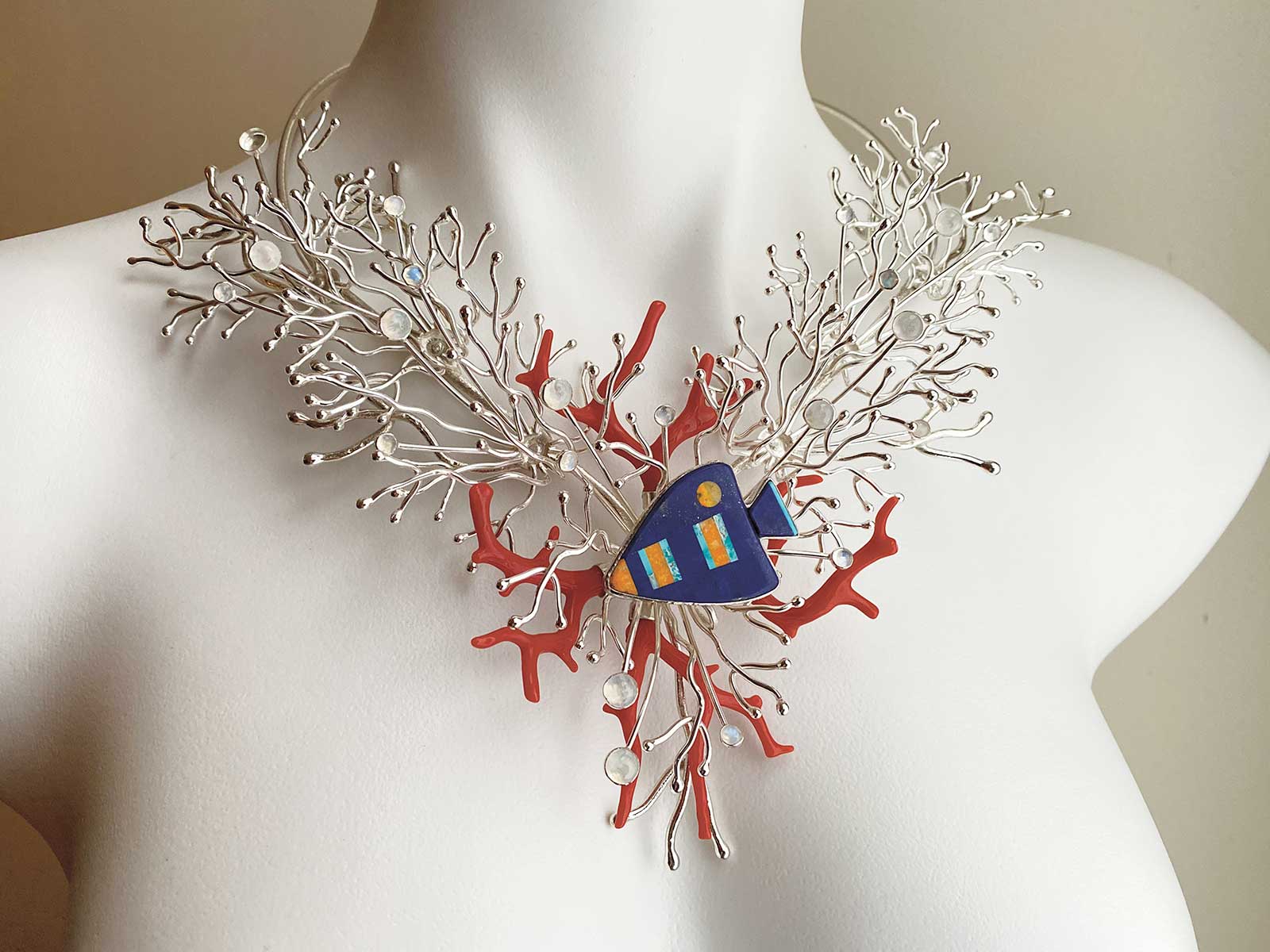 Coral Reef Collar by Decontie & Brown pays homage to oceanic elegance. It won Judge’s Choice at the 2020 Heard Museum Guild Indian Fair & Market. Photo courtesy Decontie & Brown.
Brown’s musical persona, which grew out of these runway shows, is called Firefly. It’s a blend of his Wabanaki/Penobscot and Swedish heritage. The sound is ethereal, almost otherworldly, combining traditional drumbeats and chants with elements of contemporary music, like synthesizers. “I perform under the name Firefly, but I took it one step further, and I’ll put the word ‘hybrid,’ [near my name as well],” says Brown. He was born and raised in his Indigenous community in Maine, and while the artist always knew he had Swedish blood, he knew next to nothing about that side of his heritage. “I’ve been called a half breed all my life as if I did something wrong, and then I finally took charge of that energy and said, ‘You know what, I’m a hybrid.’…Taking two awesome things and putting them together.”
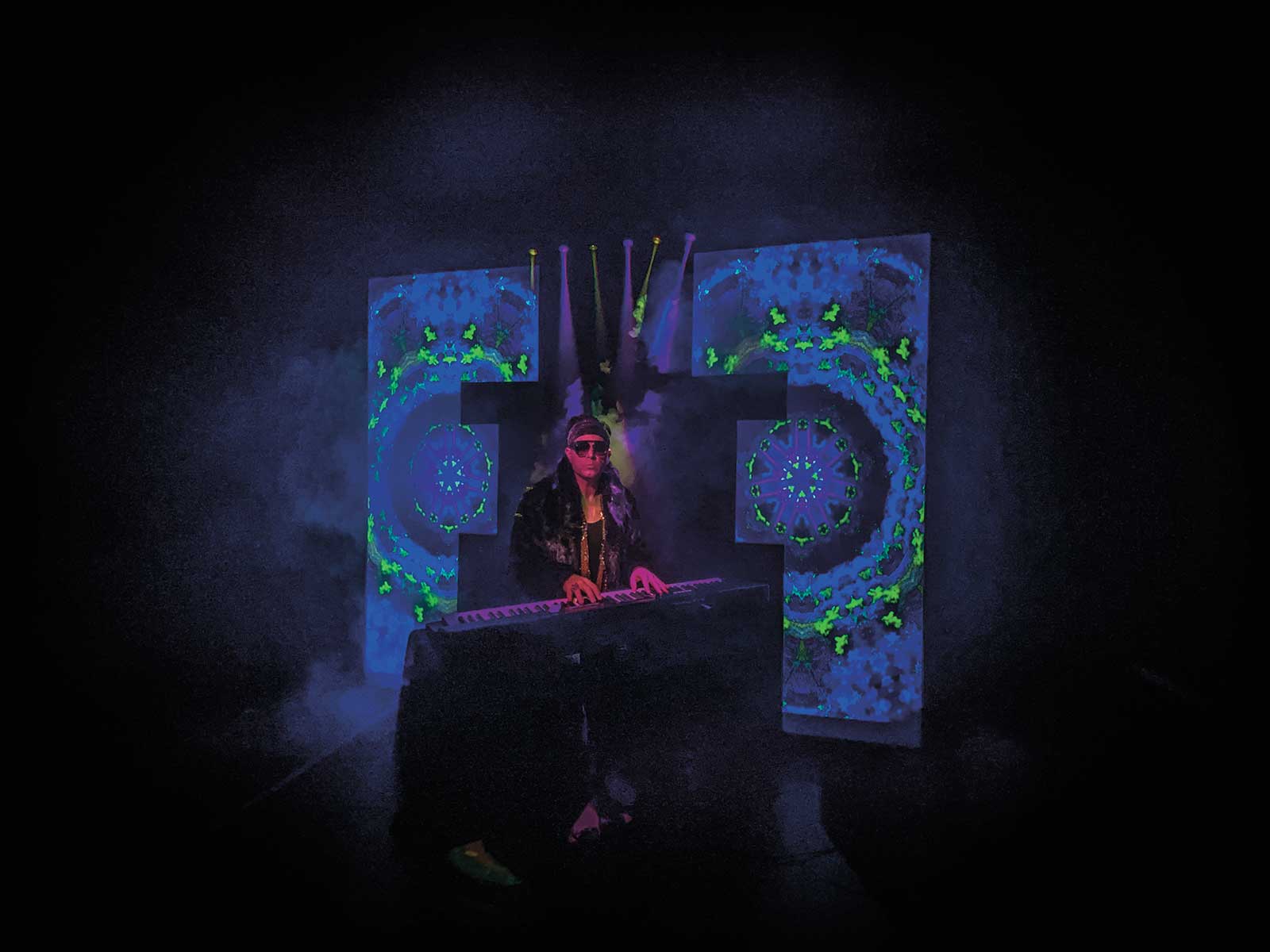 Firefly performs a piano solo inspired by traditional Penobscot music for the Kennedy Center's Arts Across America series.
His first live performance was a Facebook Live show he put on during the spring of 2020, at the height of the pandemic. Nearly every in-person event was canceled, nobody could gather together to support one another in person, and Brown wanted to honor the people who had passed away or been affected by Covid-19. “Our traditional songs belong to everyone,” he says. So he set up his drum, some purple Christmas lights to introduce “a little more excitement,” and he played a set. “People really responded to it. People told me it made them feel better...That’s medicine...We really rechanneled all the energy that Decontie & Brown does, and we started running with these live shows.” While the virtual live shows started off fairly humble (in his bedroom with those purple Christmas lights), the production value began to increase with each performance, adding lasers, large-scale props and other exciting visuals. Brown says he took time to learn how to film properly, from lighting to sound recording to getting the right equipment. “It was a whole new way to create and share,” he reflects. One thing led to another and, eventually, Brown received an invitation to perform nationally as Firefly during a virtual Arts Across America at the John F. Kennedy Center. It aired November 30 and the performance is still available to watch on the Kennedy Center website.
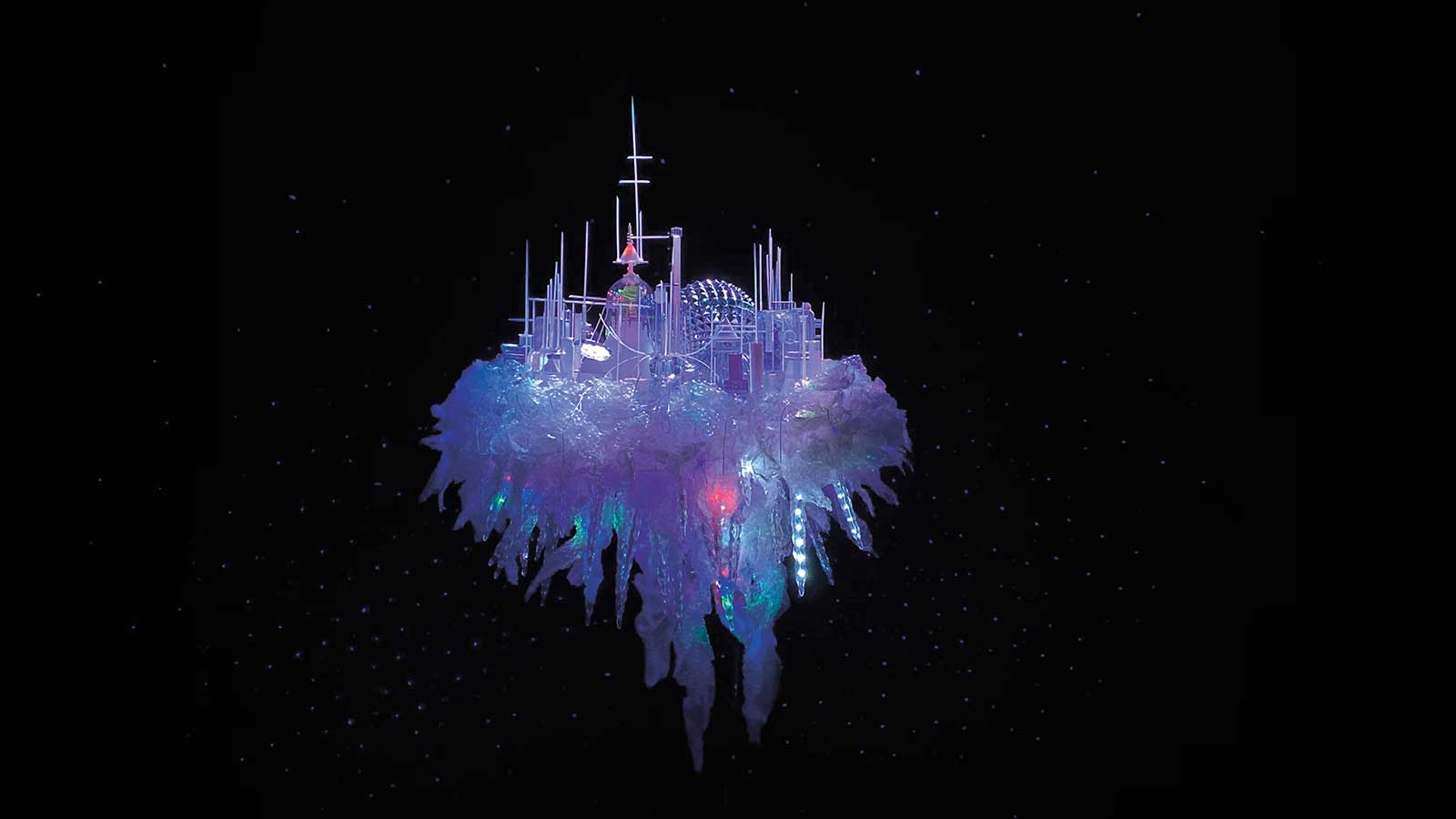 A production shot of a scale model set that Firefly built for his most recent music video, “Destination Turtle Island.”
“All of my experiences throughout my life seem to culminate,” says Brown, who has also worked as a commercial artist and graphic designer. “We do everything ourselves. I build the sets [during performances], I run the lights, I do all the visuals…We even started making the things I wear when I perform.”
He released his first single, “Love and Light,” on Spotify last summer. Brown describes the song as having a very modern, futuristic sound infused with traditional chanting.
“Everything in life is energy. There’s negative energy and there’s positive energy. Whenever something negative comes around us, I think, ‘How can I turn that into something positive?’ I’m not saying [this past year] has been easy by any stretch, but it’s like, ‘OK, this is the situation we’re in, how can we get through this the best way we know how?’”
The answer, says Brown: “Stay creative.”
Powered by Froala Editor