As far back as people can remember, the Passamaquoddy tribe of the Wabanaki Confederacy in Maine have been making utilitarian baskets woven of ash for daily use from potato farming to fishing. The tradition of “fancy baskets” evolved from the utilitarian forms. Before recorded time, the Wabanaki creation story has its people emerging from ash trees.
“That legend is important,” Jeremy Frey explains. “It shows the ash’s connections to us. Our family has been making ash baskets for over seven generations. I feel the ability to harvest the materials and my ability to weave have been given to me by all the weavers in my family who came before me. It’s part of me and I was born knowing how to do it. I can go into a healthy ash stand and see the life in them. There’s a glow to them. When an ash tree is allowed to be as glorious as it can be, I stand in awe. I feel a strong emotion when I see the sunlight on the trees and even in the exhaustion of pulling the trees out of the woods.”
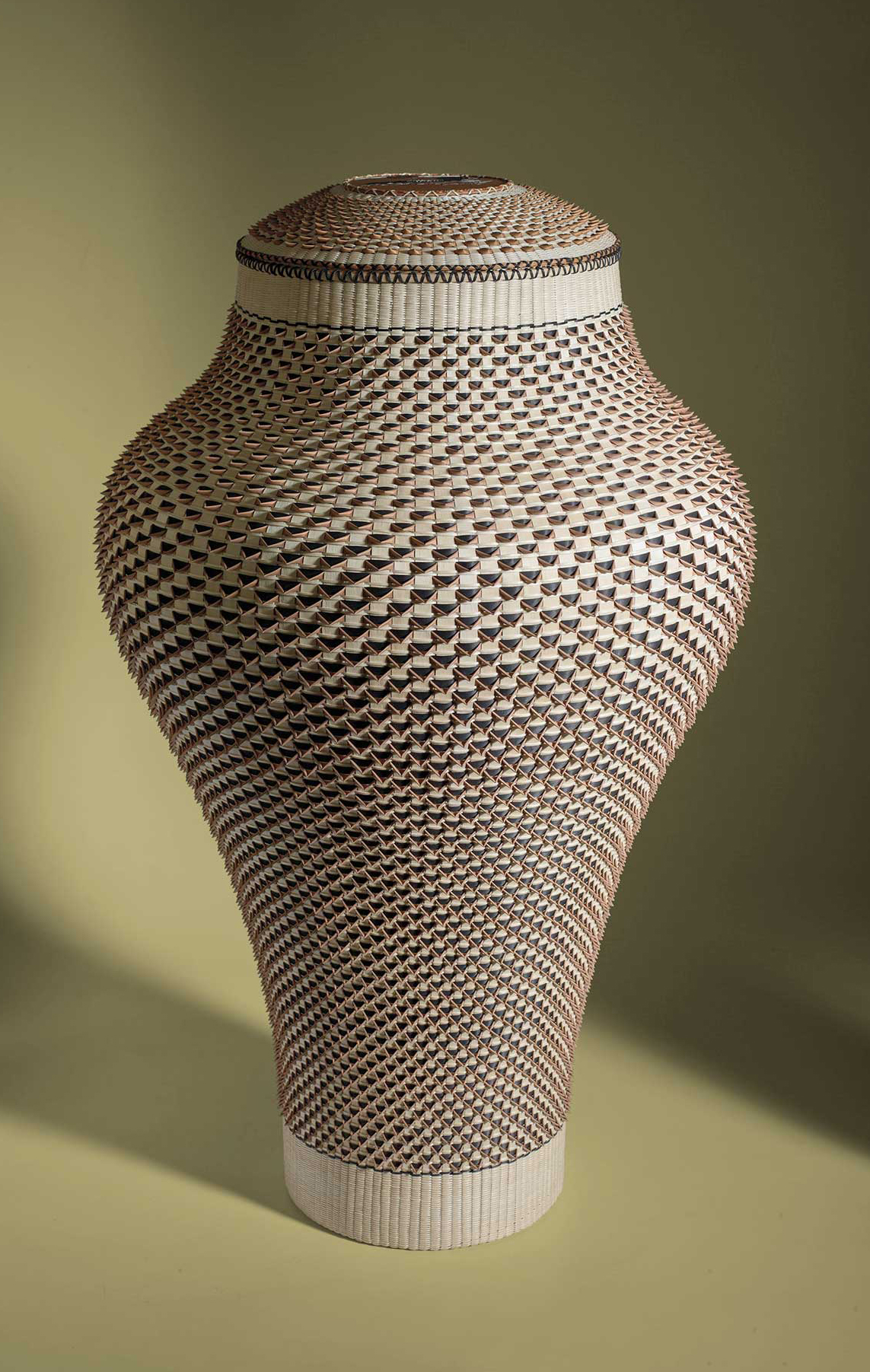 Ash basket, 37 x 24”
Pulling the trees out of the woods is only part of the process that Frey follows from finding a healthy stand of ash to displaying his finished, award-winning baskets. He drives miles from his home to a favorite stand. He inspects the bark, the size of the tree, how straight it’s growing and whether or not the shallow roots are growing in fresh rather than standing water. He comments that natural medicines grow in the same conditions among the ash. He also harvests and prepares sweetgrass from nearby marshes which he braids and weaves into his baskets.
Back at his studio, he begins the arduous process of converting the heavy log into sometimes 1/32-inch splints. “I love that it takes the amount of energy it does to make a basket,” he comments. Water vessels between the tree rings allow the growth rings to be separated after constant pounding by the blunt edge of an axe. The sound of pounding had once been commonplace on the Indian Township Reservation. “You could hear that thumping from everywhere,” he says. As the elder basket makers died, the sound died with them. When Frey began pounding his logs, the sound reminded people of their youth.
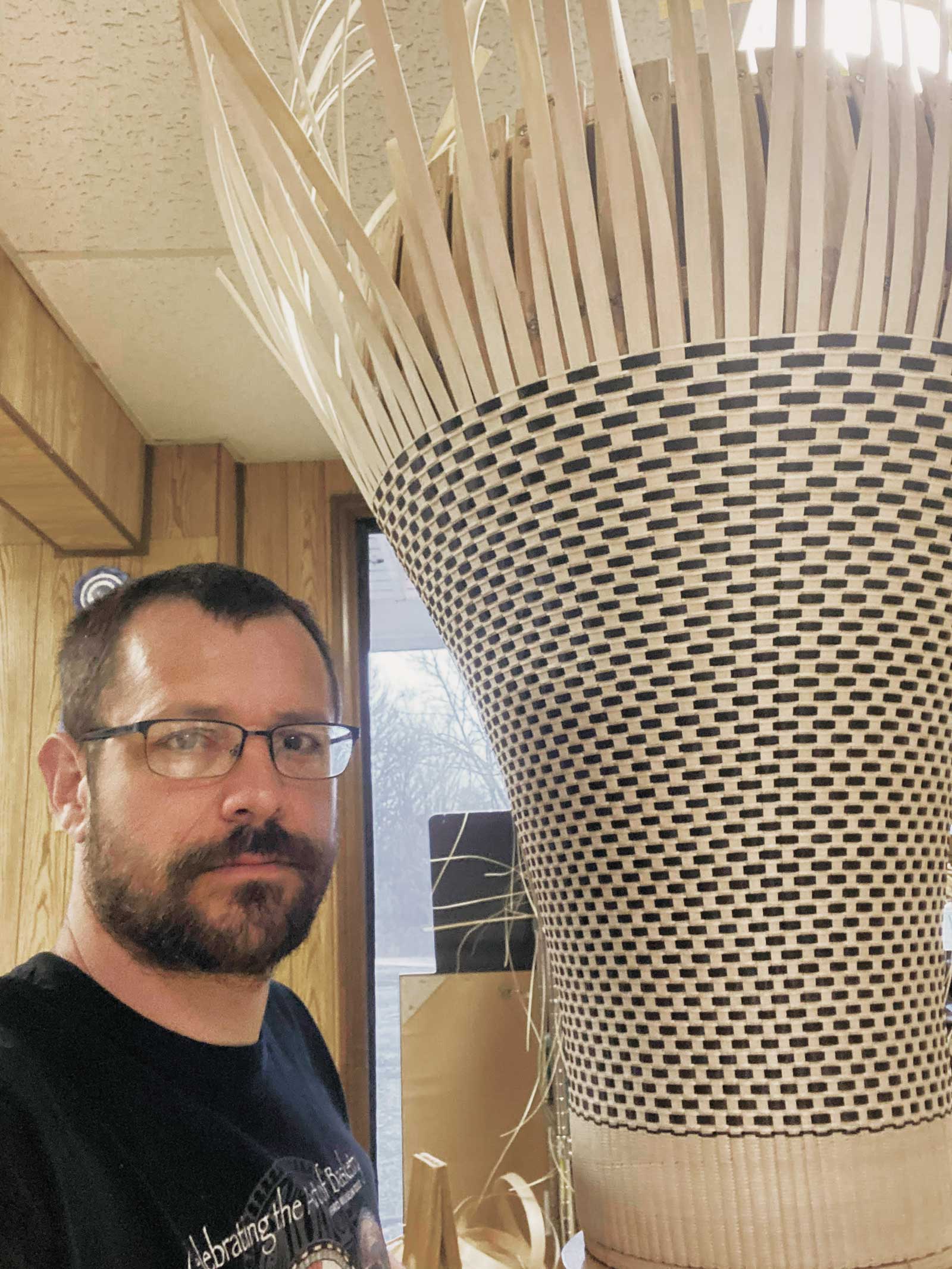
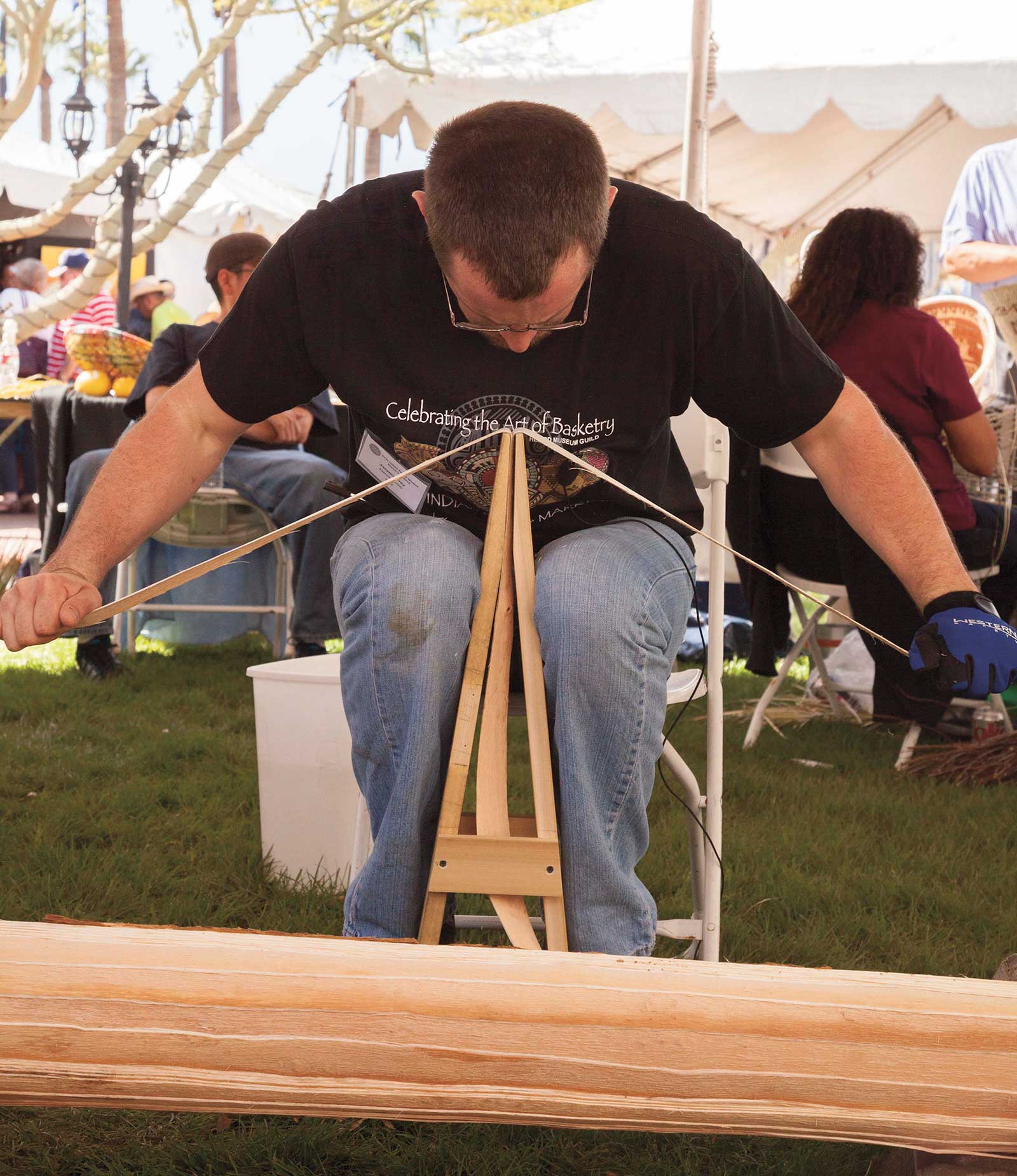 Artist Jeremy Frey splitting ash splints.
"When I started making baskets, they were made by our elders. These elders had old eyes and their hands were old. We were losing our tradition.” The Maine Indian Basketmakers Alliance (MIBA) was founded in 1993, establishing apprenticeships and opportunities for young people to work alongside the elders who were “doing a certain quality standard”, according to Frey.
In 2002, when he was 22, his rediscovery of basketmaking through his mother and through the alliance, gave him a route out of addiction. “I had an ’80s and ’90s mindset,” he says. I thought tradition can hold you back. A basket is XYZ and you’re stuck if you want to be innovative. I want to keep the bones but take it as far as I can. I want it to look like a basket we made but also be innovative.
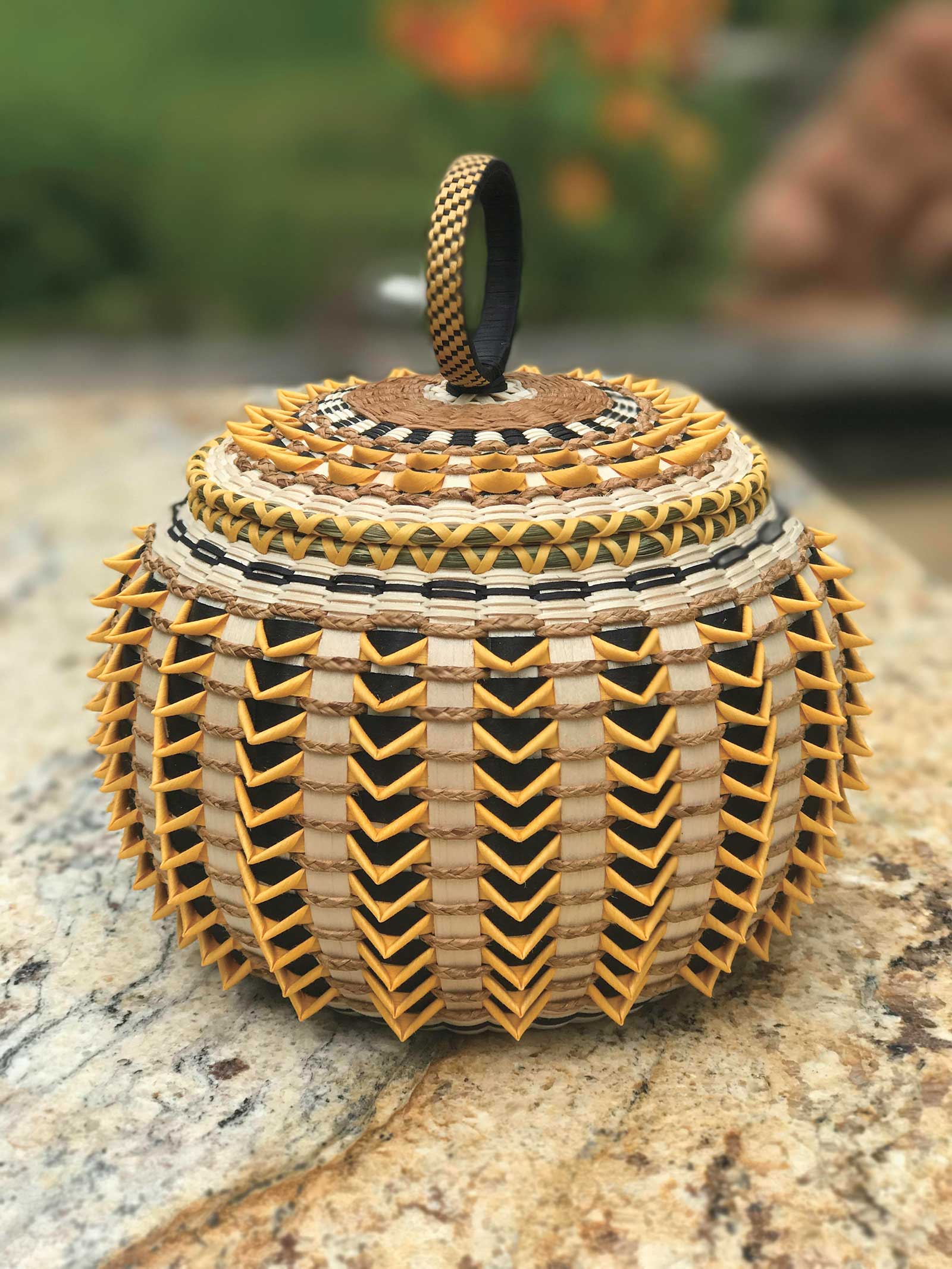 An ash and sweetgrass urchin basket
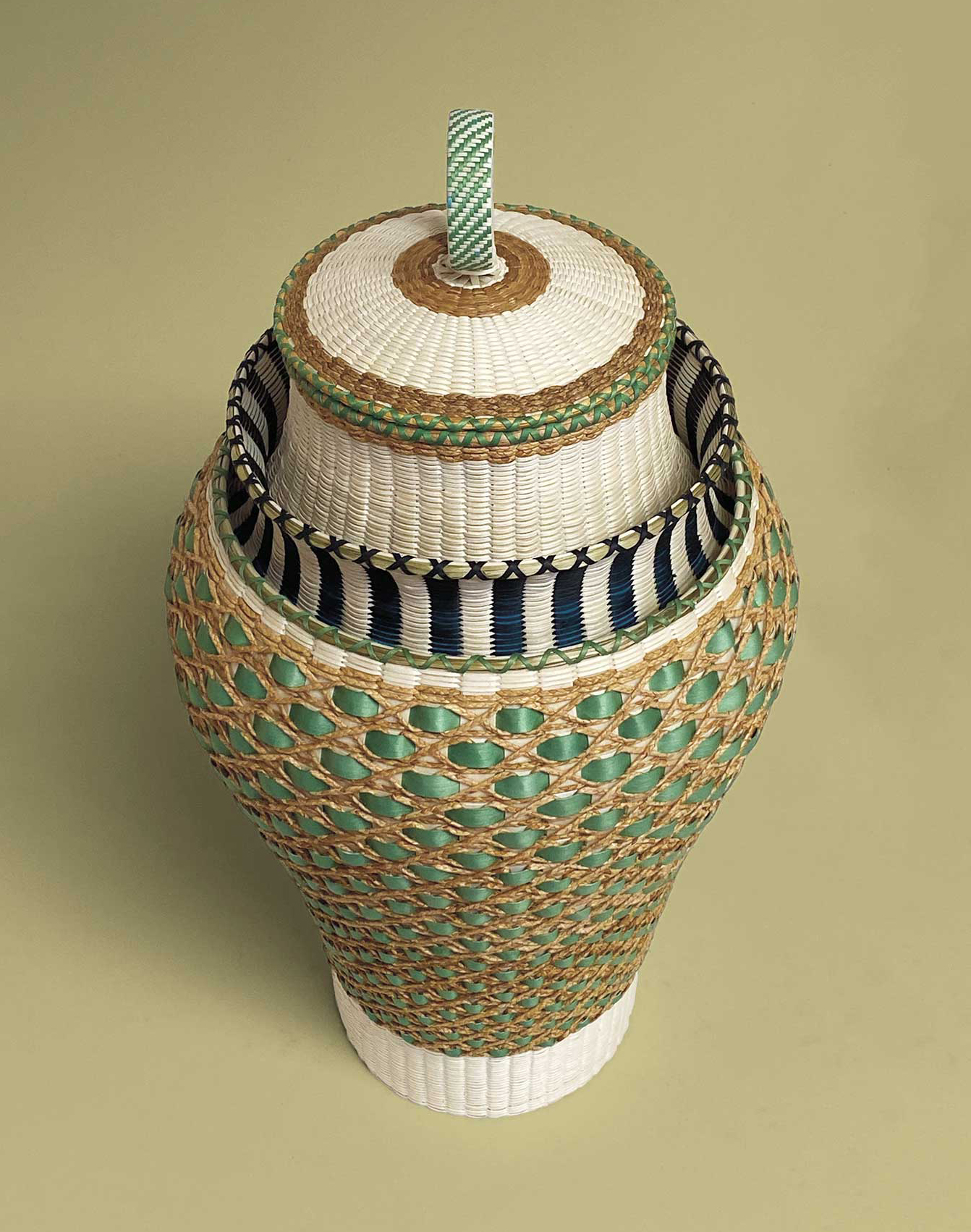 An ash and sweetgrass fancy basket.
“My Uncle Moose taught me how to harvest ash, and my mother, Gal Frey, taught me to weave. The innovations are mine. I never rush toward a specific end goal,” he continues, “I do whatever it takes to get there. As I got into basketry and had to speak to people about how important it is to me, I talked about finding a passion in life and allowing that to take over. The key to my success comes from burying myself in it early on. I developed my craft quickly because I went at it addictively. In essence, basketmaking is weaving over and under. I enjoy taking something so mathematically simple and making it continuously innovative. But you have to hold yourself to a standard.”
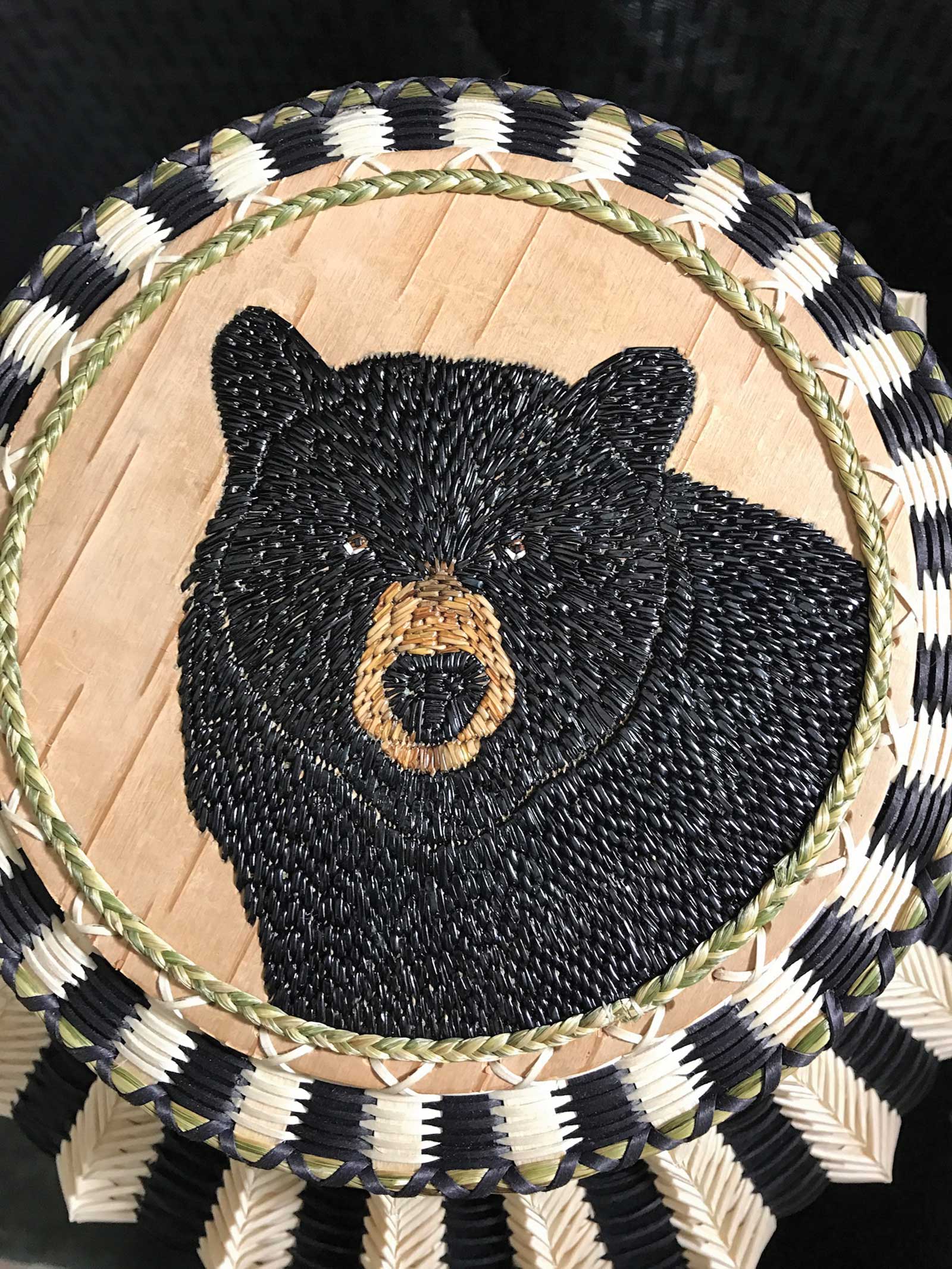 A porcupine quill bear on birch bark for a basket cover.
In 2010, his standards earned him an unrestricted $50,000 grant from United States Artists, an organization formed “to illuminate the value of artists to American society and address their economic challenges.”
The following year he entered the Heard Museum Guild Indian Fair & Market as well as the Santa Fe Indian Market. He won best in show at both, the first time a basket had won the top prize in Santa Fe in 90 years and only the second time an artist had won the top award in both markets.
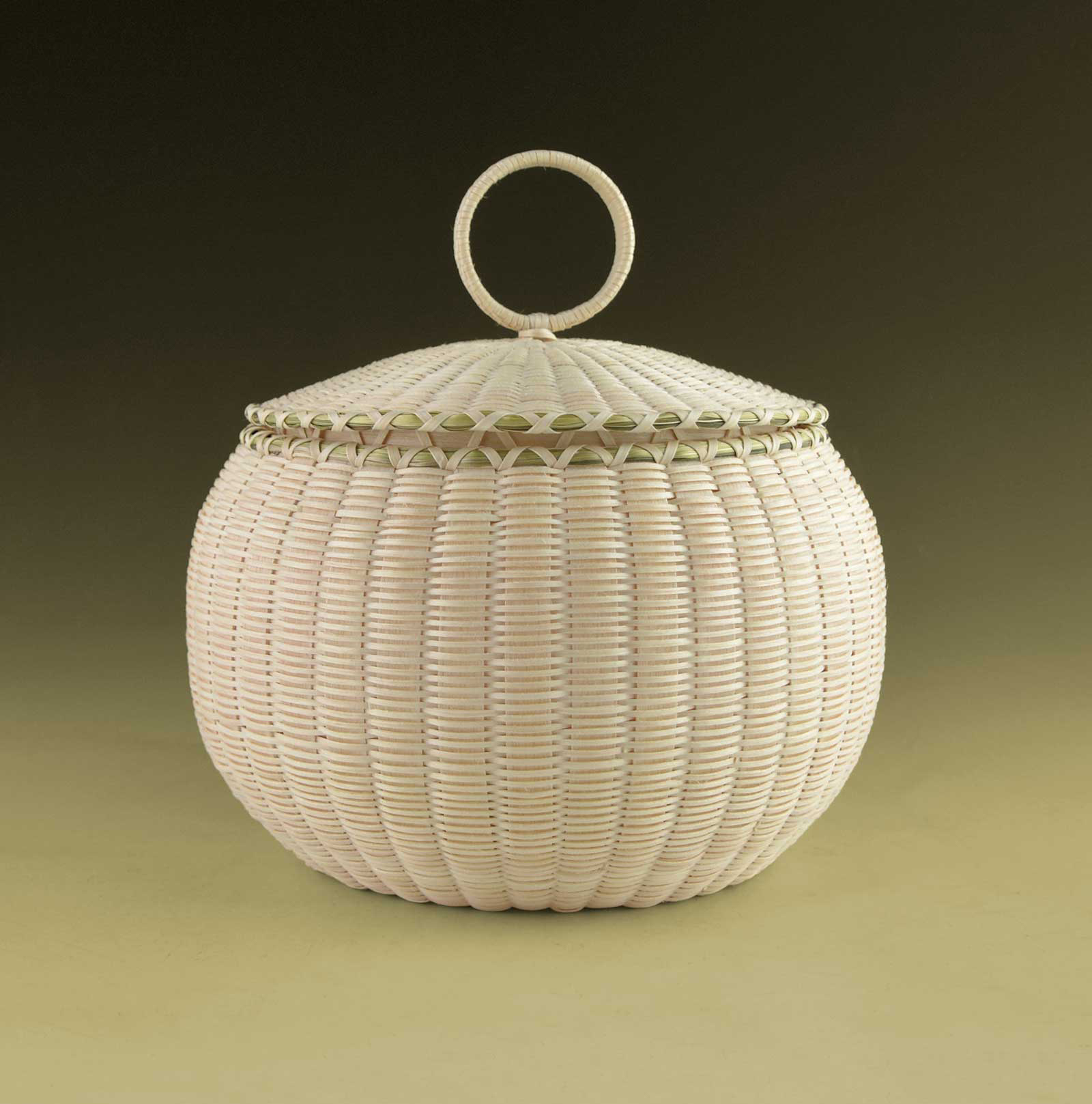 An ash and sweetgrass fine weave basket. Private Collection. Courtesy King Galleries, Santa Fe, NM, and Scottsdale, AZ.
In display cases at the Smithsonian Institution and at MIAB’s store front shop, Frey saw examples of early fine weave baskets and sea urchin baskets that mimicked the shape of the ubiquitous Maine sea creature. “The shape is wonderful but very difficult to make,” he observes. He worked on bringing them both back into production adding “points” to the urchin baskets to emulate its spikes. Points are made by folding and pinching the ash splints.
When I pointed out the tiny points in the photograph of an elegantly shaped basket, Frey explained that the points are a normal size but the basket actually measures 37 inches high by 24 inches wide. Point baskets are often referred to as having a porcupine weave.
Actual porcupine quills were used to make decorative designs on ash baskets, but Frey uses them to create images such as eagles, bears and….porcupines backed on birch bark for basket covers. Unlike Plains quillwork where the quills are moistened with saliva and flattened between the teeth, Jeremy uses the round, hollow quills in their natural state.
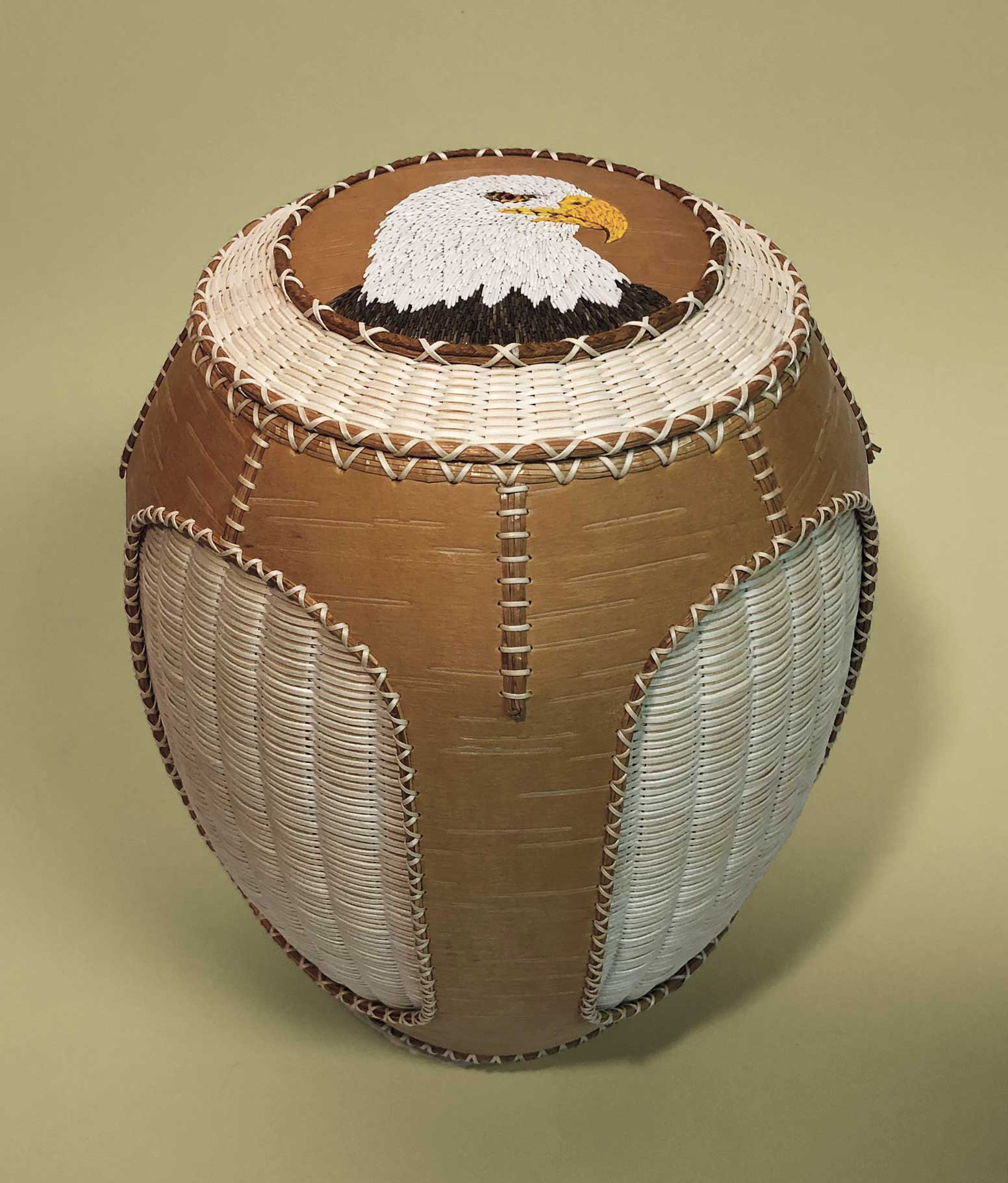 A complex ash and sweetgrass fine weave basket within a birch bark shell with a porcupine quill eagle on birch bark cover.
“Other artists inspire me,” he says. “When I go to shows, the level I see Native artists taking their art to is phenomenal. If you stay in a small group you get to a certain level and stay there. Seeing a broader group of work makes me know what’s possible. I always wonder how I can do better, how can my work stand out and be completely unique? I’m headed in that direction. The ultimate basket is out there somewhere. There’s a top on the mountain. I can see it but I may never reach it.”
Powered by Froala Editor