The pottery collections at the Museum of Indian Arts & Culture (MIAC) are built upon a foundation of over a century of research and acquisition. Through archaeological and ethnographic fieldwork, individual donations and directed purchases, the museum has developed holdings of between 5 million and 10 million objects (the number of individual pieces in bulk collections is estimated) and supporting documents from approximately 18,000 archaeological sites and Native American communities of the Southwest. Today, the museum serves as the major repository for materials from public and private fieldwork in New Mexico and surrounding states, with responsibility for the care and interpretation of collections dating from the Paleoindian Clovis Period of approximately 10,000 B.C. through the present day.
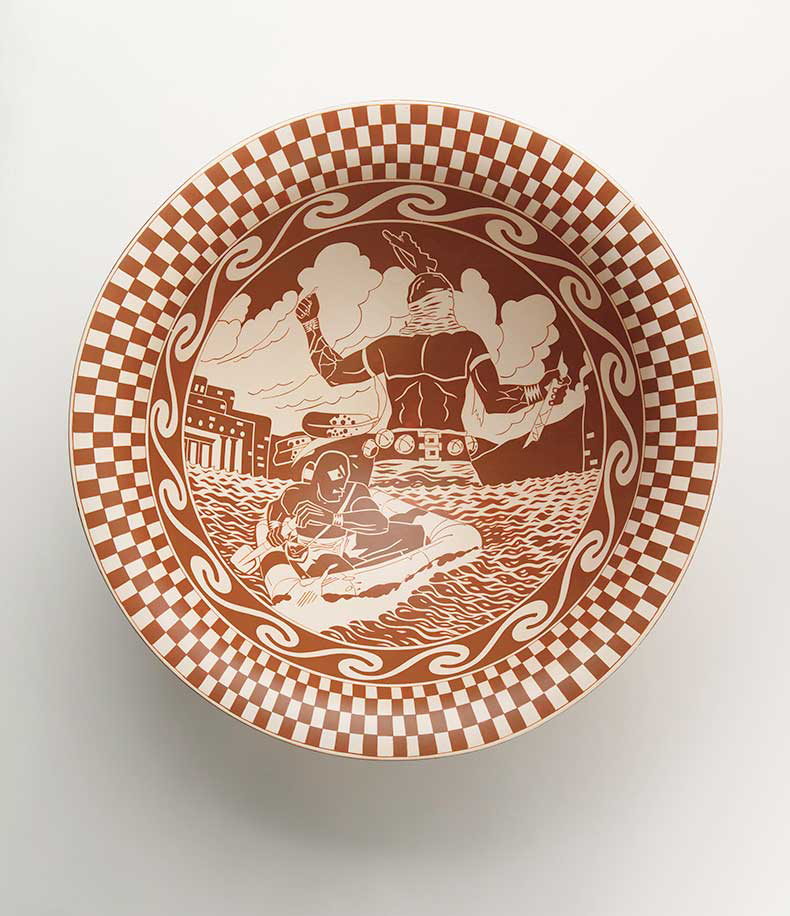 Diego Romero (Cochiti), Last Boy on Earth, 2019, polychrome bowl. Museum of Indian Arts and Culture/Laboratory of Anthropology, 60363/12. Photo by Addison Doty.
The pottery collections in the individually cataloged collections of over 5,000 exhibition- and publication-quality objects built upon institutional transfers, ethnographic fieldwork, individual donations and directed purchases. Collections include archaeological, ethnographic and fine art materials, including typological collections of Southwestern textiles, ceramics, jewelry, baskets and household items. The museum’s pre-contact ceramic collection, well documented through excavation records, is of particular significance. Many specimens in the collection are aesthetically choice ones; however, whole and un-restored pottery vessels account for less than one-sixth of the catalogued collections—from the hundreds of prehistoric and historic sites excavated throughout New Mexico relatively few whole pottery vessels may surface.
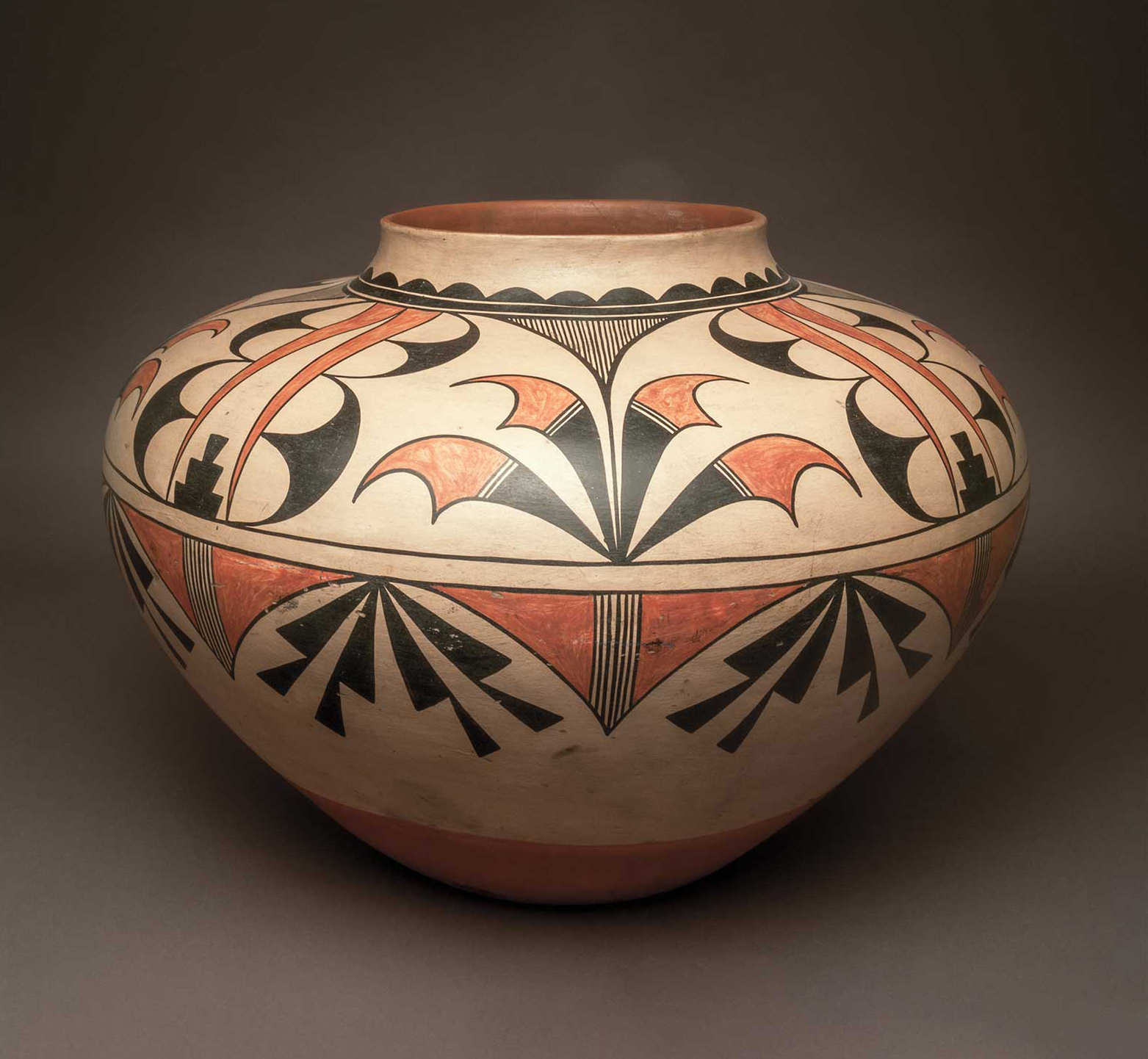 Maria and Julian Martinez (San Ildefonso), polychrome storage jar, ca. 1925. Gift of Wilson Hupp, 18780/12. Courtesy of the Museum of Indian Arts and Culture/Laboratory of Anthropology.
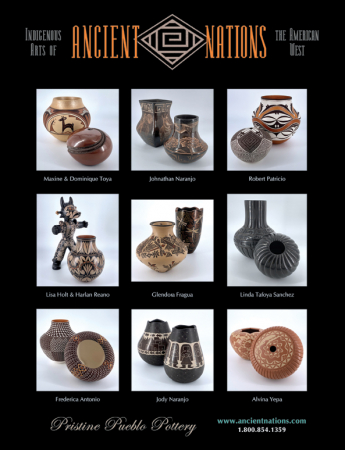
Almost 2,000 years old, Pueblo Indian pottery making is the most distinctive, versatile and long-lived craft found among any North American Indian group. The ceramic collections of the Museum of Indian Arts & Culture represent the creativity of a hundred generations of potters who made, used and replaced centuries’ worth of pottery vessels that culminate in the vessels still produced by Pueblo potters. Today, the art survives and flourishes, gaining regional, national and international recognition, and making its way into the collections of the museum.
The historic period in the Southwest began in the 1600s with the establishment of a permanent Spanish colony in north-central New Mexico. Its sustained impact altered many of the traditions of pottery making. The MIAC collection holds significant pieces that trace post-contact changes in Southwestern ceramics as potters’ focus changed from producing vessels for family and pueblo use, to producing pottery as tribute obligation owed Spanish settlers, to producing commercial wares for sale as household vessels.
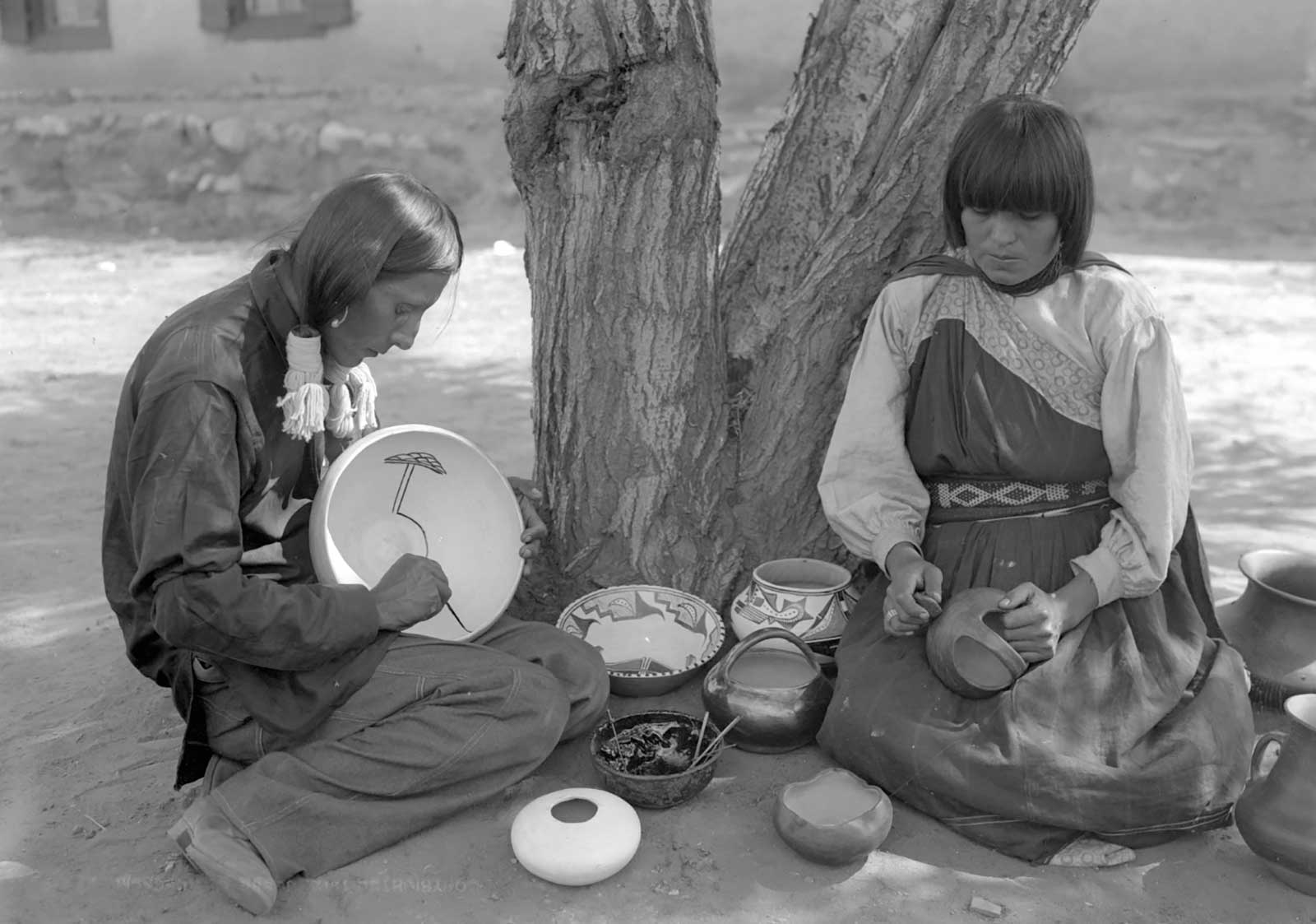 Julian and Maria Martinez (San Ildefonso) demonstrating pottery making in the courtyard of the Palace of the Governors, Santa Fe, New Mexico, 1912. Photo by Jesse Nusbaum. Courtesy of the Laboratory of Anthropology.
By the mid-1800s, after the arrival of American traders and then the railroad, Southwestern pottery became a trade good valued as much for its beauty as for its utilitarian function. With the encouragement of professionals associated with the Museum of New Mexico—including the early directors of what is now the MIAC—Pueblo, Navajo and Apache ceramic artists began to produce pottery for the growing art market. Today, the Pueblos in particular are known internationally for their outstanding ceramic arts. From 1908 through 1917 the School of American Archaeology excavated sites ancestral to Tewa-speaking San Ildefonso and Santa Clara, and Keresan-speaking Cochiti. Young men and women of San Ildefonso, many of them potters and pottery painters, made up the work force. Fieldwork brought them into daily contact with painted pottery, mural paintings and rock engravings. They also were in daily contact with museum personnel including Edgar Lee Hewett and Kenneth Chapman as well as other members of Santa Fe’s intellectual community. In response to these factors, between about 1910 and 1920 these artists created the modern San Ildefonso art pottery tradition. Julian Martinez of San Ildefonso, excavation laborer and janitor at the Museum of New Mexico from its founding in 1909 to 1915, was one of the best-known Pueblo pottery painters of his day. According to Chapman, Martinez “spent much of his time [while on the job] pouring over the designs on the museum’s collection of ancient pottery.”
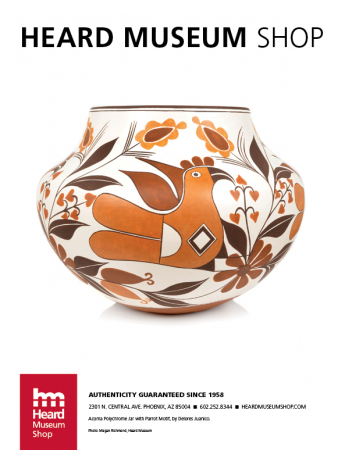
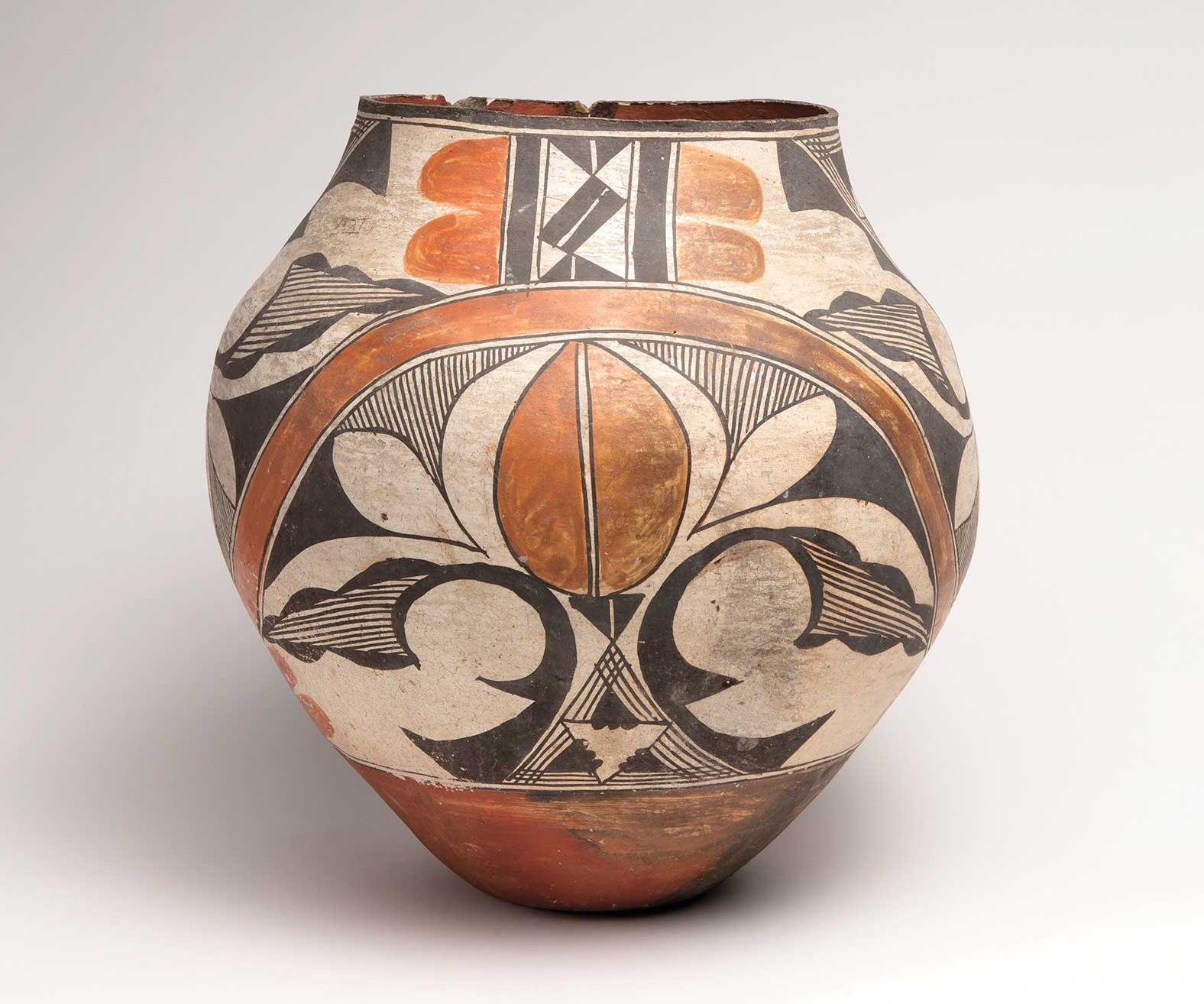 Polychrome jar, Acoma Pueblo or Laguna Pueblo. Gift of Juan Olivas. Museum of Indian Arts and Culture/Laboratory of Anthropology, 12024/12. Photography by Addison Doty.
The ceramic collection from the New Mexico Historical Society, assembled in the mid-19th century, is the Museum’s oldest acquisition. It was built by private individuals who sought to encourage the continuation of traditional pottery making in the Pueblos through financial support. Their collecting and acquisitions focus was on late-18th-century and early-19th-century Pueblo pottery. Since that first acquisition, the ceramic collections have grown to include individual pieces spanning the mid-17th century to the present. And the collections continue to grow through acquisition of important historic and contemporary pieces from Southwest pueblos and tribal communities.
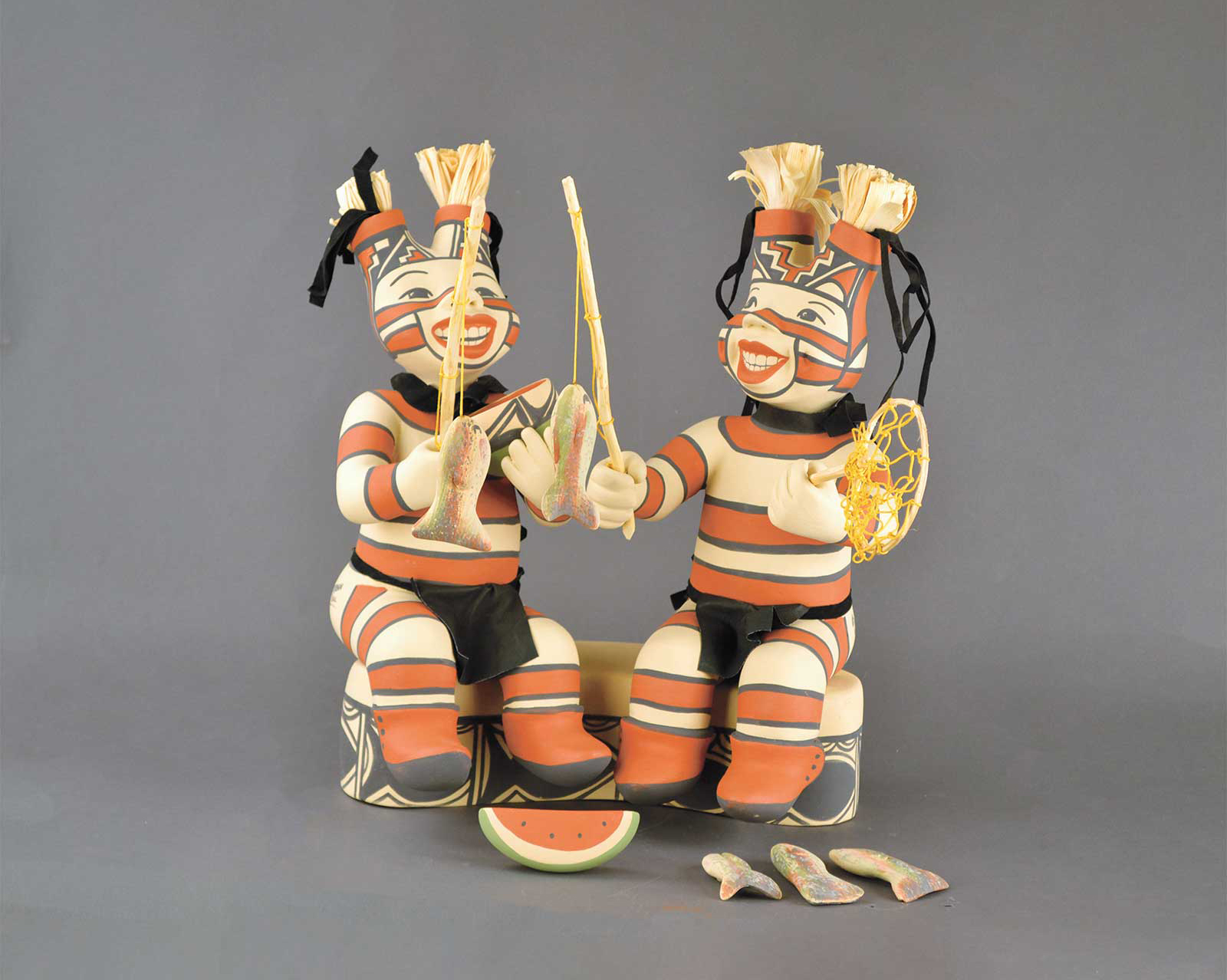 Kathleen Wall (Jemez), Koshares Fishing, polychrome figurines, 2011. Museum purchase from artist, 58071/12. Courtesy of the Museum of Indian Arts and Culture/Laboratory of Anthropology.
Pottery is family. In the Puebloan view, pots, like people, are creations from the earth. Clay is referred to, and thought of, as a mother. The literal Mother Earth, or more accurately, Old Clay Earth Mother, is a nurturer of life, and from her gifts people sustain life in all its forms, including pottery. Since their emergence from within this earth, Indian people, after many trials and migrations came to create from the earth vessels as aides to both material and spiritual existence. Clay in its manifesting of life and creation plays a vital role in Pueblo life ways. Represented in origin stories, cosmology, songs and stages of life, pottery is intricately connected to Pueblo existence. The communal aspect of pottery making cannot be underplayed. Even members of a community who do not shape vessels or paint meaningful designs play a part in this tradition.
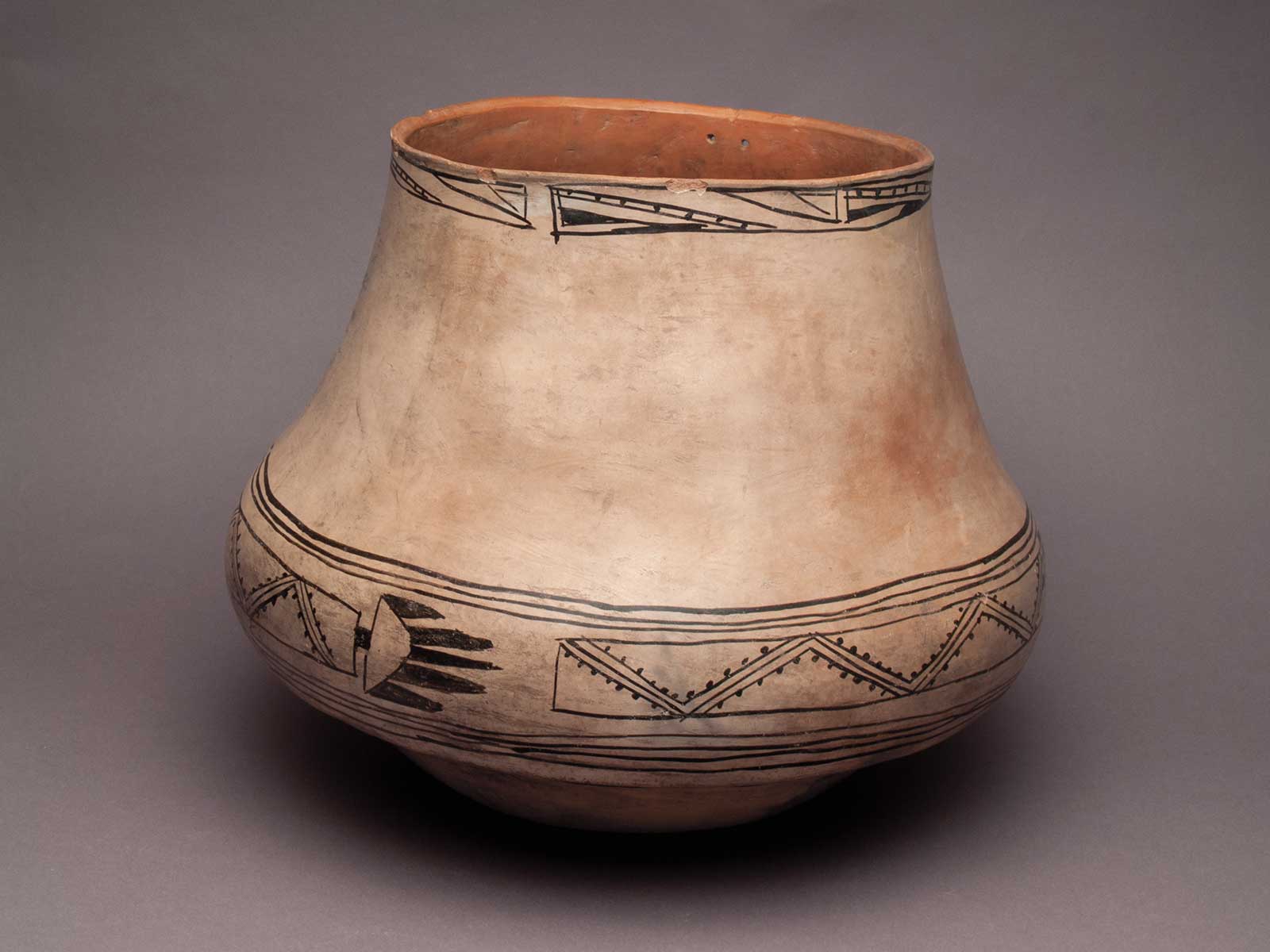 Tewa water jar, Tsankawi black-on-cream, ca. 1580. Gift of Mrs. Arthur Cable. Courtesy of John and Linda Comstock and the Abigail Van Vleck Charitable Trust, 8168/11.
In the potter’s mind, a fired piece ready for sale or household use is not an end product. The process is a journey on which every completed piece marks a step on the path. For many potters it is the path their ancestors forged; it is how the clay is gathered, how the clay slips are mixed, how the wood is gathered, how the form is shaped and how the pot is fired. This process steeped in tradition, cyclical repetition and cumulative action, is a journey that doesn’t end when a prize is awarded or a sale completed. The process and practice is passed on through generations, and even when teachers’ lives are interrupted by outside circumstances, we have seen the journey re-created by singular or communal acts; one person may take it upon themselves to learn pottery making and after they have grown in skill will teach others, or a village may fund a pottery making class to revitalize a traditional practice. Nevertheless, contemporary potters may work with clays and other materials that they did not gather from the earth, but from commercial sources. Cochiti potter Diego Romero learned the traditional methods and then branched out, on a journey that didn’t repeat the past, but instead explored new materials and artistic expression that would continue to evolve and challenge. In the footsteps of their ancestors, Romero and other contemporary potters are adapting to influences that come from over the horizon. Whether we on the outside call them contemporary, traditional or innovative, the potters of Cochiti and Santo Domingo are informed by an ancient practice that links their origin, life and spirit.
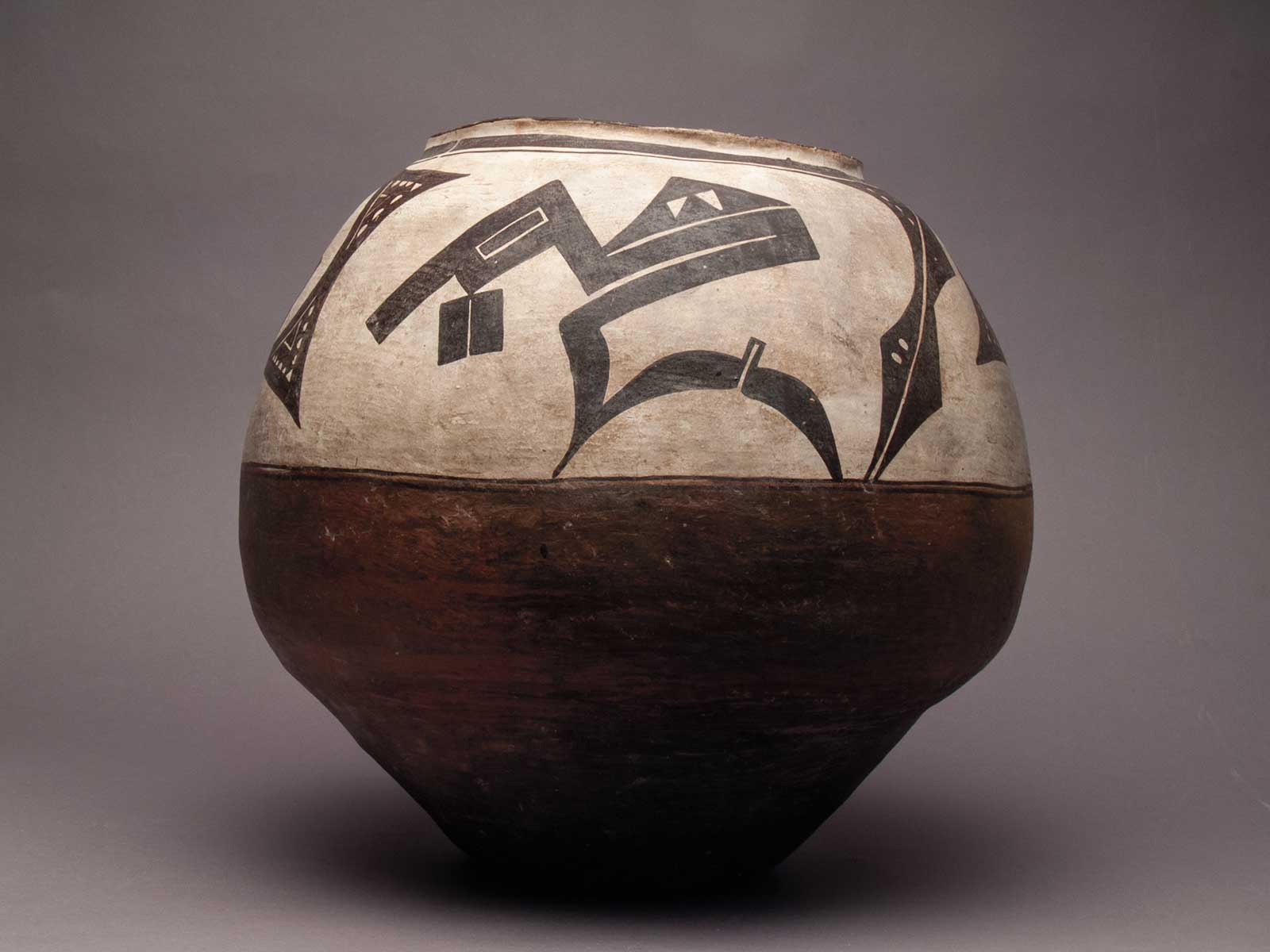 Acoma jar, Ako polychrome, ca. 1750. Courtesy of the Museum of Indian Arts and Culture/Laboratory of Anthropol
Today, the Museum of Indian Arts & Culture seeks to present a broad picture of Pueblo art outside of a framework built out of past biases that defined “real” Indian art. As the 21st century presents new challenges to survival of the Pueblos, the museum seeks to be a partner rather than a predator. Recent documentation projects in the museum’s collections have brought together artists, academics and museum staff to reexamine the pottery collection and develop more concise and accurate information. This new documentation and images can then be shared with the communities of origin. By returning information to the Native communities whose material culture makes up the collections, museums can serve as a method of preservation for the Pueblos, preservation based on their needs. Today, when tribes are actively engaged in programs for health, art and language retention, a museum can be a helpful tool by opening up its doors and sharing its resources, and by doing this, building a stronger foundation for both, museum and community.
Powered by Froala Editor