On a bend in the Arkansas River in Oklahoma lie the Spiro Mounds, the remains of a sophisticated culture active between about 900 and 1650. It is one of the most important, but nearly forgotten, Native American sites in the country.
The mounds were platforms on which the Spiro people built wood structures, long since rotted away. The mounds lay undisturbed for centuries and were preserved by Choctaw and Chickasaw freedmen who began clearing the rest of the site for farming in 1832. During the Great Depression they granted a lease to the Picola Mining Company, a group of men who were, in fact, looters, who tore into the mounds looking for saleable artifacts, trampling more delicate textiles and feather robes under their feet. In 1935, they blasted into the central chamber of the Craig Mound and plundered what the Kansas City Star called “A ‘King Tut’ Tomb in the Arkansas Valley.” What was not destroyed of the extraordinary cache of pre-contact artifacts was dispersed around the world. Their destruction was stopped the next year when archaeologists began to oversee a scientific investigation of the site by WPA workers that lasted until 1941.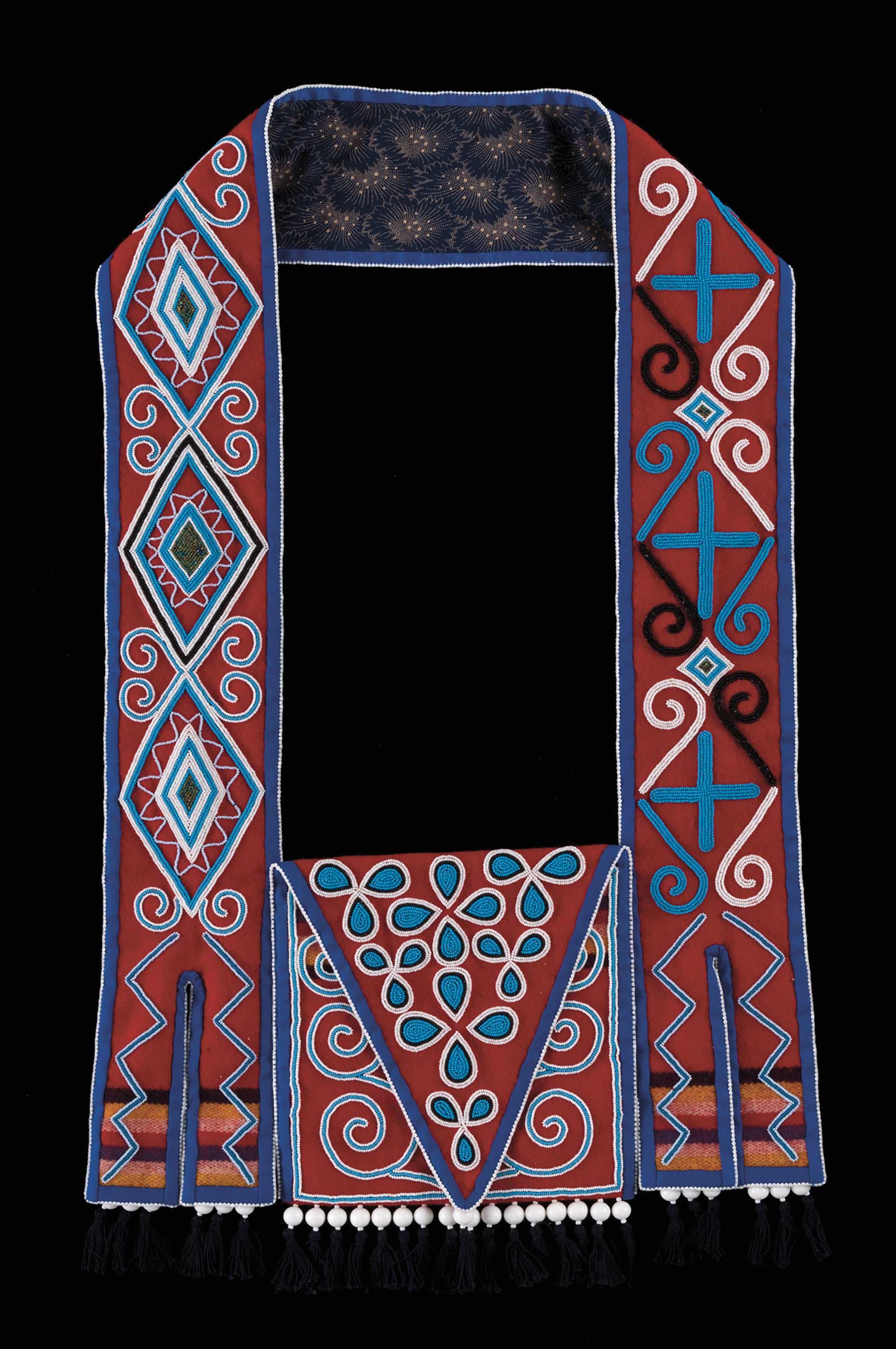 Damion Jay McGirt (Muscogee, 1953-2018), beaded bandolier bag, 1998, cloth, beads. National Cowboy & Western Heritage Museum.
National Cowboy & Western Heritage Museum will display the exhibition, Spiro and the Art of the Mississippian World through May 9. The exhibition seeks to answer the questions “How did these incredible works of art and other treasures from all over North America end up hidden for hundreds of years, and why?”
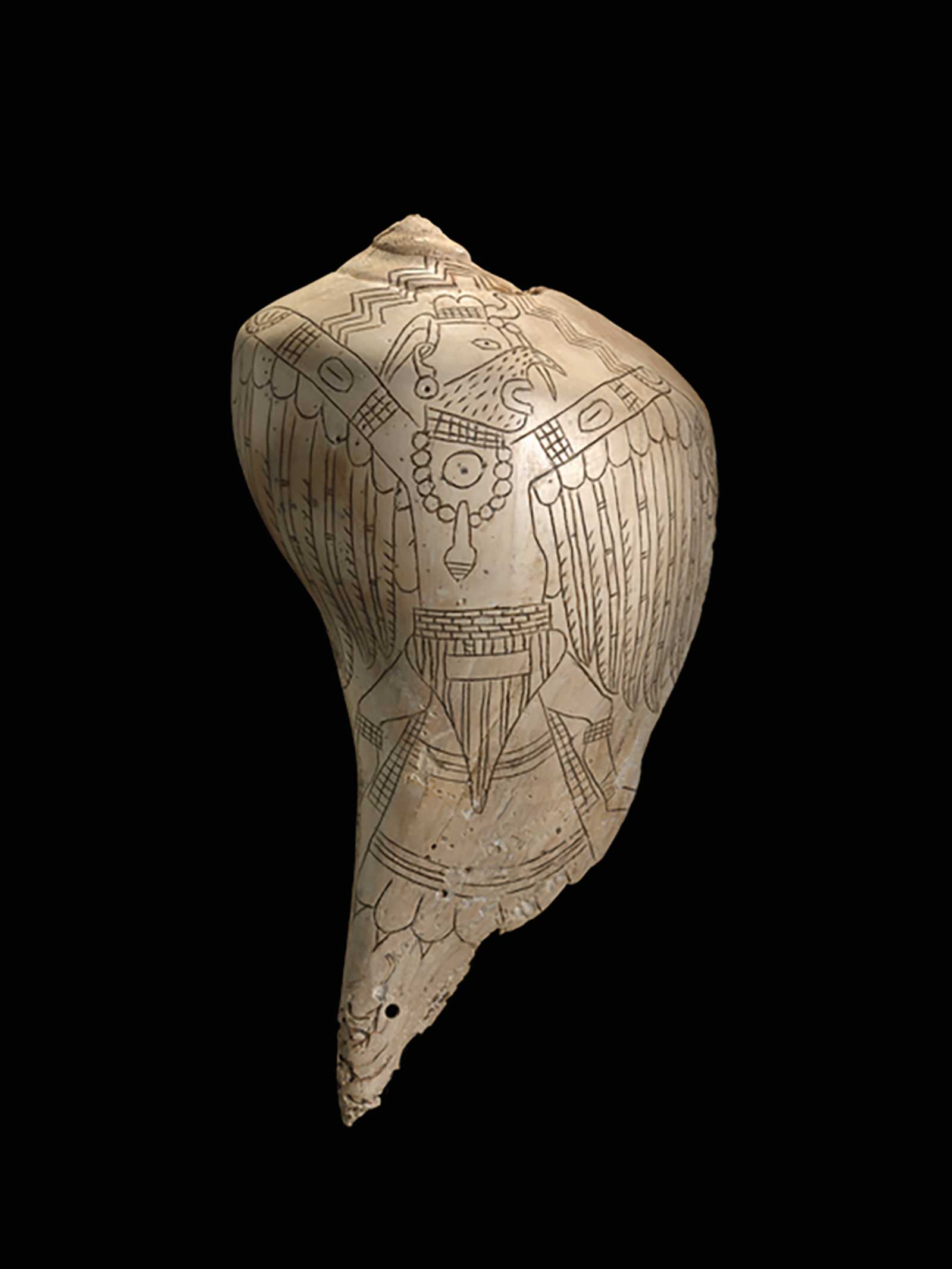 Engraved shell medicine cup with depiction of Birdman. National Museum of the American Indian, Smithsonian Institution 18/9121.
The Spiroan people were among Mississippian groups across eastern North America who, the museum explains, “created a culture, created a world equal to that of the Aztec, Maya or Inca, consisting of trade networks and highly developed social, political and religious centers. The exhibition will explore the archaeology and history of Spiro and its relationship to other contemporaneous Indigenous communities in North and Central America, highlighting community development, religious and ceremonial activities, farming and hunting practices and daily life.”
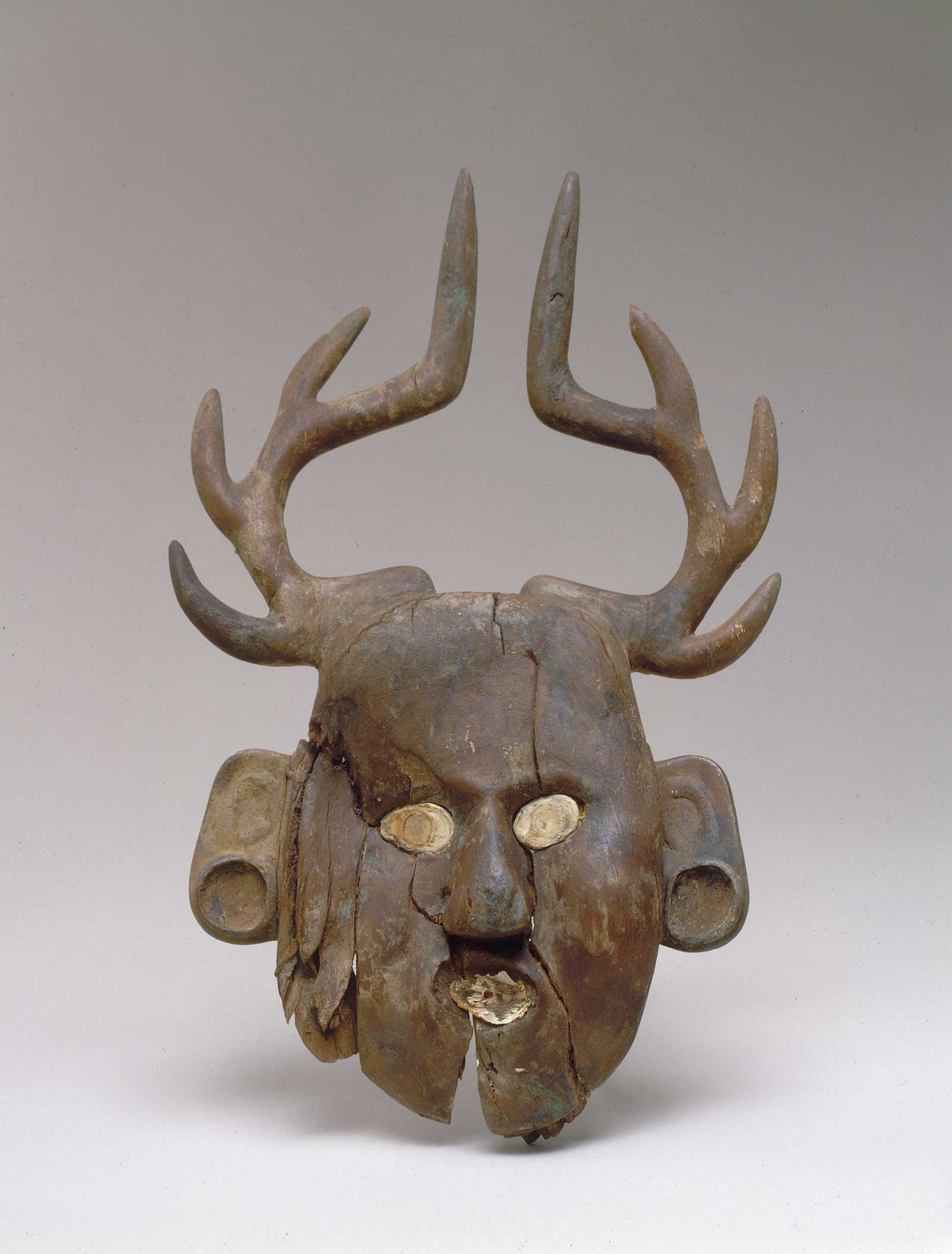 Human face effigy with deer antlers, Leflore County, Oklahoma, Spiro Site, 1200-1450, Wood. National Museum of the American Indian, Smithsonian Institution (189306).
Eric Singleton, the museum’s curator of ethnology, notes, “The people who created the Spiro Mounds were the ancestors of today’s Caddo and Wichita people. However, the remarkable objects found at Spiro were produced by not only the Caddo and Wichita, but also the ancestors of the Pawnee, Osage, Lakota, Chickasaw, Cherokee, Muscogee, Choctaw, Potawatomi, Quapaw, Cheyenne, Seminole, and countless other Indigenous communities. Items found at Spiro came from all across North America.” The people had extensive trade that brought them shells form the Gulf of California and the Gulf of Mexico and copper from the Great Lakes.
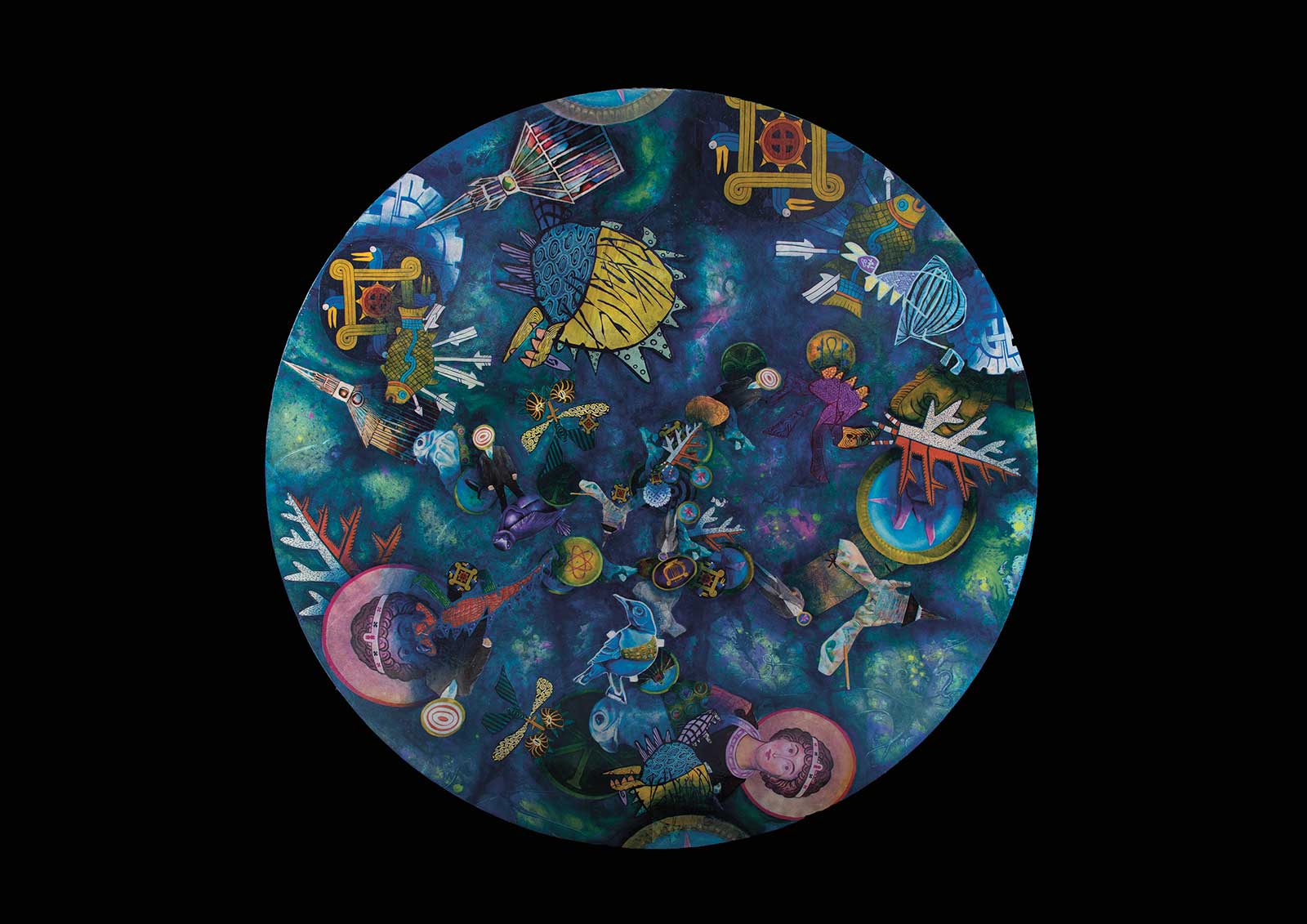 Erin Shaw (Chickasaw), Everything Belongs, 2013, mixed media. National Cowboy & Western Heritage Museum, 2017.08.
Among the objects assembled for the exhibition is an engraved shell cup with a depiction of Birdman, circa 1400. It was purchased by the National Museum of the American Indian from a man who had acquired it from members of the Pocola Mining Company. “Birdman” iconography is found throughout Mississippian culture. The Birdman lived in the Upperworld of the sun moon and stars and was a messenger of the gods.
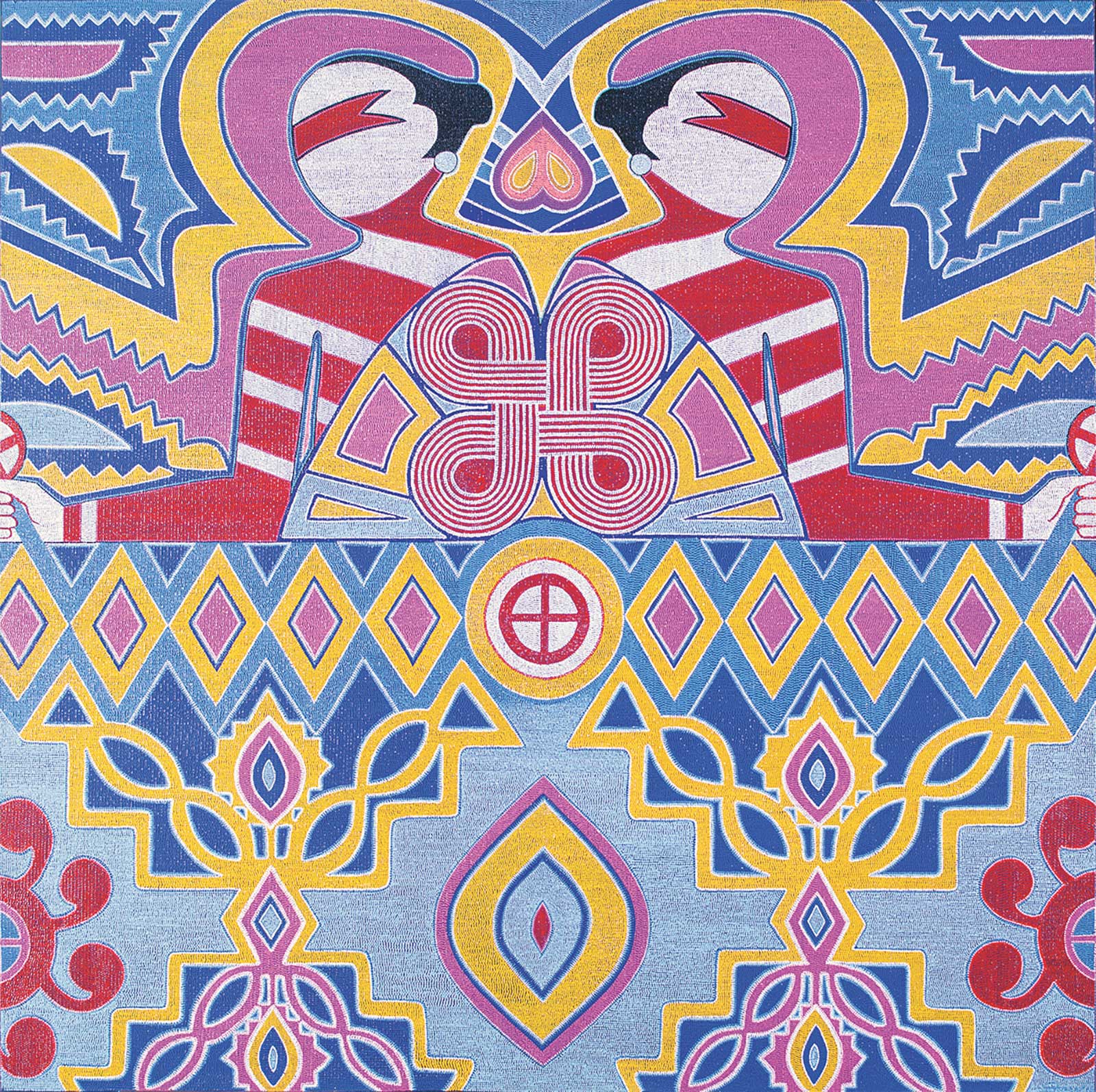 Starr Hardridge (Muscogee (Creek)), Cosmic Twins, 2016, acrylic and plaster on canvas. National Cowboy & Western Heritage Museum, 2019.17.
A human face effigy with deer antlers, circa 1200 to 1400, was acquired by the Museum of the American Indian in 1936, soon after its excavation from the Craig Mound.
Spiro and the Art of the Mississippian World also contains contemporary work by descendants of the Spiroan people, demonstrating “cultural continuation” according to Singleton.
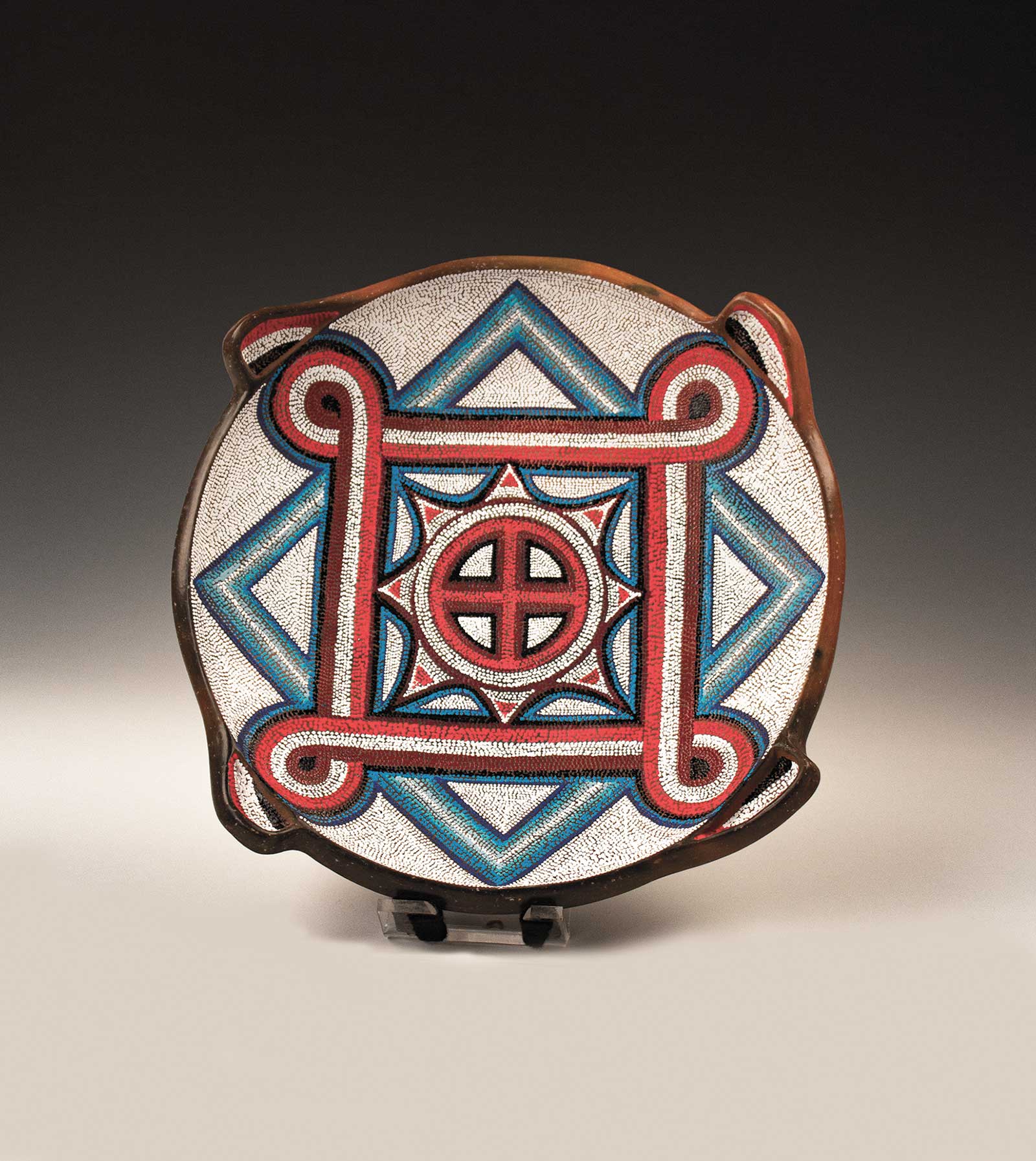 Chase Earles (Caddo) and Starr Hardridge (Muscogee (Creek)), Everlasting Fire Plate, 2019. Acrylic and plaster on Ceramic. National Cowboy & Western Heritage Museum, 2019.35.
A spectacular beaded bandolier bag, 1998, was made by Damion Jay McGirt (Muscogee, 1953-2018), who revived the production of bandolier bags, items of honor among southeastern tribes. They date from the late 18th century and contained medicinal plants or other items important to the wearer.
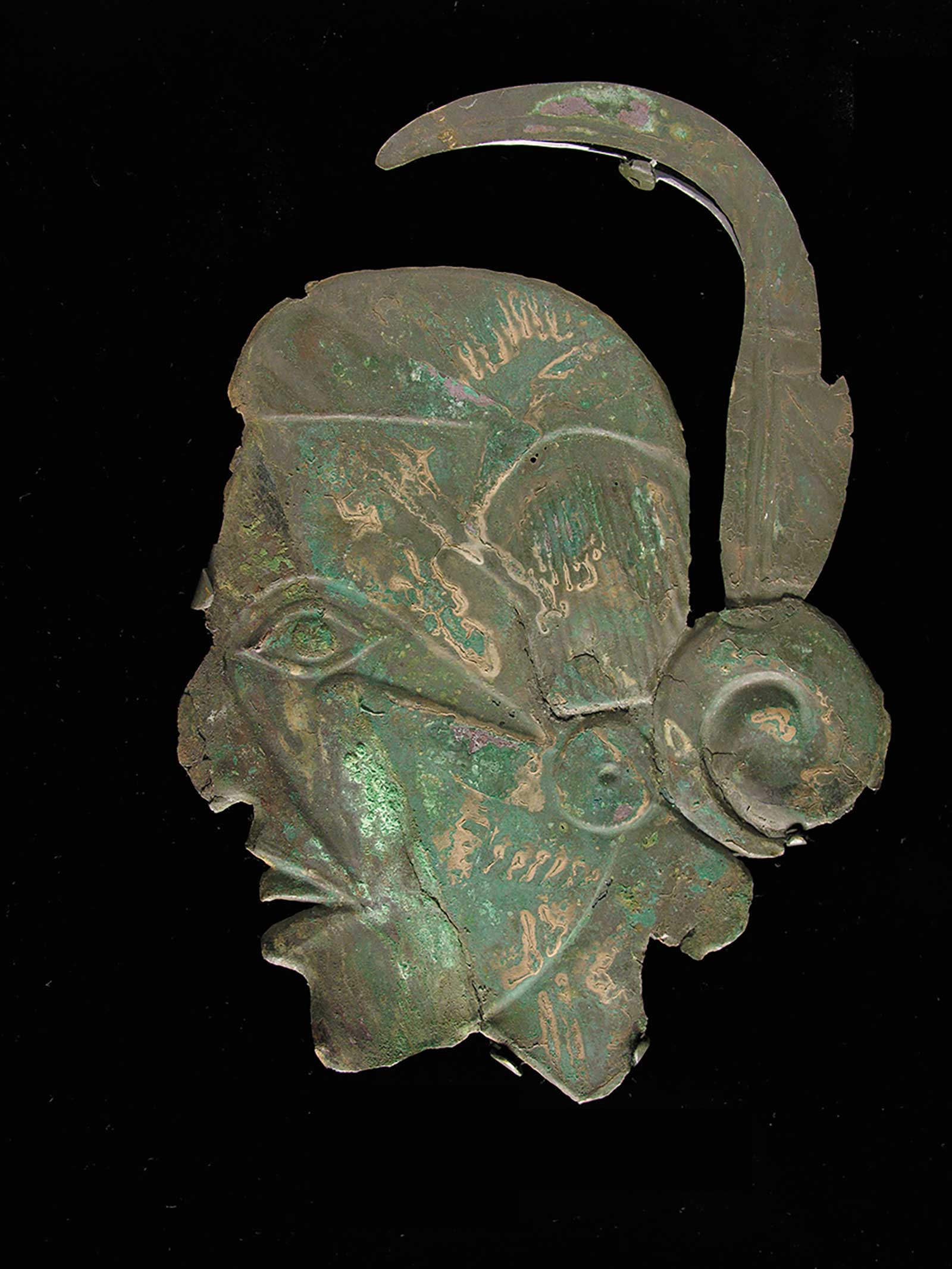 Human head effigy plate, Leflore County, Oklahoma, Spiro Site, 1200-1450, copper. Courtesy of the Ohio History Connection. A1393/000001A.
The exhibition will travel to the Birmingham Museum of Art in Birmingham, Alabama, from October 5 to March 11, 2022; and the Dallas Museum of Art in Dallas from April 15, 2022, to August 5, 2022.
Through May 9, 2021
Spiro and the Art of the Mississippian World
National Cowboy & Western Heritage Museum
1700 NE 63rd Street, Oklahoma City, OK 73111
(405) 478-2250, www.nationalcowboymuseum.org
Powered by Froala Editor