Cara Romero’s path to photography is a familiar story for many artists. She started out as a cultural anthropology major at the University of Houston and then when she picked up a camera during her senior year she was captivated by the power of photography. “I knew instantly that’s what I wanted to do,” Romero recalls. “So I ran off to art school at 20 years old.”
During her studies at the Institute of American Indian Arts in Santa Fe, New Mexico, Romero learned black-and-white film photography, but at the same time the industry was quickly changing to a digital format. To further her craft, she went back to school to study digital and commercial photography and today fuses those elements to create fine art that has editorial appeal. The imagery is always a blend of modern and traditional elements, which also incorporates her background in anthropology.
“I really like where my artwork came to be. The use of digital, color and commercial lighting adds to the modernity of it, which is what I wanted to evoke in the first place,” Romero says. “I wanted to show how modern [Native Americans] are and how we exist in contemporary society, but how we keep our indigeneity at the same time.”
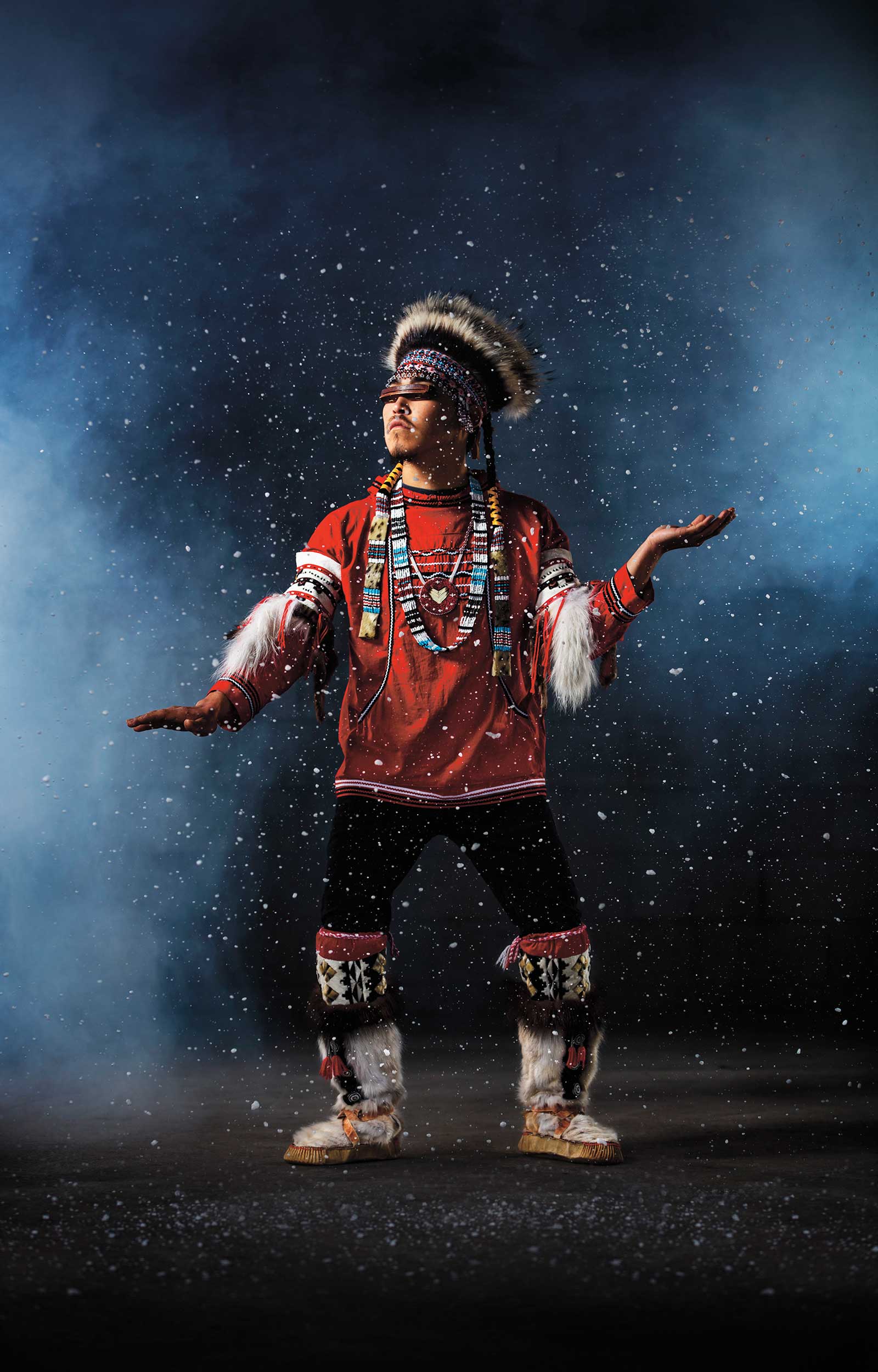 Golga, archival pigment print, 50 x 32"
Romero, who has a multicultural background, with her father being Chemehuevi and her mother German-Irish, embraces storytelling in her work and does not shy away from confronting appropriation and lack of representation. The stories are her own, ones that she identifies with and knows to be truth, and therefore is OK bringing them to life in her photographs. Her models are almost exclusively friends and family, which allows her to draw out intimate parts of their personalities in the works. She adds, “I have a lot of love and affection for my subjects and I hope my audience falls in love with them too. I hope they look at them and find the humanity and the love for that person as well.”
Currently Romero is working on several new series including photos that evoke film noir to be released in full next summer. “They’re very narrative and have a kind of mysterious quality of them as well as high-contrast lighting that’s found in the genre,” she says. “It’s similar to [my] Coyote Tales series, where they’re meant to be points in an imaginative narrative that the viewer can then decide what might be going on the photograph.”
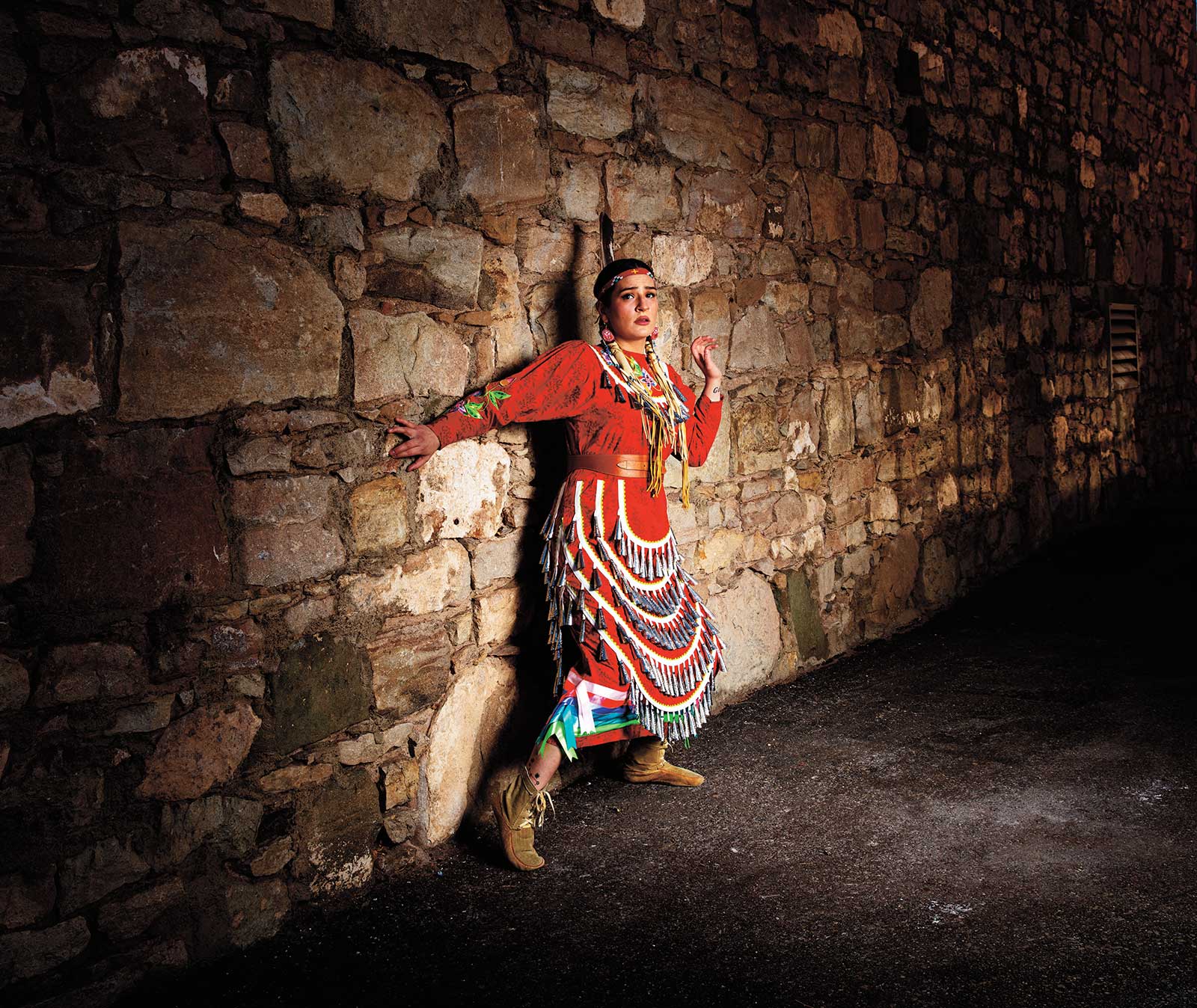 Dans L’Ombre (In Shadows), archival pigment print, 40 x 47"
In one of the works, Dans L'Ombre (In Shadows), Romero depicts her former apprentice, Leah, who is in her regalia. “When you see it, you instantly think silent movie of the 1930s,” Romero explains. In Golga, her friend Golga, a Yup’ik regalia maker, is elevated to an awe-inspiring and otherworldly level while celebrating dance culture surrounded by fog. “I really like to create photos where other Native people can tell that it’s a Native person who took them,” she says. “And they smile because they know exactly what I’m doing. That’s our version of a silent movie. You don’t need the words because it’s all there. The humor comes through.”
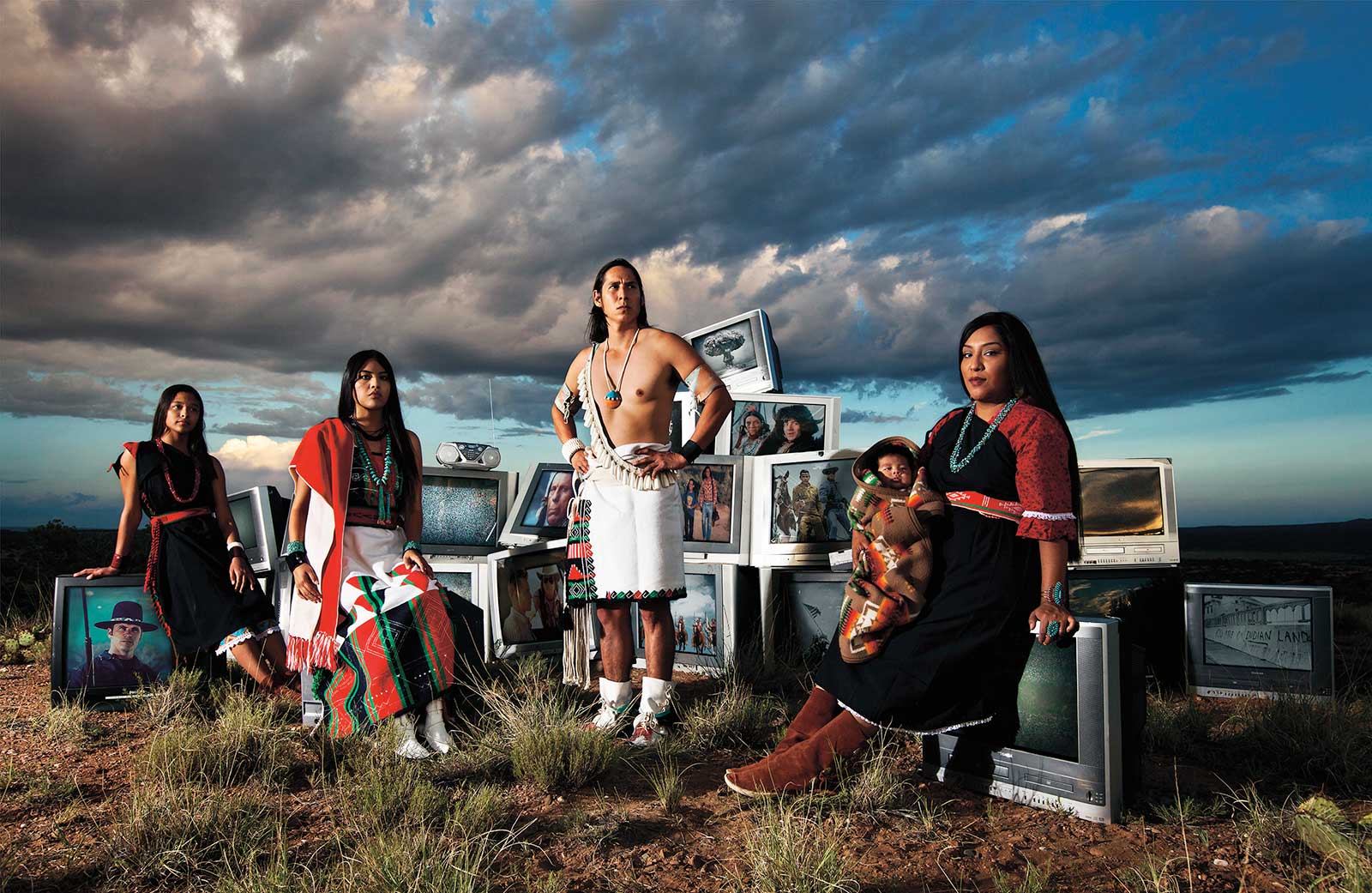 TV Indians (In Color), archival pigment print, 39 x 60"
Discussing another aspect of the work, Romero says, “I’m exploring genres where we haven’t been represented as Native American people and imagine a world if we included them [such as in this series] when we weren’t represented in Hollywood. That’s true to a lot of my work. I’ll be looking at genres or other points in history where we didn’t have command of or weren’t telling our own stories. I am looking at representation as a possibility by sticking us back in there. I’m imagining what diversity and inclusion would be like in the genres where we were historically left out.”
See More
www.cararomerophotography.com
===============================
Artist Spotlights:
Dive deeper into the genre with these established artists
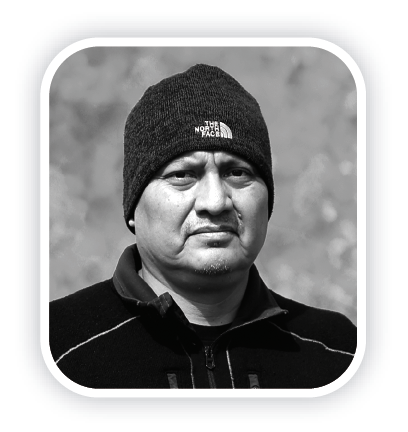
Eugene Tapahe (Diné)
www.tapahe.com
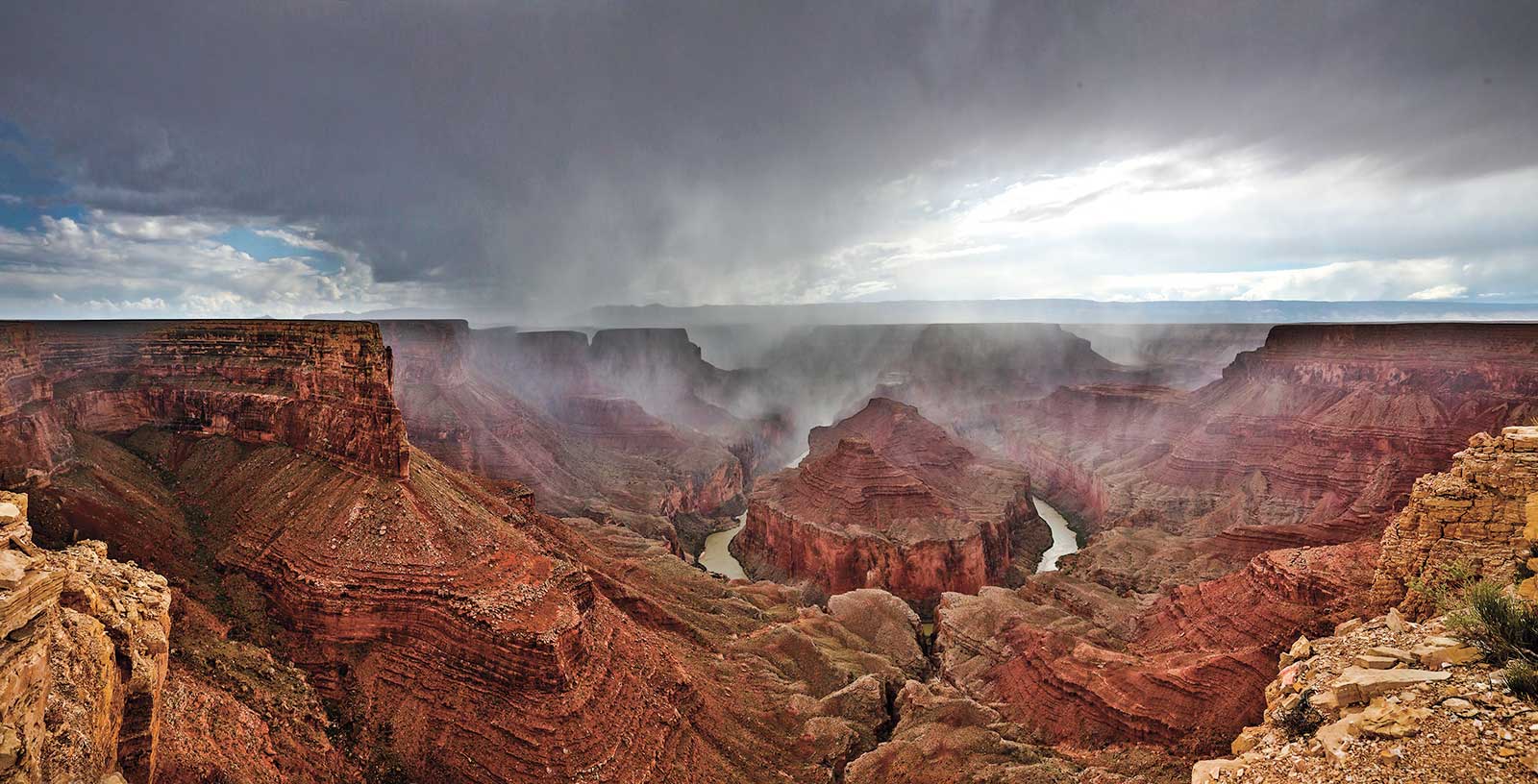
During the first years of his life on the Navajo Nation, Eugene Tapahe and his grandmother lived off the land and practiced the traditional ways of life. This instilled in him “the importance of respecting, preserving and protecting that which is sacred, the land, water and nature.” Tapahe, who has an educational background in graphic design, journalism and photography, combines his love for nature and culture in his artwork. His imagery tells beautiful and impactful stories, and he has the desire to continue photographing the lands his ancestors once walked. Tapahe has received Best of Show awards for his photography at the Cherokee Art Market and from the Museum of Northern Arizona.
===============================
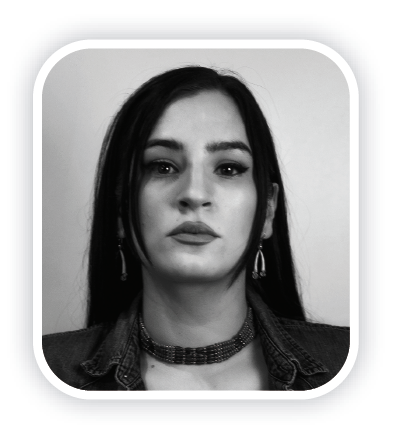
Leah Rose (Keweenaw Bay Indian Community, Michigan/Odawa)
www.instagram.com/leahrosephoto
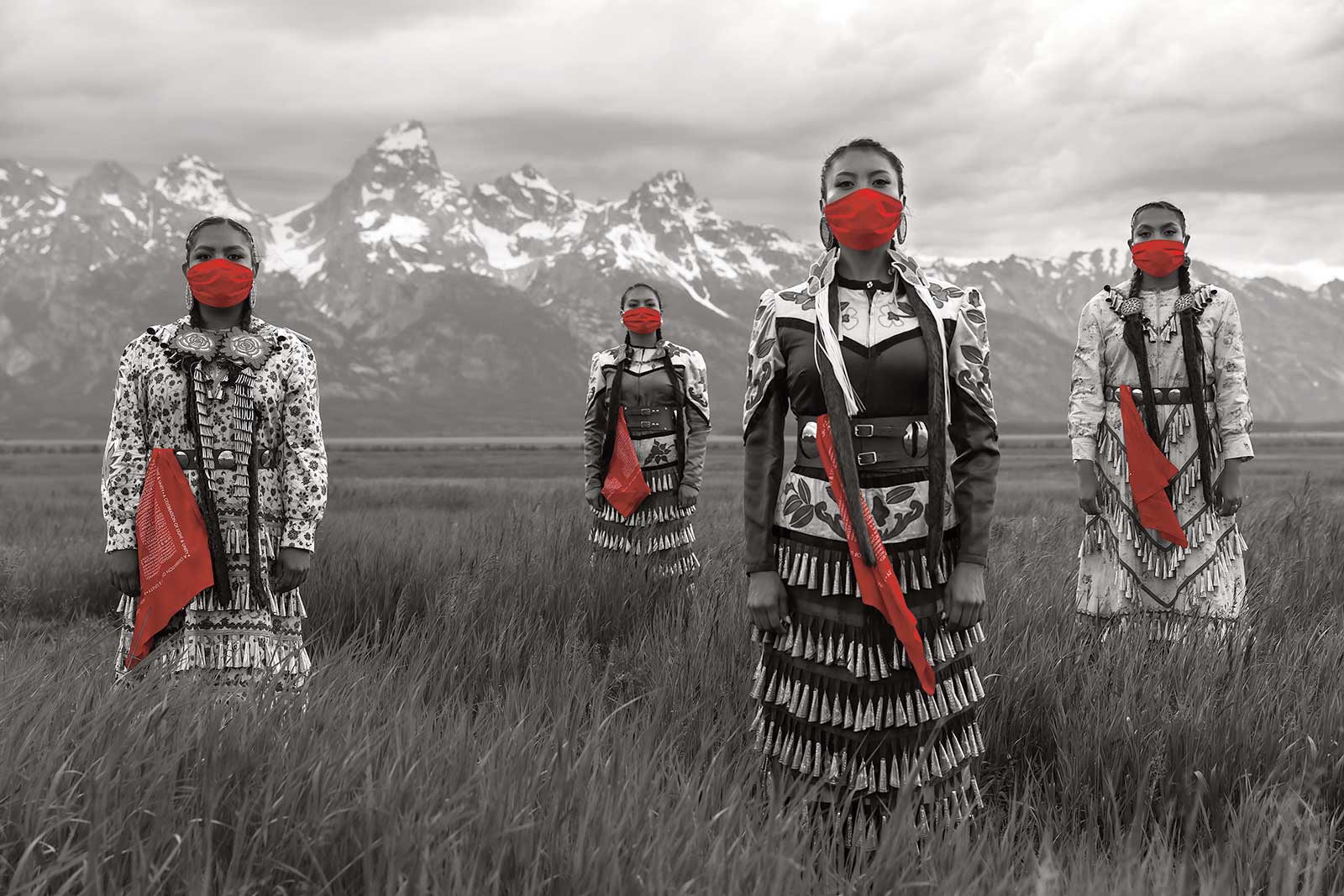
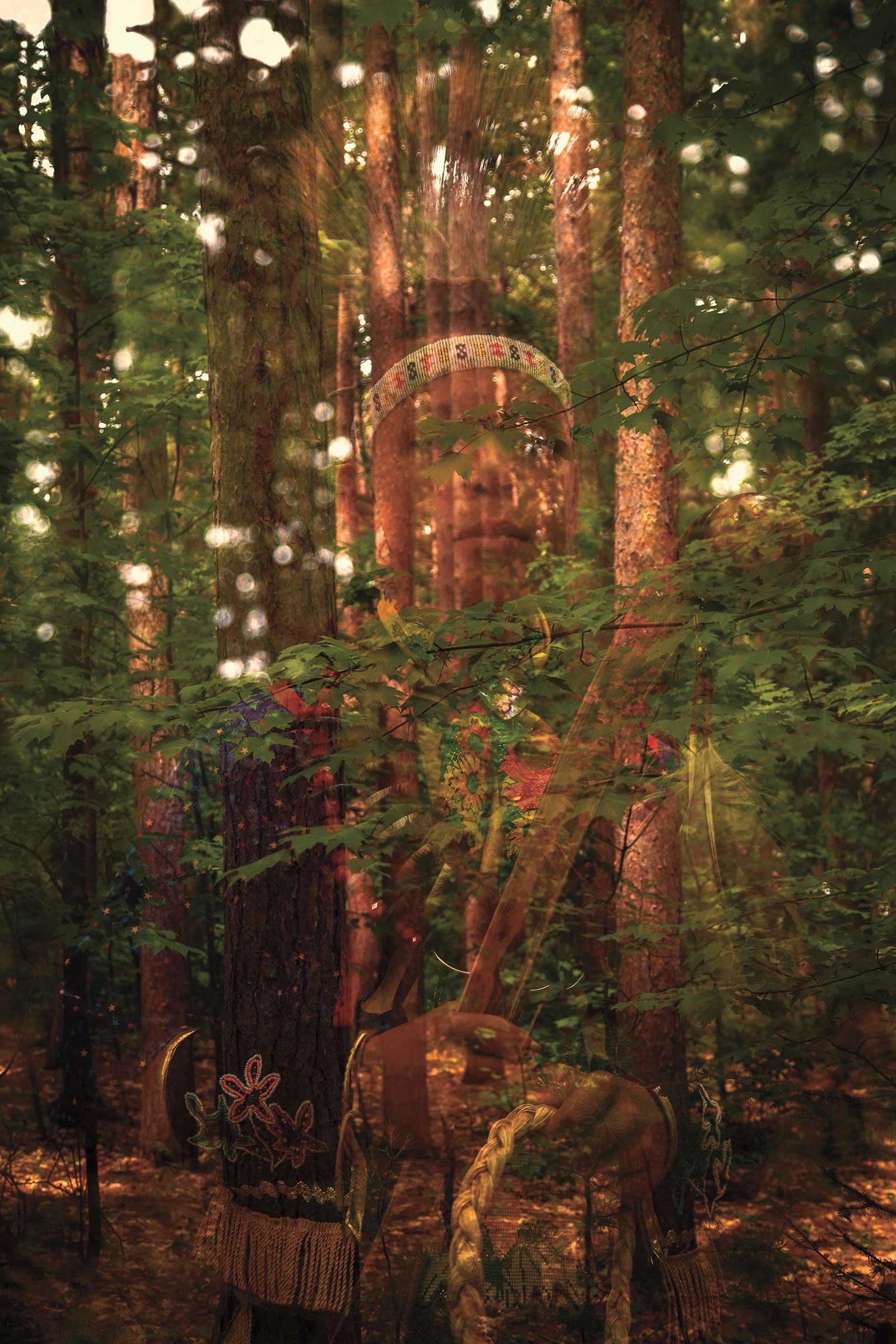
Leah Rose, an enrolled member of the Keweenaw Bay Ojibwa tribe, has been a photographer since 2009. Her fine art photography, which is a “showcase of visions that both speaks to the Indigenous people of Turtle Island and our relations to the Land,” brought her to Santa Fe, New Mexico, where she currently resides. “I use in-camera effects such as double-exposures to capture surreal, timeless moments,” says the artist. “Native people are not only of the past; we are thriving and evolving in the present. I use my photography as an exploration of my own Anishinaabe heritage and also to pay homage to other Tribes and their lands along my journey. It is my visual storytelling preserved.”
===============================
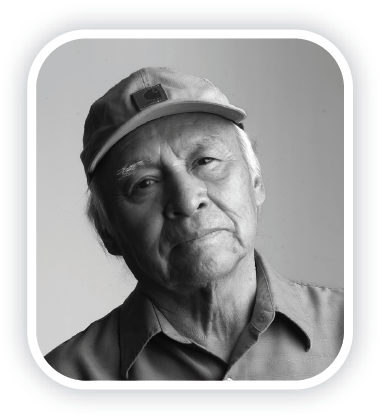
Sam Minkler (Navajo)
saminkler.artspan.com
Sam Minkler, a tenured associate professor of photography at Northern Arizona University, says, “Navajo reality derives from visual experiences in contrast to emphasizing written words to interpret reality. The desire in Navajo to follow Hozoh, the beauty way, seems natural for me and inspires me to teach this visual language and live a photographer’s lifestyle. It’s important to stress that we have been here for thousands of years and that includes our art, and that will continue to flourish.” He is interested in the themes of equality and diversity because of his personal experiences, one that includes having been removed from his nuclear family to a government boarding school. He says, “With this in my background, I approach life with a deep sense of compassion for my work.”
Powered by Froala Editor