In the third grade, Terrance Guardipee remembers each student being asked what they wanted to do when they grew up. As each student said what they wanted to be—“Fireman and doctor and stuff like that,” he recalls—it finally came time for Guardipee to tell the class. “I told them I wanted to be an artist. The teacher told me sit back down and think about it some more,” he says. Guardipee did think about it some, and by fourth grade he had completed his first carving, which still hangs today in mother’s home. He still thinks about this story when he sees the carving today, and he’s still happy with the path he took.
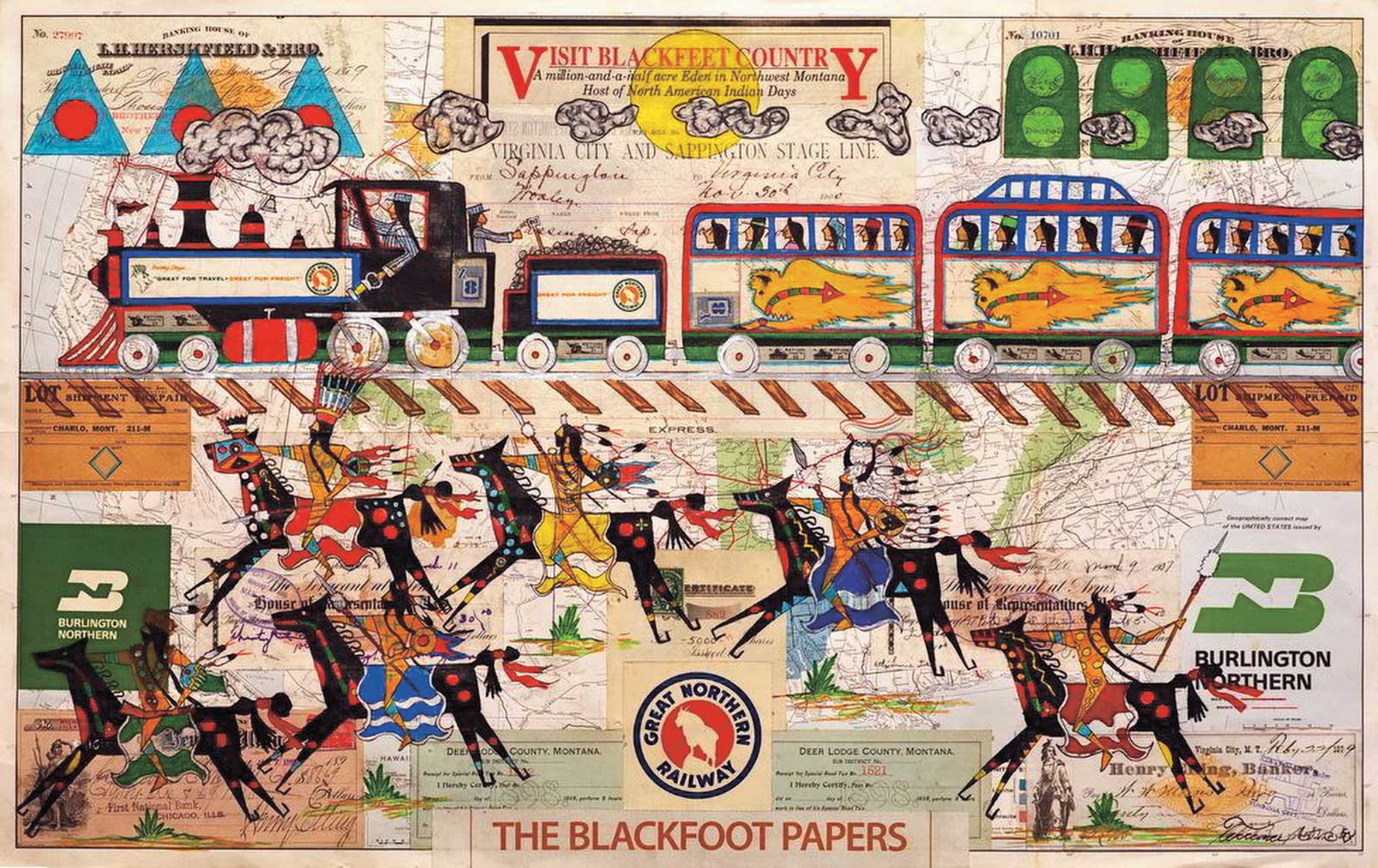 Iron Horse in Blackfeet Country, Burlington Montana map collage, oil pencil, 18 x 27”
Born in northern Montana, the Blackfeet artist was introduced to art by an uncle and a cousin, both of whom were very talented, but not entirely focused. “They were my first teachers, but they never had the drive,” he says. He went to the Flandreau Indian School in South Dakota, and later the Institute of American Indian Arts in Santa Fe, New Mexico. He remembers having an intense interest in art throughout much of his childhood. “I was the kid doing art wherever I could. I even did the backdrops for the school plays,” he says.
It was at Flandreau where he discovered ledger art for the first time, as well as early works on hide.
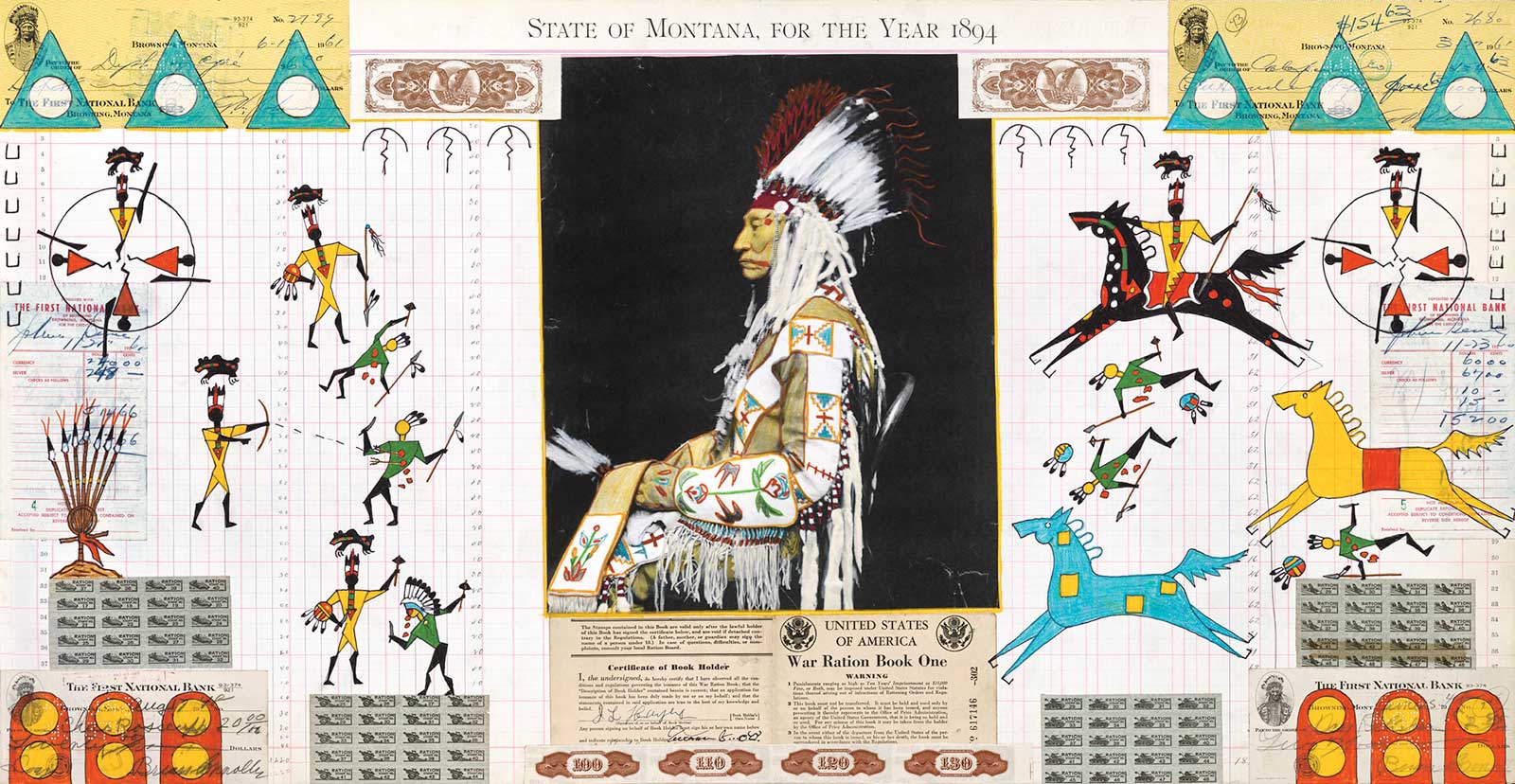 Curley Bear Coup Count, Montana 1897 ledger collage, antique Browning check, World War II ration book and stamps, oil pencil, 19 x 36”
“I was fascinated by it immediately,” he remembers. “It was the artistry of the work, but also the fact that they were warriors’ stories. That was very powerful to me.” But everything changed in 1998 when Guardipee met George Flett, who was single-handedly taking ledger art to new heights. He met other artists as well, like Donald Montileaux, Dwayne Wilcox, Jim Yellowhawk and Arthur Amiotte. But it was Flett who gave Guardipee 10 sheets of antique ledger paper. He painted on them and sold all 10, and went back to Flett for more. “He told me that I had chosen this path and I had joined a movement, so then it was up to me to go on the hunt and find my own paper,” Guardipee says.
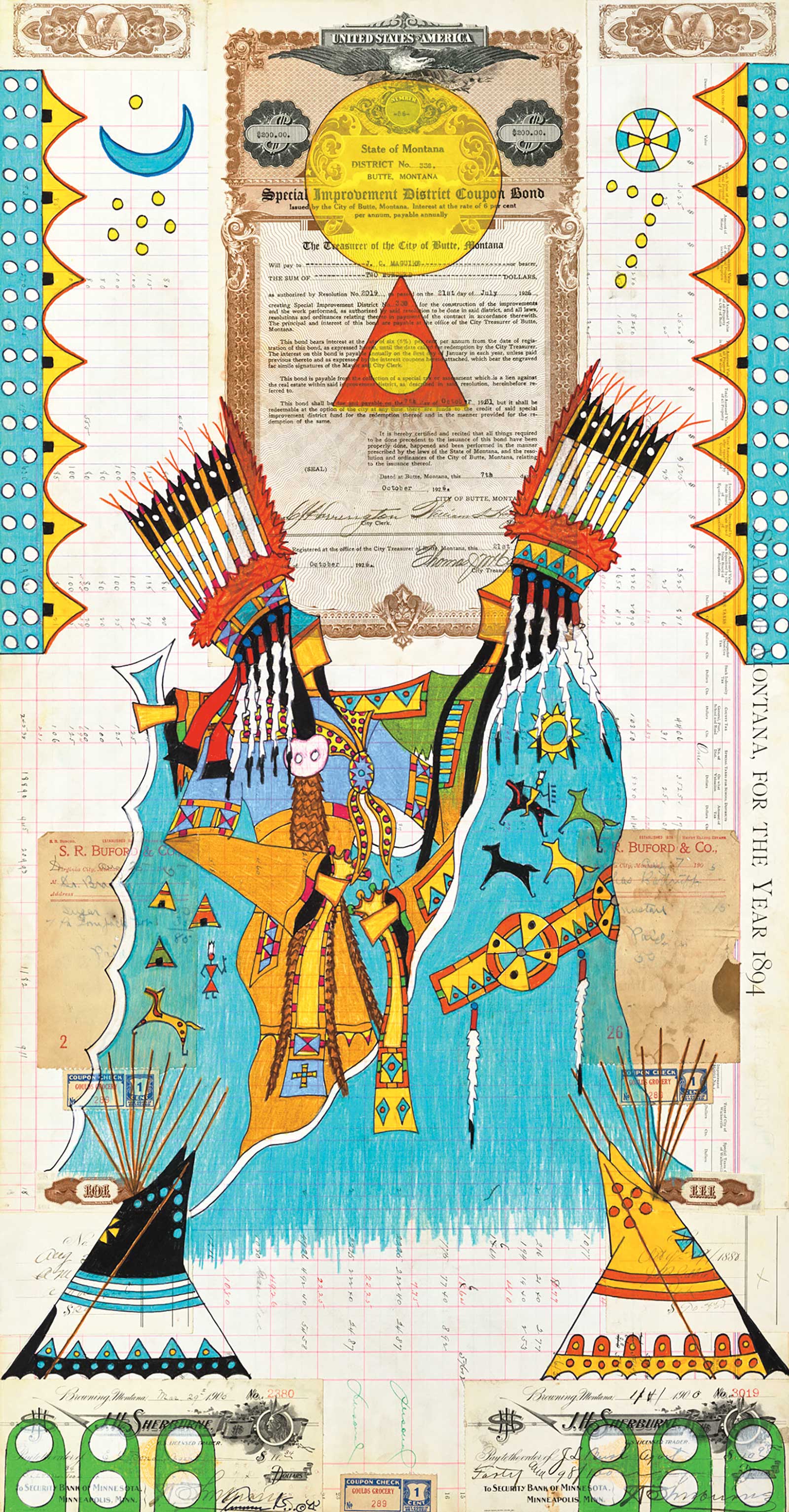 Keepers of the Medicine Lodge, 1897 Montana ledger collage, antique documents, oil pencil, 36 x 19”
Later, after he was more established, he showed at the Santa Fe Indian Market in 2004. It was his first year at the famous street festival. Flett was there and they were largely alone in terms of artists who were doing ledger works. “No one knew what to do with it. Museums didn’t know how to introduce contemporary ledger to their audiences, but I kept working at it and they finally came around,” he says. “At one point the Smithsonian came by and bought almost everything I had.” Today those works reside in the Smithsonian’s collection at the National Museum of the American Indian.
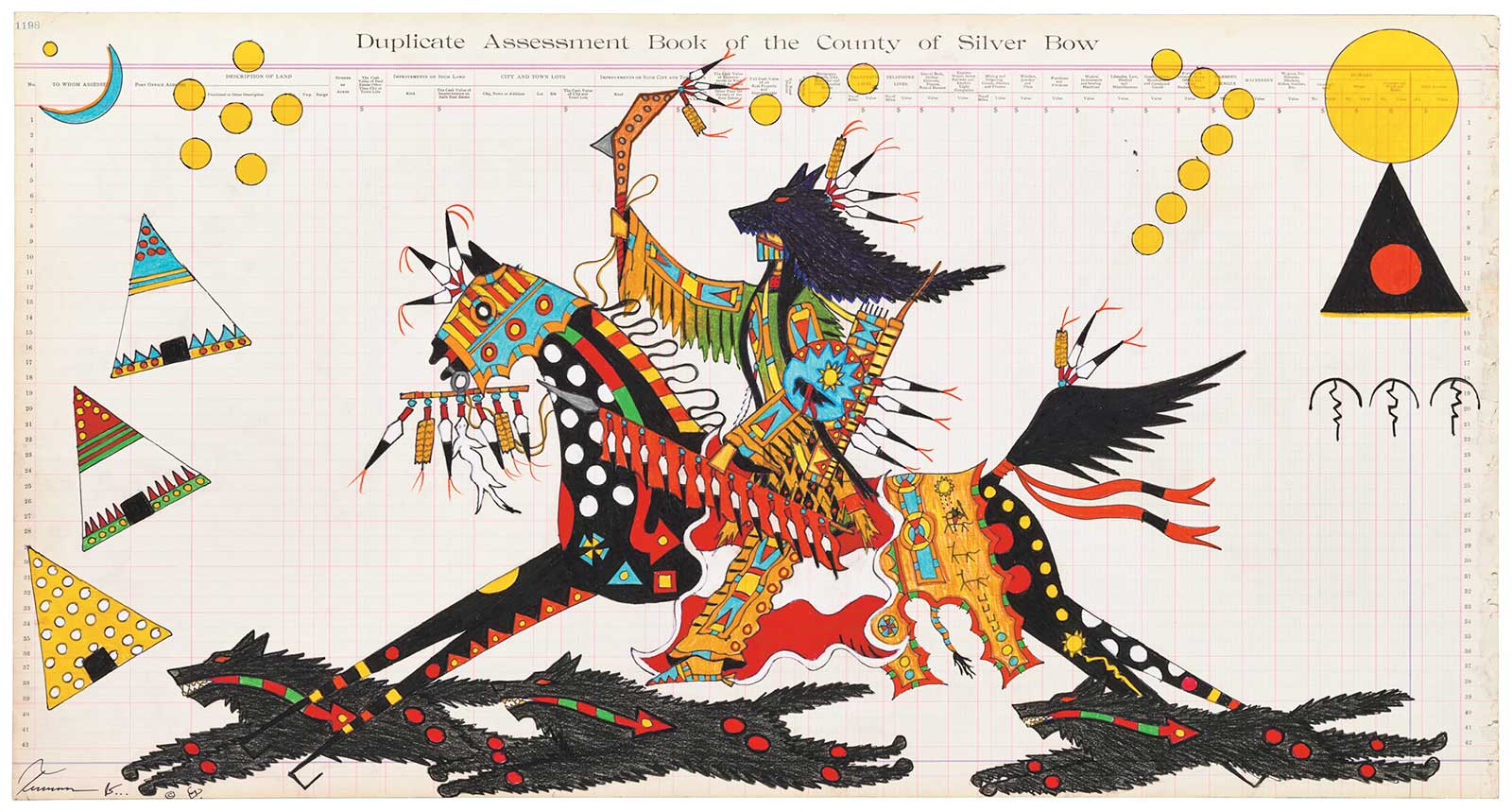 Running Eagle War Party, Montana 1897 original ledger collage with World War II ration books and stamps, antique Browning checks, stock certificate, oil colored pencil, 19 x 36”
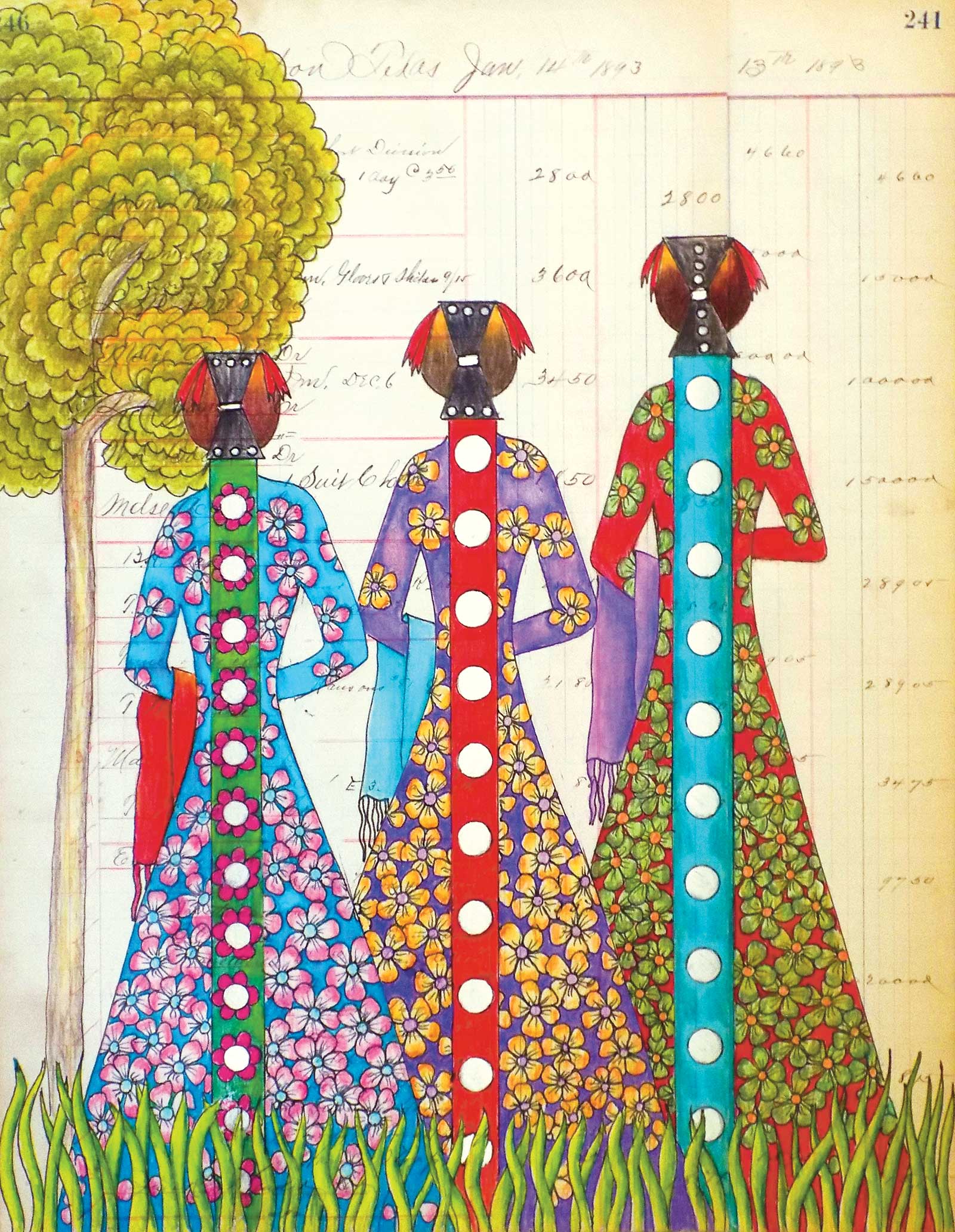
Certainly the art itself is important—and the artist is known for his rich color, dramatic stories and stylized designs—but a ledger artist is often defined by their paper. For Guardipee, he primarily uses Montana documents that he finds at antique stores. He paints and draws on anything and everything: lands deeds, checks, bank notes, gas station maps, travel brochures, World War II ration books, ledgers and receipts, and even pages torn from books, which is where the vast amount of ledger documents originate.
Lately, Guardipee has been painting a lot of Running Eagle, the Blackfeet leader of Crazy Dog Society. “She was a very powerful woman, the only woman to achieve some of the things she achieved. She was born in the late 1700s and lived in the 1800s,” he says. “She was a powerful figure, and that’s what I want my work to show—strength and beauty. I’m always striving to show the power of my ancestors and the history of my tribe, as well as my connection to God and the earth and our belief system. I specifically chose not to do negative pieces. Just beauty and power.”
See More
www.terranceguardipee.com
===============================
Artist Spotlights:
Dive deeper into the genre with these established artists
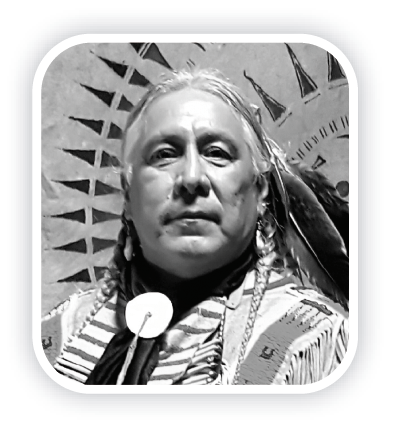
Monte Yellow Bird (Arikara/Hidatsa)
www.blackpintohorsefinearts.com
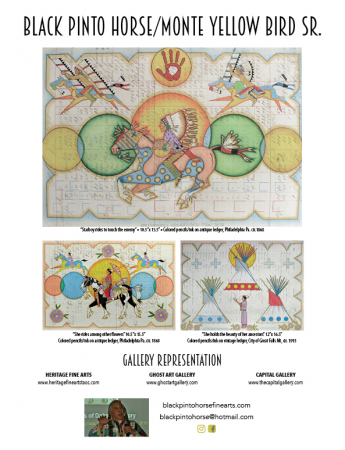
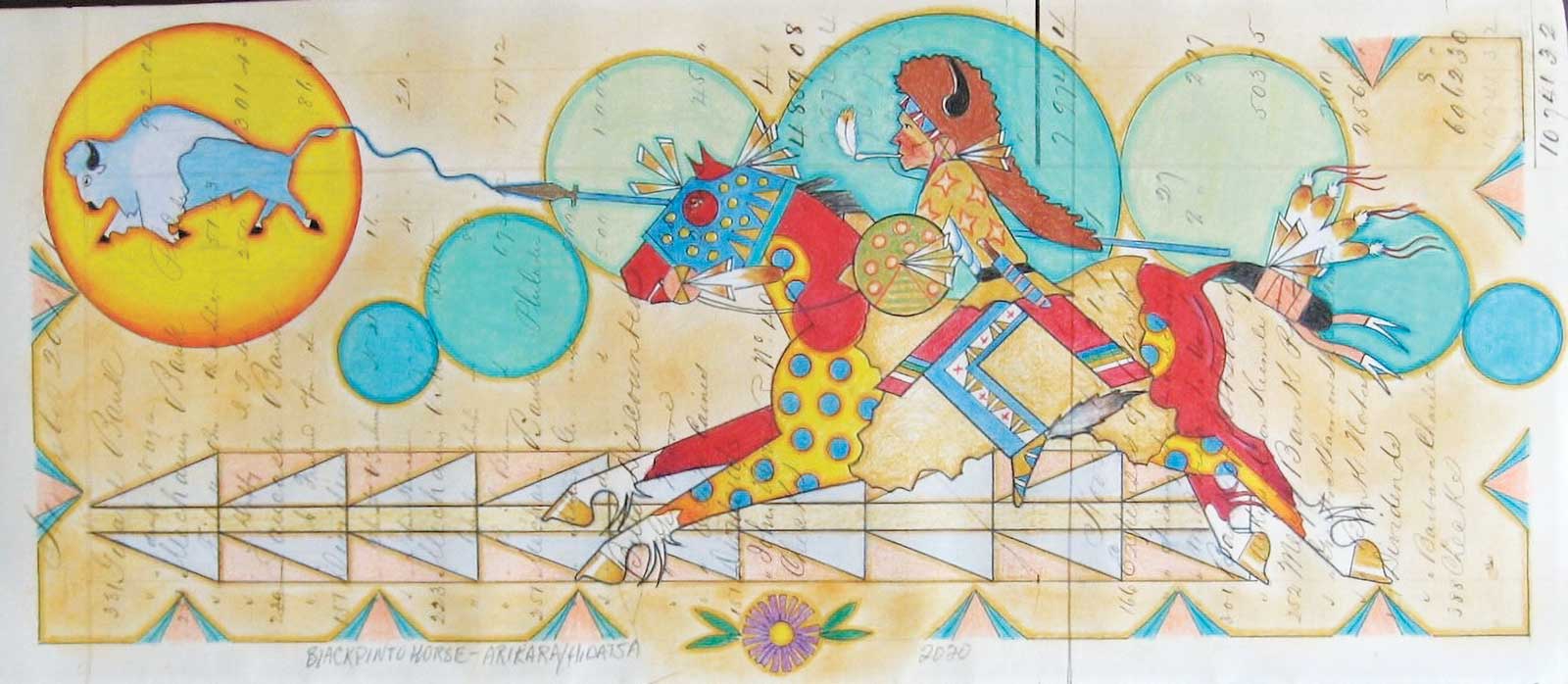
Monte Yellow Bird is hard to miss at events. He frequently shows up in full traditional regalia, including beaded shirt with feathers and intricate jewelry. His clothing gets curious questions from visitors and collectors, and he answers them all, each one an opportunity to bring people closer to his Arikara and Hidatsa culture. Yellow Bird—who signs his name Black Pinto Horse, a name he was given through ceremony—was inspired to create art from his grandfathers, Strikes Enemy and Bears Teeth. Today his works, all done on antique ledger paper, are collected around the country. His style and subject ranges from more traditional pictographs to very contemporary pieces that push the boundaries of what ledger can be.
===============================

Dolores Purdy (Caddo/Winnebago)
www.dolorespurdy.com
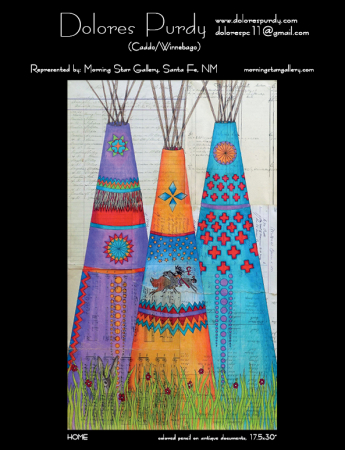
While ledger art has been primarily associated with men and male figures, Dolores Purdy brings a feminine touch to the art form with her powerful and occasionally humorous creations. Her paper works often fuse iconography with pop culture and Native American heritage, creating a uniquely timeless quality to her ledger pieces. She’s also not afraid to include modern subjects, such as cars and motorcycles, which puts her work into a more contemporary context. She has pieces in the collection of the Smithsonian’s National Museum of the American Indian and the White House, as well as museums and major collections around the country.
===============================
Chris Pappan (Osage/Kaw/Cheyenne River Lakota Sioux)
www.chrispappan.com
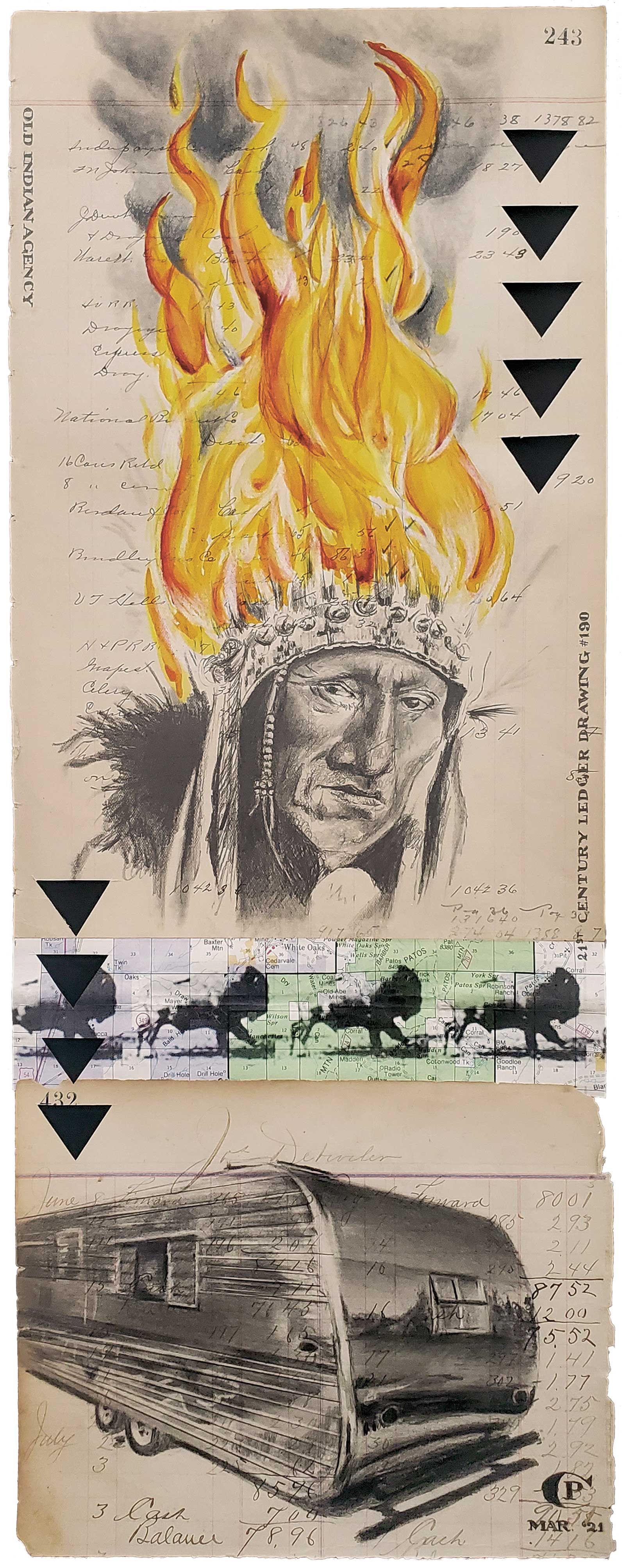
Chris Pappan is one of the most esteemed contemporary ledger artists working today, and the Chicago-based artist is taking the art form into wild new directions that speak to issues that are important to Native Americans at the present time. His work is also inventive and it pushes boundaries, including recent pieces that include consuming images of fire, figures with bison heads and nudes, which are rare. At his core, Pappan is a draftsman and his work reflects his technical ability with a pencil, which is only heightened and intensified when he adds colors. On February 22, his work of Yankton Dakota writer and musician Zitkála-Šá was featured as the Google Doodle, viewed by millions of people each day.
Powered by Froala Editor