Two years ago Ben Pease traveled to Germany with the intention of doing two things: First, he wanted to explore his grandmother’s German heritage, and secondly, he wanted to paint on the Berlin Wall. He met with one of the largest collectors of pieces of the Berlin Wall and put paint to the barrier that divided East Germany from West Germany for more than two decades. He painted Donald Trump wearing the uniform of George Armstrong Custer, who fought and died in the Battle of the Little Bighorn.
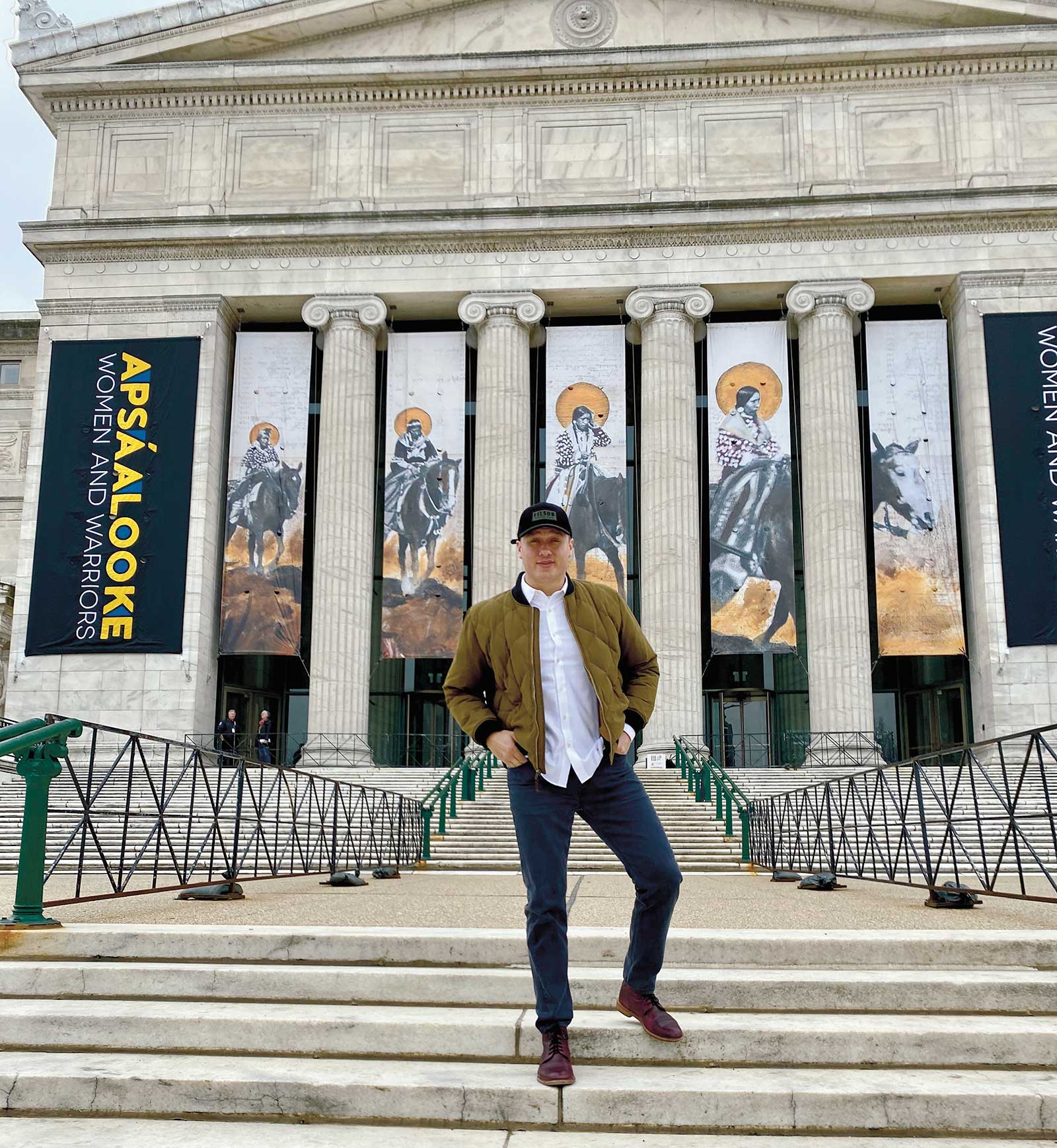 Ben Pease outside the Field Museum in Chicago, where he had work on display for the exhibition Apsáalooke Women and Warriors.
“I liked the idea of Trump on a wall because of his stance on walls and borders as barriers to human movement. Like Custer, Trump is a contrasting figure, and depending on what side of things you are on you’ll see him as an American patriot acting bravely for the country, or as a fool, a coward and a bad leader,” Pease says. “I also painted a black snake to represent oil. There were some interesting juxtapositions in the piece.”
The work perfectly encapsulates Pease’s newest works, specifically his reflections of the cultural and political landscape we live in, the occasionally polarizing subject matter, the provocative way he uses Native American history to tell hard truths and his unique ability to look at the present and future while also calling out to the past.
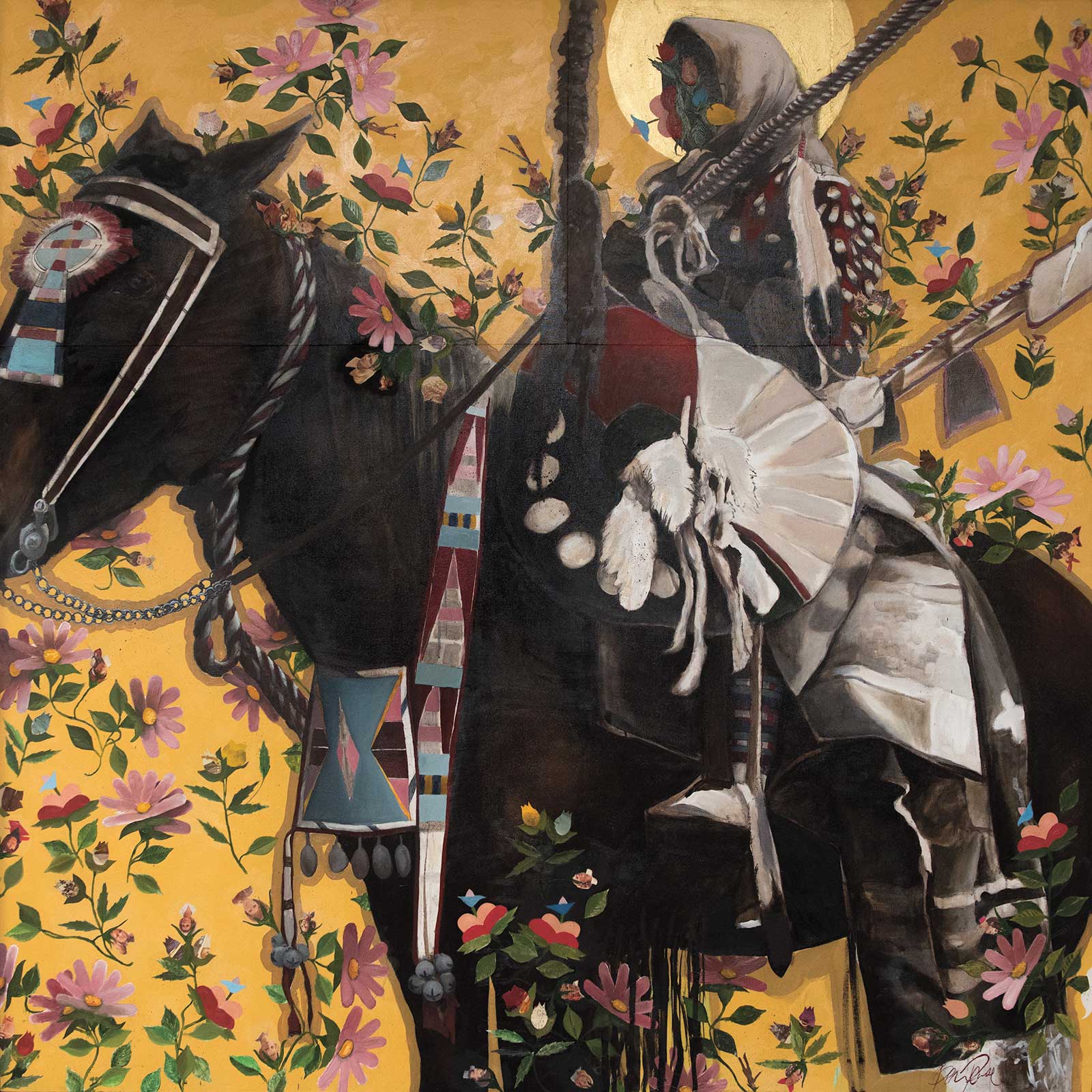 Untitled, oil, acrylic and paper ephemera, with 24k gold on canvas, 72 x 72"
Pease’s work has always been interesting, but he seems to have entered a new creative realm as he explores more contemporary work and his heritage, which is Apsáalooke (Crow), Ohmésêhese (Northern Cheyenne), Metís, Hiraacá (Hidatsa), Néhiyaw (Cree), Cornish and German. He recently became an artist in residence at Rocky Mountain College in Billings, Montana, where he started noticing other artists’ works, including more traditional Western painters and their frequent depictions of Native Americans.
“I had shown a lot, particularly near Santa Fe, where there is a larger functioning market for Native artists. When I started living in Montana I was suddenly surrounded by Western art and artists. It was a bit of a culture shock because I was seeing the commodifying of my culture. There are a lot of cultural profiteers, and they weren’t saying anything about Native people outside of beads and feathers,” Pease says. “I realized I suddenly wanted to have a dialogue about these issues.”
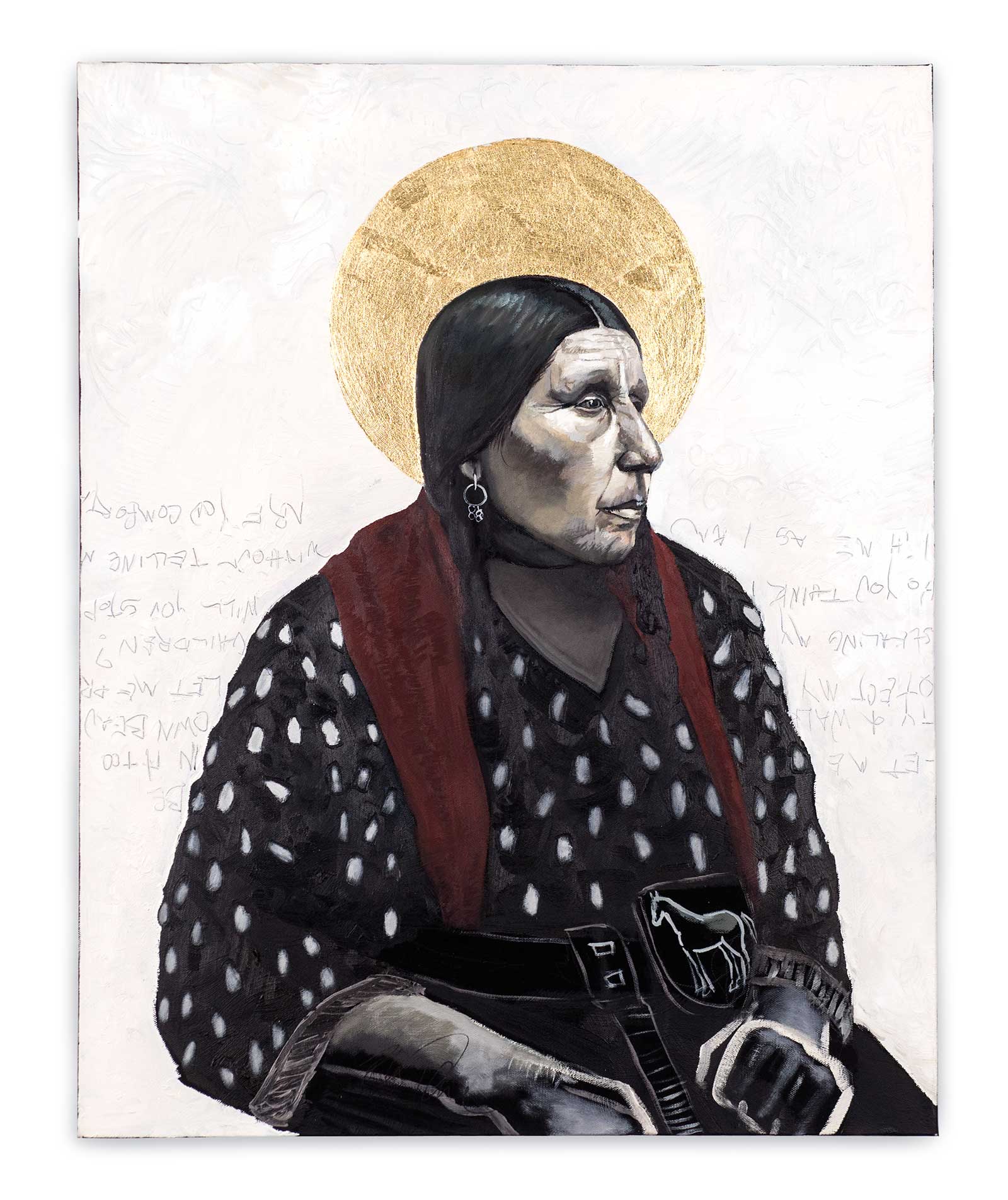 My Beauty – Sitting Bird, acrylic on canvas, 30 x 24"
In addition to his Native American portraits, the artist began doing more contemporary works that spoke to issues that were meaningful to him, including racial injustice, inequality and the appropriation of culture. In American Me, for instance, he painted an American flag with real feathers for the stars and images in the stripes that included Custer, Trump, actor Iron Eyes Cody (an Italian actor born as Espera Oscar de Corti) from the so-called “Crying Indian” advertisements, George Floyd, Standing Rock’s water protectors, stills from movies and even an image of rapper Childish Gambino from the “This is America” music video. He also created an installation for Stapleton Gallery called The Trophy Room, which took direct aim at using Native Americans as mascots and objects.
“I’m trying to move my work more in a contemporary direction because we’re not static beings, we’re always moving and the culture’s always in flux. And most importantly, we’re not just beads and feathers,” he says. “If not a transformative experience, then I’m at least having a reckoning, and thinking about how everything is being consumed, whose buying it and how it’s going to be seen. I want to be truthful and honest, and I want to embrace what happens today because it’s powerful.”
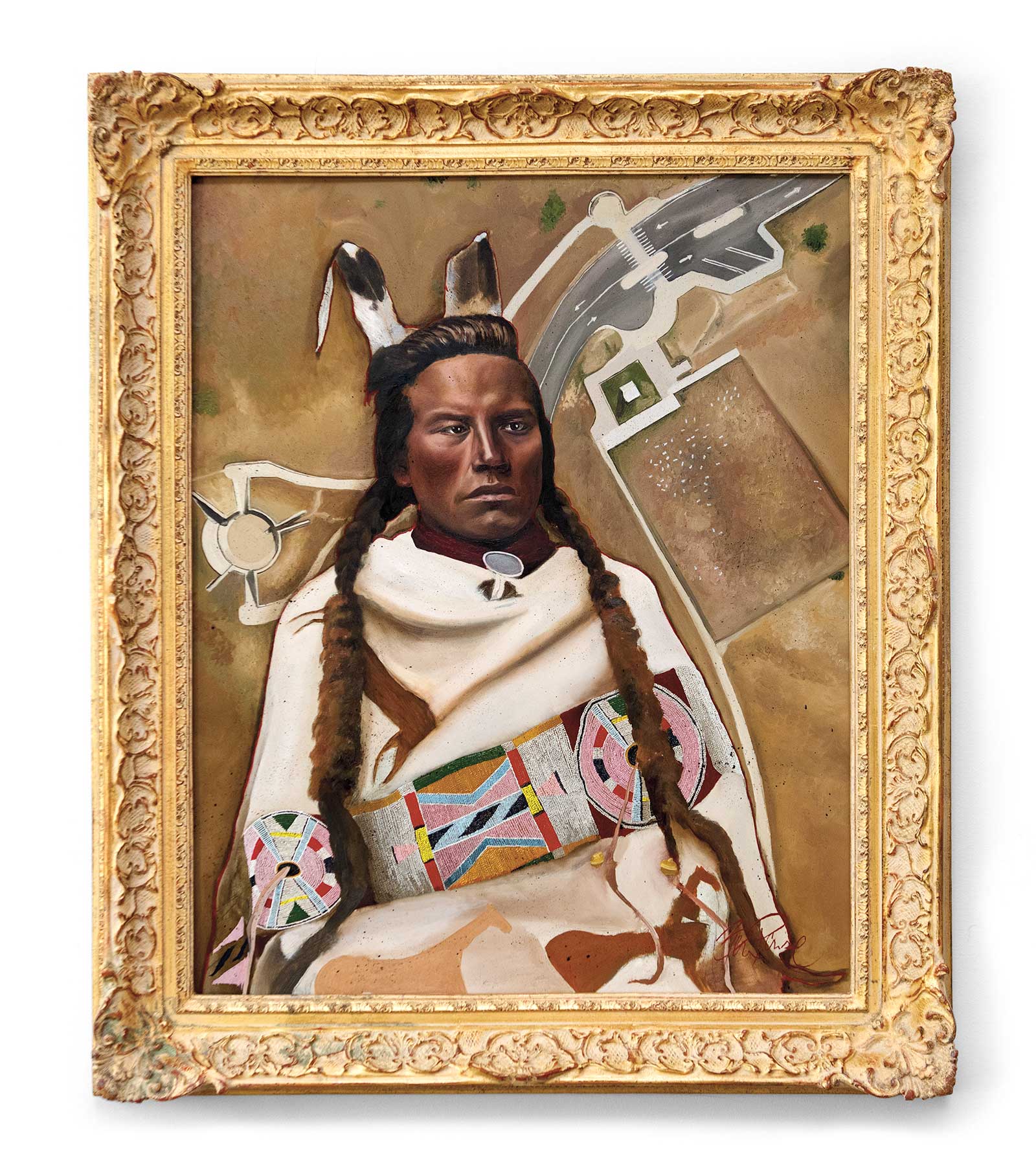 Stuck Between Two Worlds, oil on birch, 30 x 24"
Pease also wants to paint beauty, which is reflected in some of his newest works, including large-scale portraits of Native American figures surrounded by flowers. “We’re told that Native beauty is all of the traditional clothing, but I think beauty can also be a figure wearing a North Face jacket and other modern clothing,” he says.
“I like painting people,” he adds. “People are what draws this world forward.”
See More
www.benpeasevisions.com
===============================
Artist Spotlights:
Dive deeper into the genre with these established artists
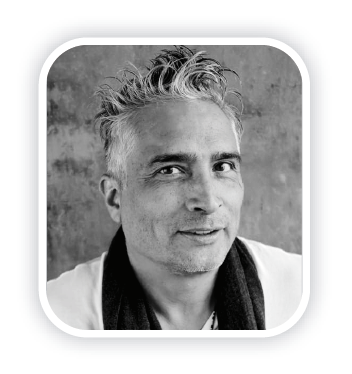
Tony Abeyta (Navajo)
www.tonyabeyta.com
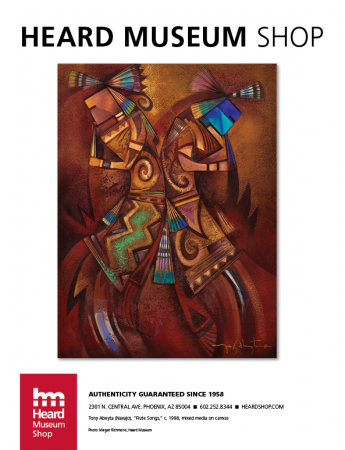
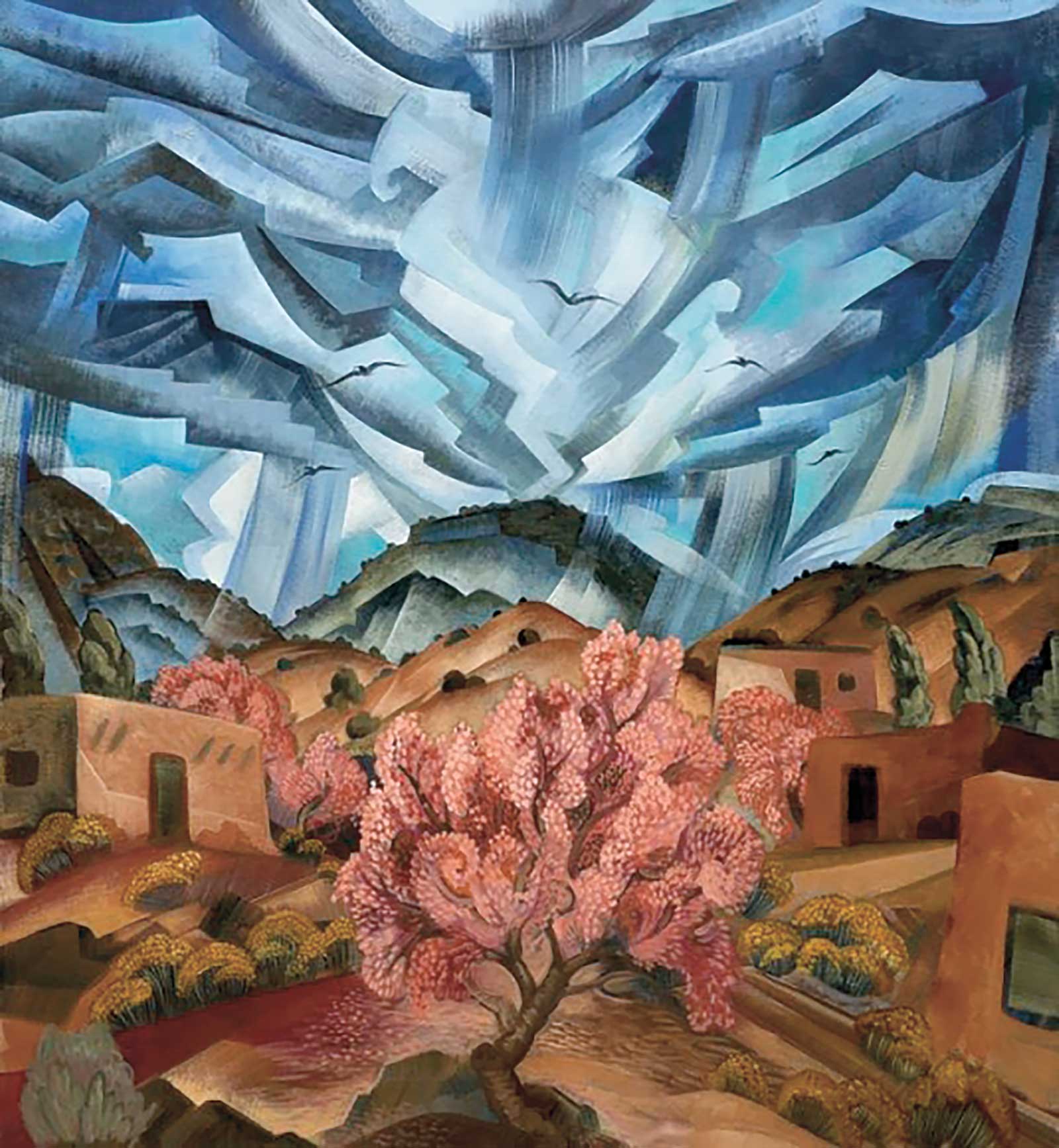
Tony Abeyta’s work is treasured by collectors and museums around the world. The artist is a graduate of New York University with an honorary doctorate from the Institute of American Indian Arts in Santa Fe, New Mexico. He’s also been awarded the New Mexico Governor’s Excellence in the Arts award, and recognized as a Native Treasure by the Museum of Indian Arts & Culture. He has pieces in the Smithsonian’s National Museum of the American Indian, Heard Museum, Denver Art Museum, Autry Muesum of the American West and the Museum of Fine Arts, Boston. His newest pieces are highly stylized and abstracted views of the Southwest, as well as increasingly modern figures, including wildlife.
===============================
Marla Allison (Laguna)
www.marlaallison.com
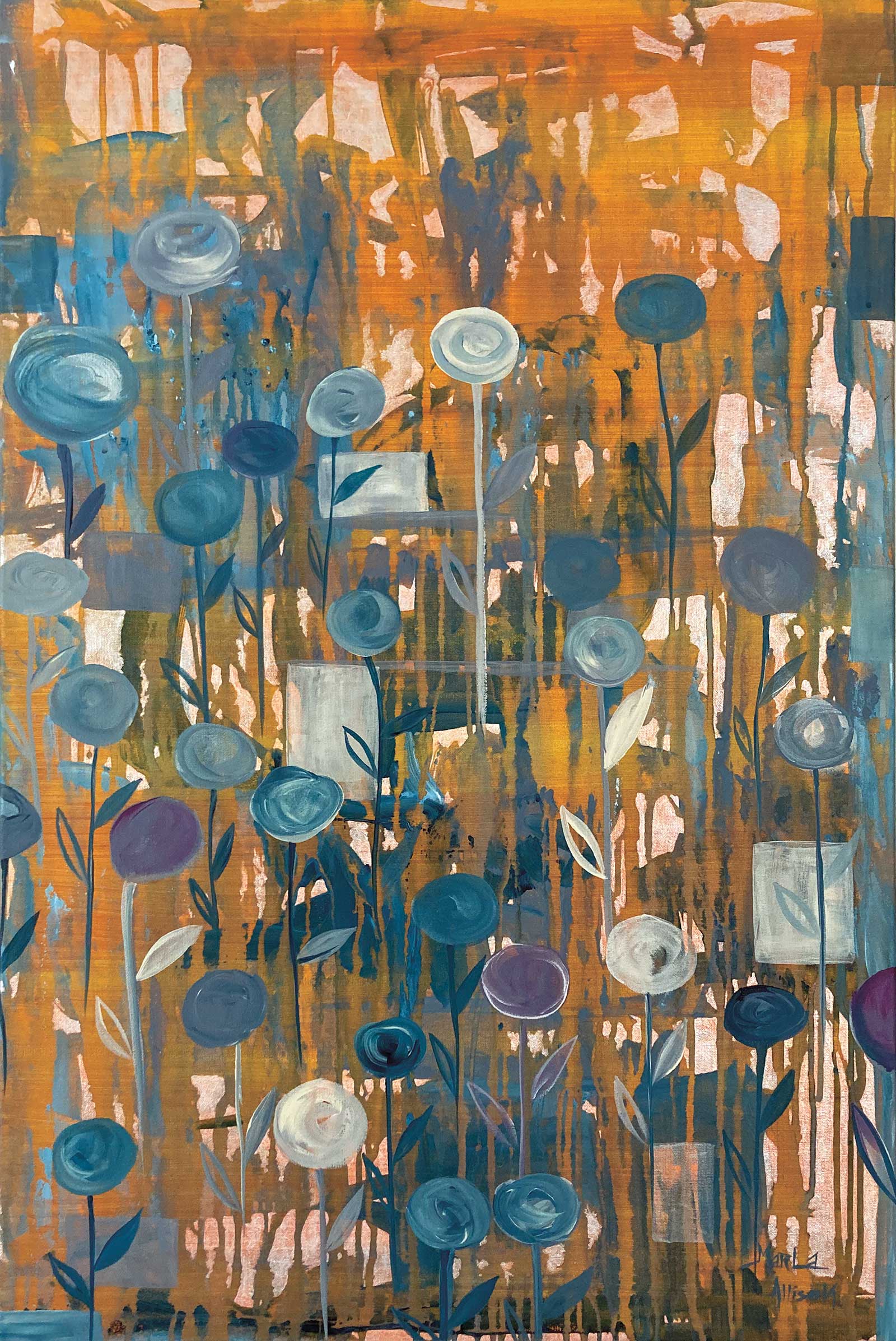
Marla Allison’s contemporary work has frequently embraced realistic figures with abstracted, even fragmented, backgrounds. Her newest works are part of a series called Lost Inside, which are as much as “fervent tonality” and claustrophobia, as they are about color and form. “Often in Ms. Allison’s work we are used to seeing light and shadow depicted in segregated blocks, delineated with a vibrant web,” writes David John Baer McNicholas. “She allows the webs in Lost Inside to become out of focus, suggesting that there is a limit to the expression of control, and that there is something entirely untamed beyond. One could claim that these are works not specific to a culture, but a critique of all human belief.”
===============================
Ryan Singer (Navajo)
ryansingerart.square.site
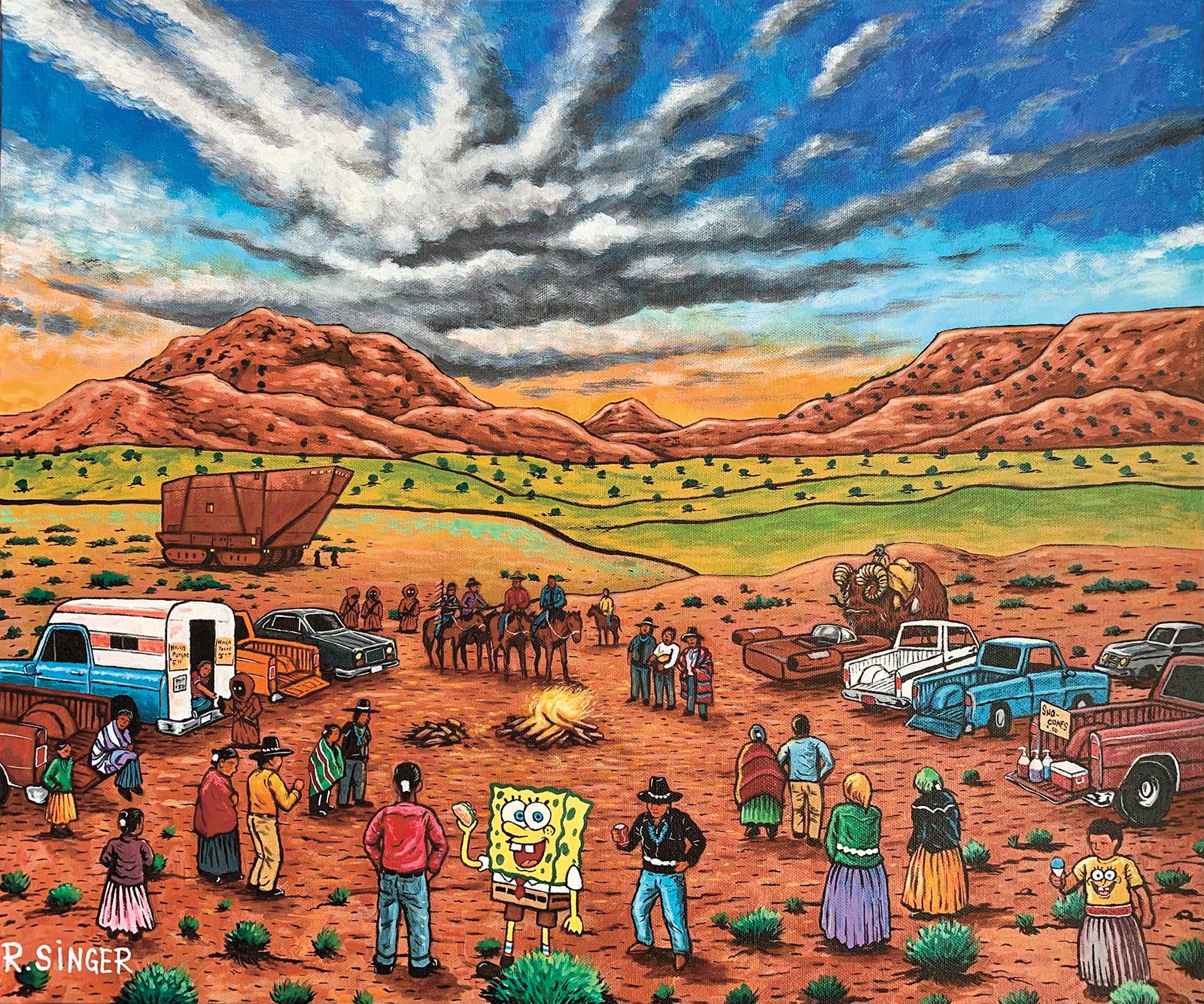
Nothing is off limits for Ryan Singer: Star Wars stormtroopers in the sage and sand of Northern Arizona. Godzilla and Mothra at a Navajo event. SpongeBob SquarePants at a desert gathering. His work is Diné filtered through a pop-culture lens—and it’s spectacularly fun. “It’s all just storytelling in one way or another,” Singer has said in the past about his work, much of which borrows from popular movies, comics and television. The artist had a busy fall and winter doing commission work—“That’s my bread and butter,” he says—and is back in the studio creating new work for 2021 shows and beyond.
Powered by Froala Editor