The highlight of Nebraska’s 1898 World’s Fair, the Trans-Mississippi and International Exposition in Omaha, was the Indian Congress involving more than 500 representatives of 35 Indigenous nations in what was billed as a “serious ethnological exhibit.” More than 2 million fairgoers attended.
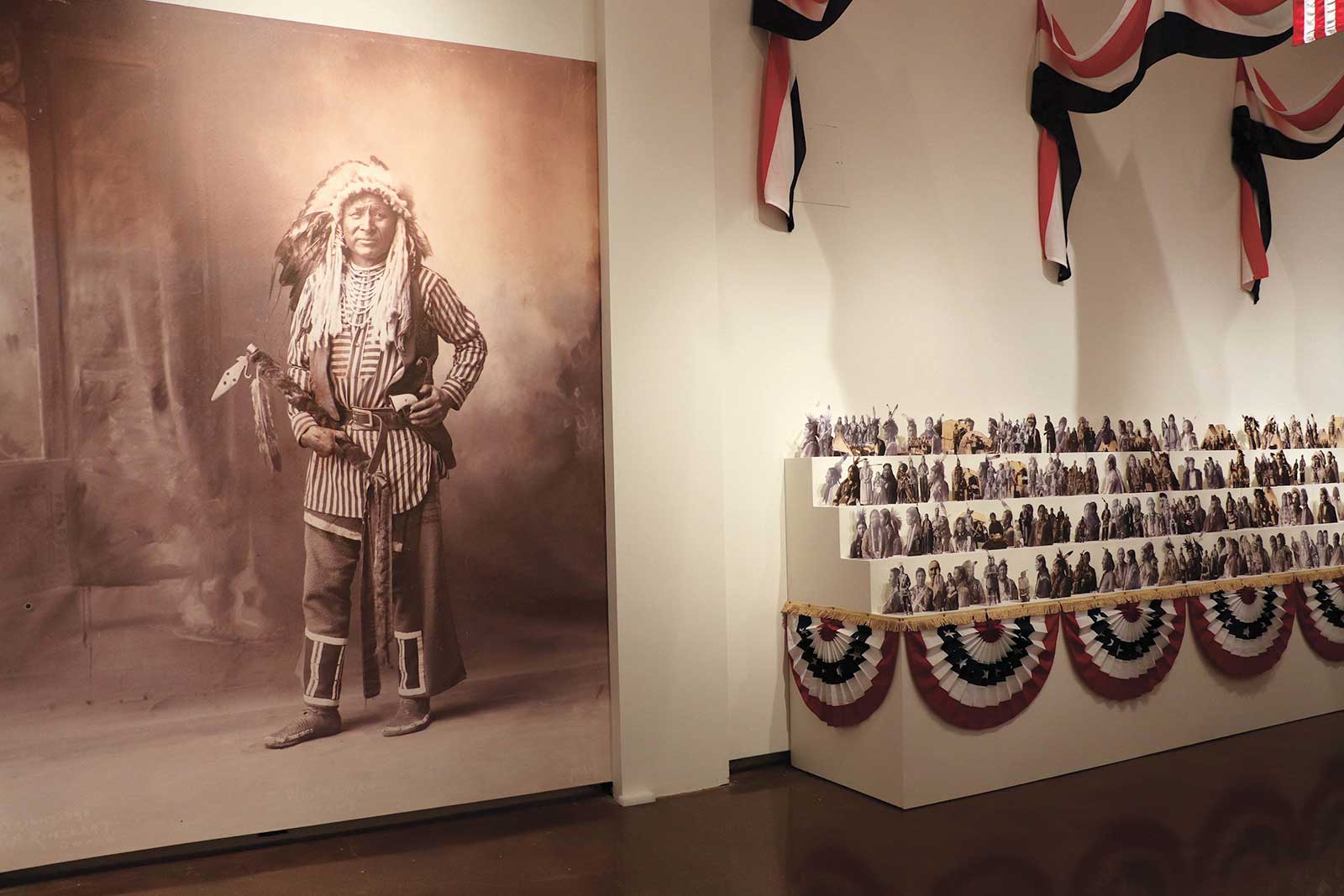 Wendy Red Star (Apsáalooke/Crow), The Indian Congress, 2021, mixed media installation with reproduction of Frank Rinehart’s White Swan, 1898, albumen silver print. Rinehart image courtesy Omaha Public Library. Gallery photo: Peter Fankhauser
The Commissioner of Indian Affairs at the time stated, “It is the purpose of the promoters of the proposed encampment or congress to make an extensive exhibit illustrative of the mode of life, native industries, and ethnic traits of as many of the aboriginal American tribes as possible. To that end it is proposed to bring together selected families or groups from all the principal tribes and camp them in tepees, wigwams, hogans etc., on the exposition grounds, and permit them to conduct their domestic affairs as they do at home, and make and sell their wares for their own profit.”
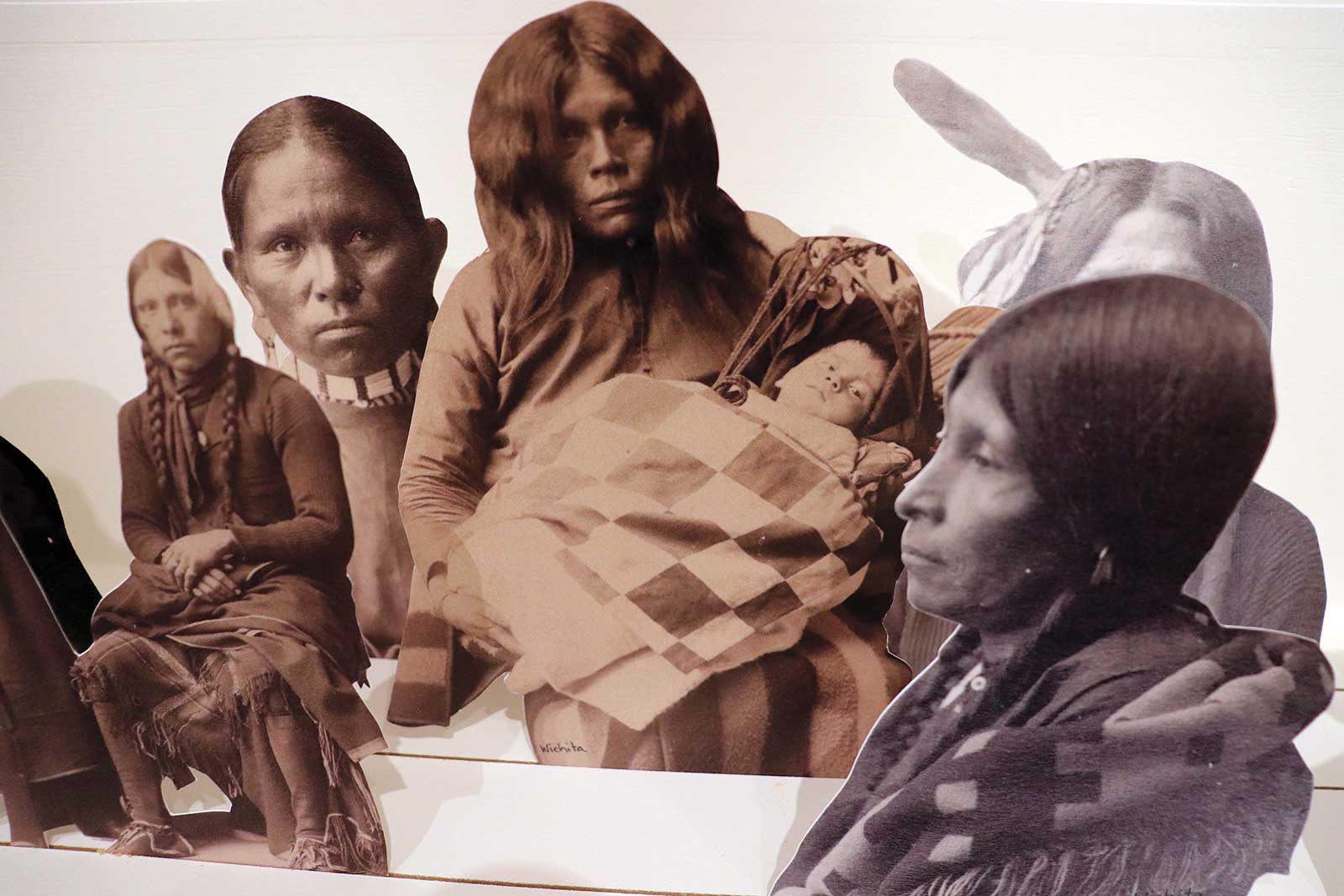
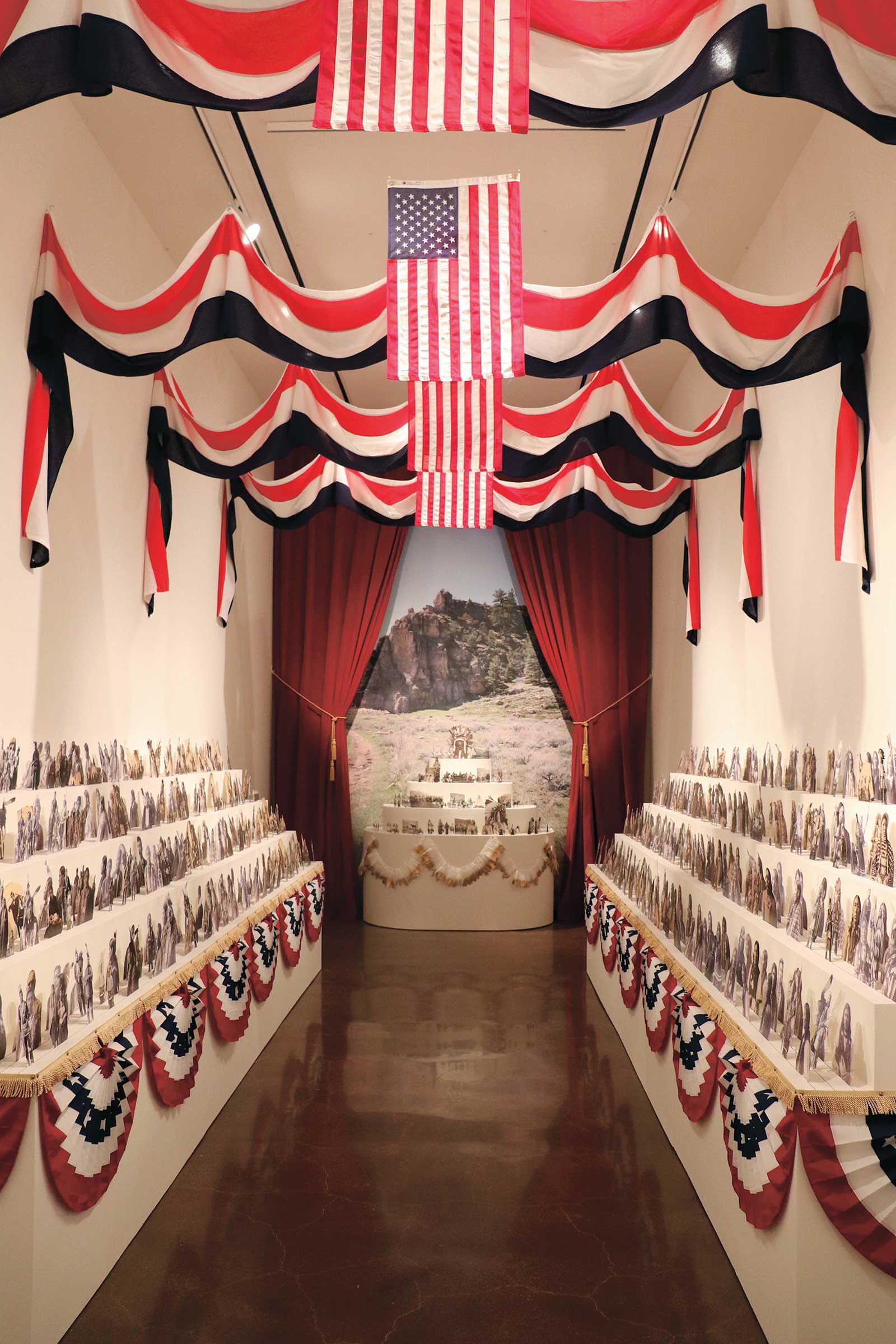 Wendy Red Star (Apsáalooke/Crow), The Indian Congress, 2021, mixed media installation. Photo: Peter Fankhauser.
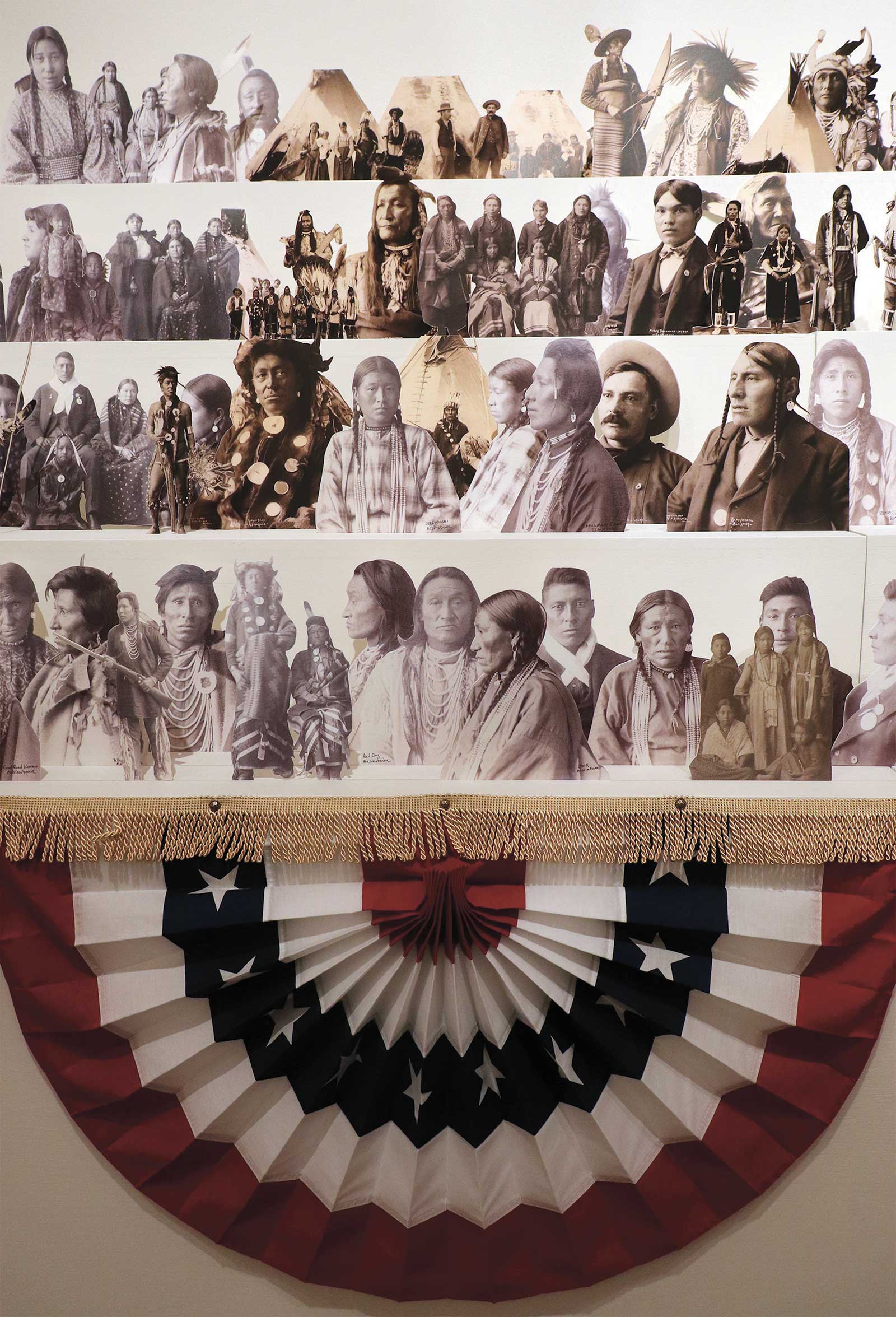
The official photographer was Frank A. Rinehart, assisted by Adolph Muhr who would later work with Edward S. Curtis on his monumental photographic effort, The North American Indian. Rinehart and Muhr’s photographs were less romanticized than other ethnographic photographs of the time and Rinehart recorded the name and tribal affiliation of each sitter on the image.
Wendy Red Star is an Apsáalooke artist and researcher who chronicles the intersection of Native American and colonialist structures both historically and in contemporary society.
She has installed her interpretation of the 1898 Indian Congress at the Joslyn Art Museum in Omaha, where it will be shown through April 25. She and the museum’s associate curator of Native American art Annika K. Johnson visited sites associated with the Congress as well as the archive of Rinehart’s photographs at the Omaha Public Library.
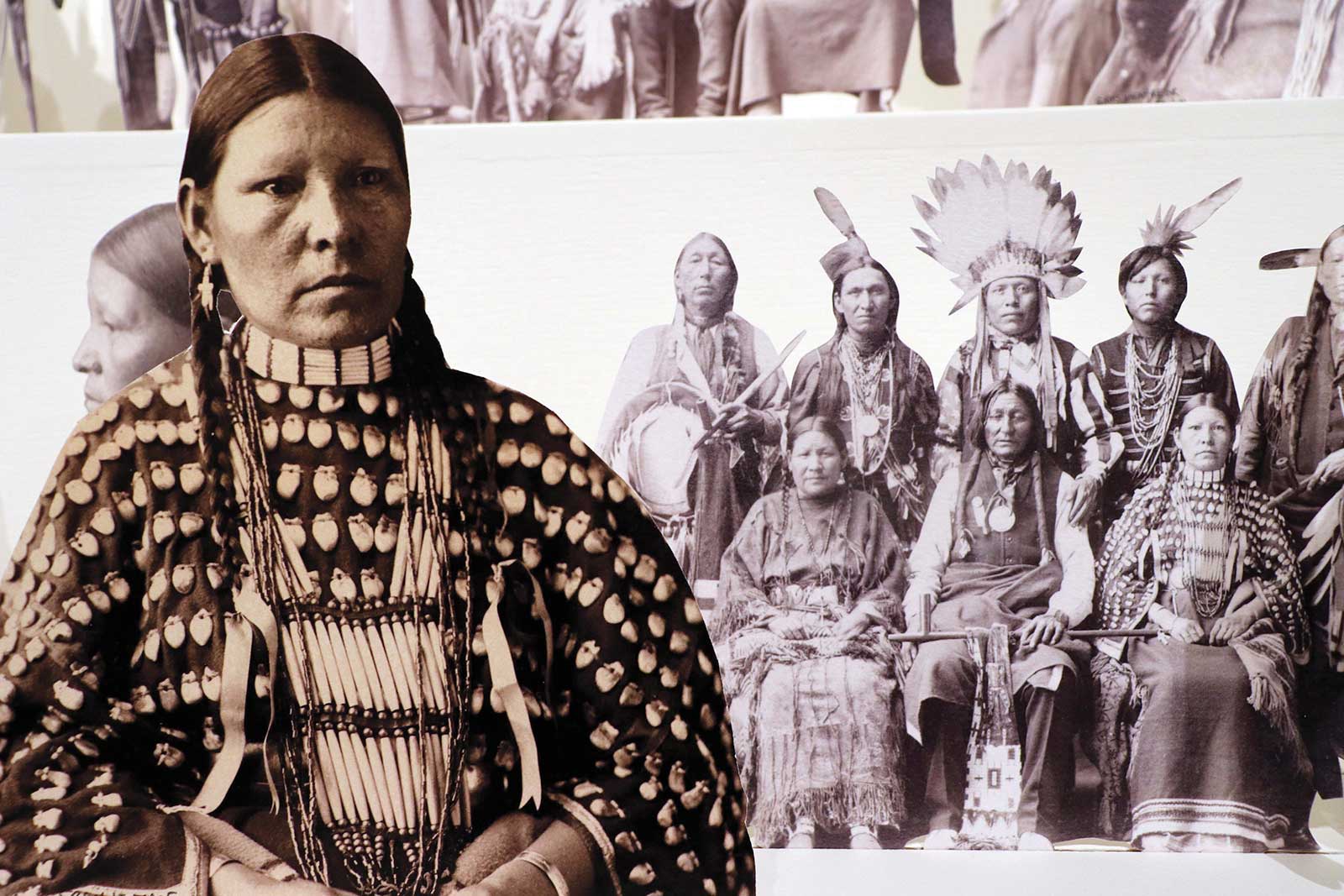
She obtained copies of the photographs and painstakingly cut out the individual delegates for her installation. Taking the design of display stands for produce and other items at the Congress she created two long tables and installed the cutouts by tribal group, honoring them as individuals. In the process, she felt she got to know who they were, commenting, “Each has a story.”
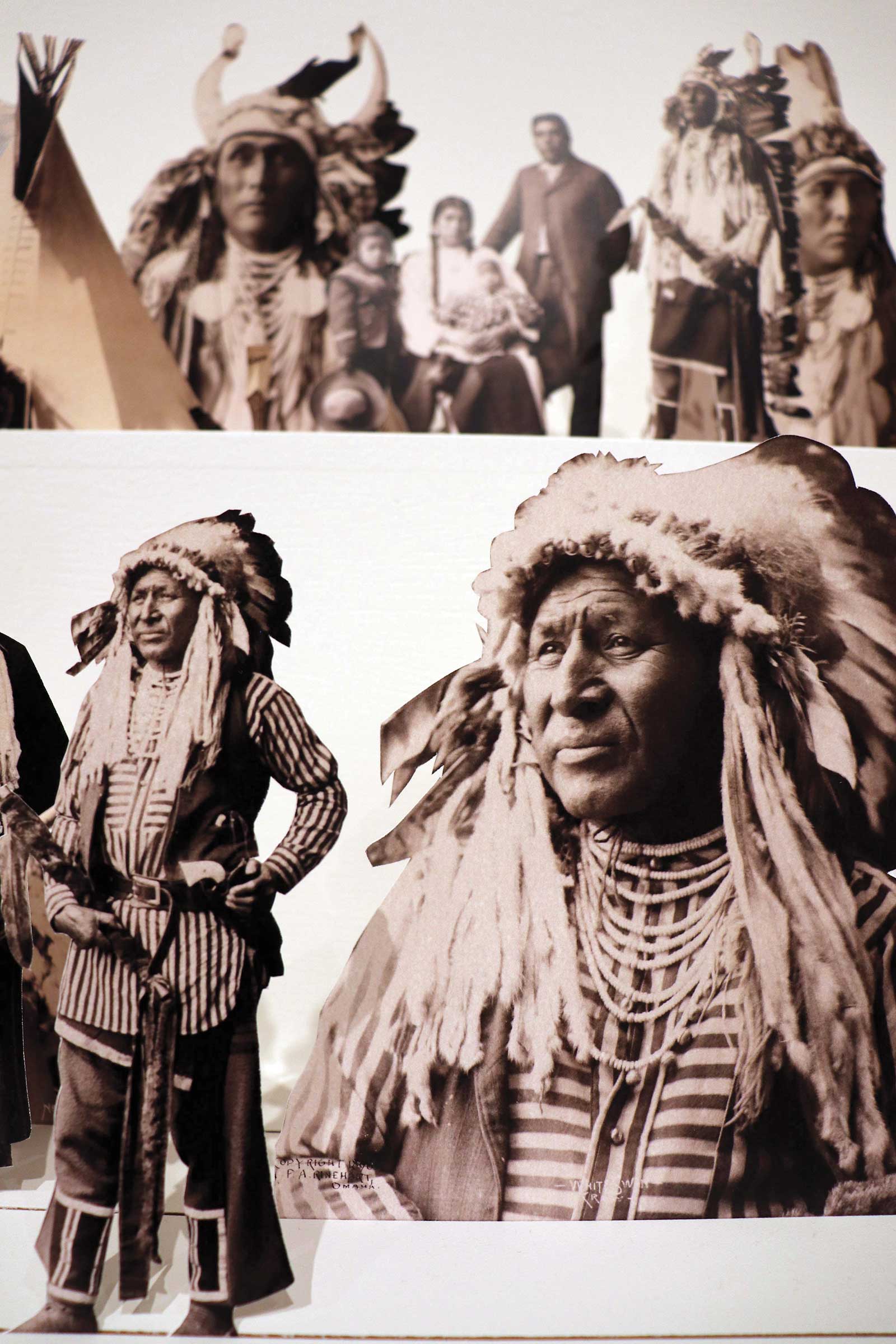
Among the prominent Apsáalooke members featured in Rinehart’s photographs and Red Star’s installation is White Swan, an artist and a scout for General Custer who was wounded at the Battle of the Little Bighorn. Later, while living at Crow Agency, he was painted by Taos Society of Artists founder Joseph Henry Sharp who described him as “Jolly, good natured and a general favorite.”
Following the Congress, Rinehart went to the Crow reservation in Pryor, Montana, where he photographed the people in their home context, only a few miles from where Red Star grew up. A focus of Red Star’s installation is a color photograph of Baahpuuo, a holy site for the Apsáalooke that serves as a backdrop for her cutouts of Rinehart’s photographs taken nearby.
Through April 25, 2021
Wendy Red Star: The Indian Congress
Joslyn Art Museum
2200 Dodge Street, Omaha, NE 68102
(402) 342-3300, www.joslyn.org
Powered by Froala Editor