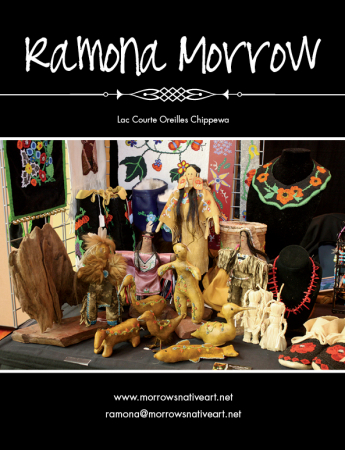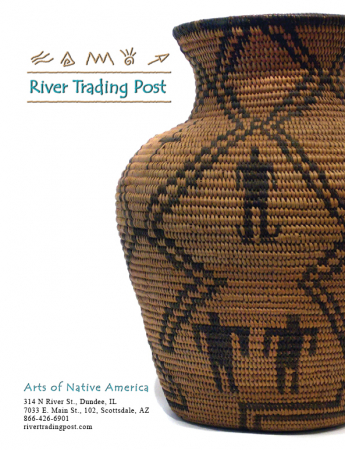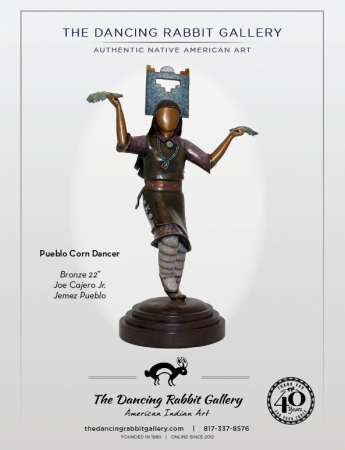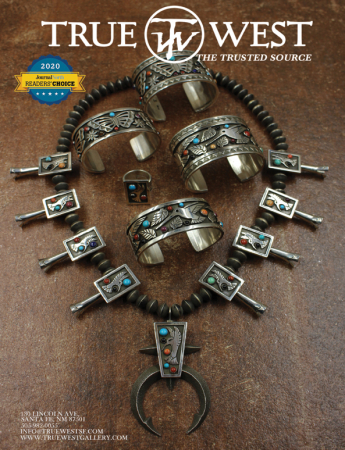
Seeing is believing. That adage becomes strikingly relevant when a visitor stands at an artist’s booth and watches them create something that, up until that very moment, was a complete mystery to them. Seeing it all come together in front of your very eyes is a powerful part of viewing and collecting art, and that tradition will continue, albeit virtually, at the Heard Museum Guild Indian Fair & Market.
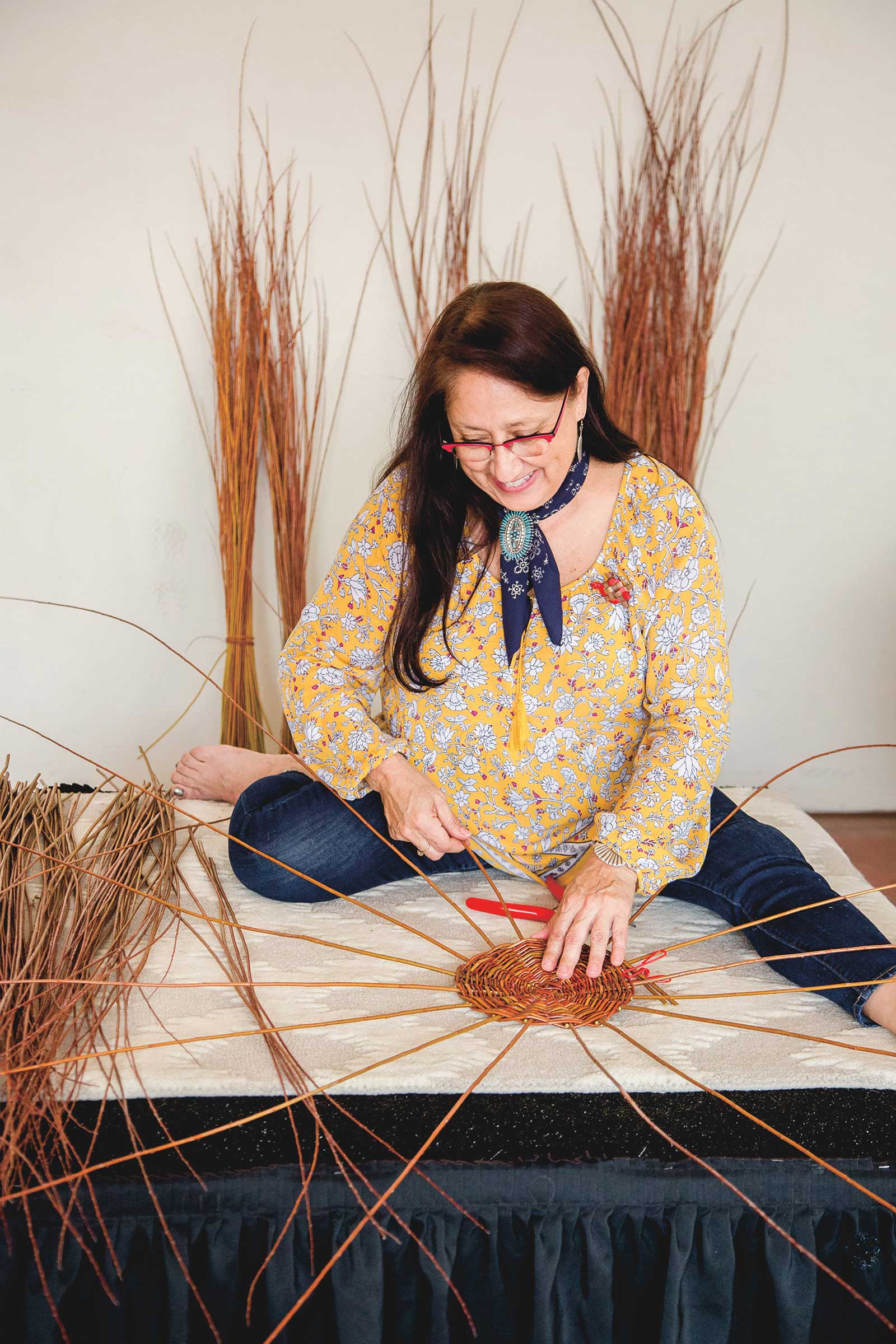 Basketmaker Jilli Oyenque (Ohkay Owingeh) participates as a demonstration artist during the 2019 Heard market.
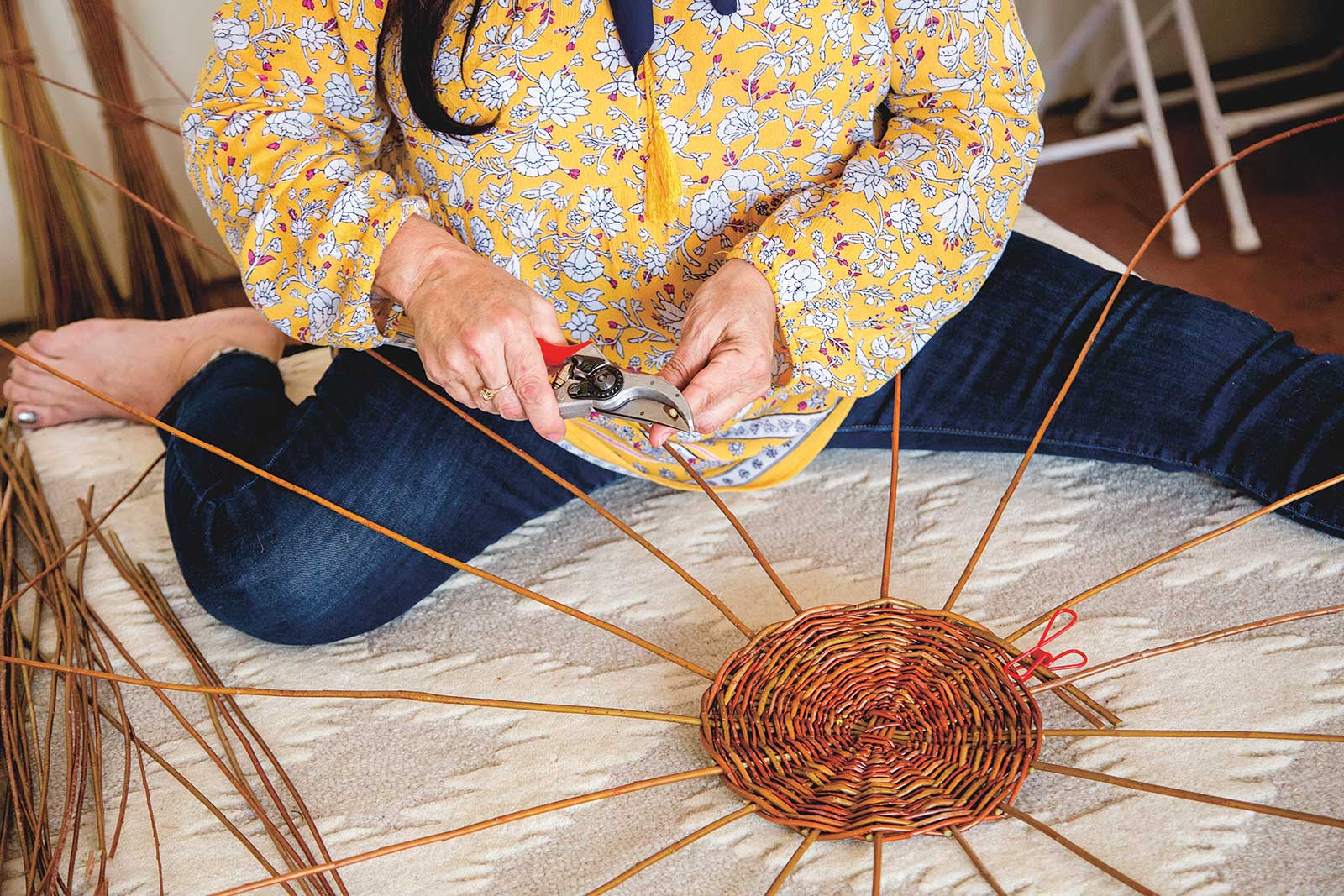 Jilli Oyenque (Ohkay Owingeh) makes a traditional red willow basket in 2019.
Demonstrations at Native American art events have a special significance because the processes and techniques used in much of the art have a personal, historical and cultural relevance to the artists. These are not lessons learned from an art workshop or gleaned from a YouTube video—they are lessons often passed down through many generations or techniques that have been done for centuries by a specific tribe or from a certain region of the country. Basketmaking, for example, is tied to certain areas of the country where desirable plants and fibers are harvested near dry creekbeds or from certain kinds of trees. Pueblo pottery comes from clay pulled from sacred places in New Mexico. Navajo blankets are made with wool from the churro sheep. These artists don’t just learn these aspects of their art; they are often gifted this knowledge from a parent or a teacher. So when a guest watches an artist demonstration, they are seeing the heritage and history of the artist unfolding in front of them.
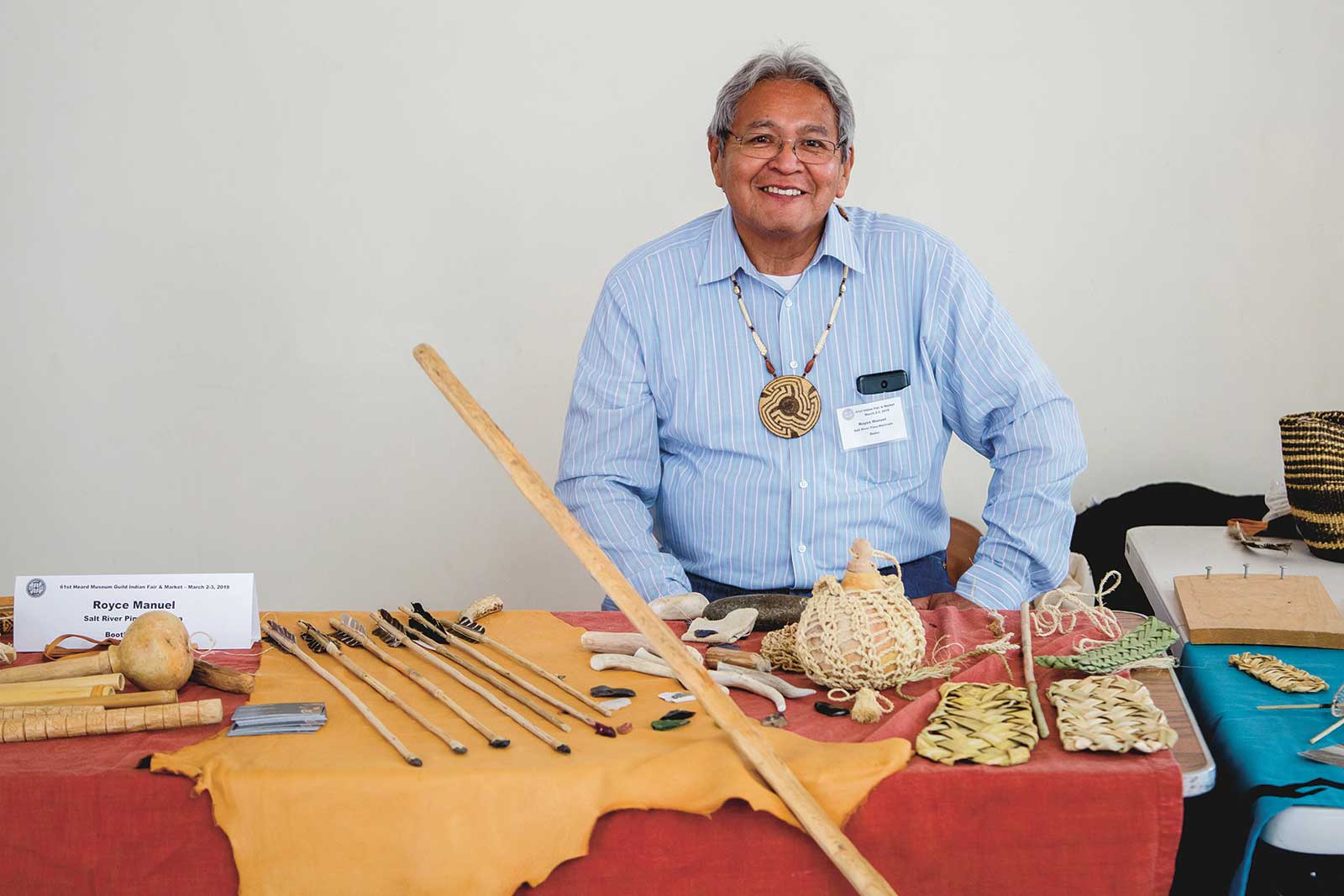 Royce Manuel (Salt River Pima-Maricopa) greets guest behind the materials he uses to make his artwork.
Art demonstrations, like the ones at the Heard, also have another effect: they demystify the artwork. Beadwork, quillwork, weaving, pottery, basket making and other forms of Native American art have processes that are so unfamiliar to visitors that seeing them in person is the only way to properly understand how these fine objects are made. Weaving, for example, is not just threading bits of spun wool through a loom, but also counting a complex pattern, alternating colors and controlling the uniformity of the wool. Seeing this process in person begins to make clear how these works are made, and also how difficult they are to create at a museum-quality level.
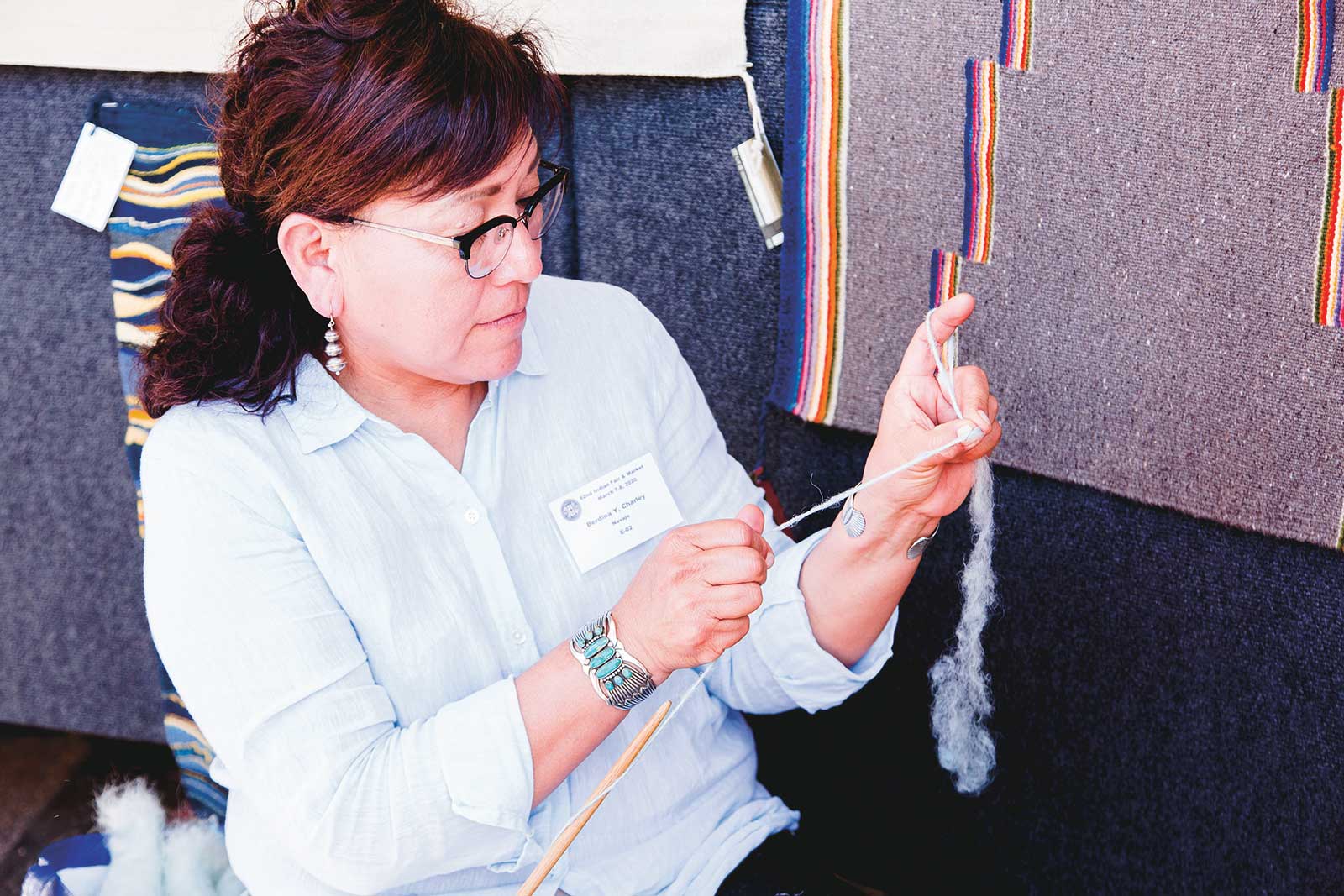 Berdina Charley (Navajo) spins wool at her demonstration booth during the 2020 market.
Another benefit to art demonstrations is the ability to ask artists questions. This is important not just so the collector can come to know and understand the artist, but also because an open dialogue between the collector and the artist is important in preserving the artwork. An artist sells 20 pieces to 20 different collectors and suddenly there are 20 new ambassadors for the artist out in the world, sharing stories they heard while visiting with the creator of the art.
For this year’s virtual market, consider making time to watch and listen to the participating artists. Seeing isn’t just believing, it’s also supporting.
Powered by Froala Editor