All artists juried-in or invited to the 2021 Heard Museum Guild Virtual Indian Fair & Market may enter the Juried Competition. While the art market will be virtual, the juried competition will be live with artists hand-delivering or shipping their submissions to the Heard for judging. Selecting winners based on photographic images of the art seemed untenable given the disparate quality of images and the lack of ability to capture enough detail for close visual analysis.
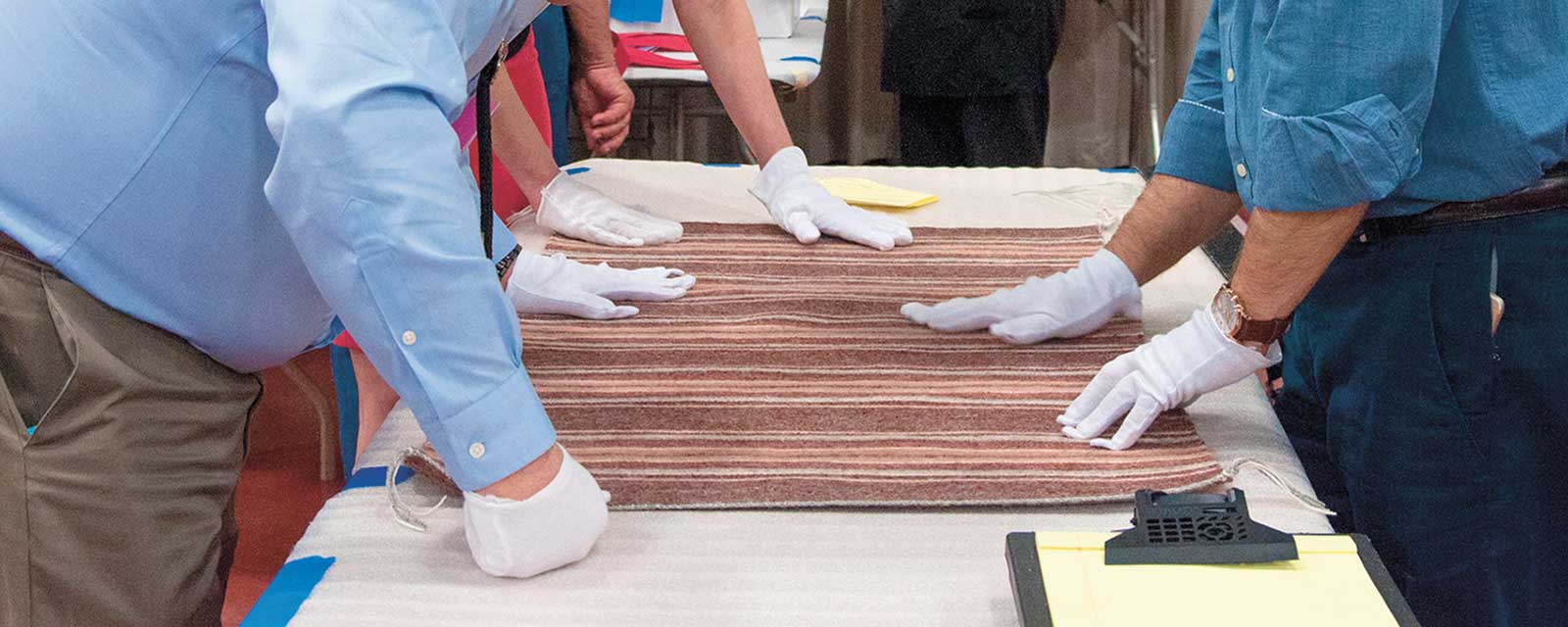
A single panel of judges will select award winners in each of 10 classifications, three specialty awards and the Best of Show Award. The classifications are 2-Dimensional Art, Baskets, Diverse Arts, Jewelry & Lapidary, Open Standards, Personal Attire & Accessories, Pottery, Pueblo Carvings, Sculpture and Weavings & Textiles.
Each classification has multiple divisions with clear standards for entry. For example, there are three divisions in Baskets: Division A—Natural fibers and cultural forms; Division B—Natural or commercial fibers, any form; and Division C—Basket miniatures, not to exceed 3 inches at its greatest dimension. A first and second place award is available for each division in each classification totaling 84 awards. Winners of the first place awards advance to the next round and compete for Best of Classification. The 10 Best of Classification winners advance to the top level and compete for the Best of Show Award. There are also 30 non-cash Honorable Mention ribbons available.
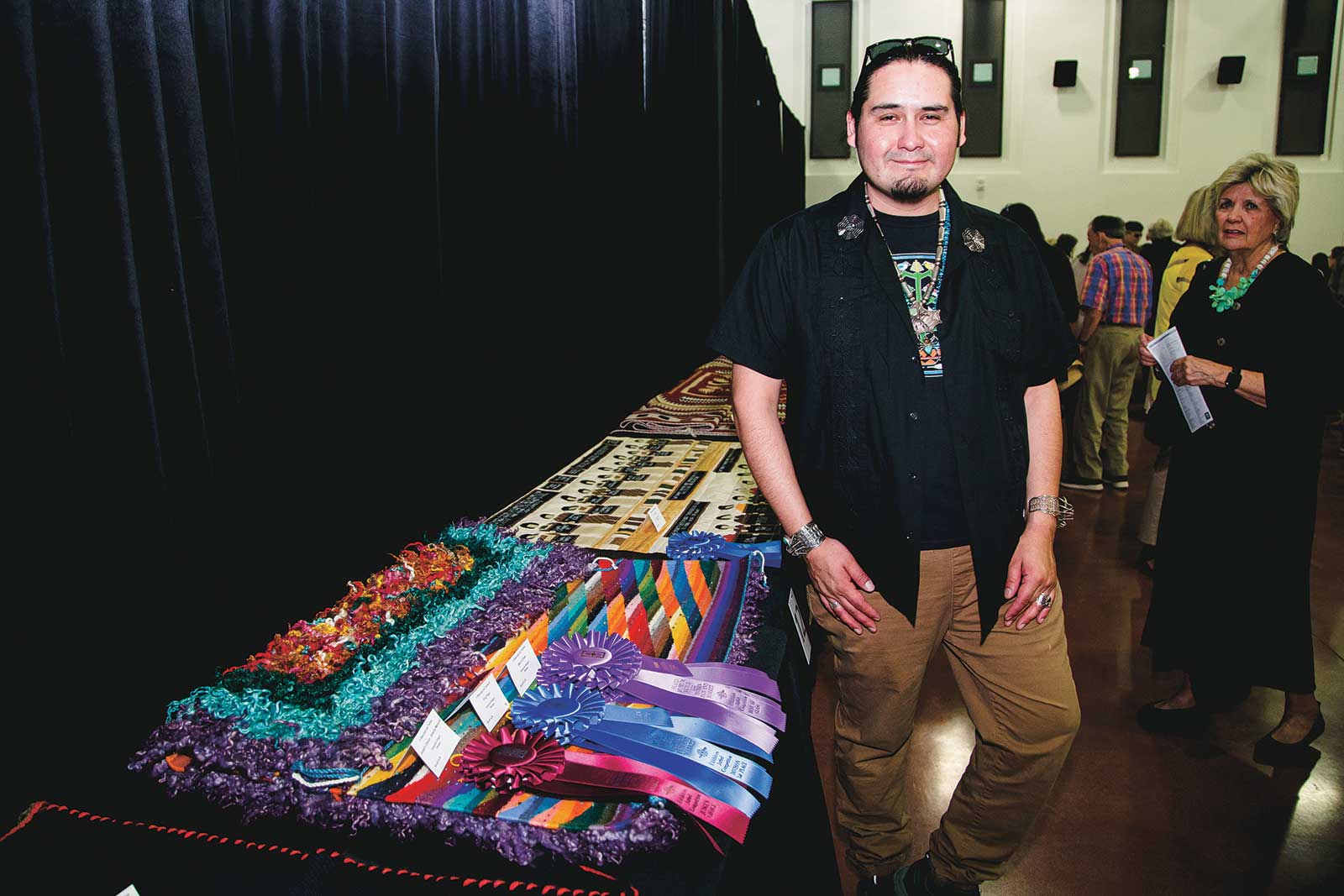
Venancio Aragon, the 2020 Best of Class winner for Weavings & Textiles.
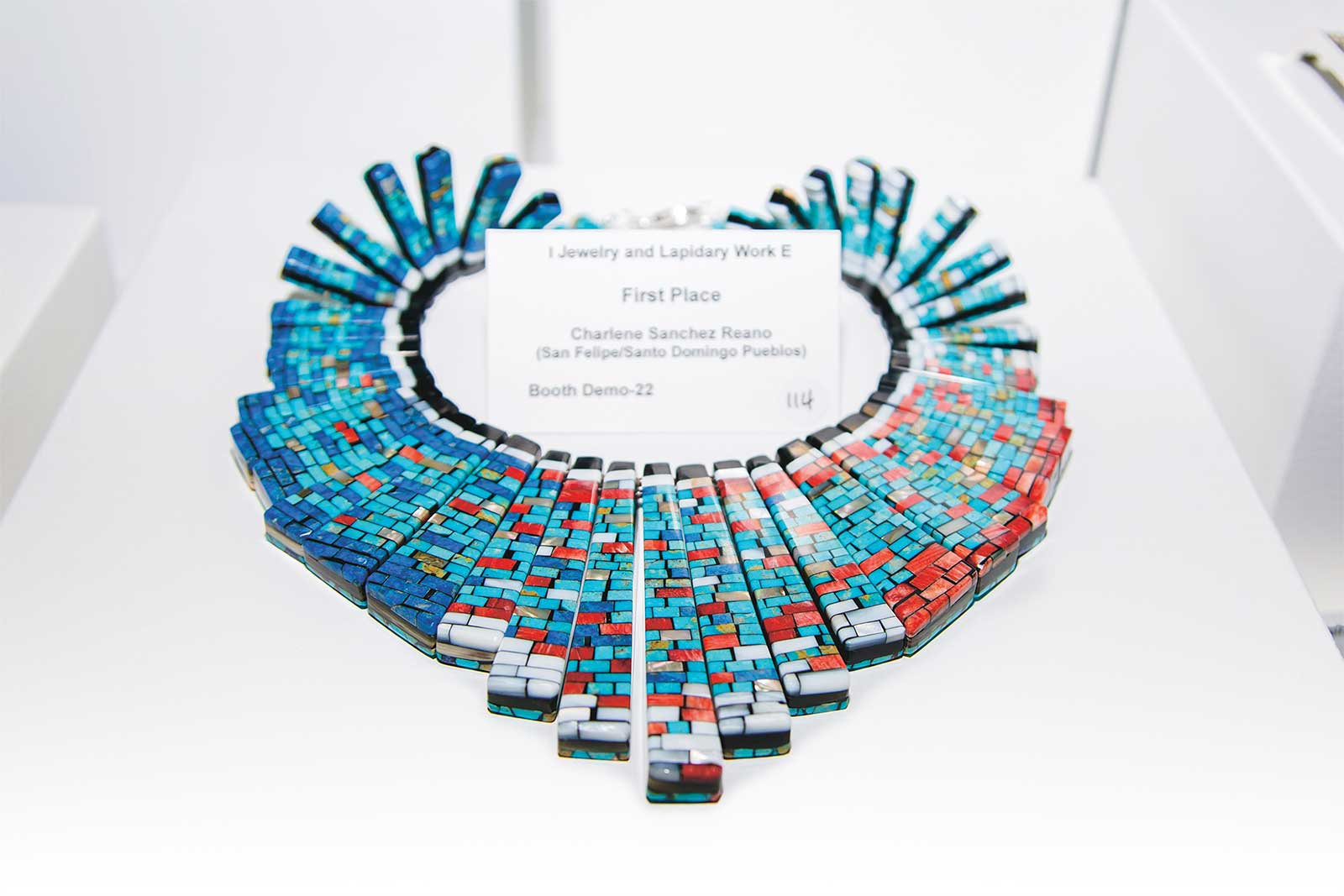
Charlene Sanchez Reano's winning piece in the Jewelry & Lapidary category at the 2020 market.
Open Standards Classification
The winning work challenges and ultimately broadens the public’s understanding of American Indian art. The work defies traditional classifications, and may even be difficult to understand, but leaves little doubt that an artist has successfully made American Indian art about the future.
For example, the standard for the classification baskets, requires that works be made from natural or commercial fiber. A basket made from soda cans violates that standard, thus qualifying for Open Standards. All artists invited or juried-in to the Indian Fair & Market in any of the other nine classifications may submit an entry into Open Standards at the juried competition. The winner of this award is eligible for the Best of Show Award.
Conrad House Innovation Award
The mission of the Heard Museum is to advance American Indian art. The Conrad House Innovation Award is given to a work of art that in both concept and quality of execution serves to advance an American Indian art form.
Each of the winners of the nine Innovation Awards compete for this award, which is on par with a Best of Classification Award. The winner competes for Best of Show.
Idyllwild Arts Imagination Award
Sponsored by Idyllwild Arts Foundation - Native American Arts Program & Festival, the winning work expresses the unique vision and imagination of the artist in addressing issues of importance to Indigenous communities. The spectrum of the “imagination” includes concept and/or use of materials and may defy traditional classification. All art entered in the Juried Competition is automatically considered for this award.
Indian Arts and Crafts Association Commemorative Award
Funded by the IACA upon the organization’s dissolution, the recipient of the award best exemplifies any or all of these facets: 1. An artistic reference that acknowledges and educates viewers about cultural tradition, authenticity, or the history of American Indians, either through subject matter or execution. 2. What Native Identity means, currently and in the future, and 3. Cultural Appropriation, including the inappropriate use of Native imagery and symbols as well as the fraudulent imitation, production and marketing of American Indian arts and crafts by non-Native people.
The prize pool totals $76,150 for 103 ribbons, including a $15,000 Best of Show prize sponsored by Howard R. & Joy M. Berlin, Kristine & Leland W. Peterson and the Head Family. Leland W. Peterson is a member of the Heard Museum Board of Trustees. Howard R. Berlin is a Life Trustee of the Heard Museum. The Heads are museum members from Minneapolis. The Guild thanks the Berlins, Petersons and Heads for their generous support of the Indian Fair & Market and our outstanding artists.
Judges
Judges are invited from a wide variety of fields and have in-depth experience in judging artwork. Judges may include experienced American Indian artists, curators, gallery directors, educators and collectors. Given the smaller number of participating artists, the Guild’s Juried Competition committee, with advisement from David Roche, Heard Museum director, and curatorial staff, selected a single panel of judges who will judge all submissions. The team will include:
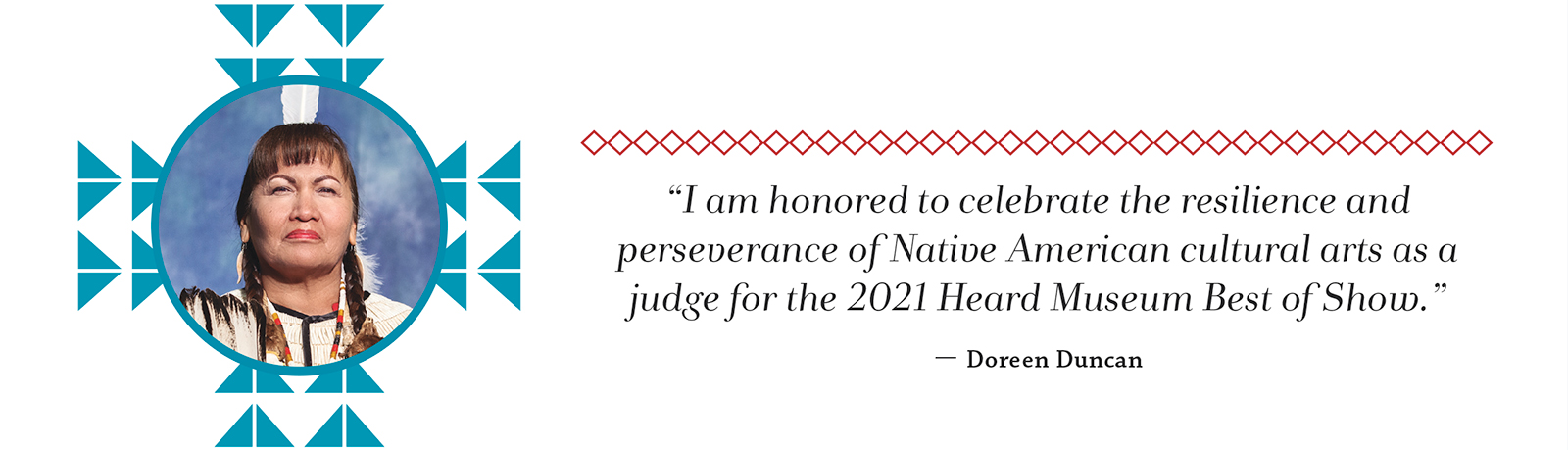
Doreen Duncan
Duncan is a member of the Mandan, Hidatsa and Arikara Nation, North Dakota, and is a matriarch, educator, entrepreneur and ambassador of Native American culture. Within all these roles and throughout her diverse life’s experiences, she continues to achieve her passion to promote a positive and accurate image of Native American people. A graduate of the Institute of American Indian Arts and Arizona State University, she manages Yellow Bird Productions, a Native family-based performing arts group. She has worked in educational programs at the Heard and as the director of the Huhugam Ki Museum for the Salt River Pima-Maricopa Indian Community, most recently as an international cultural ambassador for the U.S. State Department.
Larry Golsh
Golsh (Pala Mission and Cherokee) is a jeweler, sculptor and architectural designer whose work has won international acclaim. His jewelry is exclusively designed, entirely hand fabricated and crafted with the rich color of high-karat gold, silver and rare stones. He is best known for his tufa-cast jewelry and his use of gold. He often uses diamonds and other precious stones in conjunction with traditional cultural techniques resulting in abstract sculptural pieces that are innovative yet possess a timeless quality. He apprenticed with architect Paolo Soleri, worked with French jeweler Pierre Touraine and was the first Native American to study at the Gemological Institute of America.
Charles King
King, who began collecting Native pottery in high school, opened King Galleries in Santa Fe, New Mexico, and Scottsdale, Arizona, in 1996. The galleries feature classic and contemporary Native American art, specializing in clay art from 1920 to the present, along with paintings and bronzes. King is the author of four books about Native pottery. He has served as a judge at the Santa Fe Indian Market, the Heard Museum Guild Indian Fair & Market and Gallup Ceremonials. He has given numerous talks on Pueblo pottery, worked on pottery exhibitions and advised on the authentication of work by historic Pueblo artists at various museums.
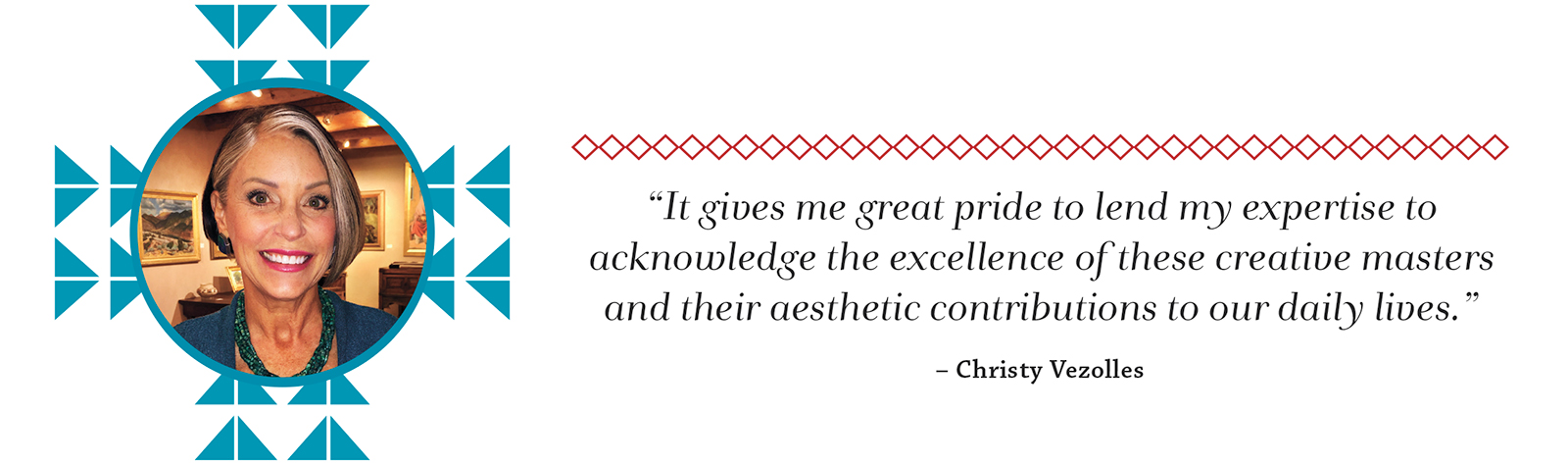
Christy Vezolles
Vezolles, of French, German, British and Shawnee heritage, is a Heard Museum Trustee, art enthusiast, appraiser, collector, writer and creator. She taught studio arts and graphic design at Sinclair Community College and the University of Dayton. She currently serves on national advisory boards of the Eiteljorg Museum of American Indians and Western Art and the Gilcrease Museum.
Powered by Froala Editor