After 62 years of a sea of white tents filled with art, artists and collectors spread across the beautiful Heard Museum campus once a year, the Heard Museum Guild faced a tough decision. Do we plan for a live Indian Fair & Market in 2021 or go virtual?
The Heard Fair had been one of the last shows in town in March 2020 when there was only one confirmed case of COVID-19 in Arizona. By summer, Arizona was a hotspot for COVID cases and the normal July opening date for applications was approaching. Reputable scientific models were predicting a rough winter and, best case, vaccine-driven herd immunity not until late spring or summer or maybe not until fall 2021. In addition, many of the artists, volunteers and collectors are members of two highly vulnerable populations, American Indians and seniors. Would the pandemic be over by March 2021? Would a vaccine be available? If so, would enough people be inoculated for the safe gathering of thousands of people?
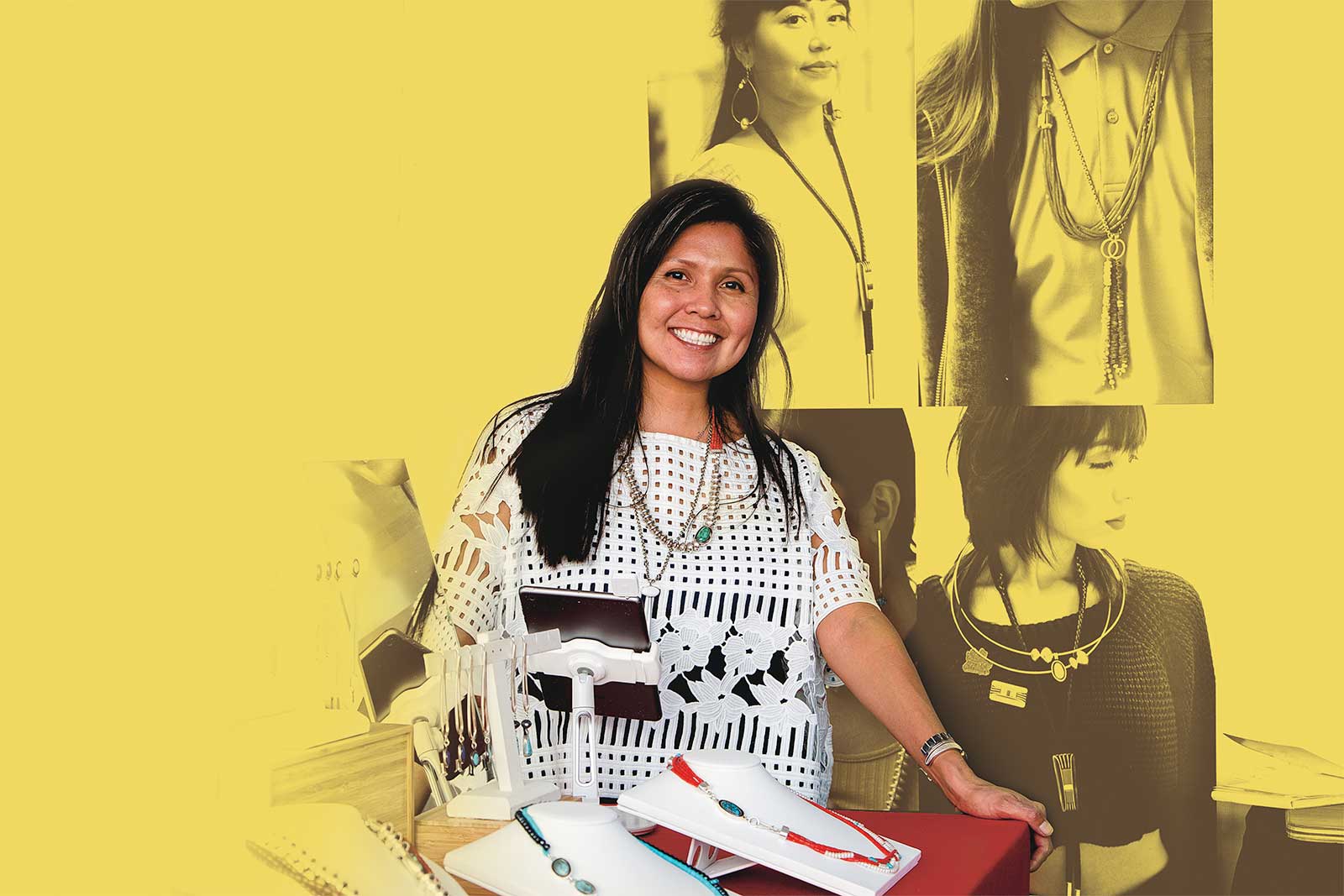 Navajo jewelry artist Nanibaa Beck.
We explored the possibility of hosting a scaled down version with fewer booths, a maximum number of people onsite at any given time with social distancing, required mask-wearing and plenty of hand sanitizing stations—a logistical nightmare.
The decision was made. Let’s go virtual! Now, how do we do that?
The Indian Fair and Market has always showcased the beauty and vitality of Indigenous creative expression from artists across Indian Country. While this year will be no exception, some artists have opted out of participating in virtual events for a variety of reasons. American Indian Tribes have been disproportionately impacted by the pandemic both health-wise and economically. Many have experienced high rates of COVID-19, most notably the Navajo Nation. Tribal governments and members have been devastated economically with shutdowns of tribal enterprises, like tourism and gaming, which represent a significant portion of revenue.
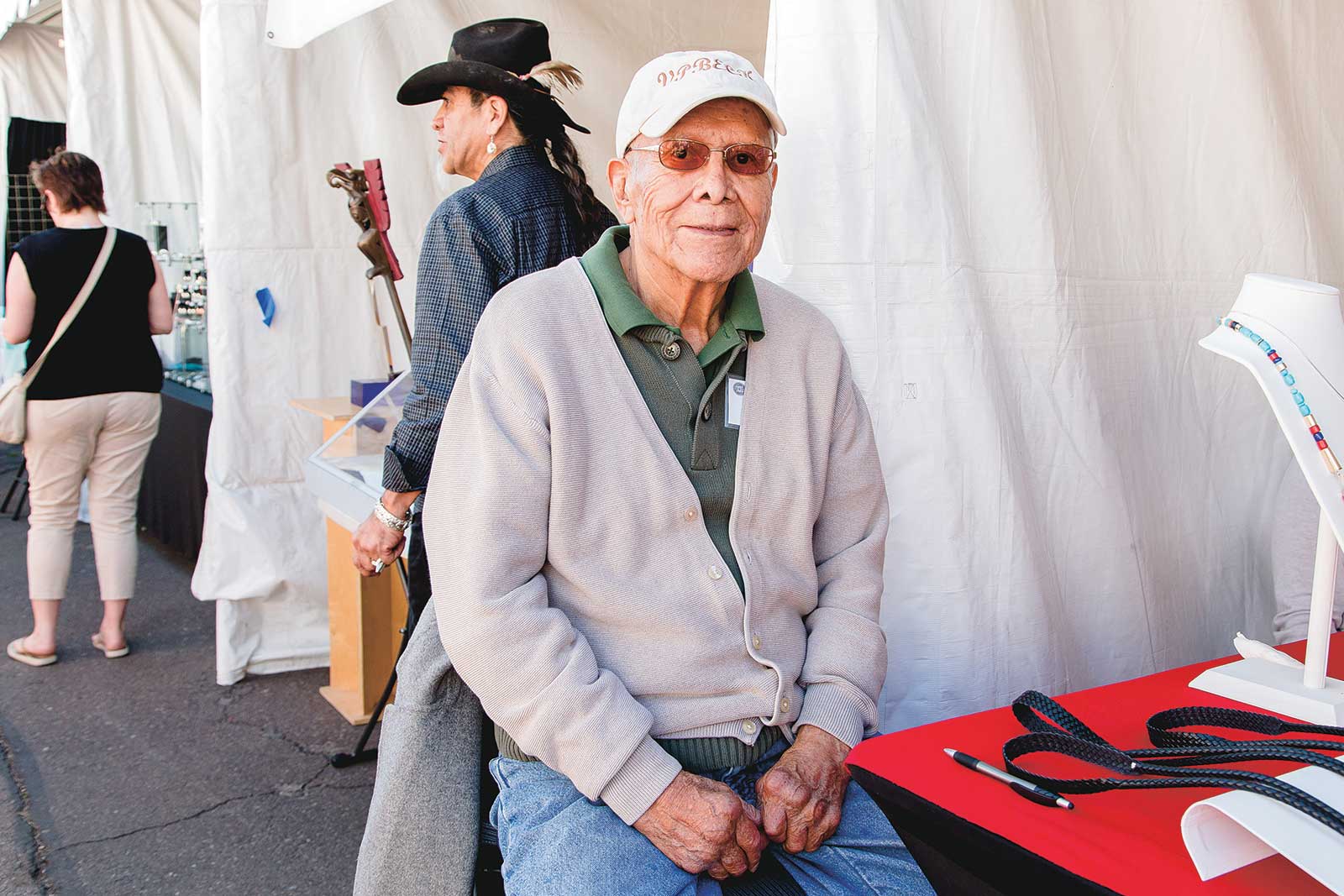 Navajo jeweler Victor Beck in the booth he shared with daughter, Nanibaa, during the 2020 Heard Museum Guild Indian Fair & Market.
For both event organizers and artists, especially Elders and those living in remote areas with limited or no broadband access, the requirements for participating in a virtual market present a steep learning curve. The Abbe Museum in Bar Harbor, Maine, was the first to take their Indian Art Market virtual in May, followed by SWAIA with the Santa Fe Indian Market in August and then again with their Winter Market in December, the Autry in November and Cherokee Art Market in December. While each organization has done things a little differently, with each learning from the previous ones, the goal and focus has been the same: create a virtual venue for Indigenous artists and market to as wide an audience as possible to support Indigenous arts and cultures.
For those artists with broadband access, the challenges range from designing, managing and paying for a website, shooting high-quality, high-resolution images and uploading them to a website, managing customer inquiries, developing and maintaining relationships to filling orders, setting up a payment process and finally packing, insuring and shipping art. Each of these presents a hurdle that some artists, especially the Elders, cannot overcome. And, while they are doing all of this, they need to continue creating art. During a pandemic.
Navajo jeweler Nanibaa Beck says she sees the impact of the switch from live art markets to virtual on her father, Victor Beck, Sr., an accomplished silversmith whose jewelry is considered contemporary in style, though his influence stems from his traditional Diné culture and life. Beck says, “He is from a different generation. He is not into social media. He is a very in-person person so not being able to go to the Heard or SWAIA is hard on him. The new way also does not translate well with his creative flow. He likes to have a hard deadline for a show. Now with a steady stream of orders coming in online, he has had to adjust so that his creations flow throughout the year.”
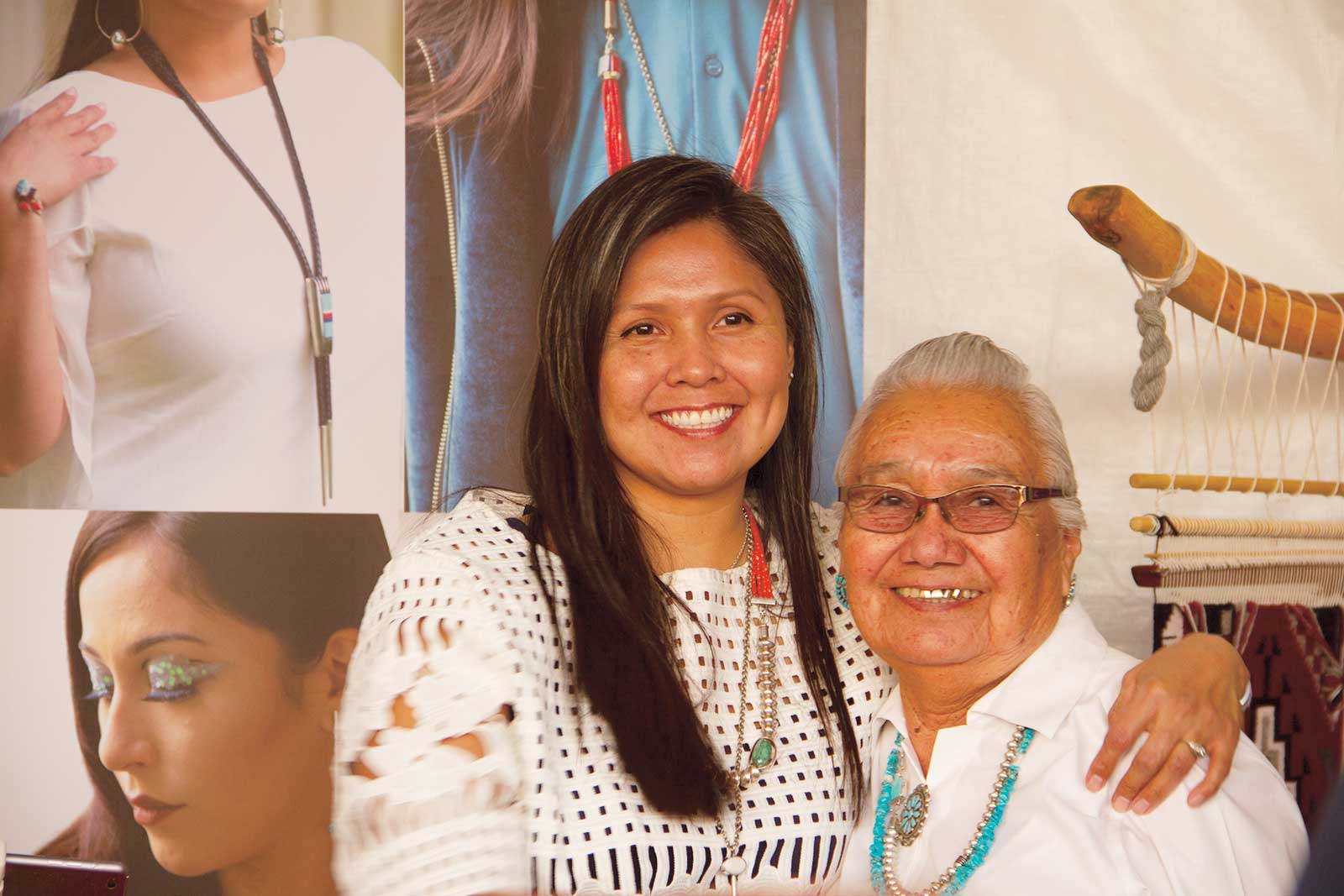 Nanibaa Beck and her grandmother, Rena Begaye.
No matter the generation, everyone is adjusting and adapting if they want to function in the virtual world. According to Beck, “It is a learning process. I’ve had to hold back on being a perfectionist. I’ve signed up for a tutorial on how to host videos on YouTube. I’m renovating my house to accommodate a studio for me and my father…I’m including dedicated space for live-streaming and photo shoots. Long-held marketing techniques no longer work. I am looking forward to when my father and I have the capability to do live streaming so that we can tell our family and individual stories.”
Of the artists, collectors and museum members who are not well-versed in social media and do not buy or sell online, some are interested, but hesitant. Others have no interest in learning or do not see the possibilities for buying and selling art online. These same issues are true for the wider art world from Art Basel Hong Kong to the Biennale of Sydney. Those who make and sell art cannot afford to wait for things to go back to normal and many do not think things will ever go back to exactly the way they were before. At all levels, event organizers, gallerists, museums and artists are learning and adapting. It is expected that hybrid models, a combination of live and virtual events, will be the post-pandemic norm.
Navajo weaver Zefren Anderson says, “Each virtual market is a new market. It is like my first Indian market. Each has unique challenges. Totally untested waters with new customers. At a live market, my sales are mostly impulse buys based on my story. For a virtual market, it is all visual eye candy—displays and photography. I can’t be there to tell my story, so I lose the impulse buys.”
Beck adds, “The discussion about the generational digital divide has been in the background for a long time, but 2020 made it readily apparent.” Anderson concurs, “The contrast is striking between Elders who barely have a land line at home and the up-and-coming artists taking advantage of all the technology. Event organizers need to find a way to make the markets fair for both groups.”
Elders like Beck’s grandmother, weaver Rena Begaye, who sell a few pieces a year now have no way to get their pieces out because they do not use social media. While family has always been important, family connections and assistance are critical to help Elders get their art out. Beck lives six hours from her grandmother, so she has to figure out who lives close by, who can take pictures, who is willing to take pictures and who can take detailed pictures of the rugs.
Beck says, “My first piece of advice, from clay sculpture artist Randy Chitto, was to send out newsletters. Put out some effort! Utilize social media. Think about how people like to connect. Is it by email or social media or snail mail? Should you be collecting emails or physical addresses or both?”
Some artists with internet access do not have websites; instead, they have a Facebook page and/or an Instagram account from which they share their process and creations with the world. Knowing their customer base as well as their need, interest and ability in expanding that base influences their choice of social media. Inupiaq Eskimo sculptor Mark Tetpon explains why he does not need a website: “I don’t really have to look for someone to buy my artwork. I usually get orders from Alaska Native corporations, local oil and gas companies, state and municipalities, so I never have anything on hand…A lot of other artists struggle to make sales and I wish I could give them pointers, but the reason I have a lot of clients is that I have been doing this for about 25 years and have built my customer base up and try my best to keep them happy.”
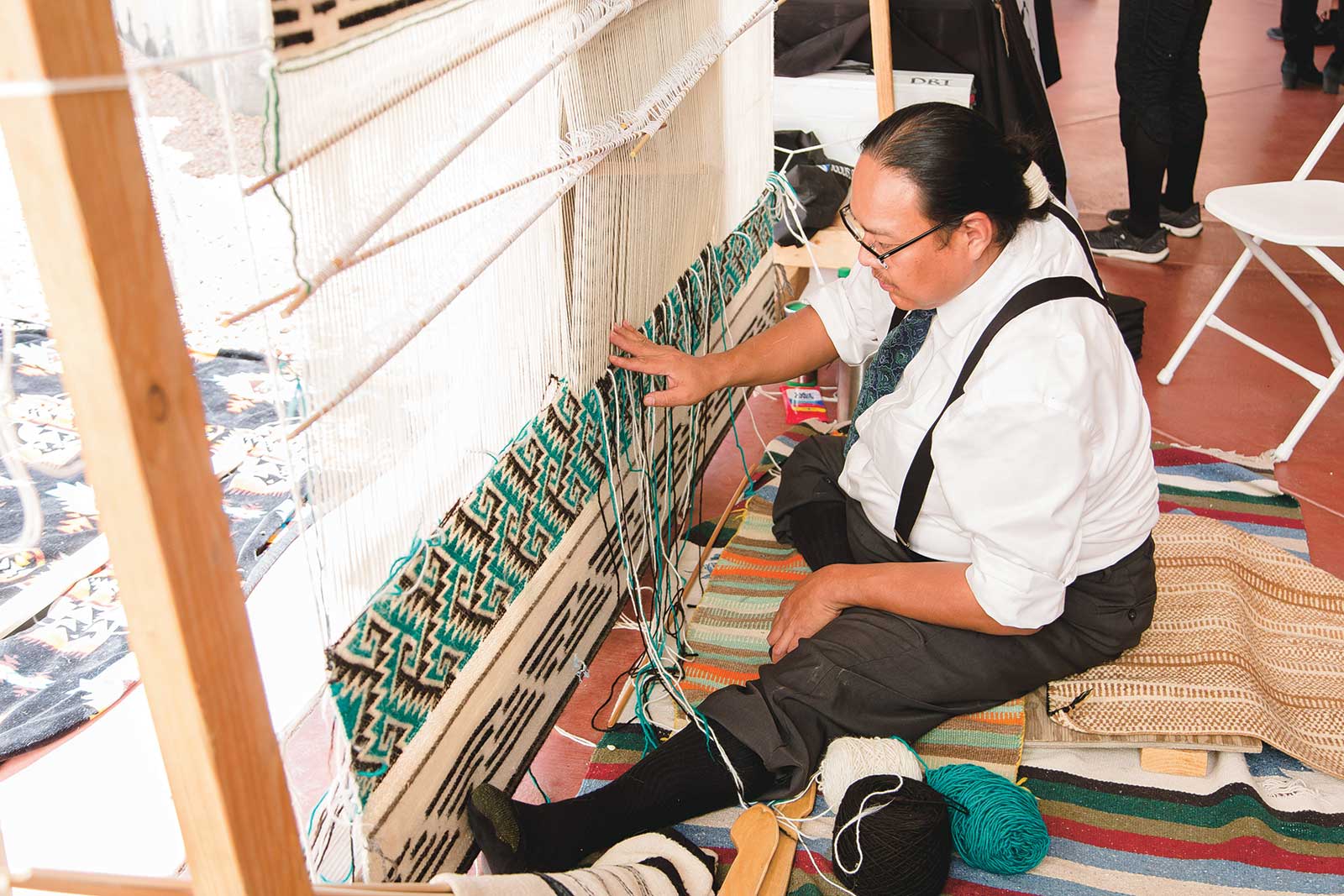 Ephraim “Zefren” Anderson (Navajo), 2019 winner of the Heard’s Best of Show award and Best of Classification, Weavings & Textiles.
Other artists have both an Instagram account and a website, giving them greater online exposure and a greater opportunity to tell their stories in the moment on Instagram. Award-winning Chemeheuvi photographer Cara Romero, has both an Instagram account and a website. Collectors who are unfamiliar with Instagram are missing an opportunity to see, if not hear, the artists’ stories and see images of the artists’, their art and their lives. While it may not replace a long chat at a booth, it is an opportunity to develop a deeper connection with an artist.
Anderson says, “Stories sell my weavings. When I can tell people about the techniques I used and their historical significance, it encourages impulse buying. That doesn’t happen when a customer clicks through images of rugs.”
Some artists have no social media presence—no Facebook page, no Instagram account, no website. Participating in virtual events is challenging for these artists and the event organizers. The Southwestern Indian Arts Association (SWAIA) had the resources to offer these artists a website through Art Span for the Santa Fe Indian Market. The Heard will host them on the event website with a landing page featuring several images of their art and contact information, usually a phone number.
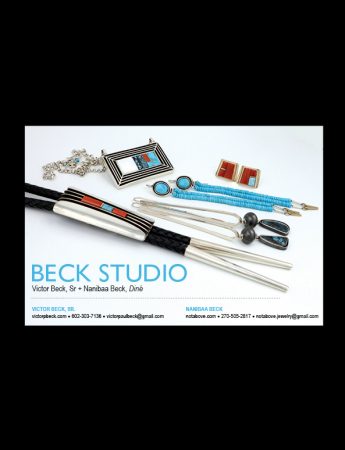
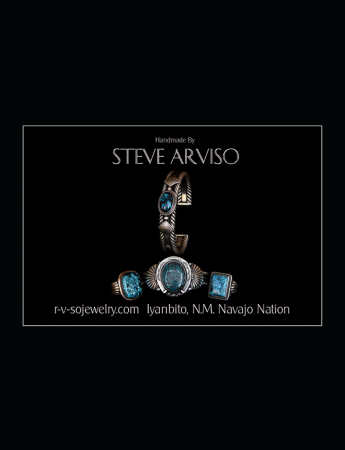
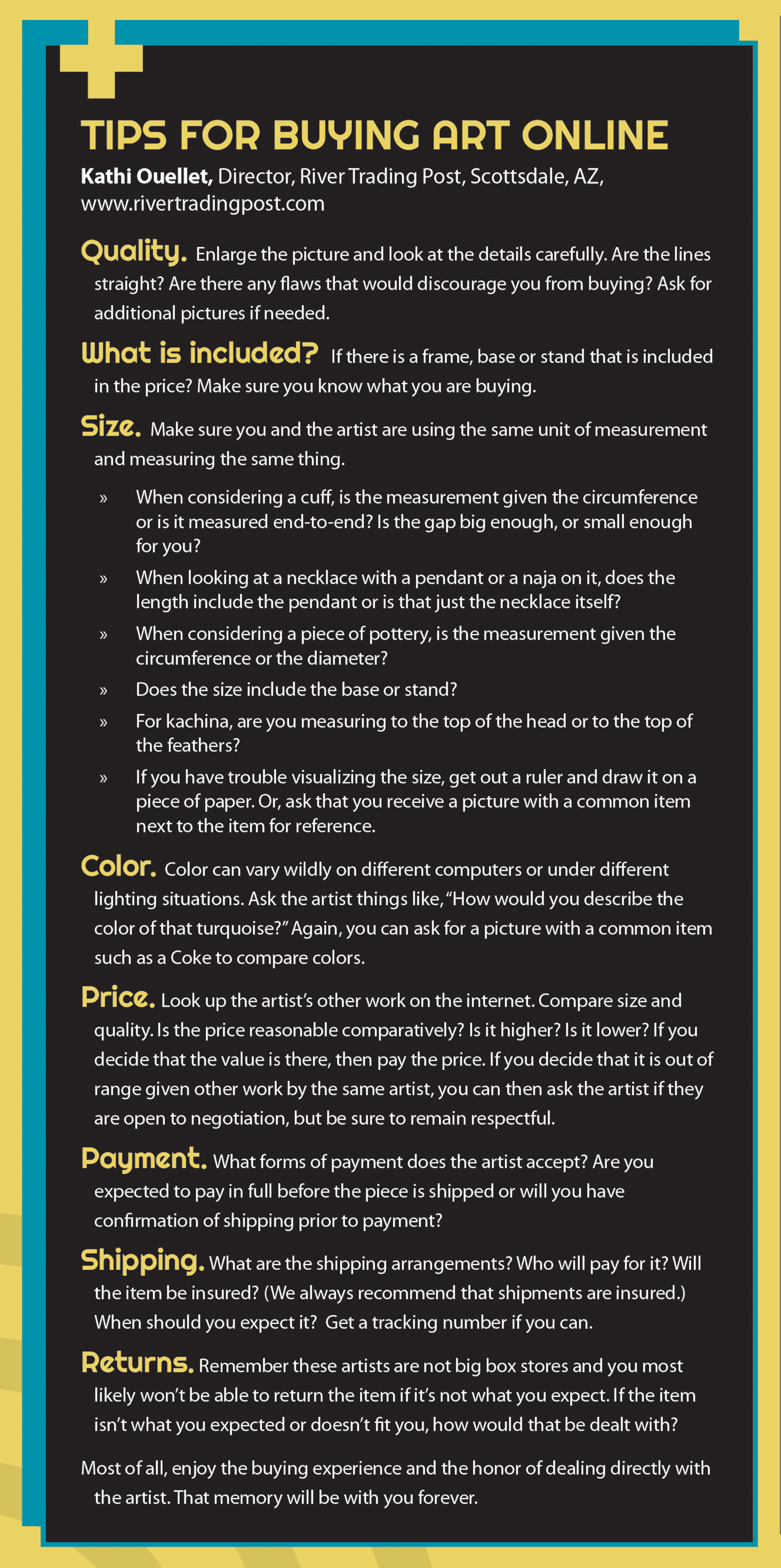
Some media is more amenable to online sales and shipping. For example, it is relatively easy for jewelers or fashion designers to display and describe their designs, materials, composition and techniques online and for customers to confidently purchase and expect to receive items undamaged. Other media, however, may be more difficult to capture detail or scale or color photographically for buyers to make a decision, or too large, heavy or fragile for easy or inexpensive packing, insuring or shipping.
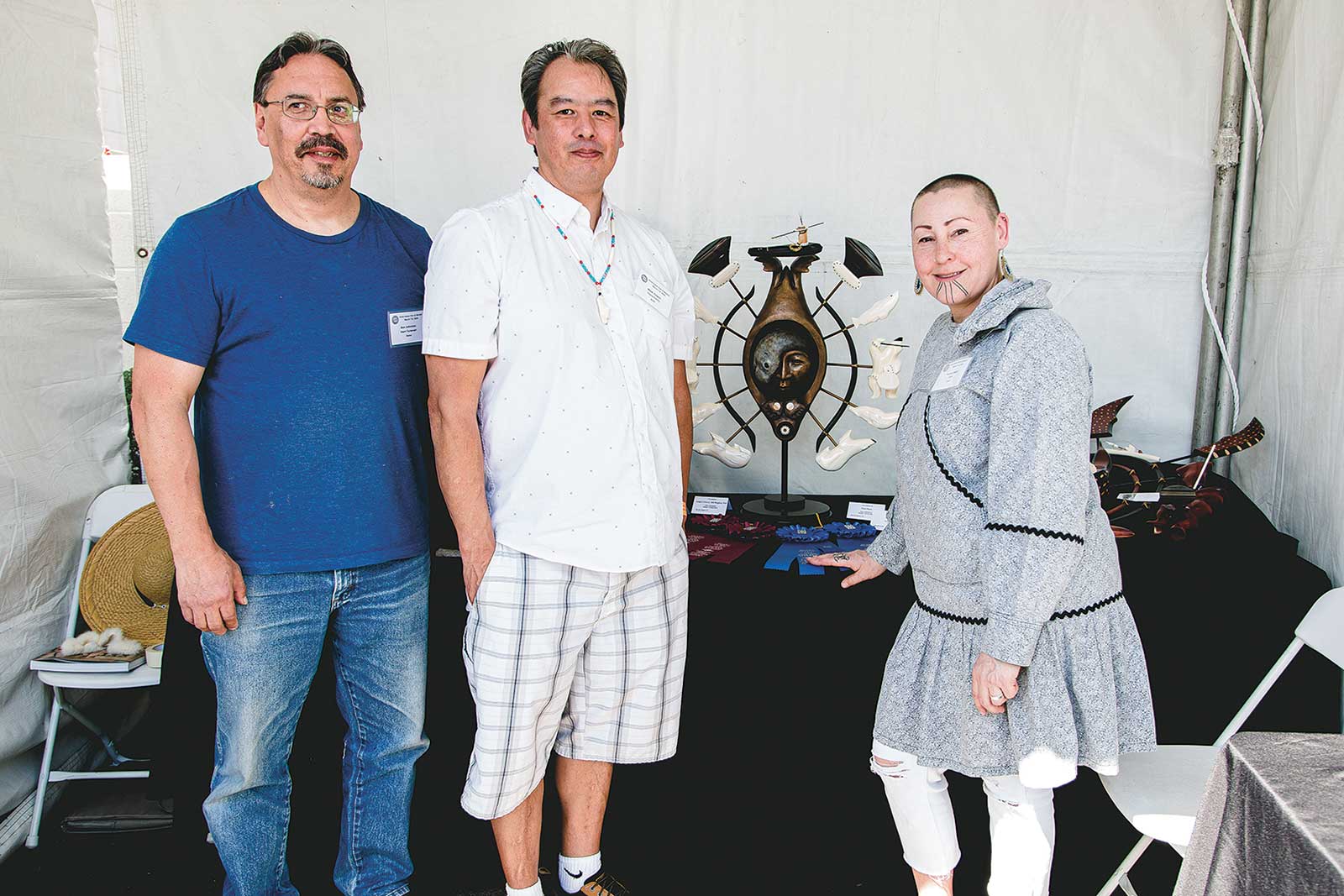 Inupiaq Eskimo artist Mark Tetpon (center) with Don Johnston (Qagan Tayagungin) and Terresa White (Yu’pik) with their First Place, Sculpture-Bronze, Seal Visions Shared Spirit at the 2020 Heard Museum Guild Indian Fair & Market.
The challenge for event organizers is how to make the event fair for both groups of artists—the Elders and the up-and-coming, tech-savvy. This can be a challenge in any year given the finite number of booths available on the Heard campus. With a virtual market, there are, theoretically, an unlimited number of booths except the group of the artists who lack broadband accessibility and do not have the technological capability to participate, and are effectively shutout. The question becomes, how do we bridge the digital divide? There is no easy answer.
Will we ever go back to large, live art markets? Some artists will capitalize on all the opportunities of social media and e-commerce and may never return to art markets even if they could. The Elders are the most vulnerable no matter what the future holds. Assuming we can host a live event in 2022, who will return? Will some of the Elders decide that the days of traveling to markets is over? Will some of the artists participating in the Heard Fair for the first time apply to a live event? Or will the cost of participation be too high? The first week of March is peak tourist season in Arizona with high hotel rates. Combine transportation, food and lodging costs with application and booth fees and the risks of participating may outweigh the hoped-for sales and the personal enjoyment of seeing people. How many pairs of earrings or paintings do you have to sell just to recoup participation costs? If those same sales can be made online, is there any reason to participate in live art markets? Only time will tell.
While taking the Indian Fair & Market virtual was certainly never on the horizon for the Guild, we made the decision that we would make this happen for the artists who have supported the Heard Indian Fair & Market for generations. For Anderson, “It’s all about building a community.” Beck concurs, “It is all about passion and family network and community building.” For the Heard Museum Guild, it is also about community as we learn, adapt and transition our community to a virtual world.
Powered by Froala Editor