Beginning March 20 at the Wheelwright Museum of the American Indian, Indigenous Women: Border Matters asks visitors to stop for a moment and truly consider the immense challenges of border issues between the United States and Mexico. The exhibition provides a lens through which to examine various issues through the artwork of four women artists who speak to issues on both sides of the U.S.-Mexico border. The work of each artist—Native American multi-disciplinary artist Makaye Lewis (Tohono O’odham), as well as Daisy Quezada Ureña (Mexican-American), M. Jenea Sanchez (Latinx) and Gabriela Muñoz (Latinx)—explores current issues surrounding identity, self-determination and human rights.
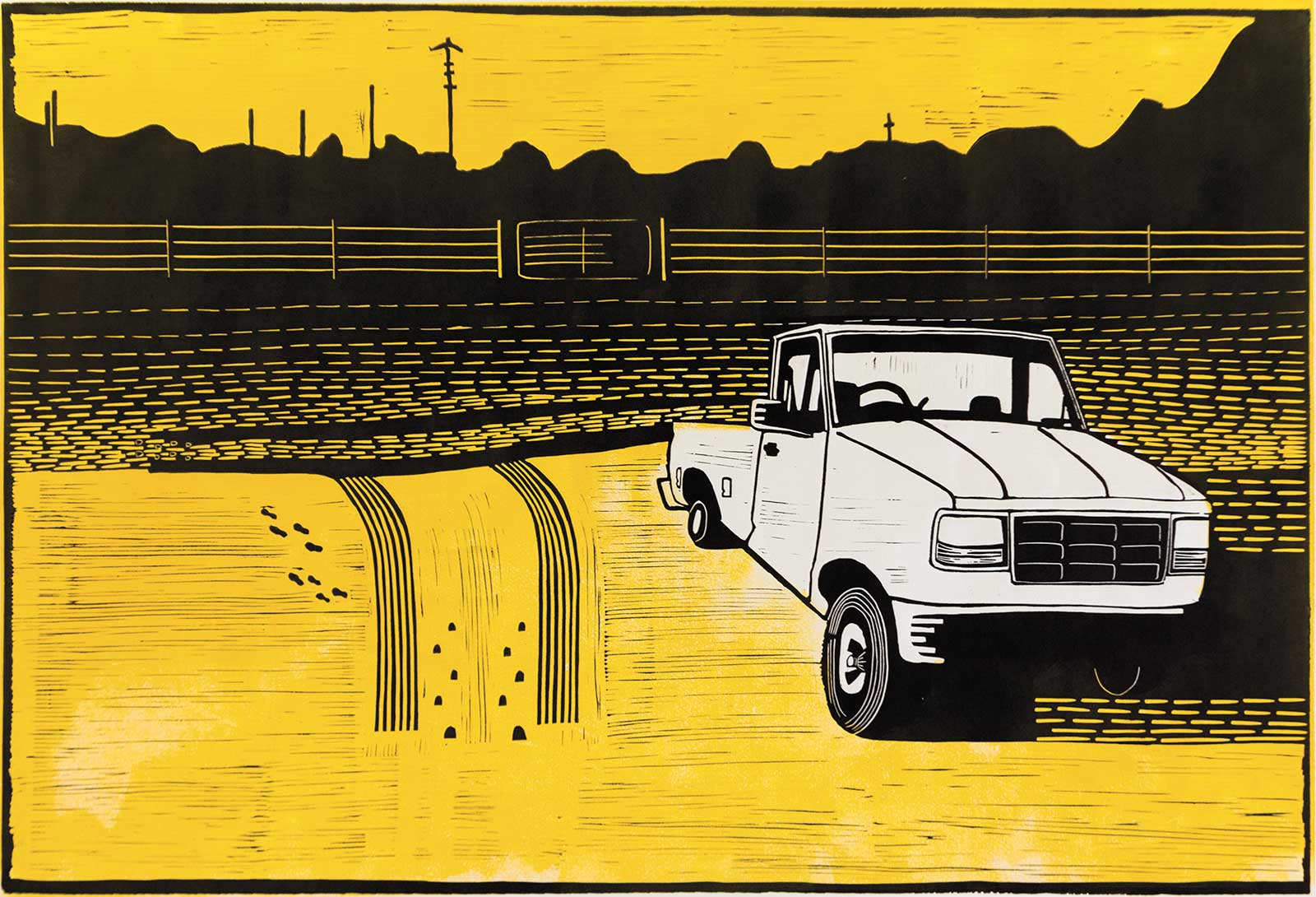 Makaye Lewis (Tohono O’odham), Waking up to Our Car Missing, monotype and linocut, 24 x 36”. Loan from the artist.
“Indigenous Women: Border Matters reveals the perspective of Indigenous women regarding the challenges and implications of the border between the United States and Mexico. The exhibition provides a glimpse of those who exist, thrive, survive and also suffer the realities of border life,” says Andrea R. Hanley, chief curator at the Wheelwright Museum.
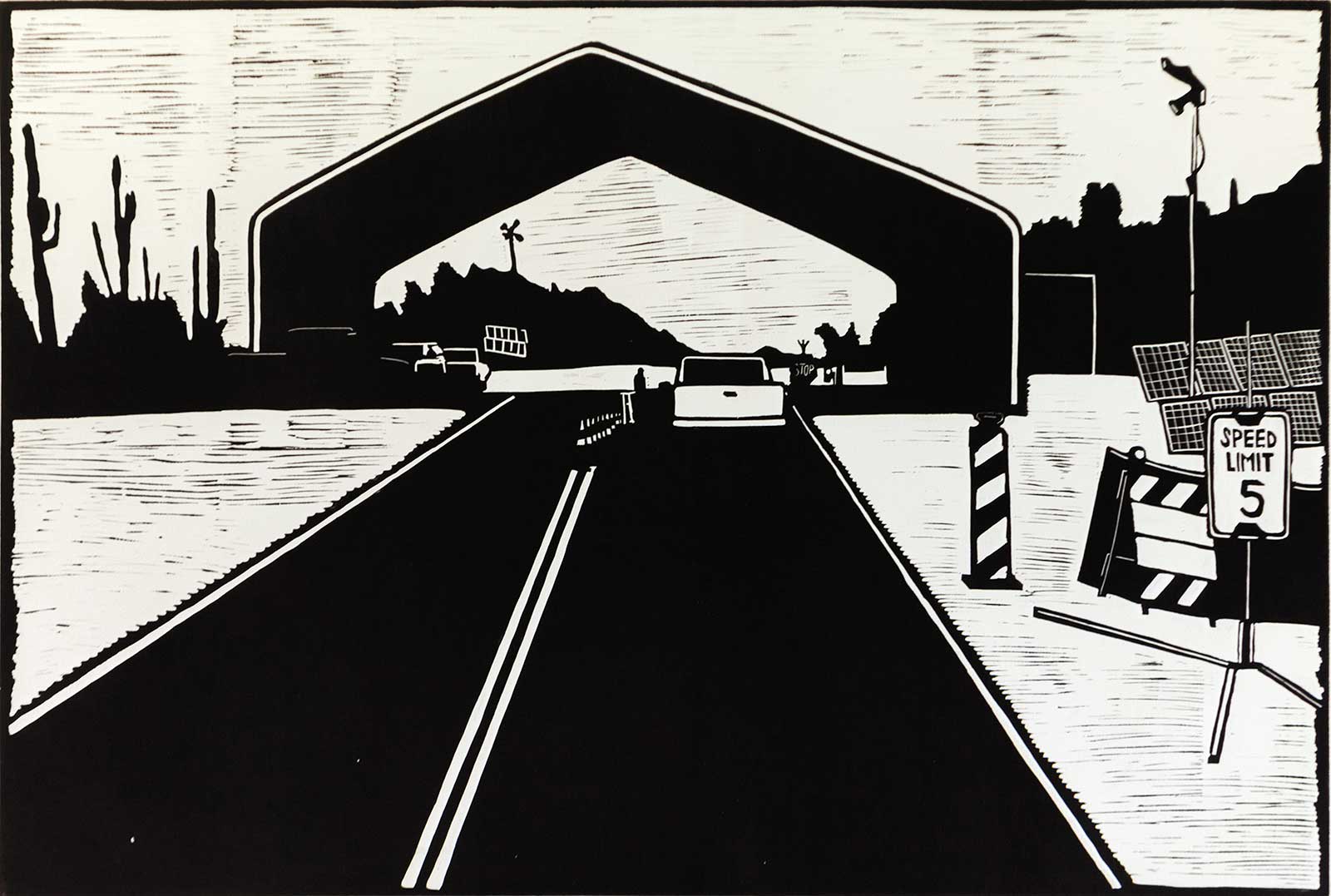 Makaye Lewis (Tohono O’odham), Checkpoints: Now and Forever?, linocut, 24 x 36”. Loan from the artist.
Lewis’ Tohono O’odham heritage and people continuously influence her work. The artist’s monotype and linocut works are high-contrast scenes, placing bright yellows or oranges against, in many cases, pure black. “The work I have in this exhibition was a part of my senior thesis work revolving around me and my family’s personal experiences living in the borderlands. We are from the Tohono O’odham Nation in Southern Arizona and our traditional lands extend below the international border, which harbors many problems, two of which I address in my work: migrants and the Border Patrol. The presence of both these entities have played a crucial part in my childhood and has made a significant impact on my life,” says Lewis.
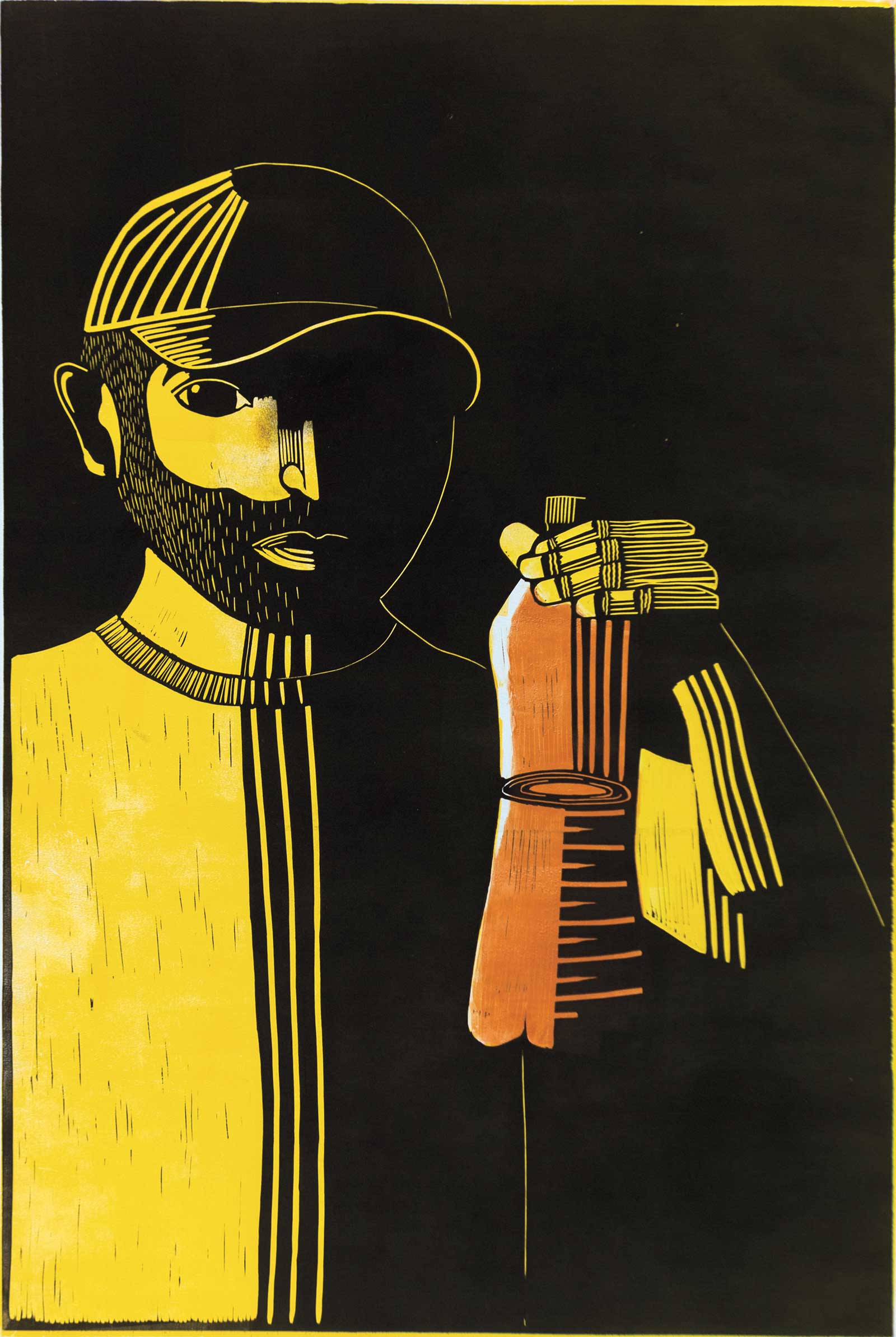 Makaye Lewis (Tohono O’odham), This Was All We Could Find to Drink, monotype and linocut, 24 x 36”. Loan from the artist.
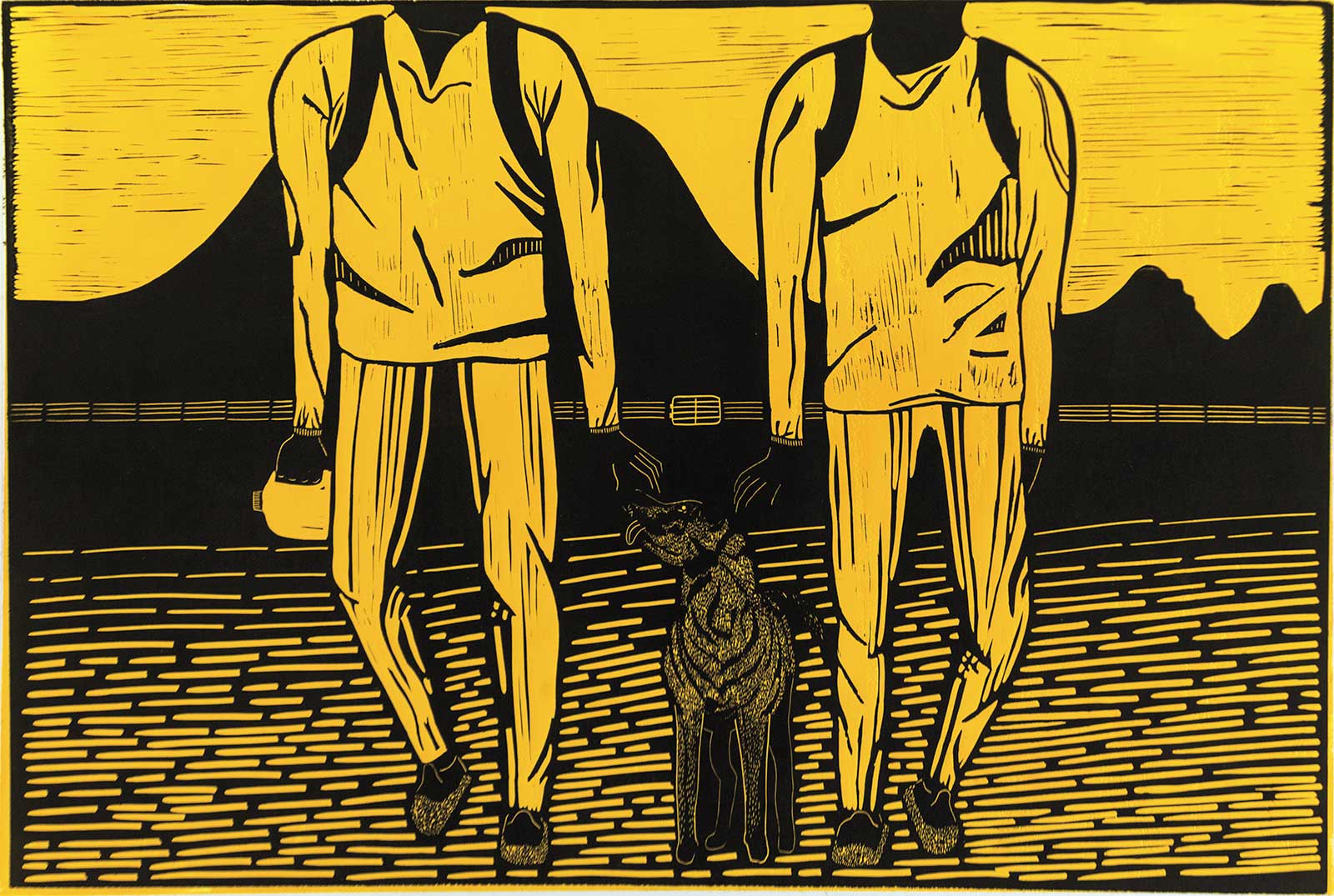 Makaye Lewis (Tohono O’odham), Roxy Didn’t Even Bark, monotype and linocut, 24 x 36”. Loan from the artist.
“These artists have thought critically and conceptually about their heritage, culture, values, identity and the land. They have made decisions about their work that not only affect their own lives but confidently offer ways of transformation for those to come. The critical and conceptual thinking behind the works in the exhibition is a foundation for empowerment and change around the complexities of the border, building new meaning and context in the way that we drive home the importance of equity-centered work and the human rights of women of color and artists,” says Hanley. “As I look at this work and responses to it, I find it is a constant powerful narrative that addresses issues with agency and dynamic, enlightened responses for political and social change.”
The exhibition will be on view in the Wheelwright Museum’s Schultz and Slater Galleries through October 3.
March 20-October 3, 2021
Indigenous Women: Border Matters
Wheelwright Museum of the American Indian
704 Camino Lejo, Santa Fe, NM 87505
(505) 982-4636, www.wheelwright.org
Powered by Froala Editor