Other than the addition of extra hand-washing stations, and the increasing frequency of fist bumps over handshakes, the 2020 Heard Indian Guild Museum Fair & Market looked like it has in previous years. Hundreds of artists were clustered into booths fanning out around the Phoenix museum, thousands of art enthusiasts milled around the booths, the scent of fry bread clung pleasantly in the air and the sound of drums thumping could be heard from every corner of the event.
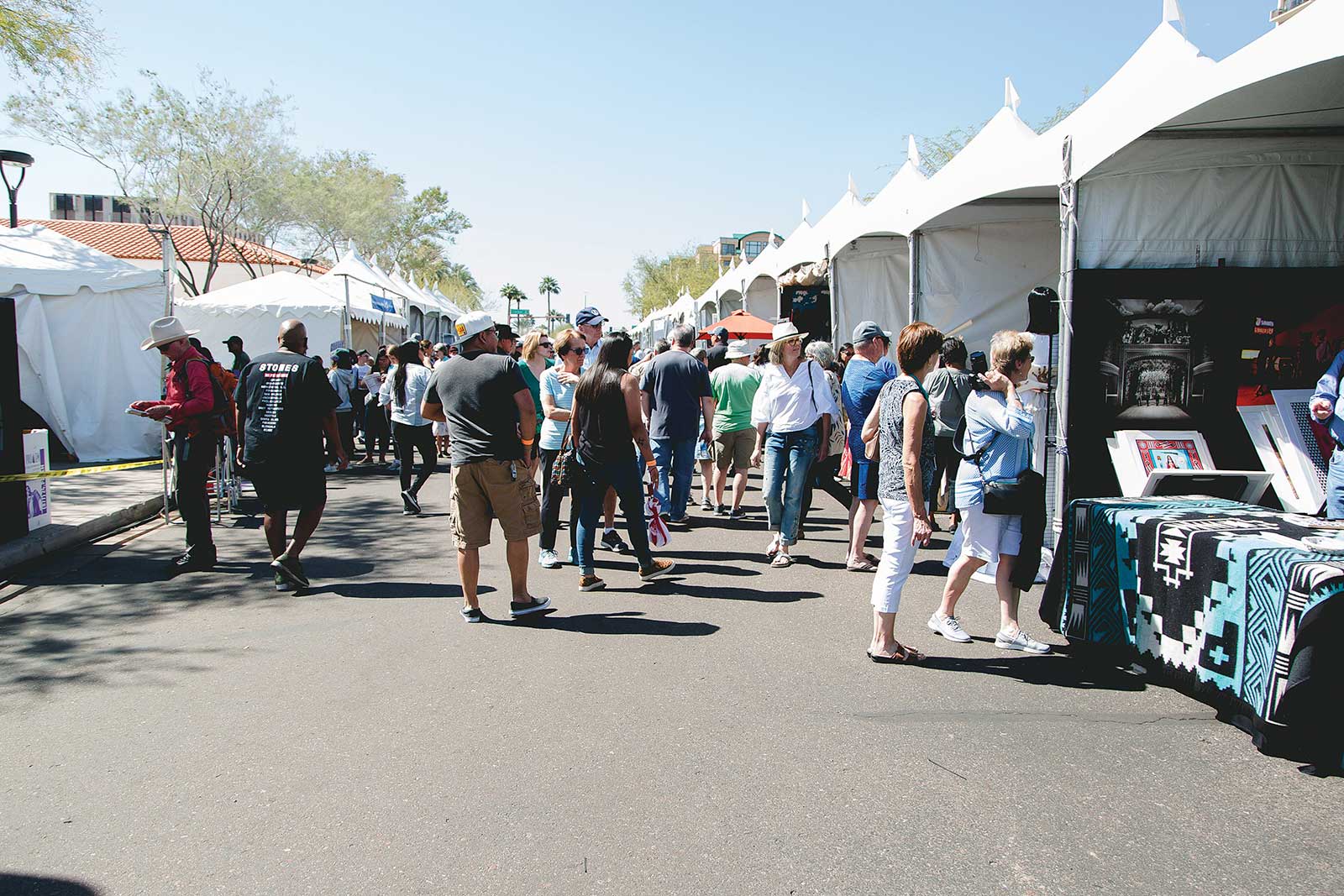 Guests browse artists’ booths at the Heard Museum Guild Indian Fair & Market March 7 and 8 in Phoenix.
This was on March 7 and 8. If you were there, you will not forget those dates, because they were likely the last events you attended for several months in 2020. At that point in time, coronavirus still seemed like such a distant threat to Americans. It was in China and Italy, not Arizona. In the days following the Heard’s annual market, the world quickly changed. Huge swaths of the country would go into social isolation. Museums would close. Events would be canceled. Culture, at least the public version of it, would cease.
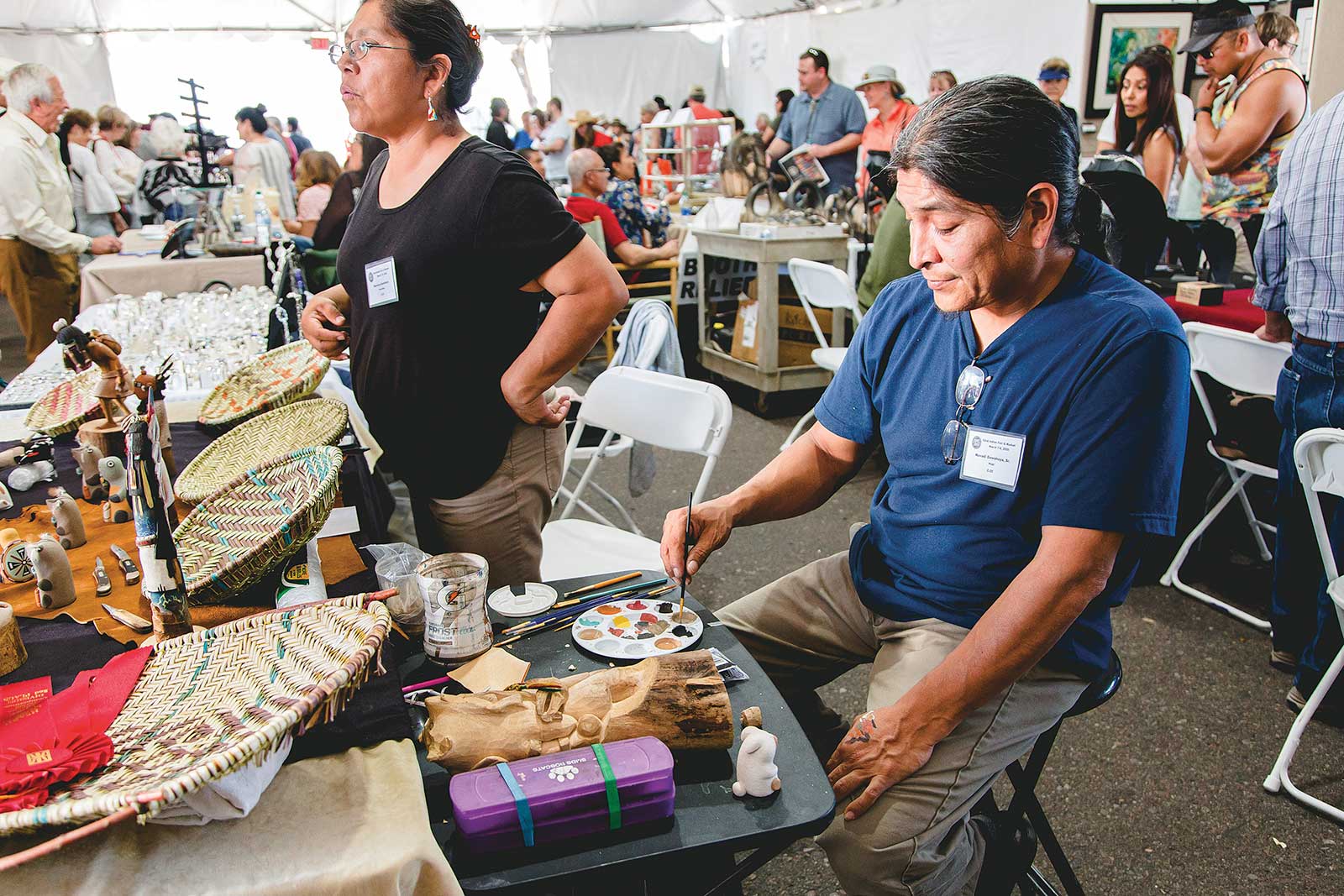 Hopi carver Nuvadi Dawahoya Sr. paints a carving in his booth.
But for two days we had the Heard Indian Fair & Market. For two days, collectors could mingle with the artists, picking their brains about Pueblo pottery, silver and turquoise jewelry, intricate beadwork, colorful weavings and many other art forms. There were performances from musicians and dancers, and demonstrations from some of the best Native American artists. For two days, artists sold their work and put pieces of their lives, their histories, their traditions out into the world.
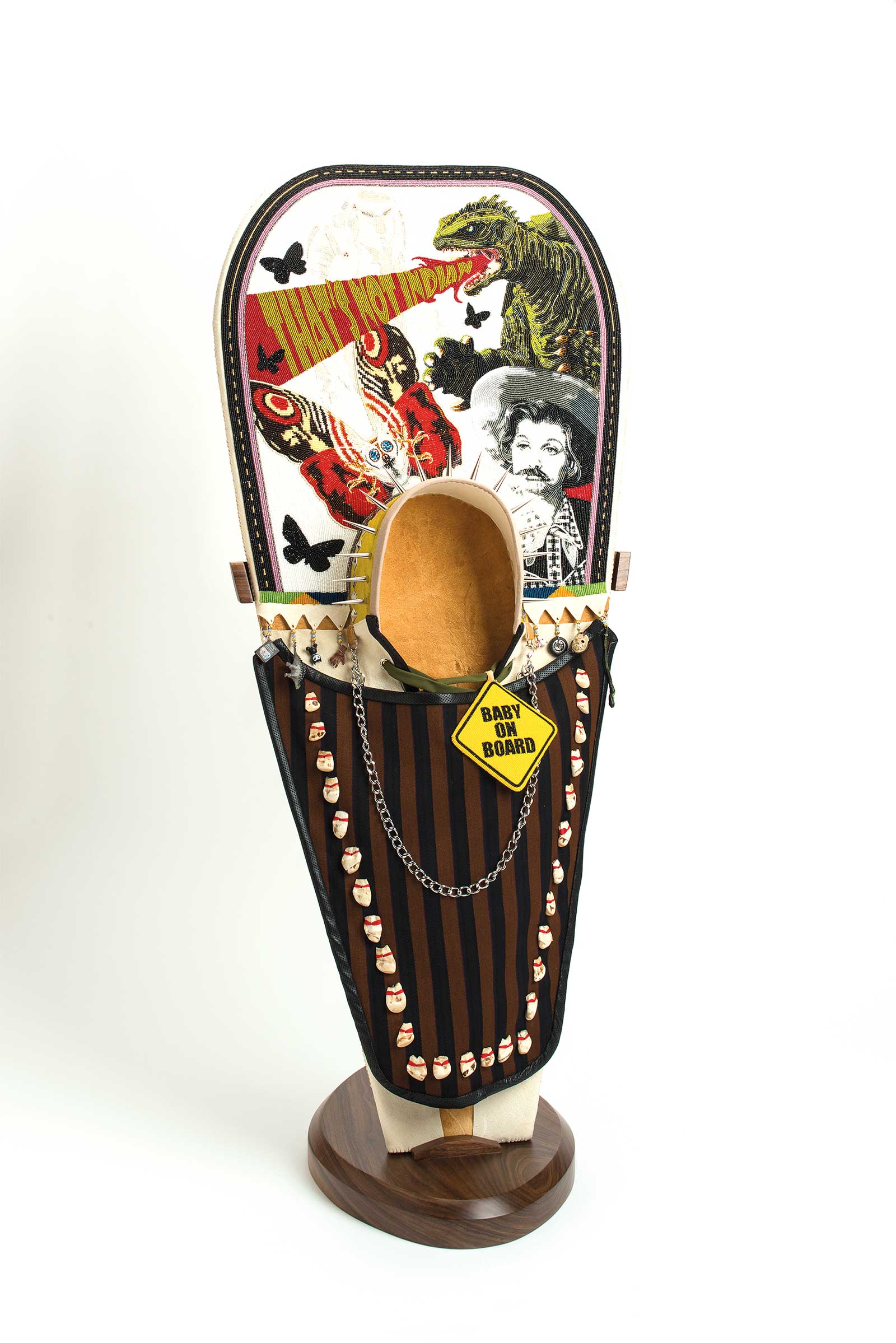 The Best of Show award went to Jamie Okuma (Luiseño/Shoshone-Bannock), who made a cradleboard titled Common Ground: Culture Isn’t Black and White.
Some of these artists—both young up-and-comers and veterans—were award winners, including Denise Wallace (Aleut) for jewelry and lapiodary, Russell Sanchez (San Ildefonso Pueblo) for pottery, Angela Babby (Oglala Lakota) for two-dimensional art, Alexander Youvella Sr. (Hopi) for Pueblo carvings, Cliff Fragua (Jemez Pueblo) for sculpture, Venancio Aragon (Navajo) for weavings and textiles, August Wood (Salt River Pima) for baskets, Catherine Black Horse (Seminole (Oklahoma)) for personal attire and accessories, and Jason K. Brown (Penobscot) for open standards.
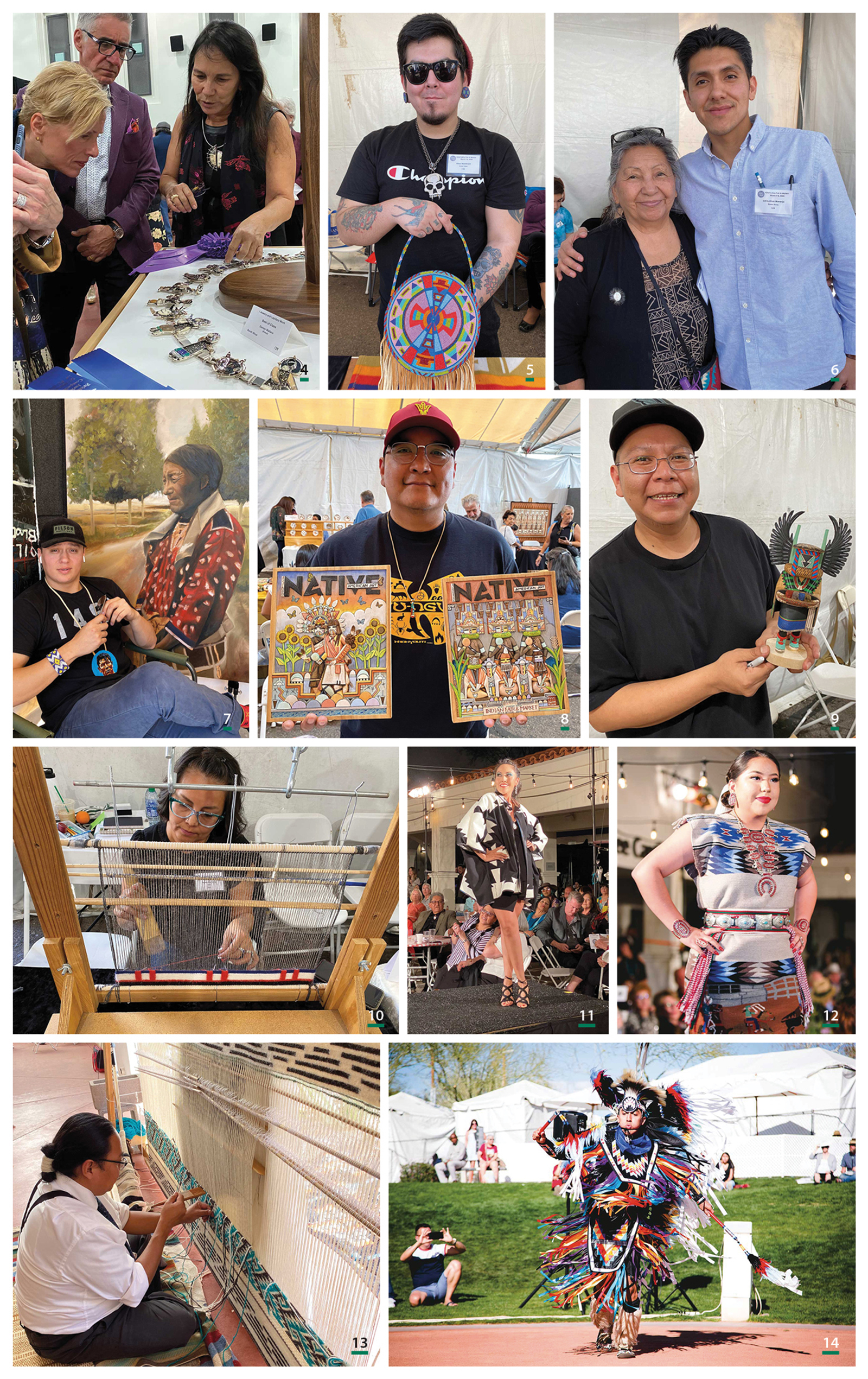 4. Jeweler Denise Wallace (Aleut), right, shows guests her award-winning artwork, Yup’ik Dancer Belt, which won best of class in the jewelry category. 5. Beader Elias NotAfraid (Crow) holds up one of his beaded handbags. 6. Potters Jonathan Naranjo (Santa Clara Pueblo) and Bernice Suazo-Naranjo (Taos) stand in their shared booth. 7. Ben Pease (Northern Cheyenne/Crow/Mandan/Arikara/Hidatsa) with a large painted work. 8. Mavasta Honyouti (Hopi) holds up work inspired by Native American Art magazine. The carving on the right was used as the cover of the February/March issue. 9. Donald Lomawunu Sockyma (Hopi) shows off one of his carvings. 10. Weaver Velma Kee Craig (Dine) demonstrates her work. 11. A model during the annual fashion show held on Friday night. 12. The 2020 fashion show. 13. Zefren Anderson (Dine) participates in the artist demonstrations. 14. A fancy dancer on the main amphitheater stage.
The best of show was given to Jamie Okuma (Luiseno/Shoshone-Bannock), who won for her diverse art work, a cradleboard titled Common Ground: Culture Isn’t Black and White. “As Native people, we have Native and non-Native cultures in our lives and I want my work to reflect them both. And I want you, the viewer, to see that,” Okuma says of the piece. “I want to create work that everyone can connect to. I want to pull people in. There is a commonality we all have as people…”
The work was more prescient than she could have hoped. In the days and weeks that followed the Heard event, the country was in quarantine, and Americans were suddenly working toward a common goal. They were, and still are, united together, all as one.
2020 is going to be a strange year—one of tragedy, one of frustration and also one of hope—but for two days in March, before everything changed, the Heard Museum showed us what we’re all fighting for: our friends, our cultures and our traditions.
Powered by Froala Editor