Susan Folwell gathers and processes clay for her pots and fires them as her family has for generations. “I respect that tradition,” she says. “It’s important for me to show young people those ways. I’m lucky, though, that I come from a long line of innovators. There comes a point in the process where what you want to say is equally as important. The only constant is change, truly. You need to have self expression and some sort of passion along with the tradition.”
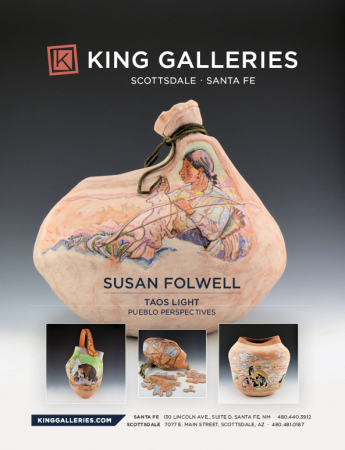
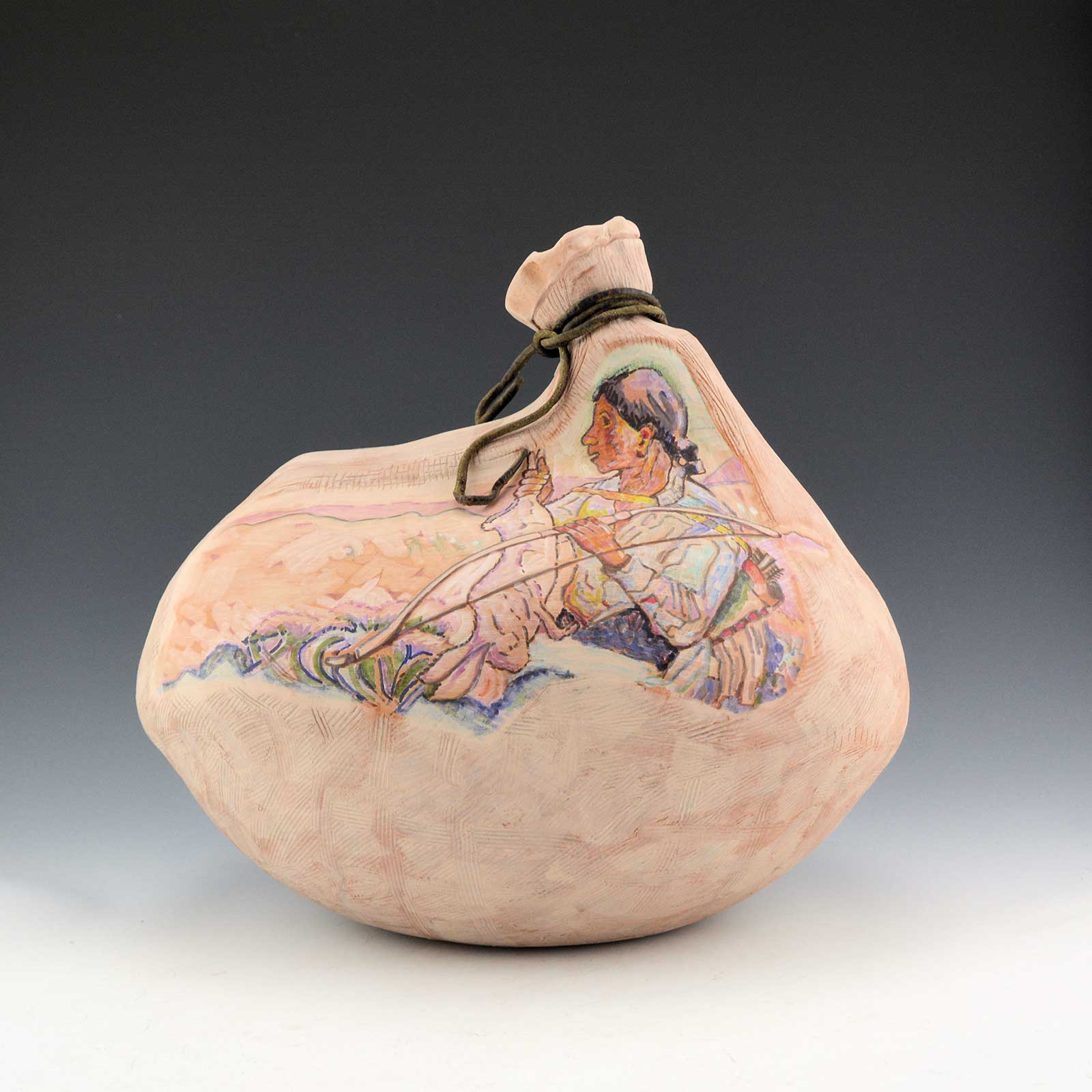 Rabbit Sack, Native clay, 11 x 10½"
Her recent innovations will be shown in Taos Light: Pueblo Perspectives beginning at King Galleries in Santa Fe, May 23. She has incorporated interpretations of paintings by the Taos Society of Artists but speaks in her own voice.
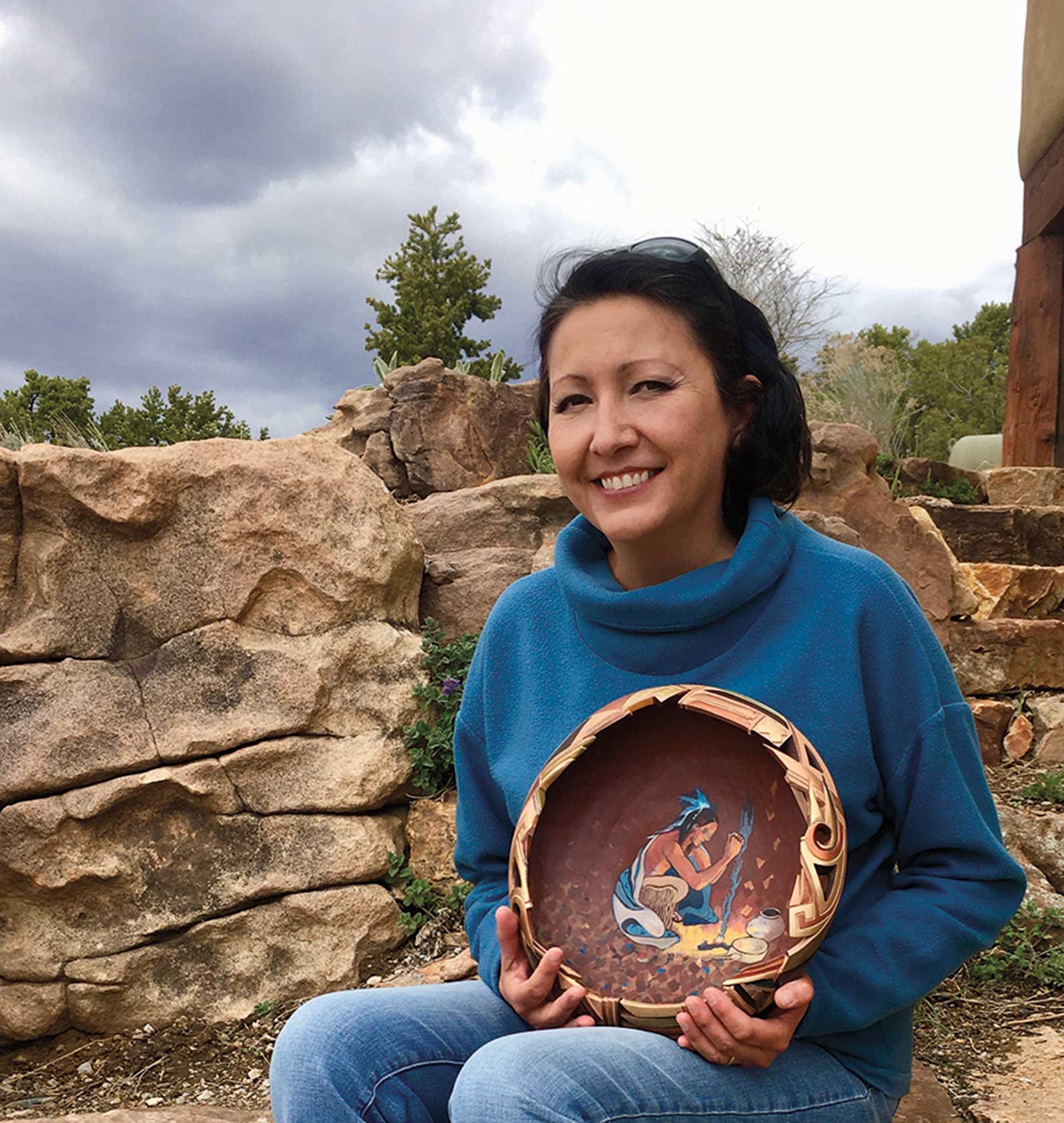 Susan Folwell holding Smoke Ceremony, 2020.
“I think of a concept for the shape and then look for imagery,” she explains. One extraordinary form is Rabbit Sack, constructed using the traditional coil method. “It was my first attempt at the form. It was pretty challenging, but I’m pleased with the success of the shape.” The slumped sack bears the central figure in the painting, The Rabbit Hunter by Oscar Berninghaus.
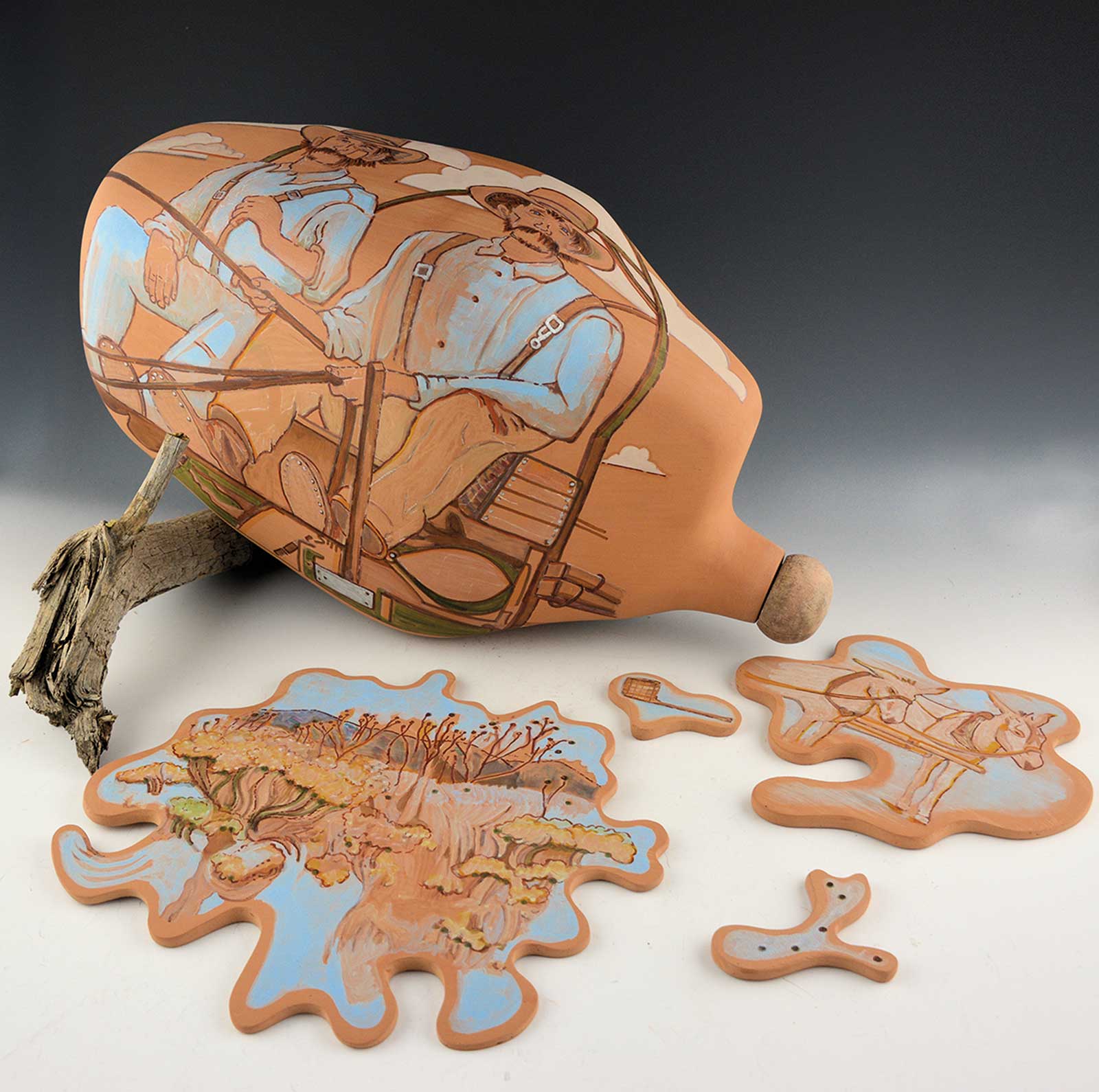 Twins Flask, Native clay, 15" long, five pieces
Folwell’s social commentary, which often appears in her work, “depends on what grabs me, what my mood is, or what the mood of the world is.” Viewers are free to come up with their own responses.
Smoke Ceremony was inspired by the innovative, deeply carved pottery of Grace Medicine Flower (Santa Clara). “It took a long time to carve the rim,” she says. “I was planning on a different image, but as I was carving and as the pandemic grew, I thought of E.I. Couse’s painting, The Smoke Ceremony. I think the figure looks prayerful.”
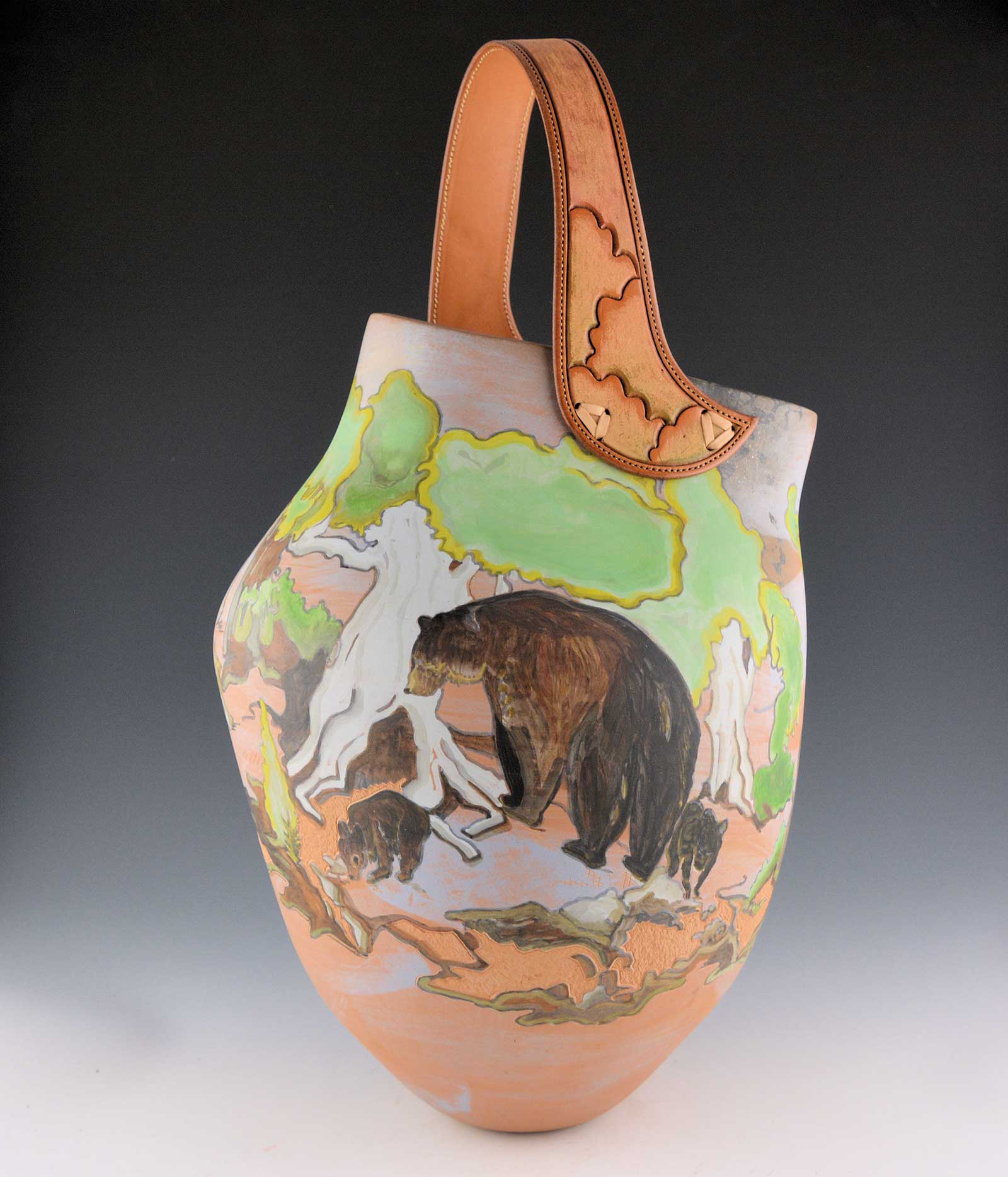 Wilderness, Native clay, 17 x 9"
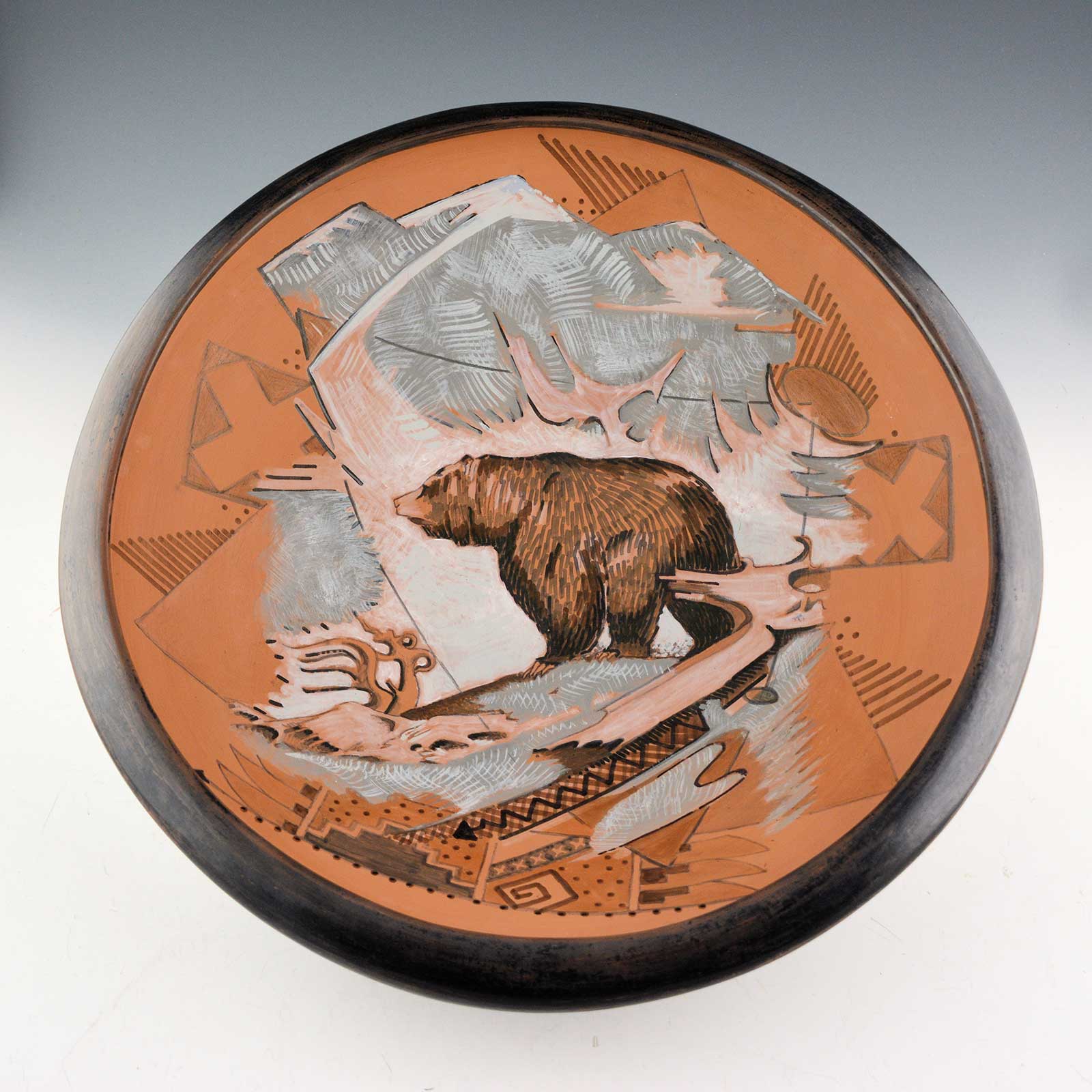 Dunton Bear, plate, Native clay, 12"
E. Martin Hennings portrayed two rugged individuals, the twins Jake and George Baumgartner, several times. Folwell has used the motif from his painting The Twins, now at the Eiteljorg Museum, on two different interpretations of flasks. Twins Flask “could contain either water or whiskey” she muses. The flask is tipped and resting on a branch, its contents spilled into clay puddles. The main motif of the twins on their wagon, one of them smoking a corn cob pipe, is on the flask, and is complemented by the pipe in one puddle, the ubiquitous chamisa of the high desert on another, and a depiction of their donkeys from another of Hennings’ paintings of the twins. “They never went anywhere without twin donkeys,” she adds.
King Galleries
May 23-August 30
130 Lincoln Avenue, Suite D, Santa Fe, NM 87501
www.kinggalleries.com
Powered by Froala Editor