This year the Eiteljorg Museum of American Indians and Western Art in Indianapolis, Indiana, celebrates 2020: The Year of Honoring Women with exhibitions and programs commemorating the 100th anniversary of women’s suffrage.
Elisa Phelps, the museum’s vice president and chief curatorial officer, points out that, “Women of the West led the nation into the struggle for women’s suffrage…Why women’s suffrage was so successful in the West raises larger questions about women’s diverse roles and brings forward issues such as why Native American women remained excluded from voting until many years later.
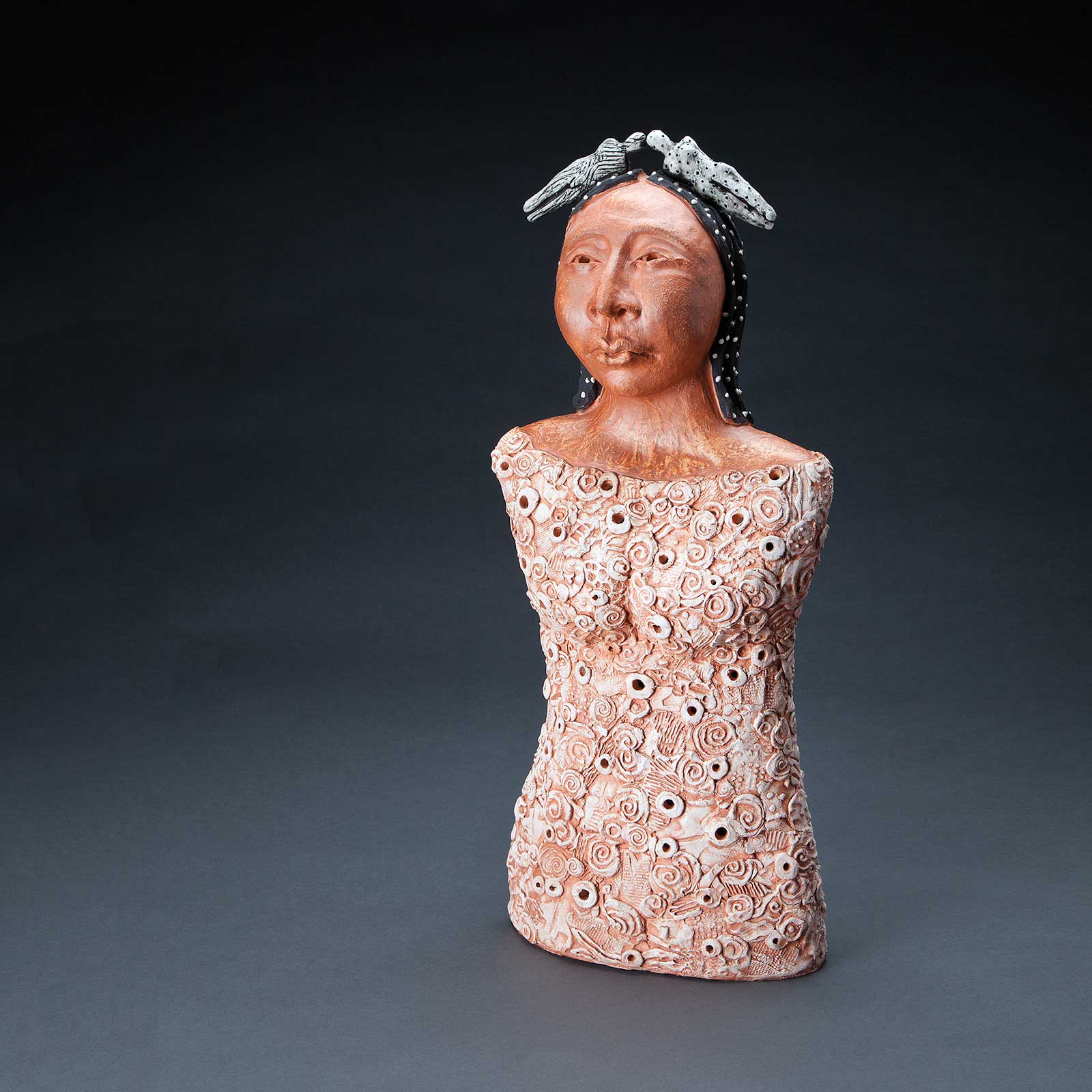 Anita Fields (Osage), Opposites Attract, 2005, clay. Gift courtesy Paul and Grace Markovits.
“With its dual mission to inspire an appreciation of both Native American and Western art, history and culture, the Eiteljorg brings multiple perspectives to sharing women’s stories. One aspect of honoring women is acknowledging their underrepresentation in the Western art collection and in the field generally.”
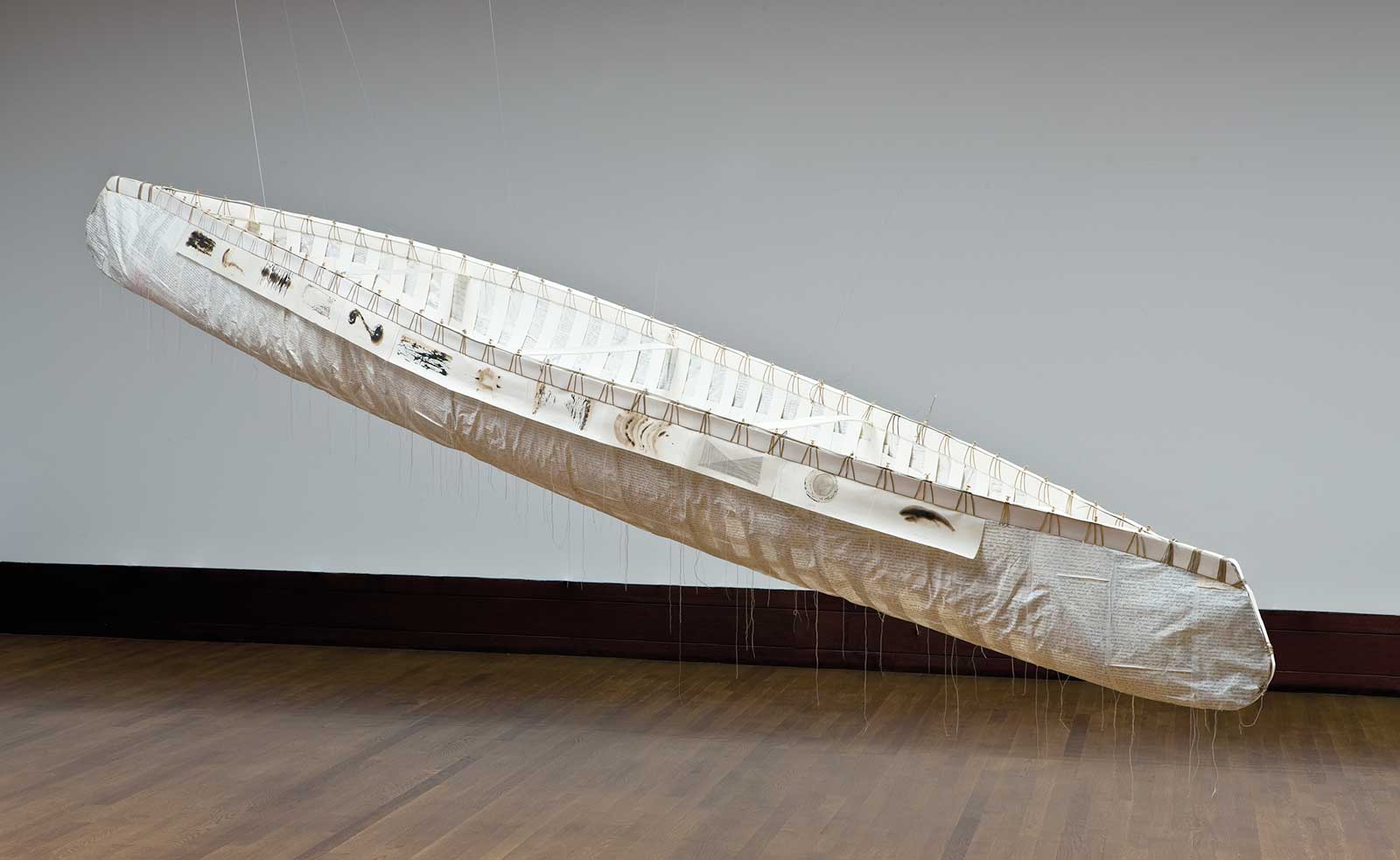 Bonnie Devine (Ojibwa), Canoe, 2003, mixed media, graphite on paper, thread, twine, beads. Museum purchase from the Eiteljorg Contemporary Art Fellowship.
Every other year, the museum awards Native American Contemporary Art Fellowships “to provide a platform for Native American contemporary artists to share their voices.”
Among the exhibitions is Powerful Women: Contemporary Art From the Eiteljorg Collection, which highlights contemporary women artists, especially Native artists, and the powerful works they have created that speak to issues of personal identity, political agency, memory and violence against women.
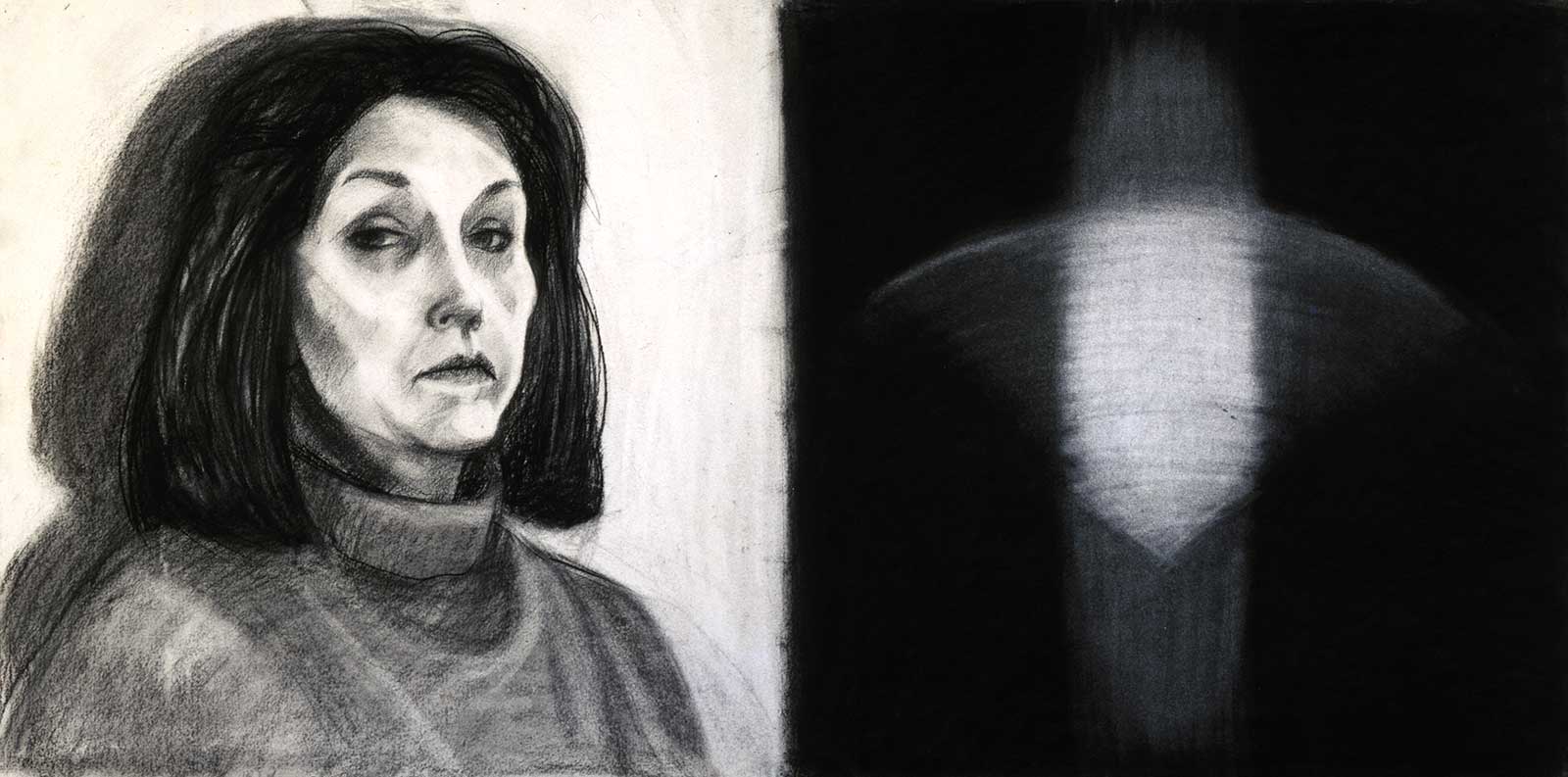 Kay WalkingStick (Cherokee), Is This Me Variation VI, 1989, charcoal on paper. Museum purchase from the Eiteljorg Contemporary Art Fellowship.
It includes sculpture by Anita Fields (Osage), mixed media installations by Bonnie Devine (Ojibwa), works on paper by Kay WalkingStick (Cherokee), textile art by Marie K. Watt (Seneca), stills from video by Skawennati (Mohawk) and important works by other women artists. An installation by Luzene Hill (Eastern Band of Cherokee), Retracing the Trace, reflects on issues of rape and sexual violence against women.
Devine was a fellow in 2011. She is an associate professor in sculpture/installation, as well as the founding chair of the Indigenous Visual Culture program at Ontario College of Art and Design University in Toronto, Ontario.
She is represented by a 16-foot Algonkian canoe constructed of sewn together pages of notes from her master’s thesis. She explored the effects of uranium mining on Ontario’s natural environment, which devastated not only the physical properties of the land but its spirit. She says, “Both my art practice and the research that grounds it are either rooted in visual ideas that are developed either in the studio as the result of historical readings, or in-situ (on the land) in response to histories, stories or legends that are embedded in specific locations. I am interested in the image making practices of my Anishinaabe ancestors, and their occupation and dis-occupation of various sites.”
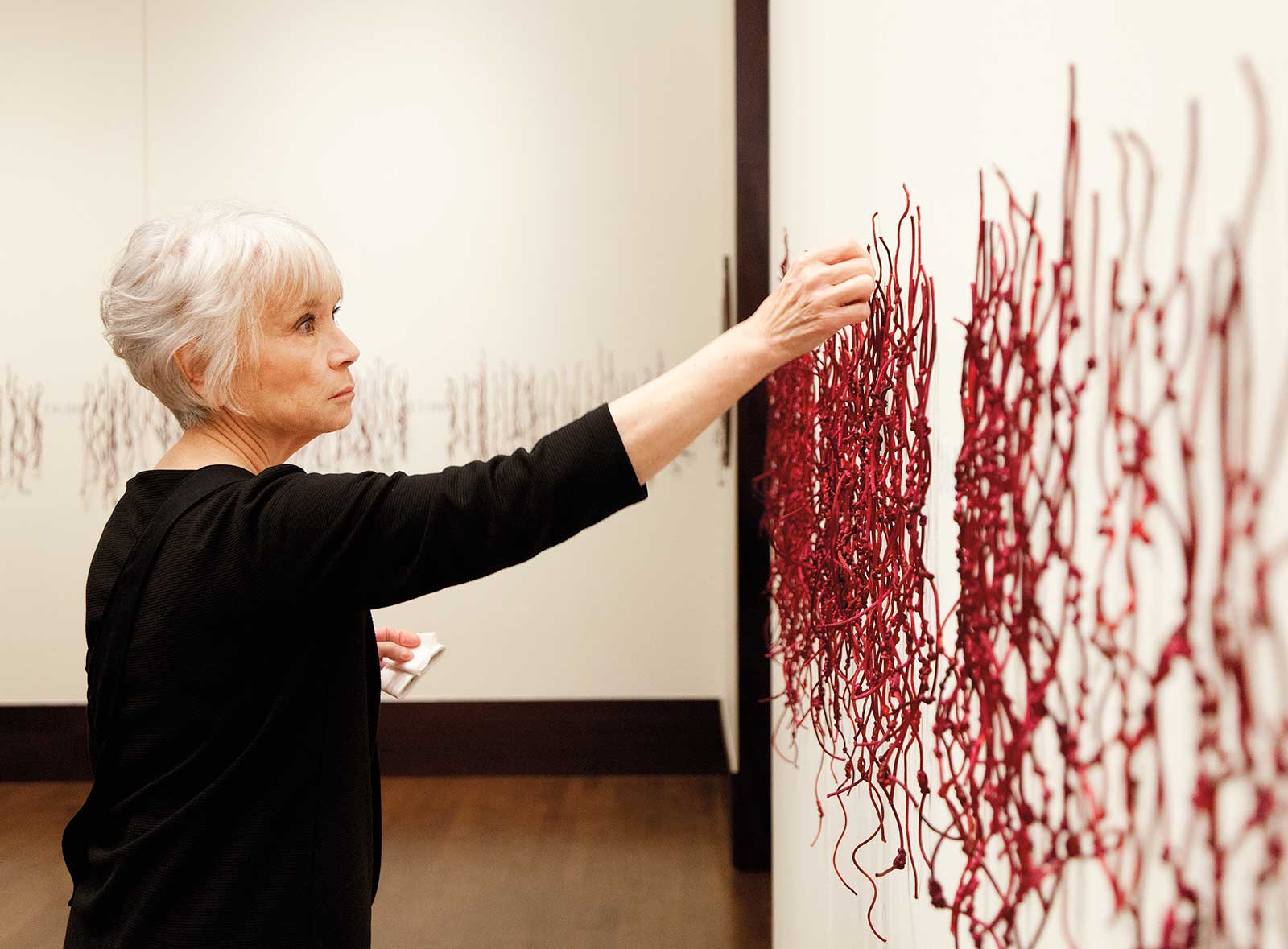 Luzene Hill (Eastern Band of Cherokee) works on Retracing the Trace, 2011-2015, satin cord, ink, pastel. Museum purchase from the Eiteljorg Contemporary Art Fellowship.
Watt’s Braid (2005), is nearly 22 feet wide and is composed of hundreds of diamond shaped pieces of wool sewn together in the form of a Moebius Strip. She and 77 other sewers gathered in sewing bees in her studio to stitch it all together. She became aware that each person’s stitch was like a signature, and the thread united them all together in community.
She explains, “I began with an interest in the many associations with braids: traditional Native identity, a genetic marker, a ledger of passing time and the intrusion of Western educational reform (one of the first things stripped from Native students in boarding schools was their long hair). Additionally, the braid’s three skeins suggest various trilogies. In Seneca mythology, for example, we have the Three Sisters: Corn, Beans, and Squash.” She received her MFA from Yale in 1996 and was an Eiteljorg Fellow in 2005.
Visitors should check the museum website, www.eiteljorg.org, for the latest information on the museum’s reopening.
Opening in 2020
Powerful Women: Contemporary Art From the Eiteljorg Collection
Eiteljorg Museum of American Indians and Western Art
500 W. Washington Street, Indianapolis, IN 46204
(317) 636-9378, www.eiteljorg.org
Powered by Froala Editor