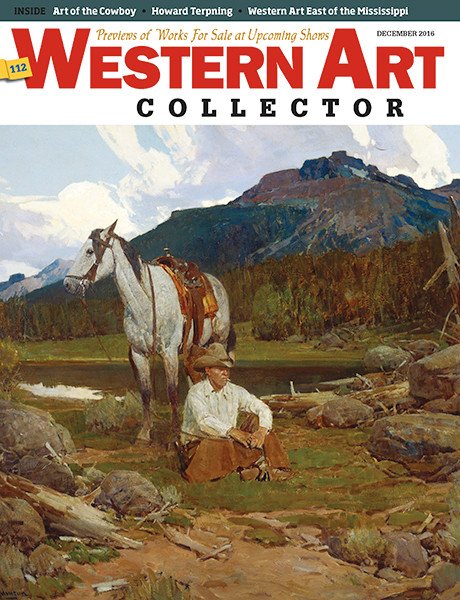
Throughout history, Native tribes showed their creativity through the use of elaborate beaded items. In this special section, collectors will see beaded beauties such as moccasins, blankets, bags and pouches. Each item is significant in the use of color, design and pattern, as well as how it’s stood the test of time. Besides the historical value each piece holds, along with the talent and expertise, the real draw is the story. Each bead has traveled through the hands of its maker, affixed to fabrics and surfaces such as leather and cotton, and was handed down generations to share joy and antiquity. As you read through the collection, we hope you garner the importance each piece carries, along with their aesthetic allure.
From an Expert: Thoughts on collecting Beadwork
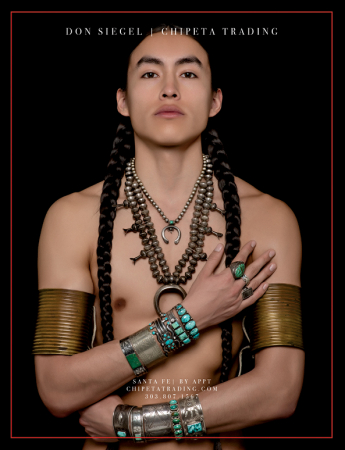
"Find a good dealer who will coach you through the process and share all of the mistakes they made along the way. Buy three books and read them cover to cover for every piece you purchase. Don’t be an accumulator, become a collector and buy the best you can afford; you’ll never be sorry for owning a few major pieces rather than many minor ones."
—Don Siegel, dealer and collector, Chipeta Trading Company
Buffalo Barry’s Indian Art
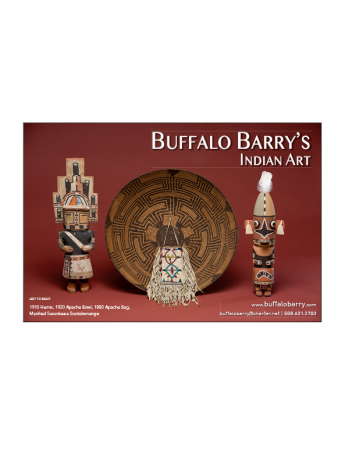
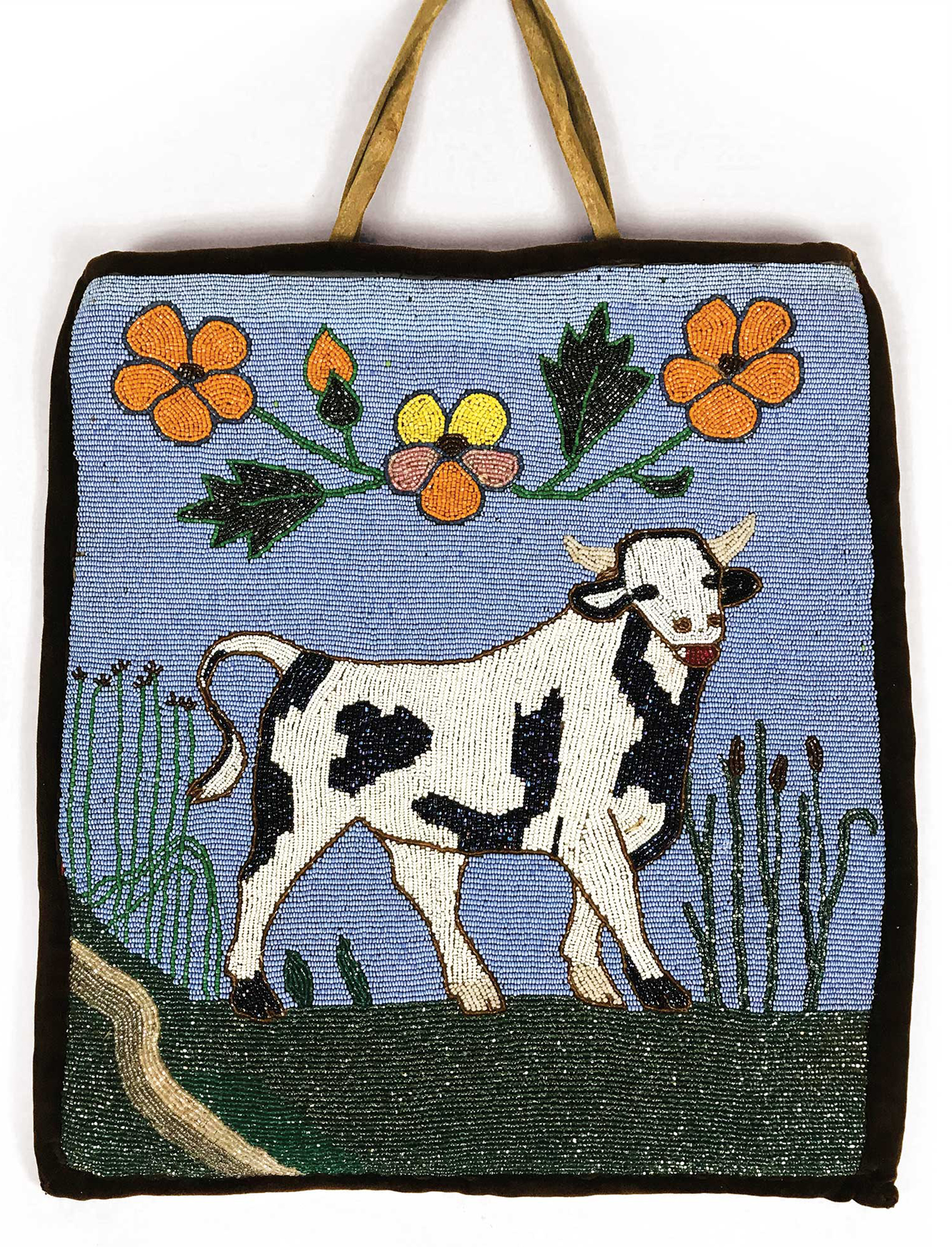
While the main concentration at Buffalo Barry’s Indian Art is Hopi katsinam, there are many other Native American art forms to which they are drawn. The Apache tribe was especially charismatic because of its well-documented history of defiance and independence. Their culture is often beautifully expressed in their crafts. One such example is this Apache Medicine pouch from the 1880s. Note the bright, asymmetrical beadwork and long flowing fringe. The object itself suggests fluidity, creativity and freedom. The bag is 12 inches long including the fringe and 3½ inches wide. “I wish we knew some of the stories this beautiful old bag has experienced,” says owner Barry Walsh.
(508) 631-2703 » www.buffalobarry.com
Chipeta Trading Company
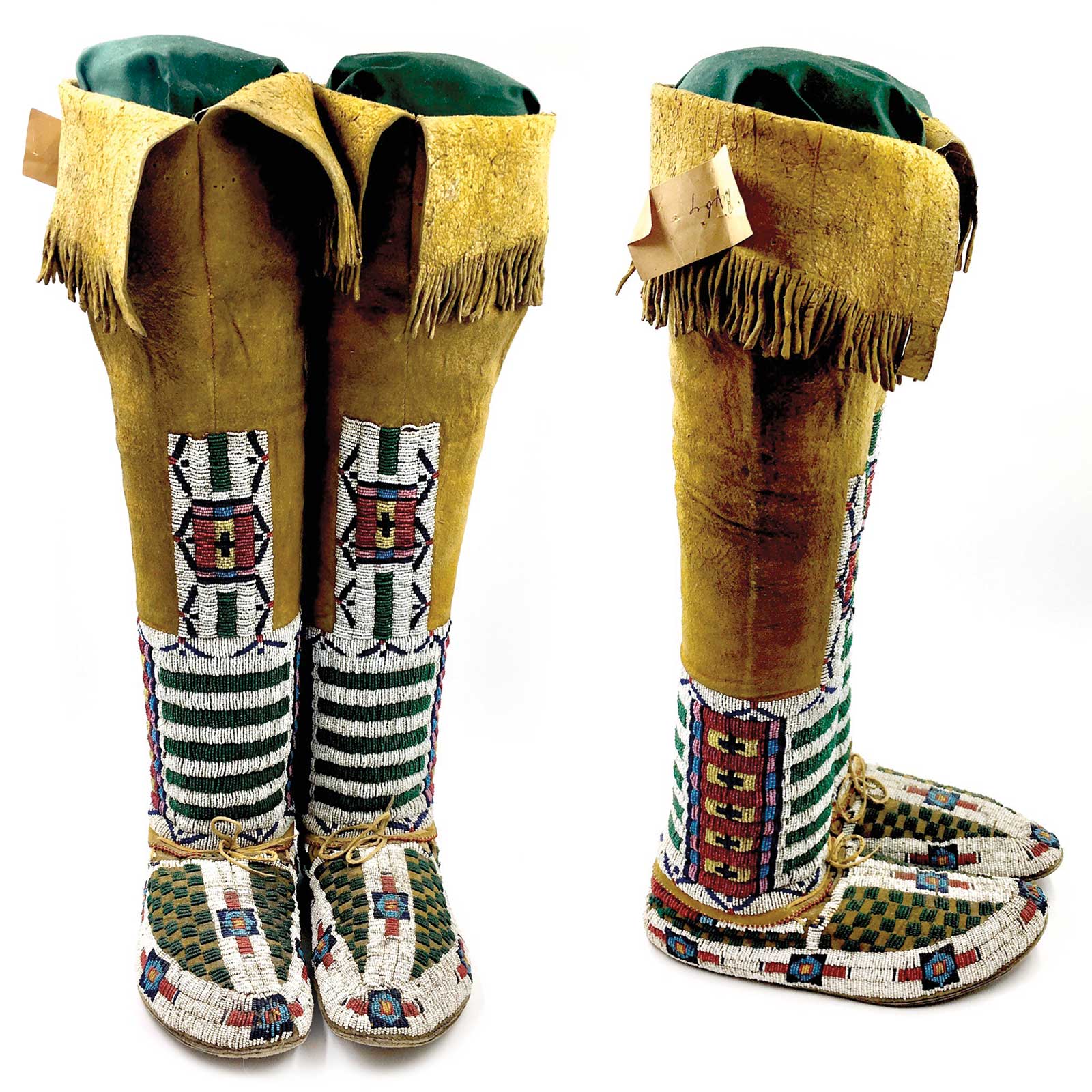
These Northern Cheyenne high top moccasins and leggings, are from the 3rd quarter of the 19th century. They’re 19 inches tall with tanned hide and sinew sewn seed beads in colors of white, green, pink, red and blue. The green military stripe beaded design elements on the front and back relate to the warrior society of the family patriarch. The collection tag on the leggings says “Bixby” and most likely refers to the small town on the Cheyenne Reservation in South Central Montana.
(303) 807-1567 » www.chipetatrading.com
Cowan’s A Hindman Company
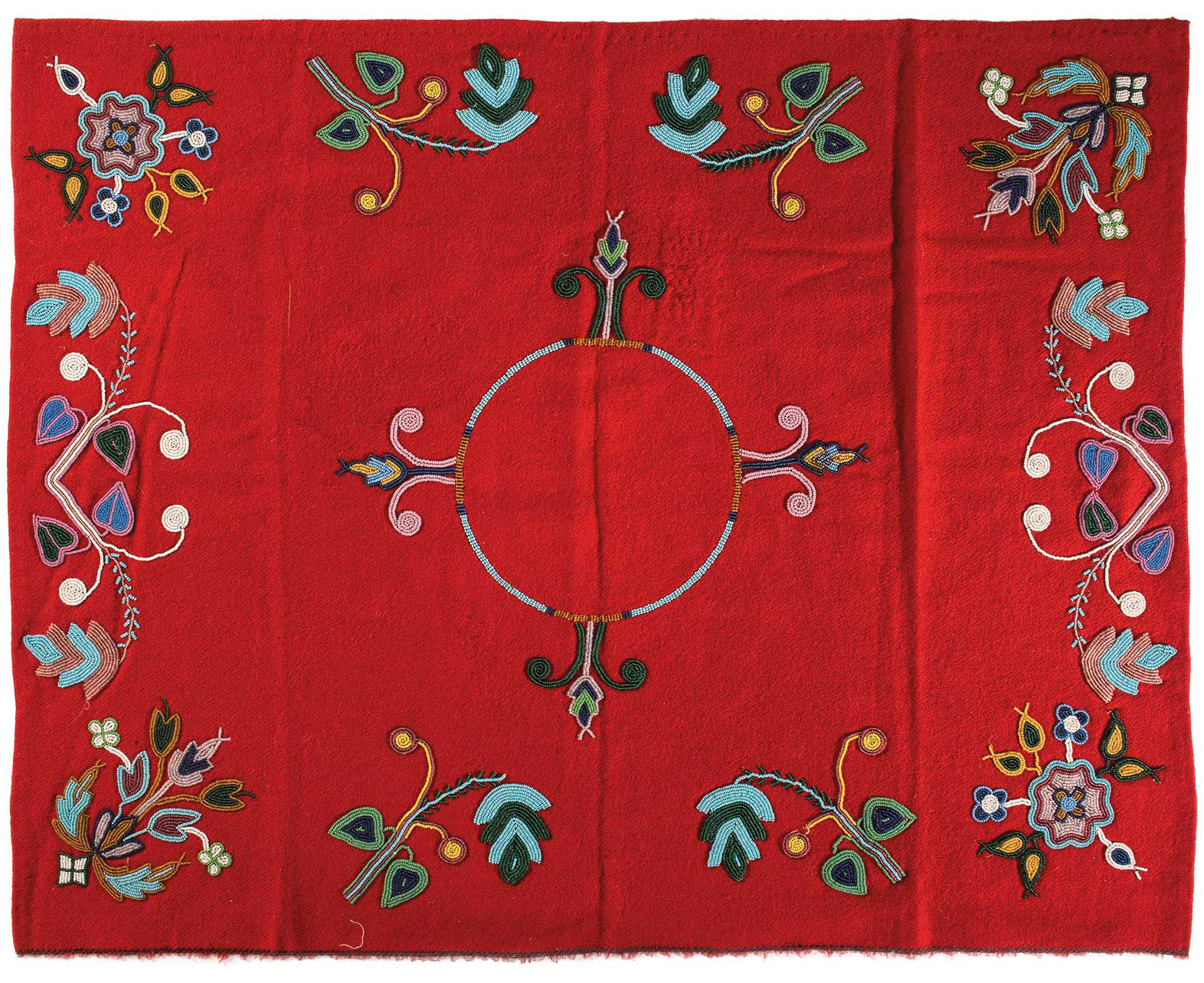
This late-19th-century Northern Plains beaded wool panel, thought to be an unfinished tablecloth, has been in the collections of Stanley B. Slocum of Minnesota, and before that, Drew Bax of Colorado. It’s made of red trade cloth and beaded with floral designs using glass beads in colors of light and dark blue, pink, rose, amber, translucent green and greasy yellow. A similar and complete example from the collections of the National Museum of the American Indian (collection number: 12/814) is identified as Dakota and on exhibit with Hearts of Our People: Native Women Artists.
(513) 871-1670 » www.cowans.com
“Beadwork is a wonderful addition to any collection. The colors and designs can be mesmerizing. However, when starting to collect be aware that there are fakes everywhere and some examples can even make experts pause. Always buy from a reputable dealer or auction, and buy what makes your eyes happy.”
—Danica M. Farnard, director of American Indian Art, Cowan’s/Hindman Auctions
Jack’s Antique
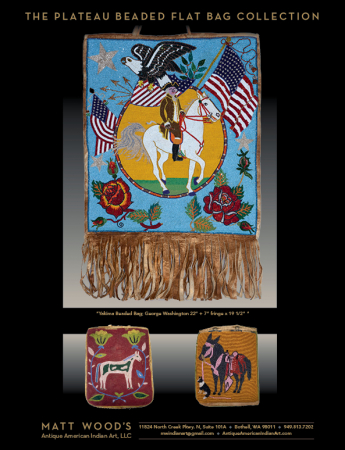
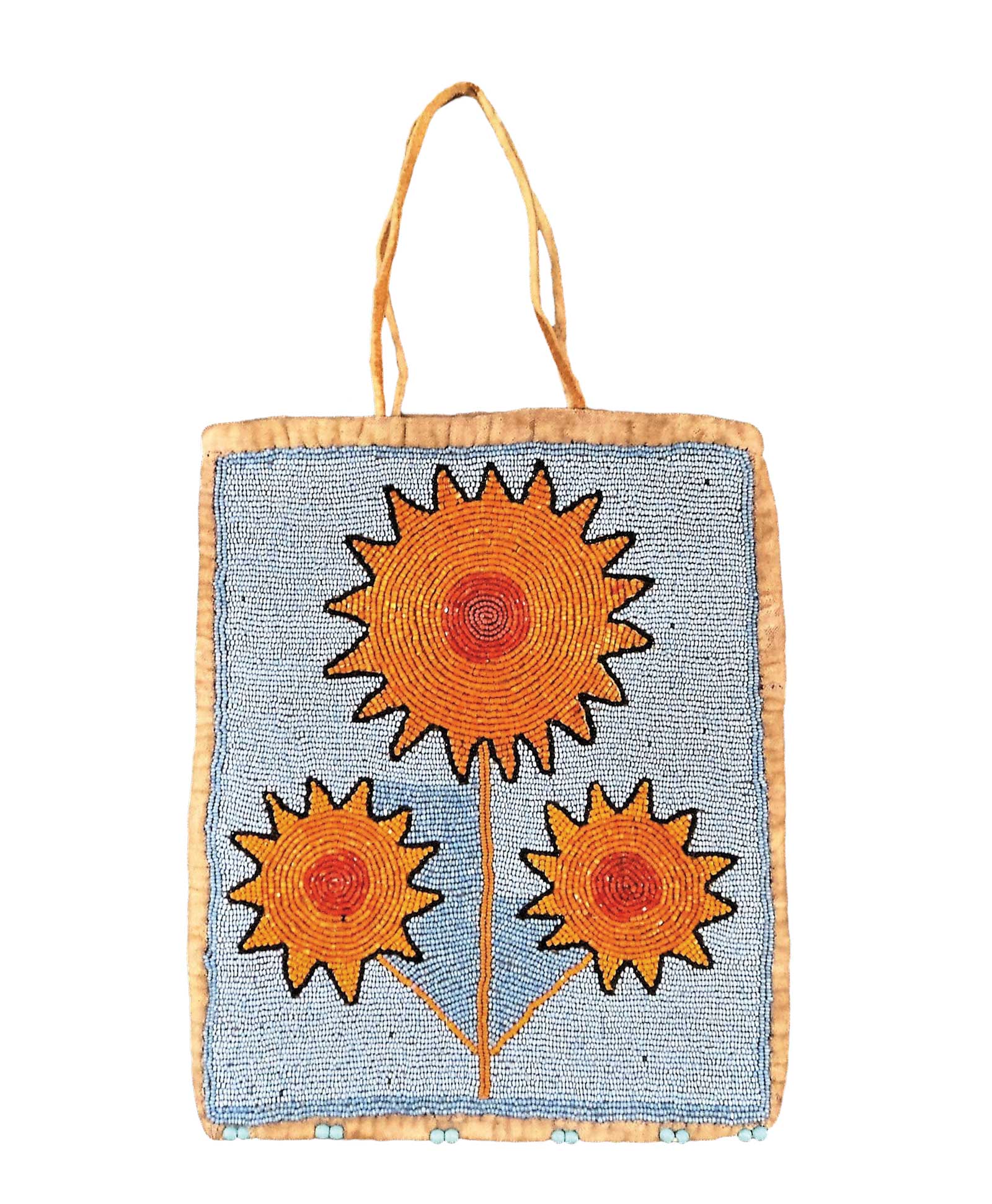
This is a new Columbia Plateau bag with three yellow flowers. The bag is handsewn cotton velvet material in light tan color. It is lined inside with cotton fabric in black and cream floral print. The seed beads used are old hand-cut yellow-orange, coral and red glass beads surrounded by a background of light blue glass beads. The bottom of the bag is accented with a row of slightly larger light blue glass beads in pairs.
Well-made beaded articles are meant to stand wear and tear. A collector should look for the integrity of the beadwork assessing for loose or missing pieces. It should also be aesthetically pleasing in terms of color, pattern, geometry, design and texture. It’s important to learn about the history of beads itself as old trade beads are desirable. The base material to which the beads are affixed should be intact and in very good overall condition or in a state where it can still be restored.
4650 N. US 89 Suite G014 » Flagstaff, AZ 86004
(928) 527-3053 » www.jacksantique.com
Mark Sublette Medicine Man Gallery
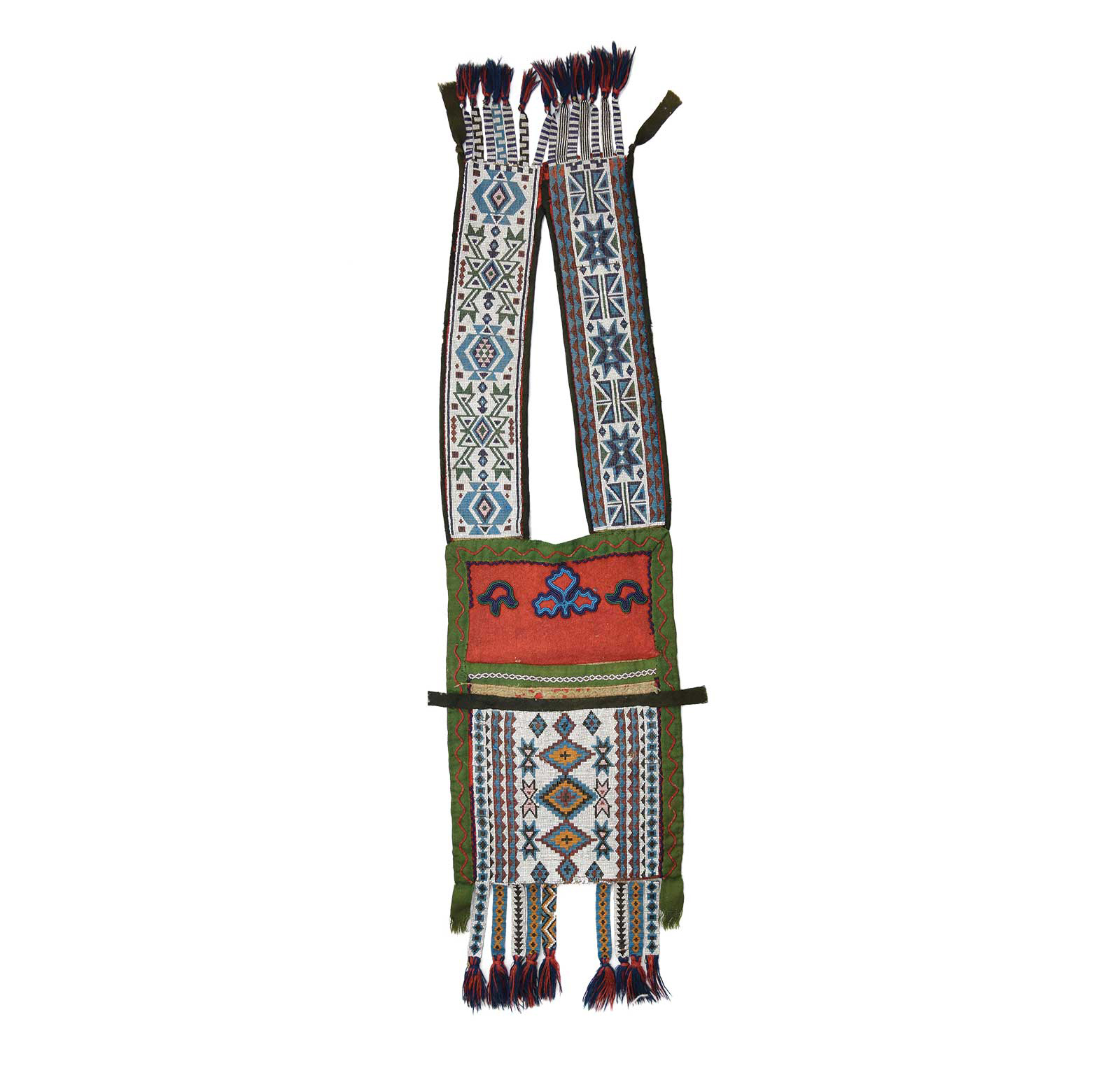
Priced at $1,675, this Ojibwe bandolier bag is a beaded shoulder-length bag created by Ojibwe women and is also called gashkibidaagan. In English, a bandolier is a broad belt or scarf worn over one’s shoulder. The French word bandoulière, refers to a shoulder bag. These were valuable forms of trade as well as status among the native trading community.
As a collector’s item, bandolier bags have a nice size and visual design consisting of fine beads laid down on trade cloth. This particular bag is early, from the 1870 to ’80s time frame, and was acquired from an Elgin, Illinois, collecting family who acquired it from a private museum that was closing in the 1960s.
6872 East Sunrise Drive Suite 130 » Tucson, AZ 85750
(520) 722-7798 » www.medicinemangallery.com
Powered by Froala Editor