After the conclusion of the American Revolution in 1783, life would be irrevocably changed for the masses. Indeed, for the colonists who had come from Great Britain and ultimately fought for an independent America, it was an era of opportunity and new horizons in the aftermath of a long and bloody battle. For the Haudenosaunee people of the Northeast, known also as the Iroquois, this period in history meant something different. Having supported the British during the conflict, their traditional way of life was altered dramatically post-revolution. The Iroquois Confederacy was defanged, their land stripped away and their power rendered obsolete. A displaced people, in order to uphold their traditions and tell their stories, they turned toward art. The earliest known examples of Haudenosaunee beaded women’s bags—a form of creative expression as well as a means of making money—date as far back as 1794. It was in this time period up to about 1860 that we see the most original and creative examples of these works.
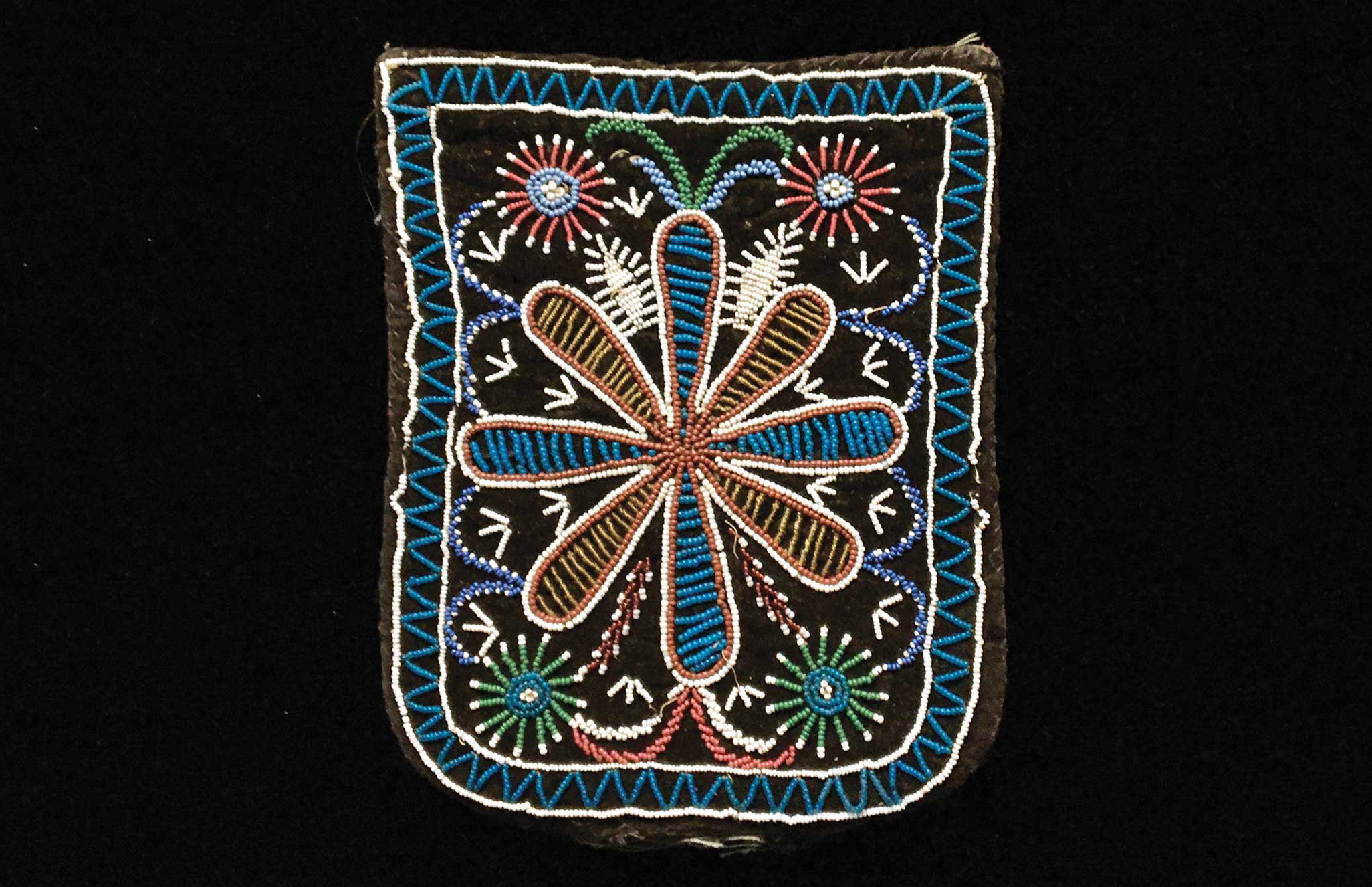 Haudenosaunee beaded bag, first third 19th century, celestial motifs, 5 x 6¼"
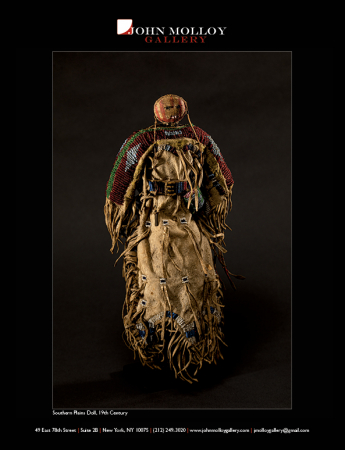
“The fineness of the beadwork, the uniqueness of the design and the beauty of the pieces speak for themselves,” says John Molloy, owner of John Molloy Gallery in New York City. “What fascinates me is how Native artists responded to this great cultural conflict they were in when their traditional lifestyle was upended.” In present day 2020, the world finds itself caught in its own struggle as people try to find beauty and meaning in uncertain times. Despite the difficulties we currently face amidst the global pandemic, John Molloy Gallery has found a workaround that allows collectors the chance to continue viewing and discovering extraordinary art. The online exhibition, Beaded Beauty: Early 19th Century Haudenosaunee Women’s Bags, highlights dozens of examples of beaded bags that reflect the resilience and ingenuity of the Haudenosaunee. “Native artists have always responded to this upended chaos by making new beautiful works that didn’t previously exist,” Molloy adds.
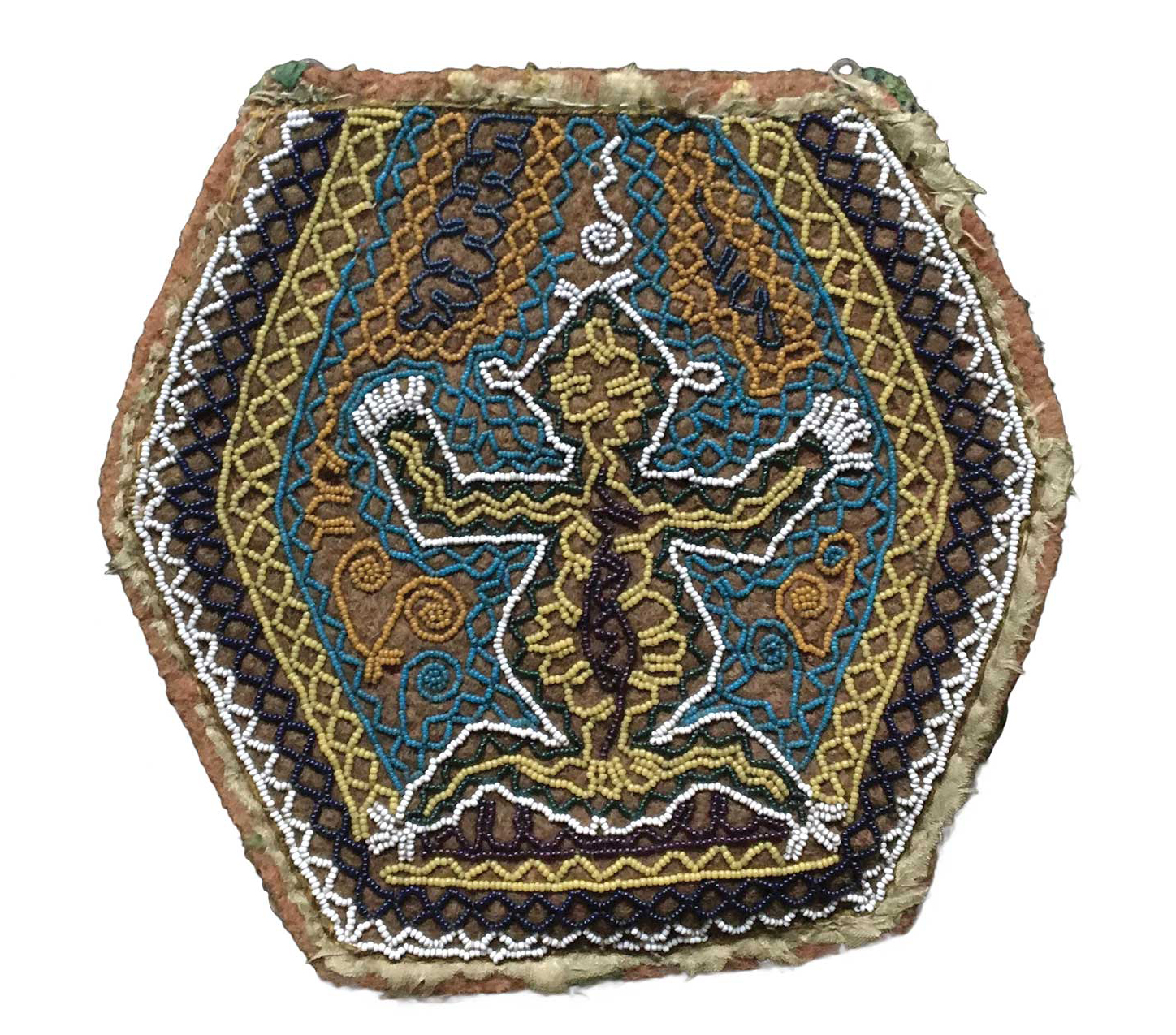 Haudenosaunee beaded bag, first third 19th century with an animal form, 6¾ x 6½"
Through an influx in trade, artists had access to new materials and supplies in the form of beads and cloth. “Niagara Falls was a main tourist destination of the 19th century, and a number of these bags were sold at trading posts at the Falls. It was almost a requisite that if you went to Niagara Falls, you had to come back with [some form of Native art or culture],” Molloy explains. “By the end of the 19th century the work became very formulaic, not nearly as artistic and original as the pieces that occurred before 1860. It’s post 1860 that you get this standardized floral motif and you lose that creativity and originality.”
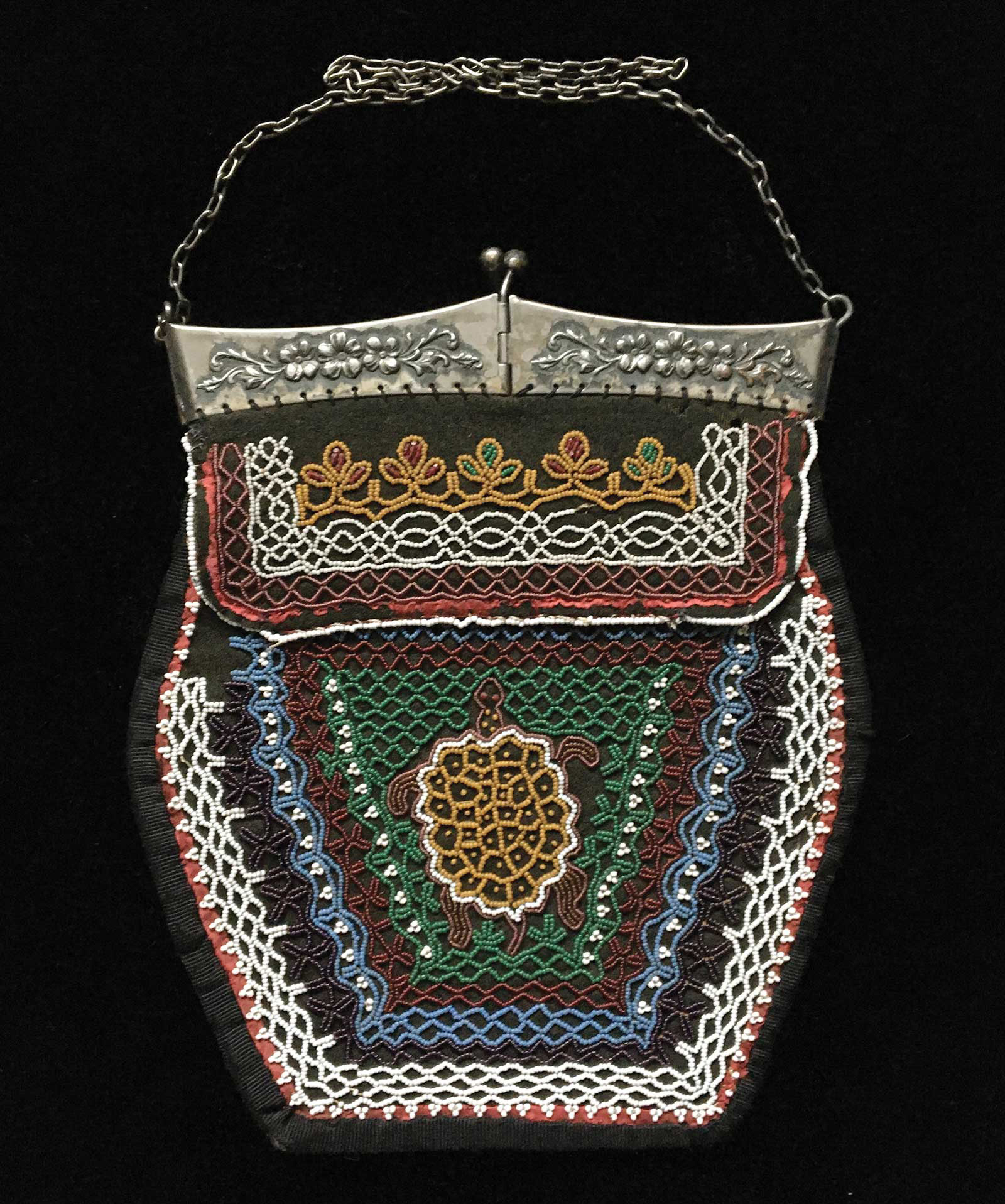 Haudenosaunee beaded bag, first third 19th century with Victorian clasp and chain and pictorial representation of a turtle, an important ally in Haudenosaunee culture, 6¾ x 8¼”
The bags seen in the exhibition include authentic and imaginative patterns, with motifs like the double scroll that reflect the “Tree of Life” or “Tree of Peace,” a symbol uniting the tribes of the Haudenosaunee Nation. “The double scroll motif is typical of Northeastern beadwork...The use of the double scroll motif is seen in prehistoric petroglyph sites drawn by the Mi’kmaq. This was later adopted by their Haudenosaunee neighbors but long before these bags were made...Other design elements reference celestial motifs and medicinal plants. Throughout North America, design motifs communicate tribal identity and these bags, essentially Haudenosaunee in their design and original use, capture a cultural era,” says Molloy. He also points out an exquisite bag in the exhibition with celestial designs. The bag, bordered with a blue zig-zag design, features a sun in the center with blue and copper tones, surrounded by red stars at the top and green stars along the bottom.
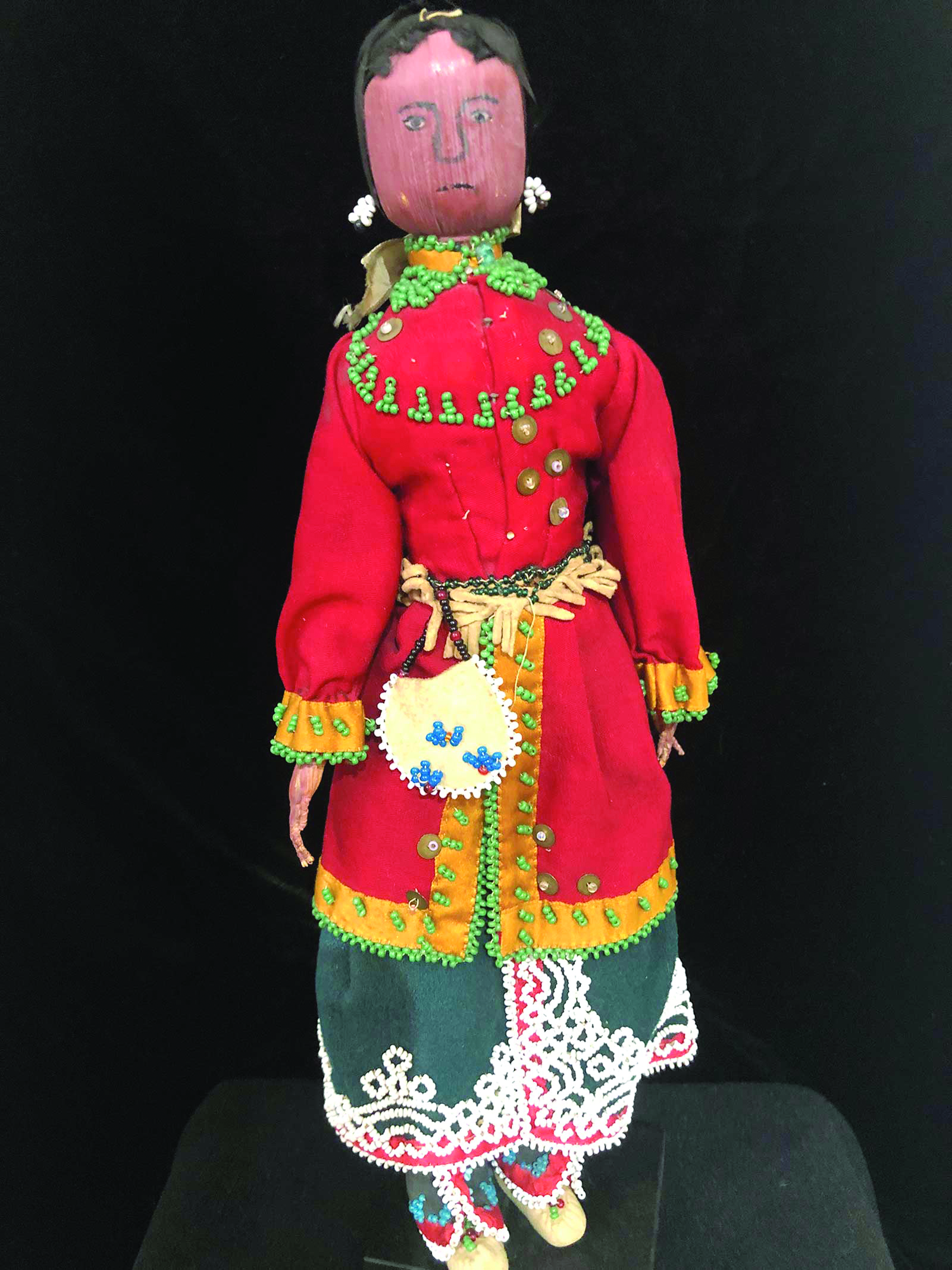 Mary Ann Bread (Oneida, ca. 1820-1900), Haudenosaunee doll, ca. 1860, corn husk painted face, 12”
One of the major standouts in Beaded Beauty, says Molloy, is not a bag but a corn husk doll from around 1860. “The doll is perhaps the most significant part of the show because we know the maker. It’s extremely rare to know the maker of an object in 19th-century [Native art],” he says, “and it’s the only Haudenosaunee object with a known maker. There’s a note on the doll that identifies the maker as Mary Ann Bread.” Her father was Chief Daniel Bread, who moved the Oneida people to Wisconsin in 1838. The artist, Mary Ann, “was born in approximately 1820 and died in 1900. She was a trained nurse and although she spent many years working in the Euro-American community, she always favored the traditional clothing of her community,” Molloy explains. The 12-inch-tall doll, wearing classic Haudenosaunee garb, has a corn husk painted face and carries its own miniature beaded bag.
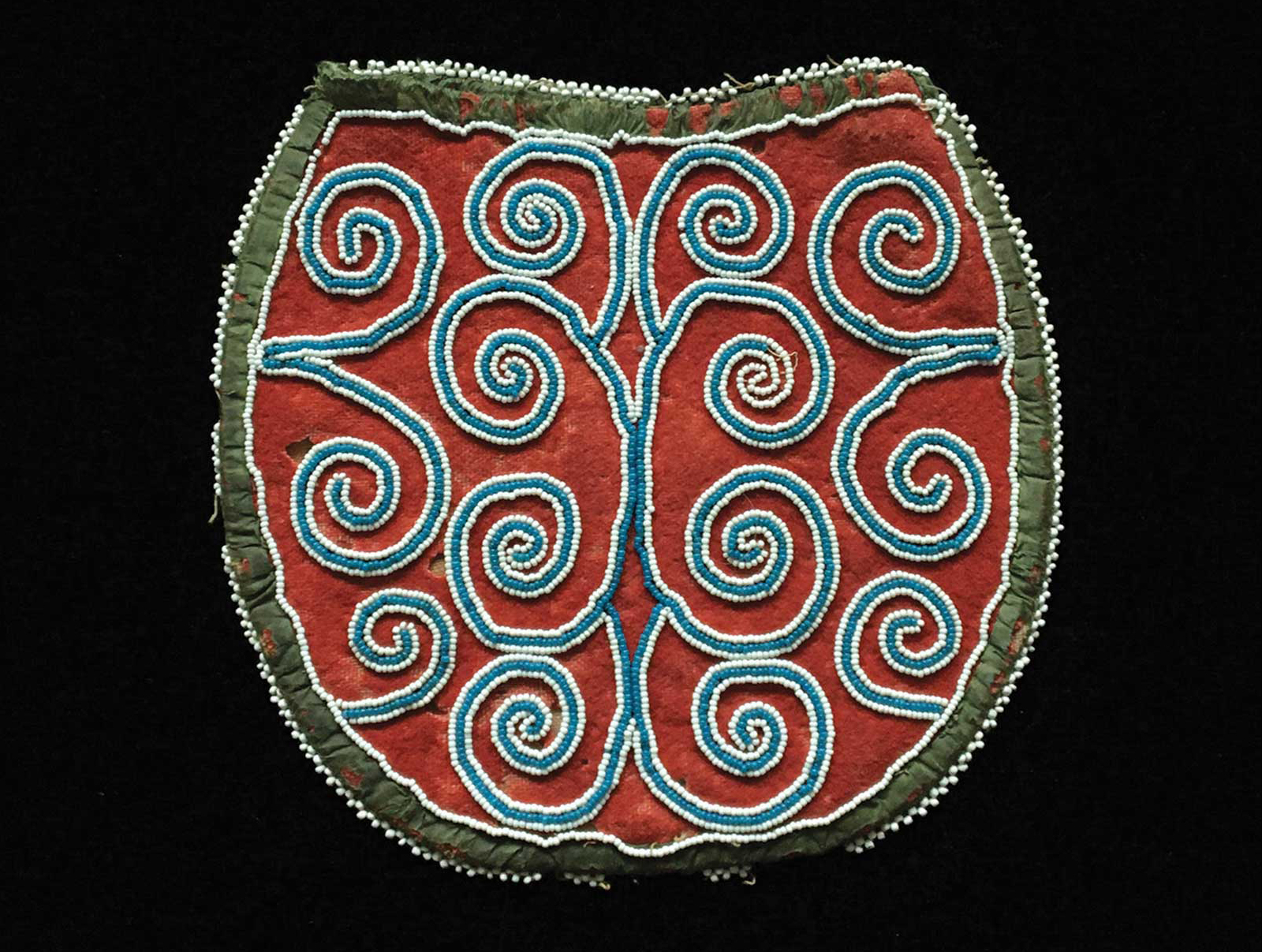 Haudenosaunee beaded bag, first third 19th century, double curve motif, reflecting the tree of life,7 x 6½”
Several of the bags were crafted with Victorian-era clasps and chains, a coveted fashion accessory of the era, though for the most part, Haudenosaunee artists remained true to their own motifs and designs expressive of their unique world view. “It is this blend of art supplies from the Old World transformed by Indigenous motifs and creativity that yielded the hybrid form that was readily sought after in the marketplace, yet remained true to the Native aesthetic,” says Molloy. The turtle is another common symbol found in Haudenosaunee beadwork. According to the Haudenosaunee Confederacy, in addition to being one of the clan animals, the turtle represents North America, as it is believed that the animal carries the continent on its back. The turtle also comes from the Haudenosaunee Creation Story, in which the animal is believed to have carried Sky Woman on its back.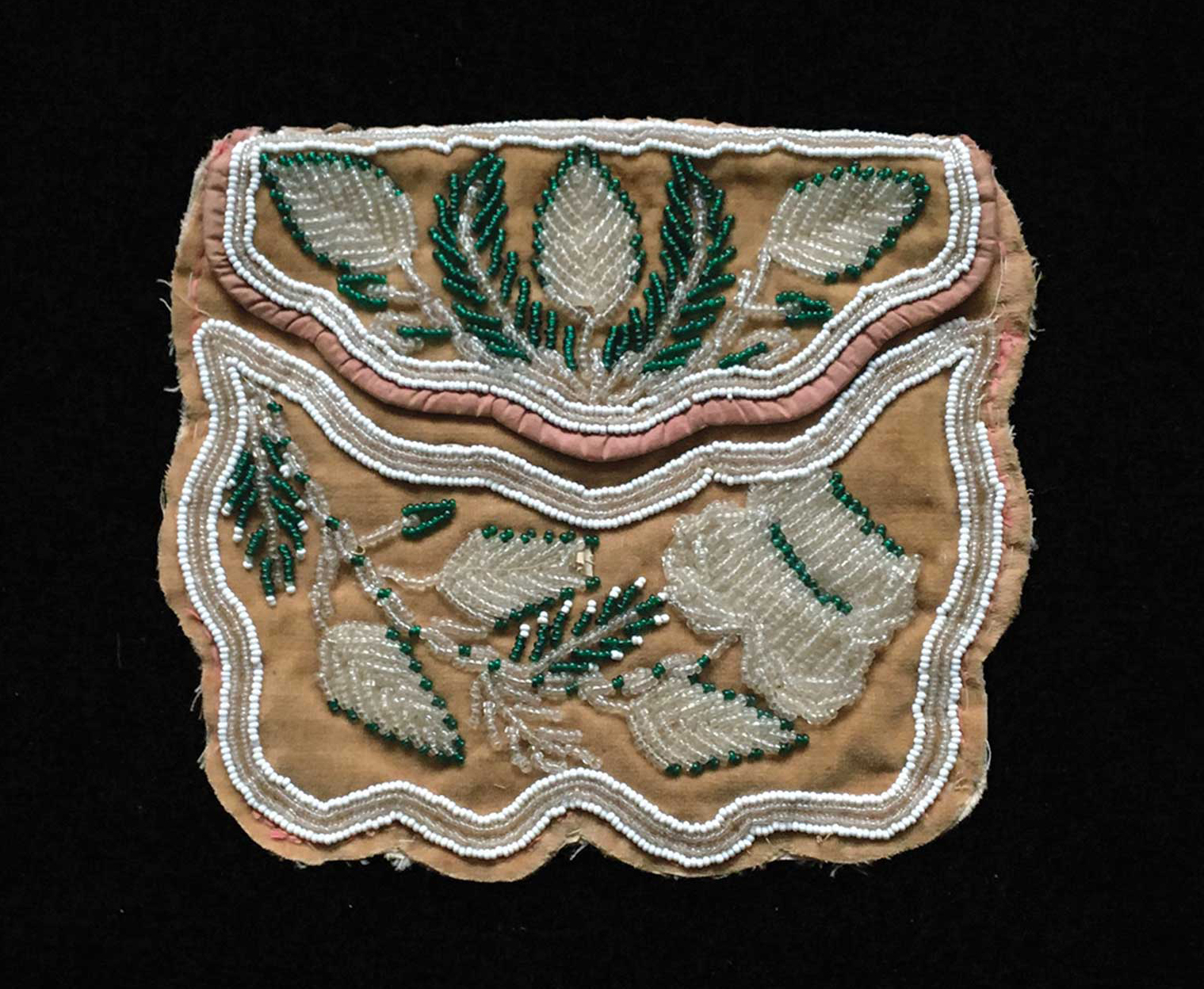 Haudenosaunee beaded bag, ca. 1850s, Mohawk floral motif, 6¼ x 5½”
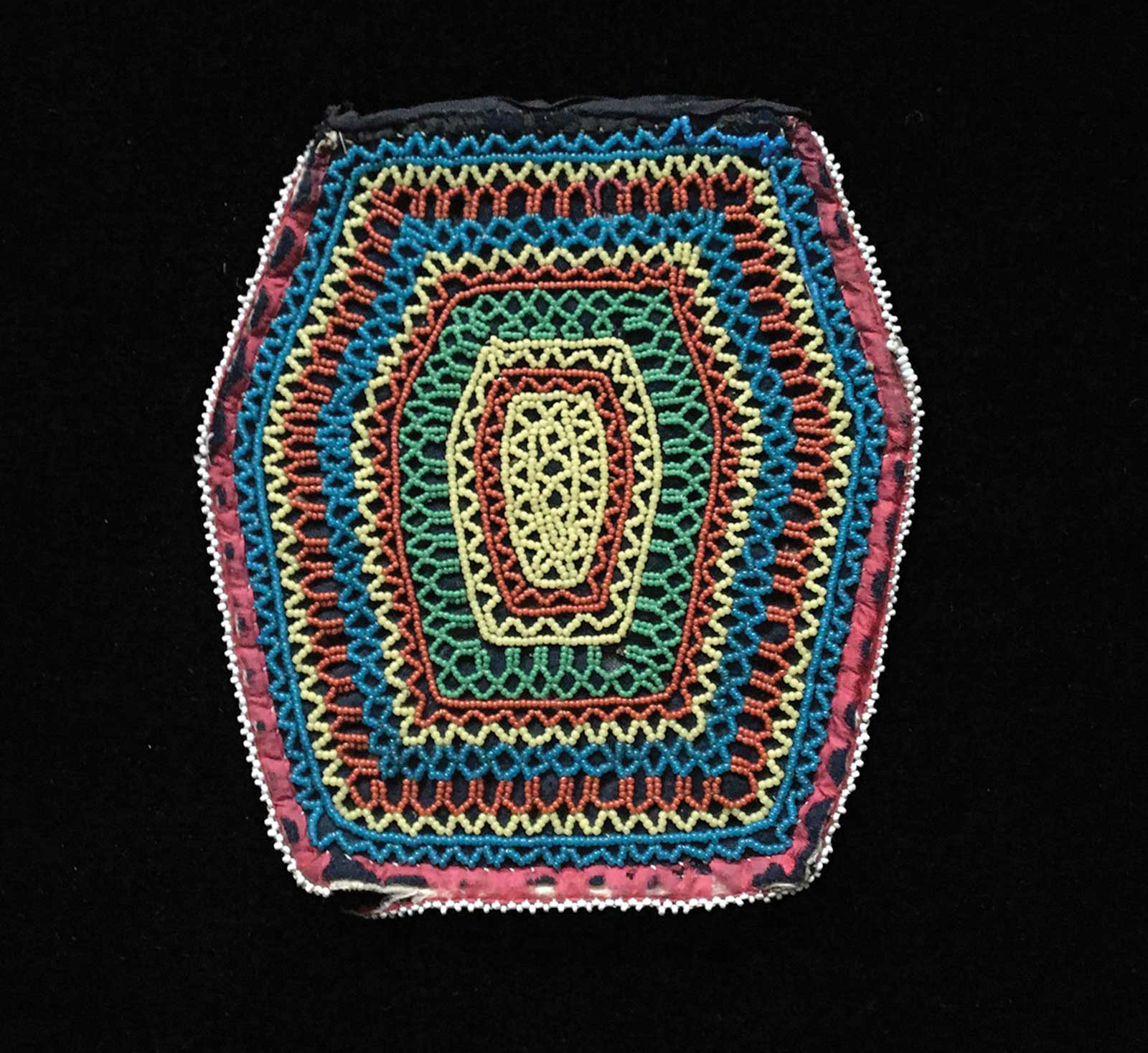 Haudenosaunee beaded bag, ca. 1840, hatch design, no flap, 4¾ x 5¼” (reverse side)
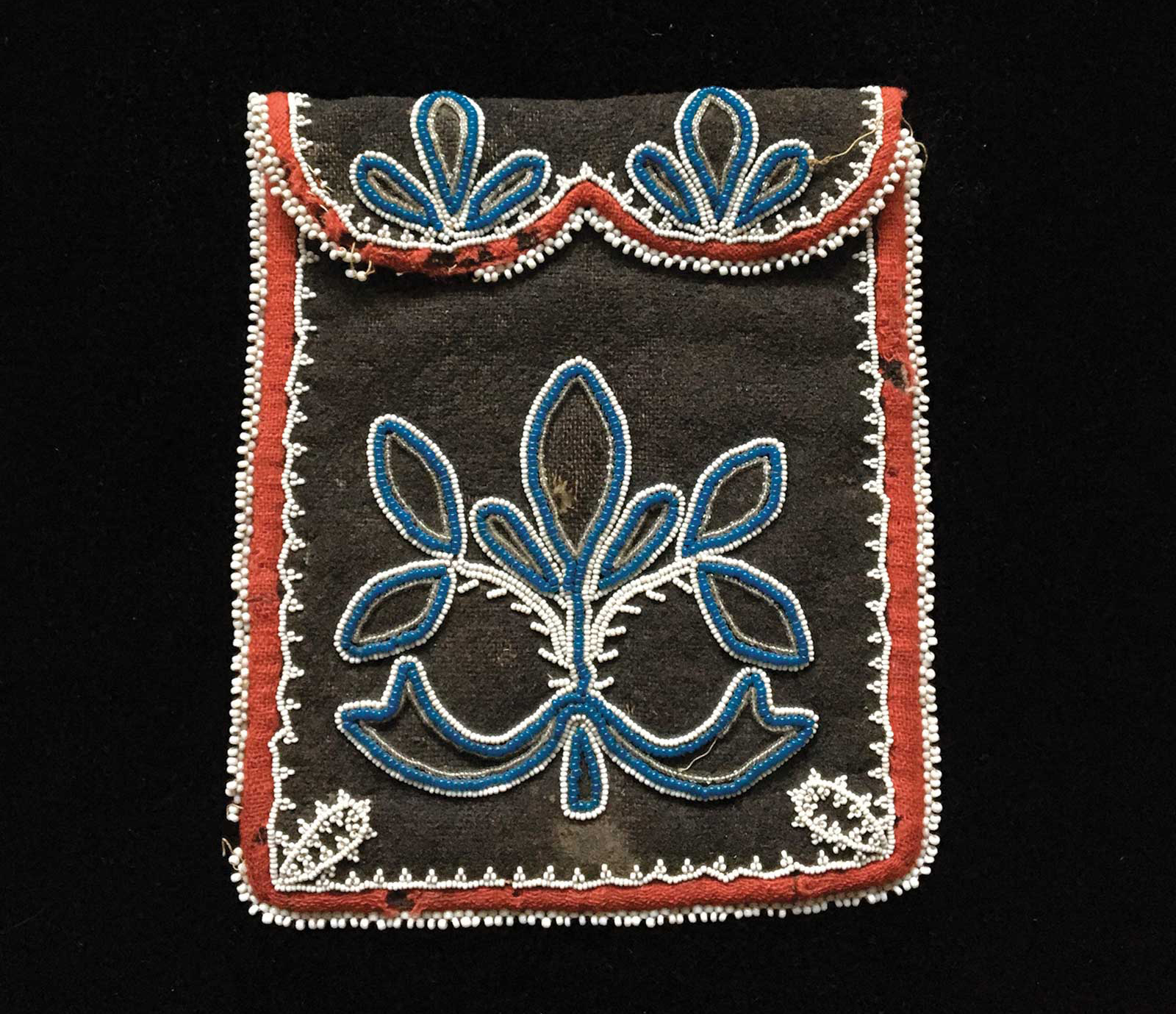 Haudenosaunee beaded bag, ca. 1840, 5½ x 6¾”
These historic works and many others are currently on view on John Molloy Gallery’s website. As for the show occupying the digital space rather than a physical gallery, Molloy isn’t discouraged. “Everybody’s home looking at their computers. That’s the advantage,” he says. From the comfort of their own living rooms, collectors can scroll through the wide range of bags on display—some hatch designs in bursts of color, others in neutral palettes with intricately beaded leaves, florals, animals and other symbols.
Molloy adds, “It’s nice to see this art begin to get the recognition it deserves.”
Through May 30, 2020
Beaded Beauty: Early 19th Century Haudenosaunee Women’s Bags
John Molloy Gallery
Online Show
(212) 249-3020 | www.johnmolloygallery.com
Powered by Froala Editor