Apsáalooke, Children of the Large Beaked Bird, this is what we called ourselves until we made first contact. Apsáa meaning the name of a bird that has since thought to have become extinct and Looke meaning “child of” becomes Apsáalooke. When early fur traders and pioneers were introduced to this name, they misunderstood the meaning, thinking this “bird with the big beak” referred to a crow, hence the “Children of the Large Beaked Bird” became known as the Crows.
Baannashtua is the word we use that means “something you pound” and was transliterated into “beadwork.” Before beads were introduced to the Apsáalooke in the late-1700s the women decorated their clothes, bags and rawhides containers with mediums available only from Mother Nature. Ochres, mineral paints from the earth found in the ground like soils and clays, made colors like yellow, green, red and blue. They also used porcupine quills to adorn clothing and these quills were color dyed with berries and plants. A distinctive technique used by the Crow women was used to sew the quills on to clothing and other items as an adornment. There is a story about a particular berry-and various plants-that produced colors of the rainbow depending on the amount of time it was boiled, from yellow to purple. It was thought to be magical.
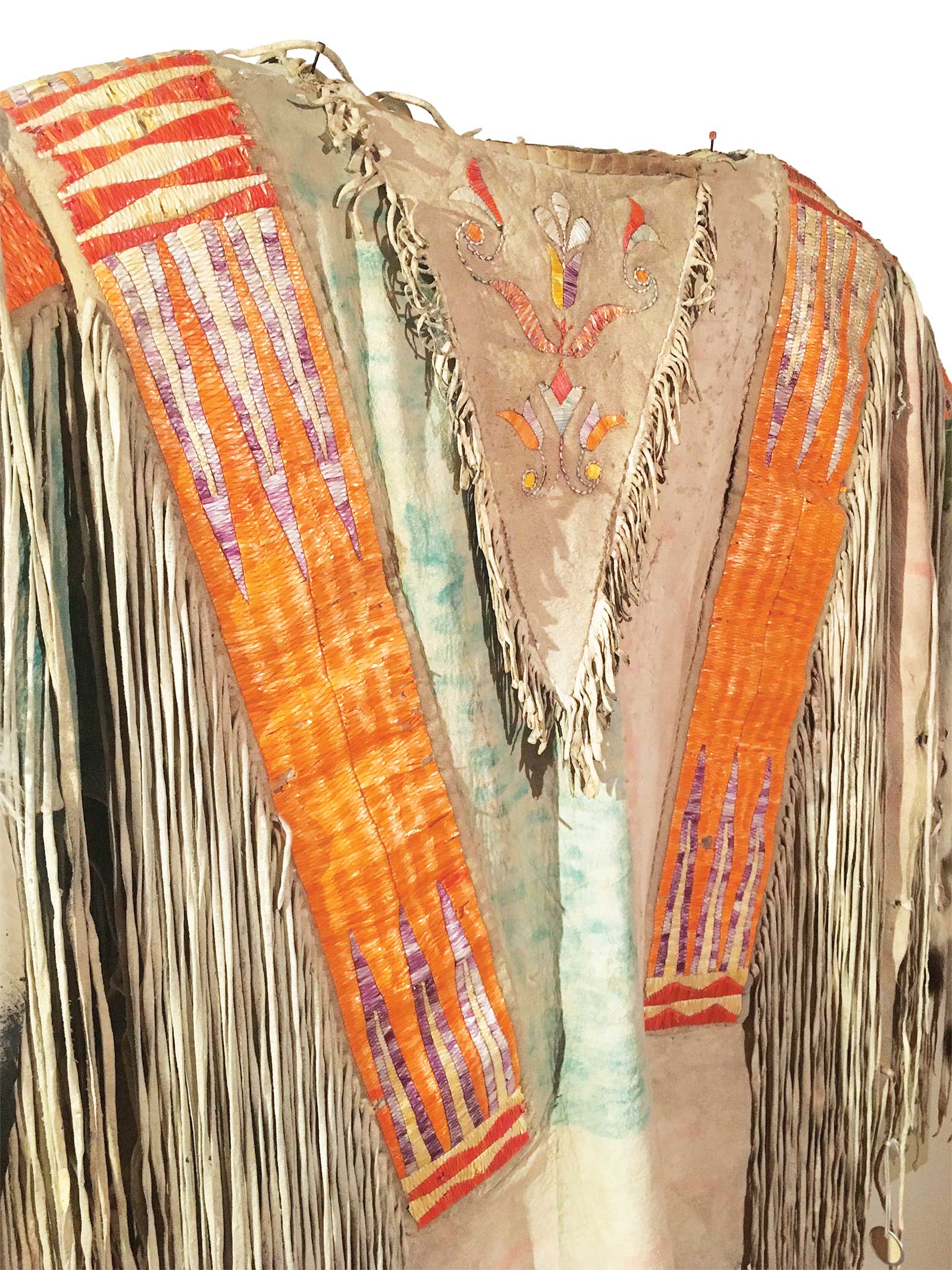 Opposite page: Hidatsa quillwork, ca. 1880s
Crow women were also famous for their use of elk teeth as an early decoration. Primarily used on women’s clothing, elk teeth were a sign of wealth and success. Only the two top “ivories” or milk teeth were used, and it took 350 elk to adorn an entire dress!
In 1780 beads were brought to Indian lands by traders of the American Fur Company. This was the first time Apsáalooke women used a manufactured item to decorate their clothing, using pony beads; up until this time they had used only natural materials. Pony beads were larger sized beads and limited in colors to black, red, white and blue. They were called “pony beads” because they arrived on horseback and were used as trade items for furs and pelts. It is thought that the Crows first obtained these beads from the Shoshone who were allies for many years. The Apsáalooke named these beads baaloo (something you can loop or catch). At this time they still used quills along with beads, but quills were still more popular. By the mid-1800s the seed bead came into fashion as there was a larger variety of colors to choose from. Early beadwork was adapted from the previous quillwork in technique and design. An adaptation from this method was the “lazy stitch” in which five to 11 beads were picked up on a single needle and thread. Odd numbers of beads were always used to create a design element within a solid field. Apsáalooke women frequently used the “Crow stitch” or “overlayed” in which two needles and sinew following up with a stitch to tack down the bead lines every fourth bead or so. This created a stronger and more durable design. Early beadwork was fairly minimal, however as time went on the art and technique became more sophisticated and covered larger surfaces.
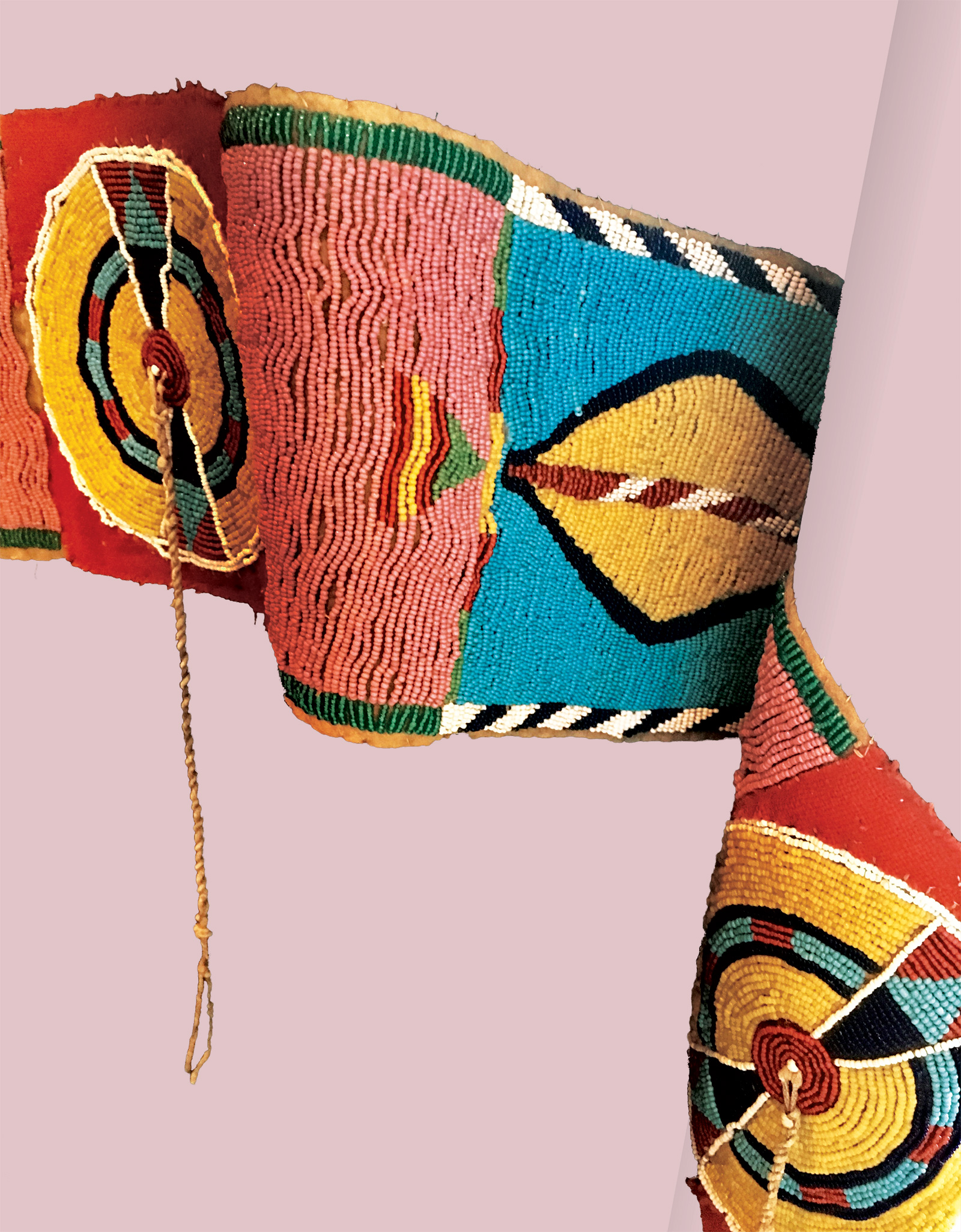 Crow blanket strip, ca. 1870s
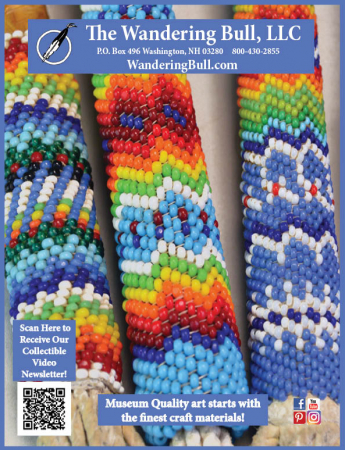
Apsáalooke women became artisans with this new medium of beads, inspired by the flexibility, colors and complexities of the seed bead. They primarily used red, white, green, yellow, dark blue, light blue, lavender and pink. Rarely, if ever, did Crow beaders use black beads in their designs. Navy blue beads were used to outline and accent. The object of the bead itself and the designs they could create was thought of as “medicine.” The preparation of rawhide and stitches needed to apply these beads on to various surfaces became an art form. Creating these techniques and certain designs were often given to them through prayer, vision and dreams. Women respected and honored this relationship with beads.
Sometimes women were given medicine, beading medicine. A woman’s beading medicine might mean a woman would not break or pop beads as they worked; some would be given particular colors as their own medicine; some would put little round rocks amongst their beadwork; some may add a certain color bead singularly inside a design; some were told not to start a project on a certain day; some were told never to take apart work you’ve already completed and that you must continue on. They would put kilos of beads of one color in their trunks with their other possessions to promote creative flow and fortune.
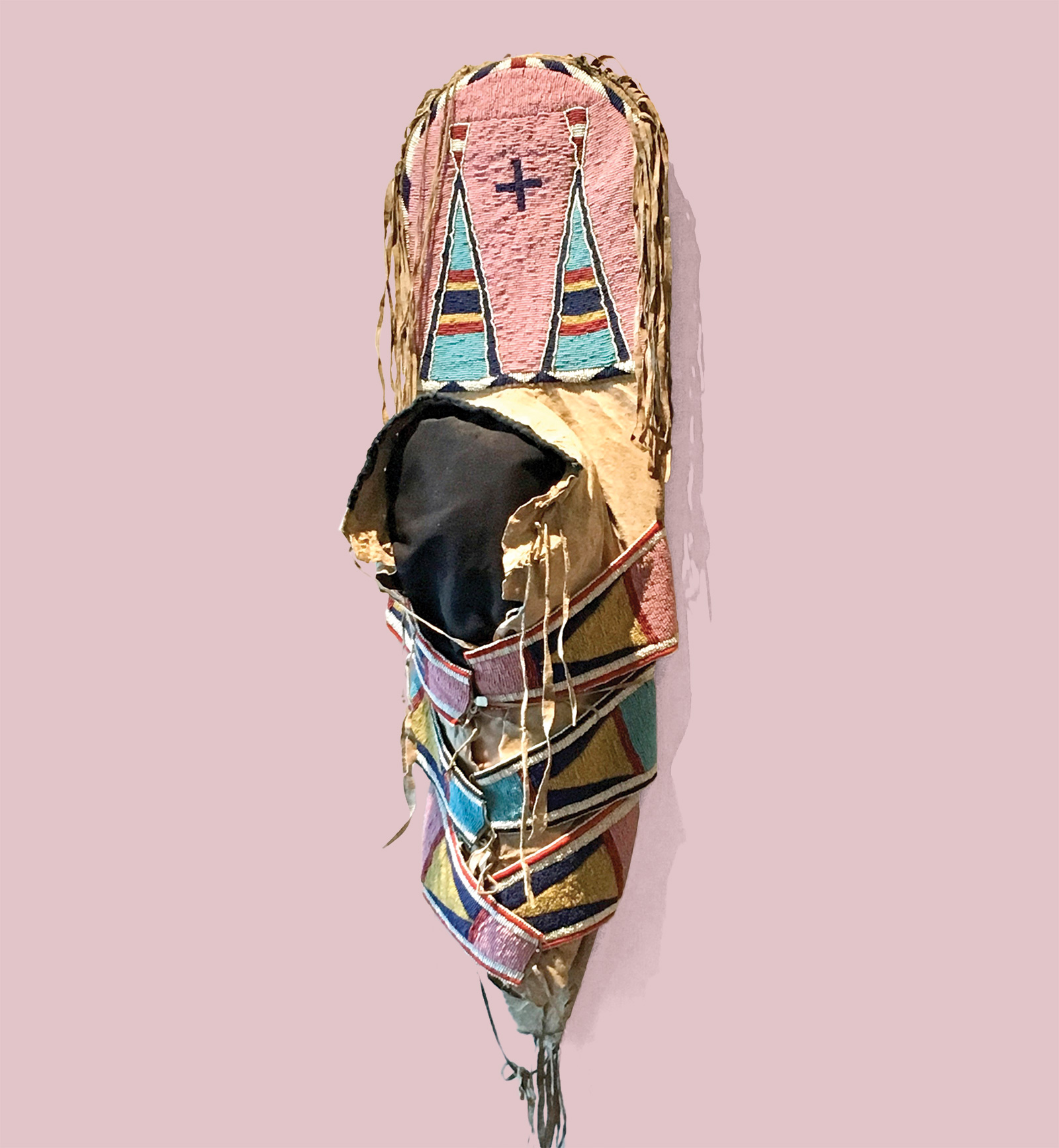 Crow cradleboard, ca. 1870s
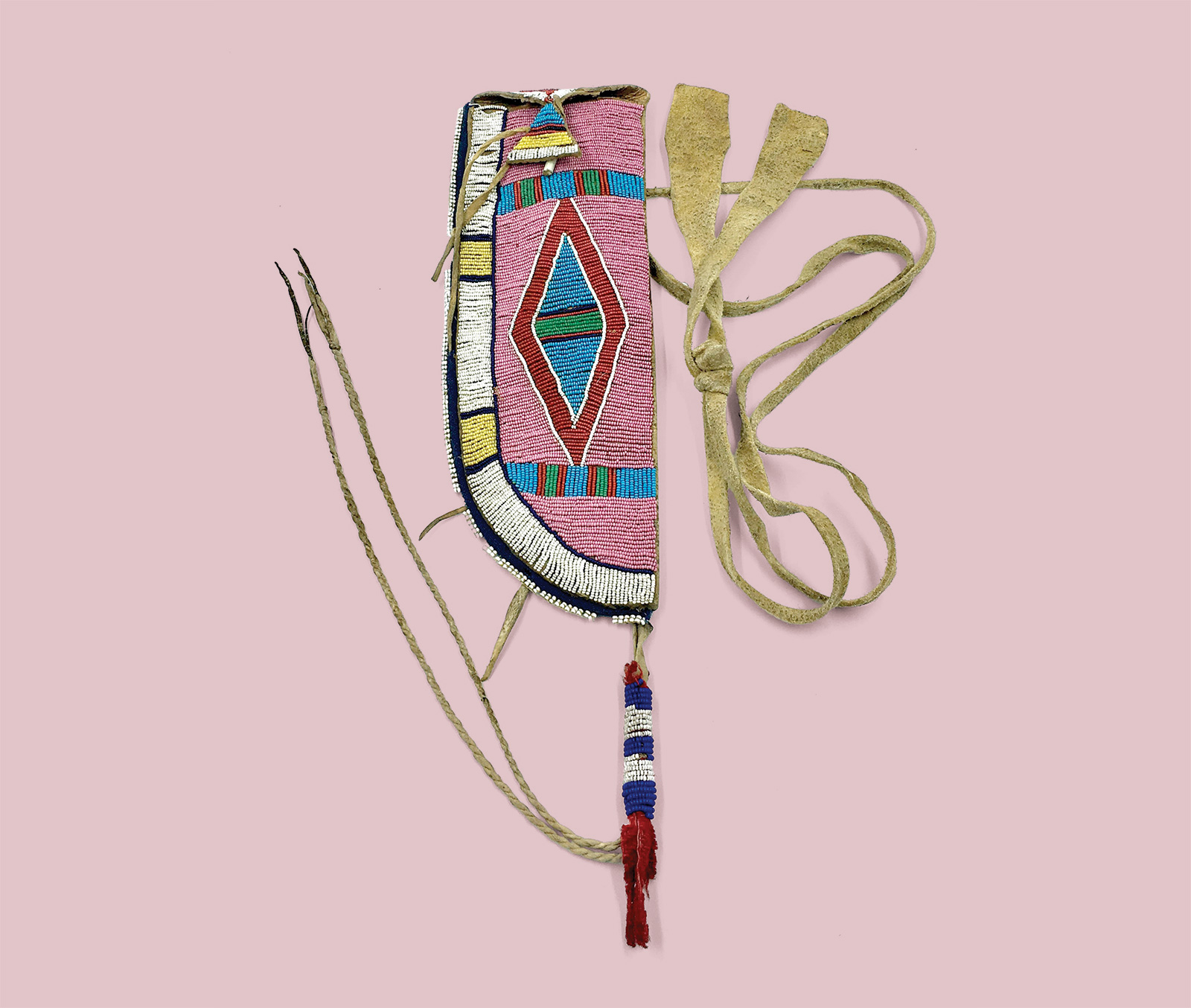 Crow knife case, ca. 1870s
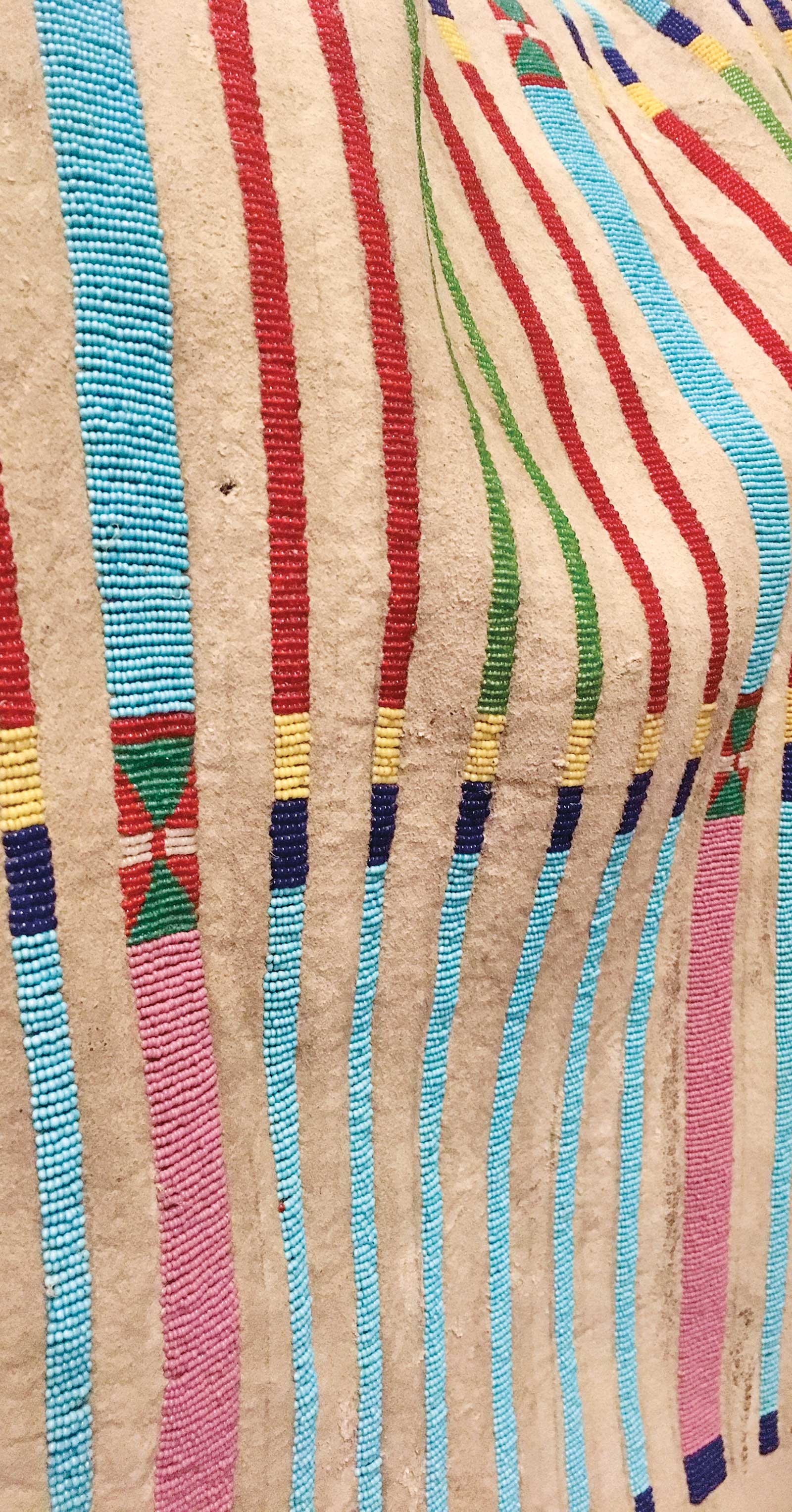 Crow wedding blanket, ca. 1880s
Baapuushiiluo means decorating somebody—putting color or decoration on a person from a vision or dream, prayers, good thoughts and love. A special necklace was made with specific colors to designate an individual as a special one who had the talent and gift to bead. This may be given to someone close to them in a good way to bring the recipient blessings or good fortune or to promote healing and creativity in their beadwork. The colors in the necklace may be used in their own beadwork hidden or visible, like a signature on a painting. A beading necklace given to someone gives them the rite of passage to bead, similar to a certificate. At this time a person has the right to explore many aspects of Apsáalooke bead working like customs, healing, teaching, being creative and asking for guidance.
Beading was held is such high regard that children were given names to signify certain aspects of beading like “one bead,” “two beads,” “many colors” or “beads don’t mix.” All of these customs and habits were thought to support good beading fortune, to have designs come to you, to be creative and be blessed with new ideas and good health, for all good things.
My aunt decorated me with a beading necklace when I was in my teens; I am a “decorated beader.” At the time I didn’t know how much my bead working would influence the direction of my life, but it was a good thing. Since then I have probably completed hundreds of beaded items, from my own personal collection of beaded clothing and sacred pieces to beading articles for museums and other people. Aho!
Many Mothers
My second mother my blood mother
Cow necklace Bishee Chilaapiash loved the many colors of the beads.
Many colors from sunrise and sunset bleeds
Many colors in water’s bonnet Biliikuupbash
All colors are beautiful in all of weather
My Mother the Sun’s wife was the best in making colorful porcupine quill designs
Finding rocks with holes are good luck signs
For these are forebearers of beads Apsáalooke attest
The soul of my bead work lives on in my necklace made by my Mother
Issaashteet Itchish ~ Blanket Without She Looks Good
My Mother Cow Necklace is Lucy Wallace Real Bird
My Mother Blanket Without She Looks Good is Annie Plenty Good Old Crow
Powered by Froala Editor