From the Atlantic seaboard to the Aleutian Islands, European glass trade beads were a potent cross-cultural currency. European explorers, missionaries, fur trappers, traders and colonists brought strings of these beads with them as they lay claim to the bounty of the North American continent. When bartering with the many Native peoples of the New World, beads were a more than successful substitute for coinage and paper notes. Glass beads also proved to be advantageous for gift-giving purposes as well.
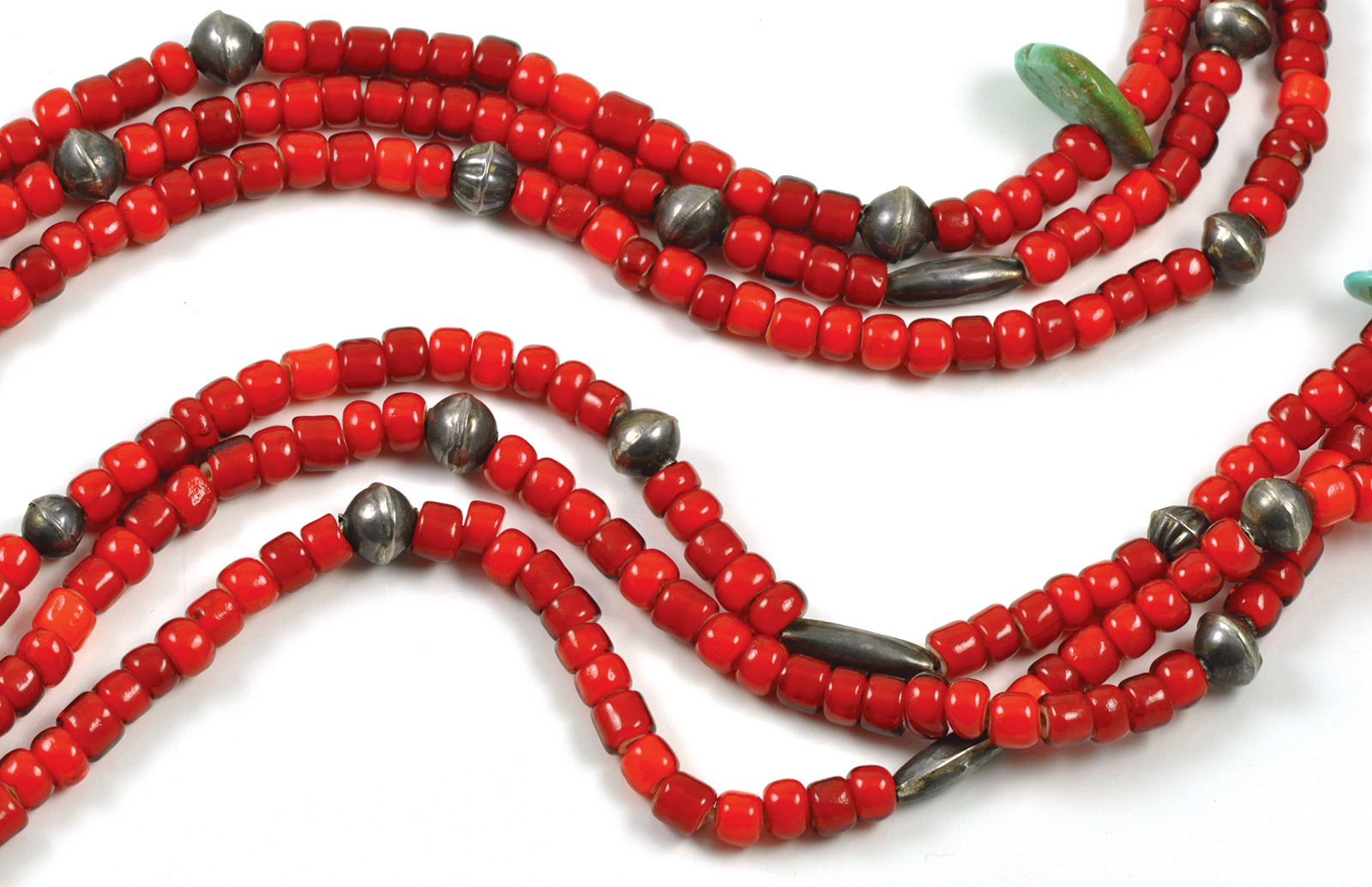 Necklace made with distinctive red Hudson Bay beads, alias “white hearts.” Courtesy Karen Sires.
Glass beads have a long history. The glass-making process began 3,500 years ago in ancient Egypt and Mesopotamia. Under the Romans, improvements such as glass blowing pipes spread an active bead trade to the most remote regions of the Empire well up to 400 CE. Glass bead adornment disappeared during the more austere Christian era in Europe until it was revived by the Venetian Republic. In the late 15th century, glass makers on Murano Island restored Roman techniques and created cylindrical hollow glass canes. The first results, called Millefiori beads, eventually became prime candidates for trade to Africa and North America in the 16th century. By the start of the 1800s, Millefiori beads had multilayered wound mosaic stripes or flowers from glass canes molded and cut onto a solid colored core.
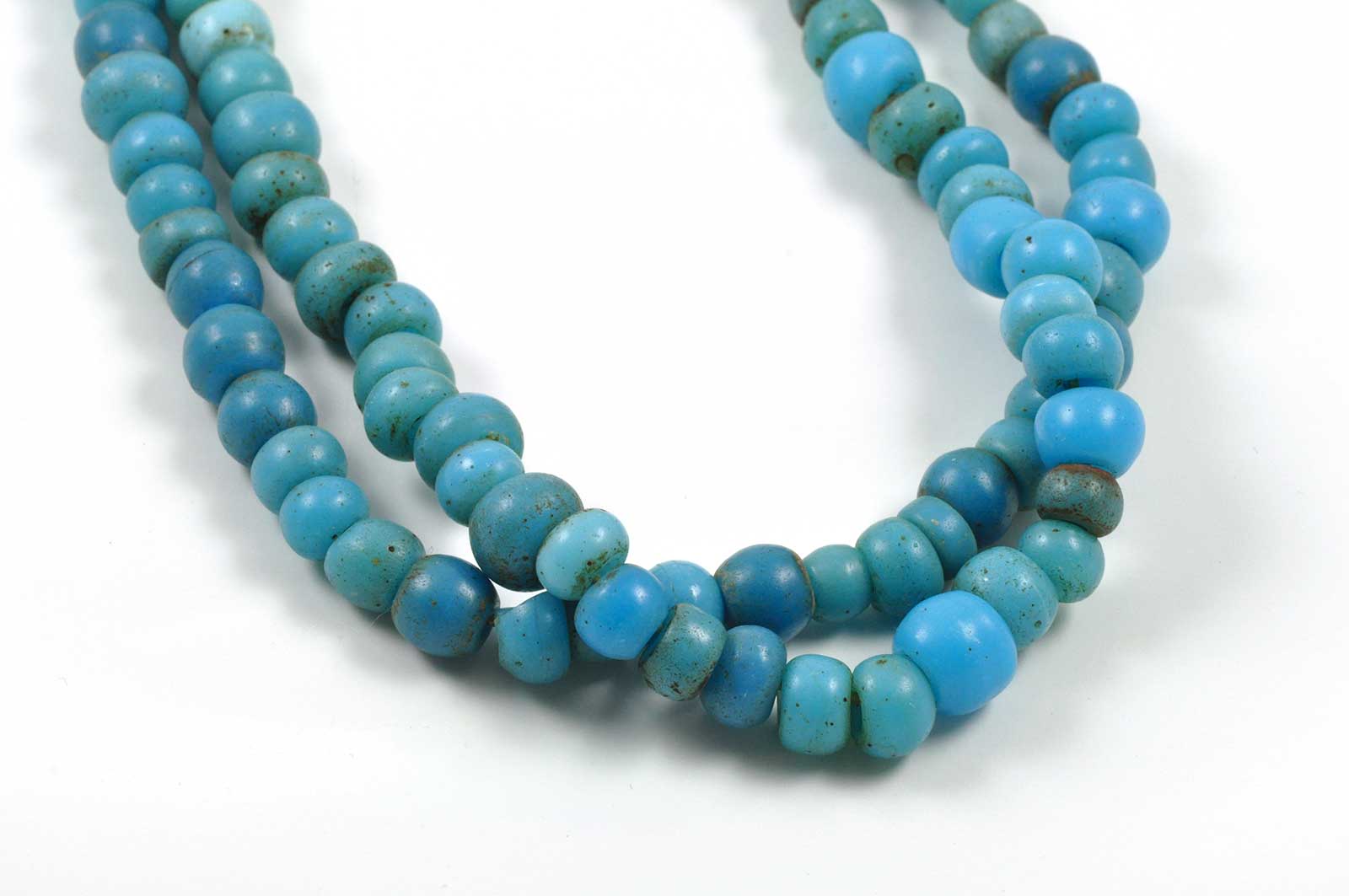 A strand of typical round padre beads. Courtesy Karen Sires.
Other countries renewed the production of beads in this time period, stimulated by explorations to the New World. The old Kingdom of Bohemia (later Czechoslovakia) established its own beads, and these creations vied with Venice for popularity. Spain, eager to pursue conquests and trade in the Americas, also created glass factories, as did France, Holland and Sweden. European countries possessing the essential natural resources for glass, such as potash, quartz and sand, cultivated glassmaking. After the glass bead mold was devised in the early 1800s, production costs lowered, and more varied bead colors and designs could be turned out.
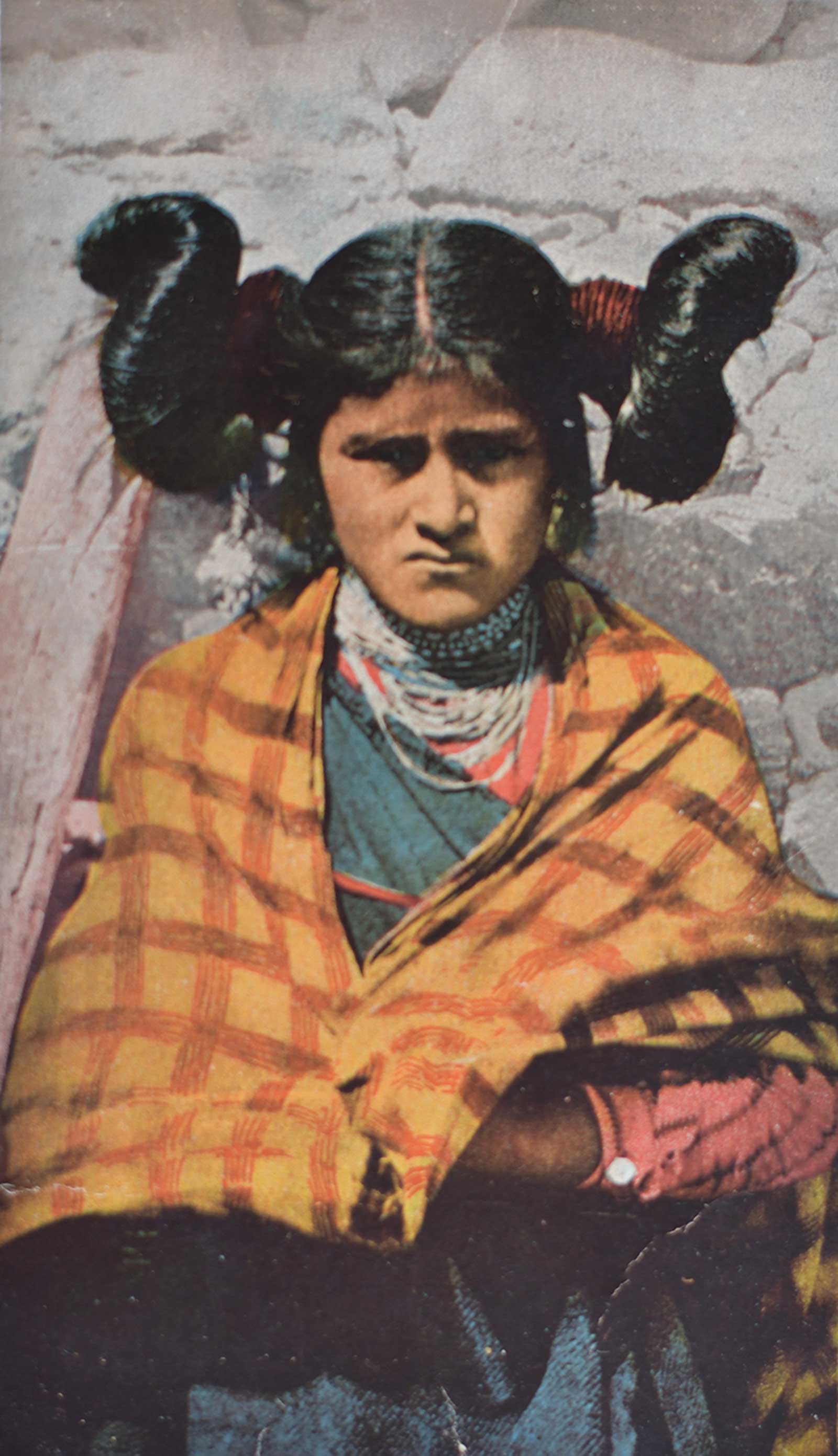 A postcard of a Hopi girl wearing trade beads, first quarter of the 20th century.
Glass was a material unknown to Native Americans. The Native peoples of North America made and traded beads created from natural materials: bone, shell, stone and clay. Shaping these beads was a laborious process, and these objects were essentially fragile. The new imported glass beads were a most desirable commodity. They possessed a fine beauty in their shapes and colors—and they were highly durable compared to those formed by hand. Glass beads came in round, tubular and ovate shapes in various sizes. Some beads were made in a single color while others had multiple hues.
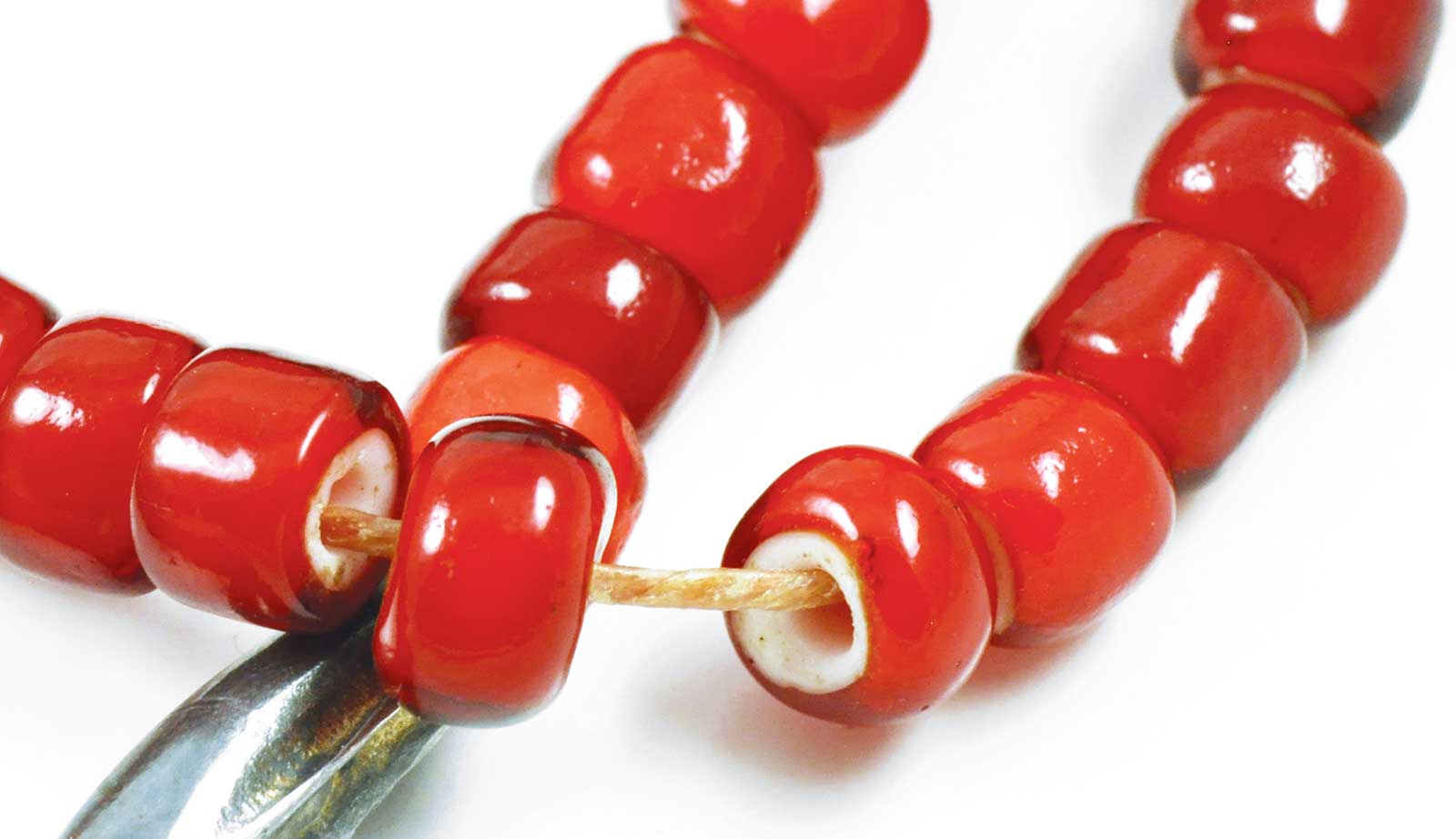
The inner core of the white heart necklace. Courtesy Karen Sires.
In the earliest European settled regions along the North Atlantic coast, the Haudenosaunee (Iroquois Confederation) and other cultural neighbors made bead bands and belts from white whelk shell and purple quahog, a hard-shelled clam. These creations were known as wampum, and they served as a significant form of currency in trade. By the end of the 1700s, glass beads with comparable colors could be substituted for the original shell beads.
Native peoples of the Southeast and Great Lakes regions favored trade beads from Holland and Venice. They particularly liked using these objects as a replacement for their own laborious bead-making process. These Indigenous groups sought brightly colored beads, including the Venetian faceted “chevron” designs made with a series of zigzag lines. Chevron beads became popular and can be found in late-16th- and 17th-century archaeological sites across North America.
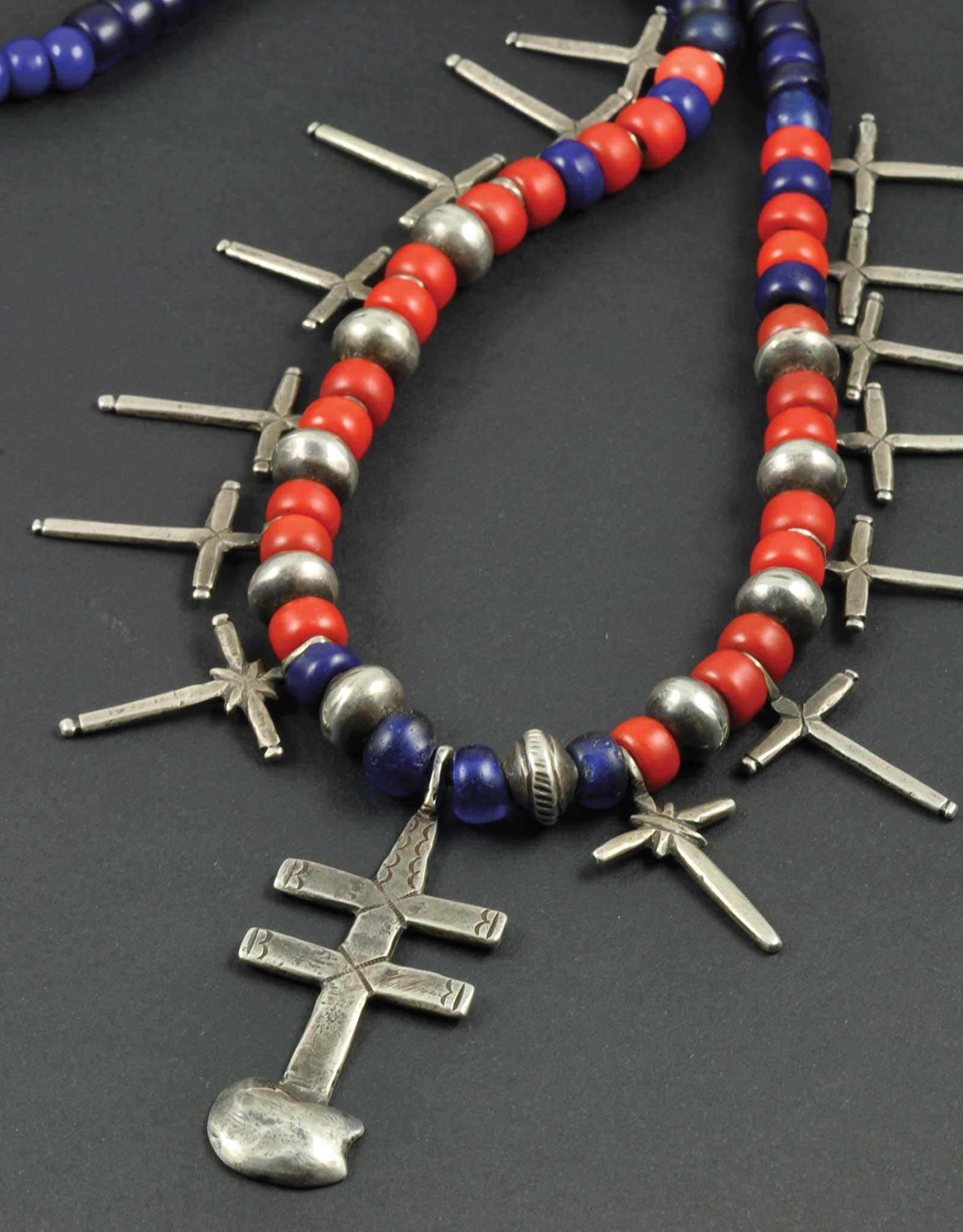 A Pueblo double-barred silver cross necklace strung with glass trade beads. Courtesy Andrew Muñana.
On the East Coast, French and Dutch arrivals transported their own nationally manufactured wares. English soldiers and settlers generally carried brightly colored and decorated Venetian and Bohemian beads. The Spanish brought these new beads as they traveled into the American Southwest and Southern California. Russian and Scandinavian sailors carried beads to the Pacific Northwest. Lewis and Clark departed on their expedition in 1803 armed with 33 pounds of trade beads. They also reported back on which types and colors were most in demand by the Plains and Plateau Indians. All of these European traders quickly found that their Native consumers had strong aesthetic preferences for three types of glass beads.
One of the most popular forms, the “padre” bead, was also one of earliest types used for trade in Africa and the New World. It obtained its name from the fact that Catholic missionary priests, often called “father” (or padre in Spanish), brought this bead in volume as an incentive for trade or Native religious conversion. The beads were given out for rosaries. Padre beads were made in a bright blue color often compared to turquoise. The early versions of these beads can be dated to the 16th through 18th centuries. There is also a connection between Venetian glass beads of this color and those made in Chinese glass factories of that time; Russian fur traders likely traded the Chinese versions to Native peoples on the Pacific Northwest Canadian and American coast.
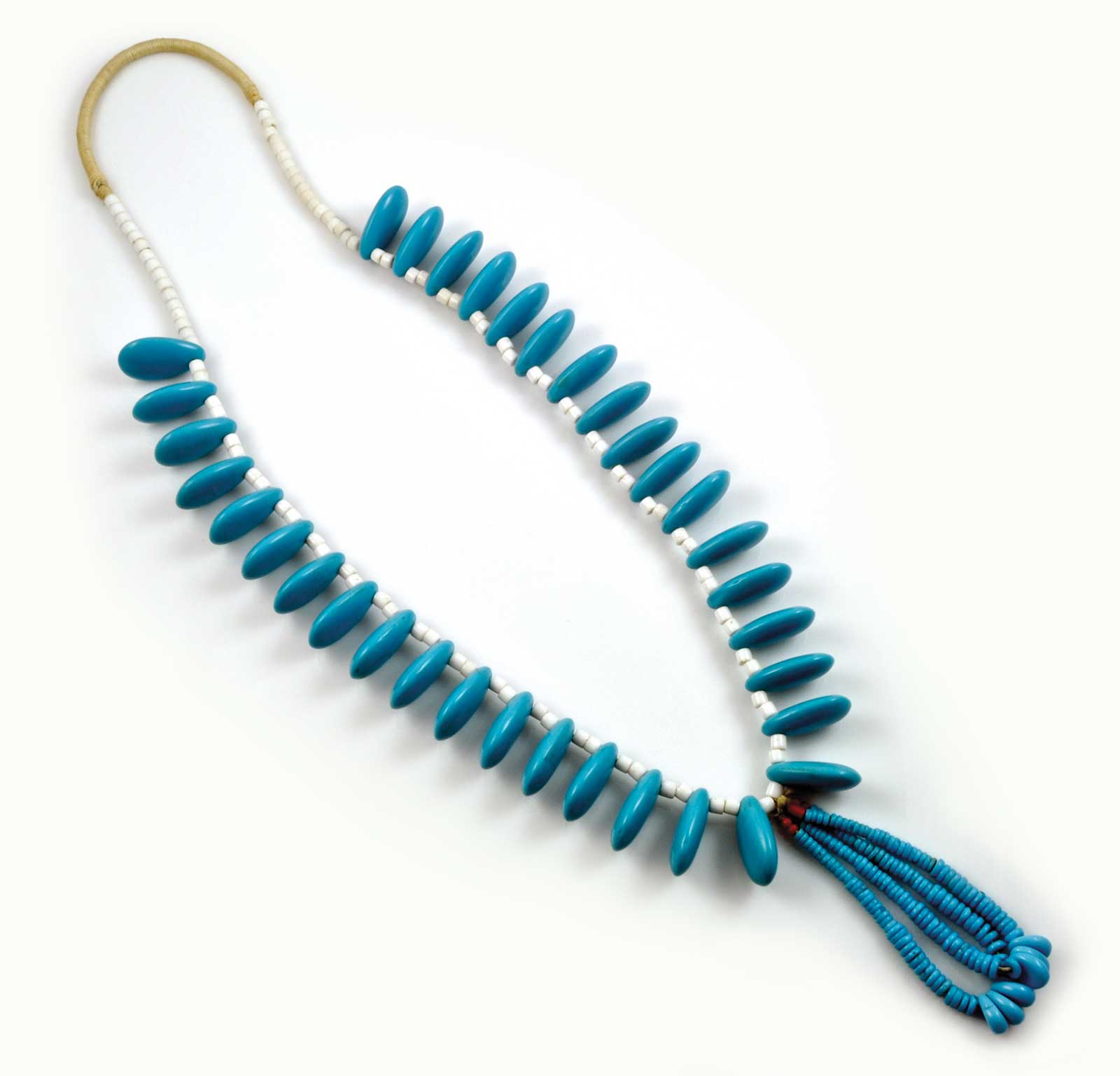 A strand of Hubbell glass beads. CourtesyJohn C. Hill.
The second form of glass trade bead possessing great Native appeal was the “white heart,” also known more formally as the Cornaline d’Aleppo or Hudson’s Bay bead. This was a two-layer compound bead with a white (most common) or yellow inner core. White hearts were made in a variety of surface colors, but a strong ruby-hued shade was the most popular. The glassmakers of Murano achieved this vivid tone by adding gold oxide to pink or violet glass. White hearts were widely traded throughout the many geographical cultures of Native North America. Many of these beads date to the early 1800s.
Native peoples of the Southeast, Midwest, Plains and Plateau regions who sewed beads for garments and adornment, among others, chose the third bead form, the “seed” bead, for their most desired trade good. Seed beads, along with the slighter larger “pony” and “crow” beads, became popular because they could be easily incorporated into Indigenous designs. For example, seed beads became an important substitute material for traditional Plains porcupine quillwork. Fine examples of this beadwork can be seen on Plains buckskin dresses, purses, moccasins and men’s jackets and vests.
Historically, tracking the overall role of Native-used glass trade beads proves difficult because these beads have great variations in what they were called. Local names were derived from where certain beads originated, the traders and Natives who bartered them, and even those locations from which they were shipped. In addition, the means whereby they were transported contributed to naming—as in the case of pony beads. The polychrome mosaic designs on some beads led to designations such as “flower” and “fancy.” One Plains tribe, the Blackfeet, even called their brightly colored goods received in trade “skunk beads.”
Color was a key factor in bead popularity. To the Native peoples, usually the most desirable beads were those in single colors. Lewis and Clark discovered that their Native trade and gift-giving partners preferred blue and white beads. White hearts with red outer surfaces, followed by those with pink and orange-yellow exteriors, were greatly popular in Northern and Southwestern geographic culture areas. Those regions with Spanish Catholic missions, such as Southern California, Arizona, New Mexico and Texas, most prized the rich turquoise blue of padre beads, although this bead was also traded widely in Northeastern and frontier areas by the early French missionary priests.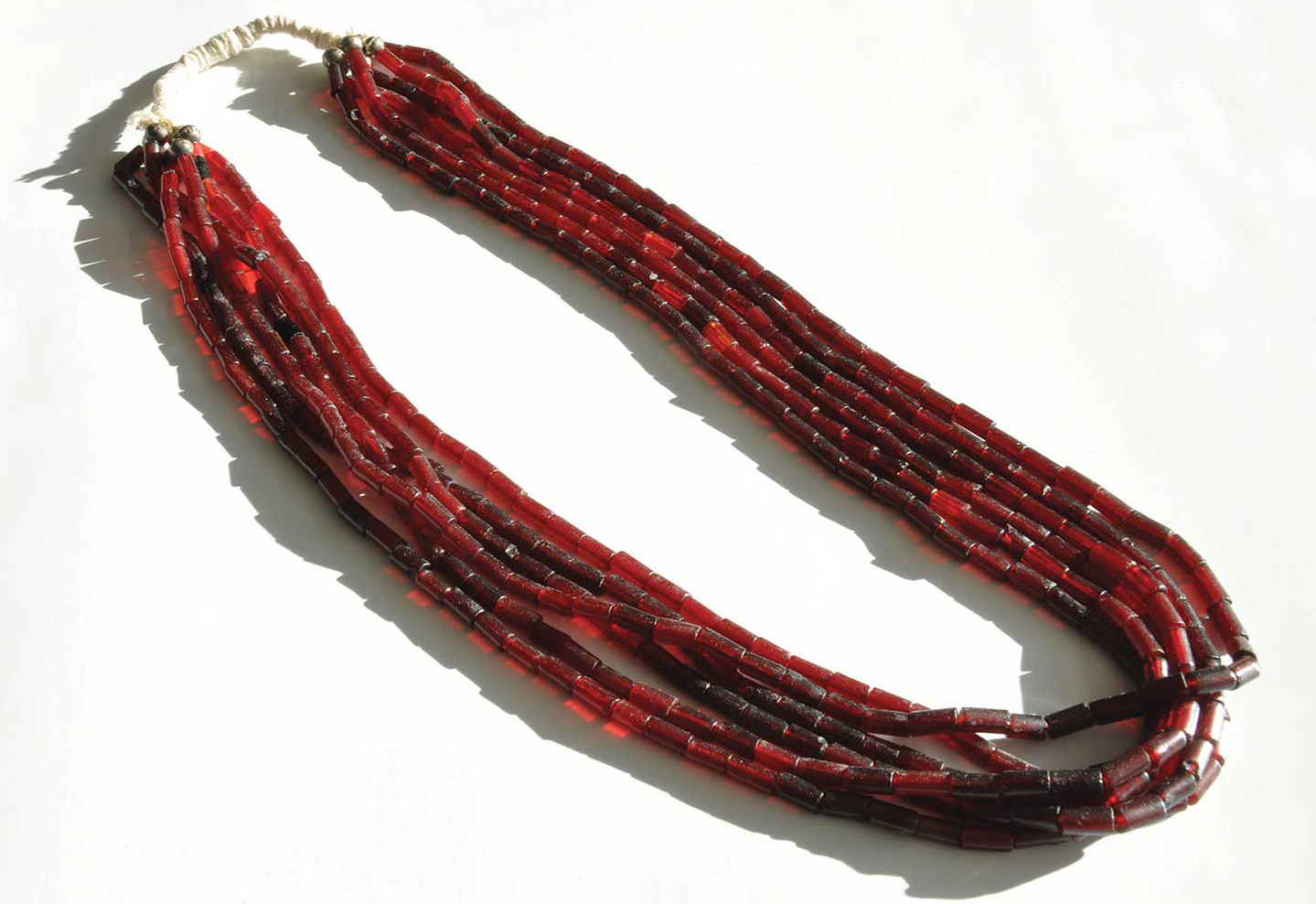 A six-strand Native-made necklace with inexpensive clear red tubular glass beads, some darkened from age. All photography by Barry Katzen.
In the late 19th century, a bead was ordered from Europe by Southwestern Indian traders for their Native customers who wished to replace the somewhat scarce turquoise used in their jewelry making. This bright blue substitute bead became known as “Hubbell glass.” In fact, this name might be a misnomer. Influential Indian trader John Lorenzo Hubbell, based at a post in Ganado, New Mexico, is credited with obtaining this bead from the Czechoslovakia. Most likely, other traders followed suit.
An article in a 1971 issue of Arizona Highways claims that Hubbell was the first trader to order the blue beads for the Indians who supplied him with jewelry. This attribution comes from the discovery of a cache of these beads at the trading post in the late 1960s. While no records have turned up at the post, there is a belief that one of Hubbell’s sons may have been involved in their promotion. Even a scholarly biography of Hubbell’s life and career, published in 2015 with extensive references to archival records, makes no mention of these items. Nevertheless, the term “Hubbell beads” currently remains very much part of the language used by artists, collectors, dealers and writers.
Hubbell beads were made in both round and tab shapes to imitate Native stone bead-making. Indian traders also imported red glass beads which were immensely popular with Navajo and Pueblo jewelry makers; these artists often finished their silver and stone creations with several lengths of individual red beads. The glass beads may have offered a changeover from the use of coral shell whenever that material became hard to find. The importation of glass beads for Indian trader use fell off after the late 1920s as the Great Depression affected both European and American economies.
Old glass trade beads are very collectible, especially if they are in good condition. These beads mark the beginning of Indigenous cooperative trade and barter with emigrants from Europe. Nor were such historical items merely trinkets of negligible value. American Indians eagerly incorporated these uniquely hardy trade goods into their personal adornment needs. Such an effective cross-cultural commodity deserves further research and assessment.
One last note: Glass trade beads are extremely difficult to date with any sense of exactitude. The beads shown in this article were strung into necklaces that were made from the late 19th to early 20th centuries.
Powered by Froala Editor