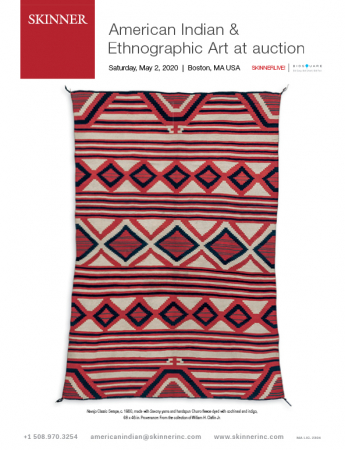
Whether it’s a textile you can wear, a gloriously patterned rug or even a wall hanging, this collection awards you with not only a sense of culture and heritage, but the warmth of companionship. Every fiber tells a story and each finished piece is a journey, leaving behind a legacy. The journey entails picking either a commercial or hand sheered fiber, such as wool, and using plant or aniline dyes that showcase vivid color, highlighting striking design and pattern. Each piece has traveled from a different location and has been crafted by spirited hands who have a history to unleash. We hope the collection leaves you with the same feelings of balance and harmony that each creator intended.
From an Expert:
Thoughts on collecting Textiles
"As you begin to contemplate collecting Navajo rugs, I would encourage you to learn everything you can from books, from media, other collectors and especially the weavers themselves…Look for quality in construction—well spun yarn; tightly woven threads and overall balance in the shape of the design elements. Textiles, just like any other art form, should speak to your soul—they should touch your heart."
—Katie Richarme, owner, The Dancing Rabbit Gallery
Cowan’s Auctions
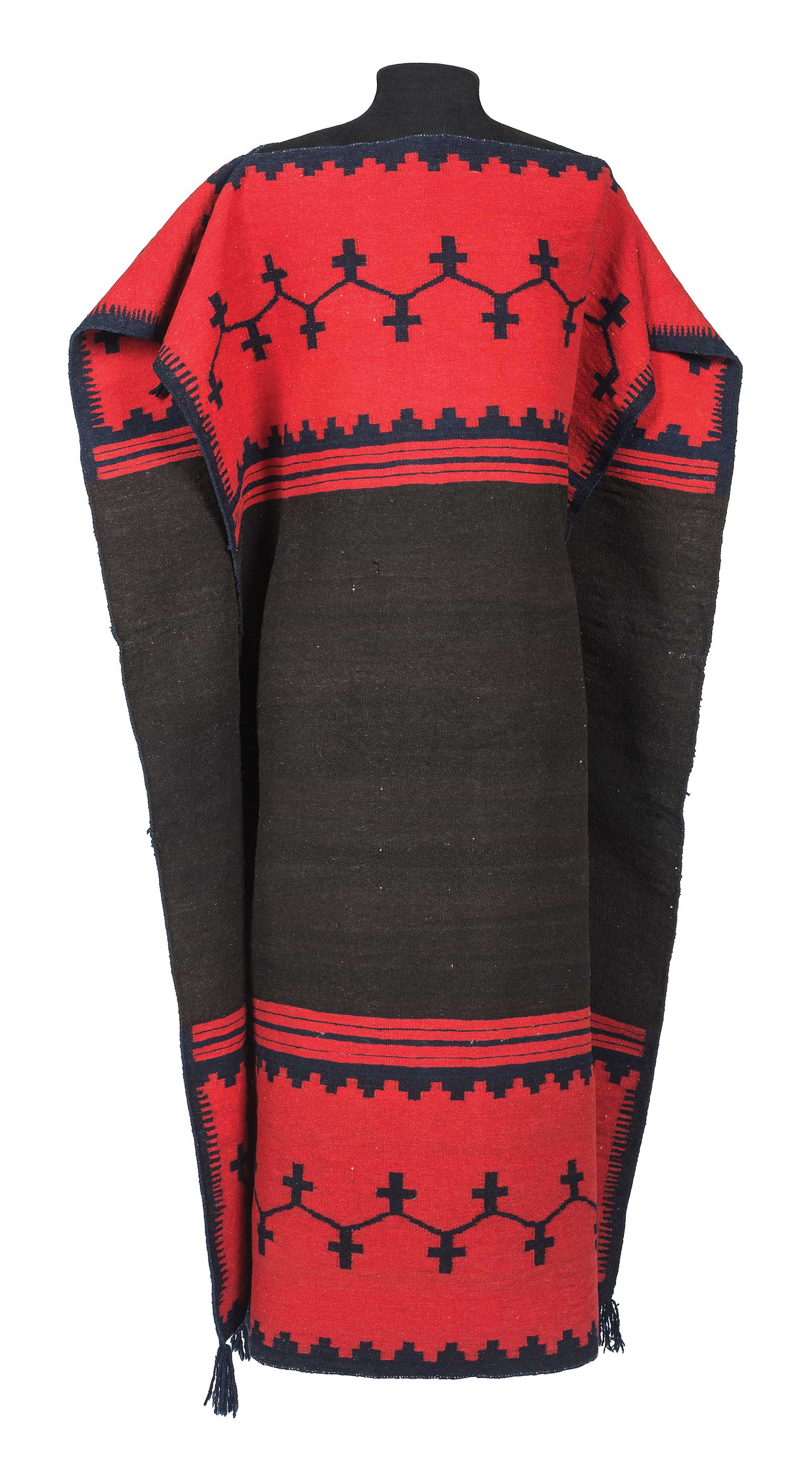
These late classic Navajo dress panels will be offered at Cowan’s Auctions in its American Indian Art auction on April 10 at Cowan’s Cincinnati office. Made circa 1870 of hand-spun wool, woven using colors of indigo, cochineal and dark brown, each panel is designed with sections of crosses and a terraced border. The panels are estimated to sell between $10,000 and $15,000.
(513) 871-1670 » www.cowans.com
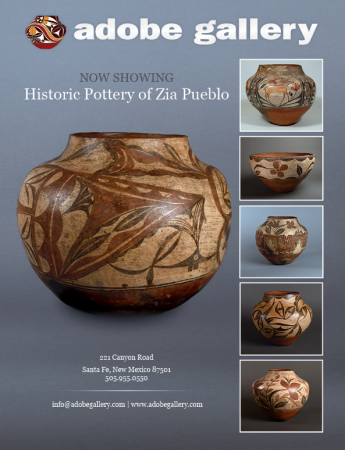
Adobe Gallery
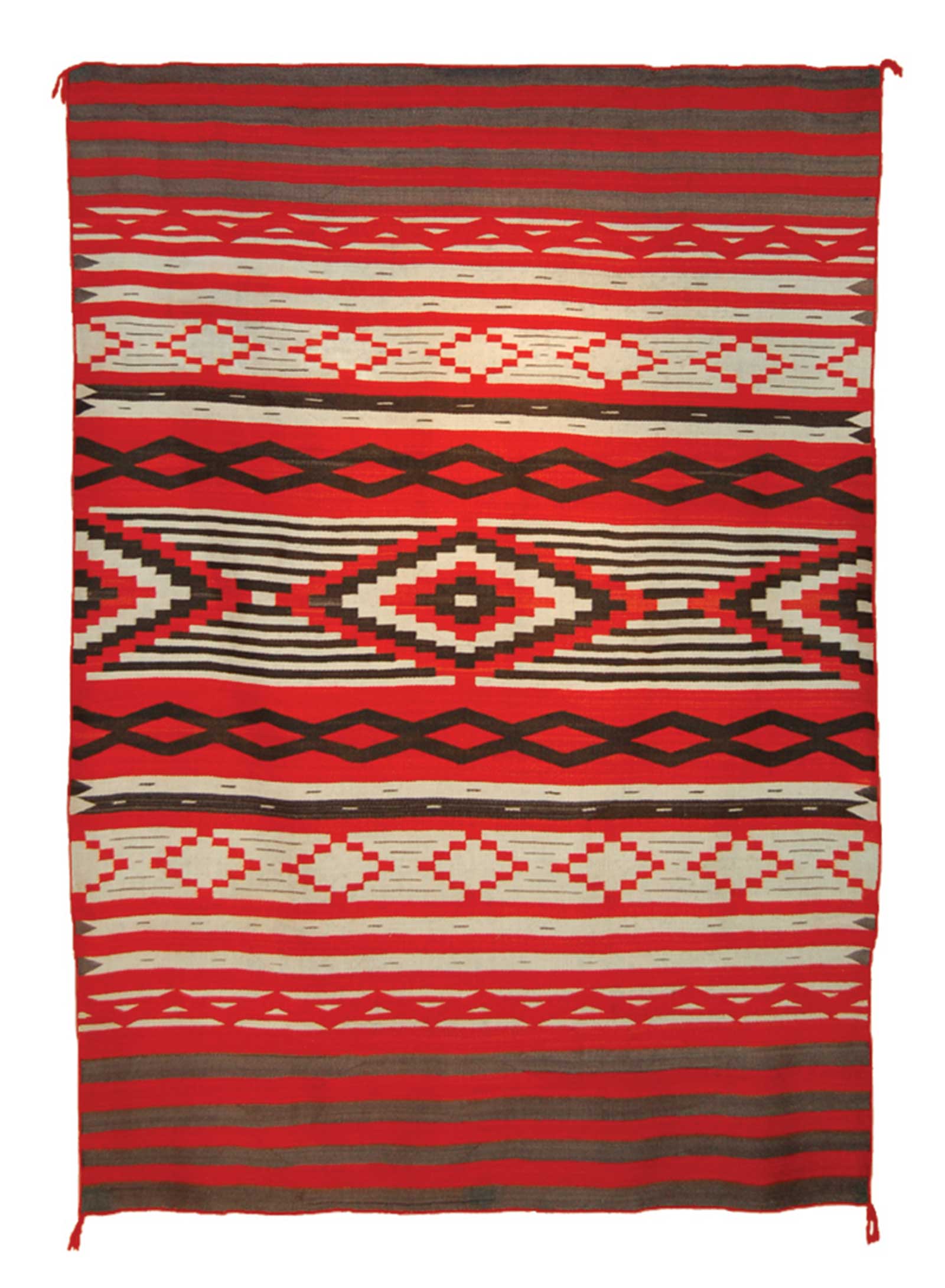
This stunning Navajo rug was the second of eight designs published by Trader J.B. Moore in the 1903 catalogue, an indication of its importance to him. Its excellent condition can be attributed to the skill of the Navajo woman who made it, and measures 94 ½ by 64 ½ Inches. Moore is famous for introducing a variety of new designs and patterns to the Navajo weavers who made rugs in the early 1900s. He oversaw a mail-order operation at New Mexico’s Crystal Trading Post, that allowed customers to select these varying styles. Prices ranged from $1.50 to $7 according to size, pattern and weave.
221 Canyon Road » Santa Fe, NM 87501 » (505) 955-0550 » www.adobegallery.com
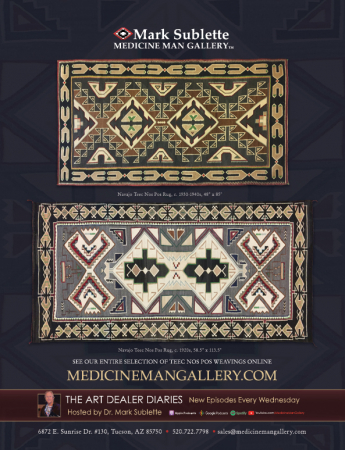
Mark SubletteMedicine Man Gallery
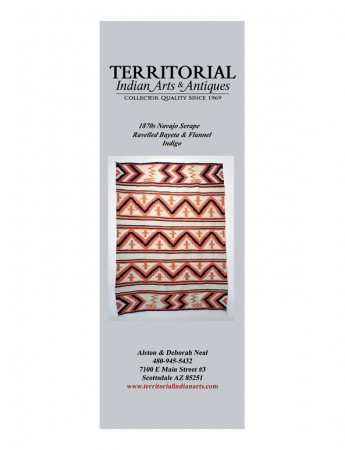
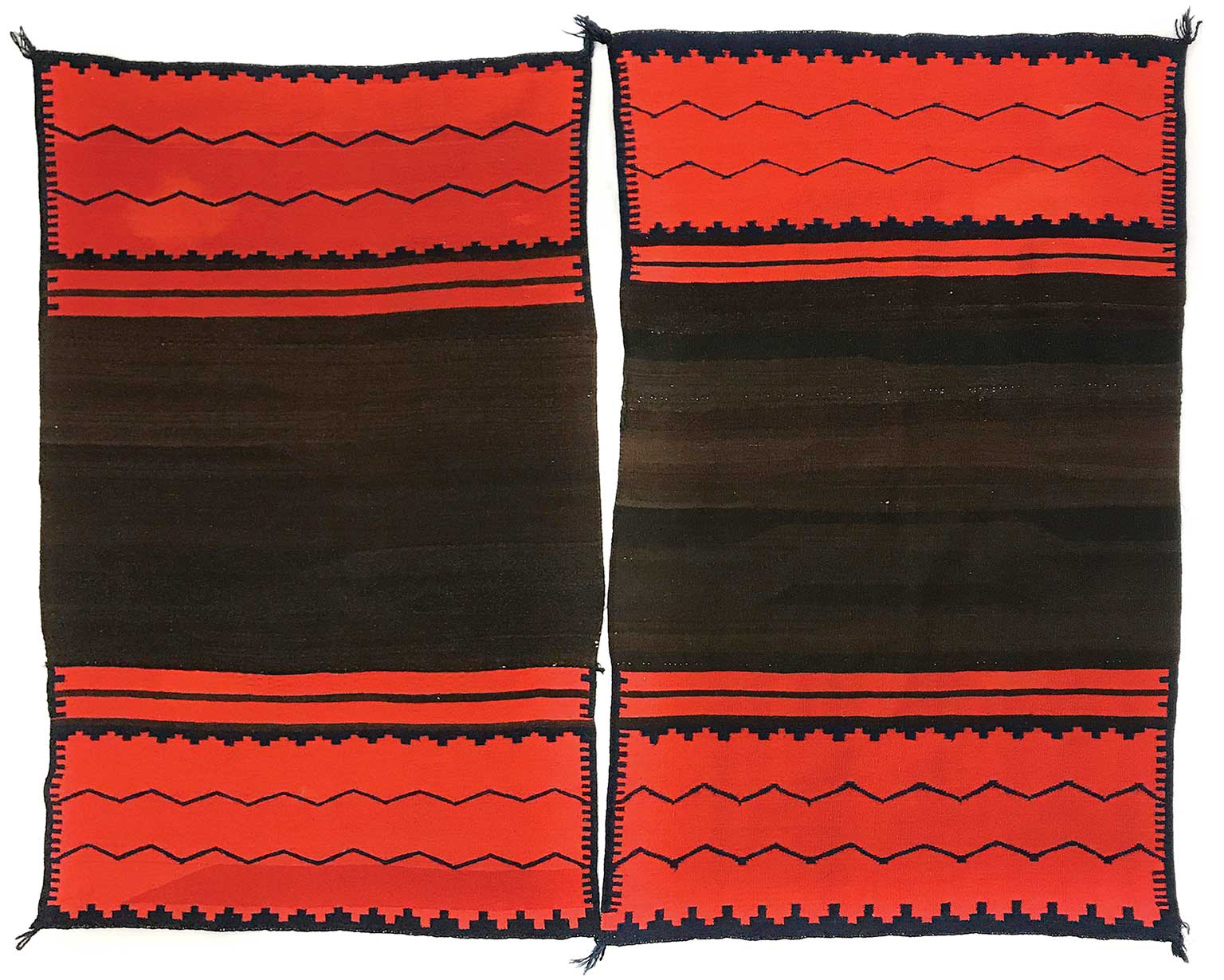
In the 18th and 19th centuries, Navajo women would wear dresses made with two identical halves secured in the middle by a Concho belt. These early blankets have a similar layout and yarn composition. This particular dress is in excellent condition and dates from the 1870s. The homespun dark brown central element with red ends is made from unraveled bayeta trade cloth and indigo blue. It also features undulating and terraced design elements.
6872 East Sunrise Drive Suite 130 » Tucson, AZ 85750 » (520) 722-7798 » www.medicinemangallery.com
Oomingmak Musk Co-Op
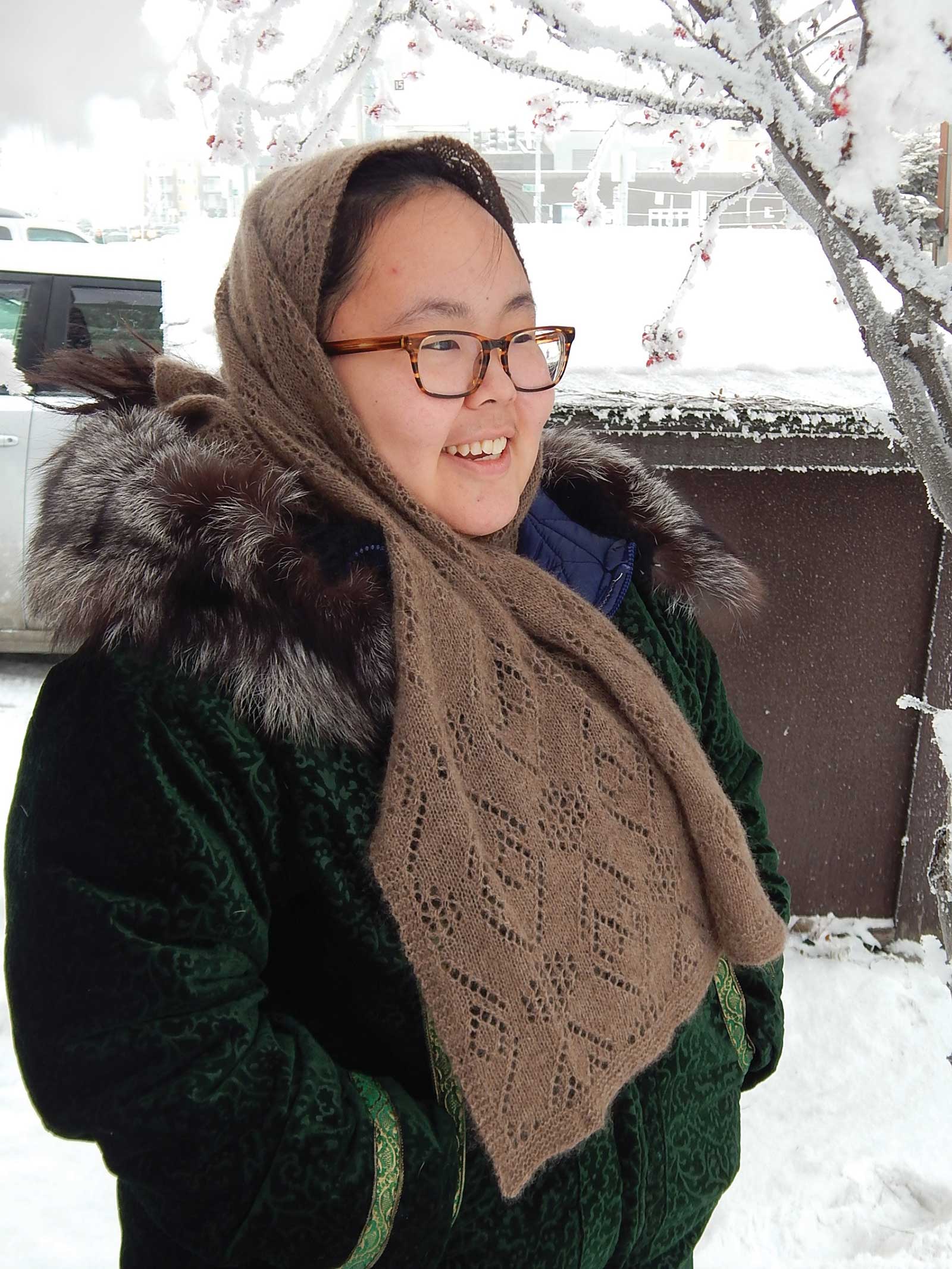
This is the Nelson Island pattern Smokering, the Yup’ik term is Nachaq, meaning hat or hood. Nelson Island is on the southwestern coast of Alaska and their pattern was adapted from the decorative trim of a fur parka used in the area. It represents the clashing of the packed ice as it breaks apart in the waters around the island in the spring. The population varies from 224 to 549 and relies heavily on a subsistence lifestyle. Made of Qiviut, a rare fiber that only sheds from the arctic musk ox once every spring, the stole is eight times warmer than wool. It does not itch and will not shrink. Garments are hand knit to earn a supplemental income.
604 H Street » Anchorage, AK 99501 » (907) 272-9225 » www.qiviut.com
Jack’s Antique
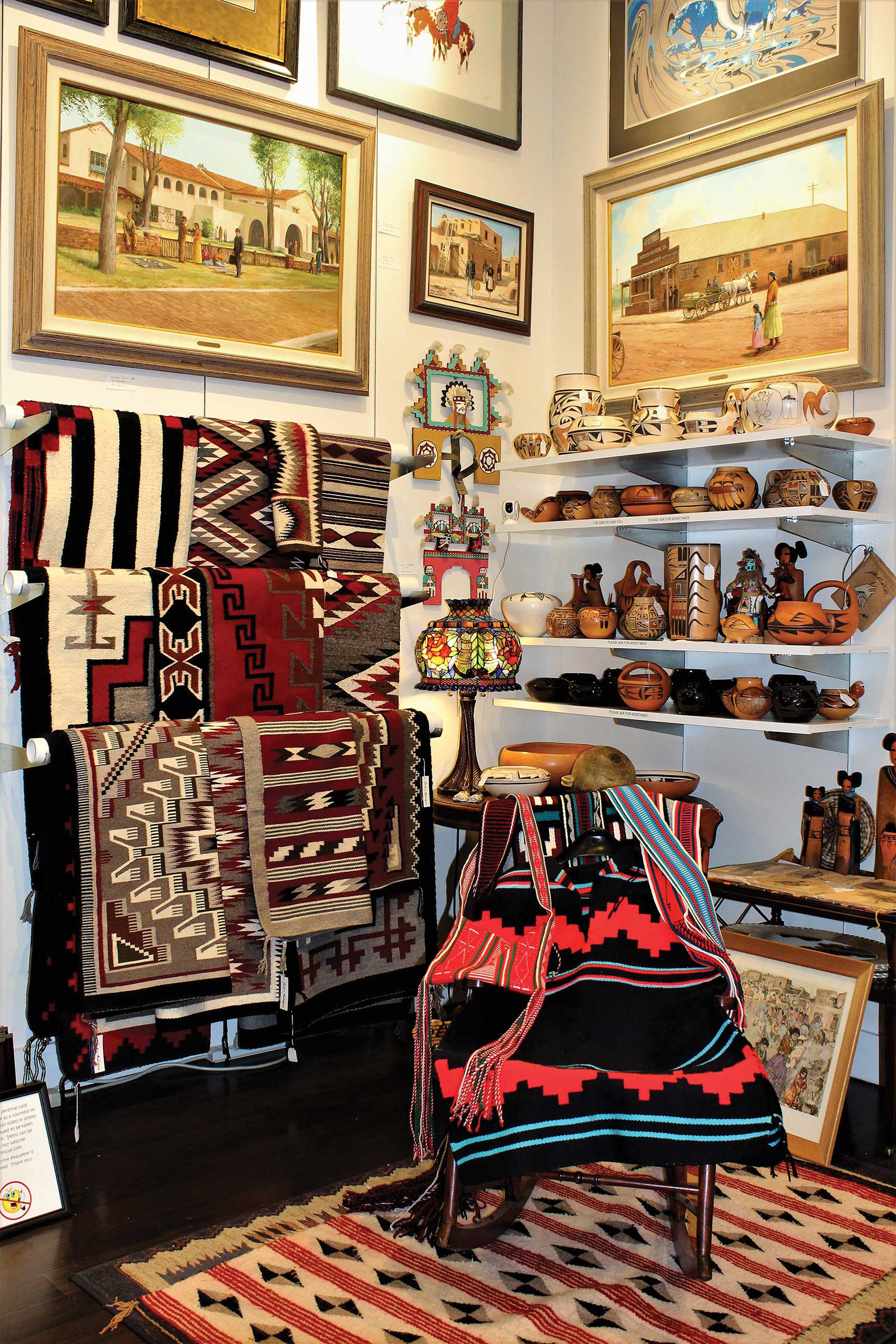
Jack’s has quite the collection of vintage Native American woven textiles, such as Navajo rugs made of natural wool yarn. They also include plant based dyes and aniline dyes, all from a private collection. The rug patterns include Ganado Red, Storm Pattern, Wide Ruins, 3rd Phase Chief’s Blanket, Two Grey Hills, Double Twill and Klagetoh. The Navajo Kinaaldá dress is from circa 1960s in striking black, red, white and turquoise. The Navajo and Hopi sashes in vibrant colors are woven around 1960 to 1970, while the shoulder bag uses vivid red yarn with a zipper closure and hand-finished cotton lining.
4650 N. US 89 Suite G014 » Flagstaff, AZ 86004 » (928) 526-0696 » www.jacksantique.com
From an Expert:
Thoughts on collecting Textiles
I recommend that those who wish to start collecting textiles begin by educating themselves. Read books, visit galleries and museums, and form relationships with knowledgeable dealers and collectors. I suggest that new collectors avoid anonymous online marketplaces when purchasing textiles.
—Alexander E. Anthony, Jr., owner, Adobe Gallery
Sandbar Trading
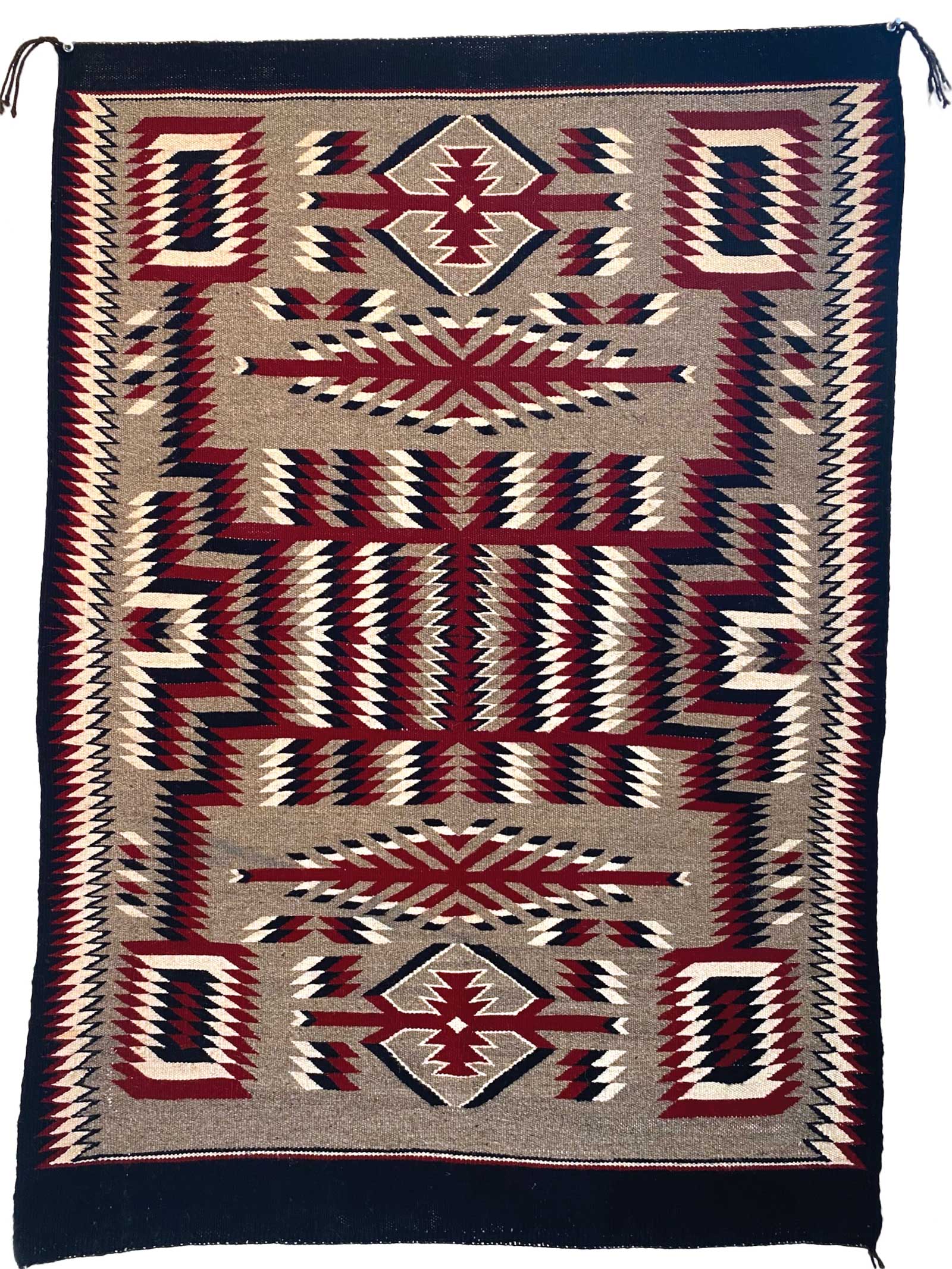
This is a very tight Storm Pattern weaving with Eye Dazzler design and intricate water bugs by Lucille Begay circa 1980. It measures 44 by 32 inches, and is made of commercial wool and aniline dye. This rug uses reds, blacks and whites on a grey background. In addition, Sandbar Trading is in the process of taking in a collection of Storm Pattern rugs that were collected from 1965 to 2000. There is quite the variation, colors and sizes in the 100 plus weavings they’ve received.
414 South Commerce Street » Wichita, KS 67202 » (316) 655-7477 » www.sandbartrading.com
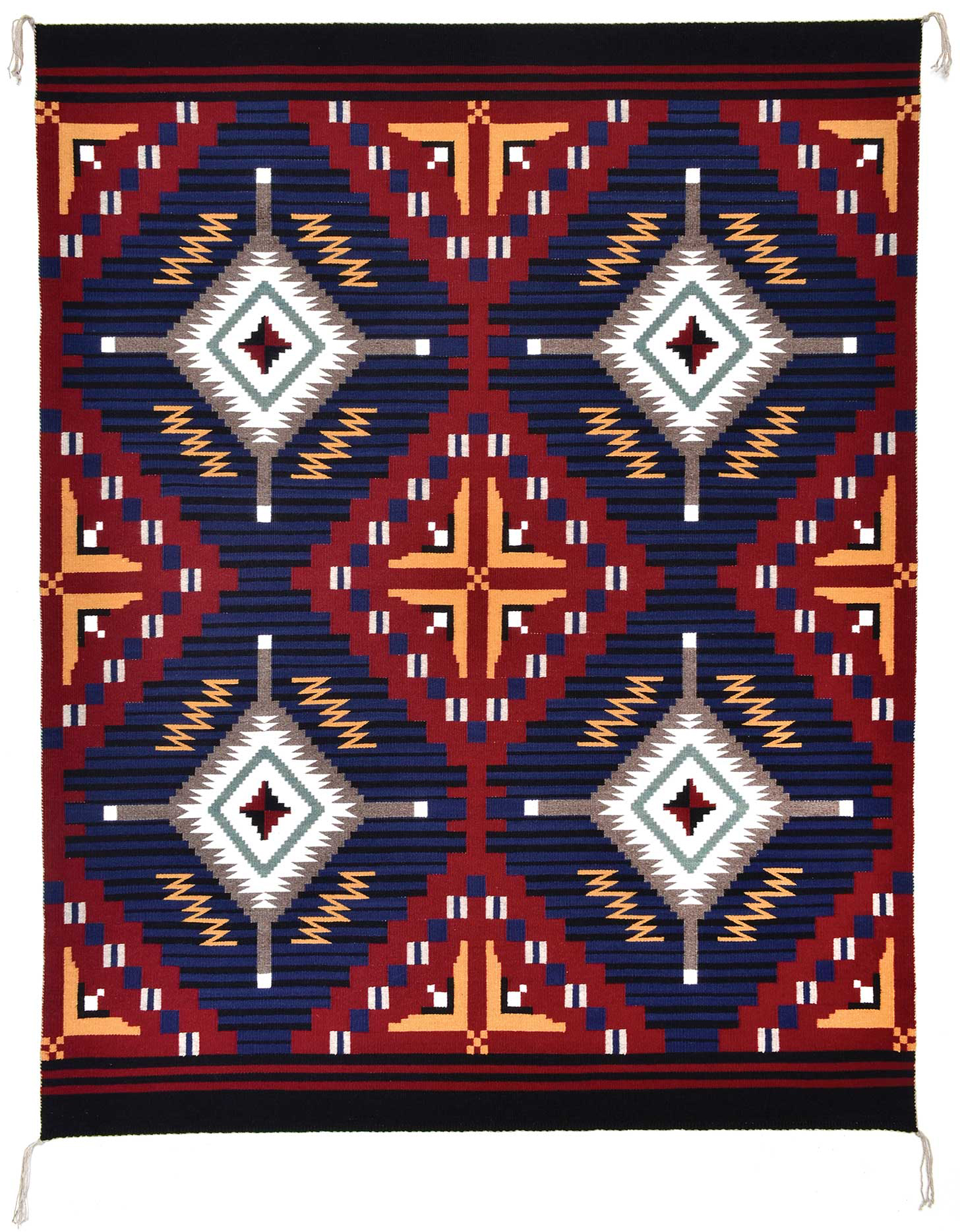
Heard Museum Gift Shop
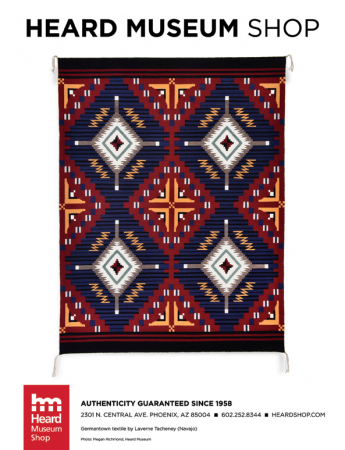
Navajo Germantown textiles get their name from where the yarns originated over 150 years ago in Germantown, Pennsylvania. Laverne Tacheney, born Laverne Van Winkle in 1963, wove this beautiful 40- by-50-inch textile using traditional methods, including an upright loom. She has been active weaving since the 1970s, and was born for the Coyote Pass People and to the Mountain Cove People. The Van Winkle family have a long history of weaving collector quality textiles.
2301 N. Central Avenue » Phoenix, AZ 85004 » (602) 346-8190 » www.heard.org
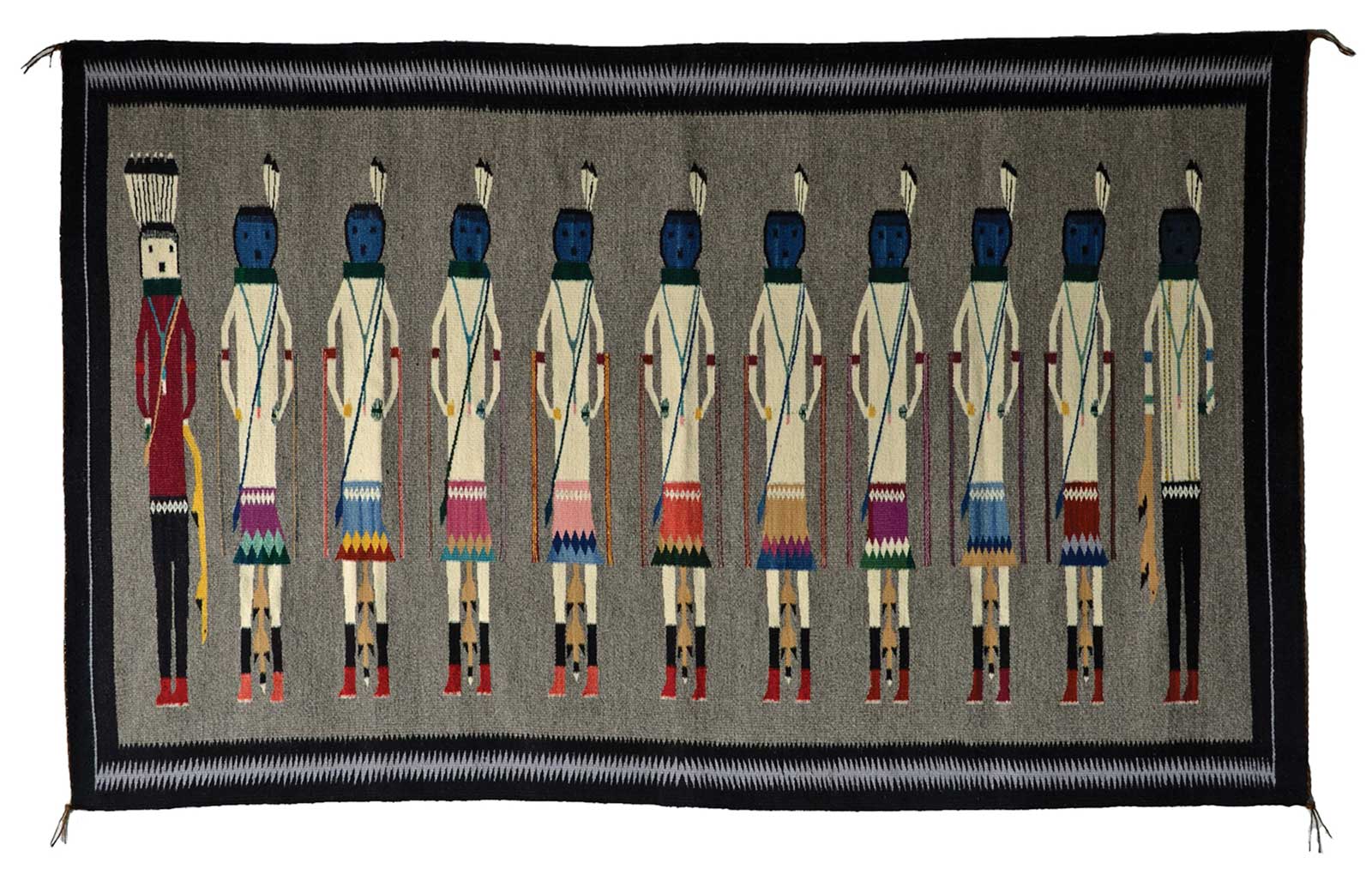
Nizhoni Ranch Gallery
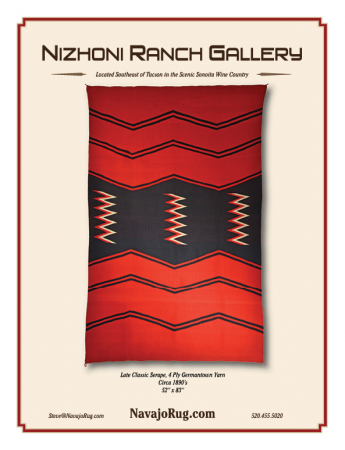
One theme that is central to the Navajo way of life is the attainment and maintenance of harmony and beauty. In the Navajo creation story, as depicted in this hand dyed rug woven by master weaver Elsie Bia, there exists numerous personas identified as Holy People or Yei be Chei. They exemplify the concepts of harmony and beauty. These same people also have the potential to create their dynamic opposites such as chaos and ugliness. During Navajo ceremonies which focus on restoring harmony and beauty, the power of the Holy People is invoked. The Yei Be Chei dancers are the human impersonators of Holy People who perform specific dances and rituals as directed by the Medicine Man for the desired result.
Sonoita, AZ 85637 » (520) 455-5020 » www.navajorug.com
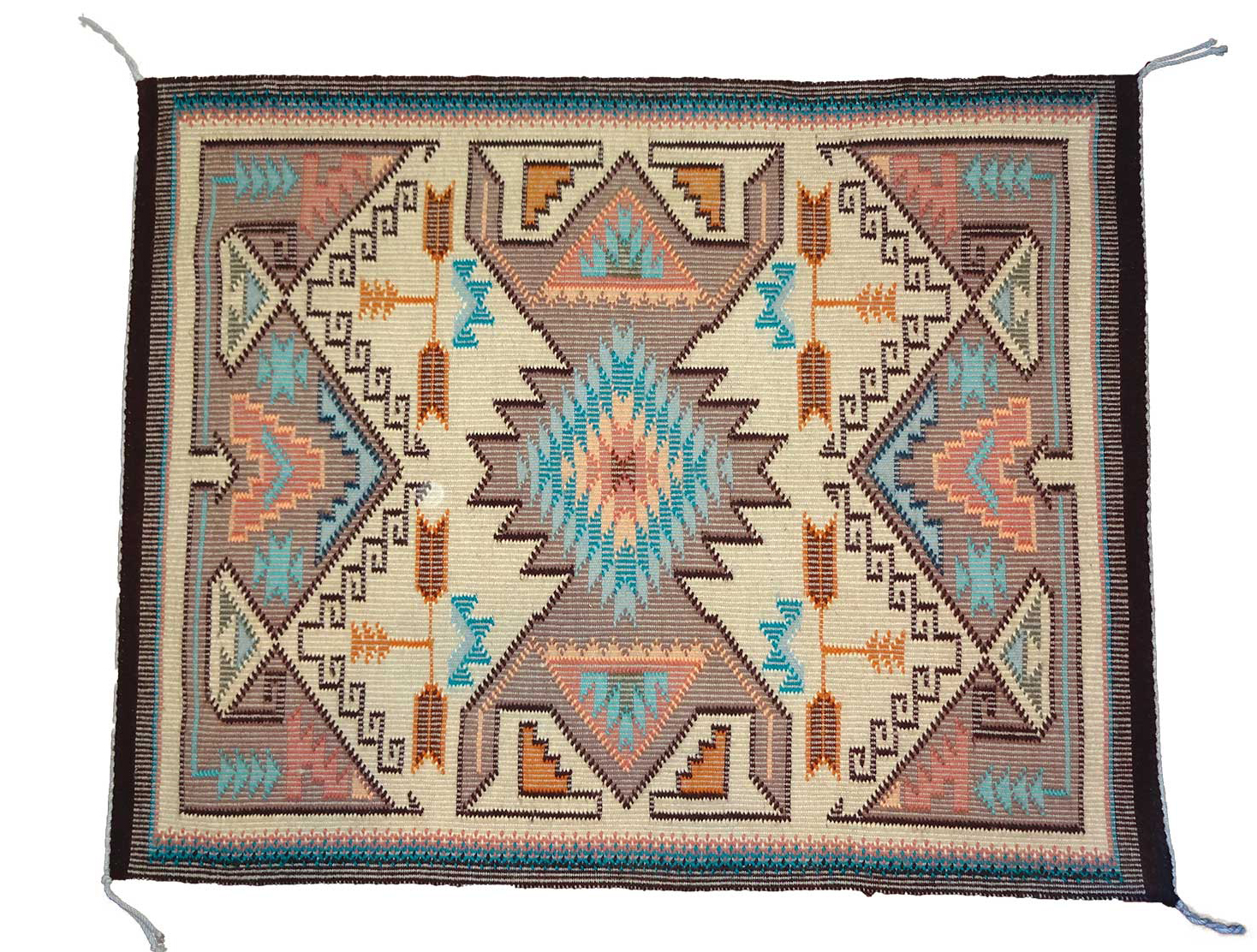
The Dancing Rabbit Gallery
Raised outline rugs like this one, come from the Coal Mine Mesa area. They are as much about style as they are about being bold and unique. The raised portion is visible only on one side of the rug. The other side of the weaving is smooth, which makes each rug feel and look especially unique. It is almost like two rugs in one, from one side to the other. Navajo weaver Nora Yazzie Wittingham took special care in weaving this 28-by-36-inch rug in the mid-1980s, and was acquired from the private collection of a gentleman from Texas.
(817) 337-8576 » www.thedancingrabbitgallery.com
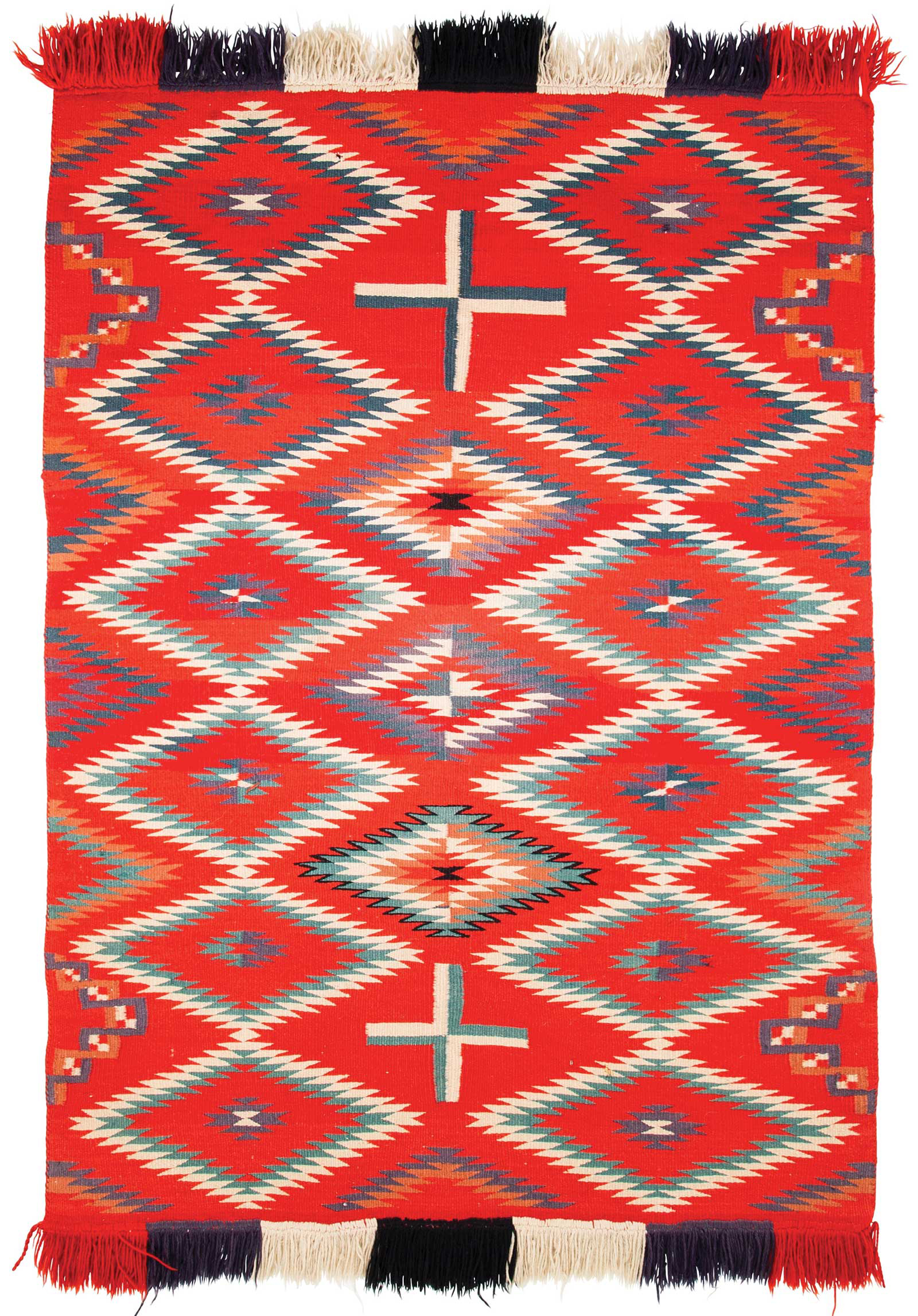
Heritage Auctions
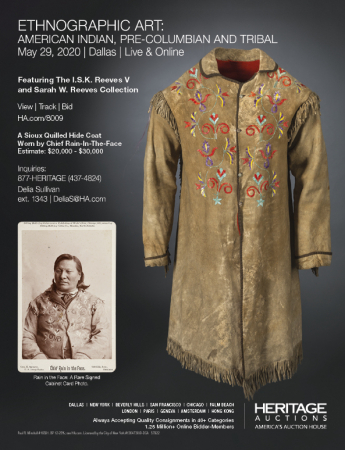
A Navajo Germantown weaving is among the extraordinary textiles offered in Heritage Auctions’ Ethnographic Art: American Indian, Pre-Columbian and Tribal Auction, featuring the I.S.K. Reeves V and Sara W. Reeves Collection May 29 in Dallas, Texas. The weaving, which measures 48 by 31 inches, is one of three in the sale that carries a pre-auction estimate of $3,000-5,000 and was produced in 1890, during a period when production could not keep up with demand. Three-ply commercial yarn was produced first in 1868 in the Philadelphia suburb of Germantown and was transported westward on the railroad to the Navajo, who were able to incorporate the yarn in their weavings.
4650 N. US 89 Suite G014 » Flagstaff, AZ 86004 » (928) 526-0696 » www.jacksantique.com
Powered by Froala Editor