In the late 1970s, Pat and Rex Lucke walked into an Arizona showroom and fell in love with a Navajo pictorial weaving, which they happily took home with them. Their collection of Navajo textiles eventually grew to more than two dozen weavings. That collection is now on view at Colonial Williamsburg’s Abby Aldrich Rockefeller Folk Art Museum in the exhibition Navajo Weavings: Tradition and Trade.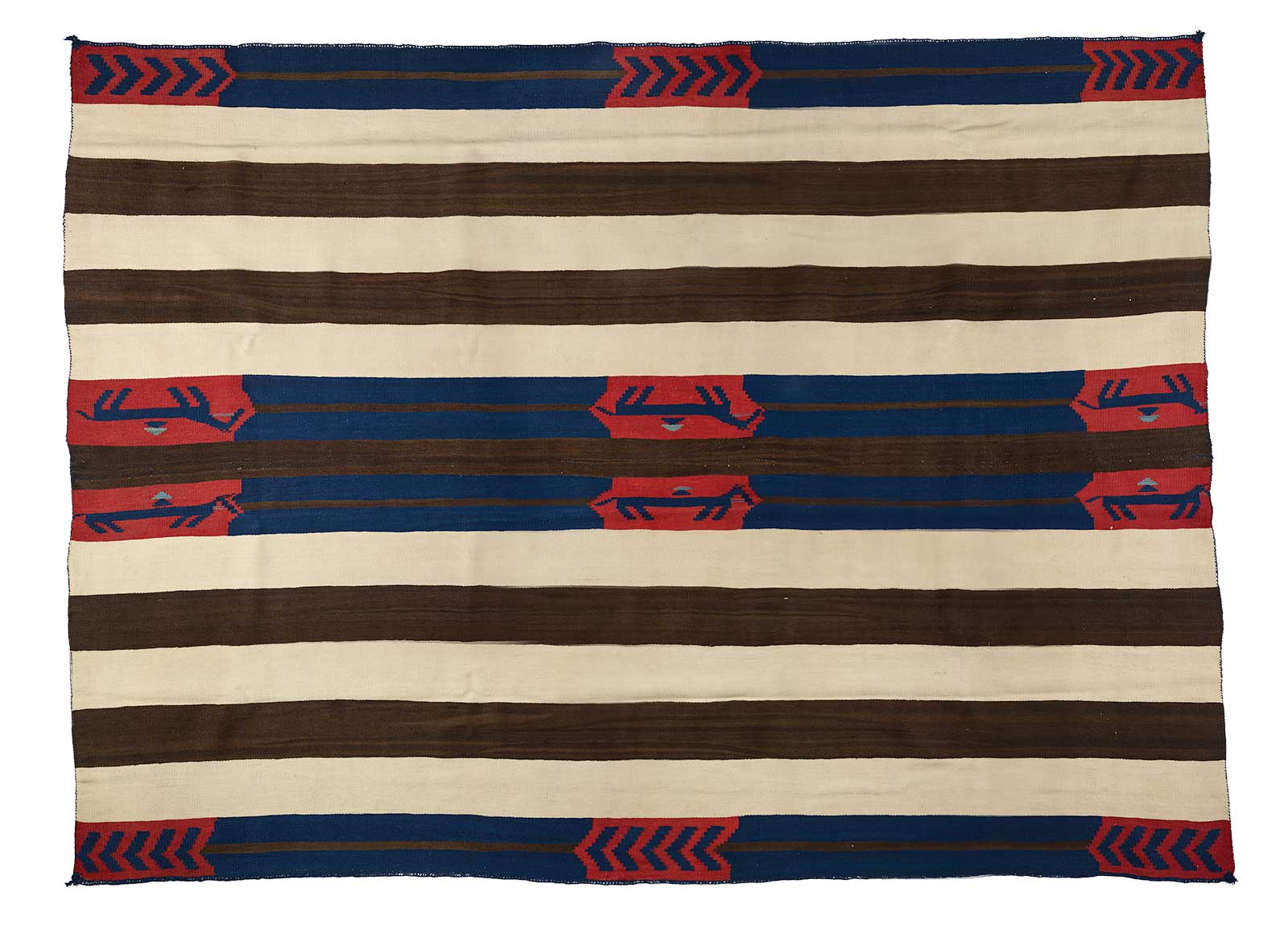 Pictorial Man’s Wearing Blanket, Chief’s Blanket, Navajo Nation, 1855-1865, Native handspun wool, bayeta and natural dye. The Lucke Collection, T073-2017, 4.
“The pictorial weavings collection represents a part of the country and a group of people that we rarely have the opportunity to show in our museum,” says Kimberly Smith Ivey, senior curator of textiles at the Art Museums of Colonial Williamsburg.
The earliest Navajo weavings were mainly functional, created to provide warmth and had a distinctive horizontally striped design. But as the railroad began to change the landscape of the Southwest in the late-19th century, bringing settlers and tourists with it, the design of the Navajo textiles began to change, too, incorporating pictorial elements. Tradition and Trade showcases the oldest-known Navajo blanket with pictorial elements, which dates to around 1855. While it maintains the familiar horizontal stripes, it also has imagery of six horses.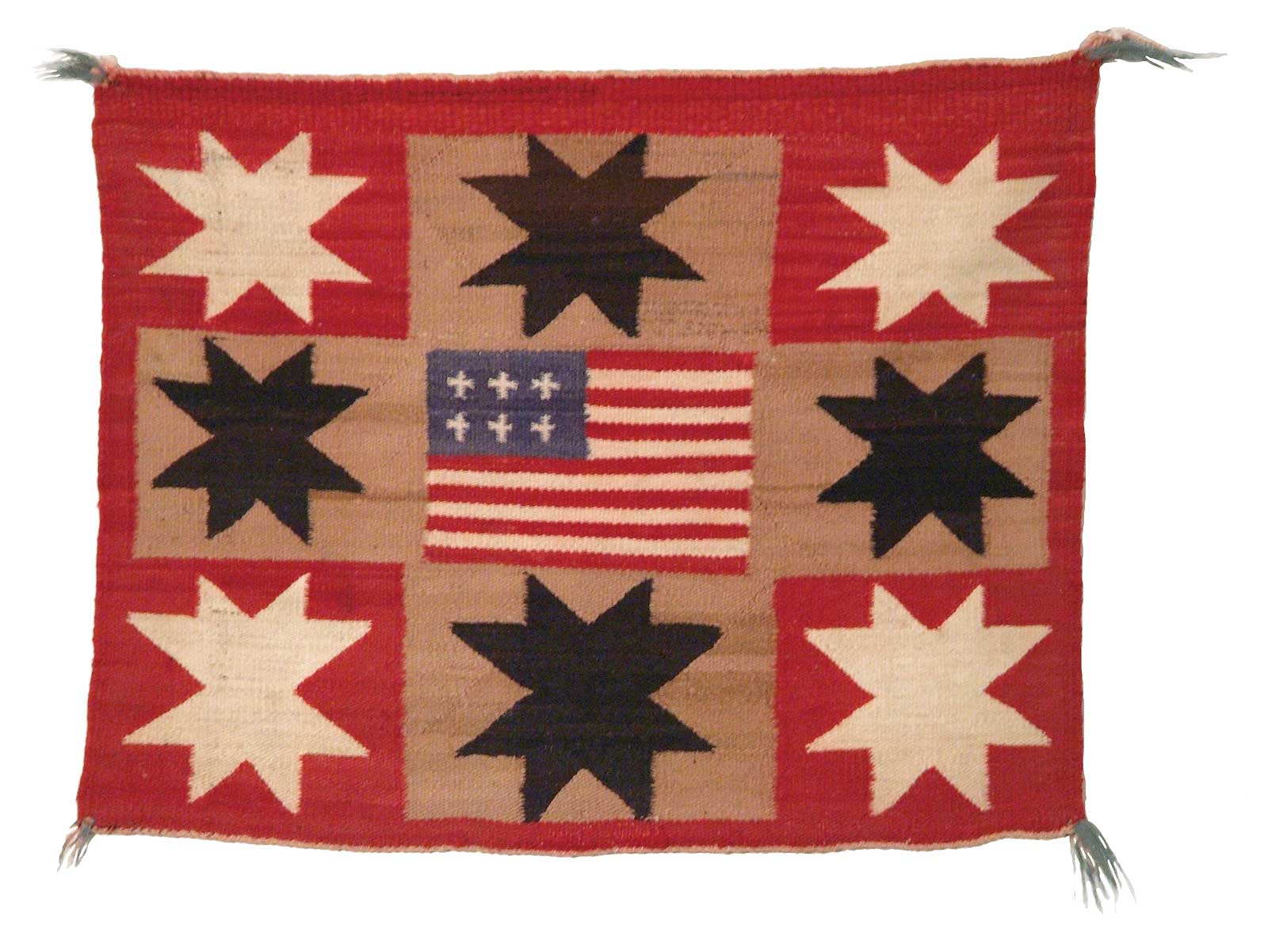
Pictorial weaving, Navajo Nation, ca. 1920, Native handspun wool and commercial dye. The Lucke Collection, T073-2017, 12.
A later weaving from this transitional period, dating to around 1885, features cowboys and livestock on a rich red background. “I love the fact that you can tell the weaver took inspiration in the people she had seen and the livestock she was familiar with,” Ivey says.
As more settlers began to flood the Southwest, their desires began to dictate the imagery of the weavings. Ivey says, “You start to see the American flag and schoolhouses, which reflect American authority and might appeal to an American tourist.” There were advertisements and marketing campaigns that encouraged people to use Navajo weavings as floor coverings, decorations, or lap blankets.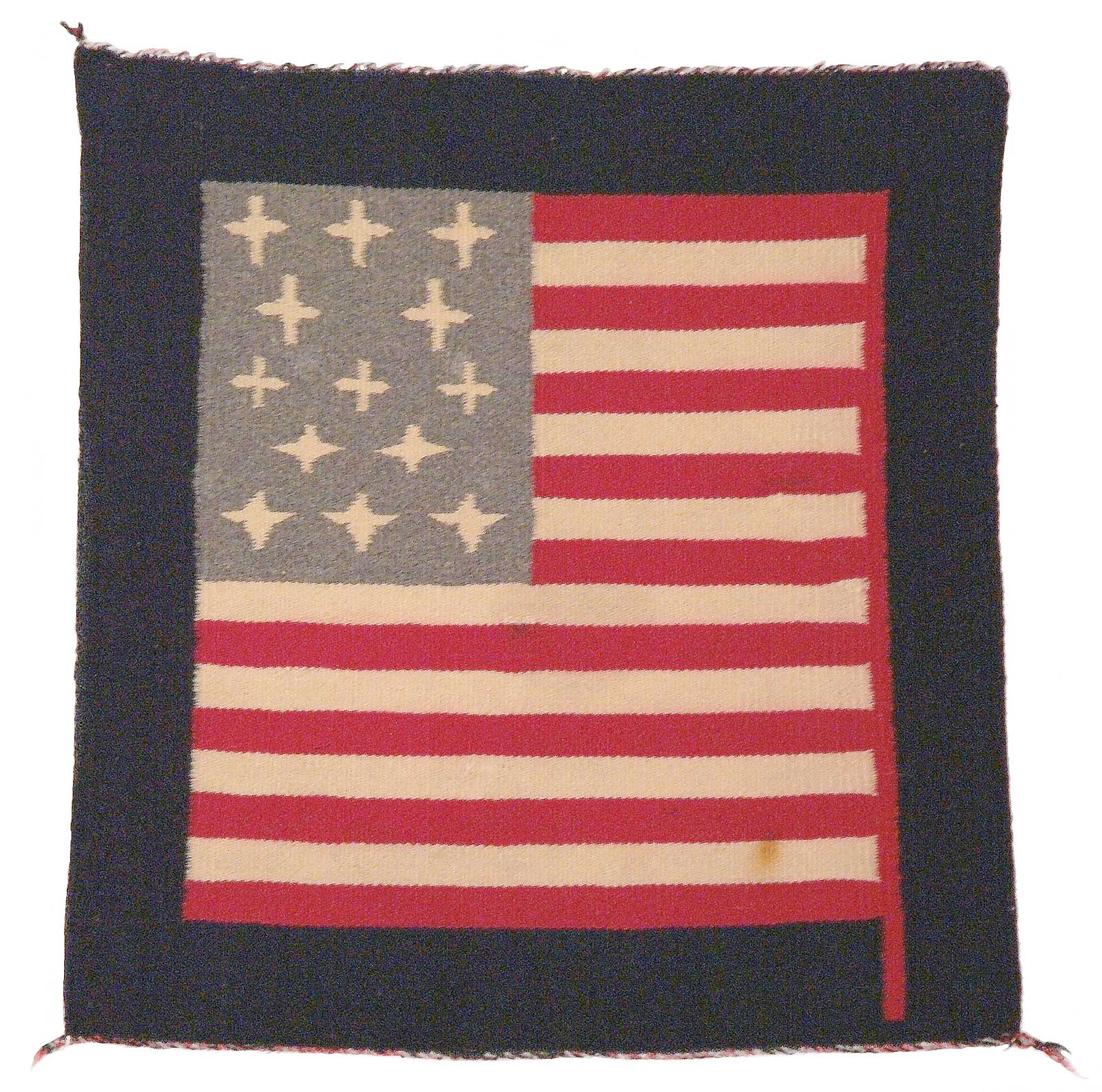 Pictorial weaving, Navajo Nation, 1884-1890, commercial wool and dye. The Lucke Collection, T073-2017, 11.
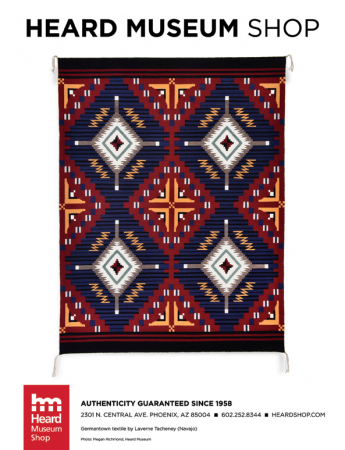
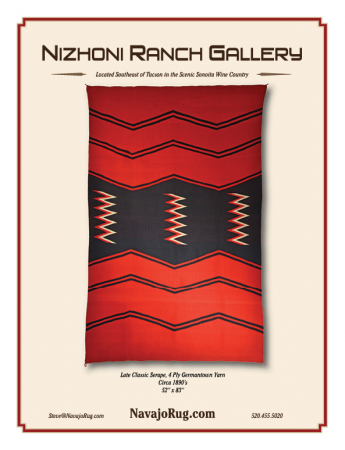
With the railroad also came access to new materials. Traders imported yarns from Germantown, Pennsylvania, that were colored with commercial dyes and brought new vibrance to the weavings. The very best weavers were given this Germantown yarn and created brightly colored pictorials, a few of which will be on display in the exhibition.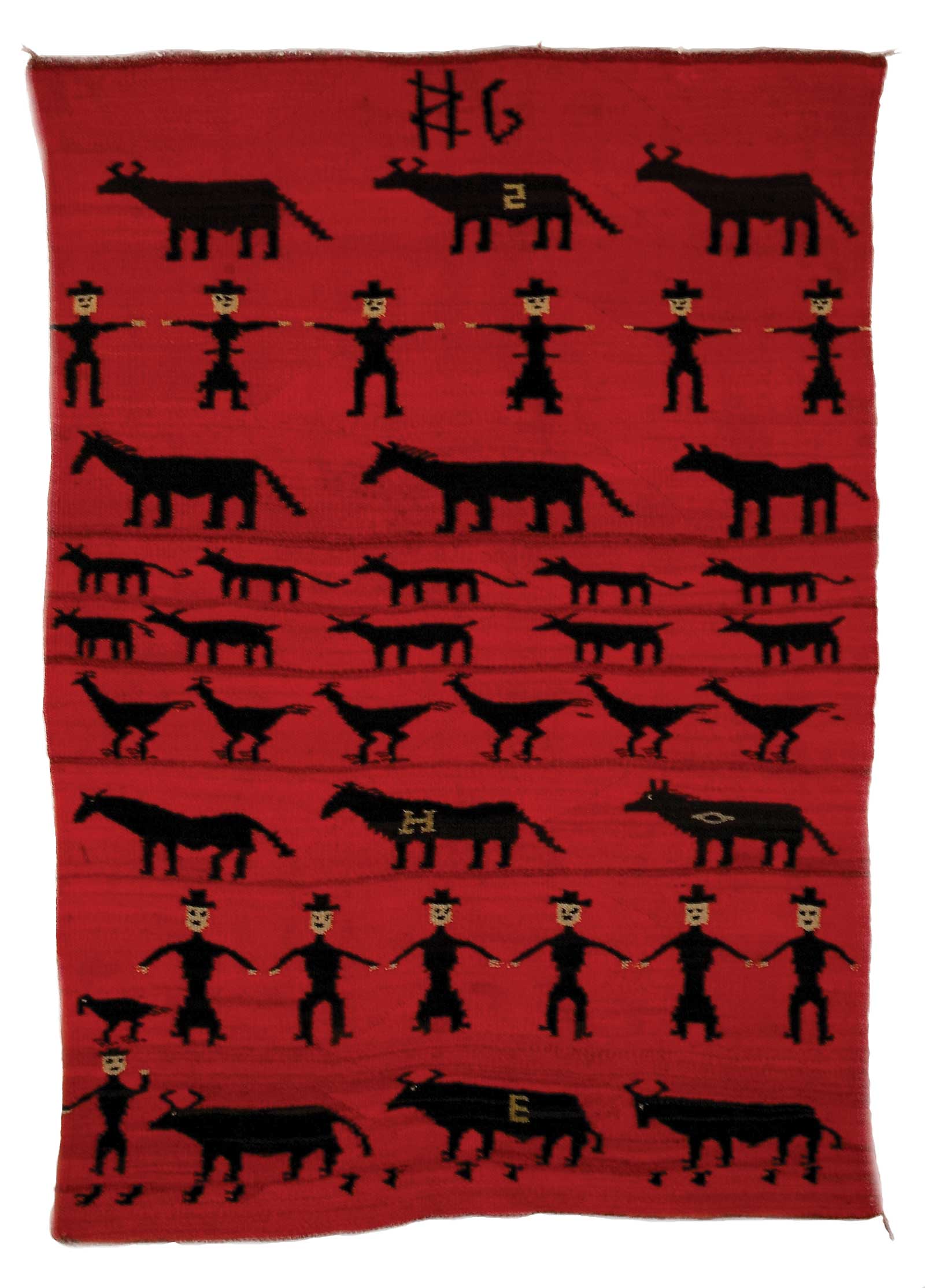
Pictorial weaving, Navajo Nation, ca. 1885, Native handspun wool and natural and commercial dyes. The Lucke Collection, T073-2017, 8.
In the 1920s and ‘30s, many weavers returned to more traditional methods. “They are using more natural wool from their sheep, which come in a variety of colors,” Ivey explains. The latest piece in the exhibition, which dates from the 1930s features the adage “God Bless Our Home,” probably inspired by a needlework sampler or decorative plaque.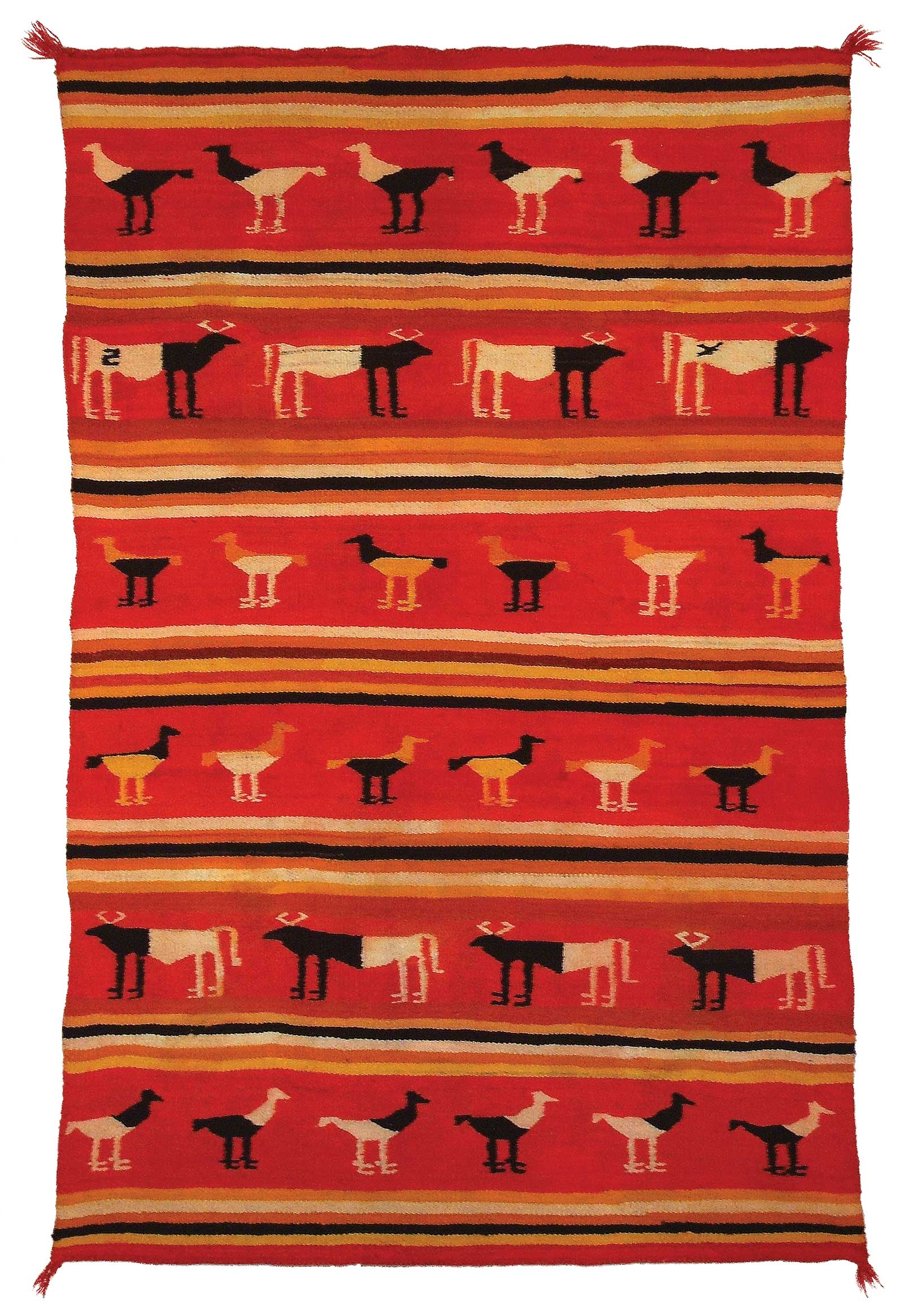
Pictorial weaving, Navajo Nation, 1885-1890, Native handspun wool and commercial and natural dyes. The Lucke Collection, T073-2017, 7.
The Lucke Collection not only gives visitors an opportunity to understand the breadth of Navajo weaving tradition—it also provides a historical connection to anonymous female artists who practiced their art in harsh and rugged environments.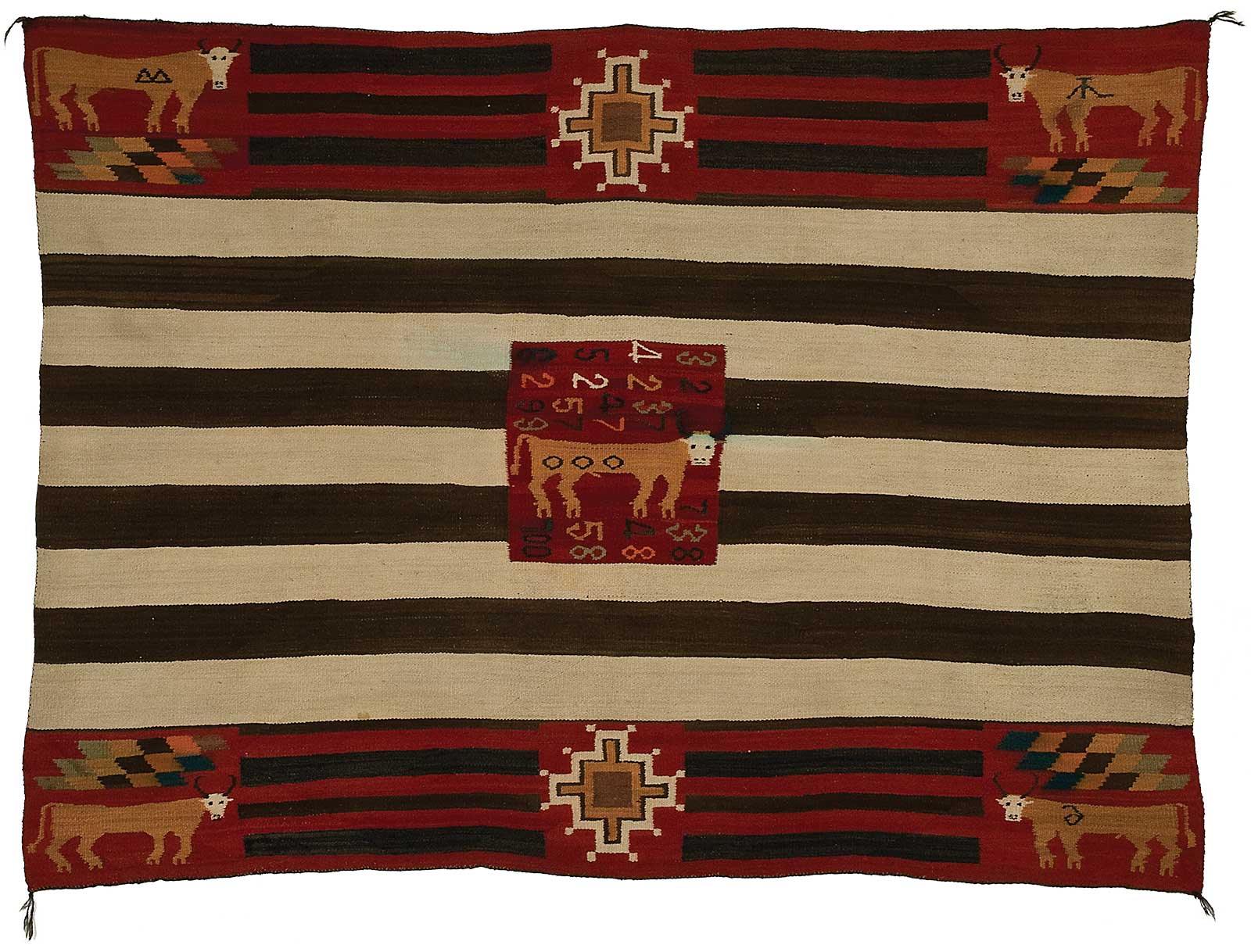
Pictorial Man’s Wearing Blanket, Chief’s Blanket, Navajo Nation, 1900-1920, Native handspun wool and commercial dye. The Lucke Collection, T073-2017, 5.
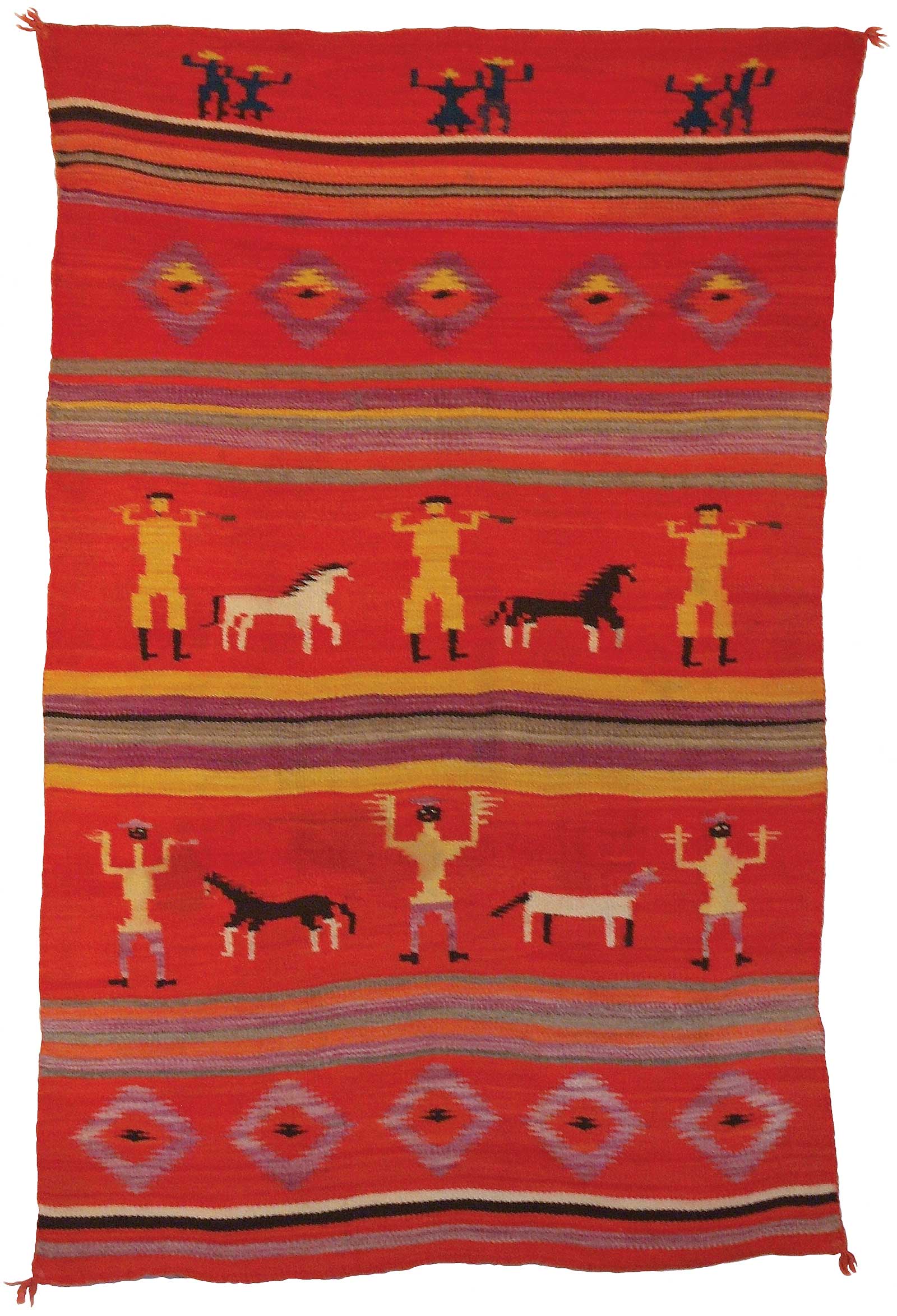 Pictorial weaving, Navajo Nation, 1880-1885 Native handspun wool and natural and commercial dyes. The Lucke Collection, T073-2017, 6.
“Even though we may never know the names of the women who created these beautiful weavings, by studying them, we can learn a little bit about their creators and the society at the time,” Ivey says. “We can see how weavers adapted and modified their work to meet the demands of a modern market…Each weaving is unique and reflects the artist, her creativity, her skill, and in some instances, her personality and her sense of humor.”
Navajo Weavings: Tradition and Trade remains on view at the Abby Aldrich Rockefeller Folk Art Museum through June 2021.
Through June 2021
Navajo Weavings: Tradition and Trade
Abby Aldrich Rockefeller Folk Art Museum
326 W. Francis Street,
Williamsburg, VA 23185
(888) 965-7254, www.colonialwilliamsburg.com
Powered by Froala Editor