Liza Siegel relates the story of her husband Don looking through a book in a Denver bookstore when a typed manuscript fell out of the book. It had been written by Dr. Joe Medicine Crow. As he read the text he thought, “I’ve got to find out who he is and return the piece.” When his research didn’t lead very far, he said to his 13-year-old son, “Let’s rent a mobile home and go find him.” They traveled through Montana and Wyoming and ended up in the archives of a museum in Cody, Wyoming. As they were looking at an original Edward S. Curtis photograph of Joe’s grandfather, Medicine Crow, Joe walked in! Although he lived more than 100 miles away, the two were destined to meet. The spirits of the Apsáalooke ancestors had brought them together.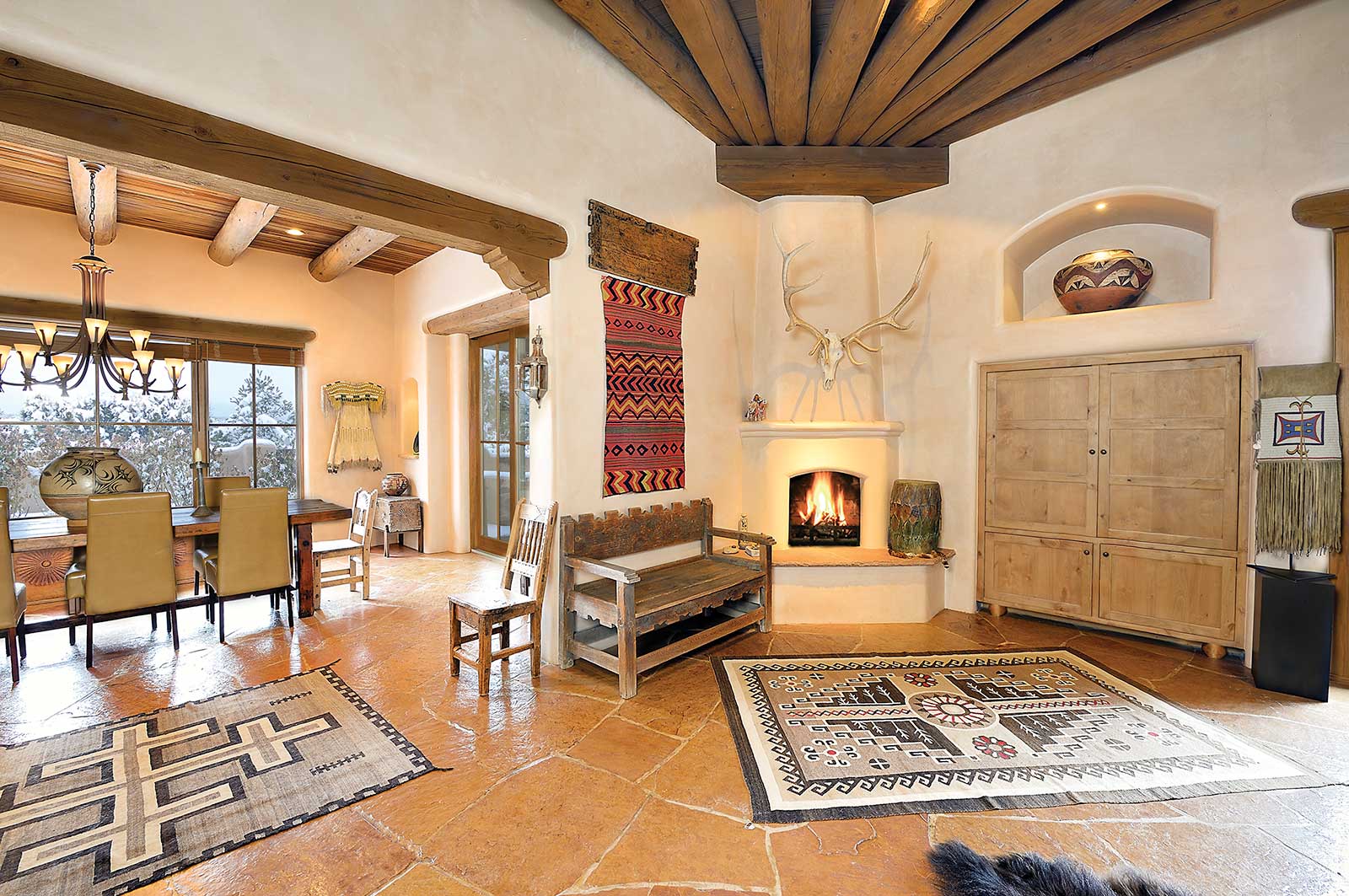 Early 18th- and 19th-century Spanish Colonial furniture of New Mexico blends with Navajo weavings, historic Pueblo pottery and Plains beadwork from the 19th century in the Siegels’ living and dining areas.
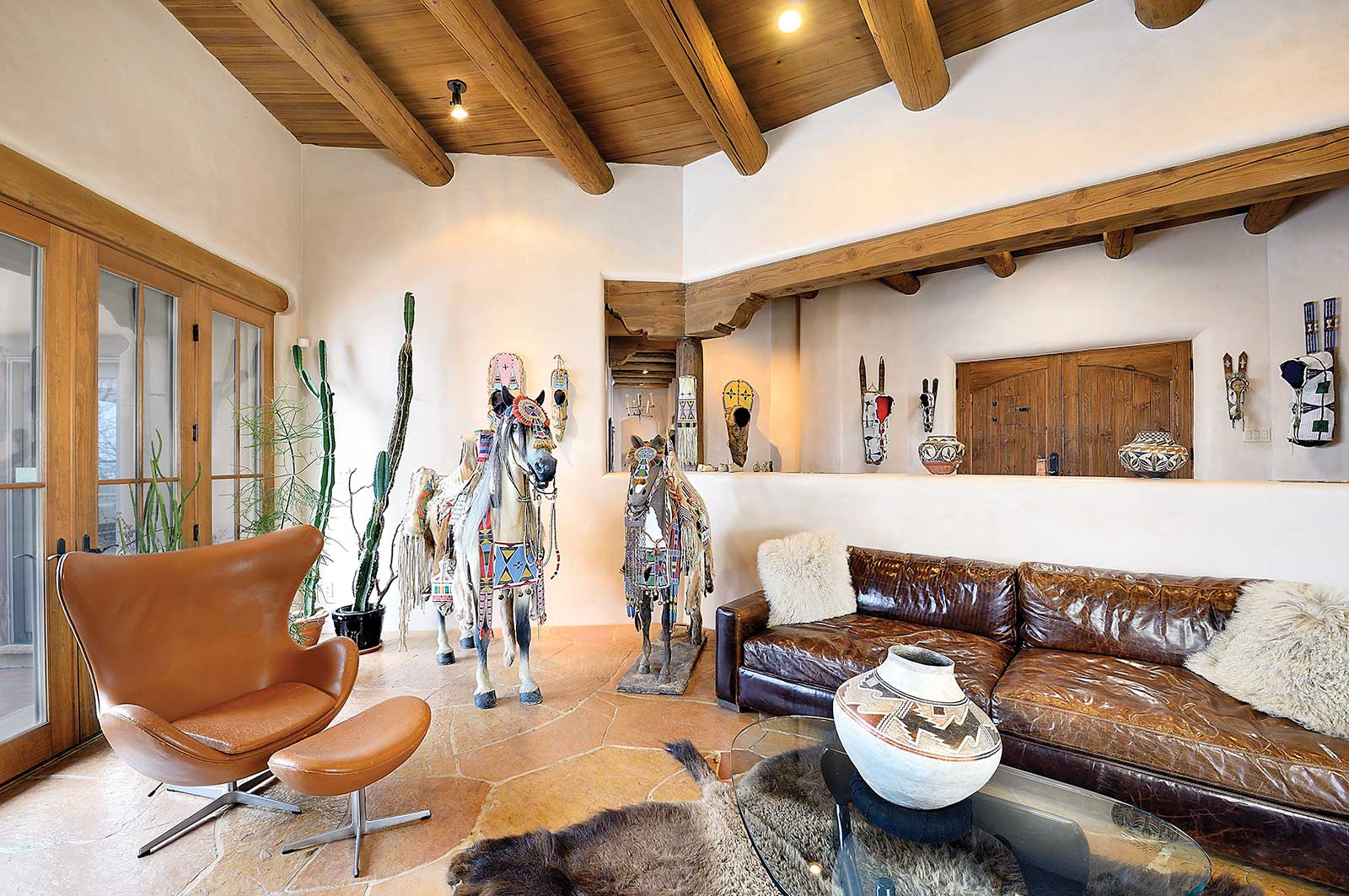 A mix of mid-century modern furniture blends with historic Plains beadwork, 19th century cradleboards and Pueblo pottery.
Dr. Joe Medicine Crow was the Crow tribal historian and last war chief of the Crow Nation, earning his honors during World War II. He received the Presidential Medal of Freedom from Barack Obama in 2009 for “contributions to the preservation of the culture and history of the First Americans” and his “importance as a role model to young Native Americans across the country.”
Don and Liza have an interest in the art of the West, especially that of Indigenous Americans, going back to a time when they were children growing up in Colorado. Don’s uncle would go on “‘picking’ adventures” around the Southwest and the reservations of Montana, Wyoming and South Dakota, and would return home for what Don’s calls “beadwork ‘show and tell.’” Liza’s parents spent time among the Native artists of New Mexico and Colorado “exposing her to the wonderful colors and textures of Southwest artists.”
After being befriended by Dr. Joe Medicine Crow, the Siegels met his cousin Alma Hogan Snell, a Medicine Woman who was raised by her traditional Crow grandparents Pretty Shield and Goes Ahead (a scout for Custer at the Battle of the Little Bighorn). After many years of friendship, Alma honored Don by adopting him into her family and giving him the Crow name Baa helene diilii xiassaalaachish, which means “Stands Out Among the Others.”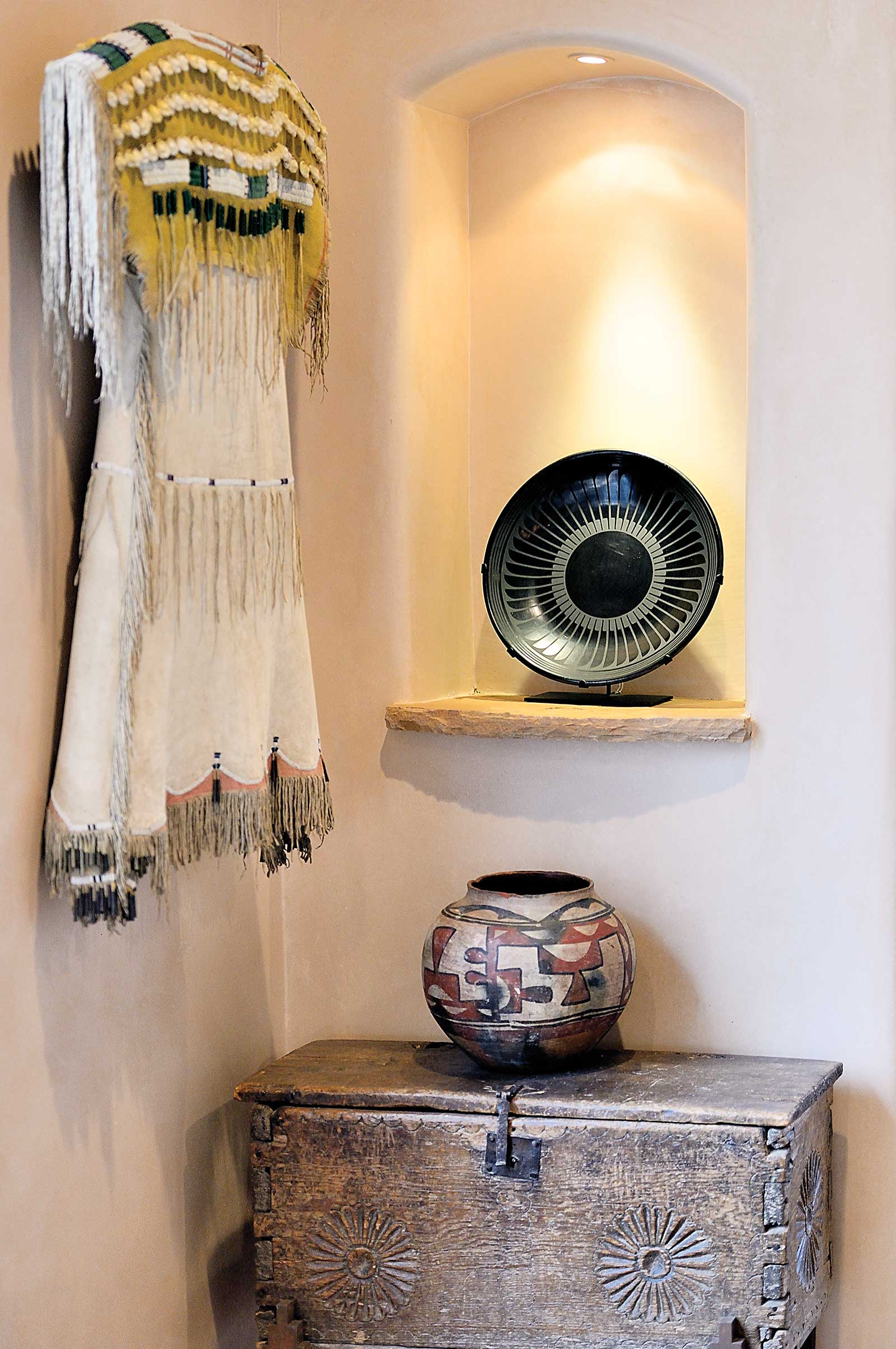 On the left is a circa 1880s Southern Cheyenne child’s dress (ex Hershfield collection); a circa 1780 Spanish Colonial carved box with a circa 1870s Santa Ana olla. A plate by Maria Martinez (San Ildefonso, 1887-1980) and Popovi Martinez (San Ildefonso, 1923-1971) is in the nicho.
Don and Liza have loaned a number of works from their collection to the exhibition, Apsáalooke Women and Warriors at the Field Museum of Natural History in Chicago. Liza “connected with Birdie Real Bird, a well-known tribal leader, bead artist and educator on the Crow Reservation in Montana,” Don explains, “and joined her family through traditional adoption. She was given the name Bia daas itchikaatash meaning ‘Kind Hearted Woman.’”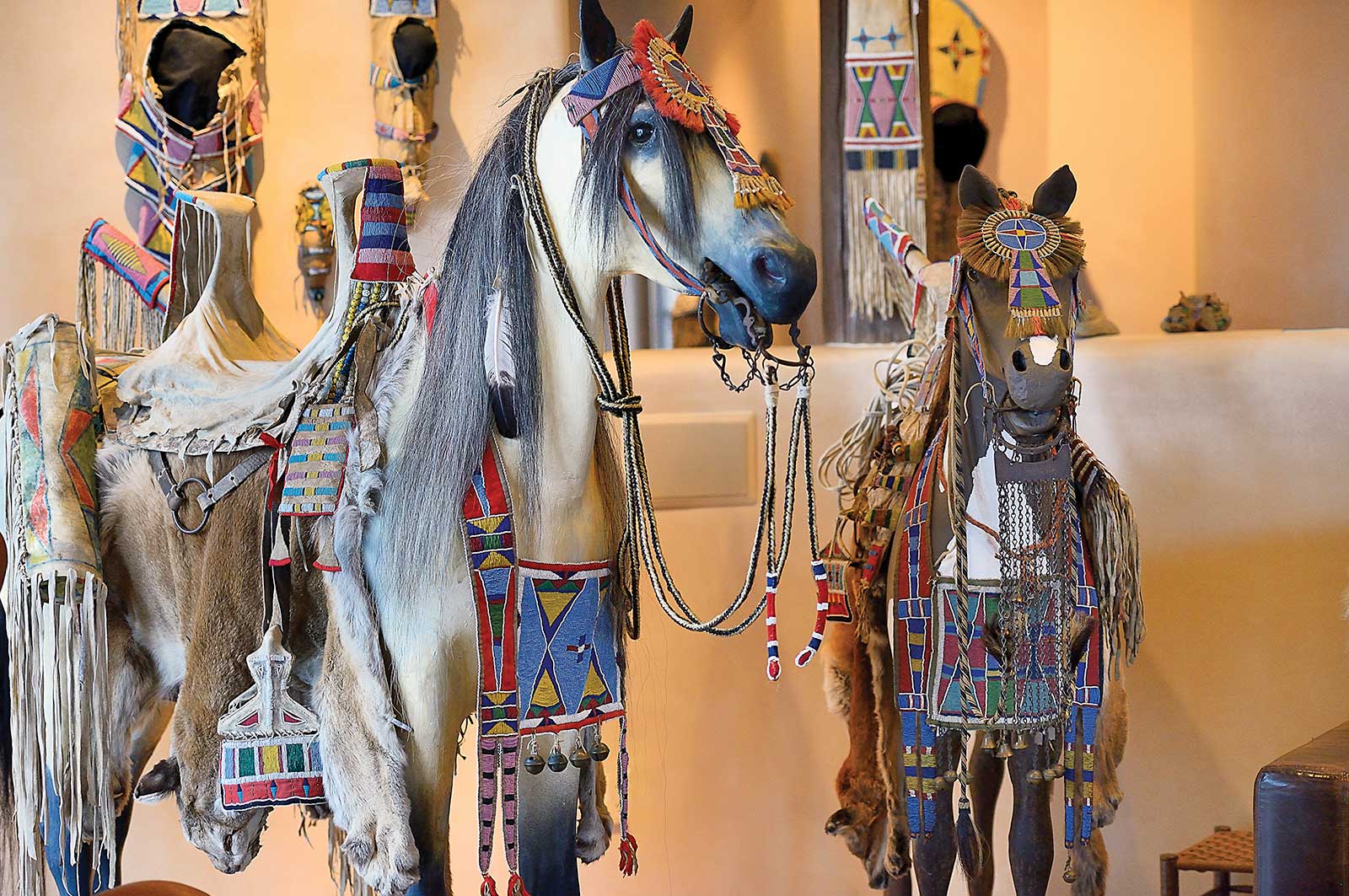 Two full-size horse models in parade regalia are the featured items in the Siegels’ collection of historic Crow beadwork from the 19th century. Crow full-size and miniature cradles, as well as a circa 1880s tobacco bag are also featured in the collection.
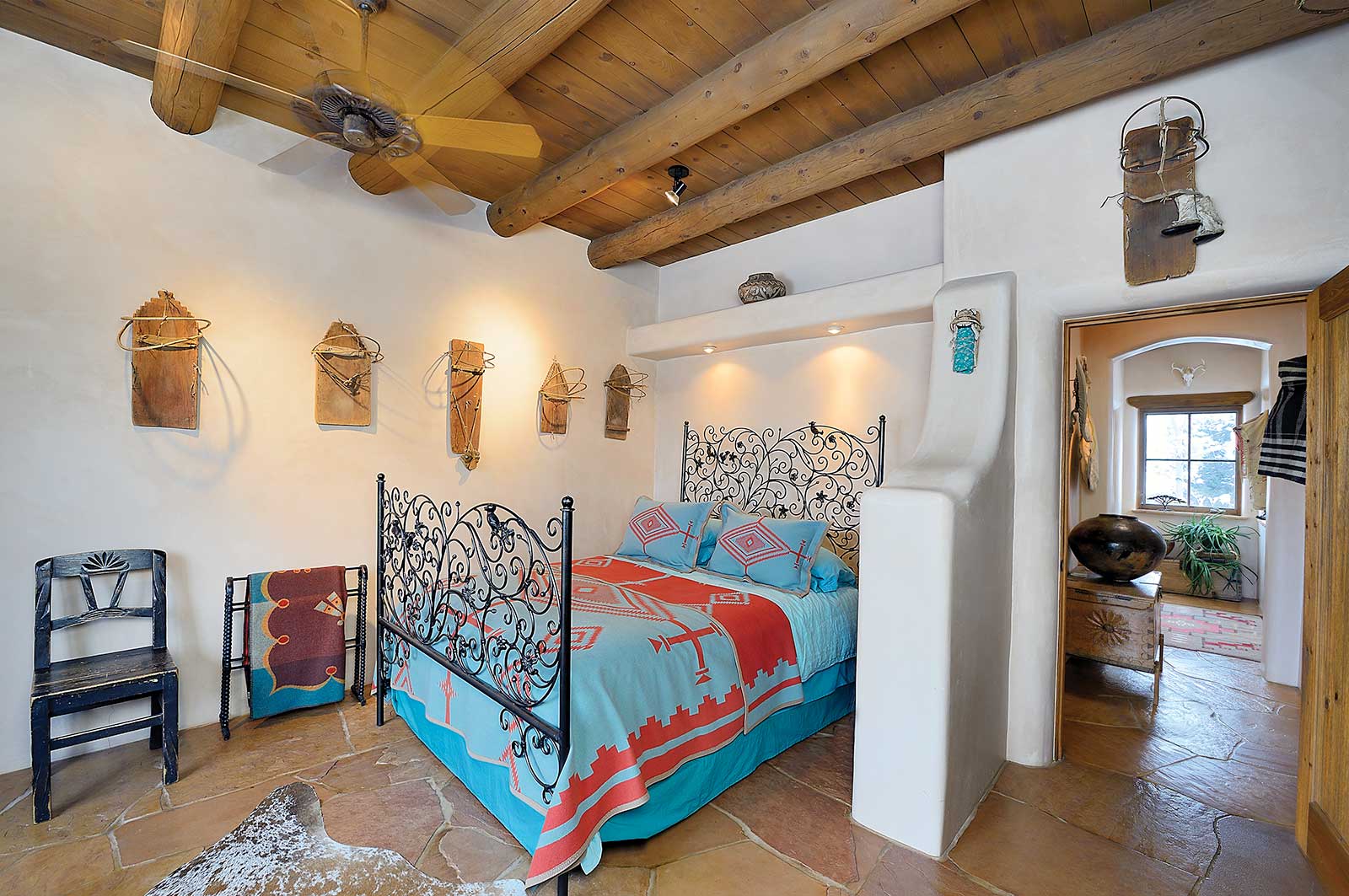 A collection of Pueblo child’s cradleboards surrounds the walls of the guest room continuing the theme of honoring the children. A San Juan storage jar from the 1860s greets you as you enter the hallway.“When we toured the Field Museum archives with the Crow delegation,” Liza says, “it was thrilling and heartwarming to see their reaction when they saw their ancestral objects.”
The Siegels honor the pieces in their collection noting that this “makes the difference between just having objects and being the steward of a collection.” They are open to the spirit of the materials the pieces are made of and the people who made, wore and used them. “Every piece has a story and has a soul,” Don explains. The fortuitous events that have brought pieces into their collection reflect their belief that “if you open your heart and mind miracles take place,” he continues. Liza adds, “There are some deeper connections that we don’t necessarily understand. But we have to be aware and honor them.”
Don began collecting Curtis photographs when he was 18. Prominent among their Curtis works, in the many media he used, is the only known silver print of Dr. Joe Medicine Crow’s grandfather, Medicine Crow. As for other works in the collection, Don notes, “We collected these pieces because we love them, and it makes our hearts good to be surrounded by them.”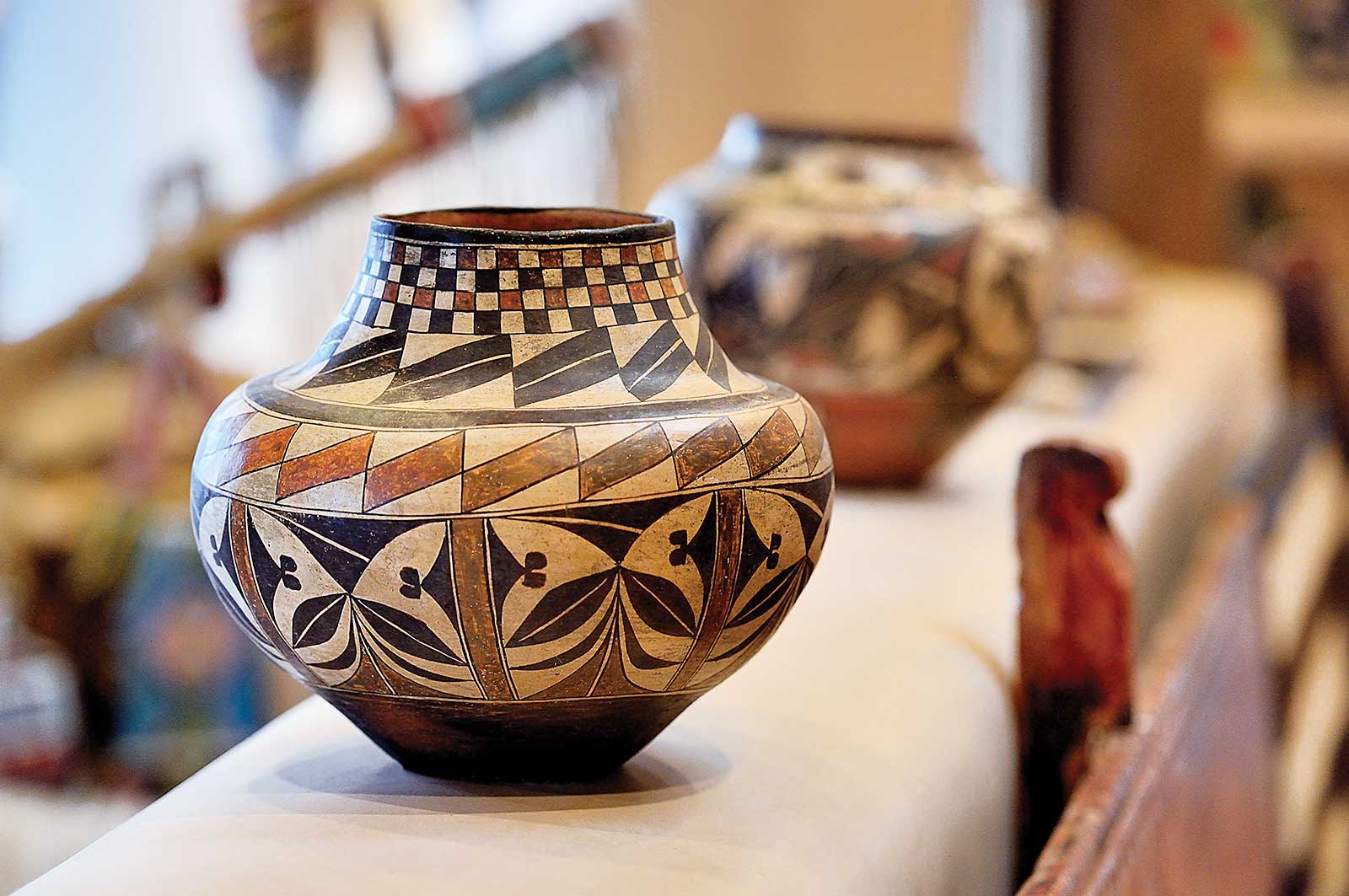 Historic Pueblo pottery is featured in the Siegels’ collection including this circa 1890s Laguna water olla.
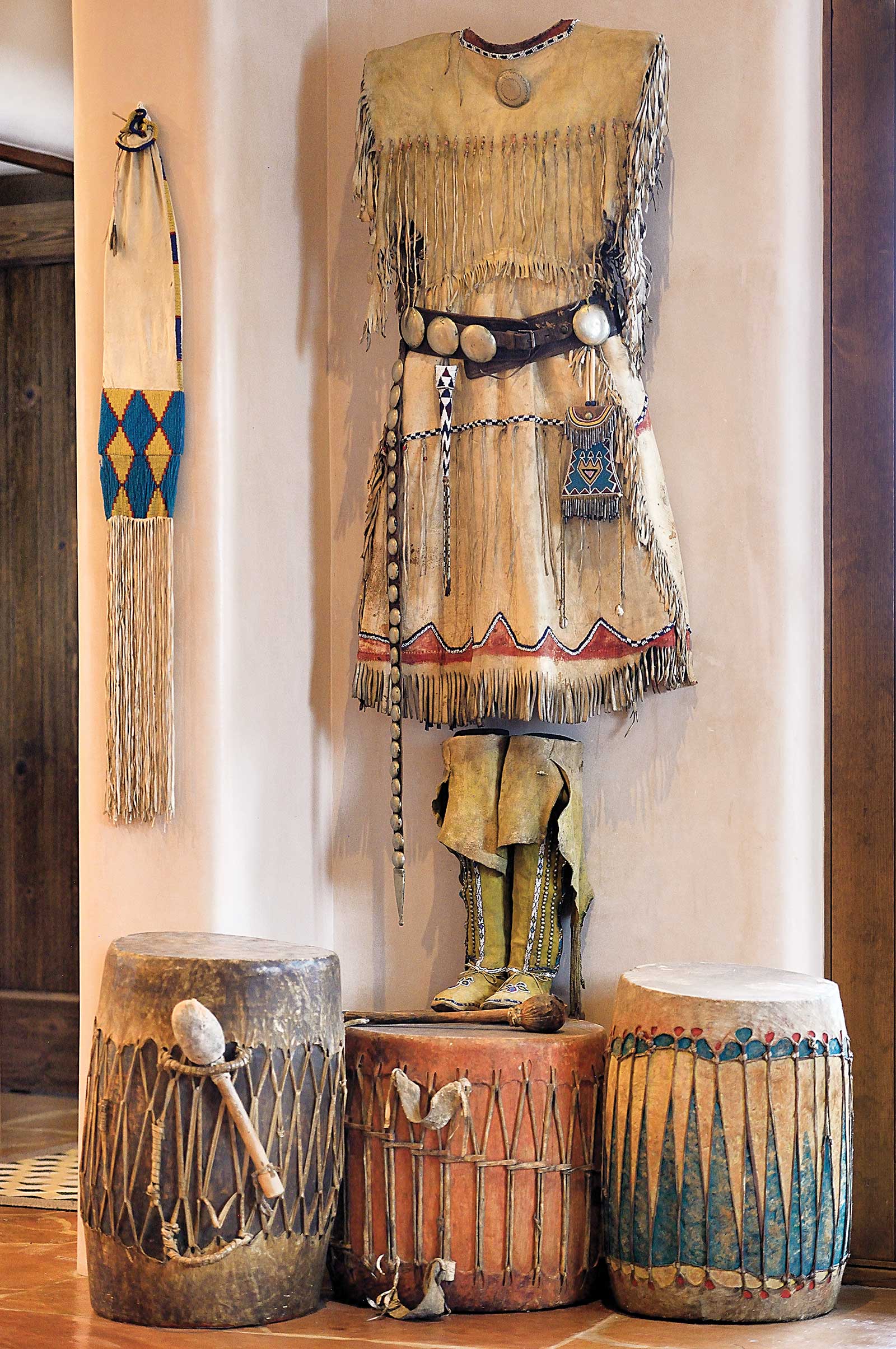 A complete Kiowa woman’s outfit circa 1870s includes her high top moccasins, strike-a-light bag, awl case and belt with silver conchas. Also included is a rare Assiniboine tobacco bag and Pueblo drums.
Featured among the Siegels’ collection are full-size beaded cradleboards coupled with child’s toy cradles, which girls would carry to prepare them for compassionate motherhood. “The child’s items speak to the soul of our collection,” Don says.
When they collect clothing, for instance, they know they are collecting someone in particular’s dress and honor not only the item but the person who wore or used it. A favorite item is a Crow child’s dress that they spent 10 years trying to obtain. The buckskin elk tooth dress is rare since elk tooth dresses were more often made of trade cloth. They have completed the ensemble with a belt, strike-a-light, leggings and moccasins, all beautifully beaded.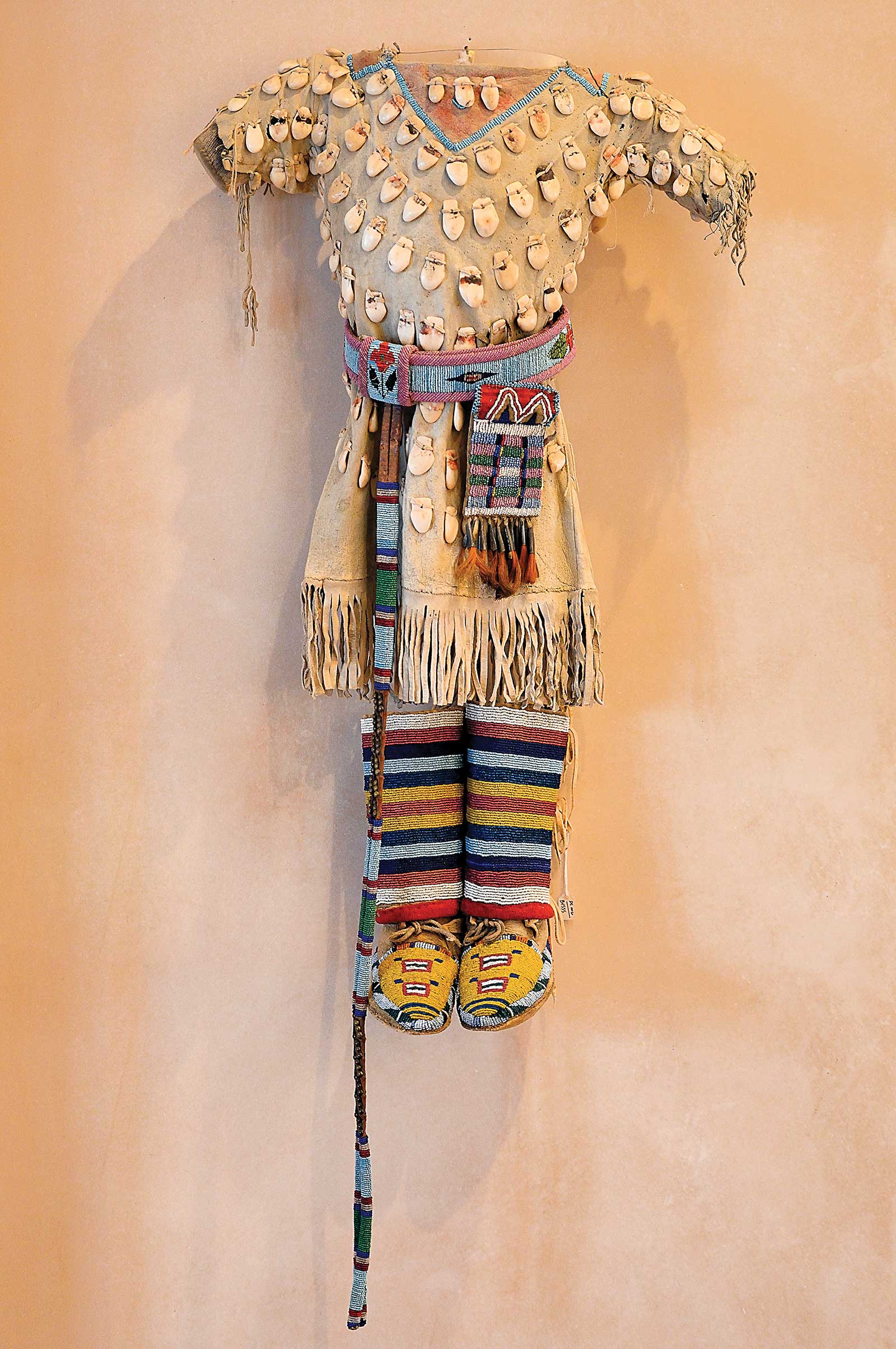 A young Crow child’s dress is a favored item of the collection as it took years to create the ensemble of the rare buckskin elk tooth dress, beaded belt, ration card bag and moccasins with leggings.
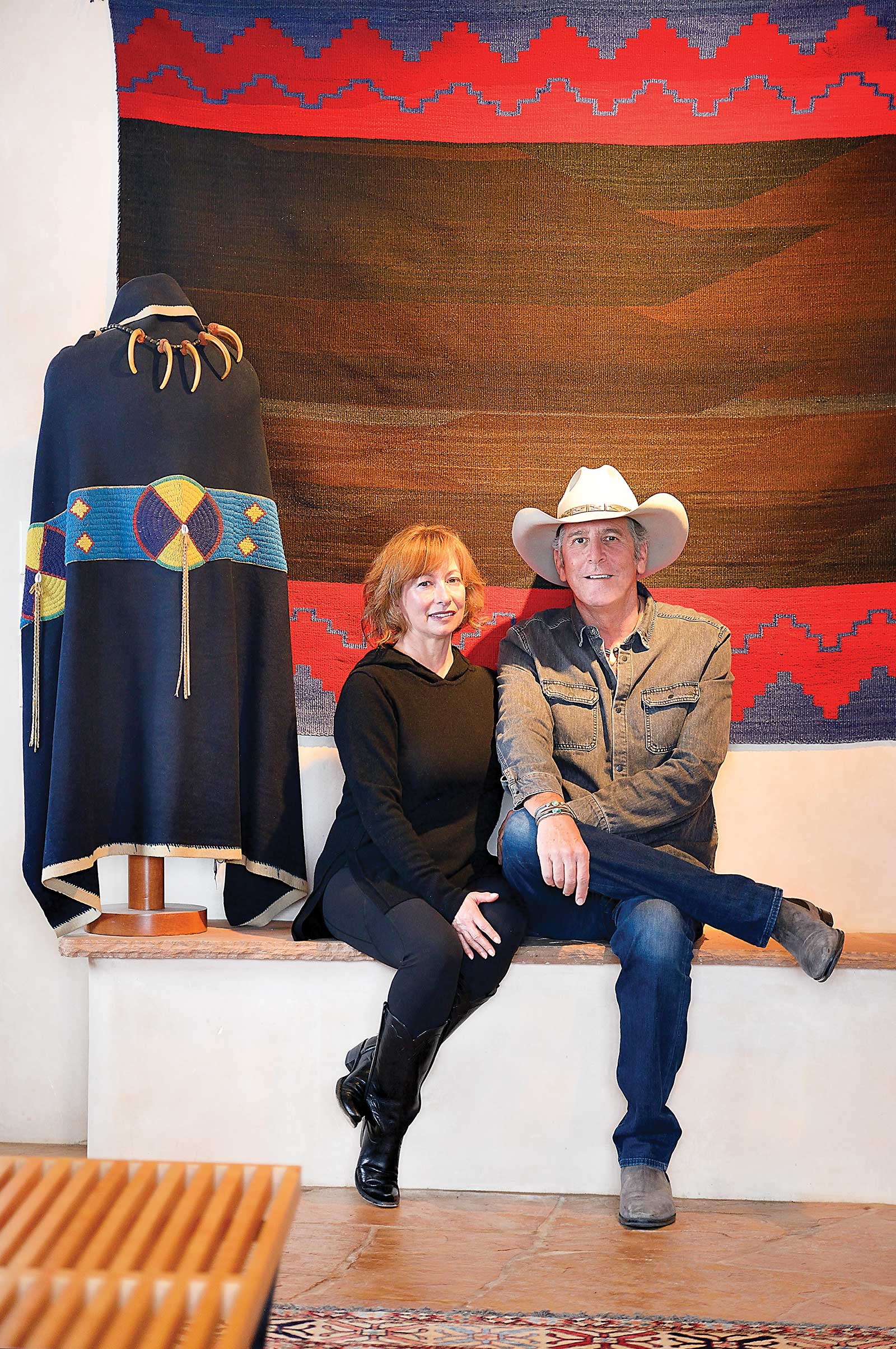 Don and Liza Siegel surround themselves with historic Native art including this large circa 1900 Pueblo Manta and a circa 1870s Northern Plains Trade Blanket with a beaded buffalo hide strip (former Bax and Hershfield collections).
Don explains, “The Apsáalooke (Crow) Tribe were the preeminent bead workers of the Northern Plains and their use of geographic design elements and colorful bead combinations make their works of art highly admired among collectors and institutions worldwide.”
In the living room are two antique life-size horses of steel, wood and papier-mâché replete with intricately beaded Crow regalia from the last quarter of the 19th century. Although they are cognizant of the requirements of conservation, Don points out a small area where beads are missing. They haven’t been replaced because, he says, “That’s real, that’s how they were used and loved.”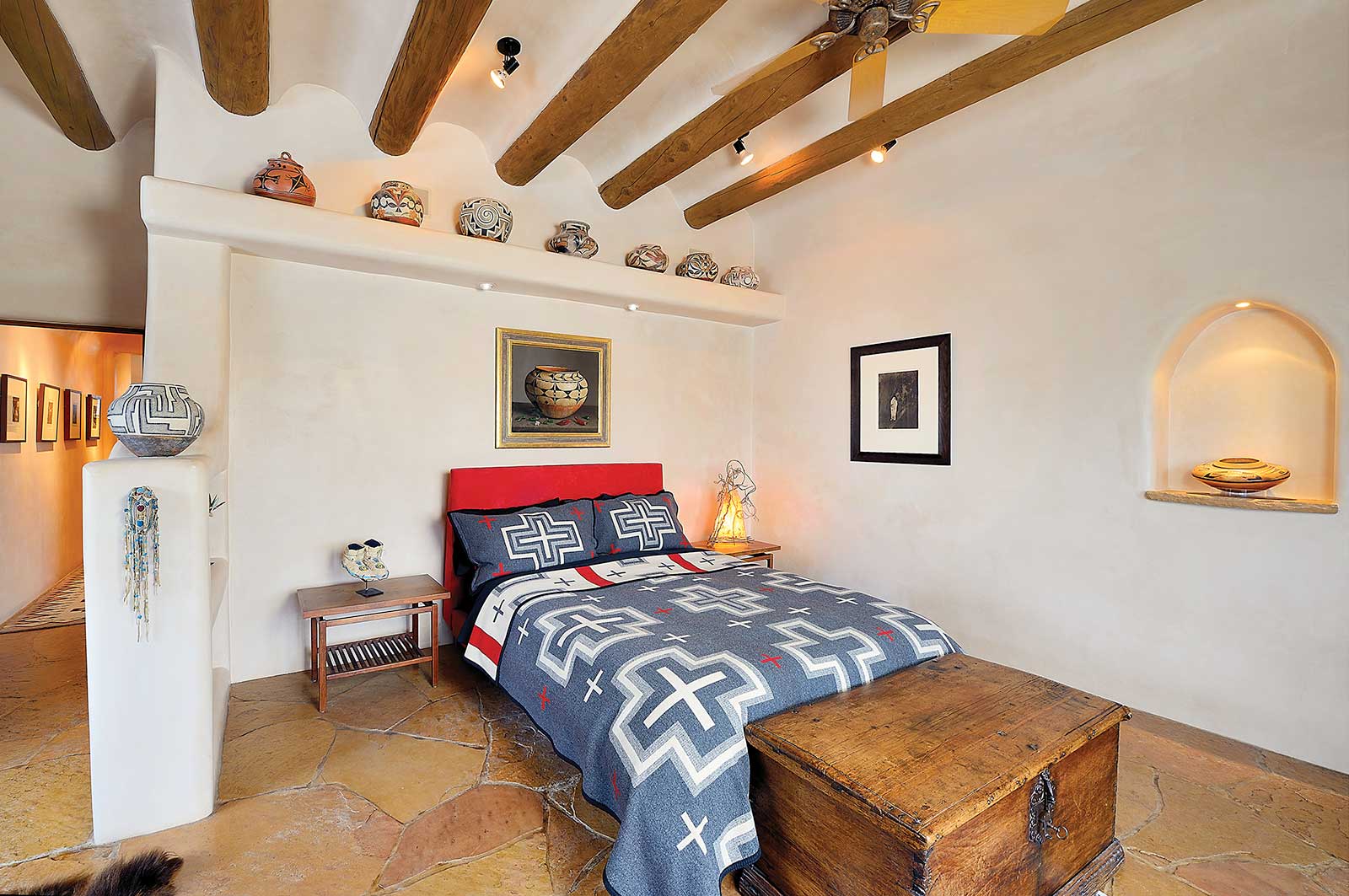 The master bedroom features historic Pueblo potter jars with Spanish Colonial furniture from the 18th century as well as the hallway lined with photographs by Edward S. Curtis.
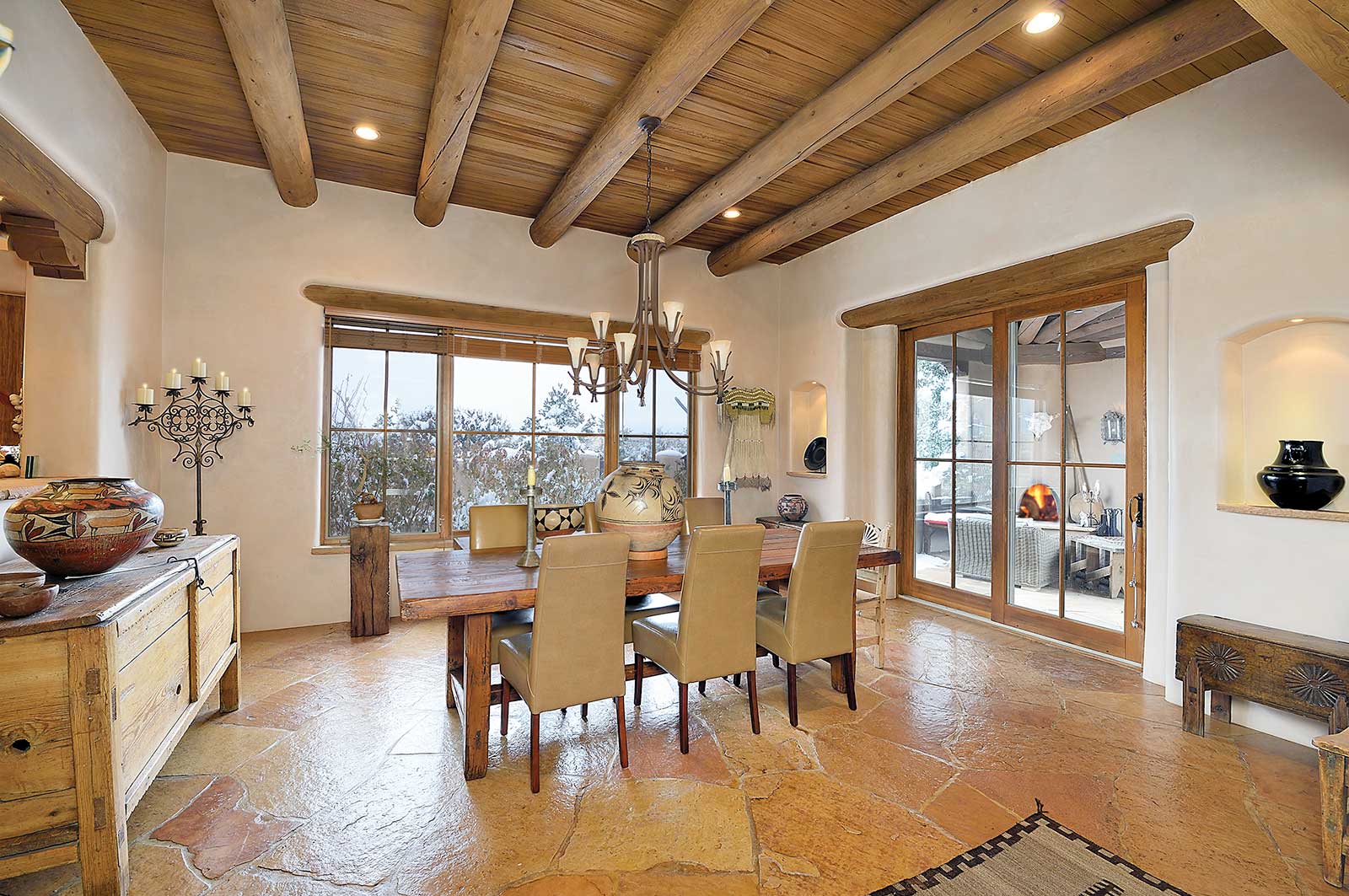 The dining room features a combination of large historic Pueblo ollas and Spanish colonial furniture from the classic period of 1780-1850.
They have loaned a number of the historic pieces in the Field Museum exhibition opening this March. Don and Liza feel, “We are the keepers of the people’s belongings, and it is an honor to share the collection and make it accessible to museums, tribes and anyone who wishes to learn more about the fabulous works of the Apsáalooke peoples, past and present.” –
Powered by Froala Editor