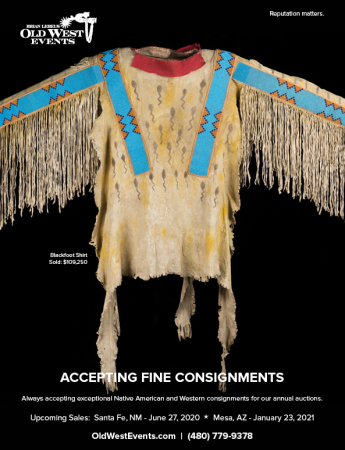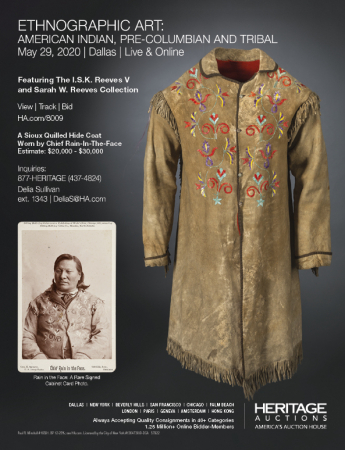
In a time when museums across the globe are struggling to reimagine antiquated and colonial approaches to exhibition making around Indigenous cultures, a collaboration between the Field Museum, the University of Chicago and the Apsáalooke Nation, has produced a groundbreaking exhibition that finally invites a Native nation and their curator to tell the story of their people. In an effort to avoid continuous colonial approaches to curation, museum collections care and conservation, as well as public education surrounding Indigenous material, the Field Museum partnered with the Neubauer Collegium for Culture and Society at the University of Chicago to tackle the issues head-on to lay out a vision for the future that includes robust consultation from Native peoples. Together the institutions hosted a remarkable series of conversations with tribal elders, Native artists and writers, curators and scholars specializing in Indigenous cultural material, scholarship and human rights. As a result of the conversations the research project improved engagement and incorporated knowledge from the Native community.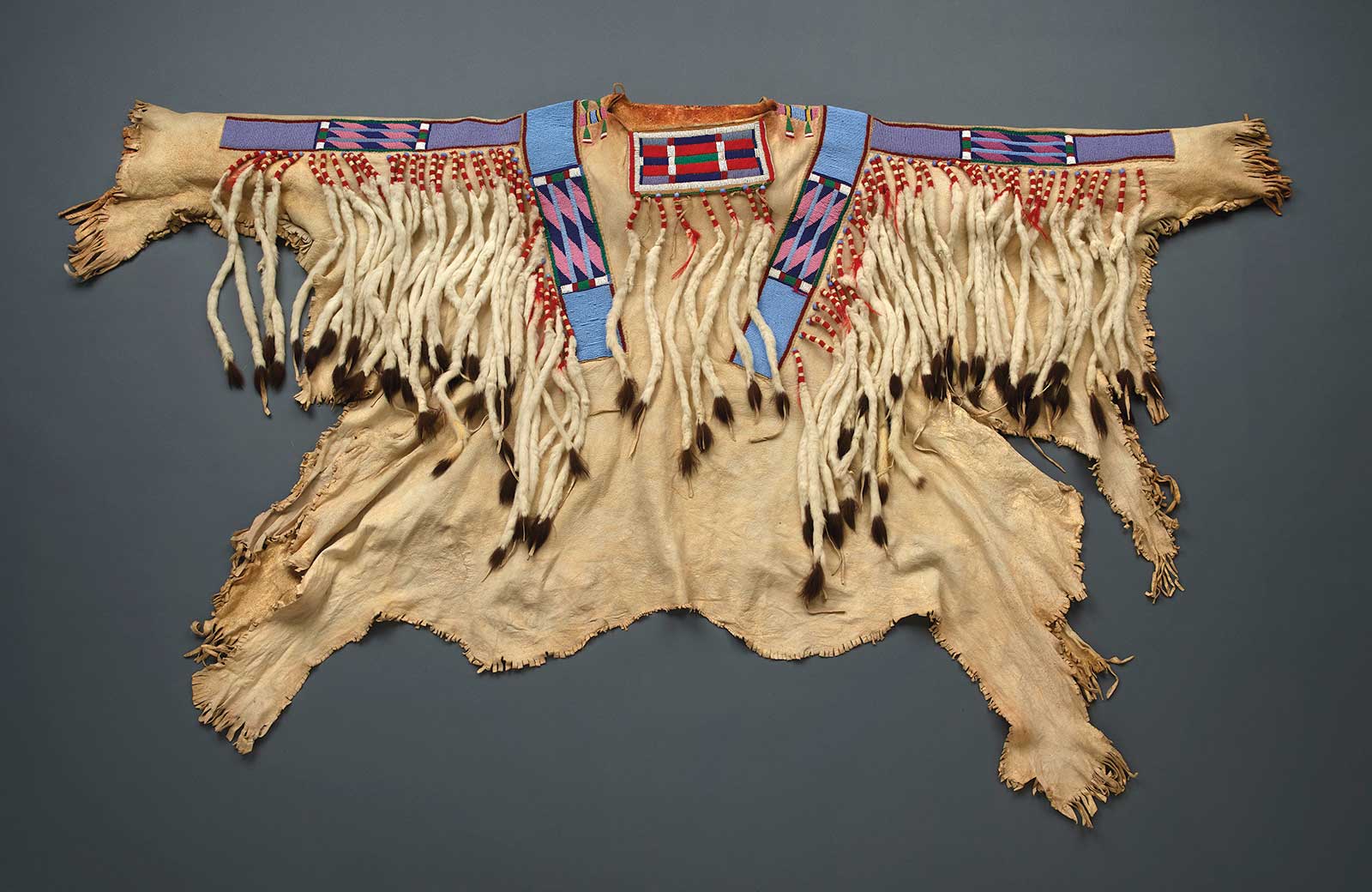 Baleiittaashtee/war shirt, possibly mid-19th century, hide (buckskin, leather), textile, fur (est. ermine), glass, hair, quill, sinew, thread, pigment. © Field Museum. Photo by John Weinstein
The first major result of these consultations is Apsáalooke Women and Warriors, groundbreaking, community-driven exhibition that features historic objects and contemporary art with narratives that emphasize the vibrant and living culture of the Apsáalooke people. A new roadmap that explores the appropriate display and education of Native objects and culture.
Apsáalooke Women and Warriors tells stories from the Apsáalooke perspective, a radical departure from the past that seeks to privilege the voices of Indigenous and marginalized people. And the exhibition book, distributed by the UChicago Press, gives center stage to Apsáalooke writers, whose essays are featured alongside sacred objects, contemporary and historic art, and photos of Apsáalooke people. All proceeds from the book will go to Little Big Horn College in Crow Agency, Montana.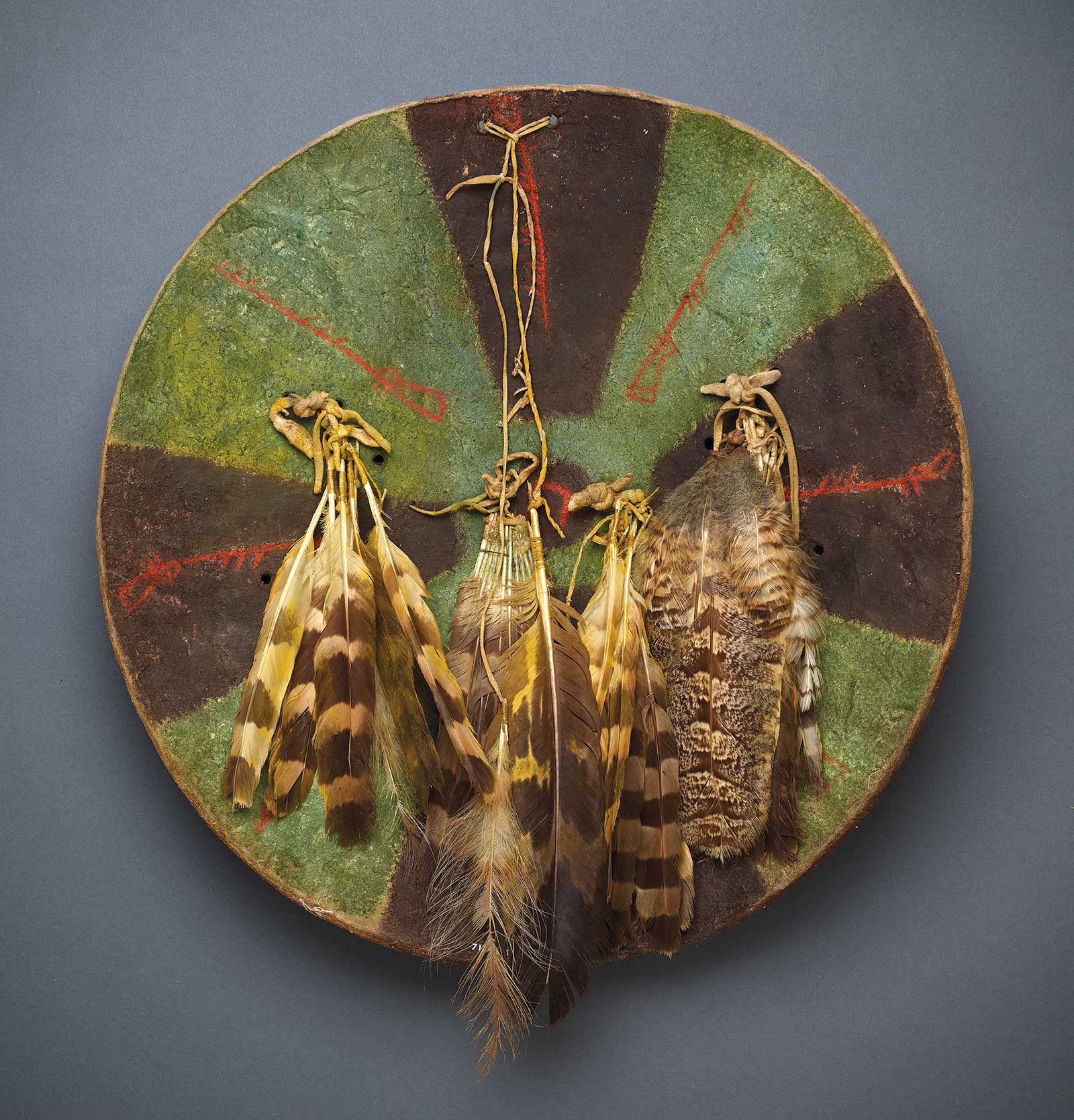 Buakwaalaaxeesh koo iishbinnaachik/war shield belonging to Crazy Sister in Law, ca. late 1800s, rawhide, pigment, owl feathers. © Field Museum. Photo by John Weinstein.
The two-part exhibition will feature contemporary art, beadwork, designer apparel, war shields, historic ledger works, an animated production about the Apsáalooke creation, parade finery and an Apsáalooke tipi. Each object described through narrative, with an emphasis on the Apsáalooke use and meaning of each item. In addition to these items the Field museum site will premiere a collection of Apsáalooke war shields curated by Aaron Brien, Apsáalooke archeologist and scholar.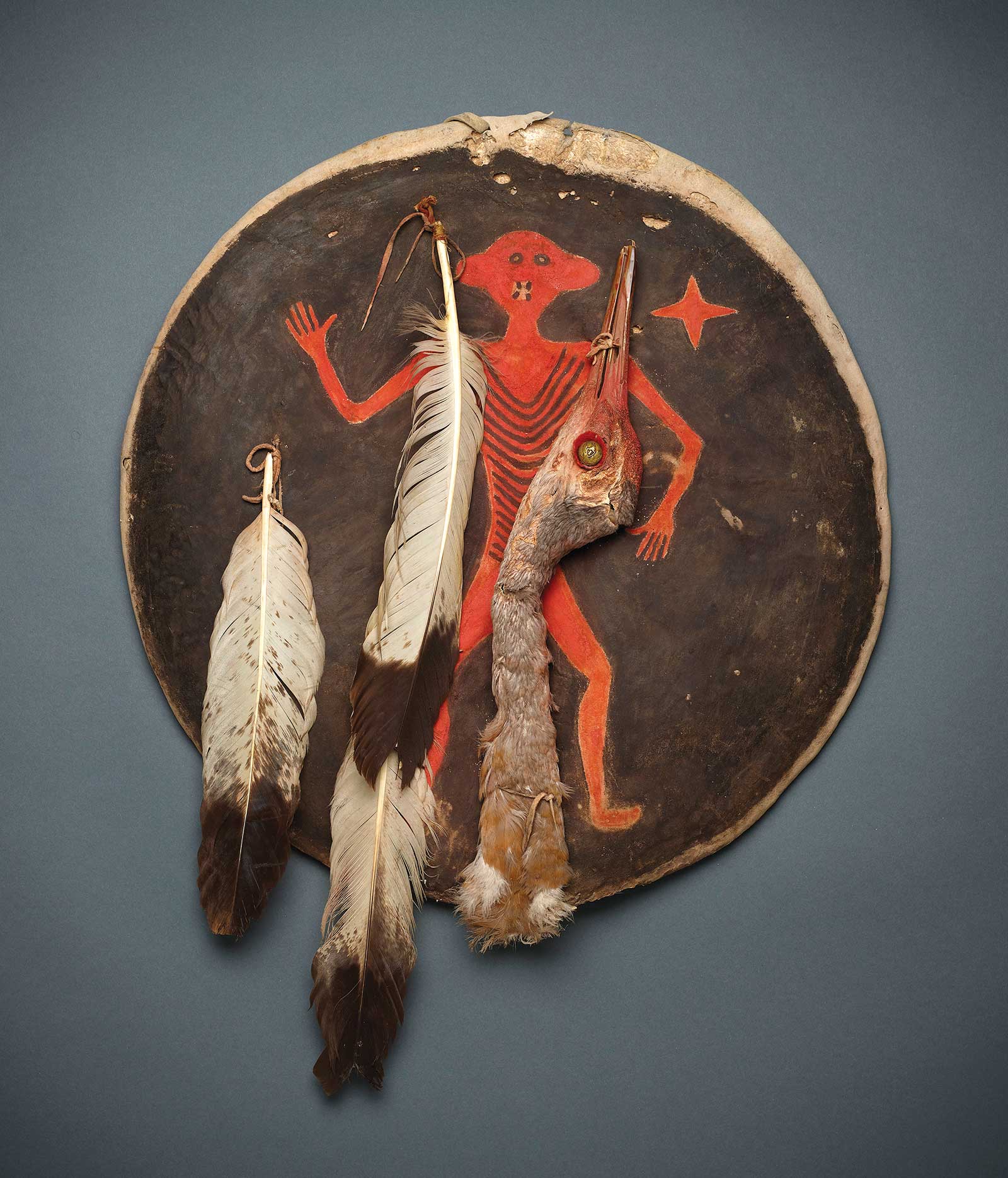 Chiischiipaaliiash koo iishbinnaachik/war shield owned by Wraps Up His Tail, ca. late 1800s, rawhide, pigment, eagle feathers, sandhill crane head. © Field Museum. Photo by John Weinstein.
War Culture
In the past the Apsáalooke were immersed in a way of life that embraced inter-tribal warfare. This war culture compelled my people to have a great deal of respect for those who exhibited boundless courage and bravery on the battlefield. These virtues are still celebrated though we no longer participate in inter-tribal warfare. A victory today is successful participation in the military, completing a degree, doing honorable work in your career and winning a significant sports competition. The Apsáalooke concept of bravery is based on one’s abilities through the spiritual power they possess. All the feats that one accomplishes is attributed to the supernatural forces that made success and glory possible. There are many objects associated with the historic concept of war and bravery, among them are war shields and war shirts.
War shields by Aaron Brien (Apsáalooke)
There was a time when most men of the tribe owned a shield. These shields represent the power of the creator and the fortitude of the individuals who owned them. They also represent the covenant that the Apsáalooke will always be protected and that we will always hold what is ours.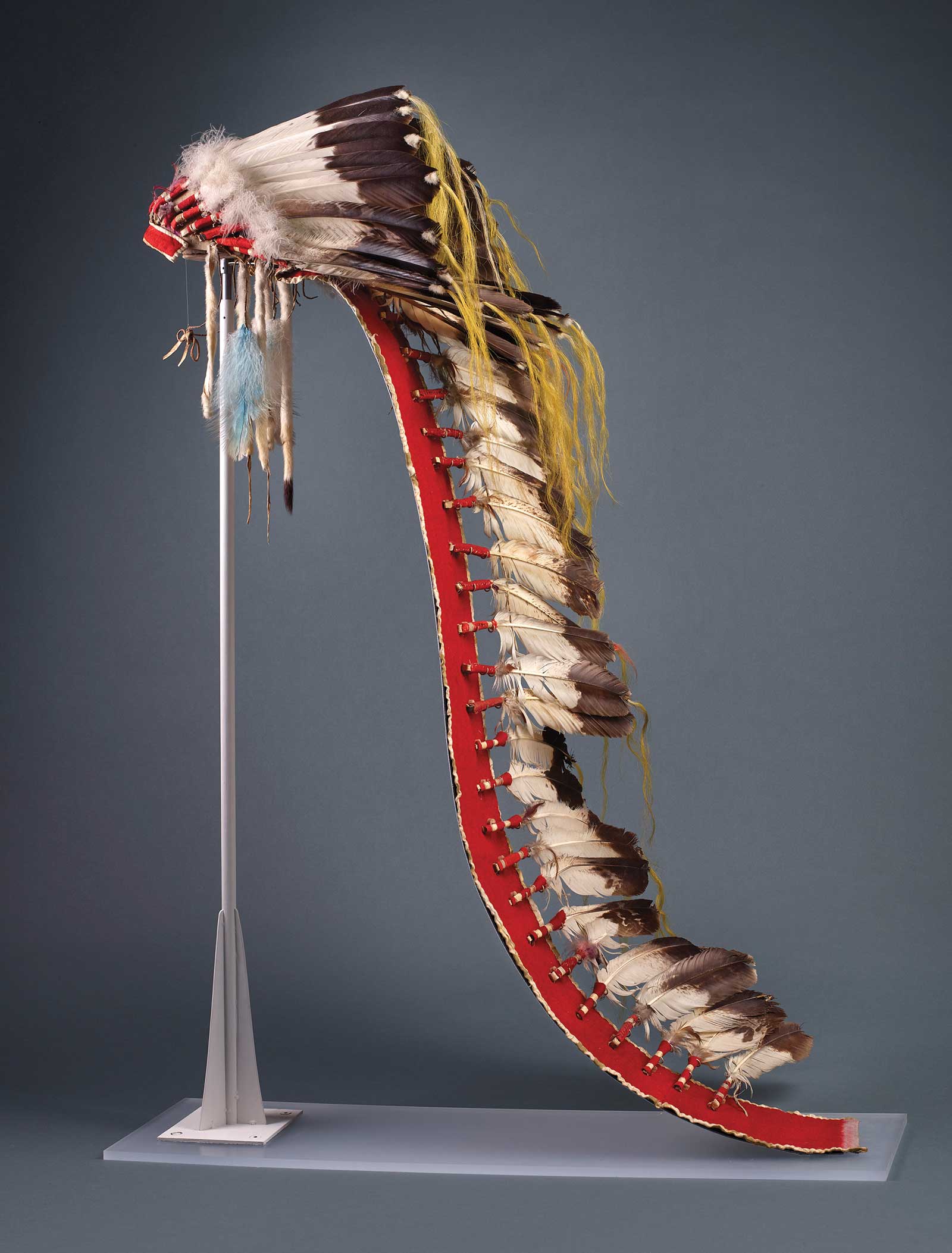 Apsáalooke war bonnet. © Field Museum. Photo by John Weinstein.
Each shield is made of three major parts. The first is rawhide made from the thickest parts of the buffalo hide: the thoracic area, or the buffalo hump. To make a shield, the owner digs a hole in the ground, sets a small fire in the hole, and then places the clean rawhide over the hole. The heat from the fire pulls the moisture out of the hide, causing it to shrink. The hide gains thickness from that process. The owner then makes a cover for the shield and typically places his “medicine” on the cover. This can be, but is not limited to, things the owner has seen during a fasting experience or medicine that has been given to the owner of the shield. It is also common to place the medicine objects directly on the rawhide and conceal the shield with a plain buckskin cover when it is not in use. The third part of a shield is the handle or shoulder strap. Most of the shields in the Field Museum’s collection include a shoulder strap. These make the shield sit on the owner in a bandolier style.
Shields are considered baaxpáa (sacred). I have asked many elders to explain the meaning of this term, and there are many views, but one that stands out to me comes from one of the leaders of the Sacred Tobacco Society, Grant Bull Tail. He states, “We [Apsáalooke] only have one word for holy and those things, it’s ‘baaxpáa.’ It means ‘To be with God’ or ‘Powerful source of energy’.… That’s why they say, ‘If you harm anything in nature, it harms everything.’”
Beadwork
Beadwork is an important part of Apsáalooke culture it is mode of artistic expression that has remained intact since the mid-19th century. Crow beadwork from about 1860 to 1910 is considered a classic style, with symmetrical alignment, and abstract geometric and floral patterns. Over the years designs have become more elaborate and bead sources continue to change causing multiple aesthetic variations. However, there are several components to Crow beadwork that make it distinctive. One is the minimal use of white, white is generally only used to border and outline designs. Another is the use of pale blue and dusty pink as the background. Other colors used regularly are navy blue, yellow, green and red. Black is almost never used.
Geometrics in the form of the hourglass and triangular shapes are a characteristic of Apsáalooke designs. Classic florals tend to be abstract and symmetrical with contemporary florals appearing more realistic and less symmetrical. Both colors and designs have symbolic meaning and are used with careful consideration. Another distinctive aspect of Crow beadwork is multidirectional bead placement, this is when the outline, design and background change direction throughout the piece, sometimes called transmontaine. Methods used are “overlay/spot stich,” when beads were threaded on and positioned into place, then, with a second thread, the row of beads is tacked down two or three beads at a time. This technique creates a flat and even surface of beads. The other less frequently used method “lazy stitch” is when a short single row of beads is laid down and tacked down at the ends creating a slight bulge in the center of each row, this stich is generally used for edging, trim and blanket robes.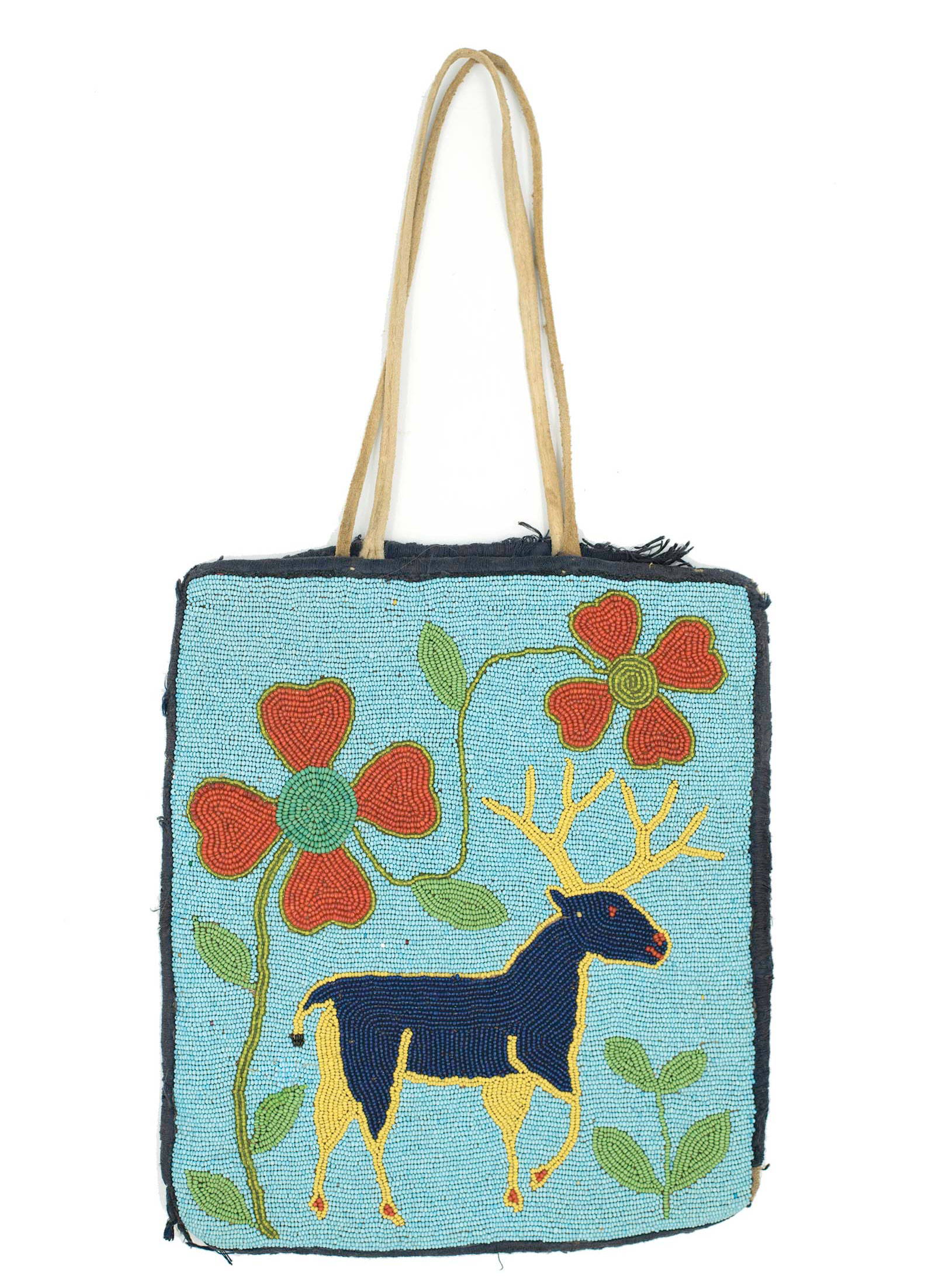 Baaisshe/Plateau bag, ca. 1885, beads, hide and sinew. Collection of Don and Liza Siegel. Photo by Terrance Clifford.
Cradleboards and wedding blankets
Like other mothers around the world, Apsáalooke women invest a great deal of time and love preparing for the arrival of a newborn. It takes many months to complete the beadwork for a cradleboard. To make things easier for the mother, the eight beaded pieces of a cradleboard are created by not only the new mothers but her sisters, aunts, mothers and grandmothers as well. The designs used are for protection and contain wishes of a long and prosperous life for the child. The hourglass and four-pointed star designs symbolize balance, protection, success and balance. The shape of the cradleboard signifies a footprint, implying that the child will eventually stand and walk into a healthy, long and honorable life.
Wedding blankets are customarily made with a large deer hide and adorned with horizontal rows of seed beads. This particular method of beading horizontal rows is aesthetic tradition that is always and only found on women’s belongings. This includes moccasins, bags and blankets. A wedding blanket is usually beaded by the groom’s family and given to the bride as one of her many wedding gifts. This blanket signifies the families respect and love in welcoming her into her new family. Many other spectacular gifts are made and given to the bride on her wedding day, to prepare her for her new life as a wife and mother.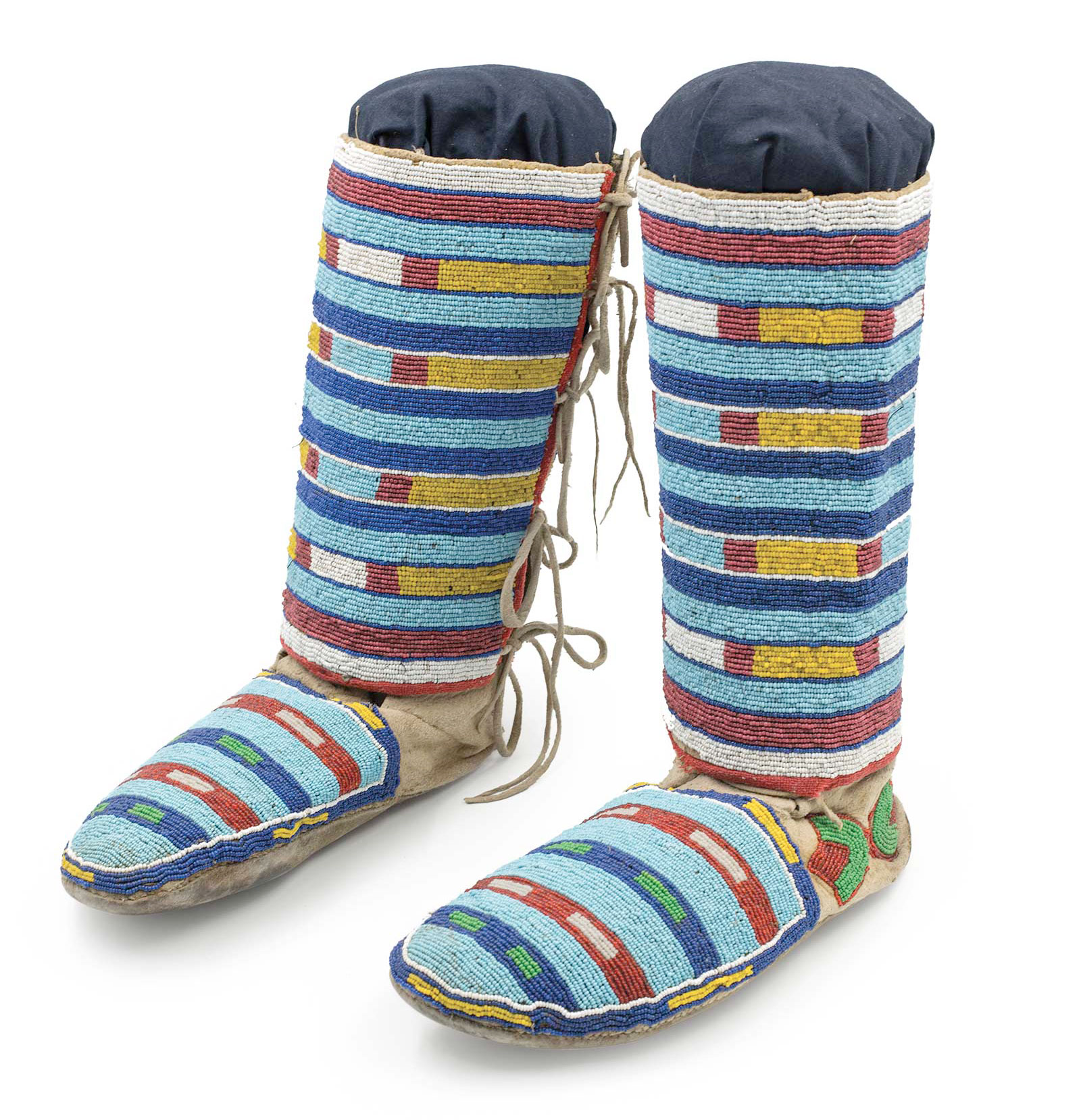 Huupkootaawaaluu o baleichkisshbaloo/moccasins and leggings, ca. 1885, trade cloth, hide and beads. Collection of Don and Liza Siegel. Photo by Terrance Clifford.
The tipi is synonymous with the Plains Indian. Though most Plains Indians lived in tipis the meaning and origins are different for every tribe. For the Apsáalooke, the tipi represents the mother’s womb—a place where we are safe and nurtured. The Apsáalooke tipi has 21 poles, and should always face the east, toward the sunrise. We give tipis as gifts in clan feeds and give away ceremonies. A man’s sisters will provide his new wife with a tipi so they may start a new home and life. Some children who are deeply loved are given small tipis to play in. Our tipis are a physical home, but also have symbolic meaning in each of its parts to remind us what a good home should have. The two smoke flap poles to the left and right of the tipi represent the Owl and Coyote, figures that watch and warn of threat. The owl sits on the left side, and coyote on the right. The four base or frame poles that support all of the other poles represent the four seasons. The first base pole represents spring and new beginnings sits on the southeast corner of the frame. The southwest base pole is summer; the northwest base pole is fall and the northeast base pole is winter. Five poles on the north and south are stacked between the four base poles. From the back, the two poles to the north represent wellbeing and health, the two to the south represent good fortune and wealth. The three poles that remain on either side that are to represent whatever is sacred to the owner of the tipi. These two sets of five poles also represent the ten lunar months that a baby is carried. There is one pole in the rear of the tipi that the covering is tied to. This pole is called the chief pole and represents the owner of the lodge. The two poles that are placed on either side of the chief pole are referred to as “helper” poles, they signify a helper from this world, and one from the spiritual world.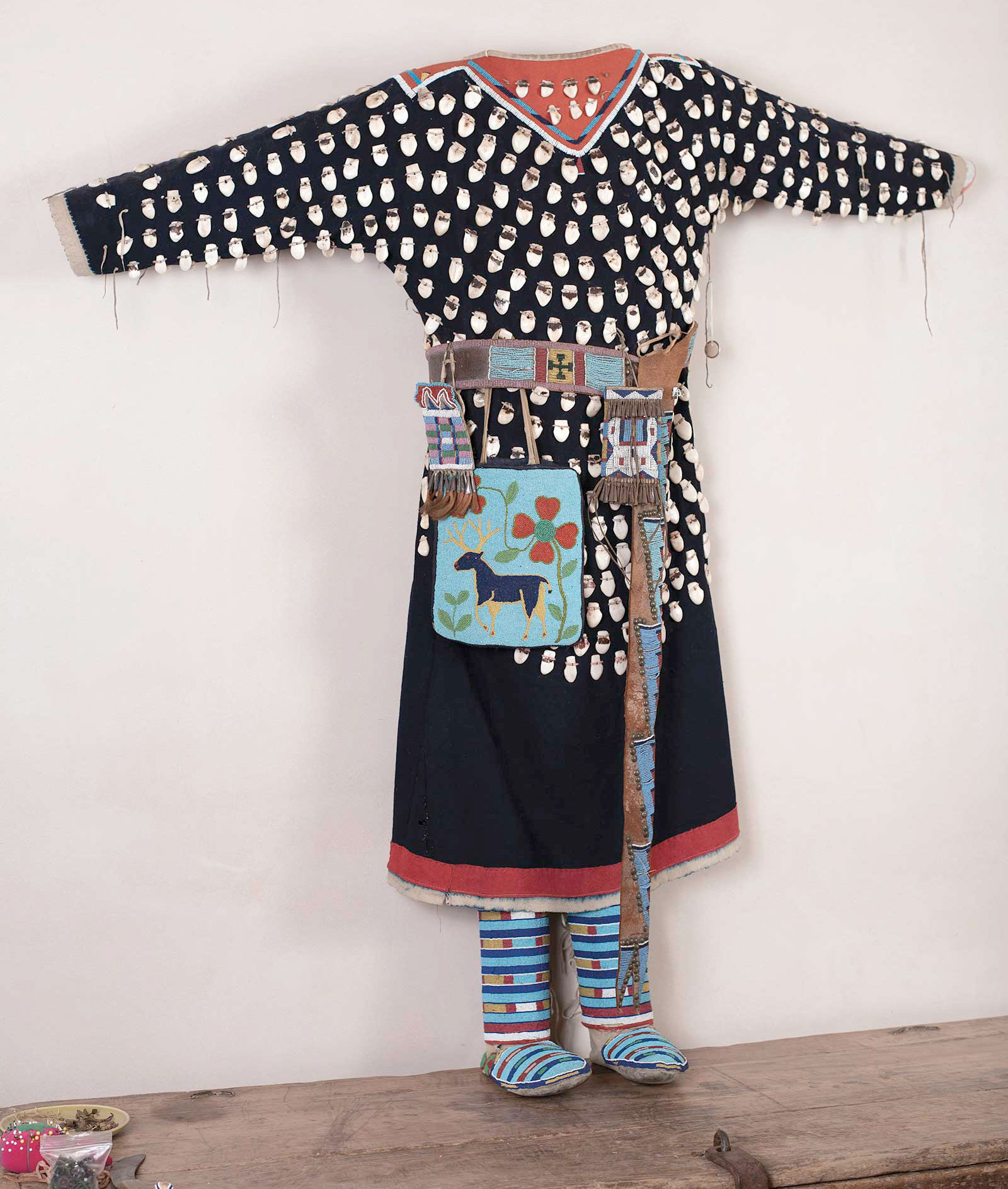 Iichiilihtawaleiitaashtee/Elk tooth dress, 1880s-1890s, elk teeth, carved bone, wool trade cloth and glass beads. Collection of Don and Liza Siegel. Photo by Terrance Clifford.
Each part of the tipi are representations of what the Apsáalooke wish for their home. The protection that is represented by the helper poles ensures a home that is safe. The foundation poles representing the seasons are for the lodge to last throughout the year and offers shelter from all the seasonal elements. The combination of protection, health, happiness, guidance, with the addition of strength (when the poles and stakes are added), represent the kind of home that we would all feel good about living in.
A good Apsáalooke person is believed to be generous and respectful. We must care for ourselves, other people, the earth and all her creatures. This is called imaachiigitua, to care for all good things the creator gives us. This includes the land and water, our families and friends, and the gifts we were given to survive and flourish during our time on earth.
The exhibition Apsáalooke Women and Warriors encompasses multiple ways of being and understanding, from the perspectives of many different Apsáalooke people. We are thrilled to share with you numerous parts of our beautiful culture, and we hope you can make it to Apsáalooke Women and Warriors in Chicago. Aho! —
March 13, 2020-March 2021
Apsáalooke Women and Warriors
Field Museum
1400 S. Lake Shore Drive, Chicago, IL 60605
(312) 922-9410, www.fieldmuseum.org
Powered by Froala Editor