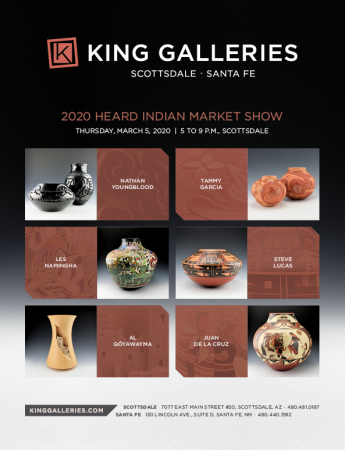
King Galleries in Scottsdale, Arizona, will hold its Heard Market Show, Thursday, March 5, focusing on three important Hopi and Hopi-Tewa potters. Works by Al Qöyawayma, Steve Lucas and Les Namingha will be shown before the Heard Museum Guild Indian Fair & Market, which opens to the public on Saturday.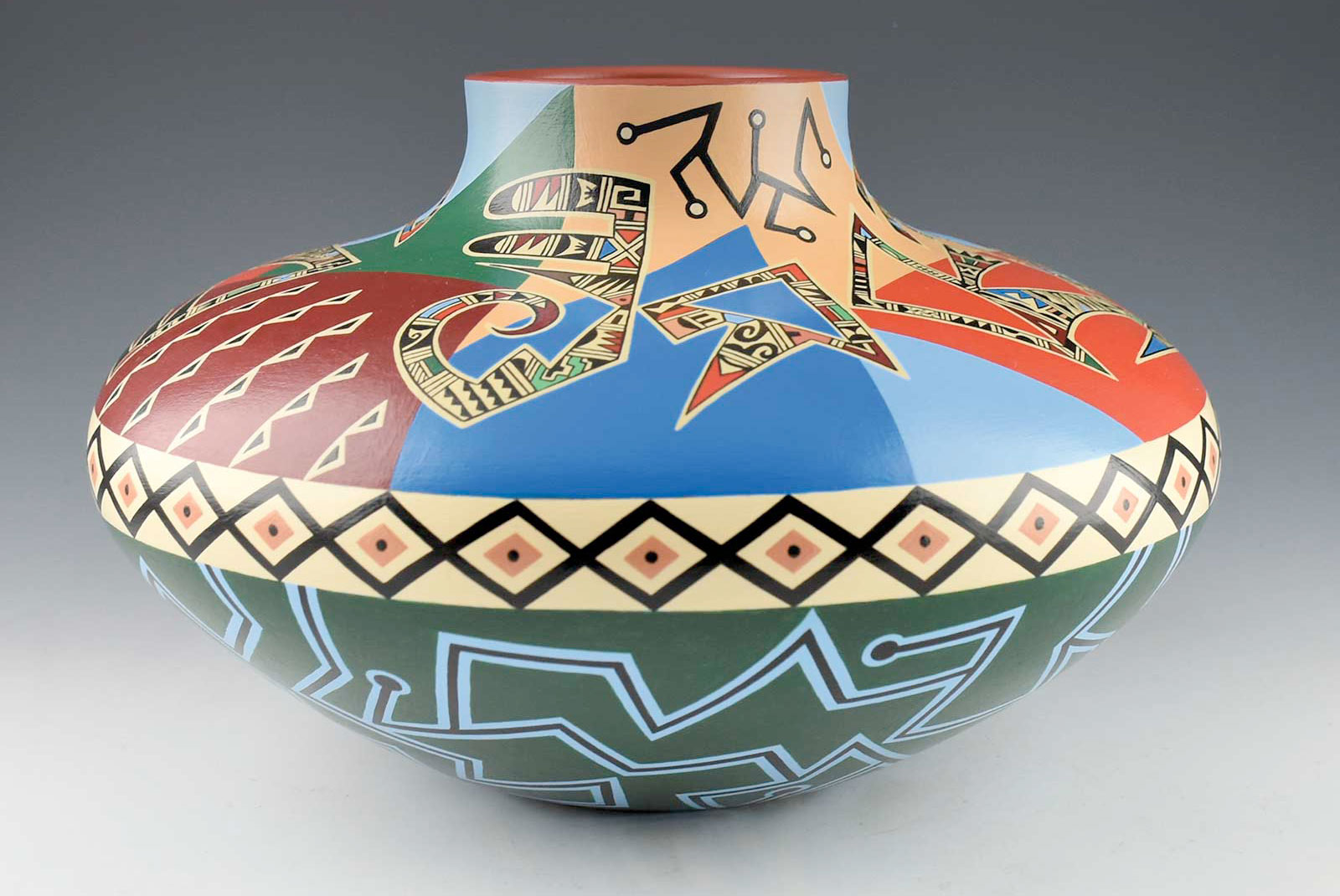 Les Namginha (Hopi-Tewa/Zuni), Finding Our Path, Native clay and acrylic
Owner Charles King explains, “Hopi-Tewa and Hopi pottery has found a resurgence in the past five years. Innovative forms and designs combined with strong technique are the foundation. It is not just a revival of historic designs, but the potters reinterpreting them in the context of their modern lives and visions of a Native future.”
Qöyawayma was born in 1938. He recalls his aunt, Elizabeth White, telling him when he was 28 years old, “You’ve got it.” He comments, “That has always stuck with me, even though at the time I wasn’t sure what I had.” What he had enabled him to win awards throughout his career including Best of Pottery at the 2016 Santa Fe Indian Market and Best of Pottery in 2017 at the Heard. Although he employs traditional coil construction, he uses a repoussé technique to create deep reliefs of architectural and figurative scenes. Some of his recent work is in polychrome, using three or more mineral-colored slips on coiled and incised pots. King describes these pots as “his vision of the evolution of Hopi pottery without western contact.”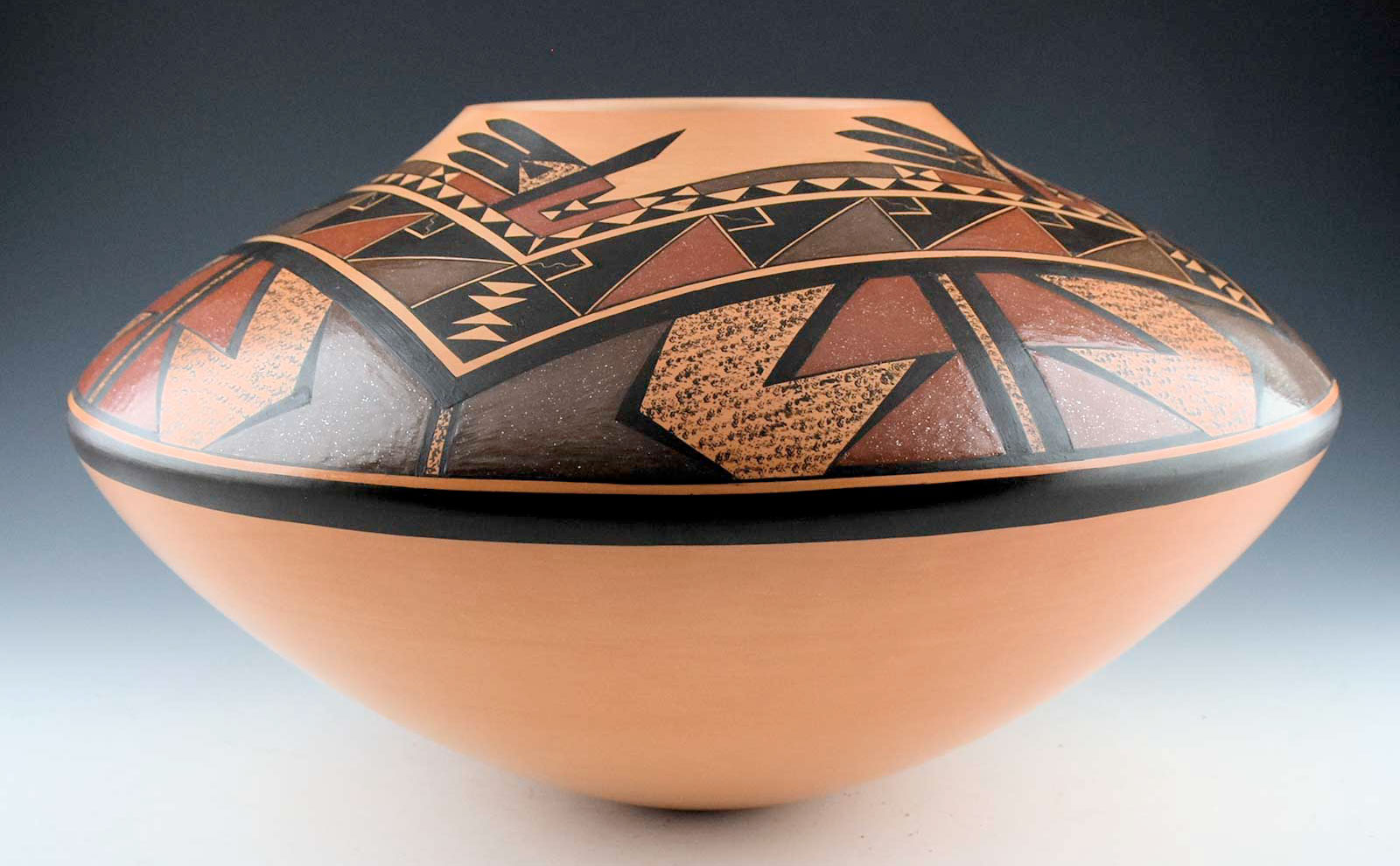 Steve Lucas (Hopi-Tewa), Sikyatki jar, Native clay and Native clay slipsBoth Lucas and Namingha are descended from the great, innovative, Hopi potter Nampeyo of Hano (1859-1942). Nampeyo was inspired by the pottery shards she found near the ruins of Sikyatki which was the ancestral home of Qöyawayma’s clan.
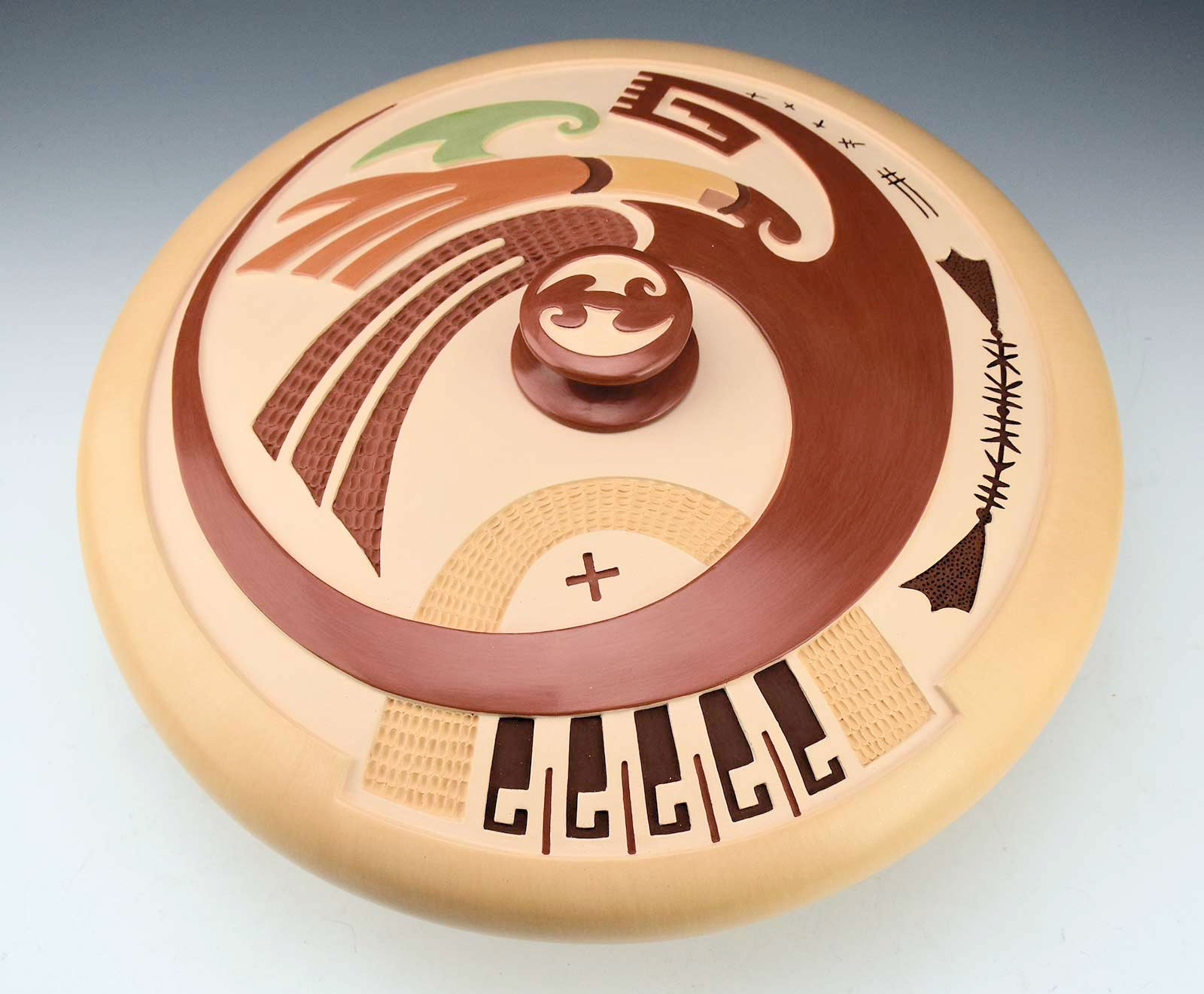 Al Qöyawayma (Hopi), Six Parrot Sikyatki Jar, Native clay, Native clay slips
Like Nampeyo, Lucas works with traditional materials and techniques and interprets historical designs. The warm glow emanating from his pots comes from firing outdoors and many hours of careful polishing with a smooth stone. He says, “People often ask me how I get the shapes and designs for my pots. Actually, my ideas come from the clay as much as from myself. I find that the more I listen to the clay, the better my pot.” He continues, “I study design books and go to prehistoric sites and look at the shards scattered around. My workplace is in Polacca. The site of Sikyatki is nearby, and I often go there. I am always awed by the work of the ancients. To think, I am trying to make pots like those long-ago geniuses. Makes you humble.”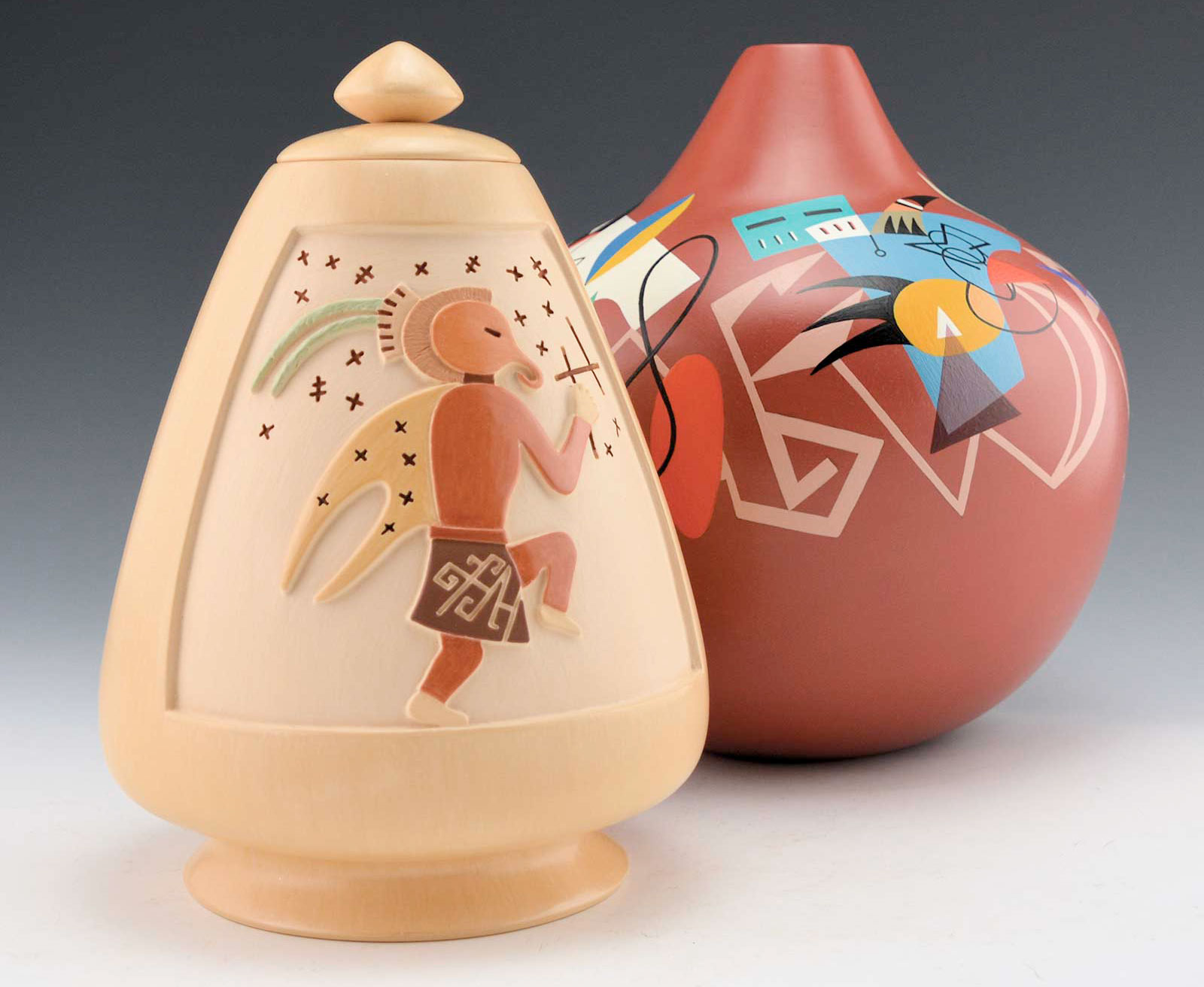 Al Qöyawayma (Hopi) and Les Namingha (Hopi-Tewa/Zuni), two pots, Native clay slips by Qöyawayma, acrylic by Namingha
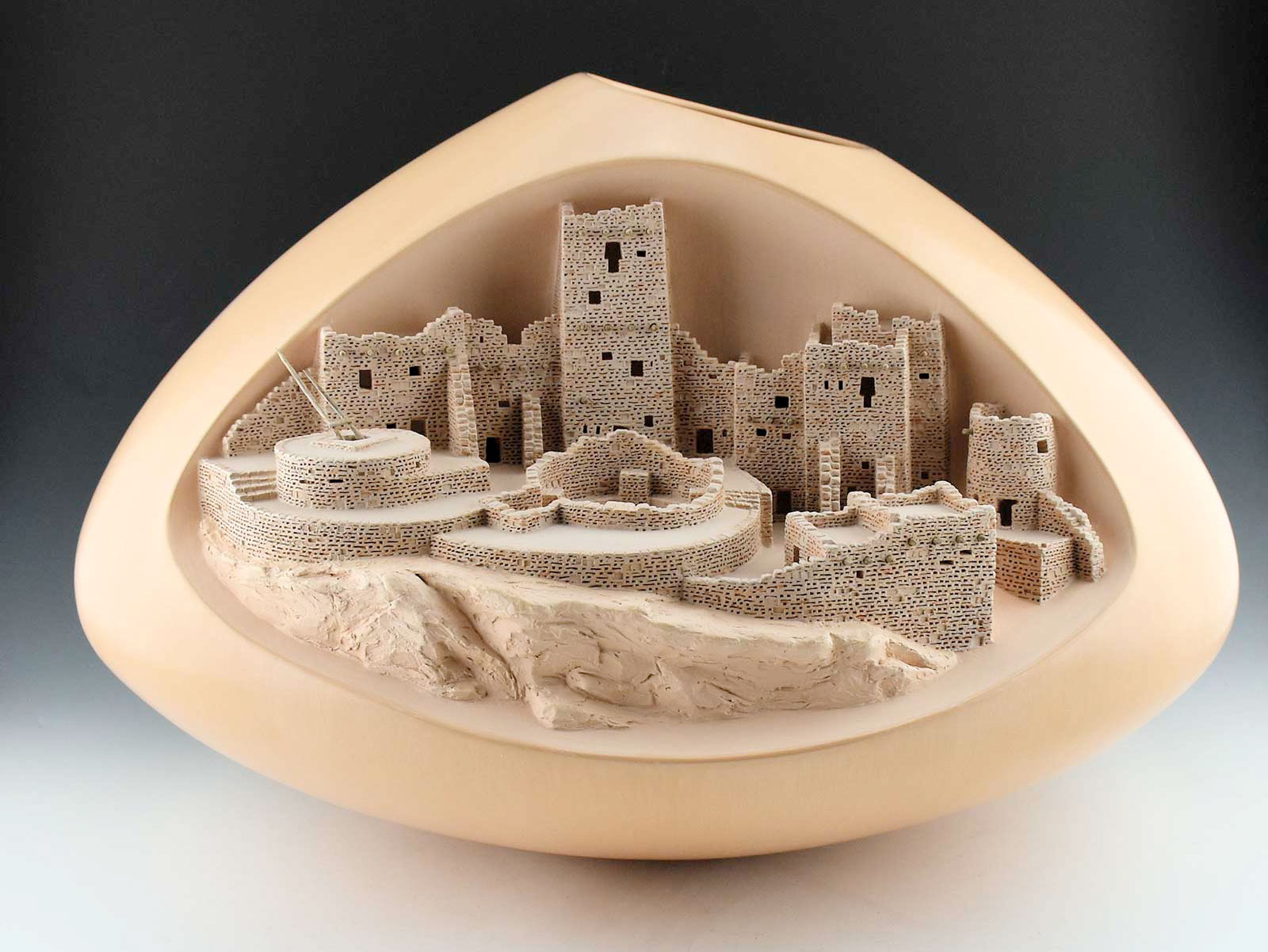 Al Qöyawayma (Hopi), Mesa Verde, architectural jar
Namingha introduces contemporary color and designs on traditional pottery using acrylic paint. Sikyatki birds appear among the designs of the top of his pot Finding Our Path is from his Urban Polychrome series. Referring to the many designs on the pot, he says, “The concept of layering is inherent in our mortal journey. As time moves forward, our memories become layered. Some memories remain vibrant, others faint or hazy. Yet others, obscure or even hidden. Likewise, our experiences, words, works, emotions, prayers and songs build up in layers creating our existence. In turn, our societal interactions become exercises in layering. We see this in evidence with street art or graffiti writing where layers of thought and a desire to express a ‘proof of existence’ create tapestries of color and marks. Blending, covering, harmonizing, dissonance, disappearing.” —
King Galleries
March 5, 2020
7077 E. Main Street, Scottsdale, AZ 85251
(480) 481-0187, www.kinggalleries.com
Powered by Froala Editor