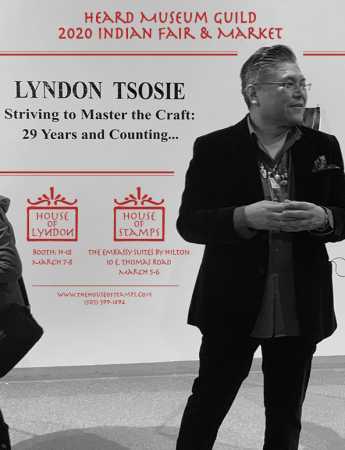
One of the great aspects of the Heard Museum Guild Indian Fair & Market is right there in the title—the Heard Museum. For anyone browsing the booths, speaking with the artists or purchasing artwork, it’s comforting to know the museum is right there as a resource, be it inspiration, information or even just context, historical and cultural.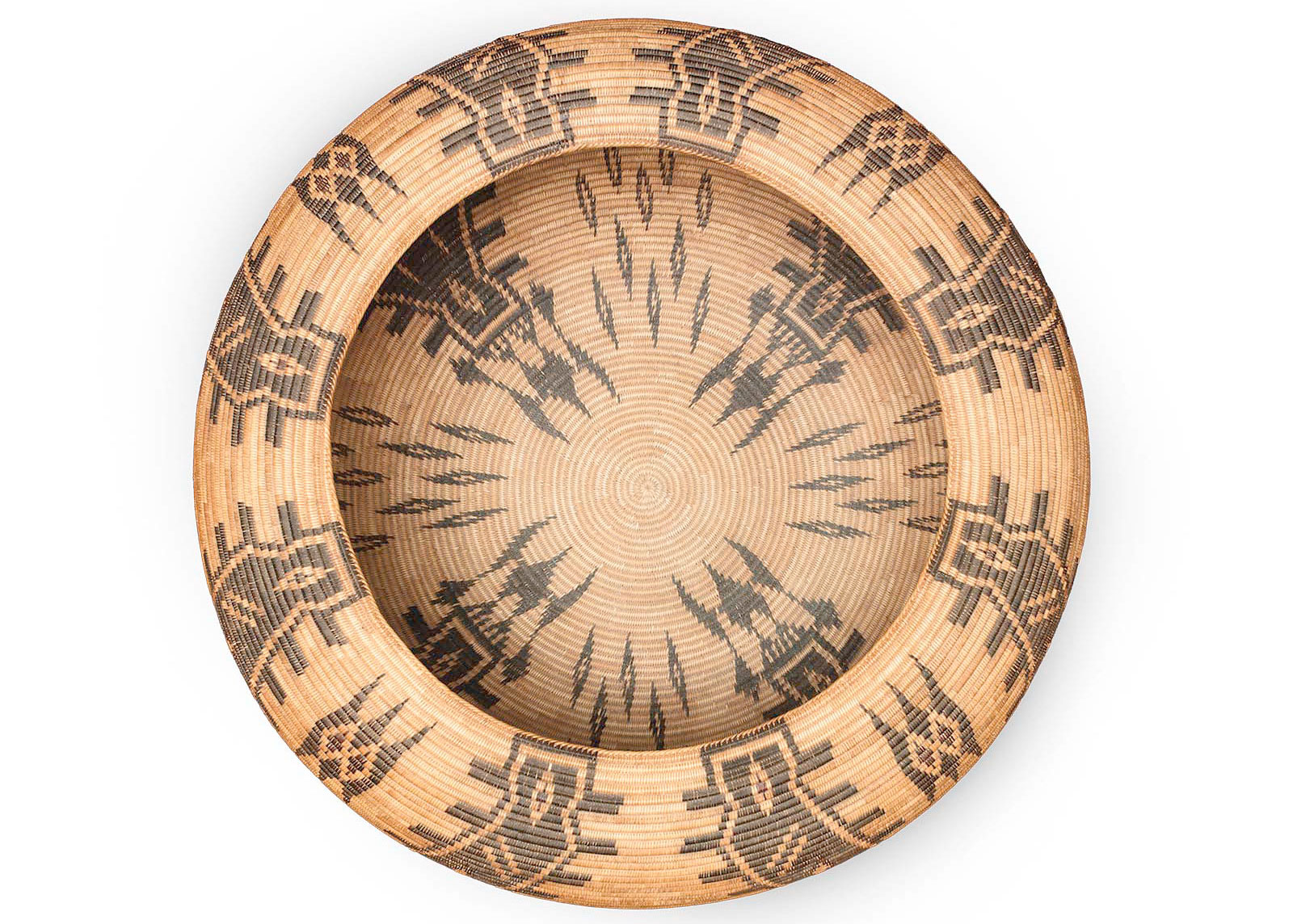 Carrie Bethel (Mono Lake Paiute, 1898-1974), Bowl basket, 1929, split sedge root, dyed bracken fern root, split winter redbud shoots, willow shoots, 8 x 17½". Collection of Edward J. and Mimi Nusrala. Photo Credit: Craig Smith, Heard Museum.
This link between the market and the museum will be especially prominent for basketry at the 2020 edition of the fair, which coincides with the exhibition David Hockney’s Yosemite and Masters of California Basketry, now on view at the museum through April 5.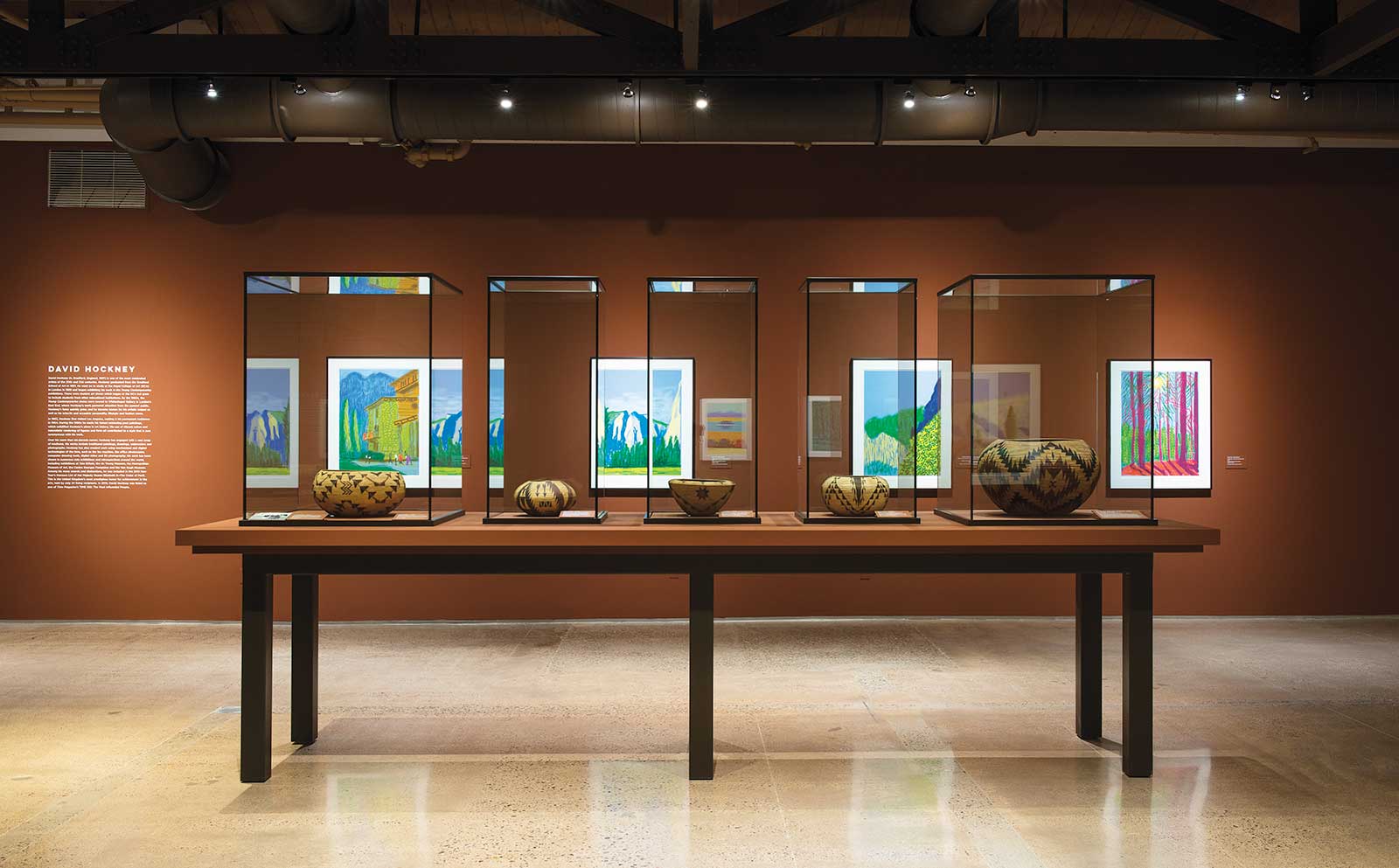 iPad paintings by David Hockney and Yosemite baskets fill the gallery for David Hockney’s Yosemite and Masters of California Basketry, now on view at the Heard Museum.
Jerry Cowdrey, a long-time docent and volunteer at the museum, calls the exhibition extraordinary, particularly the basketry element. “It’s really something very special. I’m so glad the museum could bring it all together,” Cowdrey says, adding that he also teaches new docents at the museum. “I love the show because I love talking about basketry. I just love explaining it all to people—the material, how important the pieces are, how they were made. This exhibition allows me lots of opportunities to talk about the objects I love.”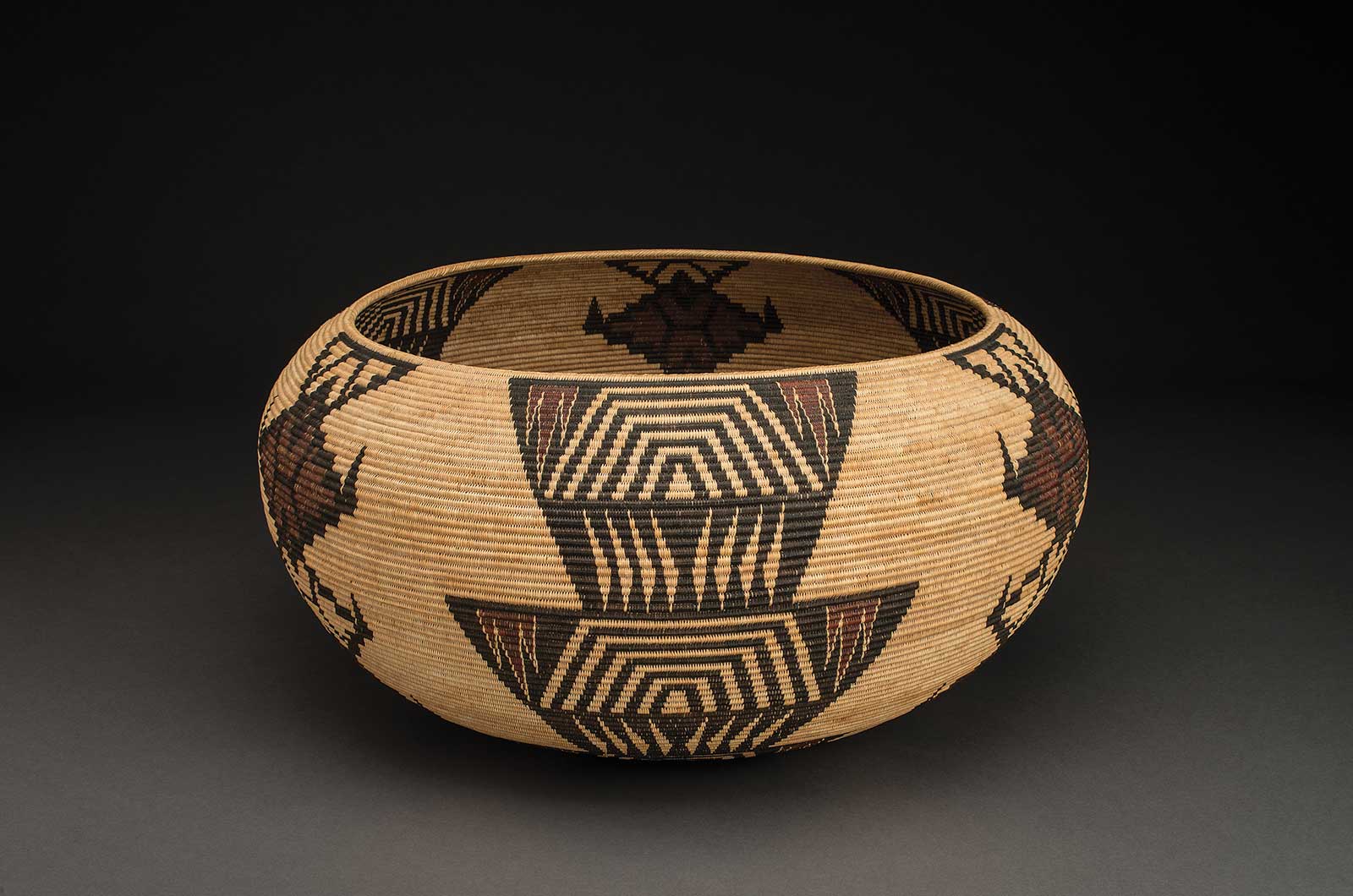 Tina Charlie (Mono Lake Paiute, 1869-1962), Bowl basket, 1928, split sedge root, dyed bracken fern root, split winter redbud shoots, willow shoots, 10 x 20”. Collection of Malee and Wayne Thompson. Photo Credit: Craig Smith, Heard Museum.
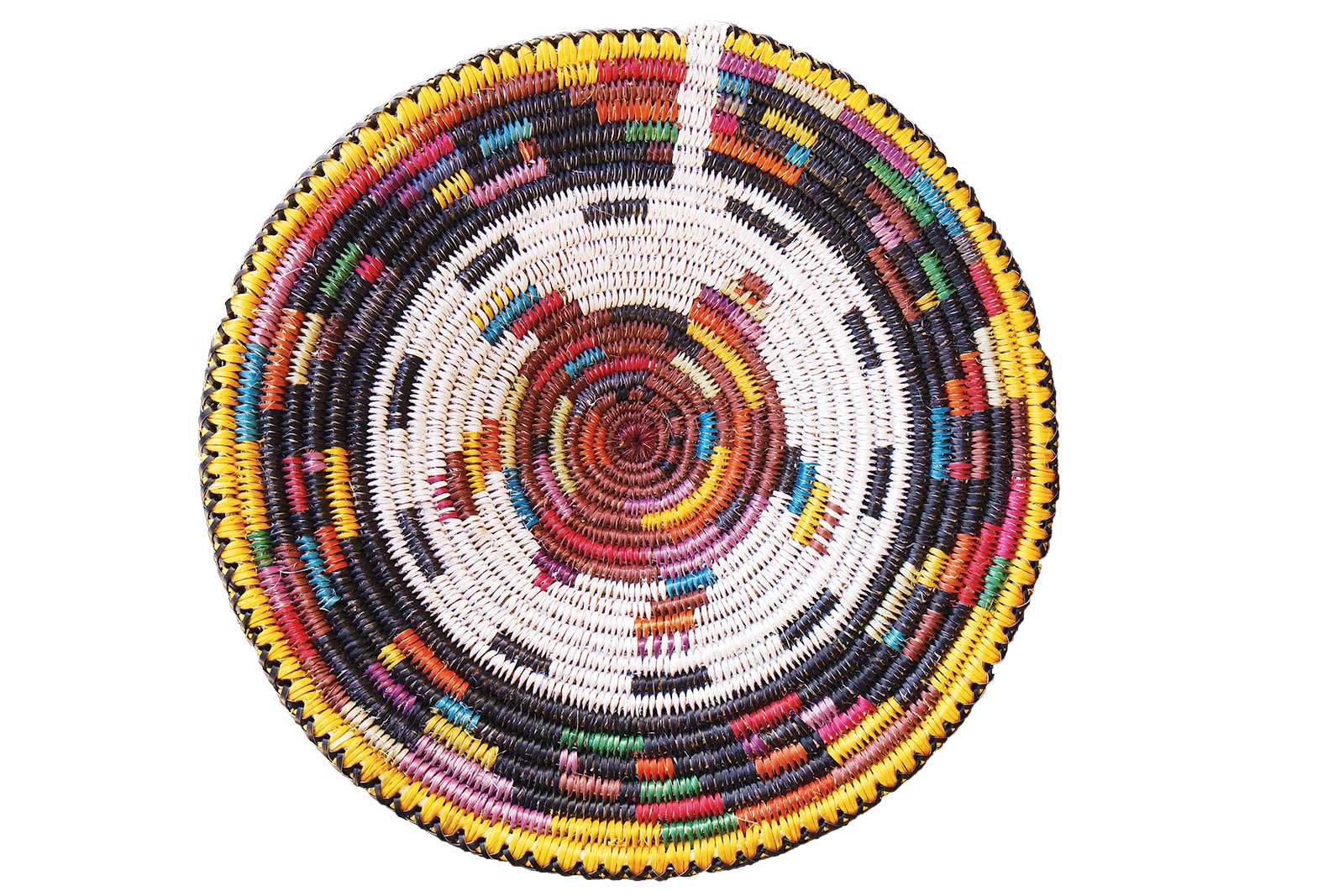 Sally Black (Navajo), sumac basket, 14"
David Hockney’s Yosemite and Masters of California Basketry will feature the iPad drawings of British painter David Hockney, who spent time in Yosemite National Park and documented its iconic features and peaceful qualities. Hockney, a notable modern and pop artist—his most recognizable work is 1967’s A Bigger Splash showing a splash in a backyard swimming pool—is frequently acknowledged as one of the most important living painters in the world. The Heard is taking his time in Yosemite and using it as a launch pad for an exhibition about the importance of California and Yosemite basketry. And while Hockney’s name is in the title and his works will have a central focus, it is the California basketry that will serve as the stars of the show.
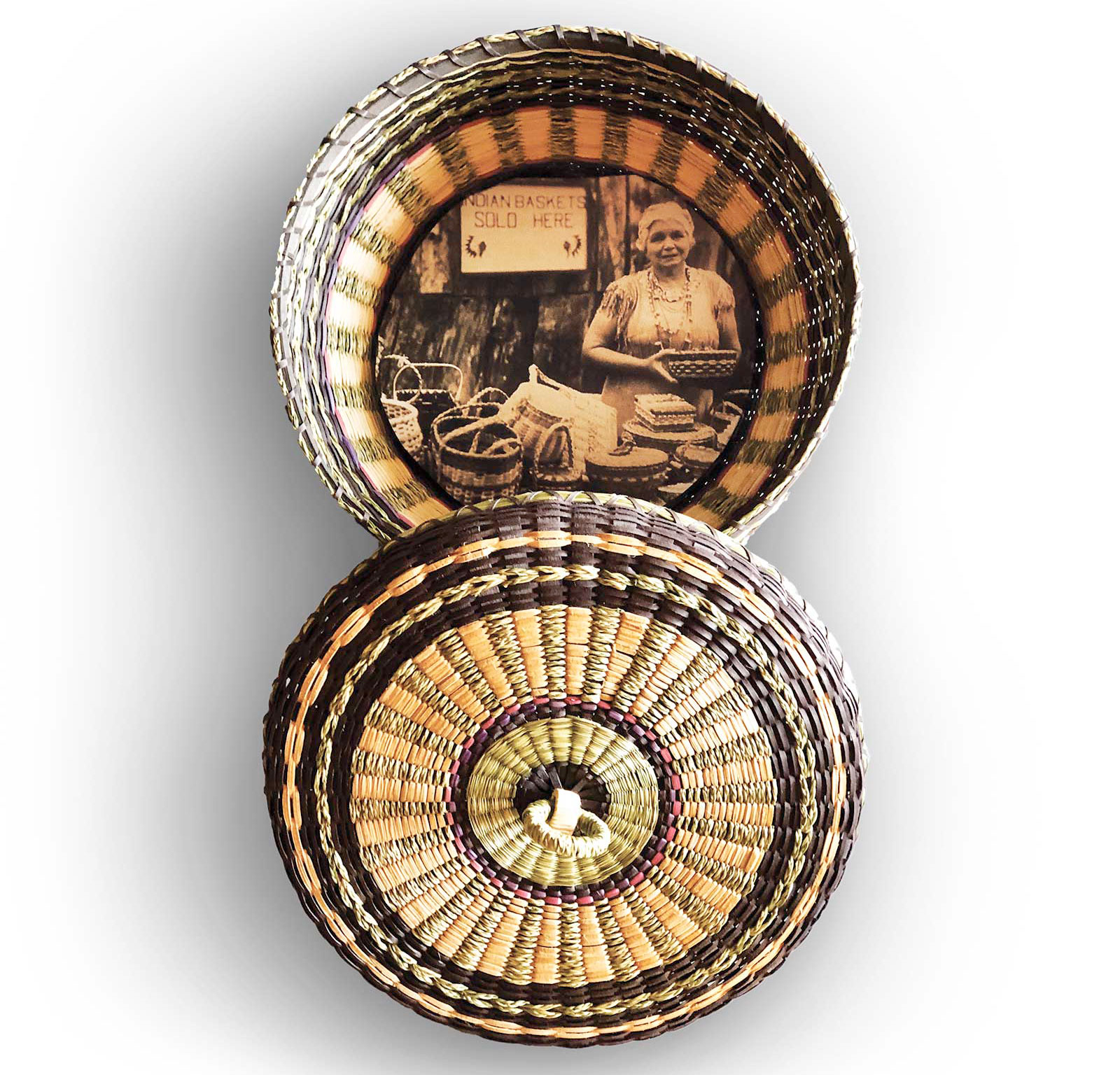 Theresa Secord (Penobscot), Penobscot sewing basket with historic photo of the artist’s great-grandmother and her baskets inside, ash wood (dyed brown), cedar bark and braided sweet grass, 10¼ x 4¼"
What impresses Cowdrey most about the exhibition is the quality of the materials and techniques, some of which have been lost to time. “I started collecting baskets 30 years ago. My first was a feather Pomo basket. The feathers intrigued me, as well as the fineness of the basket and the tight weave. My collection has a lot of miniature baskets in it, but at the Heard you can see great big ones that are amazing in every way,” he says. “The baskets in the exhibition are truly one of a kind. And there really are no more weavers making baskets today that make in that style. No one followed these artists. People have attempted, but no one is entirely sure how they are even made.”
Cowdrey adds: “These are the best of the best.”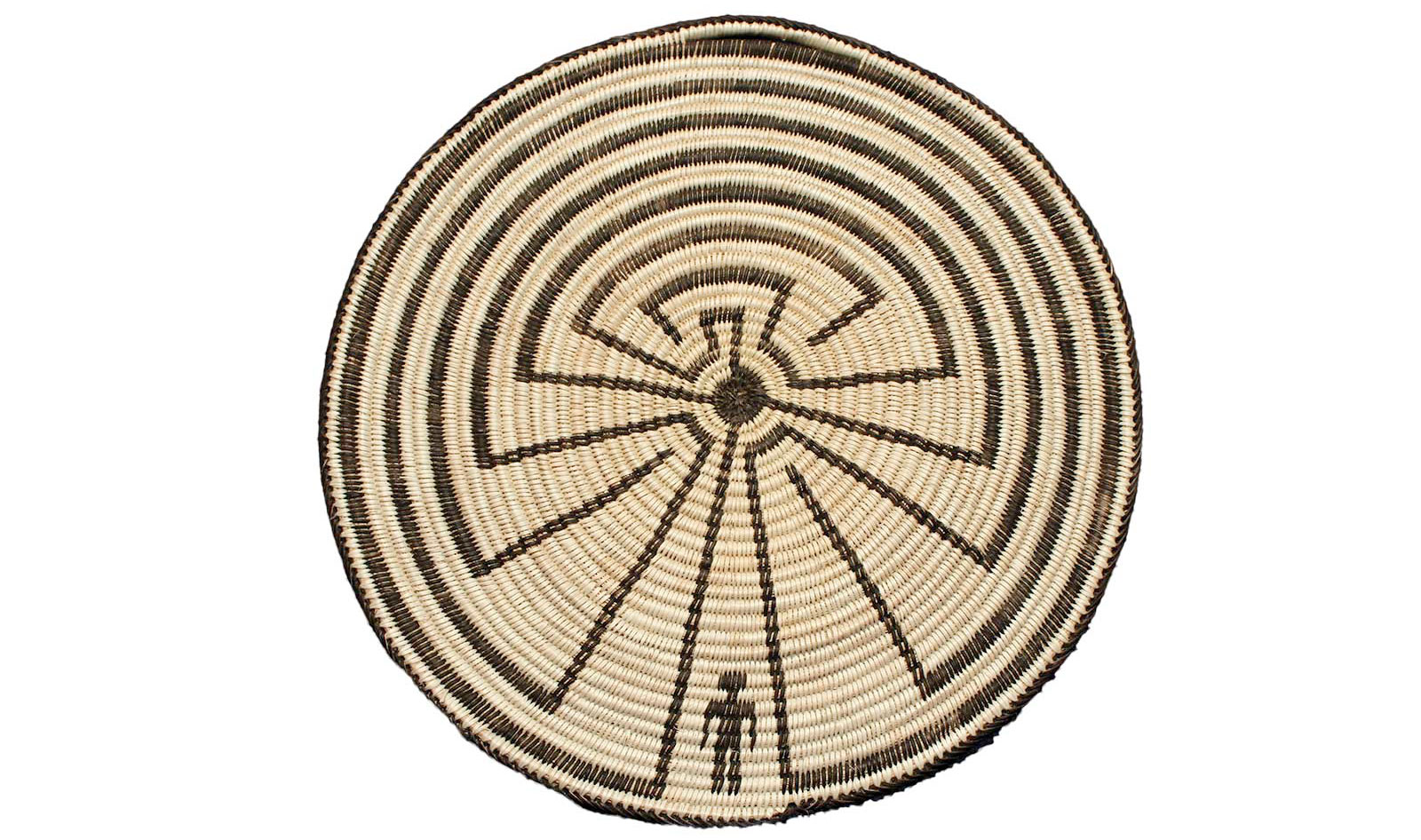 August Wood (Salt River Pima), coiled basket, willow, cattail and devil’s claw
Outside the museum, during the fair and market, collectors will have the opportunity to meet, speak with and purchase baskets from a new generation of Native American basket makers. Artists such as Choctaw basket maker and jeweler David McElroy who uses horsehair to make baskets, lidded bowls and even hats. He even adorns his works with silver embellishments, which add another layer to his finished pieces. Another artist participating is Passamaquoddy basket artist Jeremy Frey, who has won numerous awards around the country for his ash baskets, many of them in a very contemporary design that involves a complex technique.
Returning to this year’s market is Sally Black, whose classic designs and traditional methods have won her acclaim around the country. The coiled baskets of the Navajo artist are made from sumac bushes that grow in moisture- and nutrient-rich soil near her home in Monument Valley, Utah. After harvesting the sumac, which is often done in winter, Black returns to her studio, where the branches are cut, cleaned, dyed and sorted. “Sometimes I work 14-hour days, and I’m not young anymore, but I push myself,” Black says. “It’s a lot of work and a lot of stress, but it’s my work, and it’s what I chose to do.” Black learned basketry from her mother, the famous Mary Holiday Black, and says she always looks forward to her appearance at the Heard.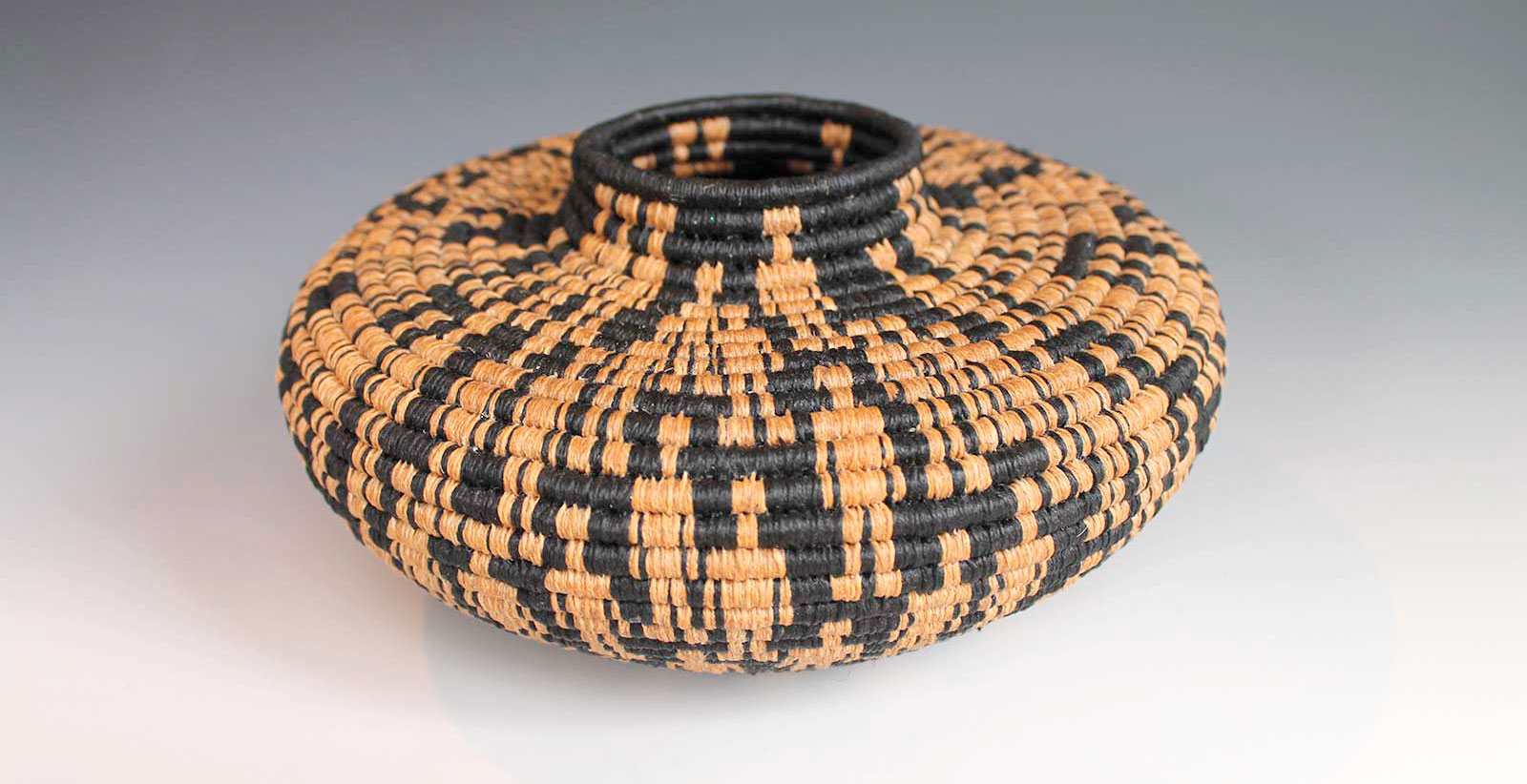 Carol Emarthle-Douglas (Northern Arapaho/Seminole), The Little People, single rod hemp core, wrapped with imported 4-ply waxed linen thread in colors of black and cedar, 7 x 12"
“I can’t wait to get to the Heard. I wake up thinking about the show and the work that needs to be done,” Black said at last year’s event. “And now I go back to work.”
Another Heard artist who uses a traditional coil technique is Carol Emarthle-Douglas, a Northern Arapaho-Seminole basket maker from Washington. Works she’s bringing to the Heard include a two-color black and cedar basket titled The Little People and a basket embellished with silver, copper, gold and pewter beads titled Twenty-nine. “The Little People represents a legend from various tribes that believe the ‘Little People’ are spiritual beings and can be seen as mischievous or can bring good luck,” she says of her newest creations. “This basket titled Twenty-nine brings awareness to the Missing Murdered Indigenous Women (MMIW) movement. The red dresses represent the missing/murdered women and the red hands represent a symbol used in the movement. The number 29 is a statistic by the Seattle Urban Indian Health Board that represents the median age women/girls go missing according to their research.”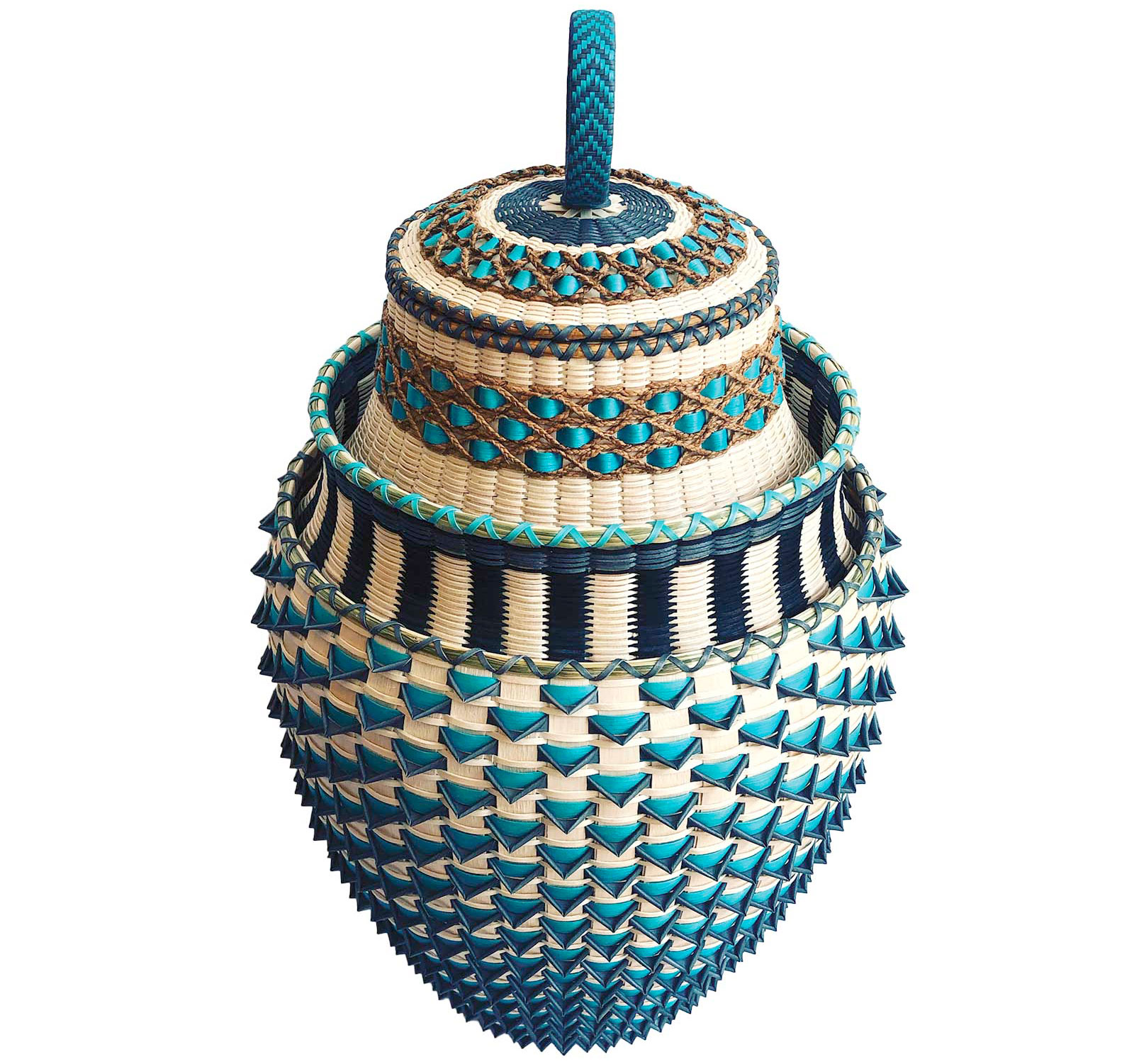 Jeremy Frey (Passamaquoddy), ash basket, black ash, sweetgrass and cedar bark, and fabric dye, 14 x 10"
Michigan weaver Kelly Church will be showing a number of contemporary works, including several miniatures that can fit in the palm of a hand. The artist, from Grand Traverse Band of Ottawa & Chippewa Indians, creates her delicate designs based on her own heritage and upbringing. Shapes include eggs, corn, strawberries and hats. She also works in black ash bark and other more complex materials.
Other artists that will be appearing at the market are Vivian Garner Cottrell (Cherokee), Marvene Dawahoya (Tewa/Hopi), Eugene Fredericks (Hopi), Frances Frey (Passamaquoddy), Don Johnston (Qagan Tayagungin), Wilmetta Kayquoptewa (Hopi), Kathryn Kooyahoema (Hopi), Jessica Lomatewama (Hopi), Jennifer Sapiel Neptune (Penobscot), Jilli M. Oyenque (Ohkay Owingeh), Leona Romero (Tohono O’odham), Theresa Secord (Penobscot), Alberta Selina (Hopi), Celia Sinquah (Hopi), Sarah Sockbeson (Penobscot), Frances Soctomah (Passamaquoddy), Norma Susunkewa (Hopi) and August Wood (Salt River Pima).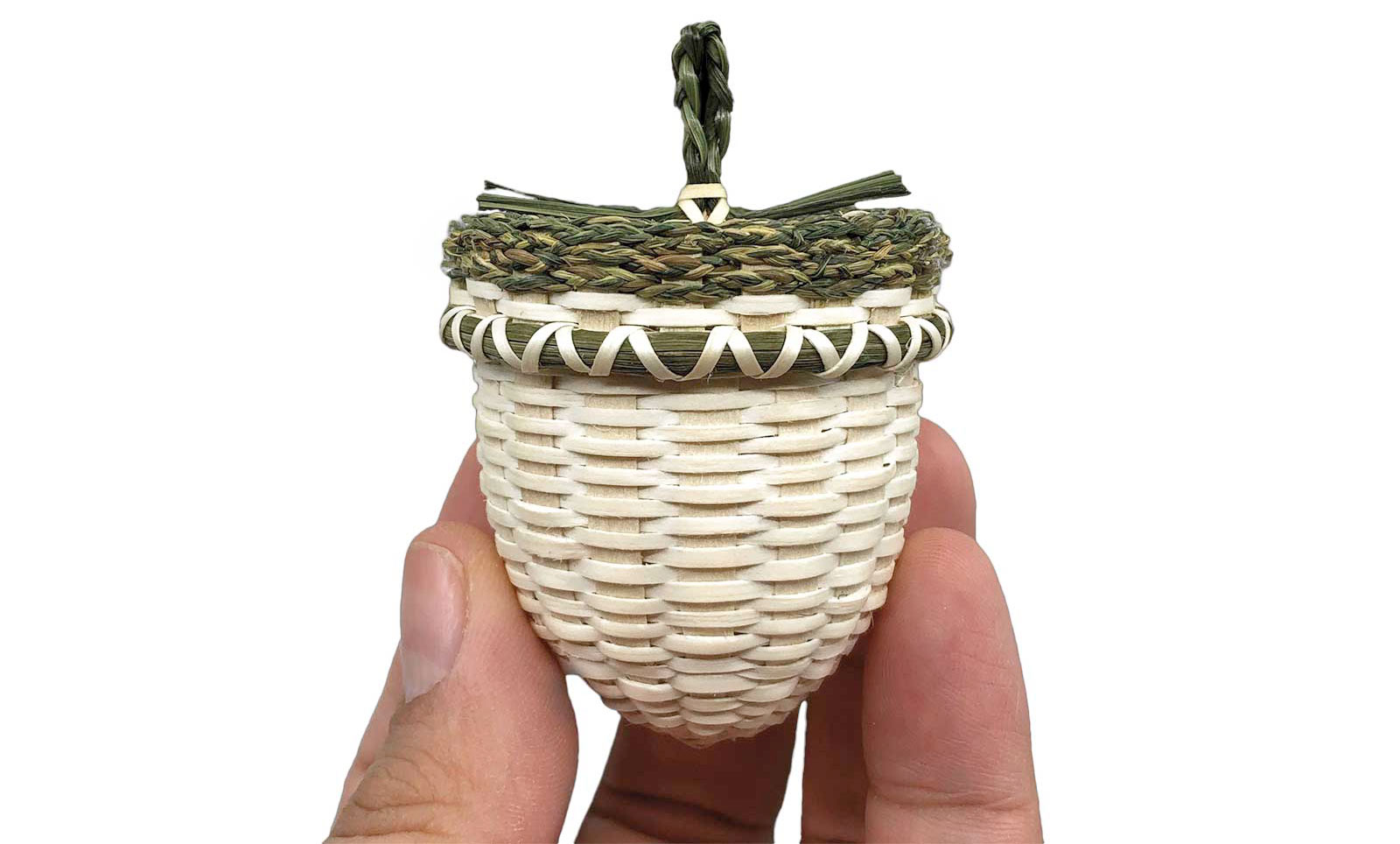 Frances Soctomah (Passamaquoddy), mini acorn, black ash, sweetgrass and commercial dyes
And while that list might seem long here in print, it’s quite small when compared with jewelry, pottery and several of the other categories at the Heard’s market. It illustrates why it’s so important to celebrate basket weavers and their creations—basket weaving could easily fade away, the way Yosemite basket techniques and materials were lost after those artists passed on. Living artists are doing their part by continuing to advance traditional and contemporary designs and techniques, and exposing new and old collectors to the thrilling art that is Native American basketry, but they can’t do it alone.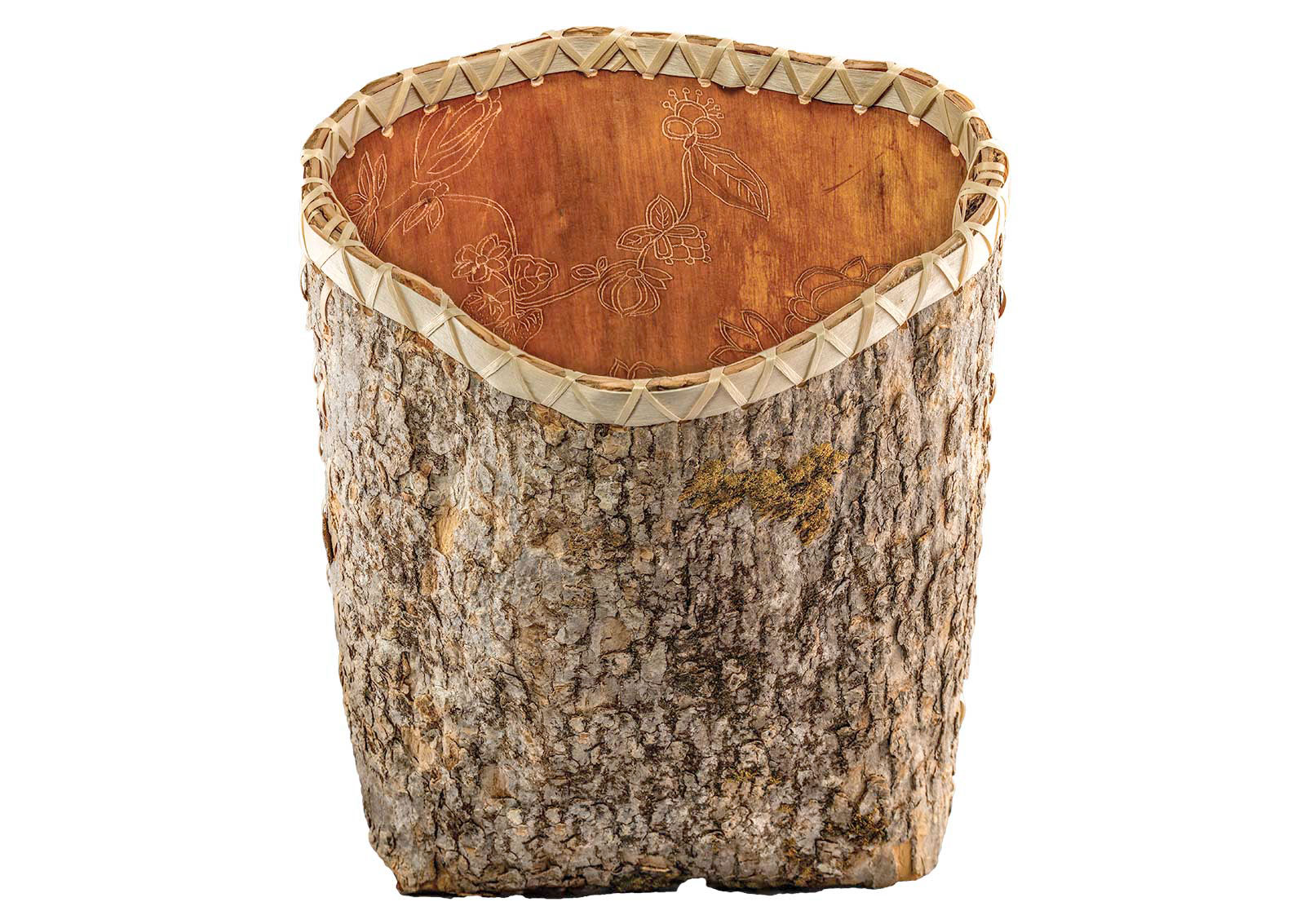 Kelly Church (Grand Traverse Band of Ottawa & Chippewa Indians), black ash bark basket
“Basketry could easily go away if we’re not careful,” says Cowdrey. “Look at [Santa Fe] Indian Market and each year there are fewer and fewer basket makers. Just look at Hopi baskets, for instance: fewer and fewer artists are doing Hopi coiled baskets. Some artists, especially younger artists, are using other methods, maybe methods that are easier. You can even go back to the 1920s, back when some of the artists could make more money by working in the hotels than selling baskets. Some of the baskets took a lot of time, and maybe they didn’t want to go out into a swamp to get the sedge root, and sometimes the materials took a full year to dry before they could be used. You can certainly see why some people would give up and do something else.”
He adds: “But that’s why we have to support the artists—we don’t want to see their work go away.” —
Powered by Froala Editor