Welcome to our guide to the Heard Museum Guild Indian Fair & Market. Over the last month, we have interviewed some of the current exhibiting artists and past award winners to find out about what inspires their artwork and the techniques that make their pieces simply unique. There are also buying tips and helpful hints for each classification so that you know what to look for when delving into the art market. This guide is just the tip of the iceberg on the hundreds of talented individuals who participate in this anticipated event year after year. Take the time to visit with each artist as you scour the fair for the latest creations and learn from the artists by asking questions about who they are as well as what they do.
Baskets
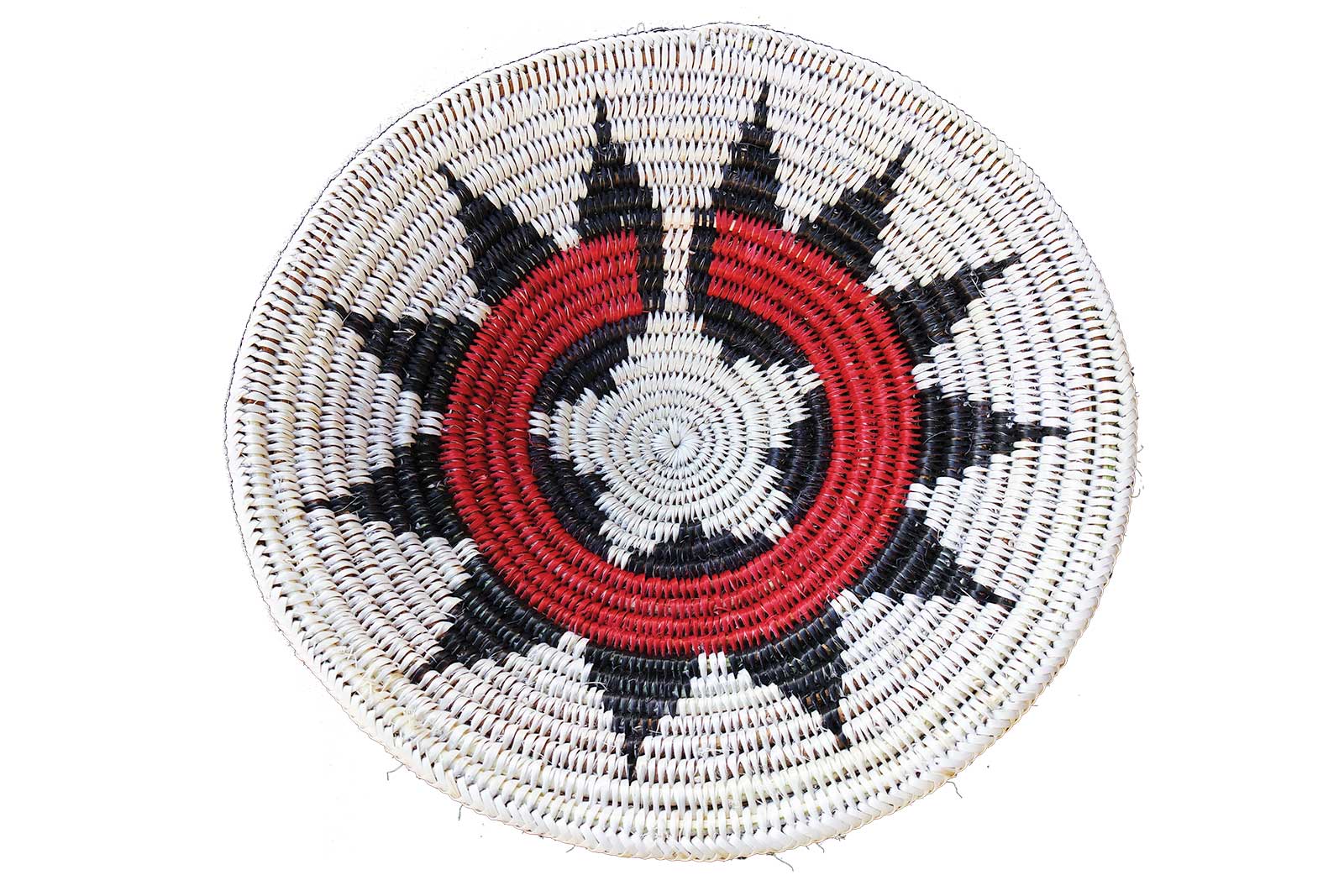
 Sally Black (Navajo)
“My designs often tell a story, sometimes from a dream and include animals like eagles and black widow spiders. When I was about 14 or 15, I wove for four days and made a large Wedding Basket while mom and dad were out deer hunting. We took it to Ojeta Trading Post and came home with a lot of groceries. I started feeding the family.”
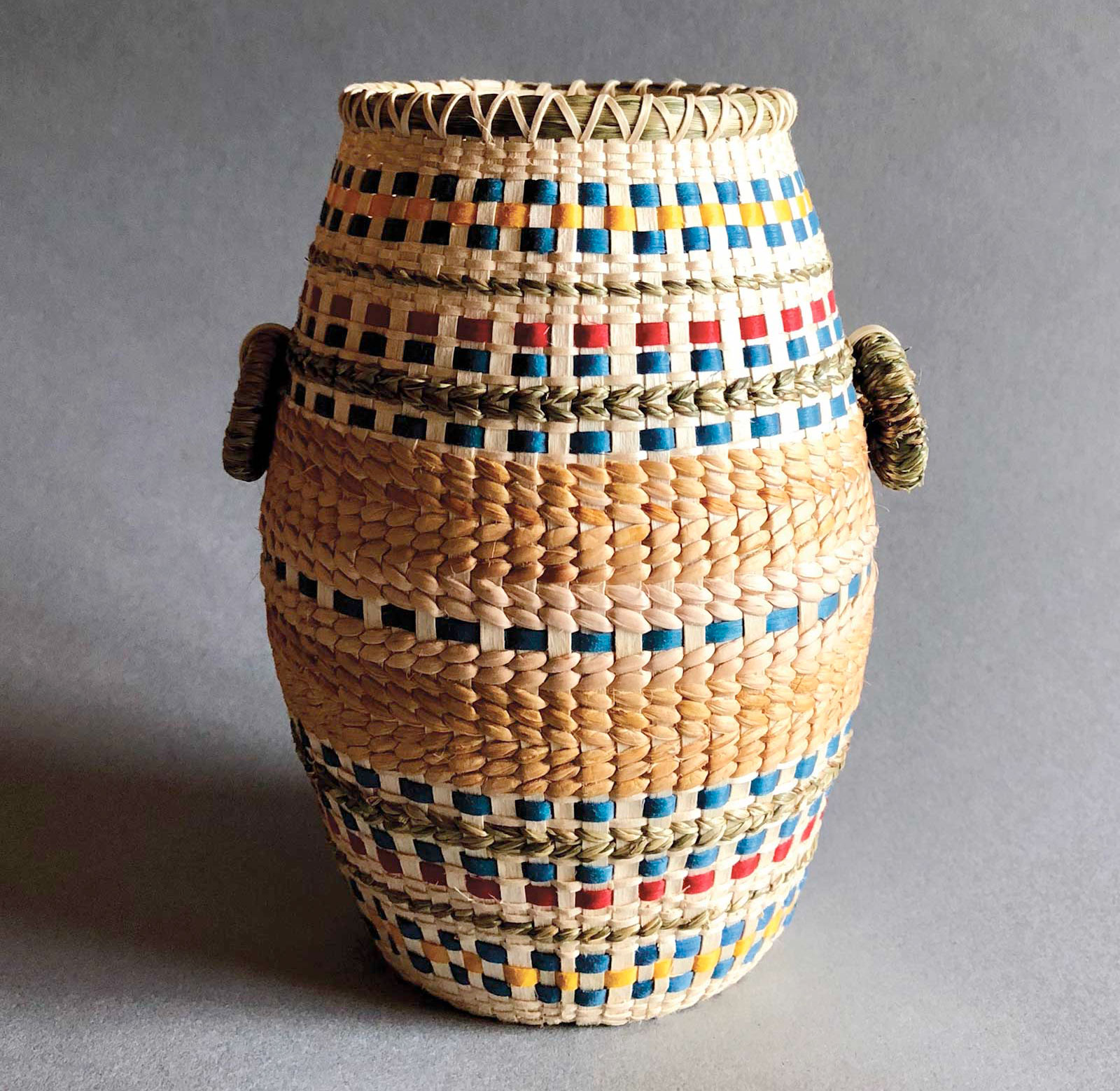
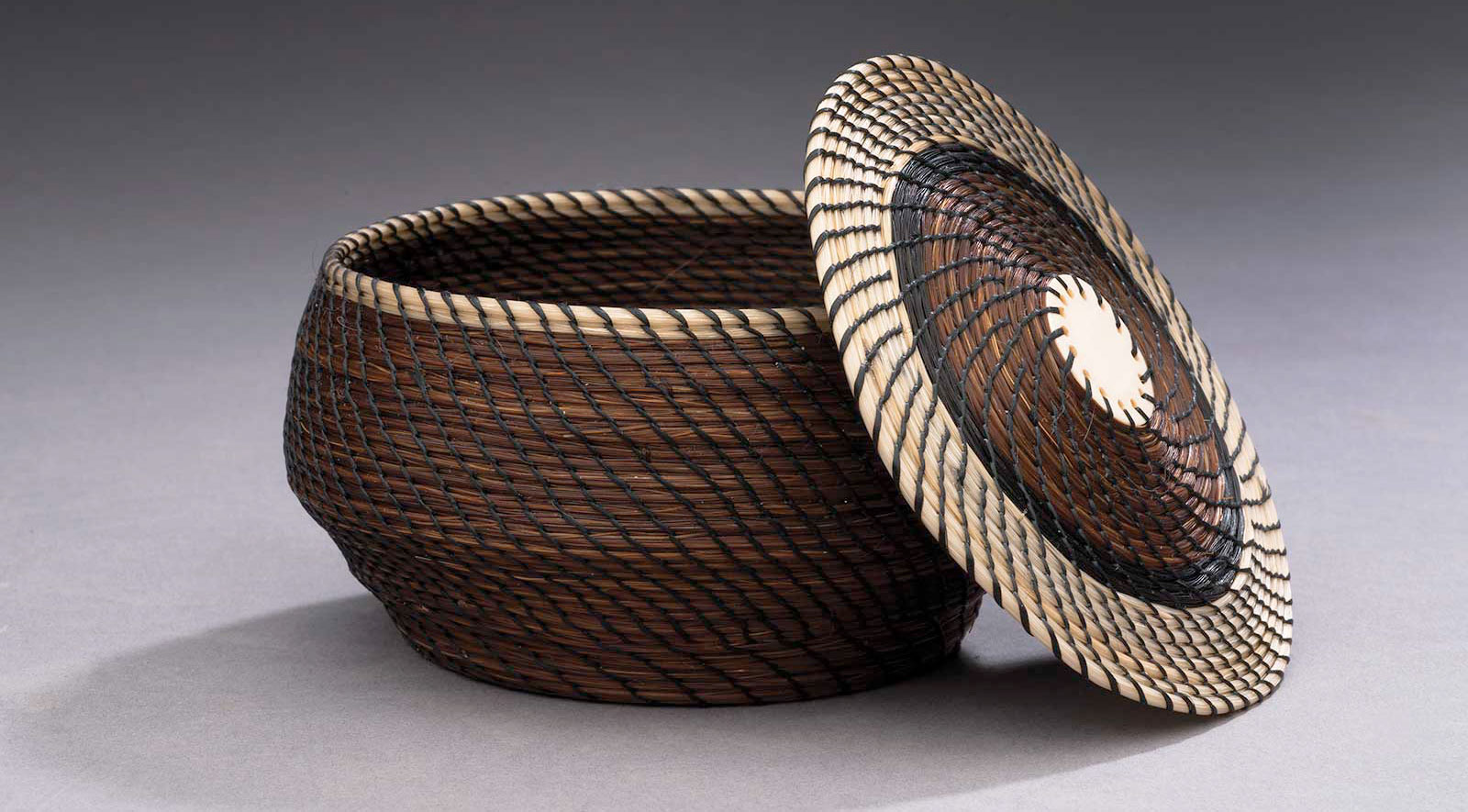
 Theresa Secord (Penobscot)“I weave baskets using the same wooden forms and tools that I inherited from my great-grandmother. My baskets reflect my family and Penobscot tribal heritage, utilizing hand-harvested ash and sweet grass. The sacred ash trees, in which our creation is based, are now threatened by the emerald ash borer beetle, an invasive pest due to climate change. As a result I also weave with a third material, cedar bark, to conserve ash wood.”
 David McElroy (Choctaw)
“I have recently developed a passion for basketry, and in particular horsehair basketry. I use the same southeastern coiled basketry technique with horsehair that was originally used with pine needles. For me, the horse represents Oklahoma. By using the horsehair in a traditional Choctaw basket form they become ‘removal baskets’—born of both the traditional and new homelands of the Choctaw.”
 2019 Best of Class Baskets
Don Johnston (Qagan Tayagungin)
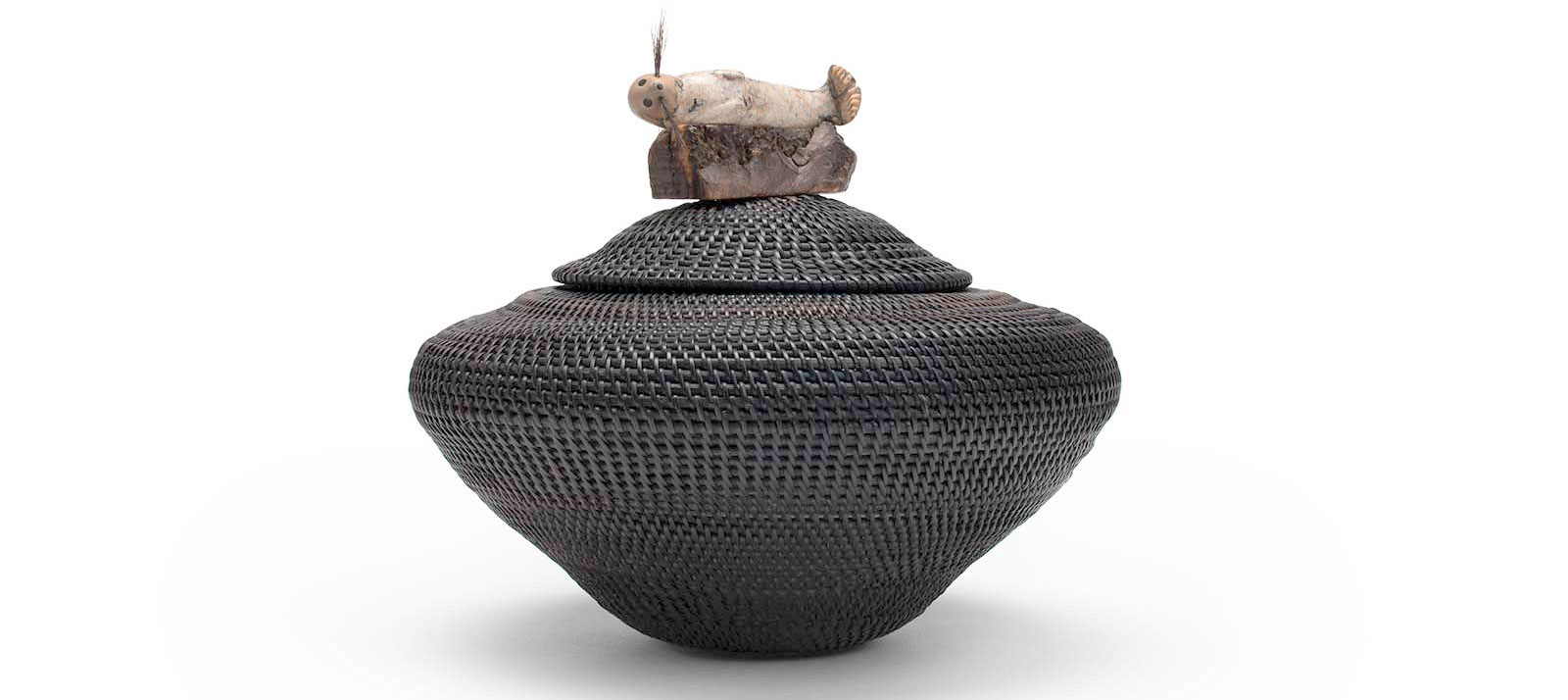
Don Johnston is known for his baleen baskets, having won Best of Show in 2017 and Best of Class in 2019 for these types of works. His 2019 piece featured a carved seal as a decoration on the lid, and the baleen material that he harvests himself. The baleen, “essentially filter-feeding ‘teeth’ whales have in their mouths,” comes in long thin husks that Johnston makes into thin strips and weaves into his baskets.
Buying Tips
From Jerry Cowdrey, basket collector and Heard Museum docent and Guild member:
- Look for the finest weave and also the tightest weave.
- Is it even all around the basket?
- If there is a design, is it consistent around the basket?
- It also depends on what tribes you are collecting. Is the material consistent with that tribe?
- Research and read about the craft you are purchasing.
- If you know the artist, do research on them.
- Go to ethnographic shows and trade shows and talk to the dealers. They have a world of knowledge. They can show you what to look for—good and bad.
- Visit galleries and talk to gallery owners.
- Go to Indian markets: Heard, Santa Fe, the Autry Museum, Museum of Northern Arizona.
- While at shows, talk to the artists. Let them know you are knowledgeable about their craft and they will be happy to talk to you and explain the process of making their craft.
- Know who you are buying from—artist and gallery.
- Buy the best you can afford.
- Buy what you like. It is going in your home.
- Never buy for profit.
- There is no such thing as collectors’ anonymous.
STANDARD-BEARERS
Annie Antone (Tohono O’odham)
Sally Black (Navajo)
Jeremy Frey (Passamaquoddy)
Lucy Parker (Yosemite Miwok, Mono Lake Kutzadikaa and Kashaya Pomo)
WHO TO KNOW RIGHT NOW
Vivian Cottrell (Cherokee)
Carol Emarthle-Douglas (Northern Arapaho-Seminole)
Eugene Fredericks (Hopi)
Wilmetta Kayquoptewa (Hopi)
Theresa Secord (Penobscot)
ONES TO WATCH
Marvene Dawahoya (Tewa/Hopi)
Kathryn Kooyahoema (Hopi)
David McElroy (Choctaw)
Jilli M. Oyenque (Ohkay Owingeh)
++++++++++++++++++++++++++++++
Diverse Arts (includes Bead- and Quillwork)
 Kevin Pourier (Oglala Lakota)
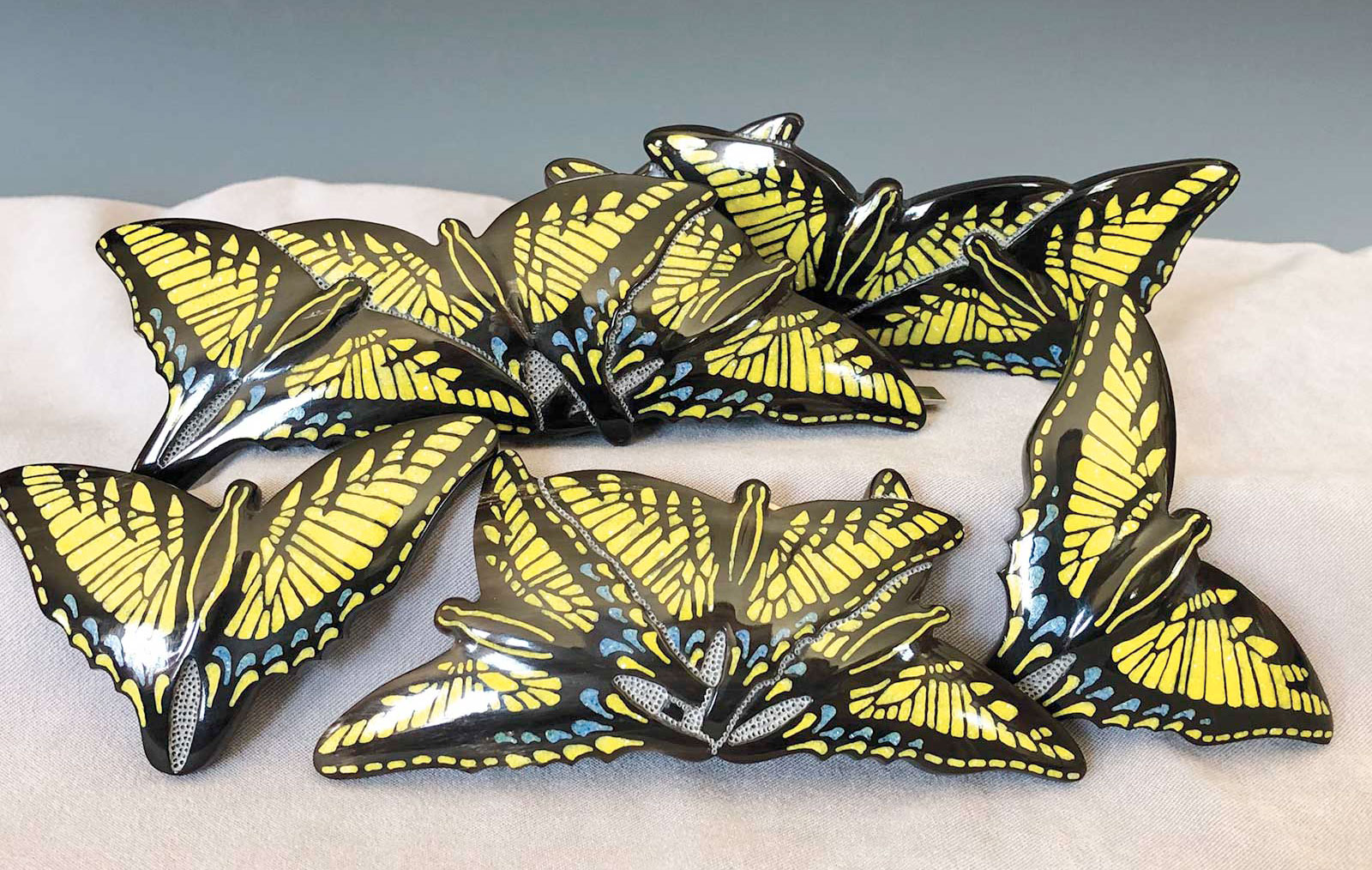
“I am one of the only artists in the country working in the medium of incised buffalo horn. The works I produce carry forward Lakota artistic practices for creating spoons, vessels and other everyday items of sublime beauty from the horns of the revered animal. My carvings reveal the beauty I see in the world around us, utilizing imagery intent on inspiring thought, growth and creating the opportunity for education.”
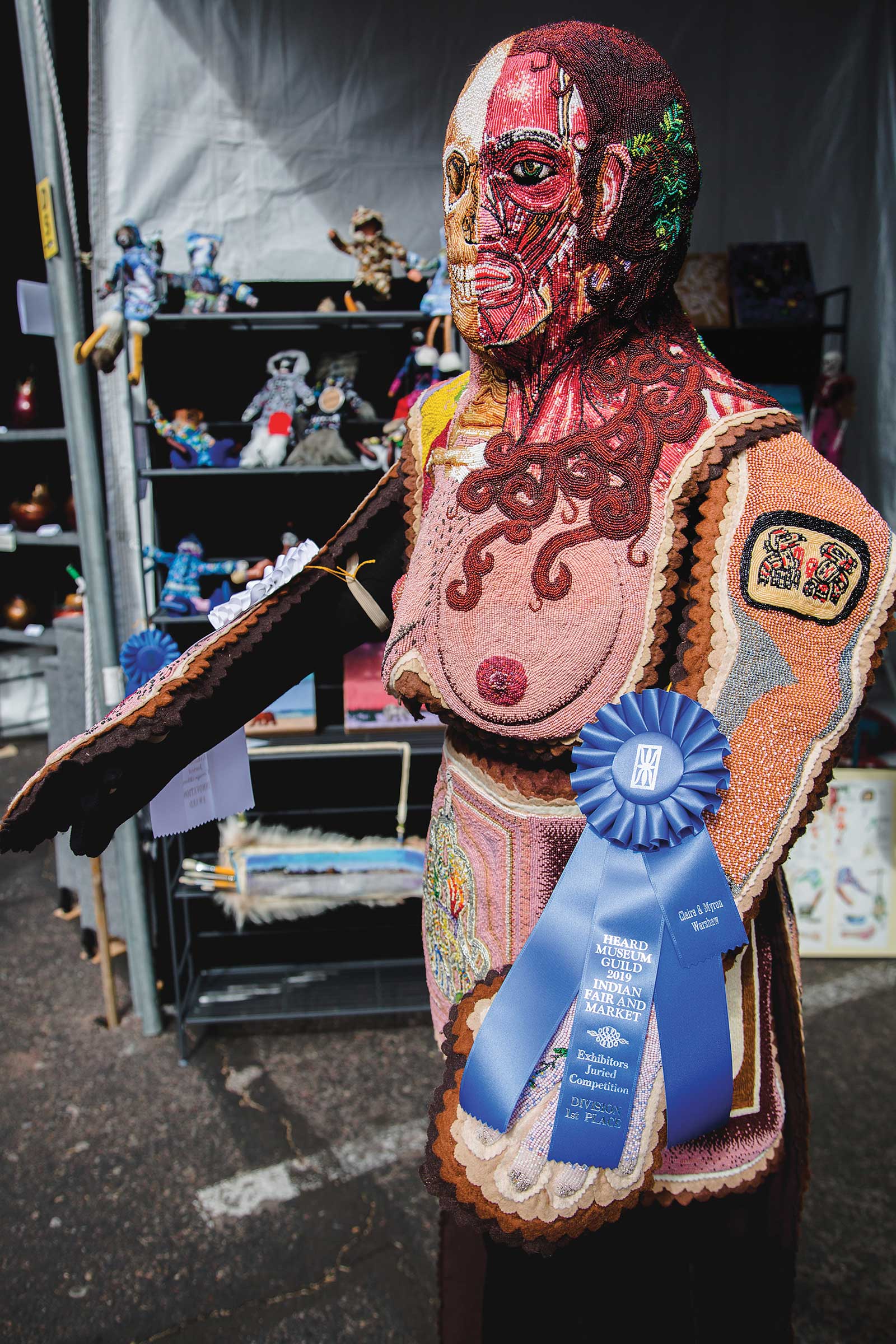
 Corey Stein (Tlingit)
“Life is full of funny situations, brilliant color and amazing artists that are important influences and subjects of my work. I enjoy using art to point out humorous contrasts, quirky juxtapositions and word plays. Using traditional art forms I explore contemporary issues to bring people into discussions. My Jewish and Tlingit heritage have offered me two worlds of inspiration, and more presents itself every day.”
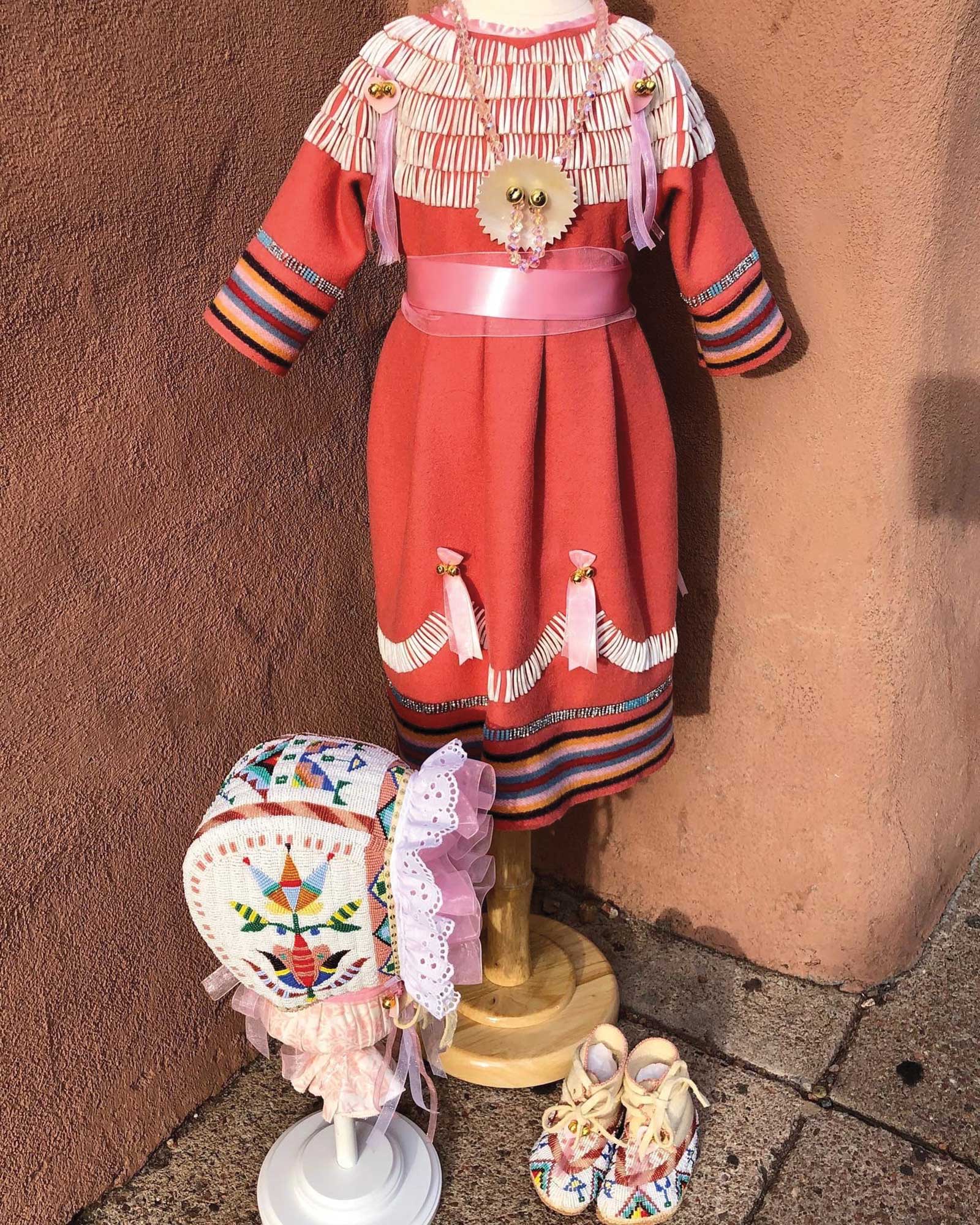
 Lauren Good Day (Arikara/Hidatsa/Blackfeet/Cree)
“My work is a reflection of who I am as an Arikara/Hidatsa woman and mother. It is rooted in cultural knowledge, inspired by tradition, while incorporating elements of our contemporary life ways. My connection to my people, the land and our cosmologies are evident within my arts. I am creating culture, from beadwork, ledger drawings, traditional clothing and Native fashion with my interpretation and imagination of Plains iconography.”
 2019 Best of Class Diverse Arts
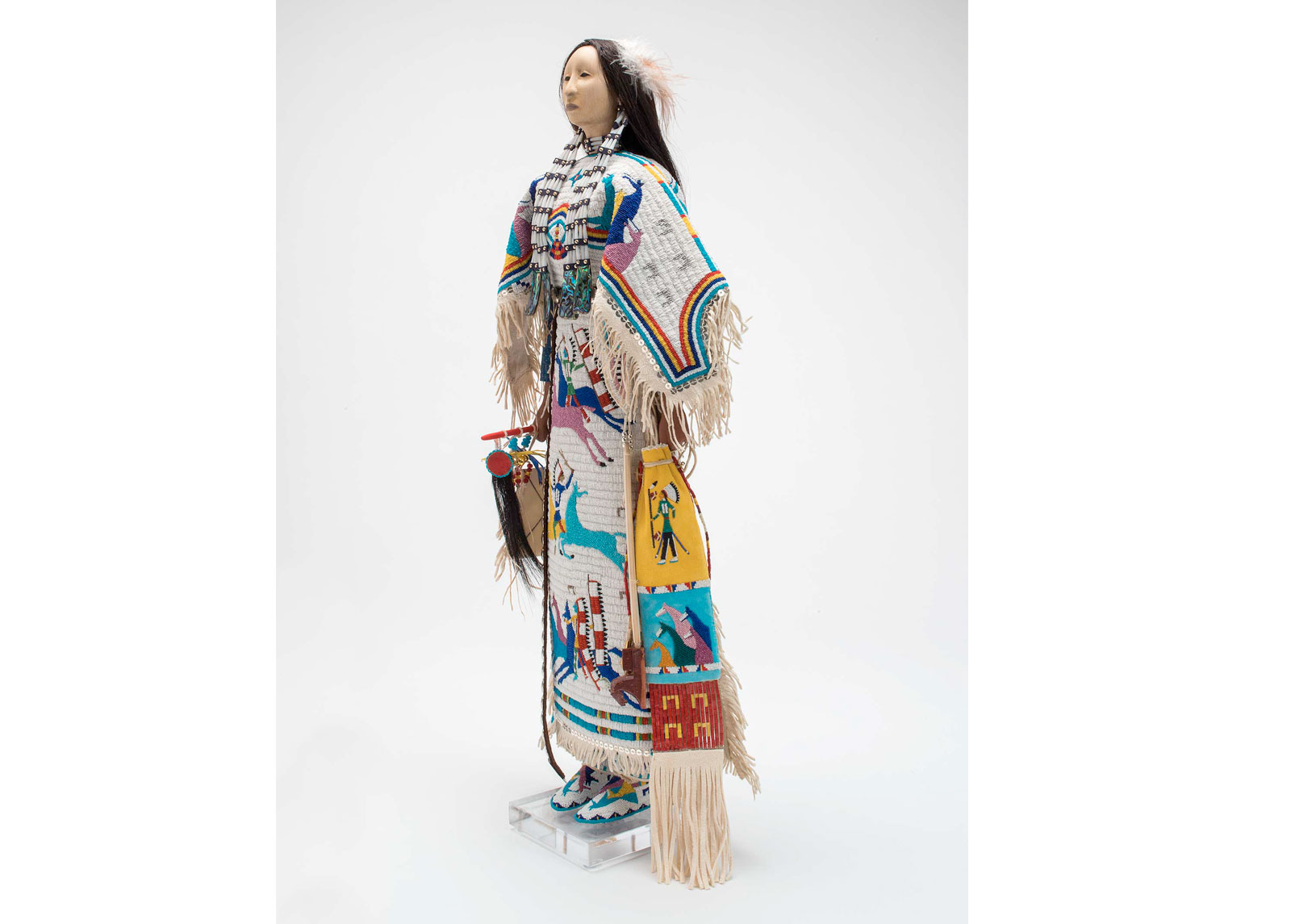
Rhonda Holy Bear (Cheyenne River Sioux/Lakota)
“I am both a figure artist and a story keeper. Stories have always played an integral role in the preservation of our Native culture. My grandmother was a keeper of stories. Little did I know, when I was a little girl, just how much of an impact my grandmother’s stories would have upon my life. Creating art is quite a meditative process for me. I often hear my grandmother’s words echoing through my memories as I work. In a very real way, her stories live in my figures…It is of paramount importance that my work act as a teaching tool, awakening the viewers’ curiosity by providing a connection to the past.”
Buying Tips
- This classification includes a variety of items such as regalia, some dolls, bows and arrows, cradleboards, bags, pipes, hide paintings, parfleche items, tabletas, masks and sandpaintings.
- Look at the finer details. Are beads and quills evenly spaced? Are there any loose threads, broken quills or missing beads?
- Research the types of materials and processes used in pieces of interest to you. What type of beads or base material was used? Is the artist adhering to traditional techniques and processes or trying something new? Which appeals more to you?
- Some designs have specific meaning or tell a story. Ask the artist. Does it resonate with you?
STANDARD-BEARERS
Kelly Church (Pottawatomi)
Teri Greeves (Kiowa)
Juanita Growing Thunder Fogarty (Assiniboine/Sioux)
Emil Her Many Horses (Oglala Lakota)
Glenda McKay (Ingalik-Athabascan)
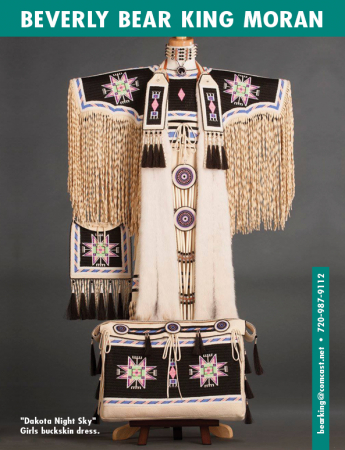
Beverly (Bear King) Moran (Standing Rock Sioux)
Jamie Okuma (Luiseno/Shoshone/Bannock)
Kevin Pourier (Oglala Lakota)
Ken Williams (Arapaho/Seneca)
WHO TO KNOW RIGHT NOW
Hollis Chitto (Choctaw/Laguna/Isleta)
Peggy Fontenot (Patawomeck/Potawatomi)
Dallin Maybee (Northern Arapaho/Seneca)
Tim Blueflint Ramel (Chippewa/Comanche)
Corey Stein (Tlingit)
ONES TO WATCH
Farlan Quetawki (Zuni)
Leonard Gene (Navajo)
Lauren Good Day (Arikara/Hidatsa/Blackfeet/Cree)
Ramey Growing Thunder (Fort Peck Assiniboine & Sioux)
Elias NotAfraid (Crow)
++++++++++++++++++++++++++++++
Jewelry and Lapidary
 Wes Willie (Diné/Navajo)
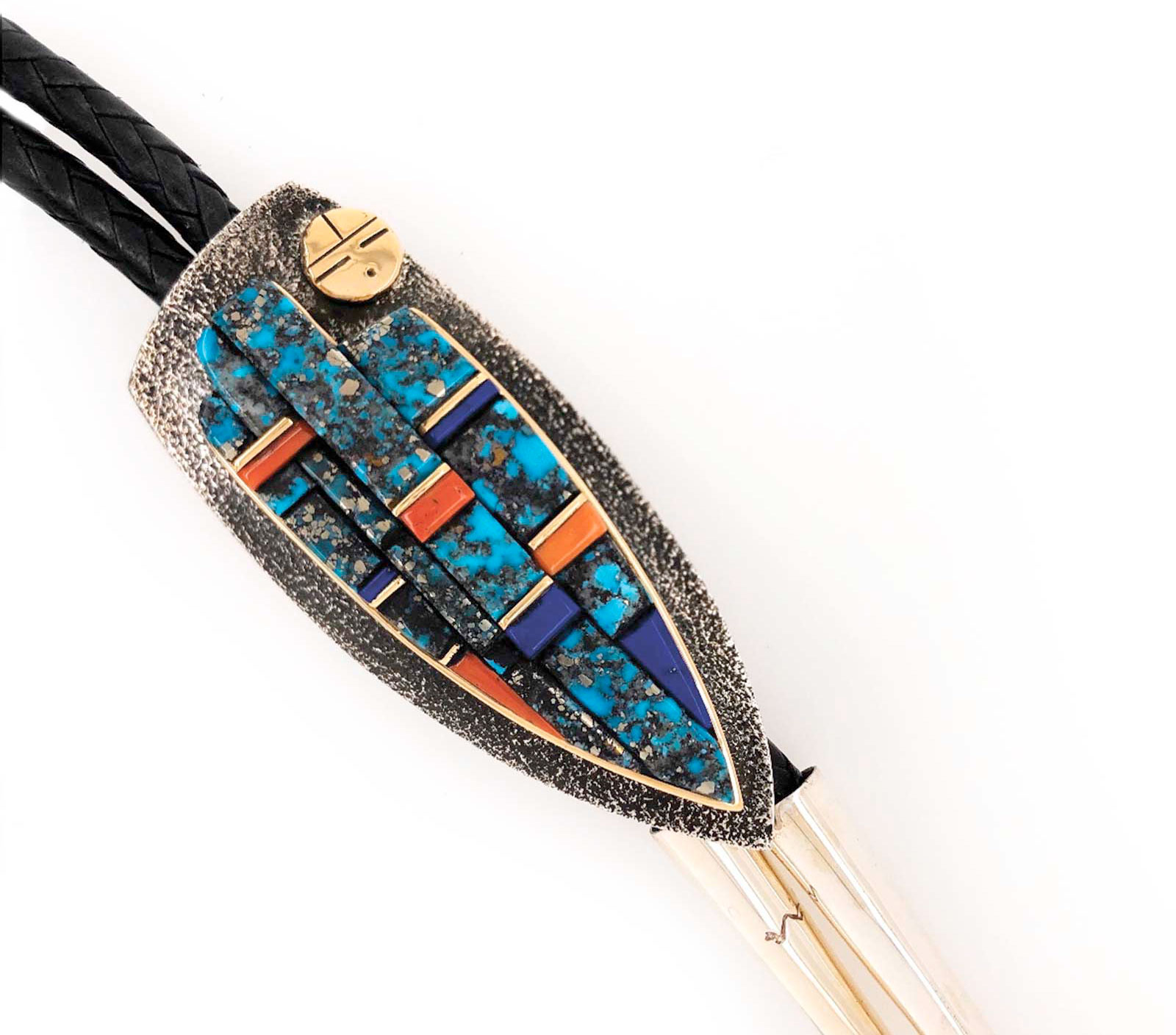
“I built my first ring in 1971 when I was in junior high in shop class. I built a lost-wax ring with the help of my shop teacher…And it wasn’t until about 21 years later that I started making jewelry in 1995…For me it’s just how intense the blue can get. That’s why my favorite stone is Bisbee. Some of it can get real intense like high, almost cobalt blue. And with the smoke in it. So it’s just a real deep blue natural turquoise. That’s what [catches] my eye…I don’t buy in bulk simply because I tend to need just certain high-end stones for the pieces I’m working on.”
 Wanesia Spry Misquadace (Minnesota Lake Superior Chippewa)
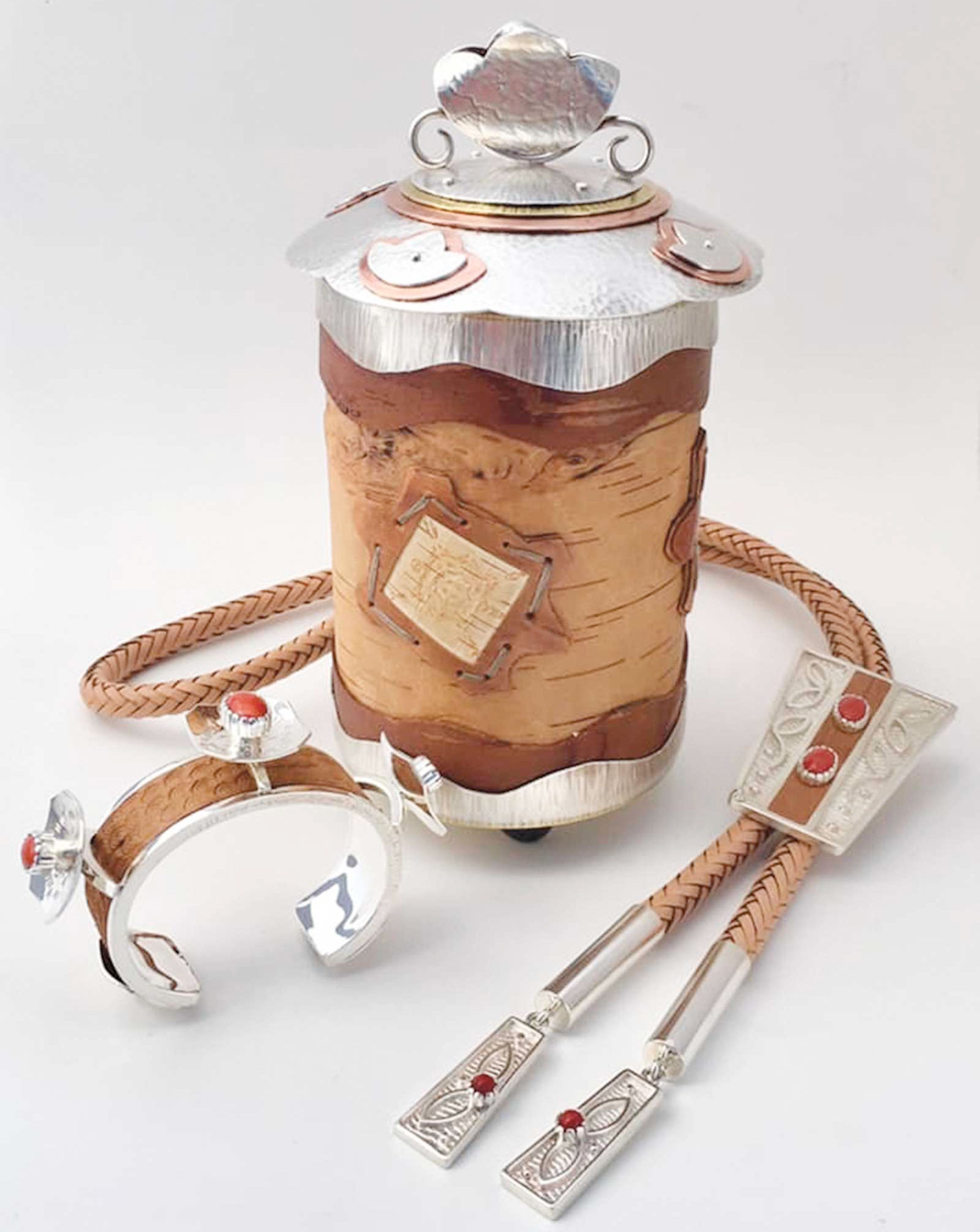
“I earned my MFA from the University of Wisconsin-Madison and BFA from the Institute of American Indian Arts in Santa Fe, New Mexico. I am the assistant professor of metals + Indigenous arts at Arizona State University, and I research essences around the traditional art of birchbark bitings, using the birchbark biting designs in new innovative ways in metals to performance art. My work has been exhibited in the Museum of Art and Design in New York...and the George Morrison exhibit in Minneapolis, Minnesota.”
 Duran Gasper (Zuni)
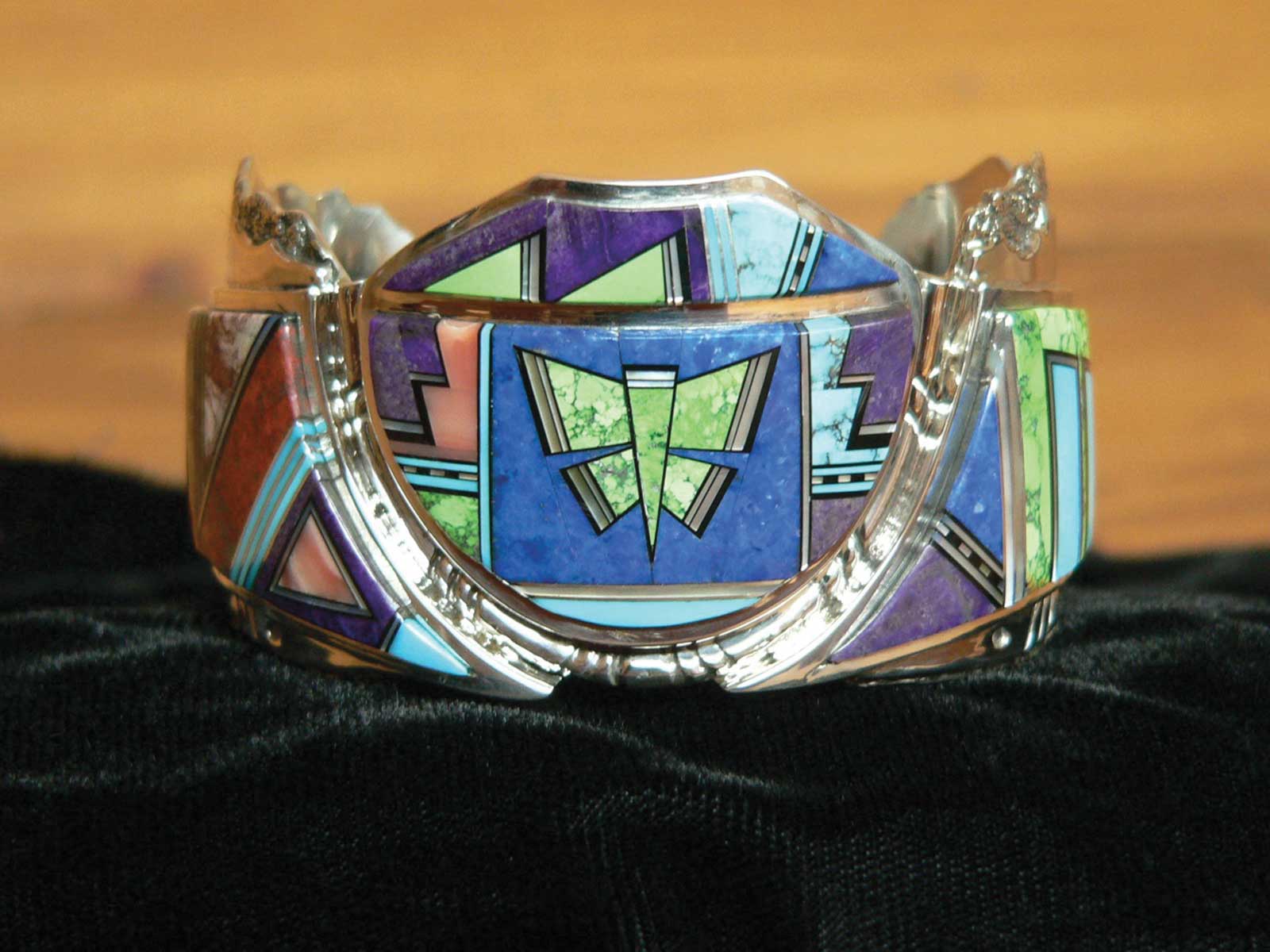
“My designs are inspired by symbolism, landscapes and petroglyphs from the ancient ruins. I work with semiprecious stones from all over the world. My work is intricately inlayed into mosaic designs. I entered the world of art as a painter and learned how to paint...in high school from my art teacher Herrin Othole. From him I learned the color wheel and dominate and monochromatic colors that I use in my jewelry. My parents, Arliss and Rose Panteah Gasper, taught me how to make petty point jewelry. My brother introduced me into the art of inlay and lapidary.”
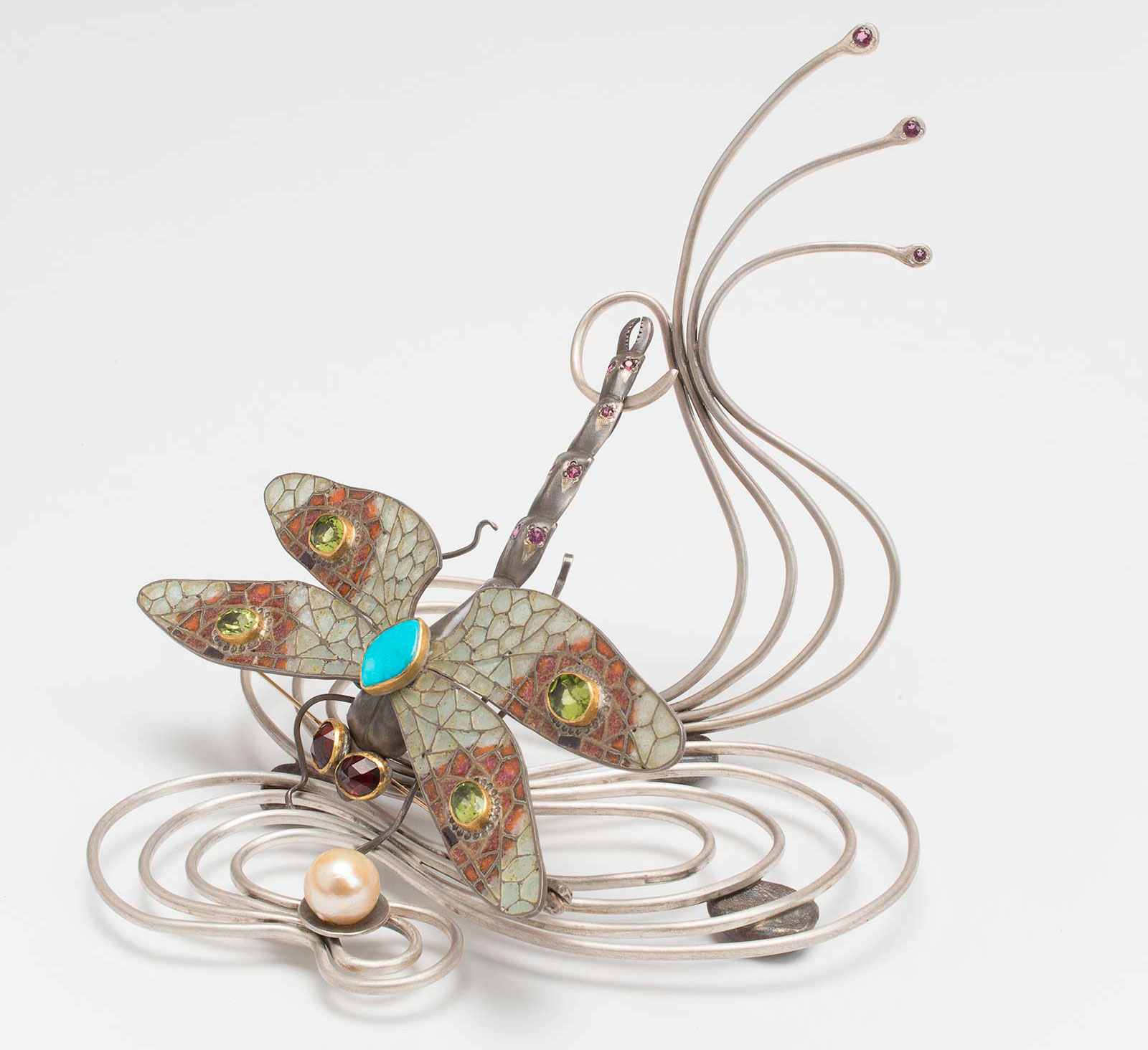
 2019 Best of Class Jewelry and Lapidary
Liz Wallace (Navajo/Washoe/Maidu)
“I’ve been working with silver since 1996, but my grandma had me working with my hands since I was 3 years old. I’ve always been artistic, and in the last few years I’ve added creative writing, belly dance, chorus and oil painting to my list of hobbies. This diverse background seems to add richness to my work. I’ve also studied blacksmithing, enameling, raising, advanced stone setting techniques and historical jewelry from around the world. My favorite style is art nouveau, and René Lalique is my favorite jeweler. Recently, I’ve been inspired by Japanese metalwork, especially cloisonné. As you will see, I am fond of insect, aquatic and floral designs, although I became known for classic designs, like turquoise butterflies.”
BUYING TIPS
From Kelly Gould, Heard Museum Shop manager
- Stones and metalwork are the two most important things to look at.
- Turquoise: Value is determined by the mine the stone came from, the size of the stone and the grade of the stone. Prices will fluctuate widely depending on the origin. High-grade stones from Lone Mountain, Lander or Bisbee will cost more.
- Stones such as coral, opal, jade, sugilite, lapis and many others may appeal to you because of your color preferences.
- Ultimately, the stone that speaks to you and that you find beautiful is the one to buy.
- Silver: buy sterling.
- Look for fine details and craftmanship.
- Many markings will have meaning, and this might be something that is important to your purchase, for example, symbols for rain or fertility.
STANDARD-BEARERS
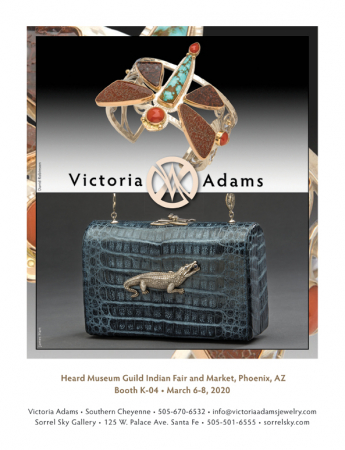
Victoria Adams (Southern Cheyenne/Arapaho of Oklahoma)
Gail Bird (Santo Domingo/Laguna)
Yazzie Johnson (Navajo)
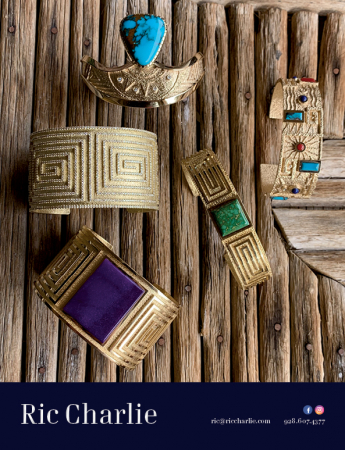
Ric Charlie (Navajo)
Richard Chavez (San Felipe)
Cippy CrazyHorse (Cochiti)
Edison Cummings (Navajo)
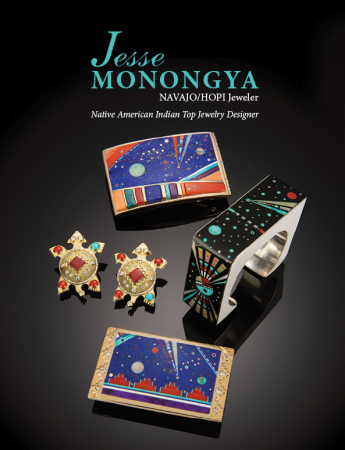
Jesse Monongye (Navajo/Hopi)
Wes Willie (Diné/Navajo)
WHO TO KNOW RIGHT NOW
Keri Ataumbi (Kiowa)
Fritz Casuse (Navajo)
Gerald Lomaventema (Hopi)
Wanesia Spry Misquadace (Minnesota Lake Superior Chippewa)
Pat Pruitt (Laguna/Chiricahua Apache)
ONES TO WATCH
Nanibaa Beck (Diné/Navajo)
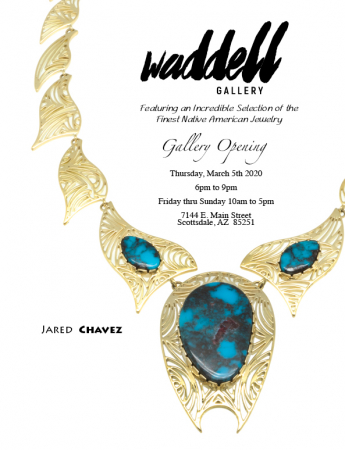
Jared Chavez (San Felipe)
Duran Gasper (Zuni)
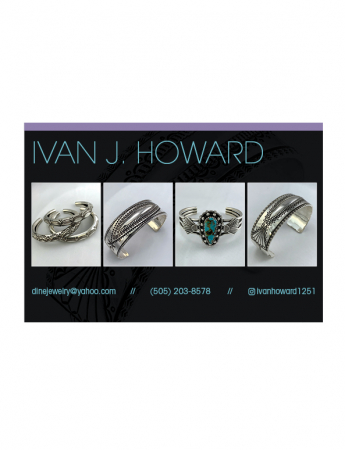
Ivan Howard (Navajo)
Jake Livingston (Navajo)
Matagi Sorensen (Yavapai-Apache Nation)
Piki Wadsworth (Hopi)
++++++++++++++++++++++++++++++
Paintings, Drawings, Photography & Graphics
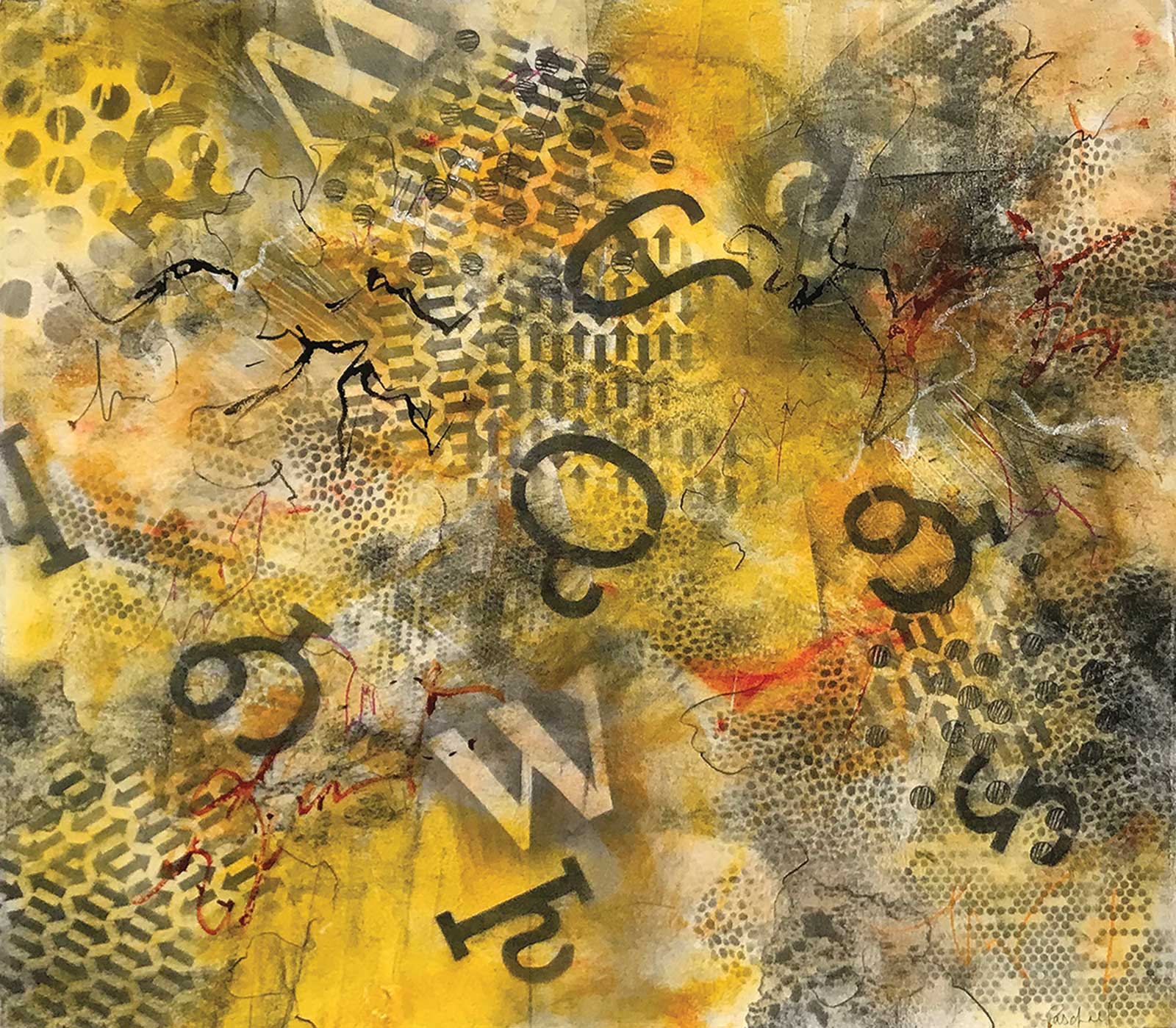
 Sallyann Paschall (Cherokee)
“I have been enamored of the possibilities of elegant mark making since I was quite young. Recently, I have begun using the combination of Cherokee syllabary with mark making. The two are a natural fit.”
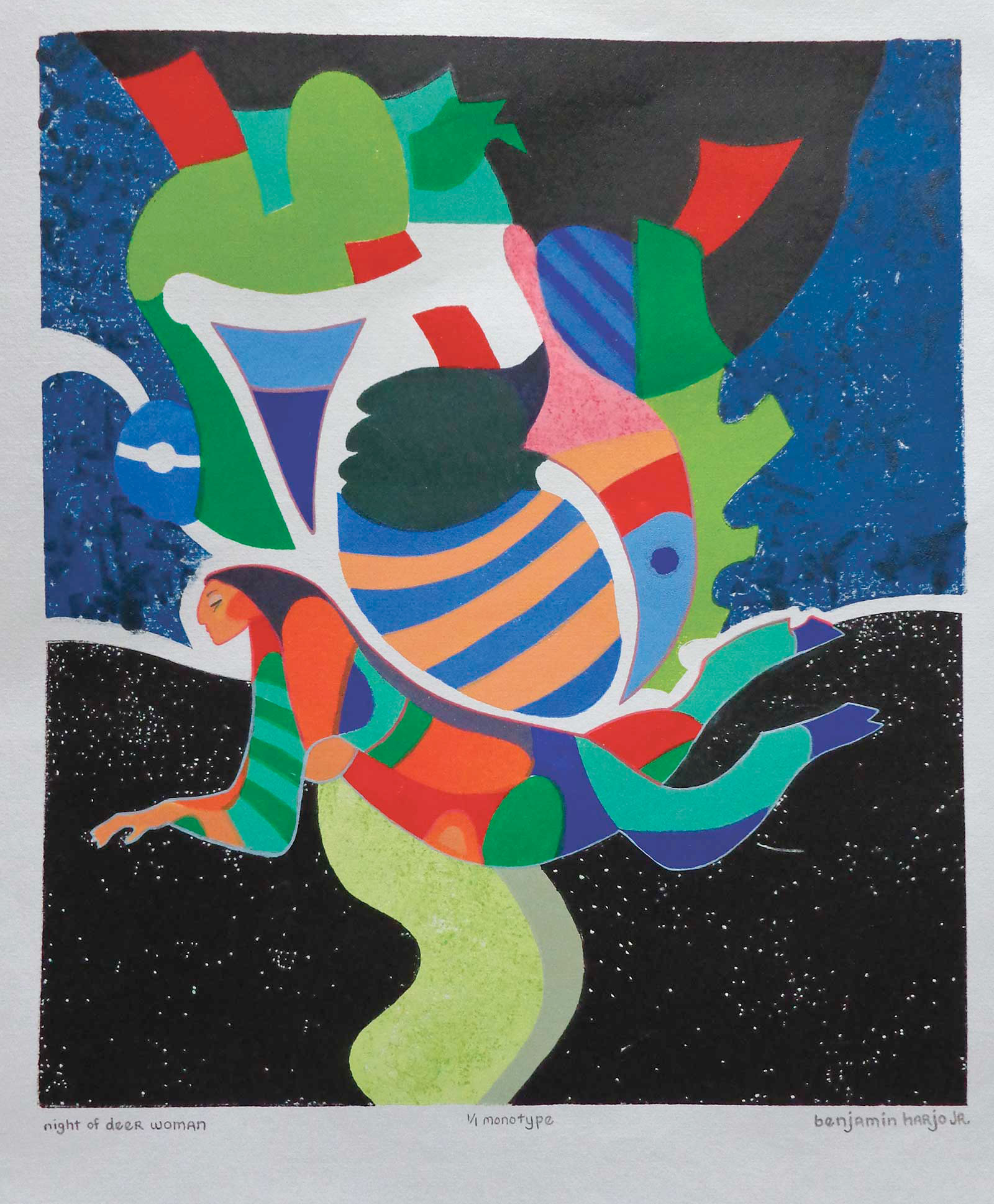
 Benjamin Harjo, Jr. (Seminole/Absentee Shawnee)
“My basic use of primary colors, geometric designs and patterns has long influenced the style of my work and helped to develop images that allow for experimentation.”
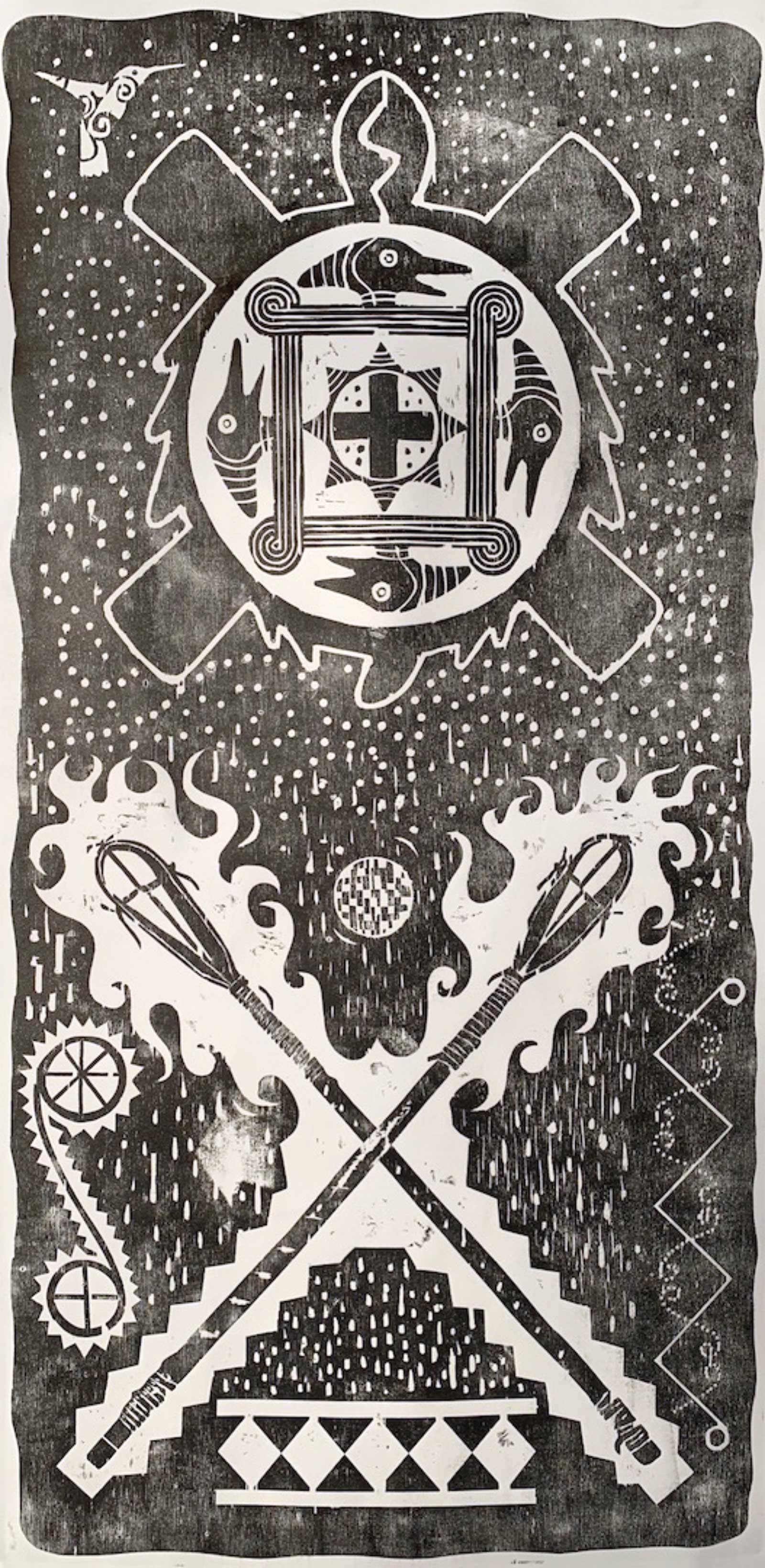
 Randy Kemp (Choctaw/Muscogee-Creek/Euchee)
“We are experiencing a new generation of progressive American Indian artists who are utilizing today’s worldwide mediums of art...to express and preserve the dignity, the traditions and beauty of our Indigenous people.”
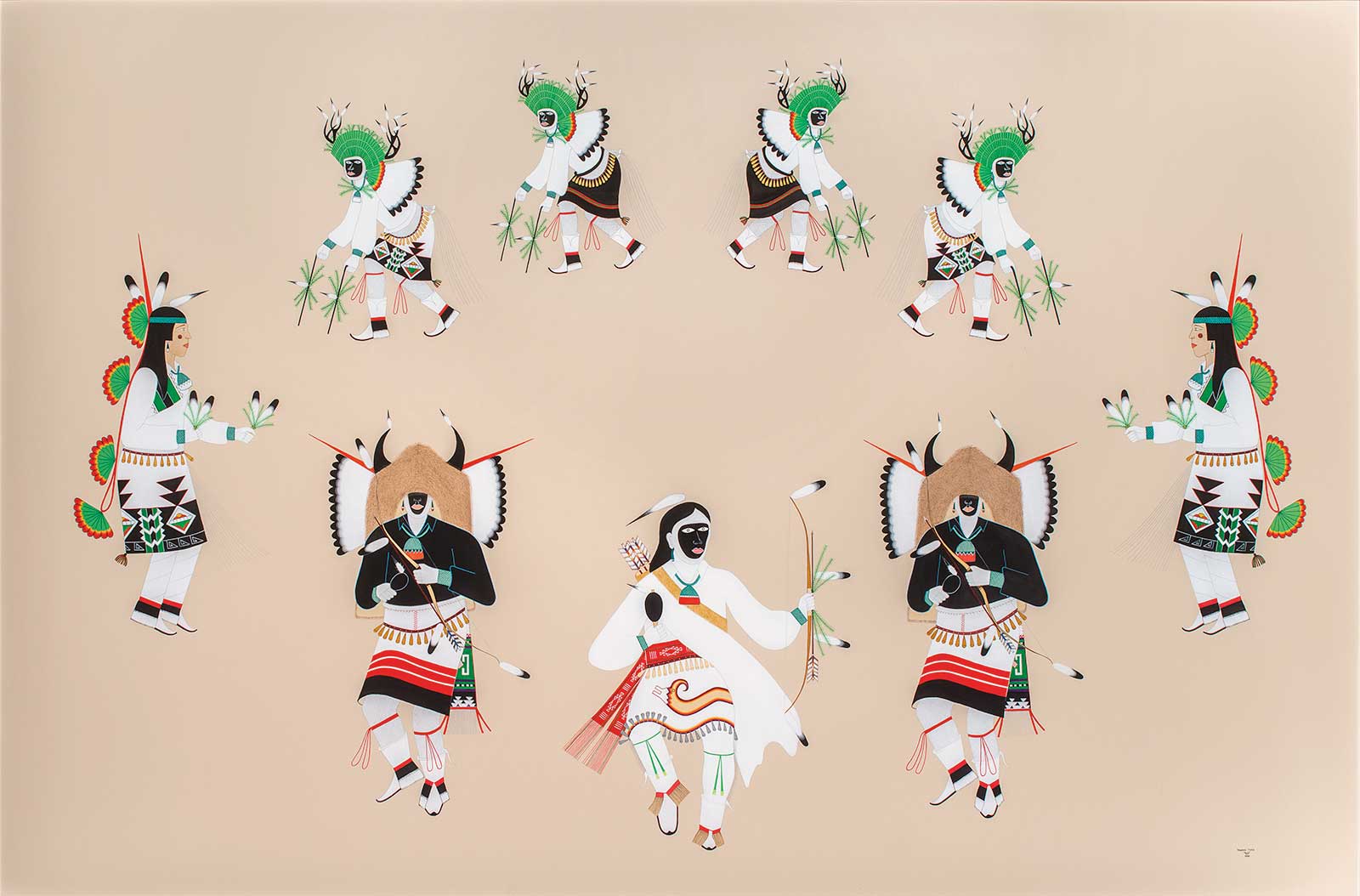
 2019 Best of Class Paintings, Drawings, Photography & GraphicsThomas Tapia (Tesuque/Tewa)
“I come from a long line of artists starting from my late grandfather, Tomas Vigil, who was born in 1889. I’m just following the footsteps of my late family artists and thank my mother for all her inspiration and advice.”
BUYING TIPS
From Laura Cardinal, manager of the Heard Museum Shop Collector’s Room
- Buy the best thing you can afford. This is the best way to collect.
- Look at the finer details. On a painting, make sure the sides are painted.
- Look for quality in execution.
- Buy what you will enjoy every day for yourself.
STANDARD-BEARERS
Michael Chiago, Sr. (Tohono O’odham)
Sallyann Paschall (Cherokee)
Mateo Romero (Cochiti)
Monte Yellowbird (Arikara and Hidatsa)
WHO TO KNOW RIGHT NOW
Thomas Tapia (Tesuque/Tewa)
Marla Allison (Laguna)
Karen Clarkson (Choctaw Nation of Oklahoma)
Benjamin Harjo, Jr. (Seminole/Absentee Shawnee)
Cara Romero (Chemehuevi Indian Tribe)
Zoë Marieh Urness (Tlingit)
ONES TO WATCH
Angela Babby (Oglala Lakota)
Rowan Harrison (Isleta/Navajo)
Randy Kemp (Choctaw/Muscogee-Creek/Euchee)
Robert Mesa (Navajo/Soboba Band of Luiseño Indians)
Jeremy Singer (Navajo)
Adrian Standing-Elk Pinnecoose (Navajo/Southern Ute)
Sheryl Susunkewa (Hopi)
++++++++++++++++++++++++++++++
Personal Attire
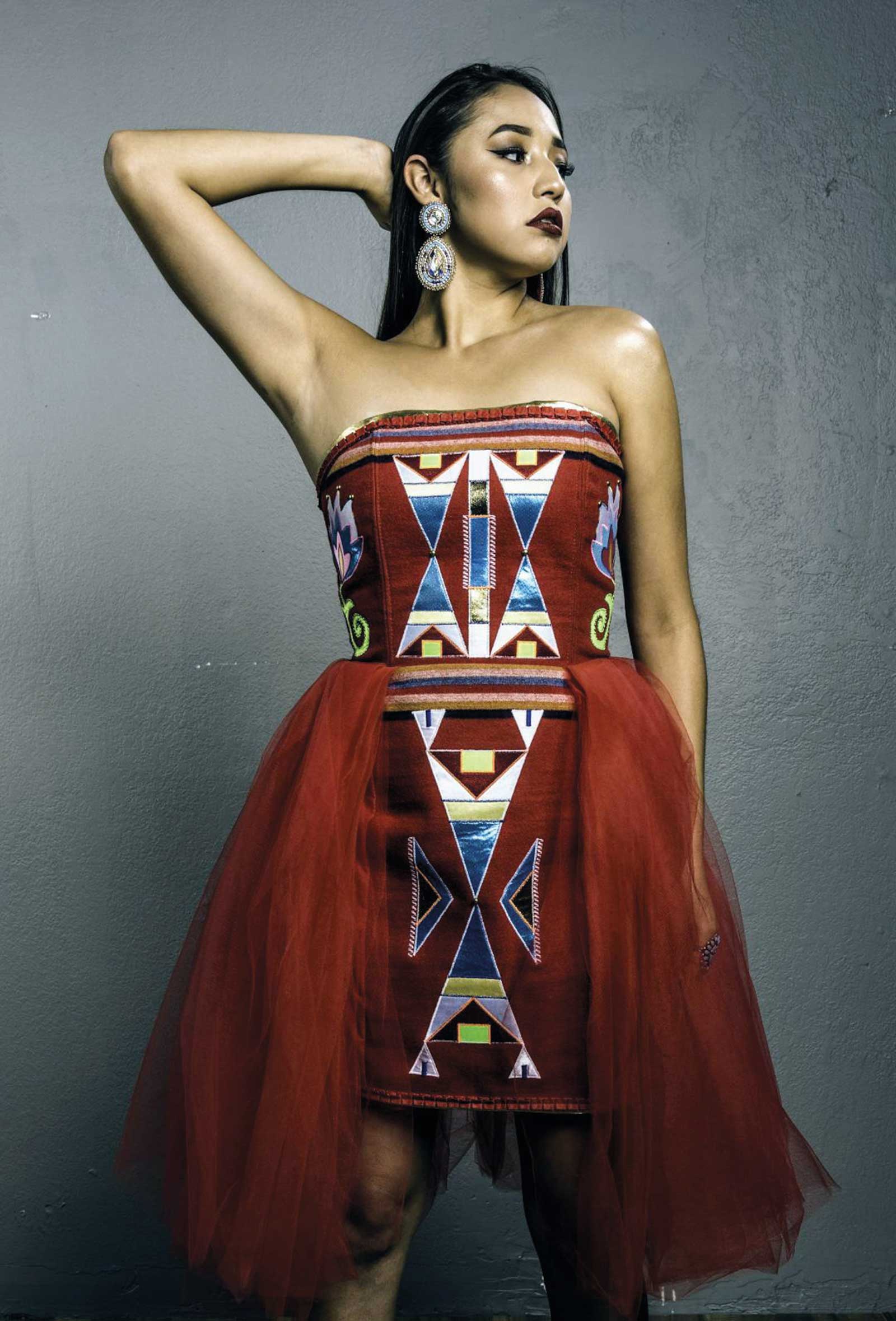
 Della Big Hair-Stump (Crow)
“Growing up, I would watch my mother, grandmothers and grandfathers sit around the table beading, sewing, doing feather work and designing/drawing out Crow designs. From these teachings, I figured how to combine the traditional and the modern world to make wearable fashion.”
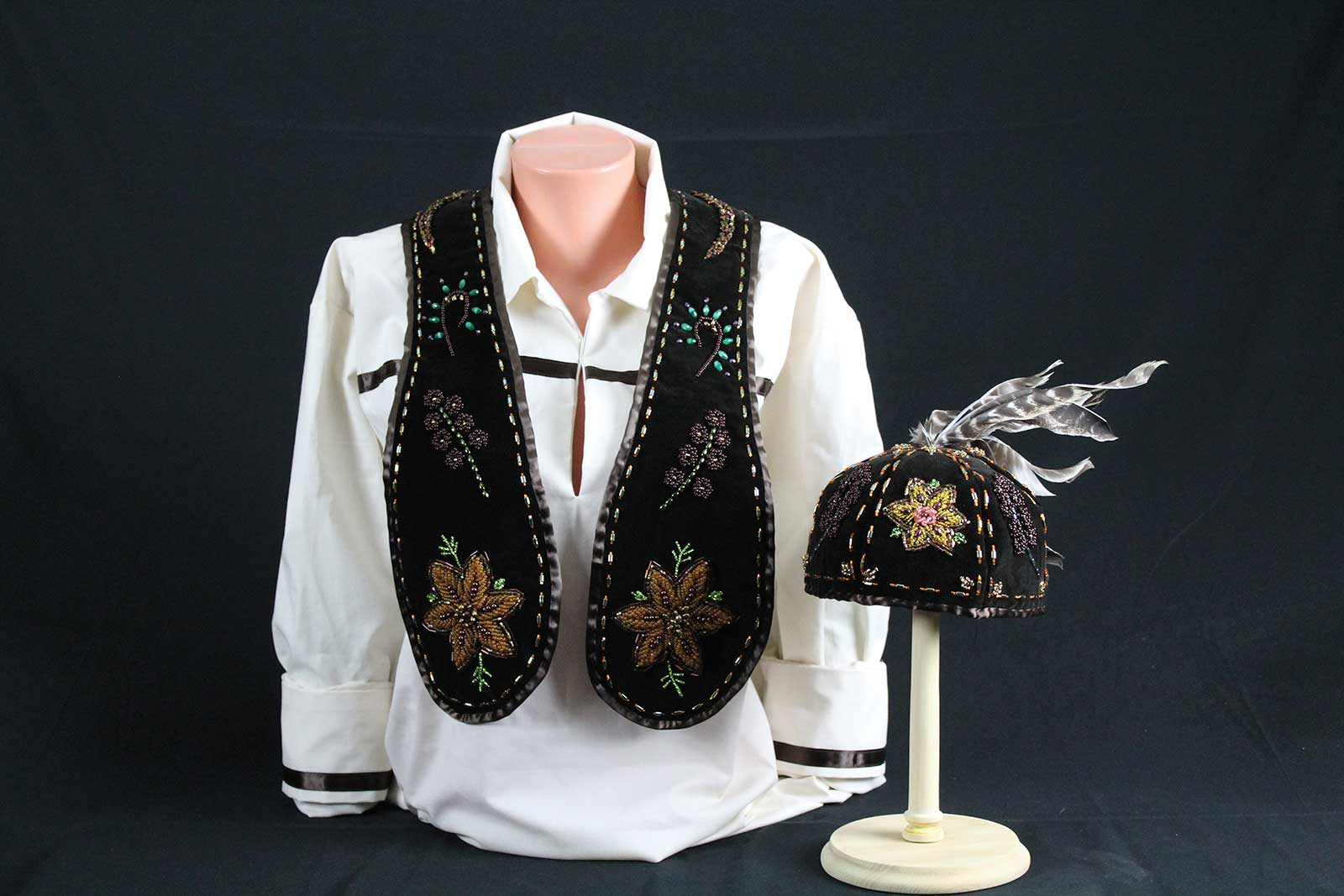
 Karenlyne Hill (Onondaga Nation/Iroquois)
“I make my art because I love the idea of taking a dish of beads and being able to create a beautiful piece of work. I also do this because it is a part of my heritage.”
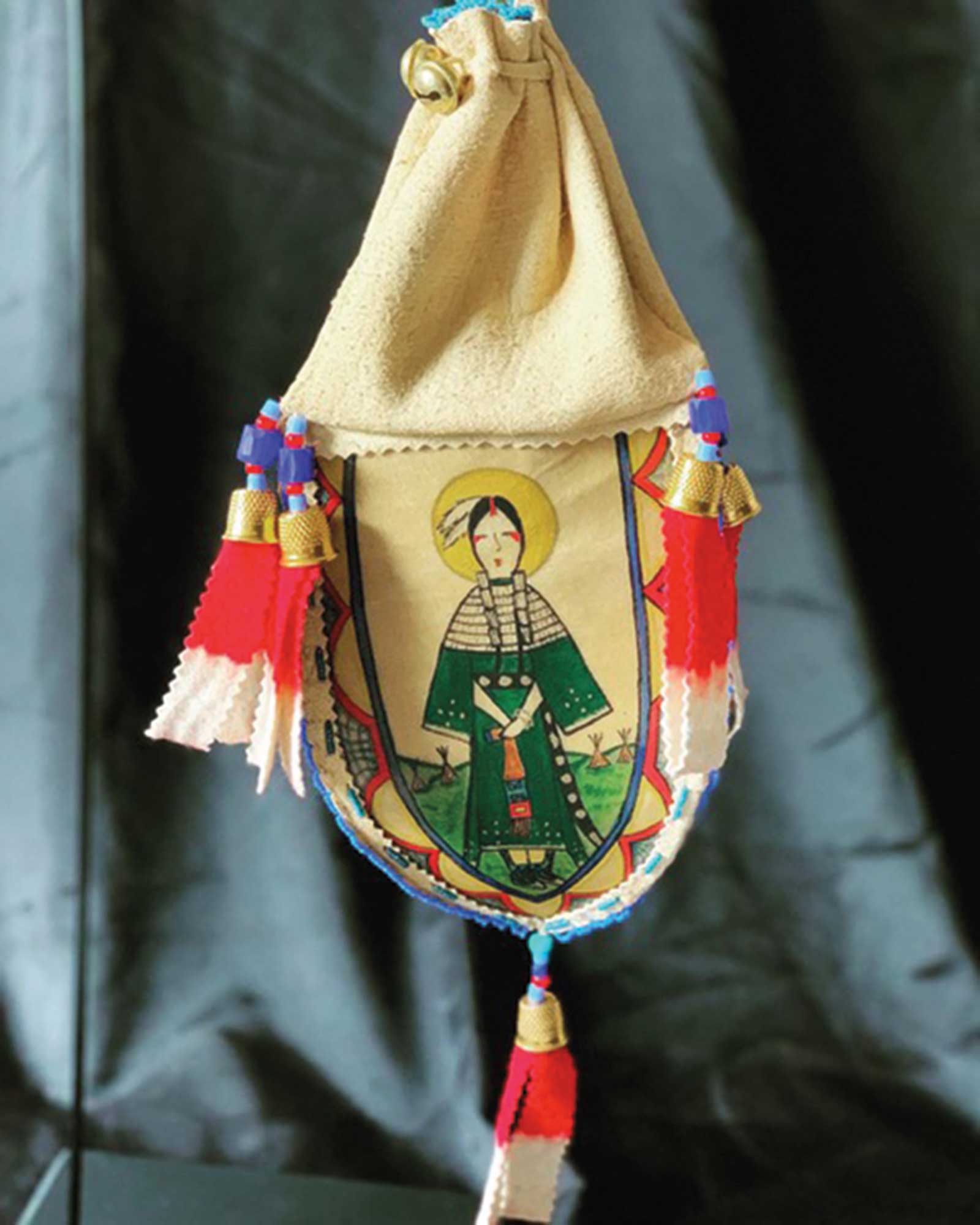
 Cole Redhorse Jacobson (Bdewakantunwan Dakota)
“As a diverse traditional artist, I’m inspired by my people, who had a very vivid and unique woodland culture, prior to our removal from our homelands.”
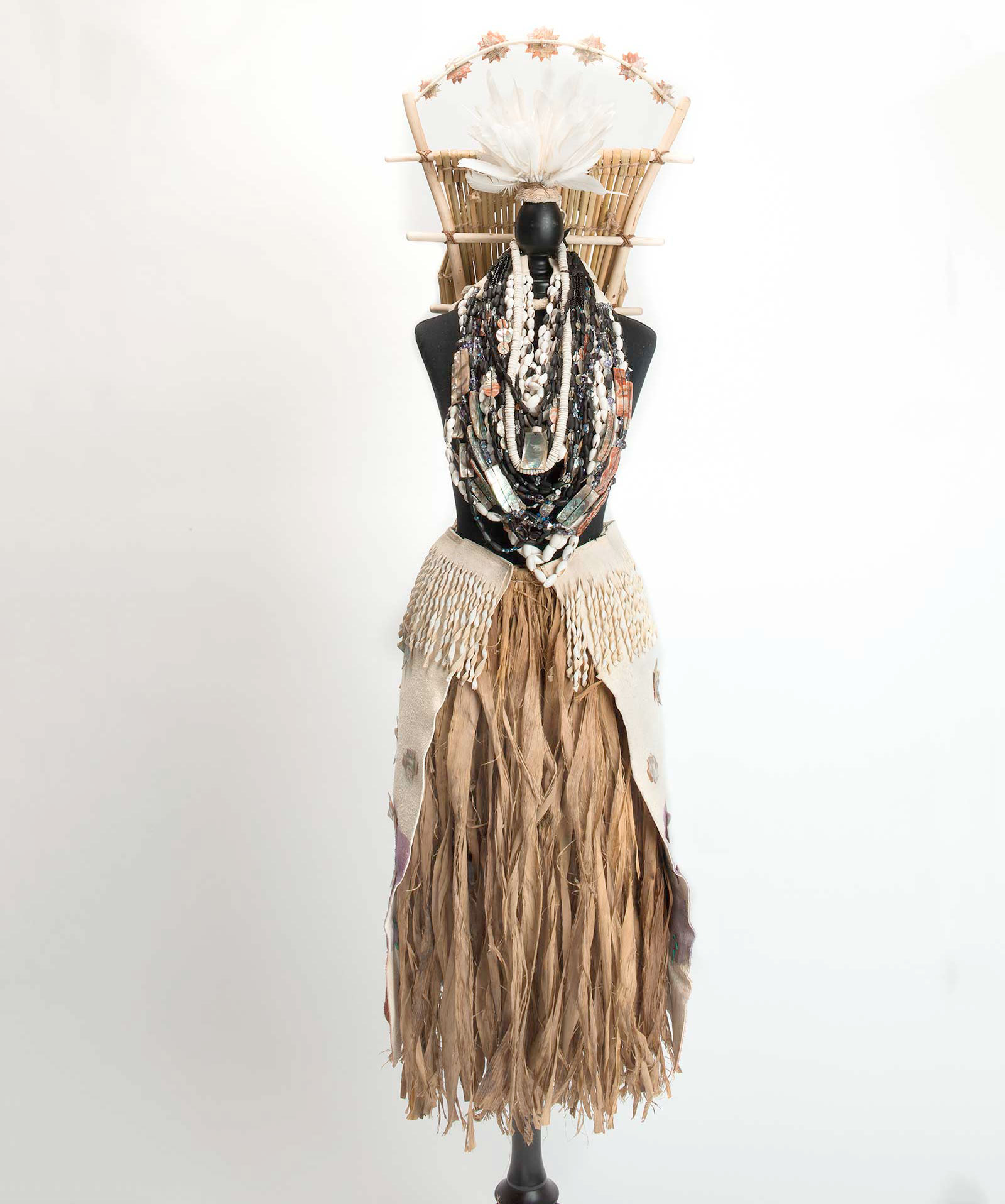
 2019 Best of ClassPersonal AttireLeah Mata-Fragua (Northern Chumash)
“I add as many place-based details as I can to transport the viewer to a place that is otherwise distant and abstract. In doing so, I convey the beauty of these vulnerable landscapes to inspire viewers to help protect and preserve these places.”
BUYING TIPS
From Bruce McGee, director of the Heard Museum Shop
- Personal attire is personal, so look at anything that really grabs your attention.
- Ask yourself if you want something trendy or unique or traditional—or some wonderful combination that you haven’t seen before.
- Native fashions often have intricate designs and details such as beadwork. Beadwork varies depending on the tribe. Whether it is microbeads or raised beadwork, look at the evenness and finer details. Do the colors and patterns work for you?
- Prices will fluctuate depending on the stature of the designer, the intricacy of the design, and the materials.
- Talk to designers and find out why they do what they do and the way they do it. Their personal stories may draw you to a piece and increase its meaning and value for you.
STANDARD-BEARERS
Loren Aragon (Acoma)
Virgina Yazzie Ballenger (Navajo)
Catherine Black Horse (Seminole Nation of Oklahoma)
Orlando Dugi (Navajo)
Penny Singer (Navajo)
WHO TO KNOW RIGHT NOW
Leah Mata-Fragua (Northern Chumash)
Sholeen “Sho Sho” Esquiro (Kaska Dene)
Della Big Hair-Stump (Crow)
Tahnibaa Naataanii (Navajo)
ONES TO WATCH
Isabel C. Gonzales (Jemez/Walatowa)
Karenlyne Hill (Onondaga Nation/Iroquois)
Cole Redhorse Jacobson (Bdewakantunwan Dakota)
++++++++++++++++++++++++++++++
Pottery
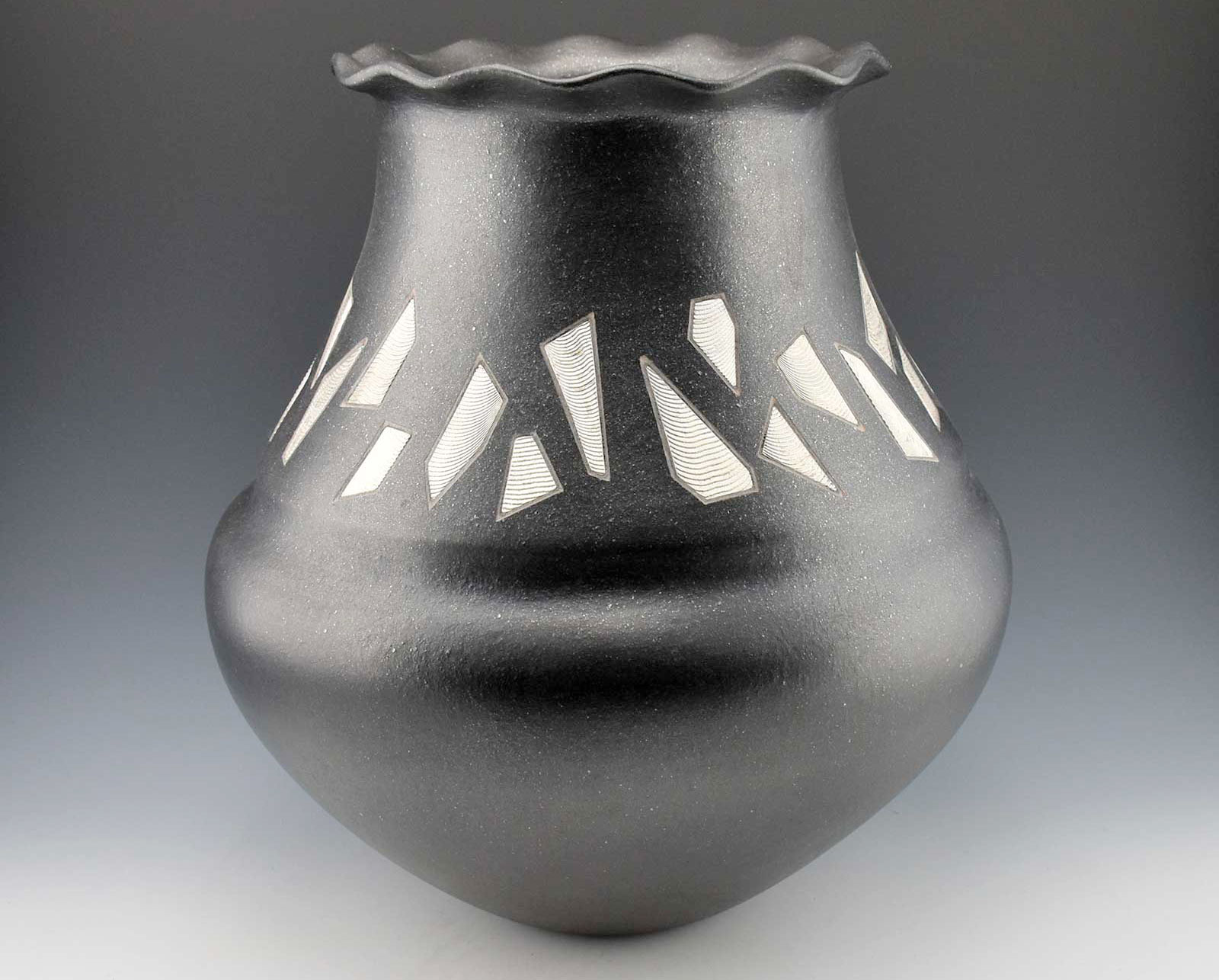
 Preston Duwyenie (Hopi)
“The [Arizona] village I was born into is inundated in and around with sand, and the land serves as a means of expression. The textural quality of the land is represented by the rippling lines on the surfaces of the clay vessels. Since the Hopi people live in the desert region of the Colorado Plateau, water is a scarce commodity, thus, the silver inlay represents this precious life blood.”
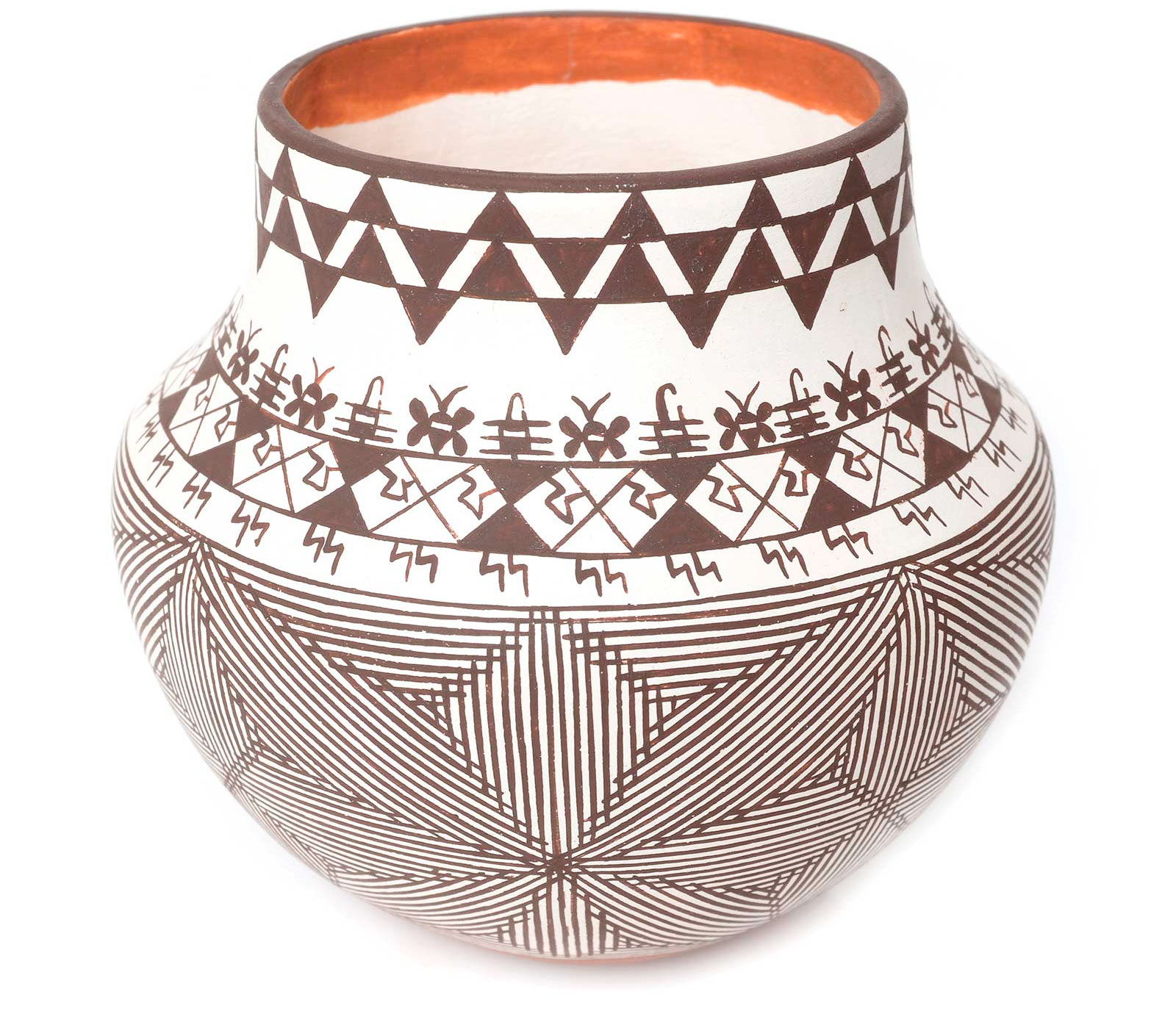
 Delores Juanico (Acoma)
“I started as a child, as most do. I watched my mother and grandmother. As they felt I was ready they would give me clay to make animals and bowls and plates. The process of clay and paint is sometimes a family thing… I was fortunate that my grandmother knew all the mines, so I know where to find the variations of red and orange. Not many women today know that.”
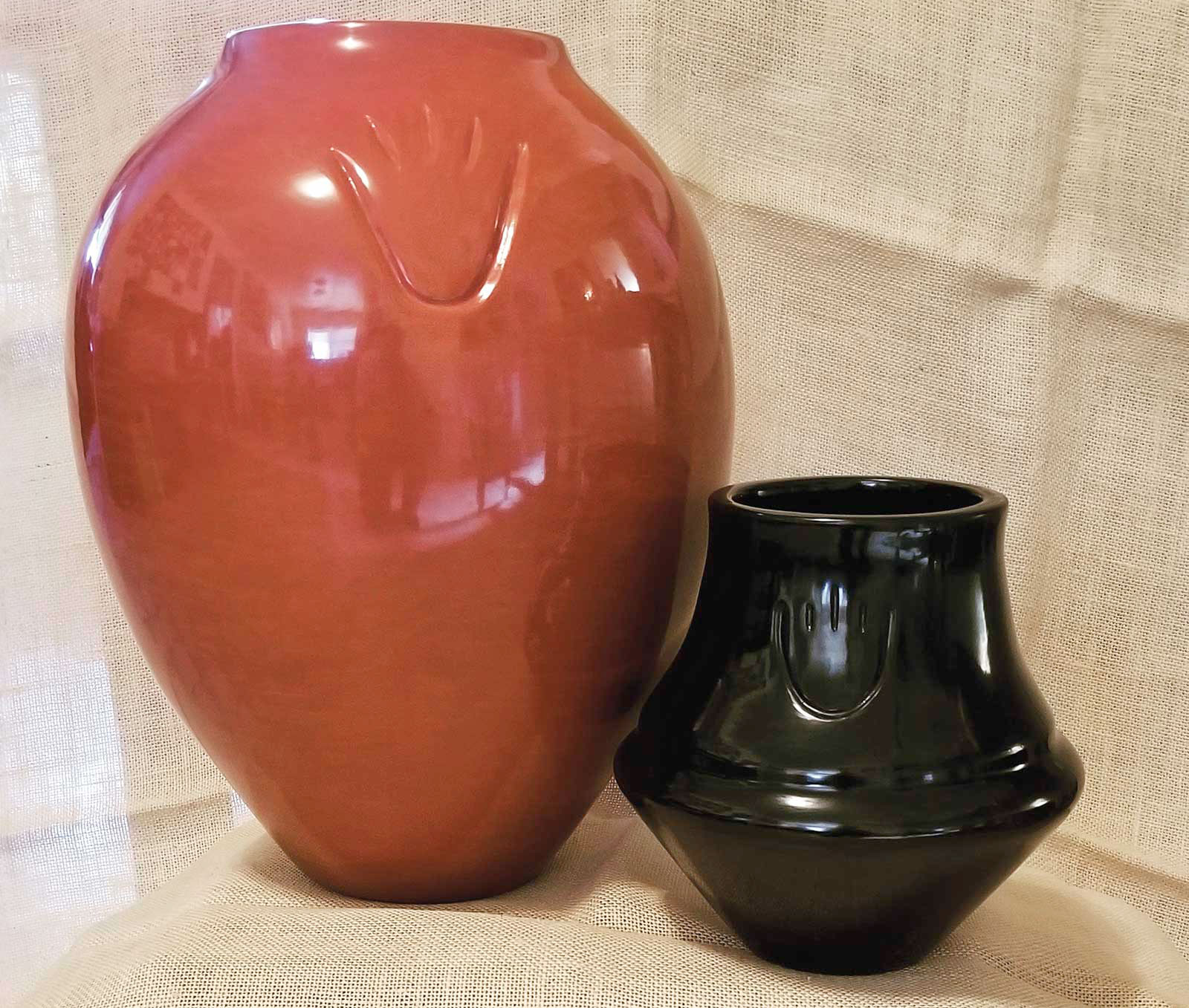
 Jason Ebelacker (Santa Clara)
“I specialize in…traditional large Santa Clara pottery made by my family for generations. I learned…from my father, Richard, who taught me the traditional techniques of pottery making, following the classic Tafoya legacy. My work is inspired by the classic shapes and designs of my family, including my great-grandmother Margaret Tafoya and grandmother, Virginia Ebelacker.”
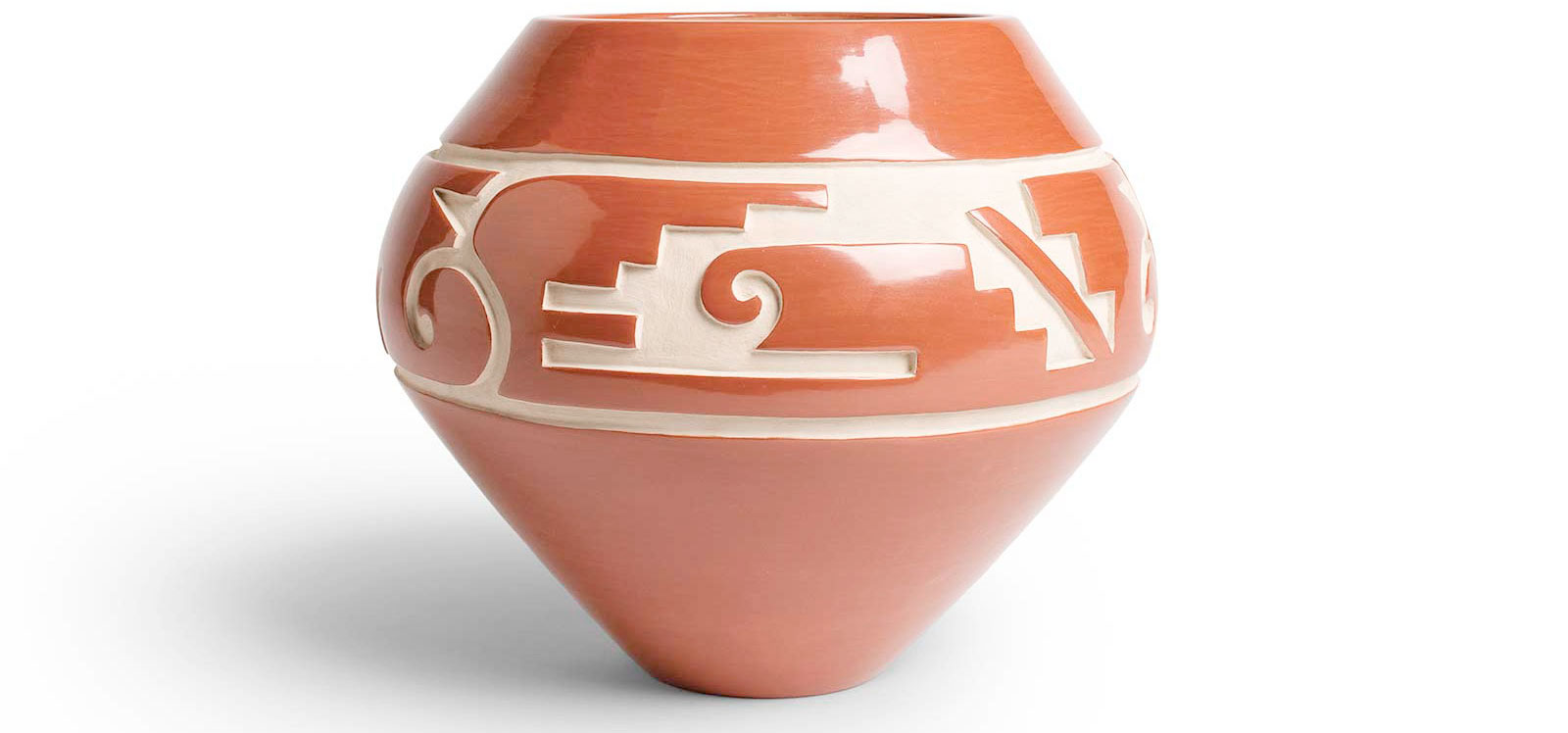
 2019 Best of Class
Pottery
Daryl Whitegeese (Pojoaque/Santa Clara)
“It’s important for me to keep with the traditional methods, shapes and designs of my mother and grandmother. These forms and designs are embodied in my carved and plain red or black pottery. The designs I use are inspired by cultural connections like kiva steps, rainbows, bear paw and the water serpent (Avanyu). These are part of our Pueblo life. I have revived old designs and found meanings of some designs are no longer known but the beauty and at times simplicity of the designs are exceptional. It’s enjoyable making pottery, polishing a pot can be very relaxing, much like a Zen moment. Polishing in the early morning, when the room temperature is cooler and the day is calm, is my moment.”
BUYING TIPS
From Alexis M. Hill, J.D. Art Appraiser and Heard Shop Board Member, Owner and Principal, Hill Art Valuation, LLC
- Artist: Who made your pot? Is it a historic vessel that is not signed? The more you know about the person who crafted your pottery, the more you will learn about your pot. Historic vessels often were not signed by their maker and were created for utilitarian purposes. Contemporary vessels are created for decorative and display purposes; they are not meant to be used.
- Materials and Techniques: How was your pottery crafted? Was it created by the coil and scrape method? Is the pot extremely smooth and appears to have been poured, rather than crafted by hand? This affects value significantly and poured pots, though less expensive than coiled ones, are not considered to be the same quality.
- Design: How many colors are used in the design? More than two? Polychrome (more than one color) pots are qualitatively higher when ranking pots that feature few paint colors. What does the pot depict? Deer and rain clouds? Figurative elements take more time and skill to design than pots with purely geometric motifs.
- Condition, condition, condition: Are there any cracks in the vessel or chips on the rim? Does your Maria Martinez pottery show scratches on the smooth black surface? Although some condition issues are expected with historical pieces, the better the condition, the better the pot.
- Size: How big is the vessel? Large pots, and the techniques used to create them, require additional time, labor and skill from the artist to create. Large pots often suffer through the firing process because the larger the vessel, the more difficult it is to fire.
STANDARD-BEARERS
Autumn Borts-Medlock (Santa Clara)
Preston Duwyenie (Hopi)
Jody Folwell (Santa Clara/Tewa)
Susan Folwell (Santa Clara)
Tammy Garcia (Santa Clara)
Jody Naranjo (Santa Clara)
Al Qöyawayma (Hopi)
Russell A. Sanchez (San Ildefonso)
Dominique and Maxine Toya (Jemez)
Nancy Youngblood (Santa Clara)
WHO TO KNOW RIGHT NOW
Glendora Fragua (Jemez)
Delores Juanico (Acoma)
Harlan Reano (Santo Domingo/Kewa)
ONES TO WATCH
Daniel Begay (Navajo/Santa Clara)
Harrison Begay, Jr. (Navajo)
Hubert Candelario (San Felipe)
Jason Ebelacker (Santa Clara)
Erik Fender (San Ildefonso)
Johnathan Naranjo (Santa Clara)
Bernice Suazo-Naranjo (Taos)
++++++++++++++++++++++++++++++
Pueblo Carvings
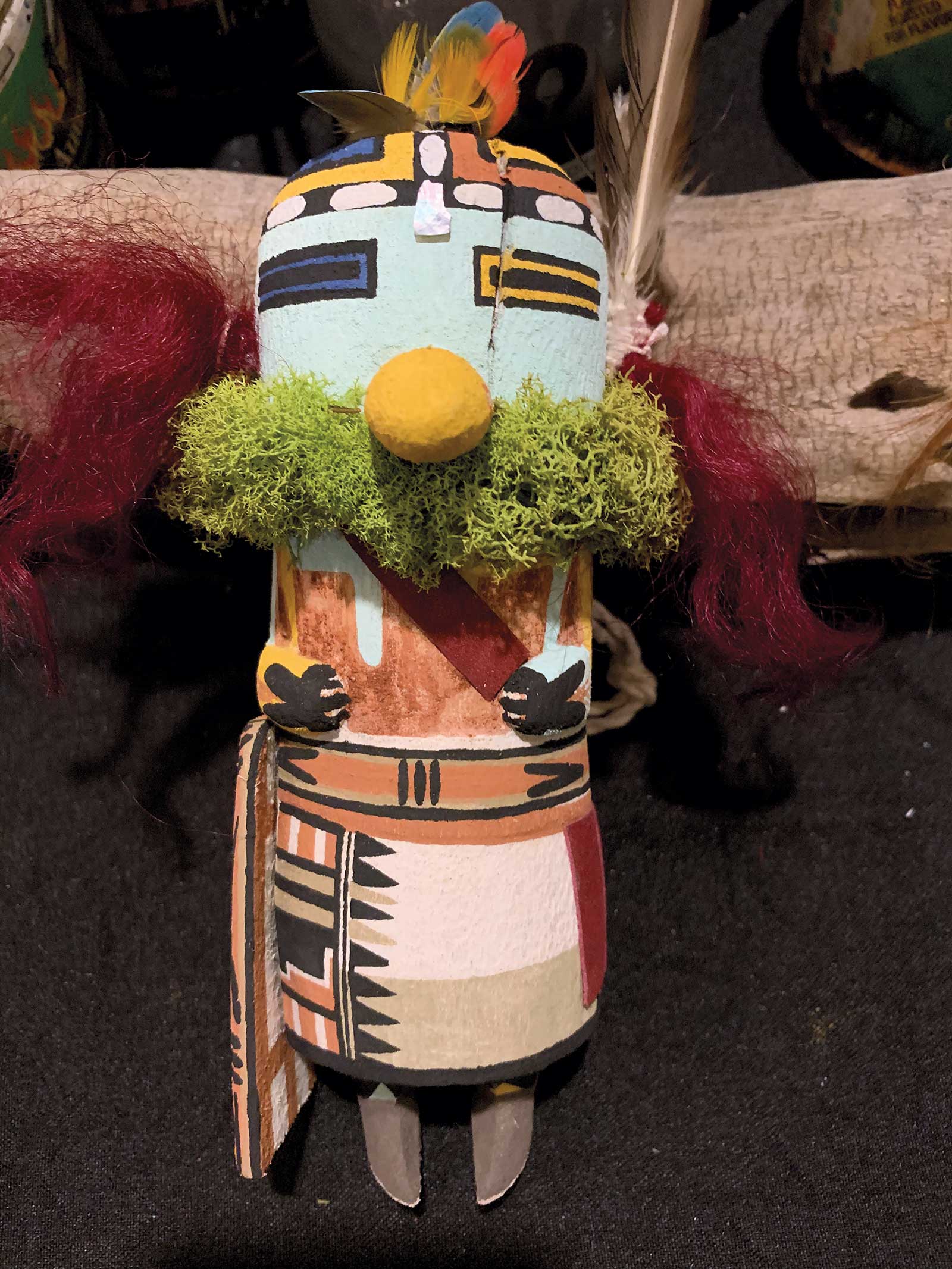
 Randy Brokeshouler (Navajo/Hopi/Absentee Shawnee)
“I am a third generation carver, my great grandfather was Guy Maktima who taught my father, Nick Brokeshoulder, and he taught my brother, Brent, and myself. I specialize in all sizes of carvings from miniature to large pieces.”
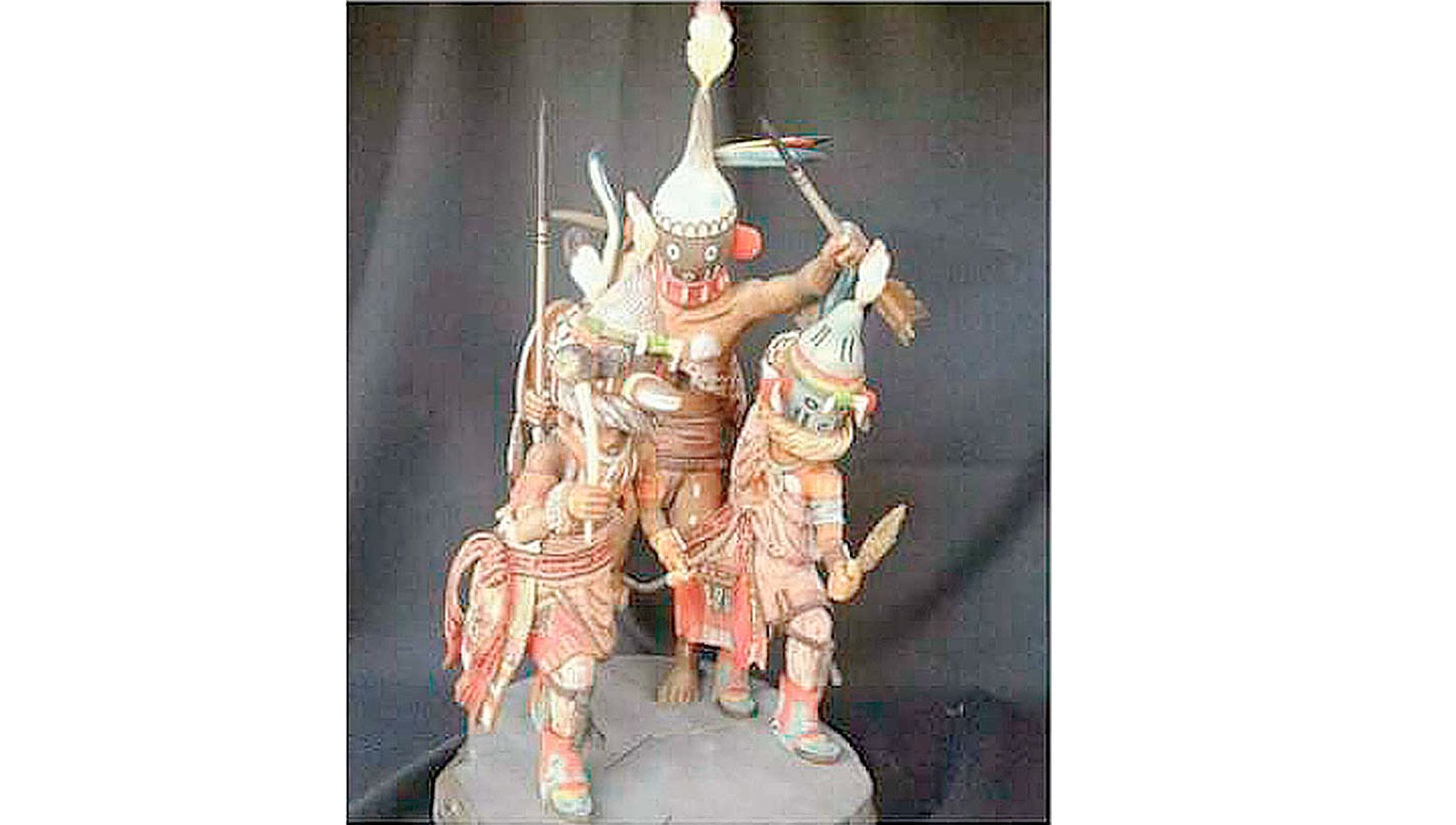
 Alex Youvella (Hopi)
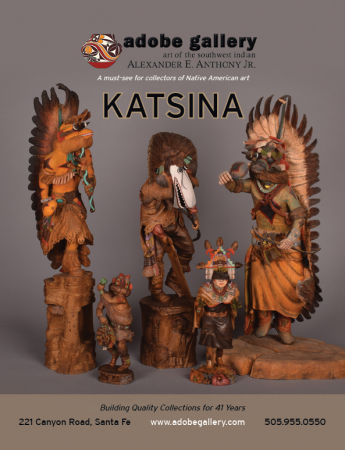
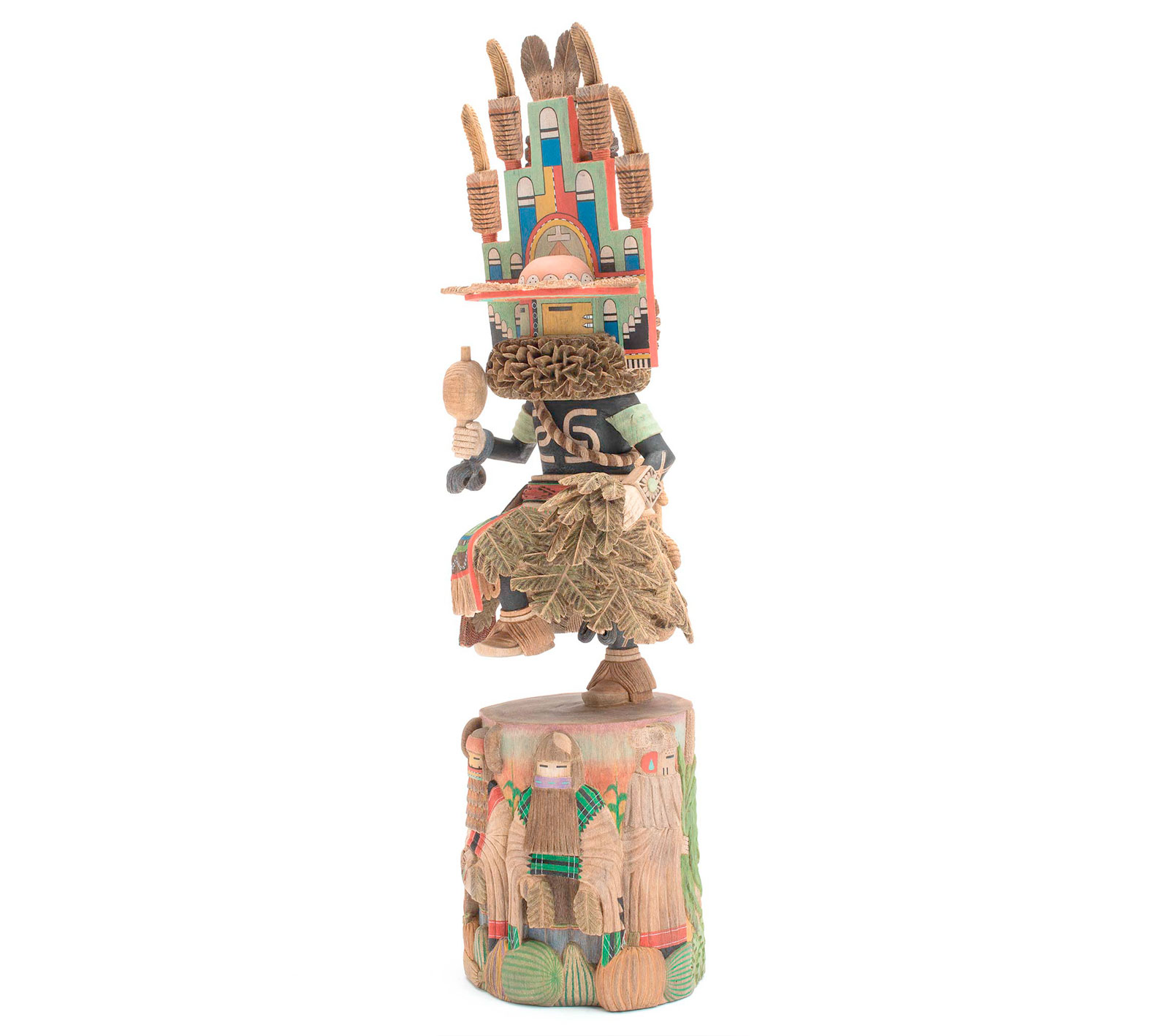
“The Hopi Katsina Doll medium identifies the Hopi culture, heritage and beliefs. I create all types [of Katsina dolls] to help evolve and express, to teach and connect.”
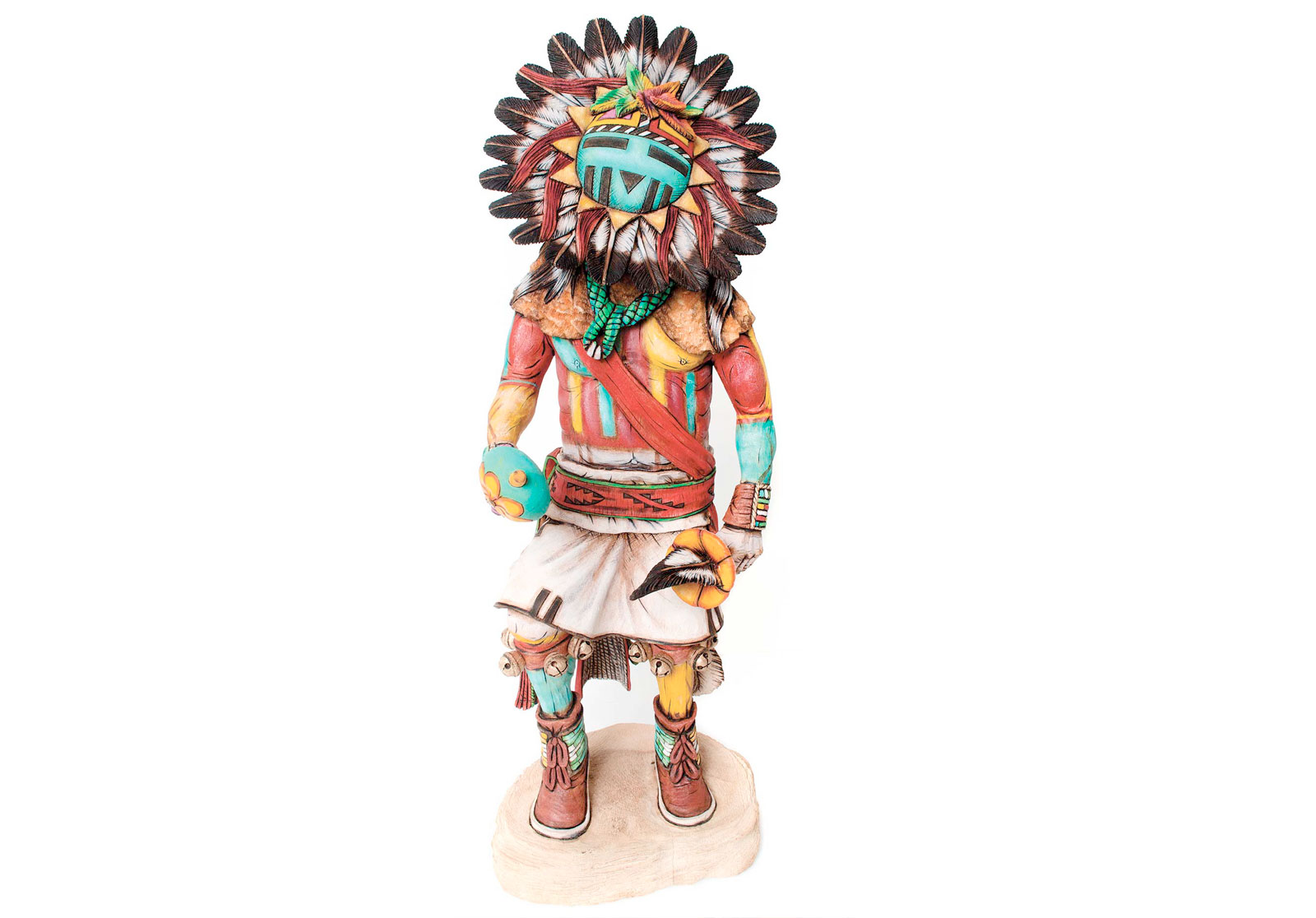
 Arthur Holmes, Jr. (Hopi)
“I look at a piece of wood and visualize what it wants to be, what I see and the feeling I get.”
 2019 Best of Class
Pueblo Carvings
Donald Lomawunu Sockyma (Hopi)
“When I work, I think about my ancestors that have done this same kind of work and I am thankful for the gift and I feel it is my responsibility to keep getting better with every piece.”
BUYING TIPS
From James Barajas, assistant manager of the Heard Museum Shop
- Trust who you buy from. Develop a relationship with a dealer/artist even if it is just to learn the basics. Buy from a dealer who has been in the business for more than 10 years who has a reputation to protect. It protects the collector until they get knowledgeable enough to buy on their own.
- Trust your own taste. Buy what appeals to you because you are going to most likely have to live with it. Don’t buy purely for investment purposes. Buying as an investment speculation can be disappointing even when you do like the piece.
- Ask a lot of questions and be more critical as the price goes up. There is nothing wrong with out of proportioned dolls priced under $500 because they are still collectible cultural items, if not fine art.
- Enjoy the process of learning: the Katsinam, the carvers and the beautiful worldview and history that the Hopi express through this fascinating medium.
- Old Style: Opt for mineral pigment paints instead of acrylic.
- Contemporary Style: Emphasis on natural proportions and details—like hands, faces, feathers, sanded finishes are time consuming, so often skimped on.
STANDARD-BEARERS
Aaron Fredericks (Hopi)
Arthur Holmes, Jr. (Hopi)
Stetson Honyumptewa (Hopi)
Ed Seechoma (Hopi)
Manuel Chavarria (Hopi)
WHO TO KNOW RIGHT NOW
Donald Lomawunu Sockyma (Hopi)
Randy Brokeshoulder (Navajo/ Hopi/Absentee Shawnee)
Nuvadi Dawahoya (Hopi)
Mavasta Honyouti (Hopi)
Wilmer Kaye (Hopi)
Ryon Polequaptewa (Hopi)
Gerry Quotskuyva (Hopi)
ONES TO WATCH
Aaron Honanie (Hopi)
Kevin Honyouti (Hopi)
Michael Dean Jenkins (Hopi)
Eric Kayquaptewa (Hopi)
Tayron Polequaptewa (Hopi)
Alex Youvella (Hopi)
++++++++++++++++++++++++++++++
Sculpture
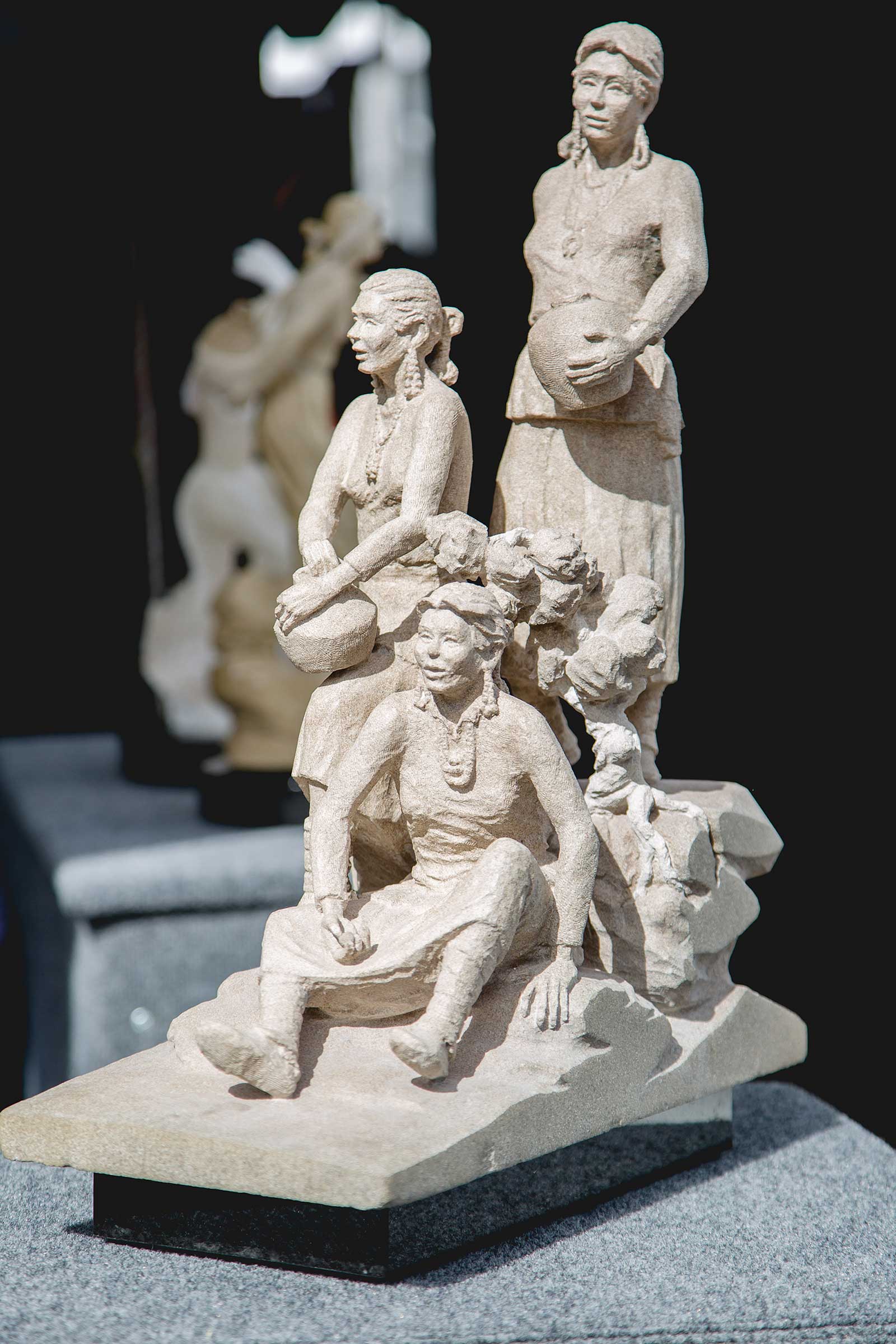
 James Goodman (Navajo)
“Since my teenage years there was always a desire to explore art. Through the years I was unsuccessful, even an anatomical stick man was unrecognizable. Jump 25 years, my wife insists I join her for an evening live model drawing session. Her teacher opens a whole new avenue of basics to drawing. I am hooked. After years of drawing, one day I discover stone. That has been my passion since. I am honored to be a part of the Heard Guild show and am humbled that the committee would include me in the 2020 magazine.”
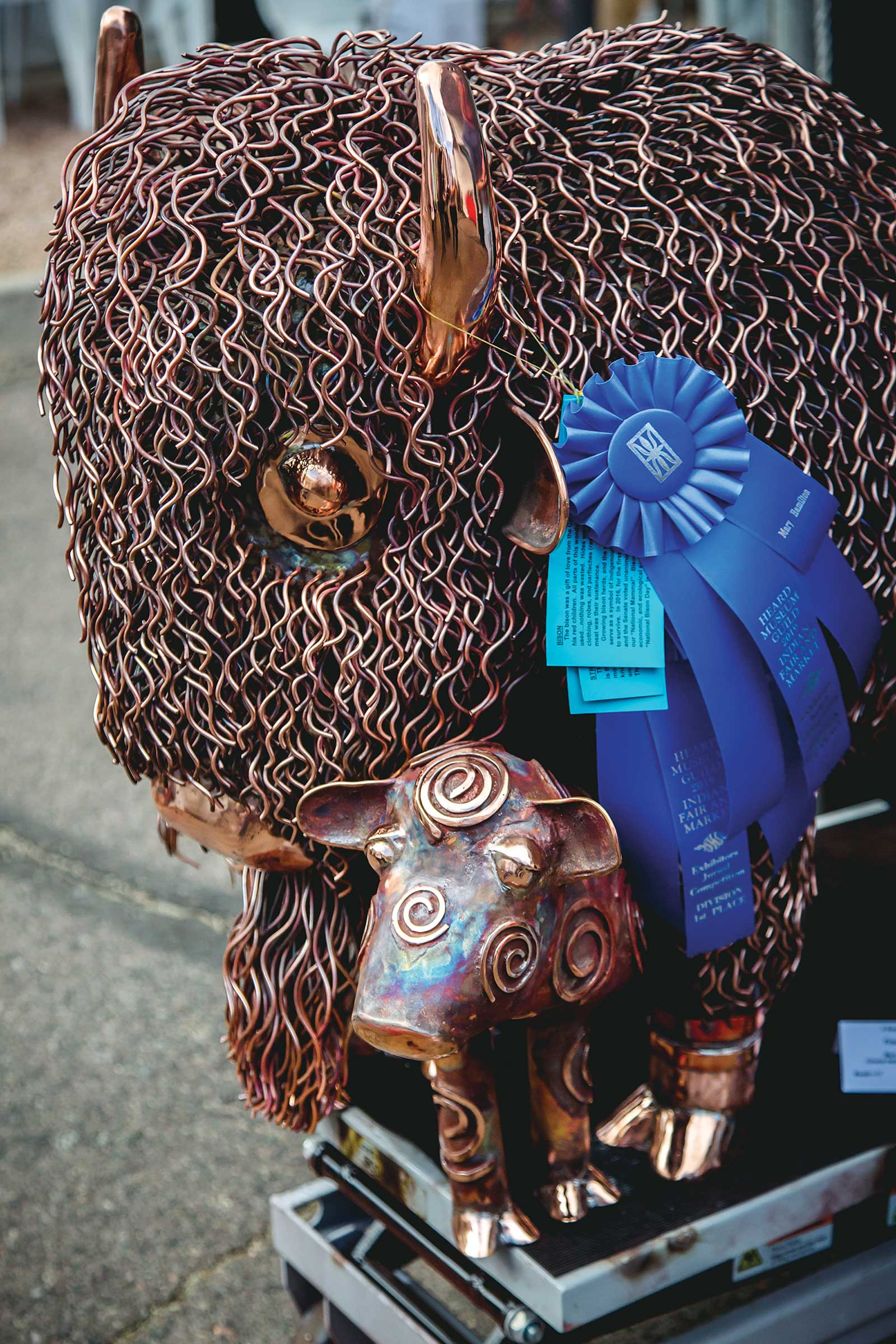
 Mark Fischer (Oneida Nation of Green Bay)
“My storytelling copper sculptures are interpretations of traditional and visual imagery representing nature and my Native American heritage. Annealed, hammered, hand cut and formed copper assemblages are welded in hard silver solder and copper wire using oxy/acetylene and typically given a verdigris patina to enhance the natural aging process.”
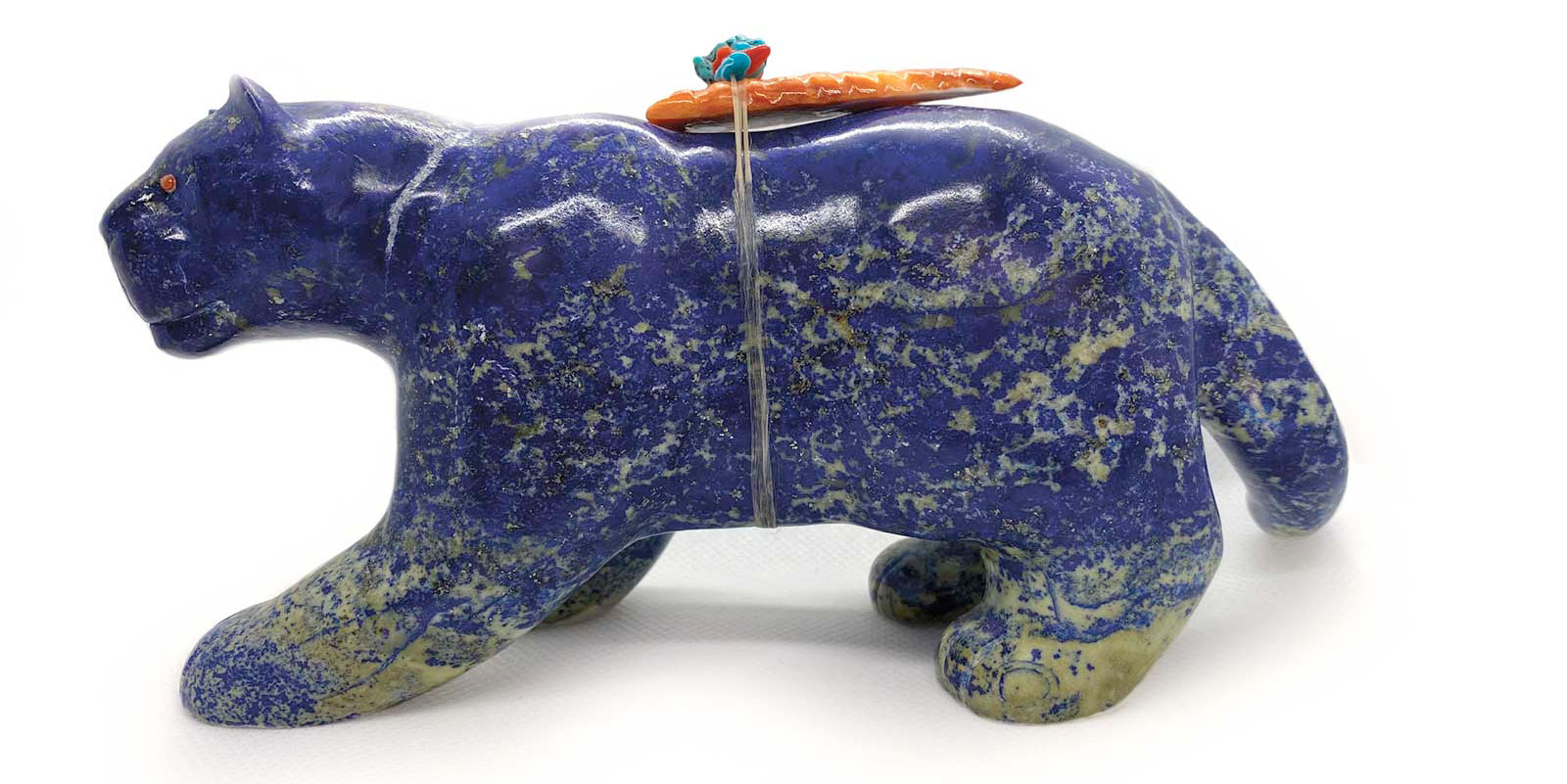
 Loren Tsalabutie (Zuni)
“I learned how to carve from my late father Jeff Tsalabutie when I was 14. I have since carried on what I was taught and have since pushed myself to create spectacular animals showcasing balancing techniques, humor and a strong spiritual connection to the circle of life. Carving has been a great way to connect with my father and ancestors as it has been part of our tradition for many centuries. The stones I carve are exotic, and they have to speak to me on an artistic level for me to carve them. My work is true to tradition with a small amount of Inuit influence. “
 2019 Best of Class
Sculpture
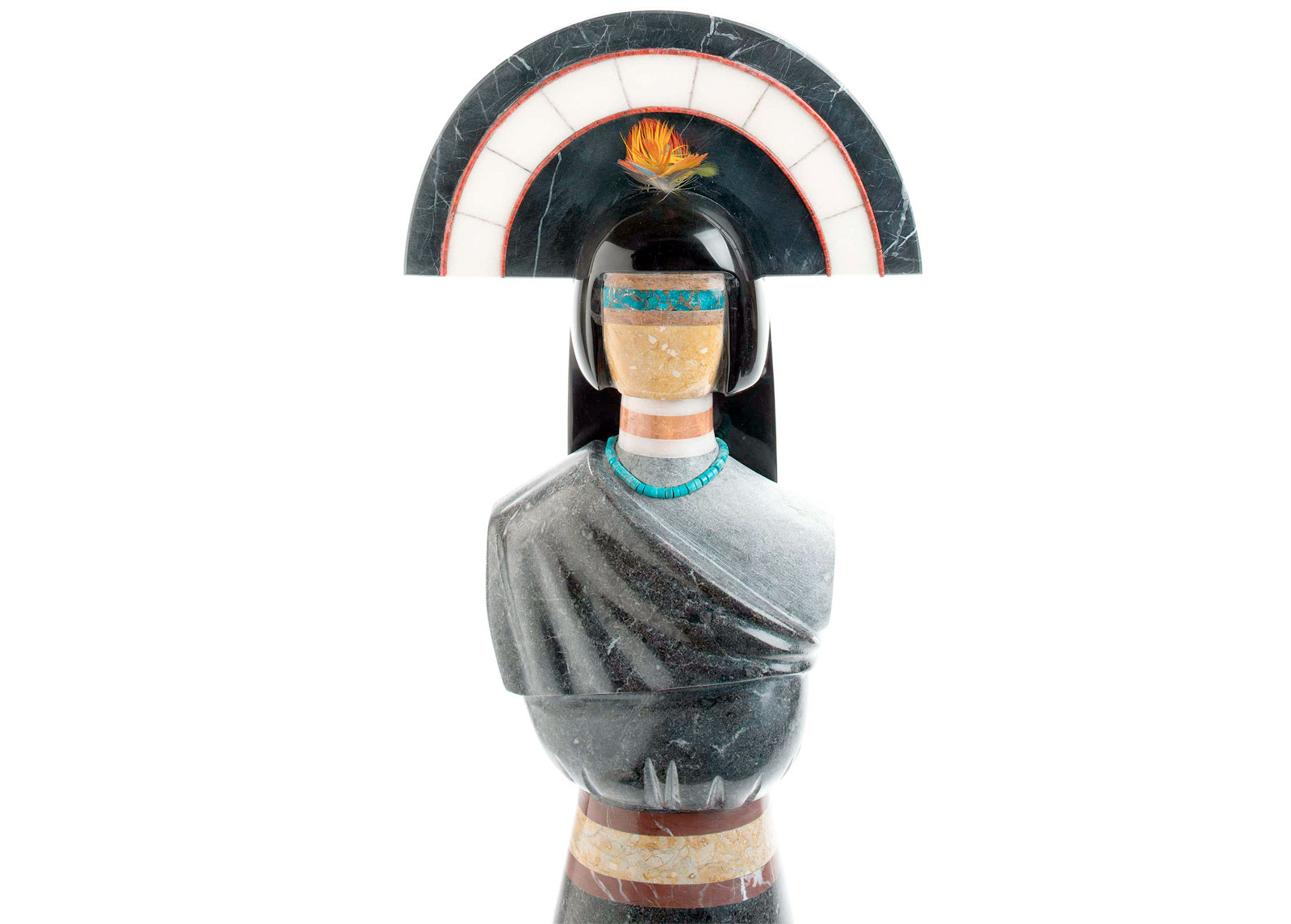
Cliff- Fragua (Jemez)
“An enrolled member of the Pueblo of Jemez, I am from the Cornstalk Clan (maternal) and Badger Clan (paternal). I was born October 21, 1955. I am a sculptor who works primarily in stone, but also has works available in wood, bronze and glass. My most notable accomplishment in my career has been the Po’Pay Commission awarded to me by the state of New Mexico in 1999, which is now in the permanent collection of the US Statuary Hall in the US Capitol Building, Washington DC. My sculpture studio is located in Jemez Pueblo, where I reside. I come from a culture and community that is based in agriculture, traditions, ceremonies and sustainability. These are the basic inspirations of the sculptures I create.”
BUYING TIPS
From Laura Cardinal, manager of the Heard Museum Shop Collector’s Room
- Sculptures are typically made from stone, wood, bronze or stainless steel. Some materials are harder to carve than others. Knowing that may help you assess the quality of the execution.
- Pay attention to the finer details.
- Ask the artist if the piece is one-of-a-kind or part of a limited edition. If part of an edition, ask what number. This will affect the dollar value.
- You can research artists, materials and techniques, but ultimately this shouldn’t enter into the equation. Buy what makes you happy.
STANDARD-BEARERS
James Goodman (Navajo)
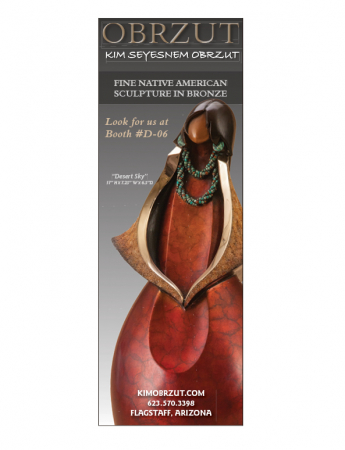
Kimberly Obrzut (Hopi)
WHO TO KNOW RIGHT NOW
Gibbs Othole (Zuni)
Troy Sice (Zuni)
Loren Tsalabutie (Zuni)
Robert Dale Tsosie (Navajo/Picuris Pueblo)
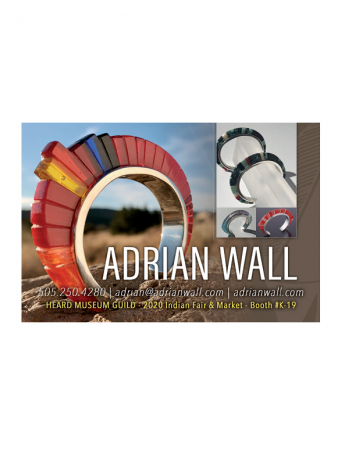
Adrian Wall (Jemez)
Tim Washburn (Navajo)
ONES TO WATCH
Mark Fischer (Oneida Nation of Green Bay)
Saige LaFountain (Dine/Turtle Mountain Band of Chippewa)
Ira Lujan (Taos)
Nelson Tsosie (Navajo)
++++++++++++++++++++++++++++++
Weaving and Textiles
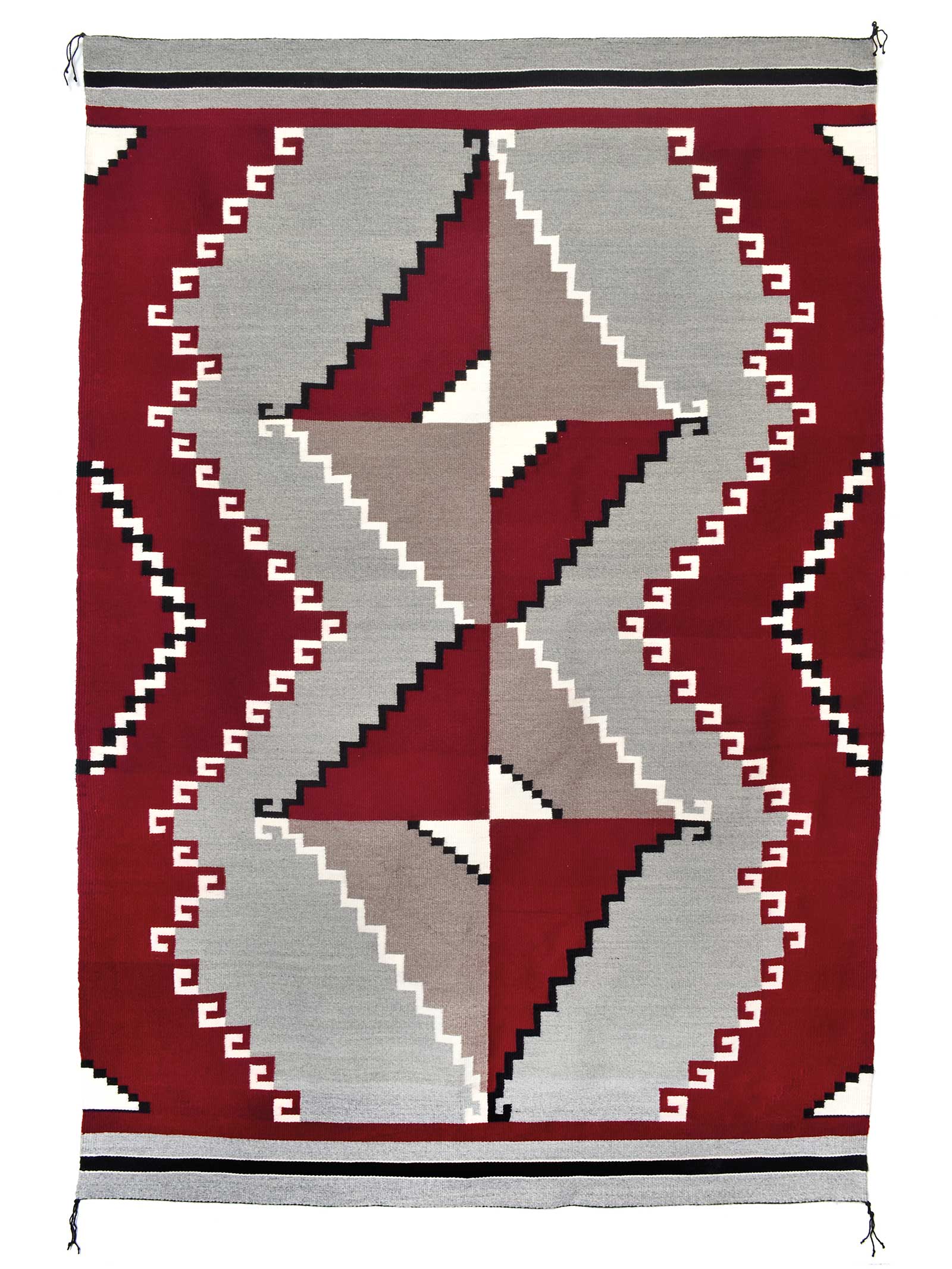
 Rena Begay (Navajo)
“I started weaving when I was 17. I learned by sitting behind my mom and watching her. From her and my grandmother, I learned how to string the loom, count the warp threads and count how many designs from the middle to the side. I carded wool from the sheep, washed it and spun it and strung it outside to make the wool finer and narrow. I used to weave a lot of Ganado red and Two Grey Hills. But now, at 78, I weave a lot of Chief blankets. I still card wool when I can. My son helps me with the colors.”
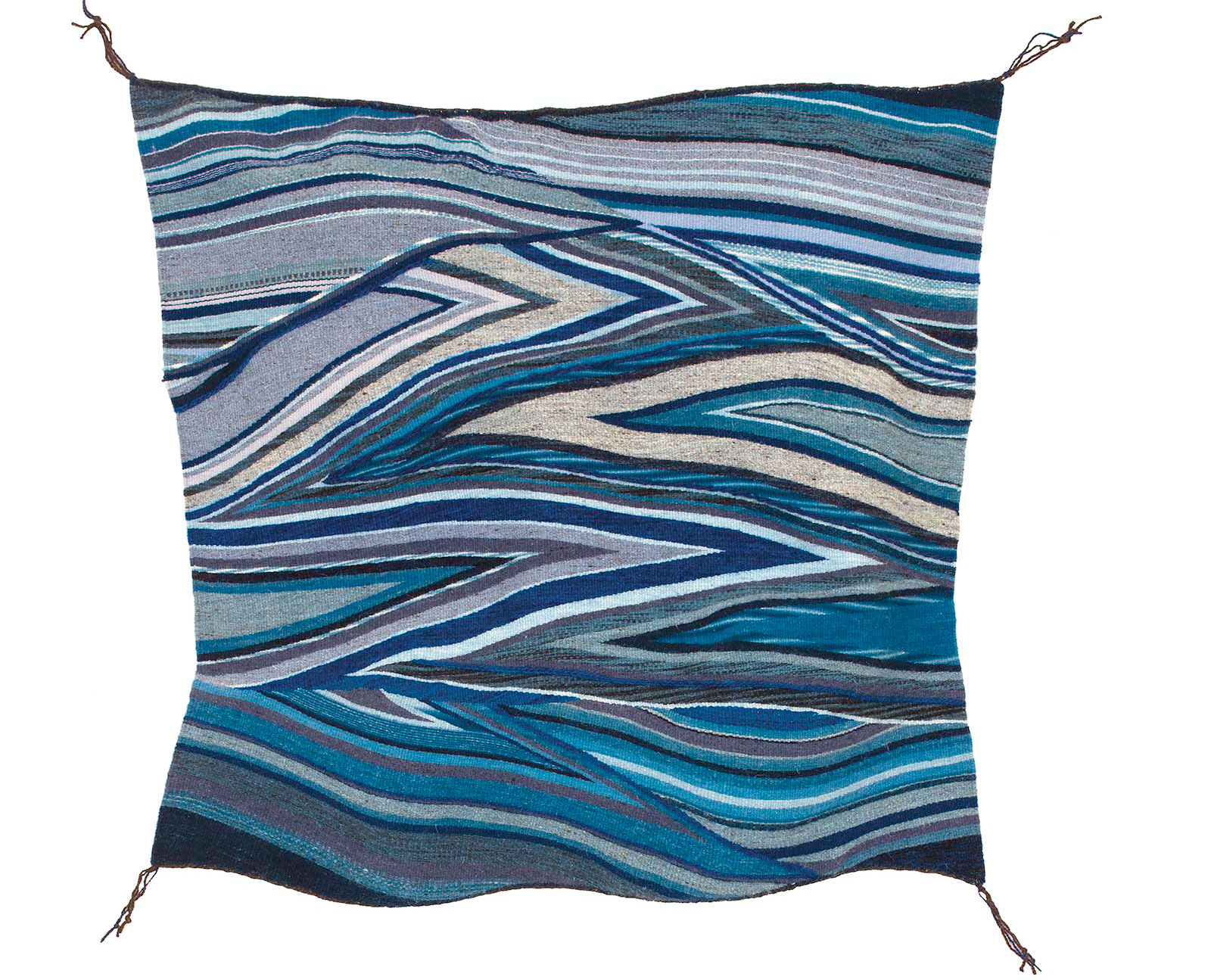
 Marilou Schultz (Navajo)
“Presenting the beauty of Navajo textiles through a unique and personal lens is what I strive for whether it is through color, materials, technique and design. I continue to maintain my culture’s traditions in weaving because it spiritually represents a gift given from our ancestral grandmothers. My traditional Navajo way of life, the way I think and respond to the world around me, all give great influence to the form, patterning, and art in my rugs and tapestries.”
 Susan Hudson (Navajo)
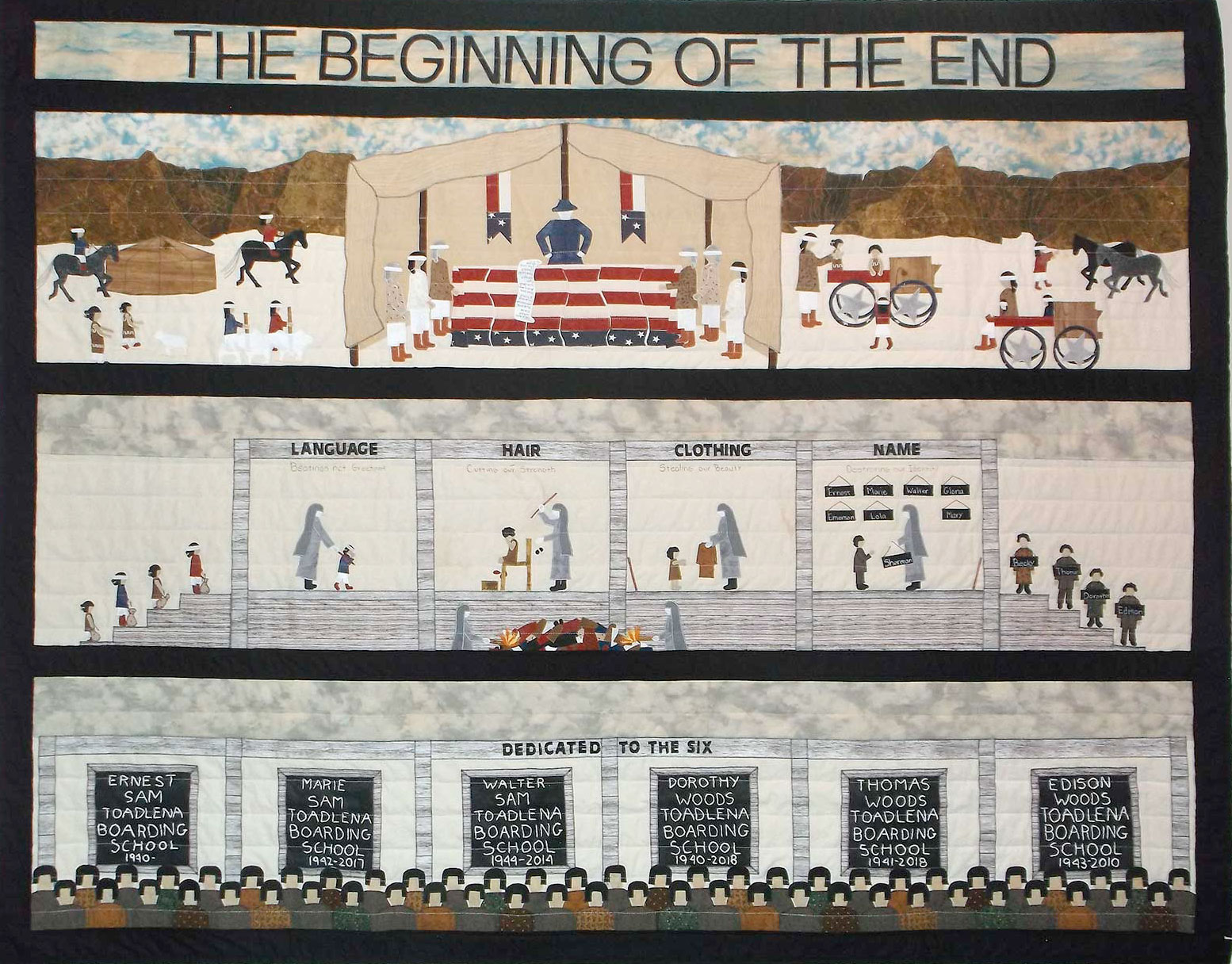
I live in Sheep Springs, New Mexico, on the Navajo Reservation. My mother taught me how to sew out of necessity, since we were so poor she couldn’t afford to buy us clothes. She learned how to sew at Toadlena Boarding School. In order to be able to tell stories with my quilts they have to be able to evoke emotions in people and to speak for themselves. From the very first dream that I have been blessed with, to sew it into reality, to the very last stich I am able to convey the emotional impact that the quilt had on me. To ensure that our ancestors’ stories are never forgotten, and to show that it has taken generations of Native quilters to help me become the artist that I am. By taking quilting to another level I have become a woman activist through quilting.”
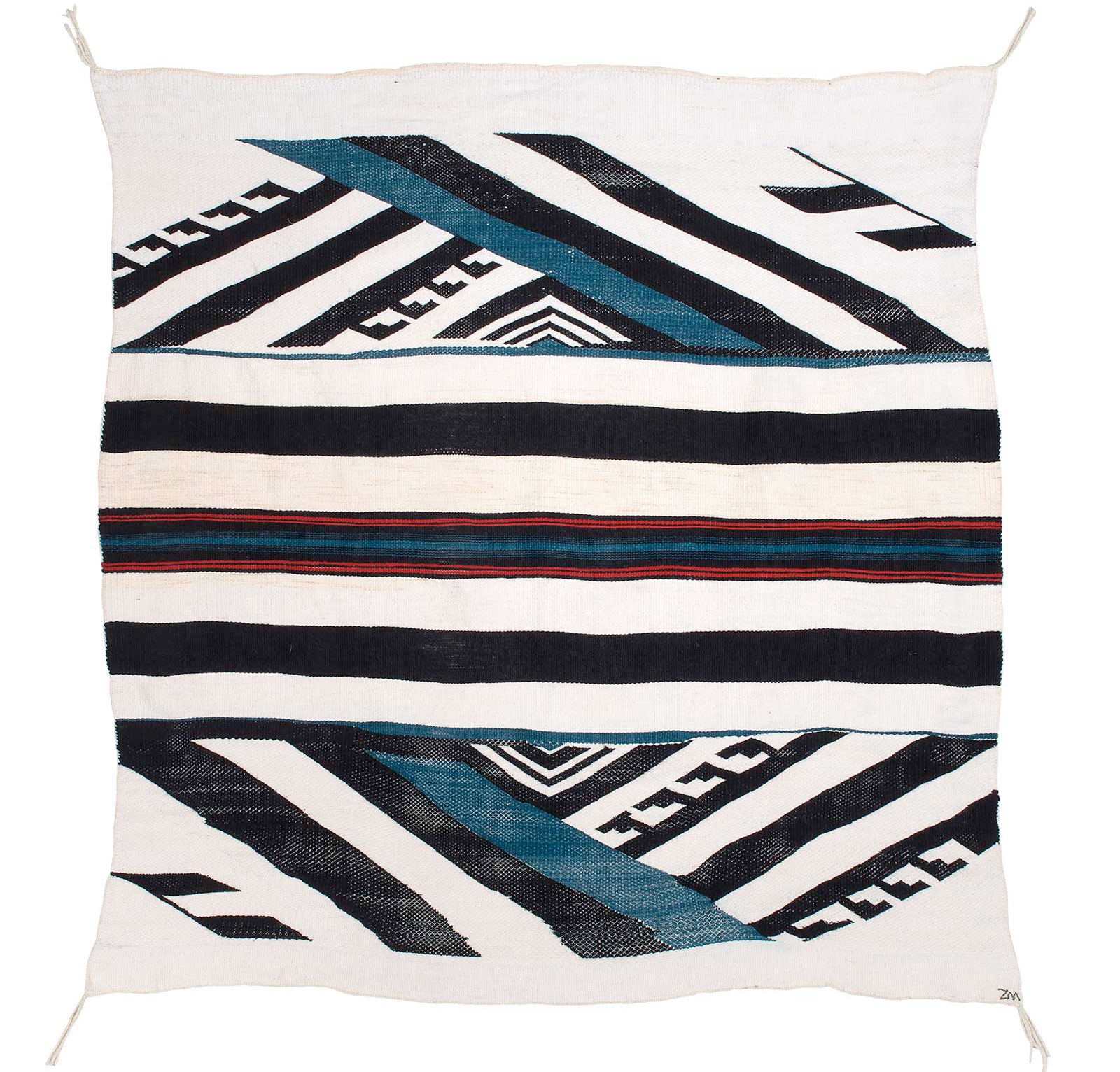
 2019 Best of Class
Weaving and Textiles
Ephraim Anderson (Navajo)
“I really wanted to find the most complex twill weaving possible. It was certainly complicated. It really all comes down to the manipulation of the yarn. Every time you add a heddle it can give you two, four, six or even eight times more work. It’s an exponential product.”
BUYING TIPS
From Ann Marshall, Director of Research, Heard Museum
- Look for innovation in color and design.
- Look for innovation in technique, assuming the technical aspects are excellent.
- If a regional style is being woven, look for some aspect that makes the textile unique.
STANDARD-BEARERS
Barbara Teller Ornelas (Navajo)
D.Y. Begay (Navajo)
Rena Begay (Navajo)
Lola Cody (Navajo)
Jason Harvey (Navajo)
Mona Laughing (Navajo)
Geneva Scott Shabi (Navajo)
WHO TO KNOW RIGHT NOW
Kevin Aspaas (Navajo)
Berdine Begay (Navajo)
Vivian Descheny (Diné/Navajo)
Marilou Schultz (Navajo)
Phil Singer (Navajo)
ONES TO WATCH
Venancio Aragon (Navajo)
Gerard Begay (Navajo)
Leona Bia (Navajo)
Calandra Cook (Navajo)
Alberta Henderson (Navajo)
Susan Hudson (Navajo)
Michael Teller Ornelas (Navajo)
++++++++++++++++++++++++++++++
Youth (Ages 12-14 and Ages 15-17)
Amidst all of the well-known, established artists showing their best work at the Heard Museum Guild Indian Fair & Market, there’s a subset of burgeoning young artists, ready to hit the scene. The Heard Indian Market youth category supports and encourages these young creators as they follow in the footsteps of their family members or pave entirely new paths of their own. The youth category is divided into two sub-categories: ages 12 to 14 and ages 15 to 17.
Last year’s Best of Class junior division awards went to Tara Lujan-Baker (ages 12-14) for her piece Working Mom and Isaiah Begay (ages 15-17) for Beauty Work of Spider Woman. And this year, visitors can expect to see even more upcoming talent.
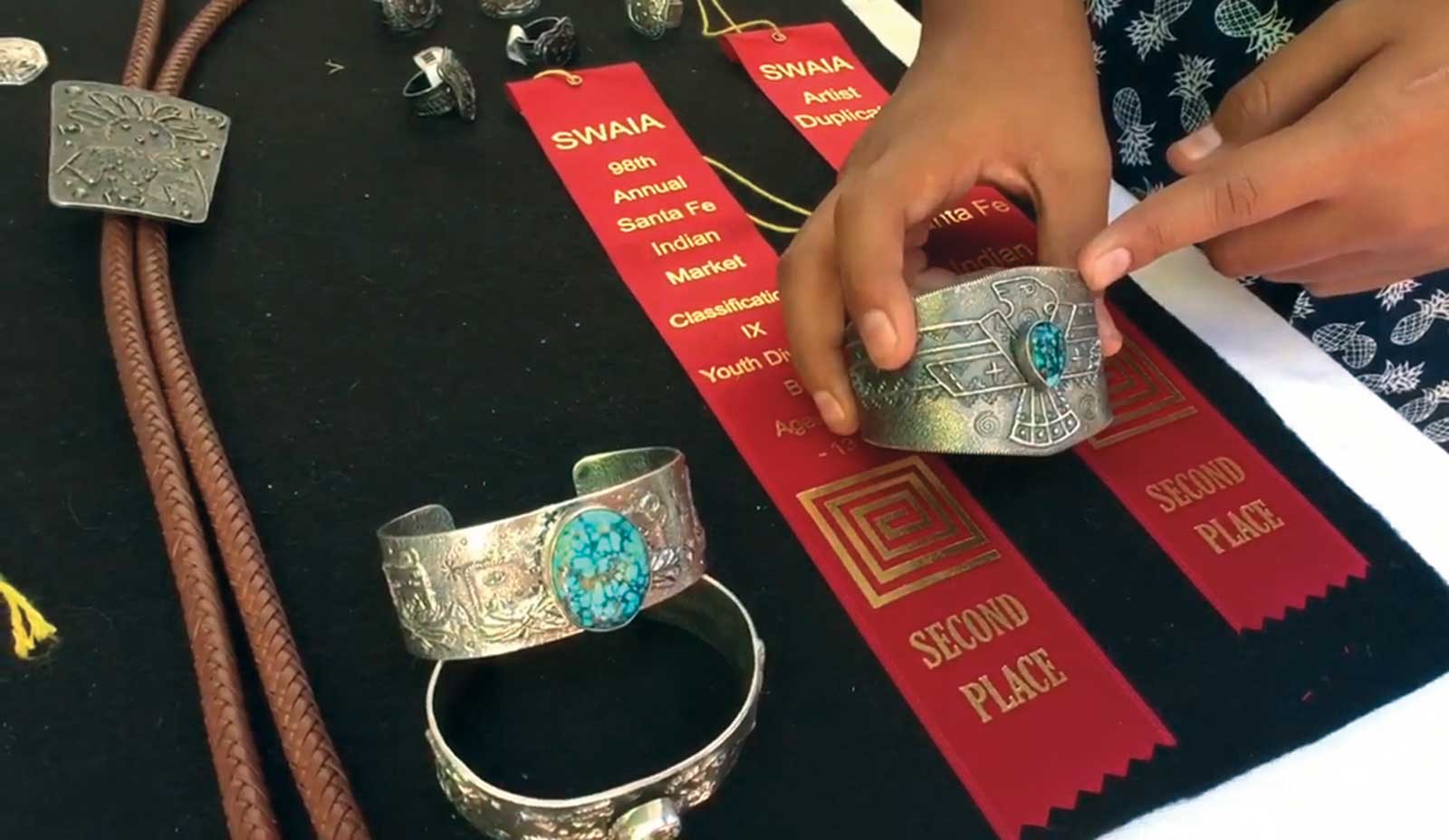
 Mosgaadace Casuse (Navajo/Minnesota Lake Superior Chippewa)
Mosgaadace Casuse is a 14-year-old second generation silversmith, painter, lacrosse athlete and flute player. Son of artists Wanesia Misquadace and Fritz Casuse, Mosgaadace is an enrolled member of the Navajo Nations and Minnesota Lake Superior Chippewa Tribe. He is a big fan of Star Wars, Diné storytelling, Anishinaabe florals and Native code talkers of World War II. His pieces represent superheros and Native humor in both metals and on canvas. “Everyone needs a superhero, a warrior necklace, stick or ring, even adults,” he says.
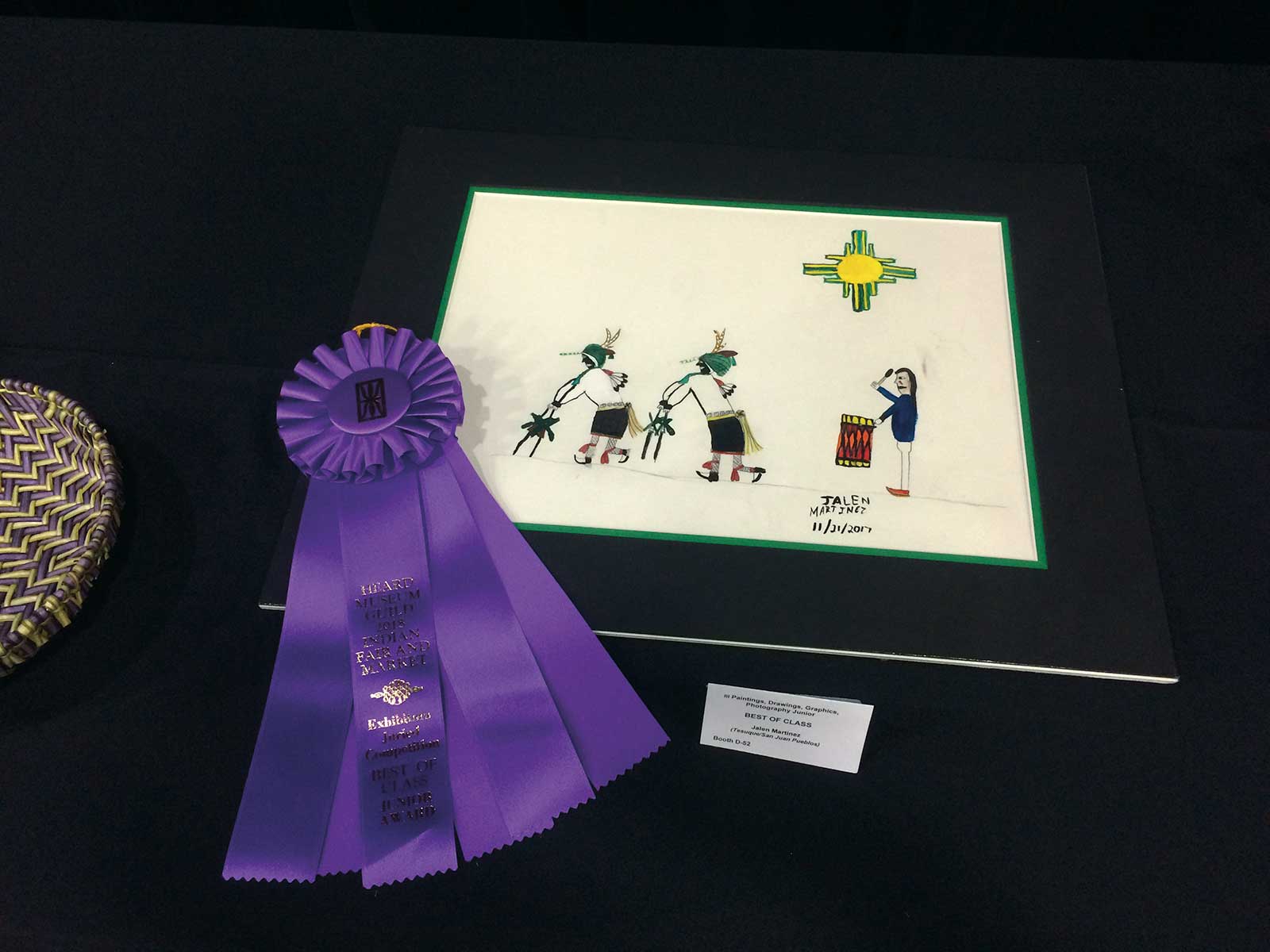
 Jalen Martinez (Tesuque/San Juan)
Jalen Martinez, son of Tesuque/Tewa painter Thomas Tapia, will be bringing his artwork to the 2020 market (Tapia won Best of Class for the Paintings, Drawings, Graphics, Photography category at the 2019 competition). “I always watched my dad paint. I learned from watching him. Then I just started painting on my own. I go to the Heard Market with my dad and show my art in his booth,” says Jalen, whose artwork is reminiscent of his father’s. —
Powered by Froala Editor