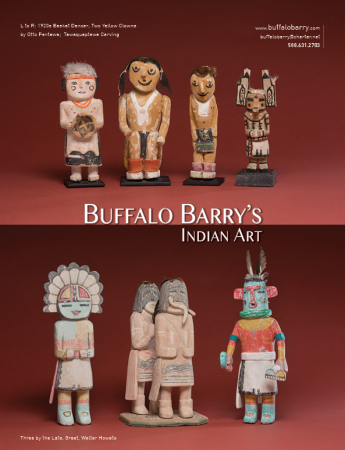

It all starts with the wood. Cottonwood, that is. The root of the cottonwood tree. Cottonwood trees find water. They grow best alongside rivers or streams. Their innate ability to find water is what makes them sacred to the Hopi katsina carvers.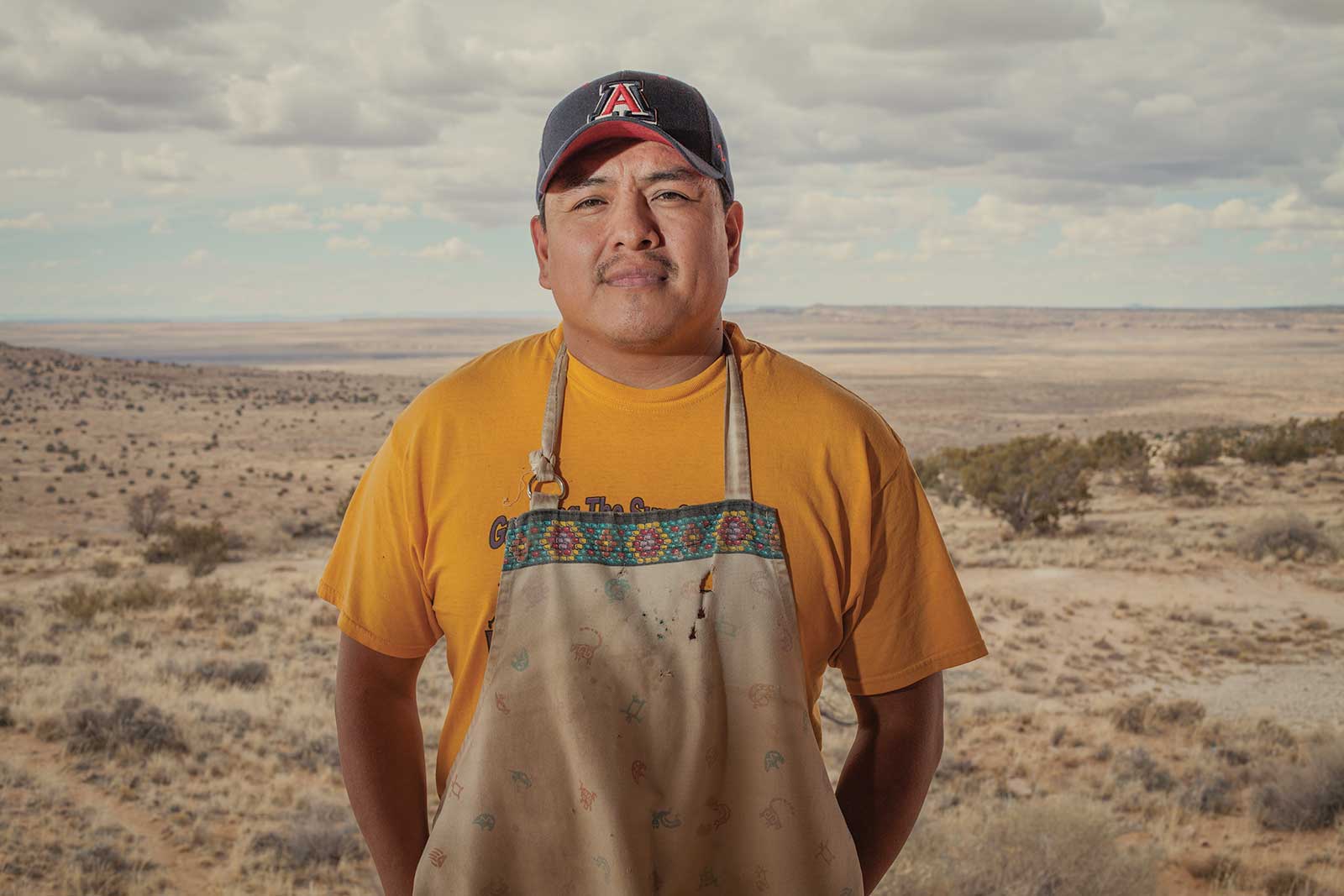 Darance Chimerica. Photo by Anna K. Walsh.
“It’s strong and light at the same time,” says Donald Sockyma, who learned to carve from his father Bennett, who is still alive and carving today. “What connects the cottonwood is the way it grows by the water, which connects to a lot of Hopi ceremonies like when we pray for rain. It knows where to find the water. And that is why it was chosen and why the Hopi admire it. It’s sacred.”
Hopi katsina carvers have been an integral part of the Heard Museum Guild Indian Fair & Market since the beginning. Many carvers have been awarded the prestigious Best of Show award over the years and typically the market features around 30 carvers selling their newest offerings. This year is no different, as famed carvers such as Sockyma, Manuel Chavarria, Darance Chimerica, Eric Kayquaptewa, Kevin Pochoema, Alexander Youvella and Mavasta Honyouti are all set to participate in the market.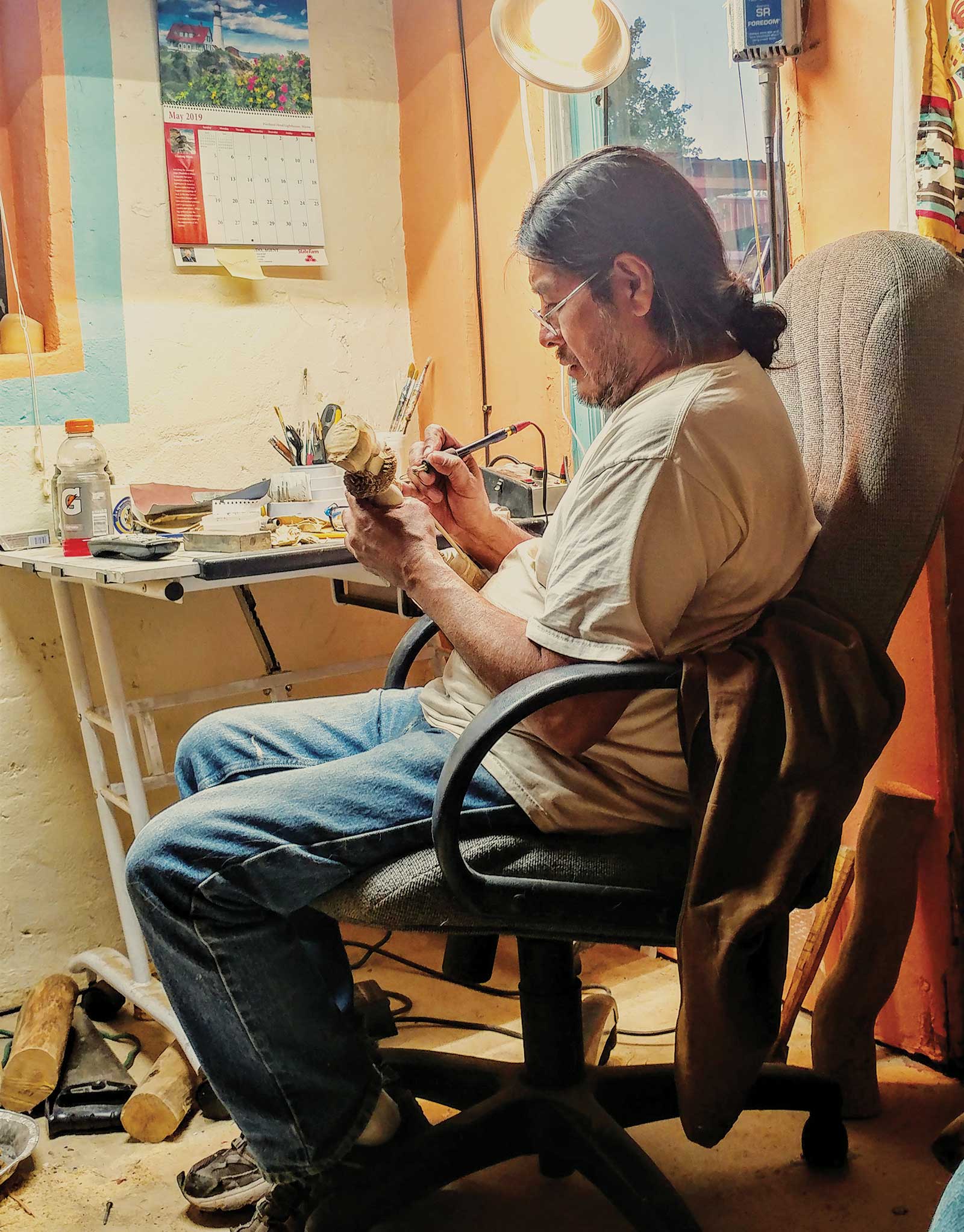 Kevin Pochoema is part of the Greasewood Clan and lives in the Hopi village of Bacavi on Third Mesa in Arizona. He is a top prize-winning katsina carver. In 1992, his 20-inch Water Maiden won a special award: “Best Concept Carving.” His dramatic female figure wore an elaborate 4-inch tableta, Reviewer Laurence Linford stated, “Carving and painted details are exquisite, especially in the portrayal of the long, black hair fanning over the shoulders.”
This past summer, Sockyma’s village of Kykotsmovi on Third Mesa held a Home Dance for the first time since he could remember. It was performed to showcase a Hopi wedding. At the dance, Sockyma saw a turtle katsina. Now, nearly six months later, he is finishing one of his highly sought-after katsina dolls based on that experience.
“That’s how I work,” says Sockyma. “I go to the ceremonies and whatever catches my eye, I go home and make that.”
Barry Walsh, in his brilliant new book, The Great Tradition of Hopi Katsina Carvers, 1880 to Present, dates Hopi katsina carving back to the late-19th century. “While katsina prototypes have been identified on prehistoric petroglyphs, pictographs, pottery and kiva walls, the earliest examples of katsina wood carvings date to the 19th century.”
Today, there are more skilled carvers working than ever before. Most of them learned the intricacies of the art form from their fathers and all of them feel that the true beginnings of each doll they make begins in this same way—with the wood.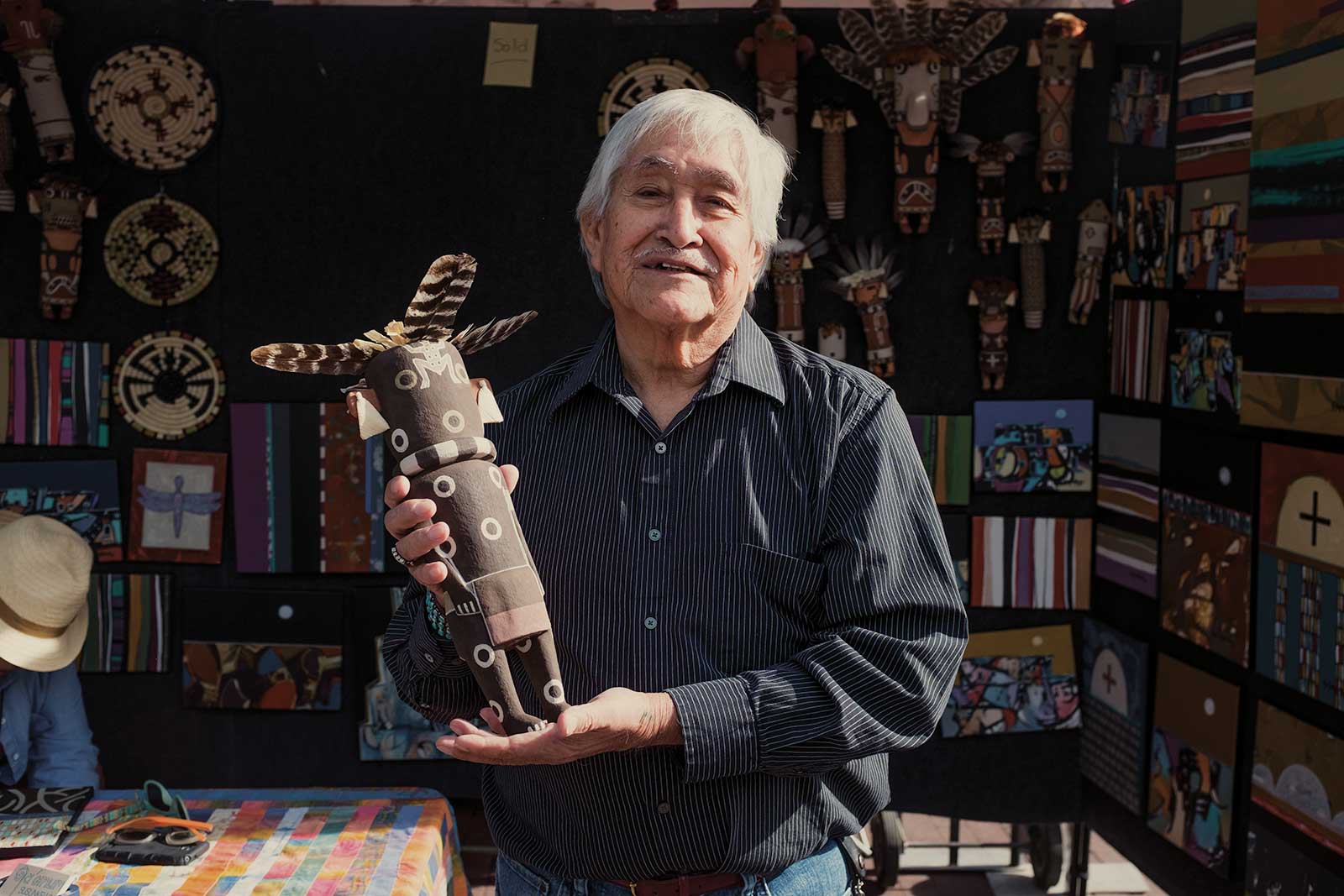 Manfred Susunkewa. Photo by Anna K. Walsh.
“Each doll is brought out in the wood itself,” says Arthur Holmes Jr. “I look at the piece of wood, hold it in my hands, turn it around a couple of times on the bench and the wood speaks to you. Each figure is within the wood. It lets you know what it wants to be.”
Holmes has been carving for 28 years. He learned from his father, Arthur Holmes Sr., who used the old techniques, including seashells, leather and rabbit fur. Holmes, like all the other carvers, connects everything he does to the ways of the Hopi people.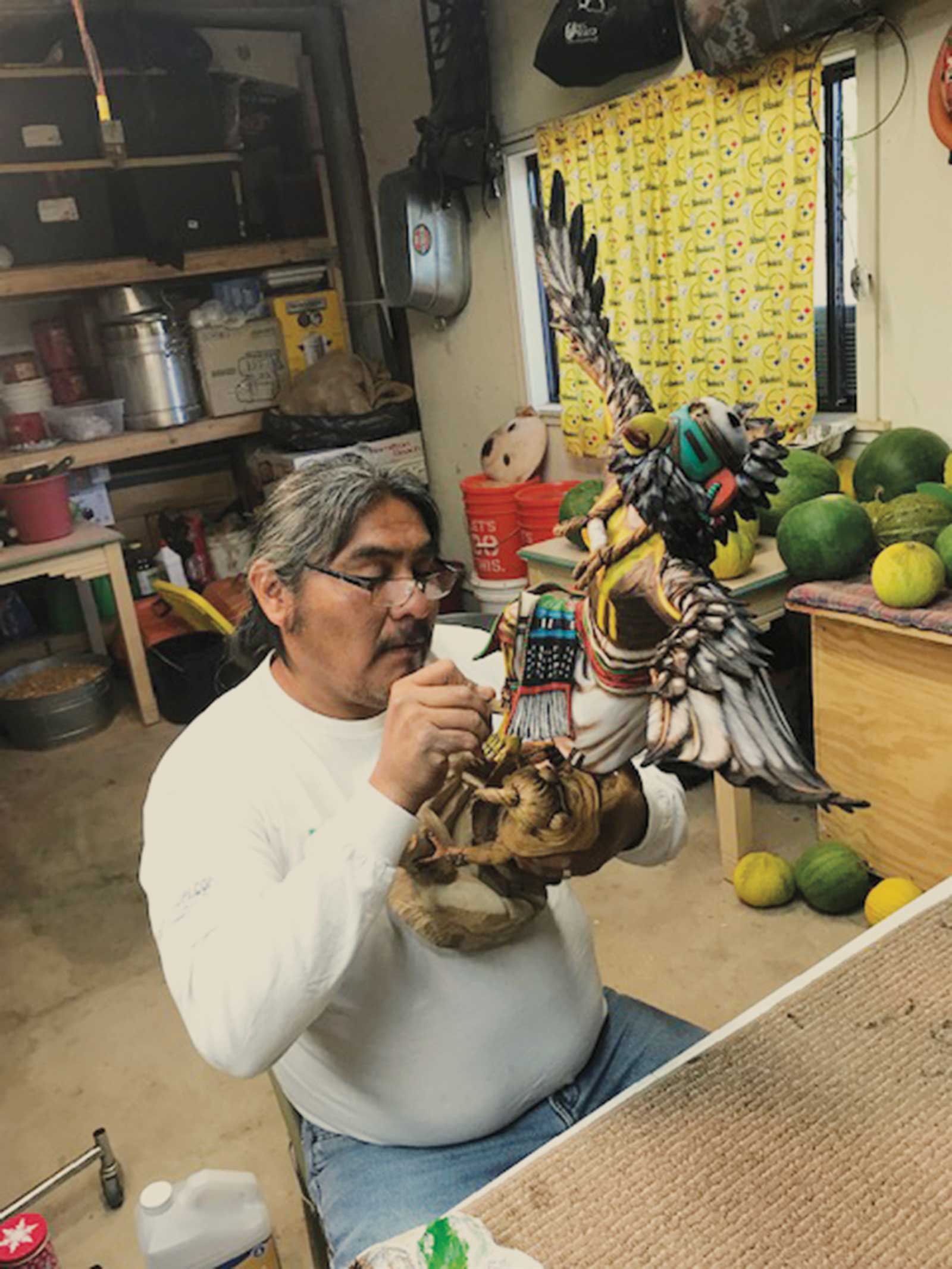 Arthur Holmes Jr. in his studio located on lower Moencopi.
“The way I’ve been carving, you need to participate in order to understand the meaning behind the work,” says Holmes. “You have to take part in ceremonies, see them at the villages, see with your own eyes. You have to have that connection between the ceremonies and the spiritual life and belief. It’s the true meaning of being part of Hopi.”
This also includes farming since many of the katsina dolls relate back to the yearly cycle of the crops.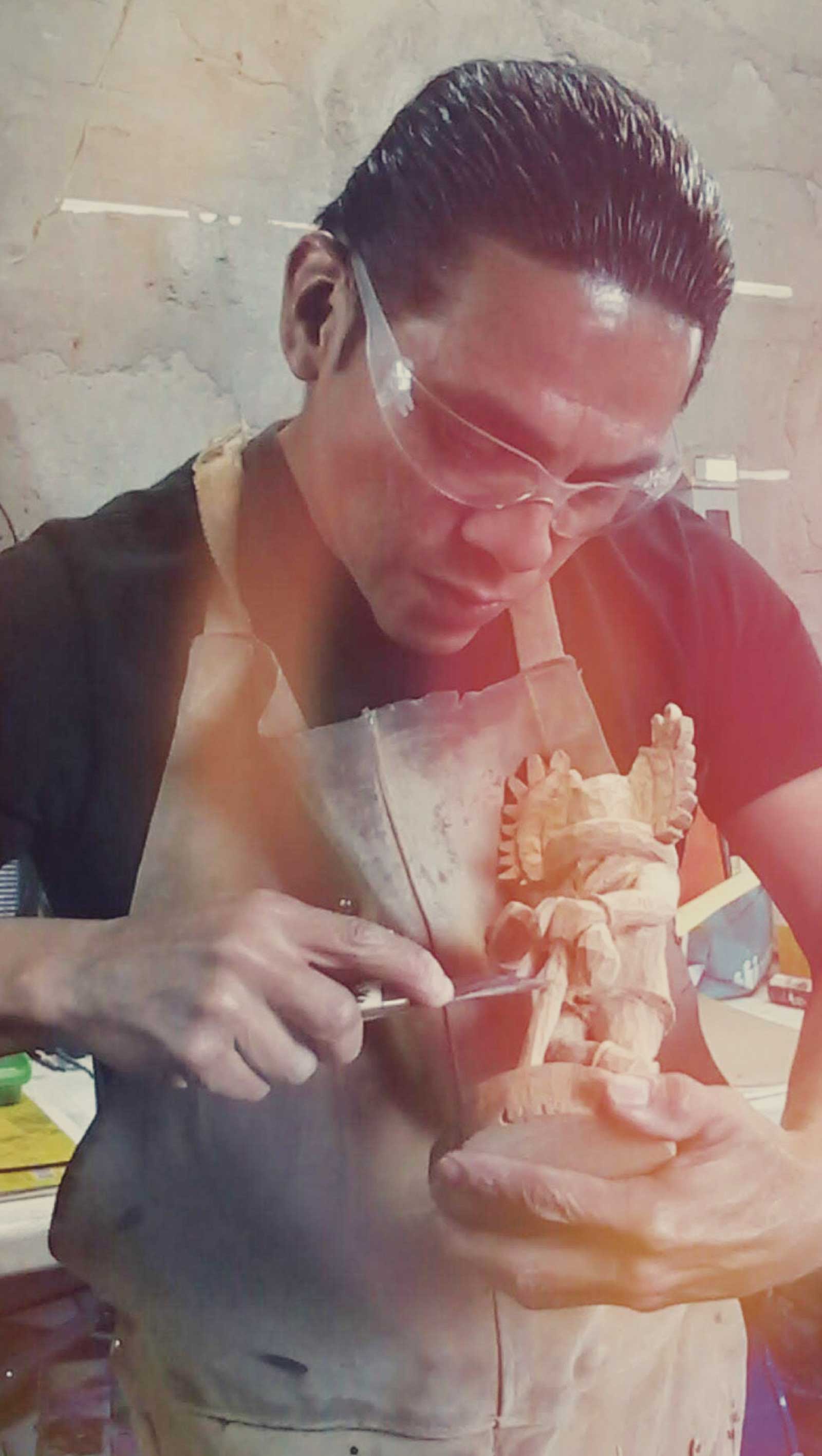 Alex Youvella Sr. is one of the few katsina carvers who embraces change and evolution in his work.
“I’m a farmer,” says Holmes. “I grow my own crops—melons, beans, watermelons, Hopi melons—and I work in the field every day. You need the connection to the earth itself too to do this work. We use the root of the cottonwood tree to carve and this comes from the ground as well. This is part of our culture and it’s very important for me. I want to feed my family but also my surrounding family, a grandma here and there, an auntie, relatives on different Mesas. It’s about providing for others.”
Holmes and his father are both part of the carving movement that Walsh terms the “great wave of ultrarealistic and sculptural carvers” which began in the early 1960s. With these artists, “micro-detailing became the norm,” writes Walsh. “Individual vanes of feathers and strands of hair were incised with wood-burning tools, X-Acto knives, and power rotary tools. Such devices were necessary to successfully execute fine detailing. During this wave of innovation, some of these Hopi artists were arguably among the best wood-carvers in the world and still are...”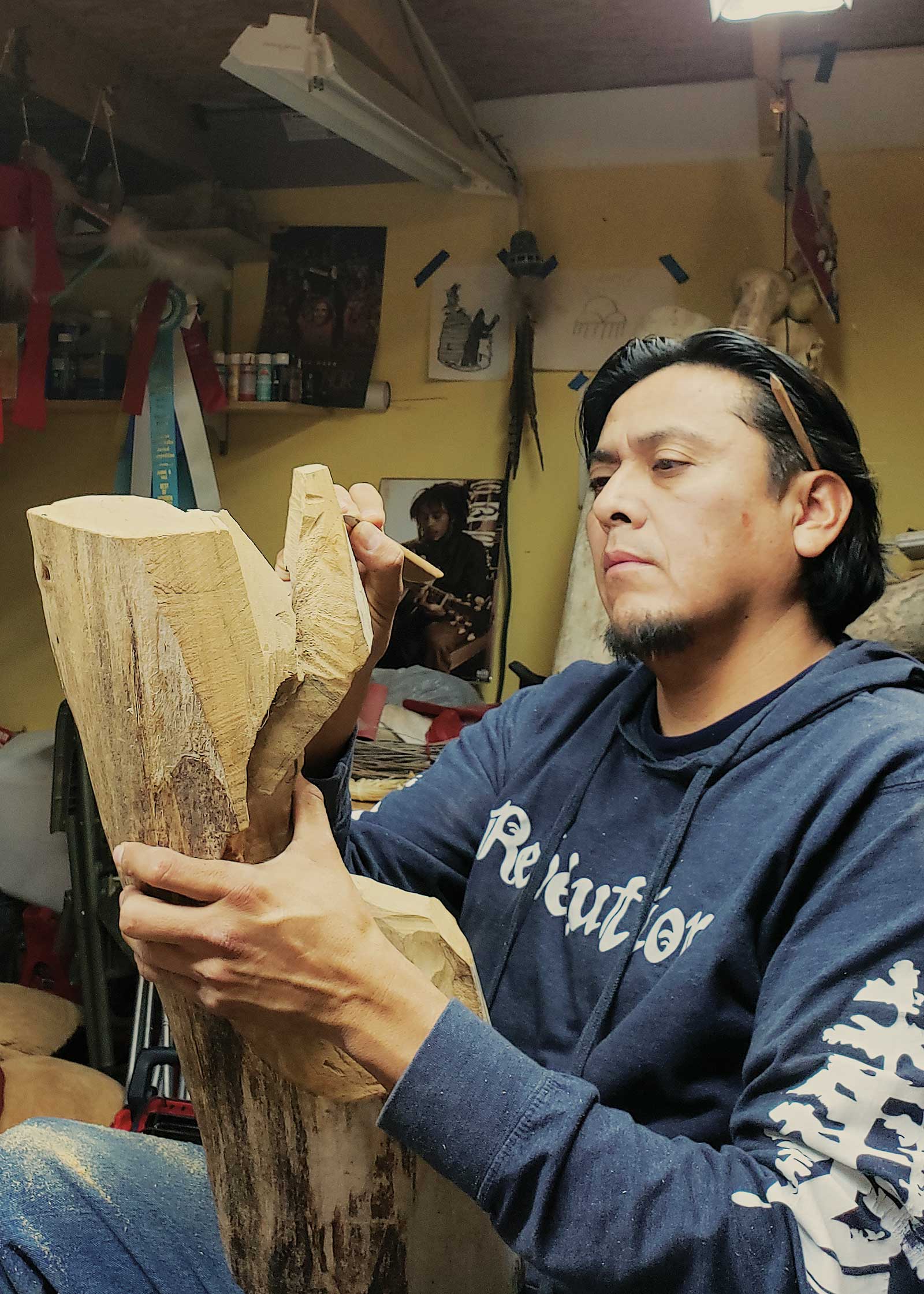 Mark Taho carves the root of the cottonwood tree.
The Hopi Reservation extends over 1.5 million acres in northeastern Arizona. Its heart and soul is the 12 villages located on Three Mesas east of Tuba City. About 6,000 people call the reservation home. So silence and solitude rules the day. It is even more present in the studios of these artists, most of whom work early in the morning or in the late hours of the night to accommodate for the usual work and family duties during the day.
“I tend to work early in the morning,” says Holmes. “I get up at 3 a.m. with fresh energy and a clean mind. The world is quiet so I go outside and think before I start. Then I go inside and start my work. I work until 10 a.m. and then go work in the fields. That is part of my culture and is important to me. But from this quiet I am able to create my work.”
Chimerica lives in Hotevilla and was inspired by his two grandfathers. However, they only made work for cultural use only and never sold their dolls.
According to Walsh, Chimerica is a traditional style carver. “He always starts with a douma (white clay) undercoat, and uses natural pigments exclusively, noting that when needed he goes over a color two or three times to achieve the shade he wants. Darance shared that he obtains his blue pigments from Colorado, red from New Mexico, purples and black from Ganado, yellow from near Kykotsmovi, and green from a nearby Hopi wash. He says that when traveling he is always on the lookout for interesting stones, colors and minerals.”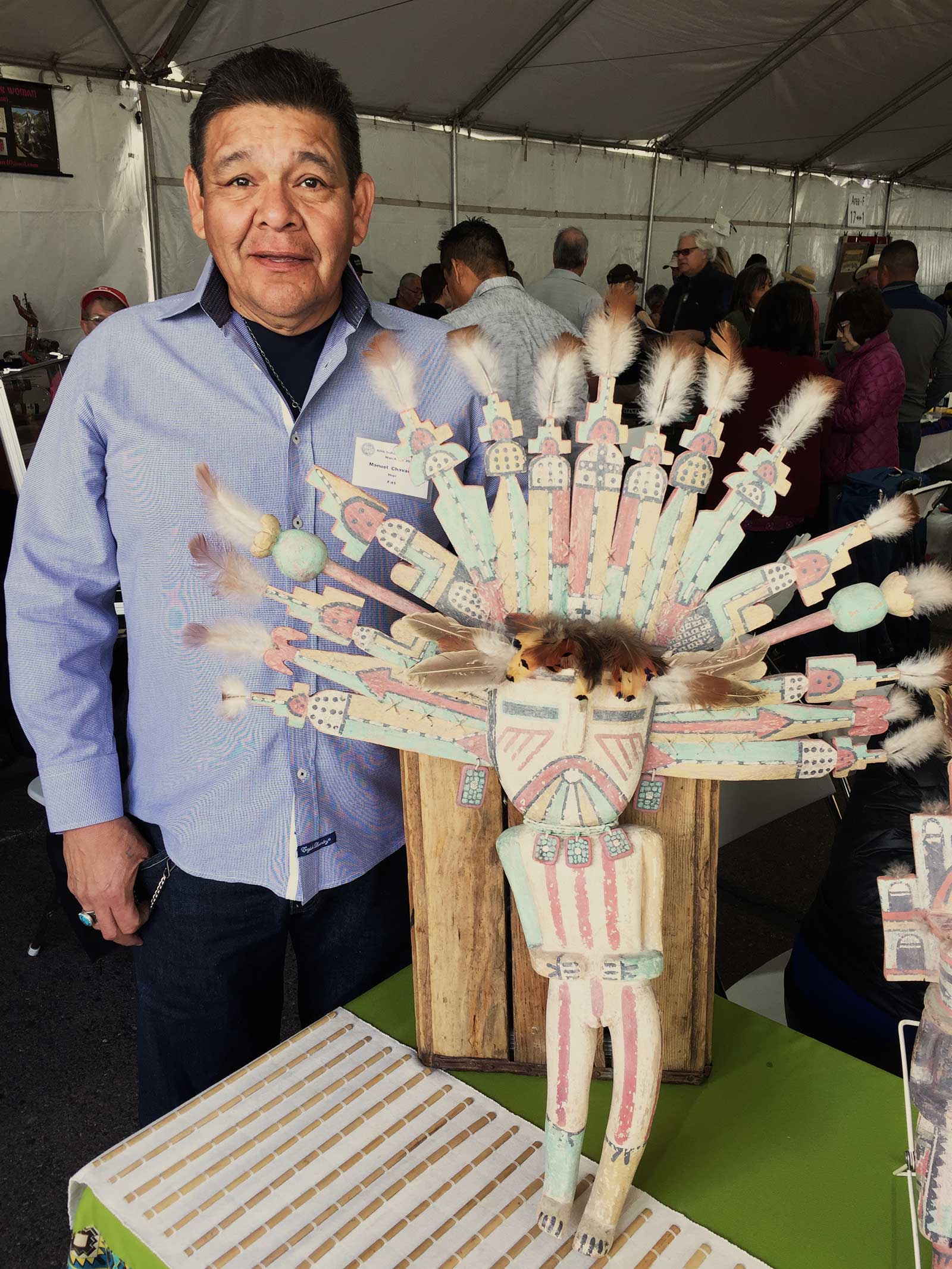 Award winning carver Manuel Chavarria last year at the Heard Show.
For Chimerica, though, it’s important that his carvings be seen as a way to explain to the people of the world who the Hopi people are and what they stand for.
“Some people think all Natives are the same, that we are all one thing,” says Chimerica. “But Hopi is an ancient culture. We are an agricultural people. We are not trying to make war or anything like that. We are a humble people and carving to me is important so we can carry our traditions as long as we can. I’ve lived on Hopi my whole life, I’m active in the Hopi culture and this is an important thing for me. People who carve should be active in their culture, they should know what they are making and they should represent what they are making.”
Although Kayquaptewa is 41 years old, he has already been carving for 27 years. He, too, learned to carve from watching his brothers and his cousins and he distinctly remembers them getting together for long carving sessions and he would watch from afar. He also lives in Hotevilla, where he takes part in religious ceremonies so important to the Hopi
way of life.
Kayquaptewa started carving when he was 15, although his career really picked up when his daughter was born and he started participating in more markets and shows. His more recent offerings include an attempt to bring motion to his pieces, to do more than depicting them standing straight. He wants them to feel as if they are about to walk.
Currently, he is finishing one of his favorites to bring to market. It is a germination katsina, noted mainly for its horns that imitate a seed opening.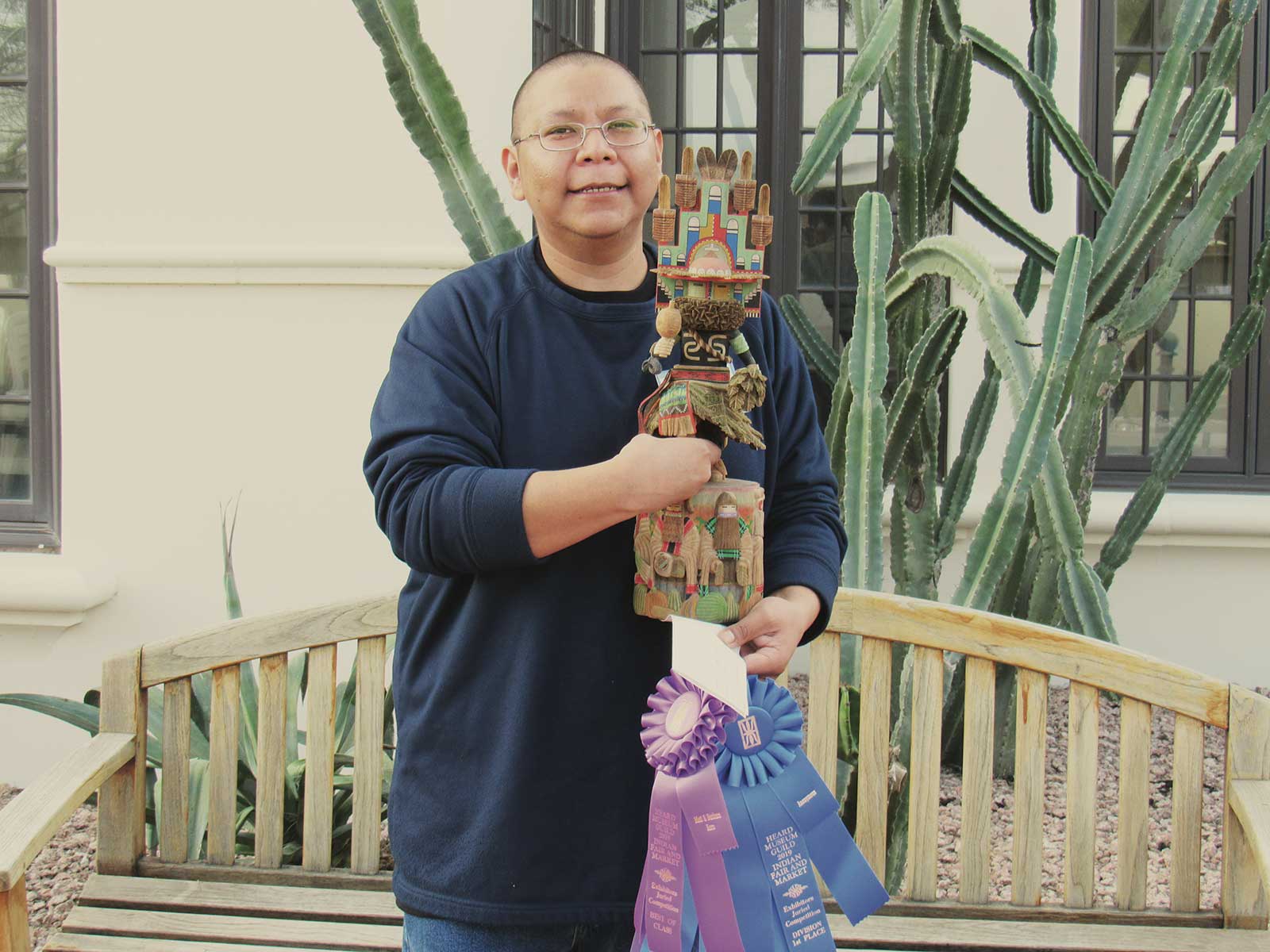 Donald Sockyma won Best of Class for his katsina carving last year at the Heard show.
“The basic meanings behind these katsinas have been there before I was born, way before,” says Kayquaptewa. “But sometimes, I might make little adjustments. Maybe the pattern of a sash or a pose.”
Like the other carvers, though, it goes back to the cottonwood root, the desire for moisture, the ability of that single tree to find water.
“When I’m carving, I’m thinking that I hope this helps bring all the moisture back home,” says Kayquaptewa. “We use that moisture to plant fields, to have good prosperous crops and food. And that benefits everyone.”
When Youvella started to make katsinas, he didn’t look to his past carvers for inspiration. Rather, he researched renaissance and baroque sculpture. His desire was to create fine art pieces that had wonderful details and close attention to the human anatomy and body language.
“But then that style died out a little,” says Youvella. “In carving, eras come and go, and now the old style is coming back as well as relief carvings where you having vanishing points and depth. With those you want to make a piece look three-dimensional rather than a flat piece of wood.”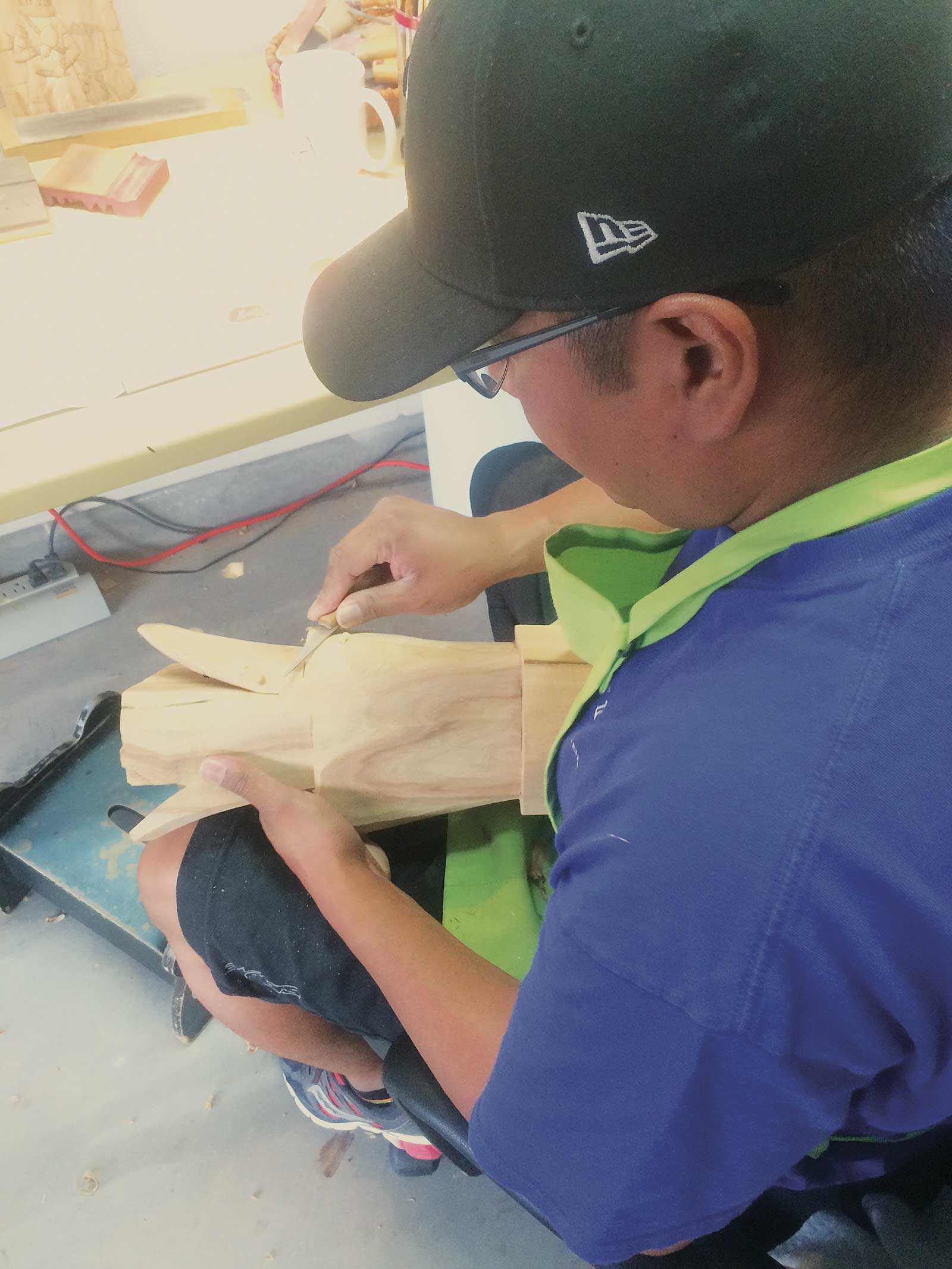 Mavasta Honyouti working in his old studio located just below First Mesa.
Youvella is led by the idea of innovation. In fact, in some of his recent pieces he has incorporated lighting. It was a fire god katsina and the flames at the base of the katsina actually lit up.
“I like to present new things to collectors,” says Youvella. “And it’s always exciting to see their reactions. There are traditionalists in everything that people do and those people don’t want to see things evolve. But everything in life changes and evolves. Religious ceremonies change, and of course art is always changing. So for me as an artist, I’m proud to be a part of that history of change and evolution. And if I can give a piece of myself to that medium, where I come from, it becomes greater than myself.”—
Powered by Froala Editor