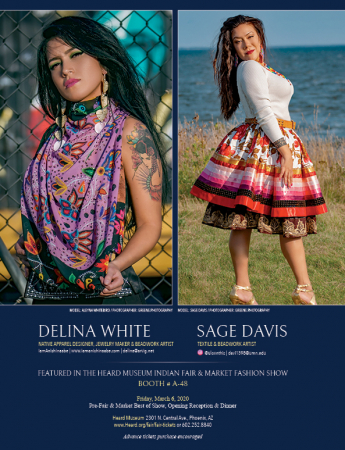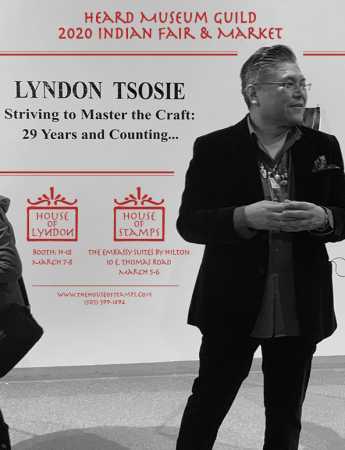
The Heard Museum Guild Indian Fair & Market is not only an annual event for those who admire and collect Native American art, it’s also a reunion. As one of a few major shows for Native American artists, with approximately 600 participating this year, it’s where they conduct business. It’s where they connect with others who understand their passions, their talents and how this all works together.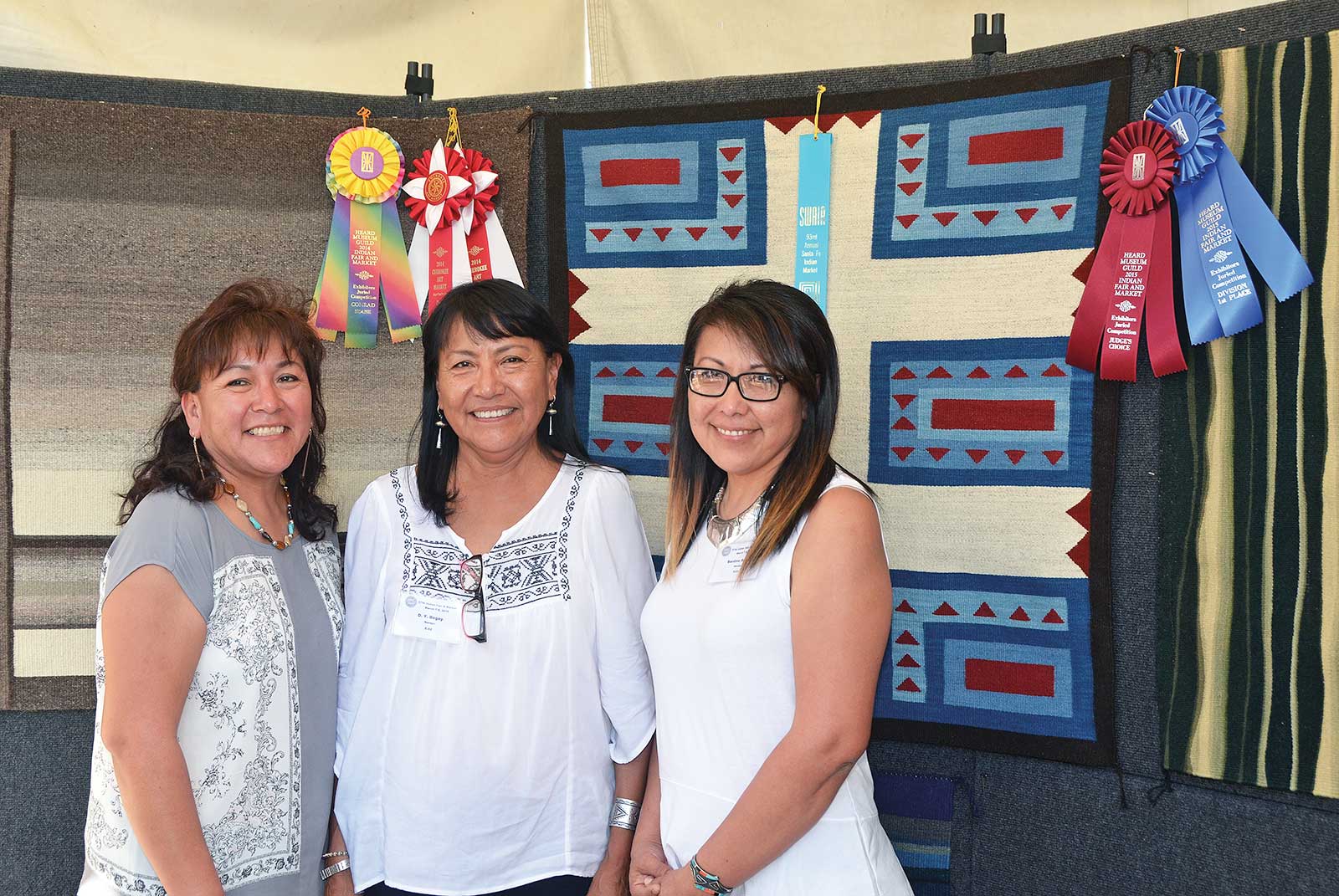 Navajo weavers, and sisters, Berdina Y. Charley, D.Y. Begay and Berdine Begay. Courtesy Heard Museum.
For some artists, like jeweler Victor Beck Sr., who has participated in the Heard for decades, it’s about seeing old friends. He says, “It is like a reunion, a lot of artists I don’t get to see for a whole year.”
For his daughter, Nanibaa Beck, coming with her parents is one of her fondest childhood memories.
“I grew up running around...playing hide and seek, going to my friends, other relatives, asking if their kids could play,” she recalls
No matter what their crafts are, they share the bonds of this larger “family” of Native American artists, many growing up surrounded by talent and skills passed down through generations: parent to child, sister to sister, brother to brother. These many smaller family units consider the Heard part of their annual family traditions.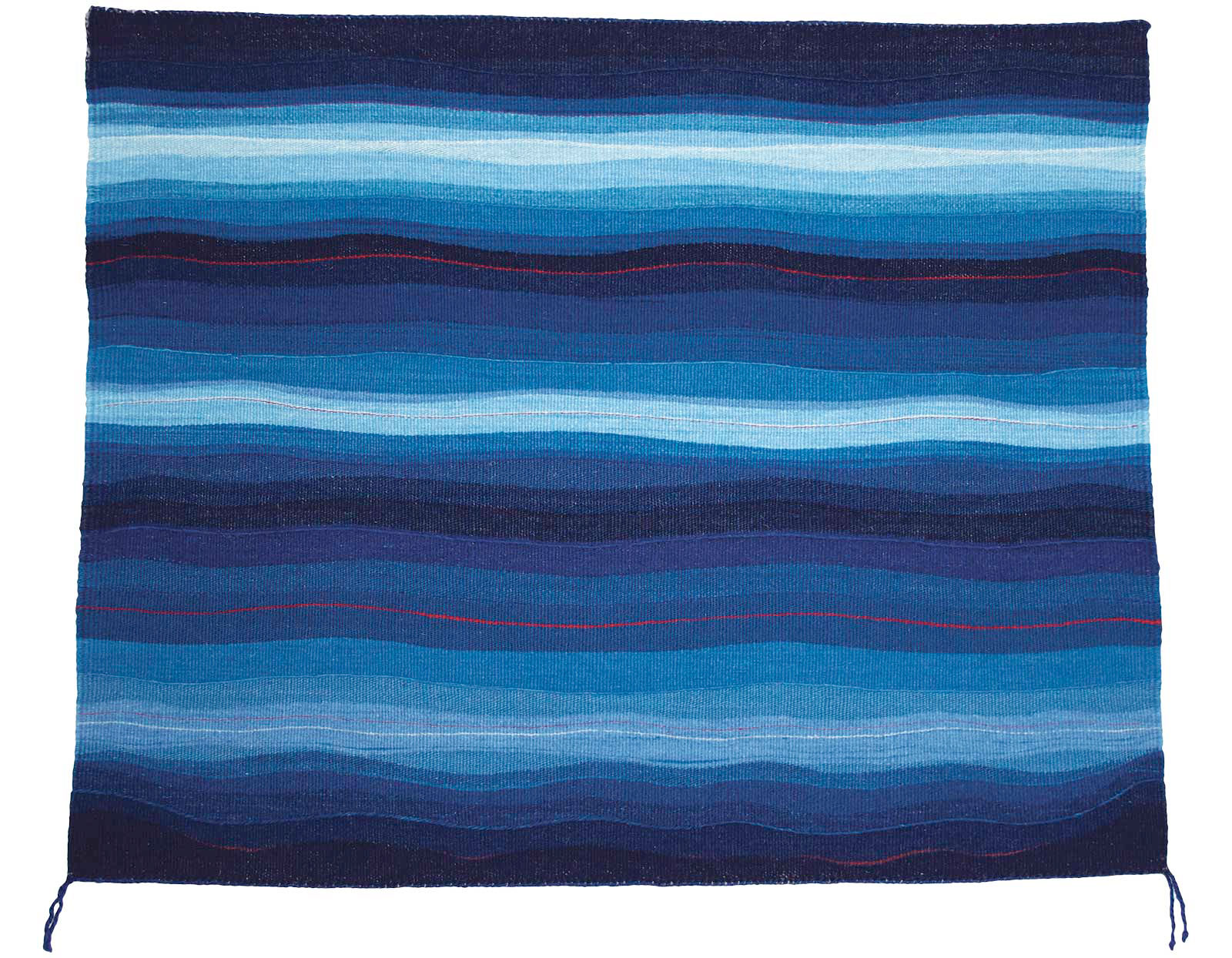 D.Y. Begay (Navajo), Trails of Ingigo.
The first time Randy Kemp entered anything in a Heard competition, he wasn’t even present for it. While he was going to school in Oklahoma, he would send entries to student art shows in Arizona. “I had never even been there, and would get honorable mentions,” he recalls. “When I finally moved to Arizona and was going to Arizona State University, I entered again as a college student, and won Best of Show in my category.”
That was the first of many awards and accolades this multi-media artist would receive. He likes to say he was home schooled in art without the tuition, because of his enhancing landscape murals his brother drew on a patio wall at their East Los Angeles home. He eventually found his way to Bacone College in Muskogee, Oklahoma, and ASU, where he earned his bachelor’s in fine arts.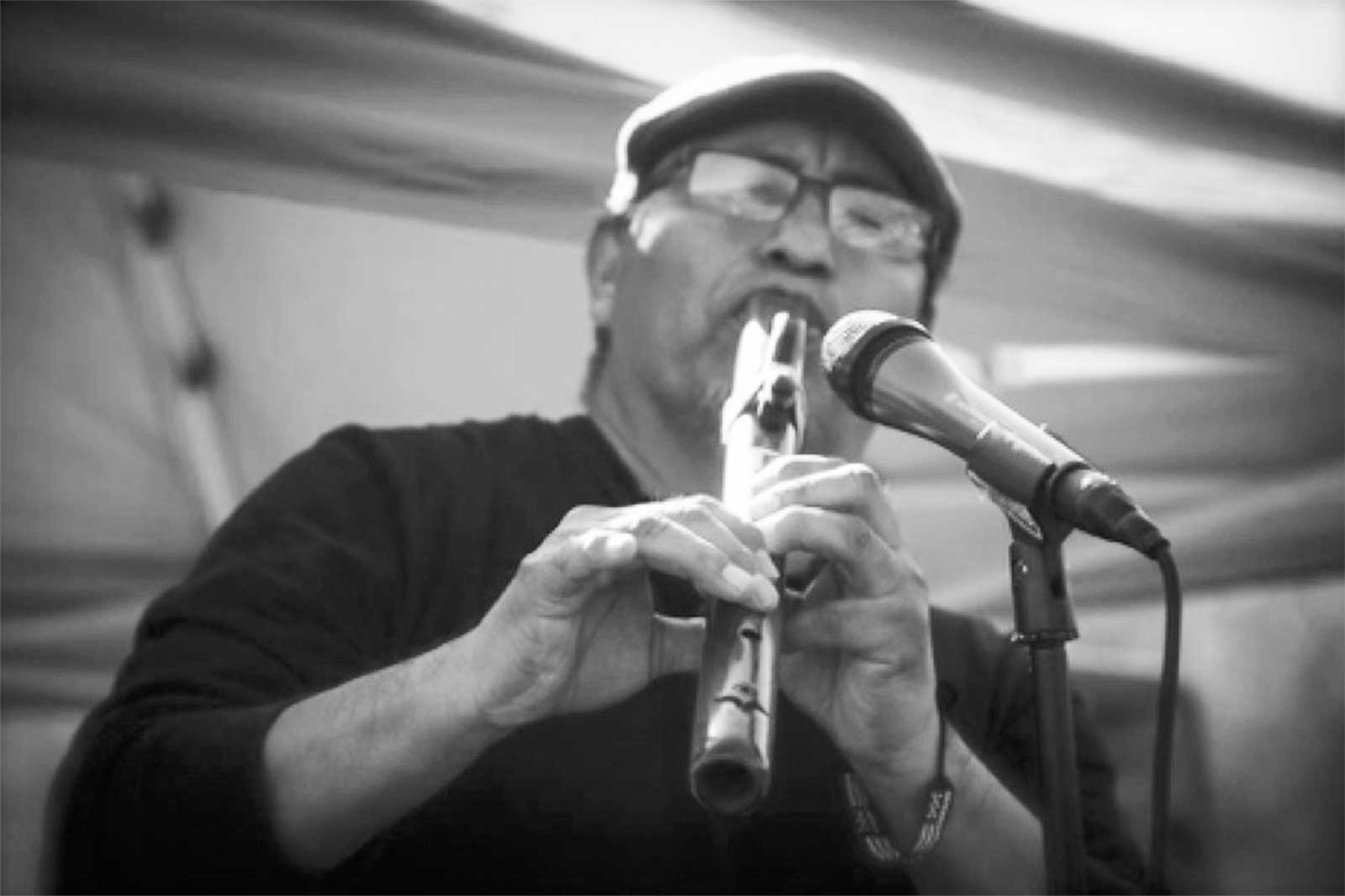 Randy Kemp (Muscogee (Creek)/Choctaw Nation) playing the flute.
“I was really, really fortunate because I was going to school at Arizona State University,” he says. “I graduated and got picked up by the university after I graduated to be a painter. Not an ‘artist’ kind of painter, but a wall painter. That helped me a lot, because at that time, I just had Rykelle as a baby, so I needed insurance; I needed full-time support.”
Randy worked at ASU as an environmental graphic designer senior for 30 years, but his artist friends didn’t realize he had a full-time job. And, yet, that support allowed him to expand his horizons as a painter, printmaker, musician, actor and playwright, and the list goes on. When asked how he could hold a full-time job while being a full-time artist, the answer was simple: “You find time for it. Those are the things you love, so you find a way.”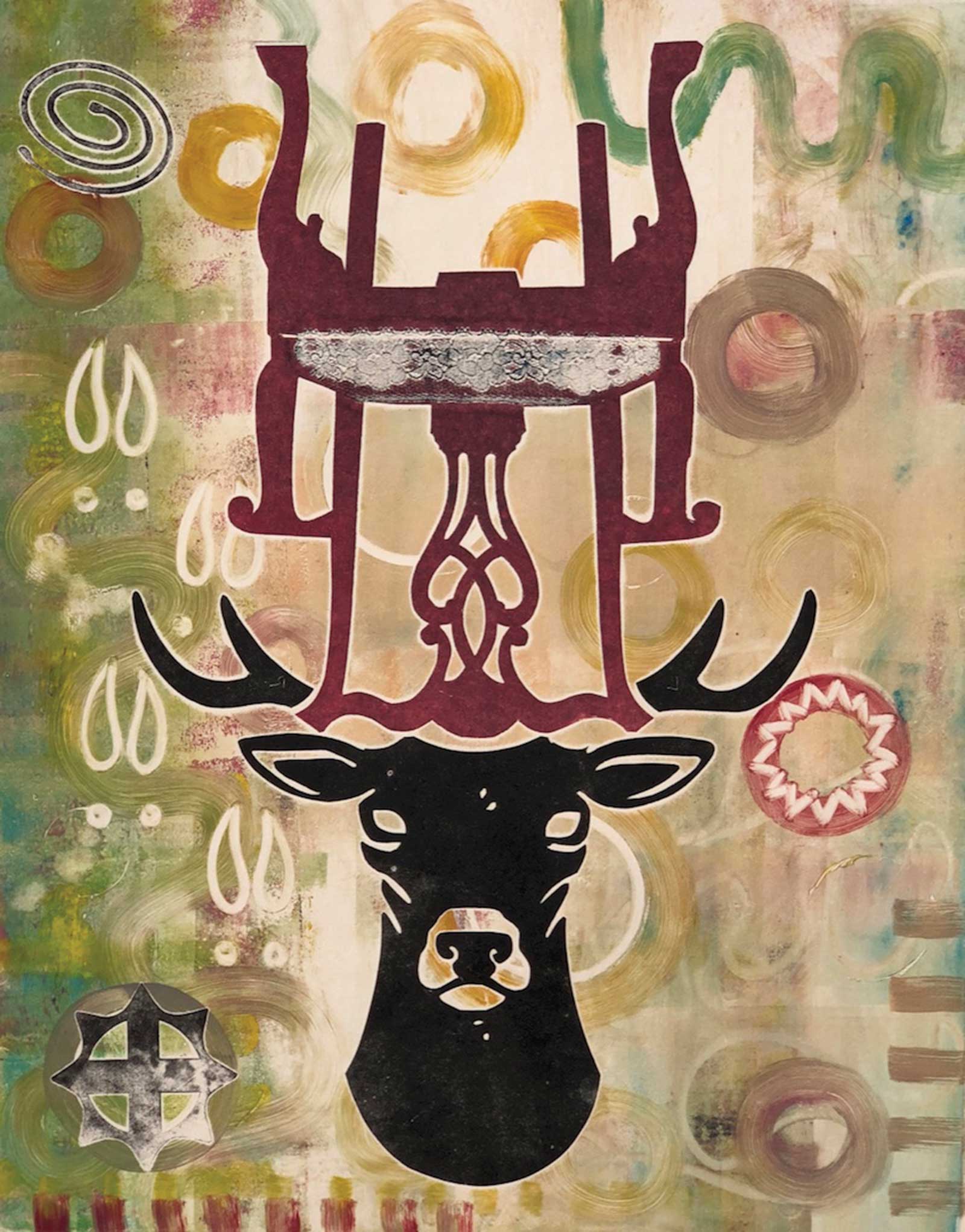 Randy Kemp (Muscogee (Creek)/Choctaw Nation), Chairman Deer, 19½ x 15½”
The Heard has always been a second home to Randy and his multi-layered talent. The same goes for his daughter, Rykelle Kemp, who was a toddler when she went there with Randy and his wife, and quickly figured out what was going on. “It was about creating something, and if someone wanted it, then you could have it for purchase,” he says.
“I tore out pages from my coloring book, and I put 25 cents or 35 cents on the corner, and I put it on my little seat there,” Rykelle explains with a laugh.
“She would put rocks on top of her little drawings,” says her proud dad, “and stand there and act like she was an artist at the market as well. She’d actually sell things! It was just the idea, the concept of understanding that this child understood the idea of the market.”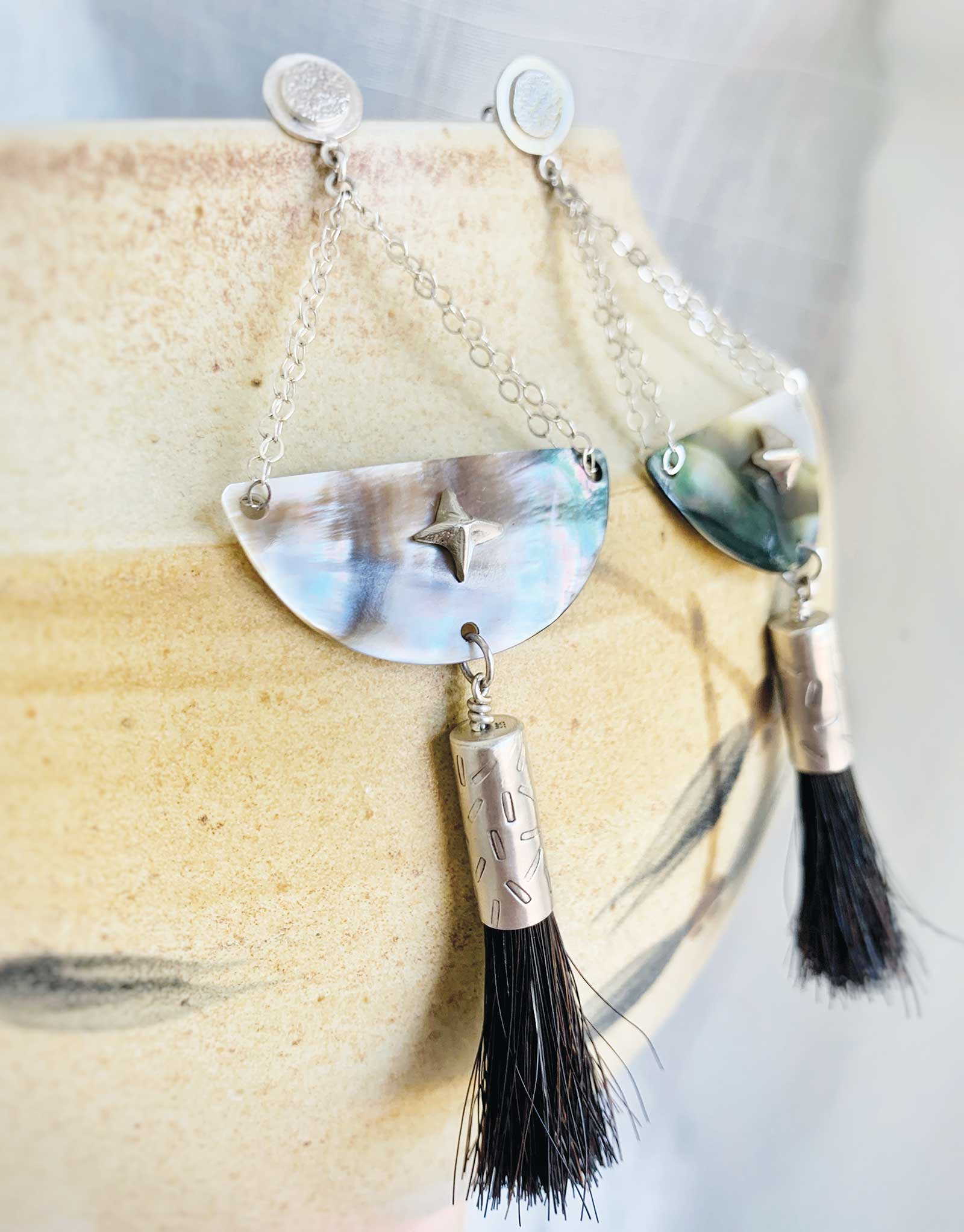 Earrings designed by Rykelle Kemp (Muscogee (Creek)/Choctaw Nation/Navajo).
Something else Rykelle learned from her dad was to not focus on one individual medium, but to become diverse with the arts while still enjoying them all. “And because of that,” Randy says, “you’re able to pull from each of the disciplines and utilize it towards the other. They’re interconnected…it’s like a cross-pollination of disciplines.”
“There’s so many different roads you can go,” Rykelle adds. “I think it’s a self-discovery thing, as an artist.
I always loved the idea of learning something new…I think that just helps your creativity flow out of you as well.”
Rykelle, who is now 35, started as a printmaker as well, and by her senior year in high school, she applied to the Heard Museum students’ show, and won several ribbons, including first place and best of category. She hasn’t missed a beat since then as she continues with printmaking and other endeavors, including jewelry making, which she is really excited about.
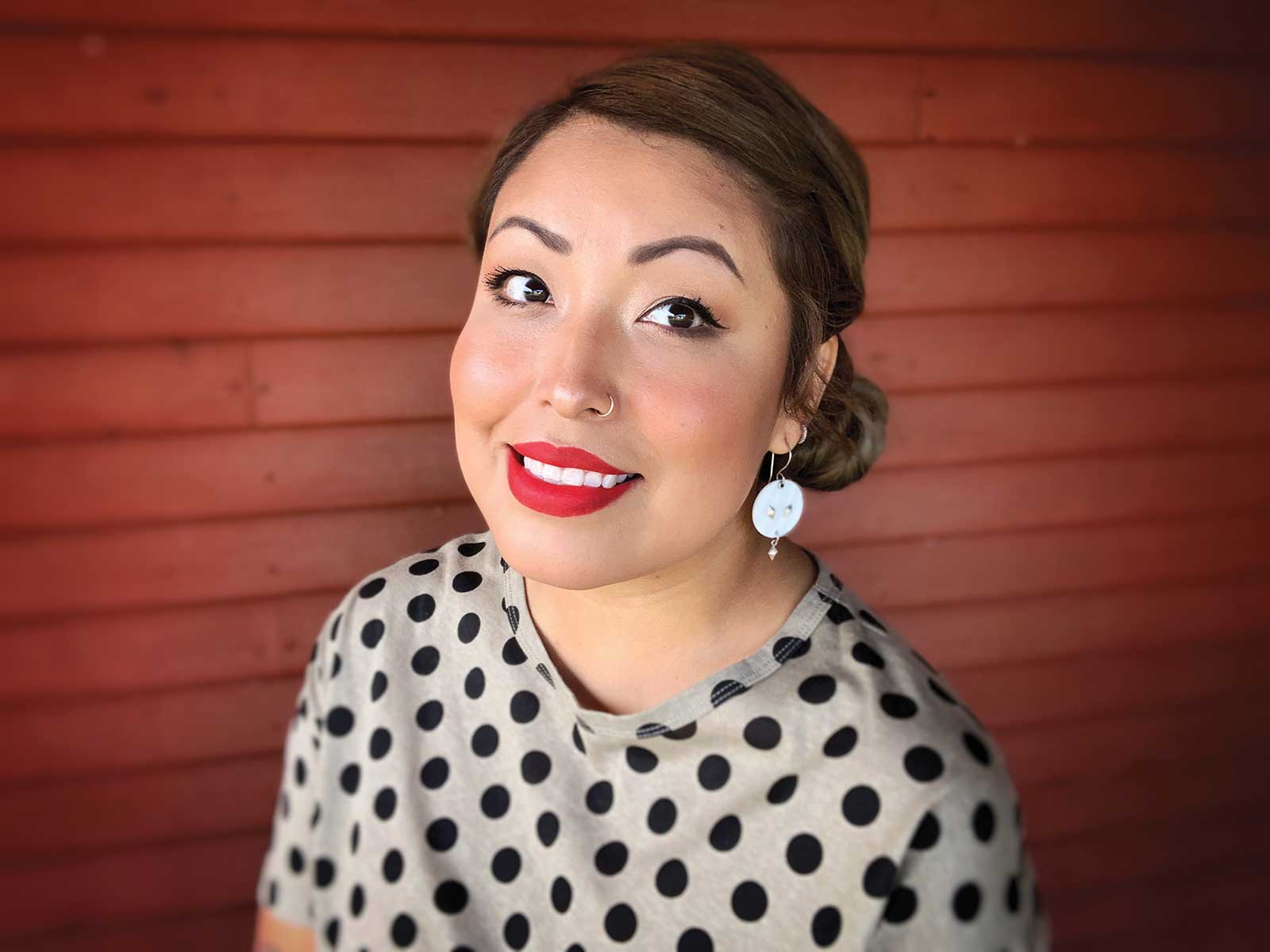 Rykelle Kemp (Muscogee (Creek)/Choctaw Nation/Navajo).
“She has really, really blazed a trail through that!” says Randy. “She’s really drawn some attention, she’s got great clients and other collaborative work with other artists that is just exciting to see!”
But at the Heard this year, Rykelle is leaning more toward entering some printmaking pieces for now, knowing she’s up against some stiff competition: her dad. “We both entered printmaking pieces [in 2018] and he won first place, and I won second place in the category,” says Rykelle. “It became a running joke after that, that his biggest competition was right in his own booth!”
Clearly, this father and daughter wouldn’t have it any other way.
For the Begay sisters—D.Y. Begay, Berdine Begay and Berdina Y. Charley—weaving is part of the tapestry of their own lives. They are the fourth generations of weavers in this Navajo family, but the first to take their pieces up to the next level and compete in shows like the Heard Museum Guild Indian Fair & Market. This thread of fiber arts has been running through them as far back as they can remember.
“We were exposed to weavers, so there were always weavers as long as I can remember,” says D.Y., the oldest of five daughters and the second oldest of nine children. “My mother and grandmother and great-grandmother basically wove for their own use, and also to trade to their local trading post for food or clothing or fabric or whatever.”
D.Y. was taking classes at Arizona State University, which included fiber courses. She said it fascinated and inspired her to return to the loom, explaining,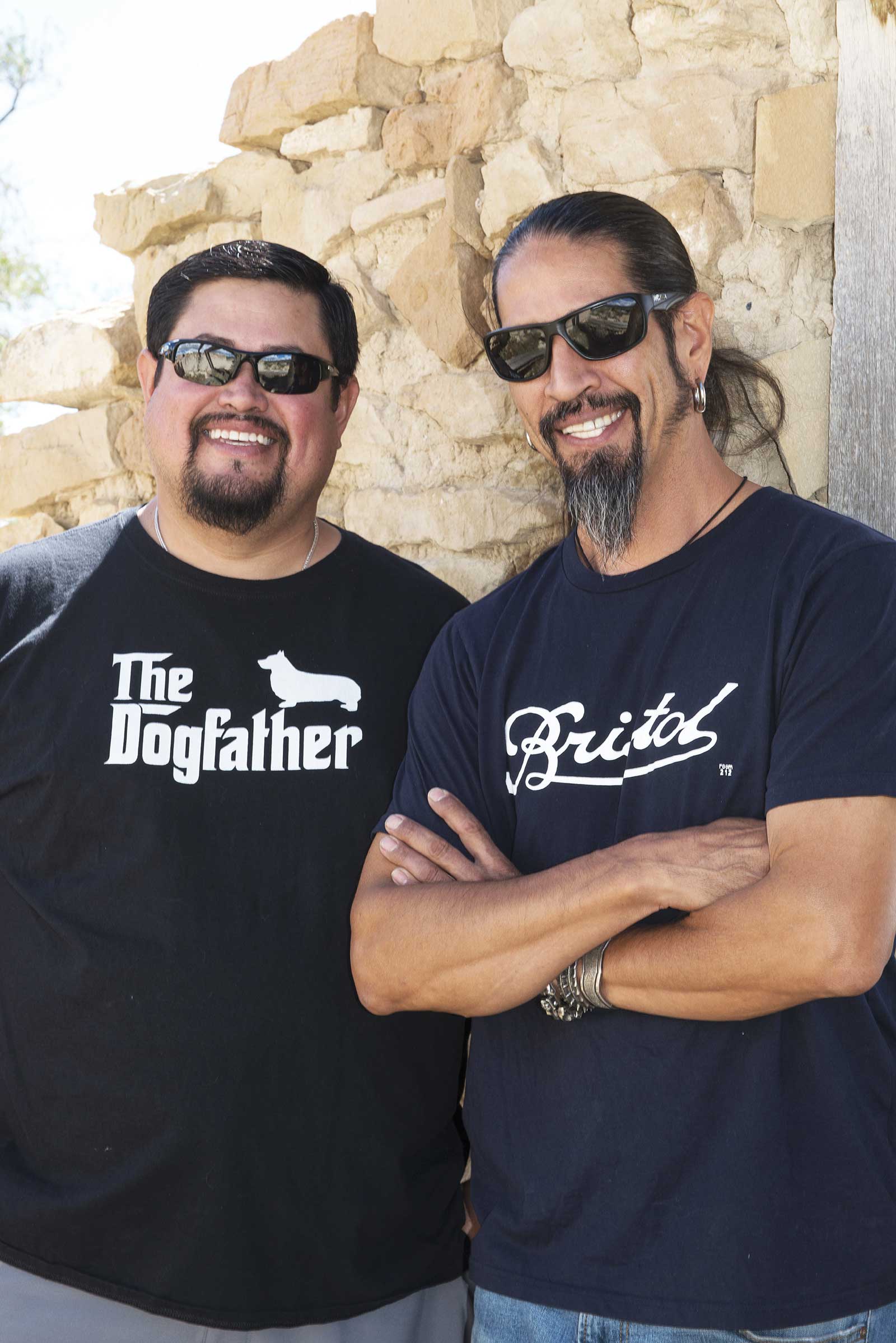 Brothers Chris and Pat Pruitt of Laguna Pueblo. Photo by Craig Smith, Heard Museum.
“I think starting in the 1980s I started weaving again, and after that I discovered this is what I really liked to do…creating with yarn and going back and learning more about my weaving tradition.”
This is also when D.Y.’s weaving took a dramatic turn. “I discovered for myself that I did not want to be confined to the regional styles many Navajo weavers weave,” she explains. “I have woven some of those, and honestly, I got bored. It was not as interesting or as exciting to me! Because [I have] an art background, in my mind were all different ideas in different directions.”
That sparked her stunning landscapes, with pieces more like paintings created by an artist than a weaver. Her work drew plenty of attention. More and more of her exceptional pieces were displayed in museums and appearing in shows like the Heard, where she started competing about 18 years ago.
Two others were taking notice as well—her twin sisters Berdine and Berdina, who are about 15 years younger than D.Y. While they also grew up surrounded by weavers on the Navajo reservation in Tselani, Arizona, it was D.Y.’s work that inspired, mentored and influenced them.
“She taught me a lot with the working, the spinning, pretty much the techniques of different kinds of weaving,” says Berdina, known as “Dina” in the family.
Berdine, who now lives in Oklahoma, agrees that it’s D.Y. who sparked their interest. “We picked up a lot…weaving techniques so we kind of built that all up,” she says. “She gave us [that] just to enhance our traditional weaving skills, with more and more about dying and weaving.”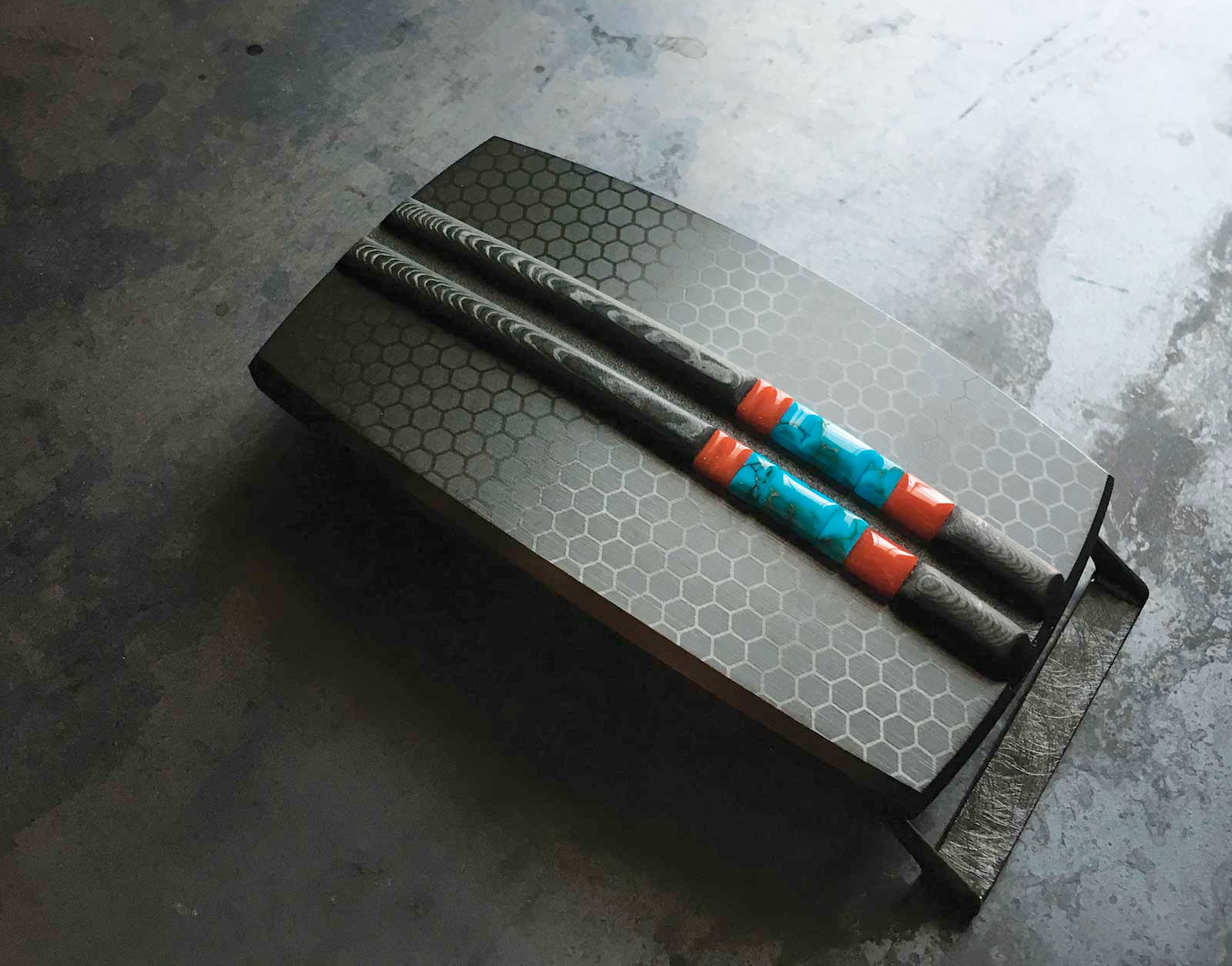 Pat Pruitt (Laguna) and Chris Pruitt (Laguna), Belt Buckle, 2019, zirconium, natural coral, natural Lone Mountain turquoise, uni-directional carbon fiber machined, laser engraved.
Dina still lives in Tselani and raises the family’s flock of Churro sheep, which provides wool that all three sisters weave into beautiful pieces of art. “We share the family of sheep,” says Berdine. “So we wash, [there’s] sorting, carding plus ironing, spinning and dying.”
The three sisters get together at two big shows every year: SWAIA in Santa Fe, and the Heard in Phoenix where they all share the same booth. At the shows, and their biannual sheep shearing, it’s a chance for these ladies to talk about threads, which unite them as family and as weavers.
“That’s the time we get to visit, talk about our work, what we’re doing,” says D.Y. “I do a lot of traveling and go to a lot of exhibits. I share what I’m learning and come across, because I see a lot of collections throughout museums all over the world…it’s a teaching tool for them, and the exposure to a show is good for them.”
And as D.Y. also pointed out, shows like the Heard mean business, as this is where they sell their pieces. “It is a business for me,” she says, “and I have to realize that
I can’t just be out there, enjoying the sunshine.”
For these three, it’s not a matter of competing against each other, but more like considering possibilities out there for the next weaving, the next show, and the next inspiration from their big sister who has brought them so far in this fiber art form.
“All the different designs she can do, I know I can do,” observes Dina, “I guess you can say she makes it look like it’s possible…and it is possible to do it.”
You won’t find the Pruitt brothers, Pat and Chris, sharing a booth at the Heard Museum Guild Indian Fair & Market, but there is so much these two do share, such as dedication to their craft plus holding high respect and admiration for each other.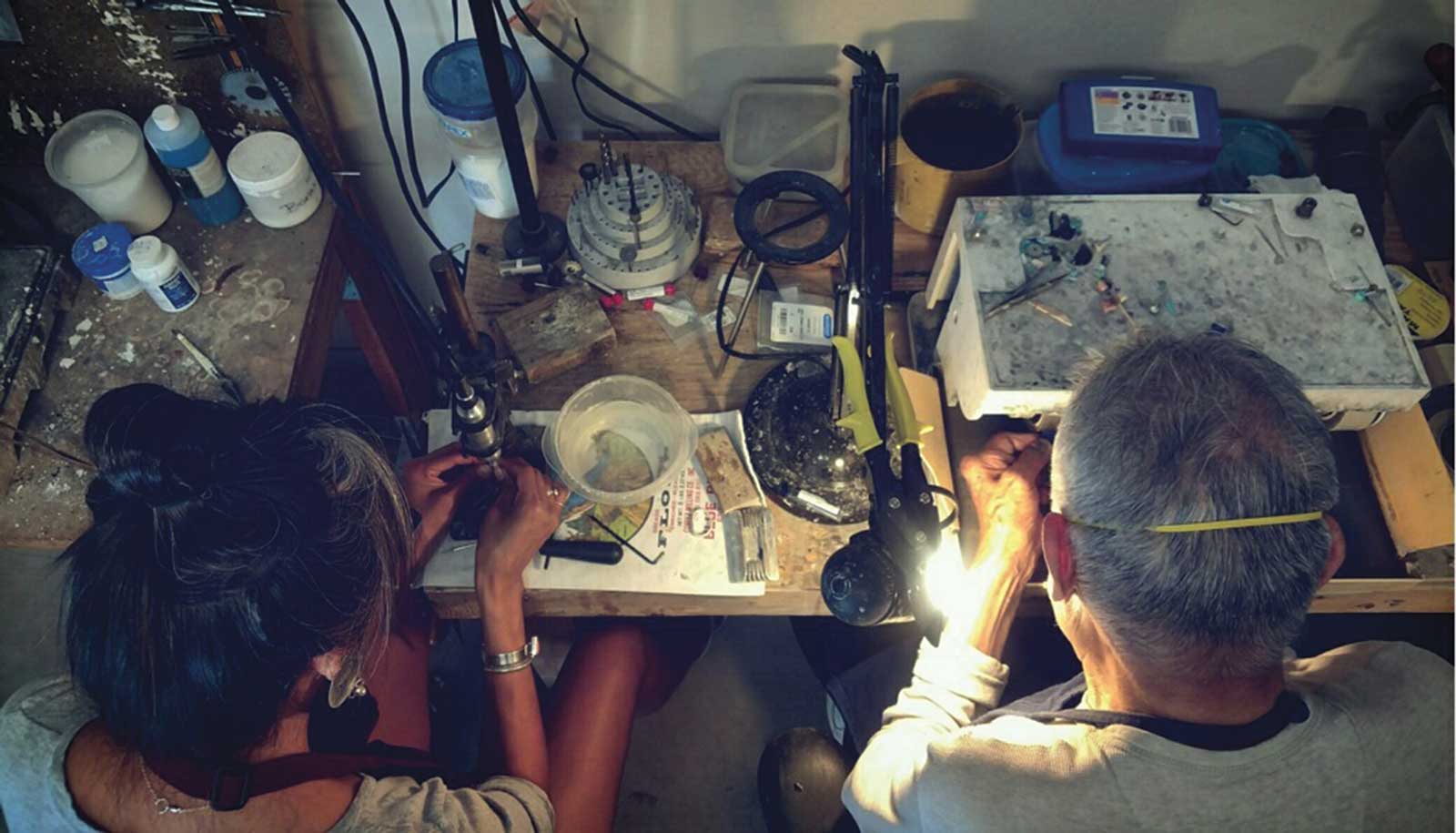 Navajo jewelers Nanibaa Beck and her father Victor Beck Sr. working in their studio. Photo by Jeff Slim.
Pat, at 47, is the older brother by eight years. He’s from the village of Paguate, New Mexico, on the Laguna Pueblo reservation. He’s a metalsmith, and for decades has created all types of jewelry, sculptures and more. “When I was 15 is when I started on my endeavors,” he says. “I didn’t really realize it was going to become my professional endeavor at the time.
“I was actually studying mechanical engineering, when I got into college,” he continues. “So the jewelry/metalsmithing has always been there…it’s part of what I’ve done and it’s just evolved…just a variety of acts in life, I guess is the best way to put it.”
The photos he posts on Instagram are of remarkable pieces out of stainless steel and other metals, some with laser engraving. The look is sleek, ultra-modern, with some pieces downright edgy but still just as amazing.
For several years Pat focused on jewelry used for body piercing, but has since moved back into more traditional adornment. He says, “Traditional in the sense of your adornment like cuffs, bracelets, rings but from a perspective of using a material that one uses, or no one has committed to.”
Chris, on the other hand, trained in culinary arts, and spent 10 years as a personal chef working with restaurants and other chefs considered to be in the top 10 in the country, as well as on a few Food & Wine functions. He was putting in 16-hour days until an accident took him out of the kitchen for a while, and he started thinking about other ways to make a living. “During that, Pat had shown me the basics of how to make things,” he says, “and from there I just started to build upon it.”
“I taught him how I learned,” Pat explains, “because I was very fortunate to be taught by people who knew their craft extremely well, and as they taught me they went all the way back to the basic fundamentals.”
“One of the things he always instilled was clean, clean work,” Chris reflects on his early training with his brother. “Clean up anything you make, no matter how big or little it is, and take pride in those little things. People will eventually notice.”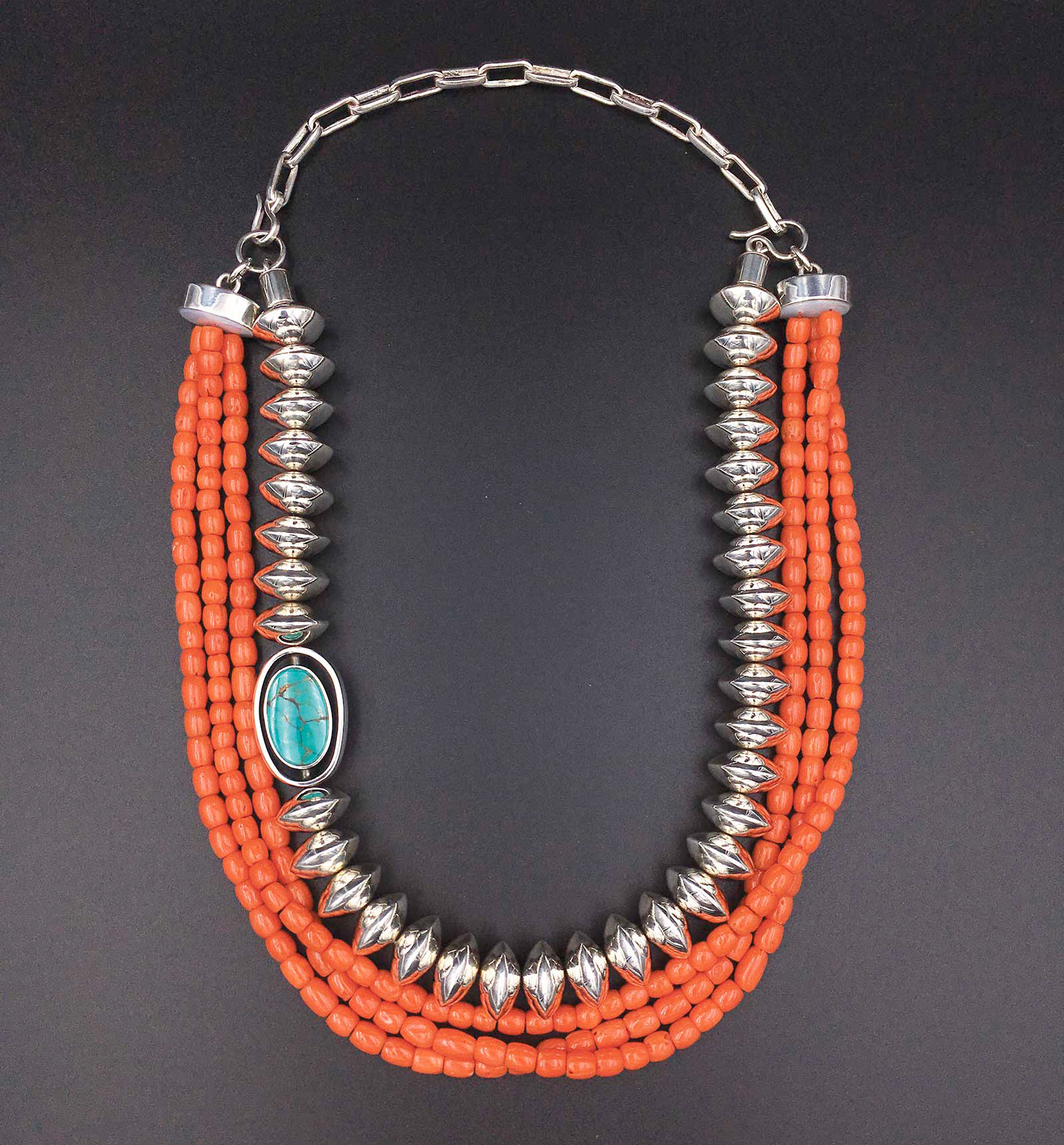 Nanibaa Beck (Navajo), Eleanor necklace.
And people did notice, such as family and friends including jeweler Charlie Bird in their village of Paguate. Pat worked with Charlie early on, and now it was Chris’ turn, as Charlie introduced him to working with stones. Chris saw how Bird worked with a version of inlay called mosaic, and soon he started cutting stones and found his own niche, just as Pat had. And you could not find a prouder big brother than Pat.
“That’s where his talent has really shown!” Pat says. “He’s really, really good at working with stone. His eye for color, details and precision just blew me away!”
Chris, who says his own style is contemporary, says it was Pat’s mentoring that helped shape his own way of crafting his work. “With his influence, it’s thinking out of the box,” he shares. “With some of his stuff, you can really grasp that thought process that he had on creating it.”
Collaboration between these brothers was a natural move with stunning results. As Pat is first to point out, lapidary is just not his thing. “I don’t work with stone,” he says. “That’s not my strong point. My strong point is metal.
“But,” he continues, “when we started doing collaborative work, it just seemed to be like that perfect brother fit. That one’s strong point is doing the metal work, the other’s strong point is the inlay and stonework…and it was just a perfect match.”
The pieces these brothers work on together have done well, with a few awards and some commissions. They do limit the number of collaborative works, however. According to Chris, “We don’t do hundreds of them. We really want to control what’s out there.”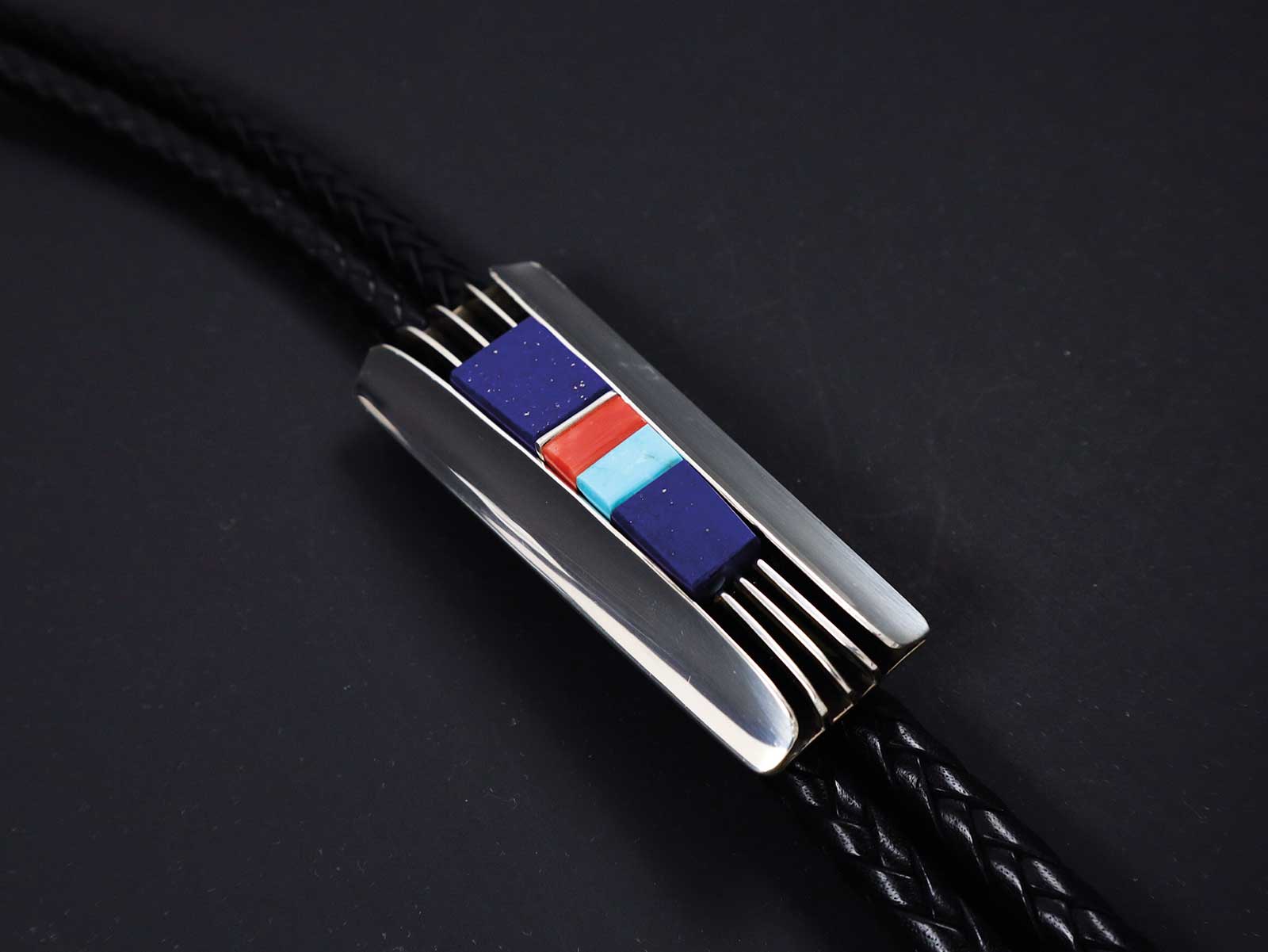 Victor Beck Sr. (Navajo), Turquoise Santa Fe bolo.
Chris also says it’s fun to go to shows together, which they have done before but not in the same space. “We’ve never really had to share a booth all the time,” he says. “We each hold our own, have our own spaces, respective spaces, but we all function within them.”
That feeling is the same for Pat. “He has his own space, I have my own space, because his design style [and] my design style are two entirely different styles.”
Contemporary jewelry can also be found at the booth occupied by Victor and his daughter Nanibaa, who both have their own styles. While one style is still evolving, the other became known more than 40 years ago and refuses to slow down.
Victor, of the Navajo Manygoat clan and was born for the Salt (Ashii) clan, remains true to his culture, his faith and his beliefs. The classic and yet simple, clean lines of his pieces have stood out for decades, and Victor is considered a master jeweler. And yet, it’s almost by accident this became his medium to create in.
He had gone back to school for a degree in fine arts with an emphasis on pottery making. As a requirement he needed to take a jewelry making course. His parents were collectors, so he was already familiar with it. But, in taking that course, he fell in love with jewelry making, as this medium of art spoke to him.
“It definitely did,” he says. “It was a natural for me…
I kind of knew just what to do with it…I’ve seen a lot of bracelets, rings and necklaces and so on…and so
I thought, ‘If I was to do it, I’d do it this way.’”
As for his contemporary style, his inspiration came from a German jeweler in a college classroom in New Paltz, New York. “He was a little bit familiar with the way our Native jewelry,” he says, “how the jewelry was being made, with a lot of leaves, styled leaves and small drops, stuff decked out with that all around the stone.”
He continues, “But he told me, ‘Victor, do something that is very simple…something that will talk to you…that will catch your eye the second that you see it.’ And that’s how I got into it. I’m the only artist that does that style, the way I work my jewelry.”
As Native American jewelry was taking off in the late 1970s and early ’80s Victor was blazing his own path, collecting praise, awards, and customers who loved his classic, dramatic pieces often mixed with gold, turquoise and coral.
His wife, Eleanor, who later earned a degree in education, was assisting him. They also now had two little girls going with them to shows. You can hear the smile in Victor’s voice as he recalls when the toddlers traveled with them to these events. He says, “They used to sleep under or lay down under the table where we had a display of jewelry. Their mom would bring things for them to lie down on, so this is what they used to do.”
Nanibaa laughs at those memories as well, calling herself a “Booth Baby.” She adds, “The kids who attend shows with their parents or relatives and grow up being in that whole culture, understand at an early age what selling and marketing are, the culture of what they sell.”
As they grew older, Nanibaa and her sister would help their father prepare for shows. She was a teenager when she learned the basics, working as her father’s assistant, but resisted back then any thought of making a career of it. After high school, her path was college, anthropology and museums. Despite being a thesis away from earning her master’s degree, she returned to creating jewelry.
In 2015 Nanibaa shared a booth at the Heard with her father, mother and grandmother, joining them this time as an artist. “It means a lot to be showing alongside family, because they really understand and see the path and growth ahead,” she says.
Her mom had started making jewelry herself several years earlier, but sadly died in 2016. Nanibaa now has her own line of jewelry, with some of her designs compared to her mother’s. “The work I’m creating now reminds me a lot of my mom’s work,” she says. “That’s how she got into it, helping her mom, doing the design. Yes, she does have it,” says the proud dad. “I enjoy seeing her…just being who she is, my daughter. And a lot of the artists have come to her booth, and were amazed by how fast she was coming up.”
But as Nanibaa comes into her own, this doesn’t mean Victor is ready to retire even though he’s 78 years young. While he’s been showing at the Heard for decades he’s pretty adamant he’s not about to stop. “The bottom line what this business is, what any business is that you have to love it and enjoy it,” he explains. “That’s the whole thing. You have to love…and that’s what I’ve always told my children. If you want to get into business with me, you’ve got to love it and enjoy it. Otherwise it’s not going to work.”
Something all these families share, besides talent in their respective fields, is a love for what they do, and a love for sharing it with others, family especially. And it doesn’t matter of they are 78…or just a kid selling pages from a coloring book.
Randy echoes Victor’s thought: “I’m still learning. I’m still trying to figure out other mediums, and other ideals and processes. And I have artist friends just doing amazing things, like wow! ‘How did you…how does that work?’ That’s the fun part…that really is the fun part!” —
Powered by Froala Editor