One of the missions of the Heard Museum in Phoenix is to educate visitors on Native American cultures across the United States. During its annual Indian Fair & Market, more than 20 artists are invited to participate in the demonstrator area of the fair and share their artwork and traditions. Each artist sets up their booth with completed pieces that can be entered in the juried competition alongside in progress items they will work on throughout the weekend. This allows collectors to ask questions, see the work as it develops and make purchases.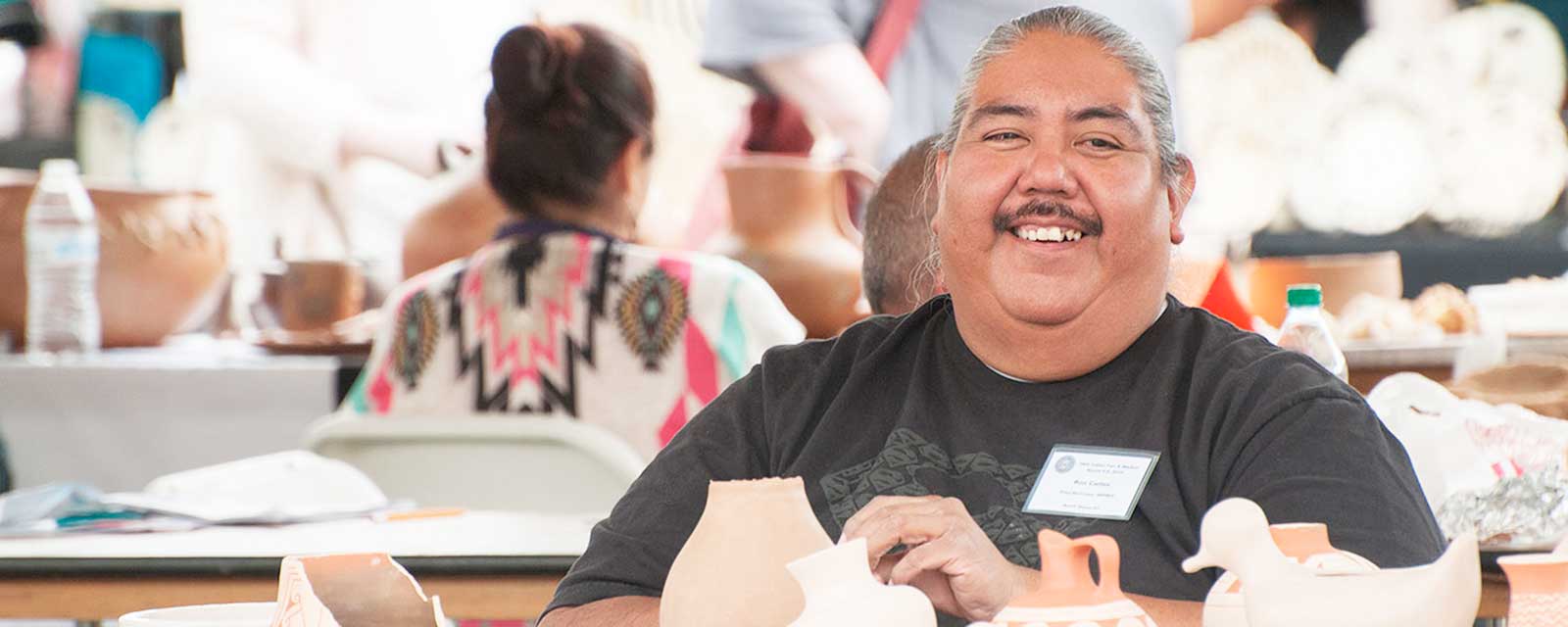 Potter Ron Carlos (Salt River Pima-Maricopa) uses the Hohokam “paddle and anvil” technique for his works.
“The demonstrators show how the works are made, how much time it takes and the materials they use,” says Carol Gunn, a member of the Heard Museum Guild who has curated this section of the fair for the past eight years. “Attendees can speak personally with the artists as well.”
Gunn invites a mix of artists to participate with the goal of highlighting multiple mediums and tribal affiliations. “Since I’ve been doing it, and always in the past, we try to have a variety of artists. There are Hopi carvers, jewelers, potters, weavers—it’s a wide variety,” she says. “We have Don Johnston, an Alaskan basket weaver who lives in Maine; being in the Southwest we have a lot of Navajos and Pueblo artists; and there will be a beader from upstate New York that’s coming.”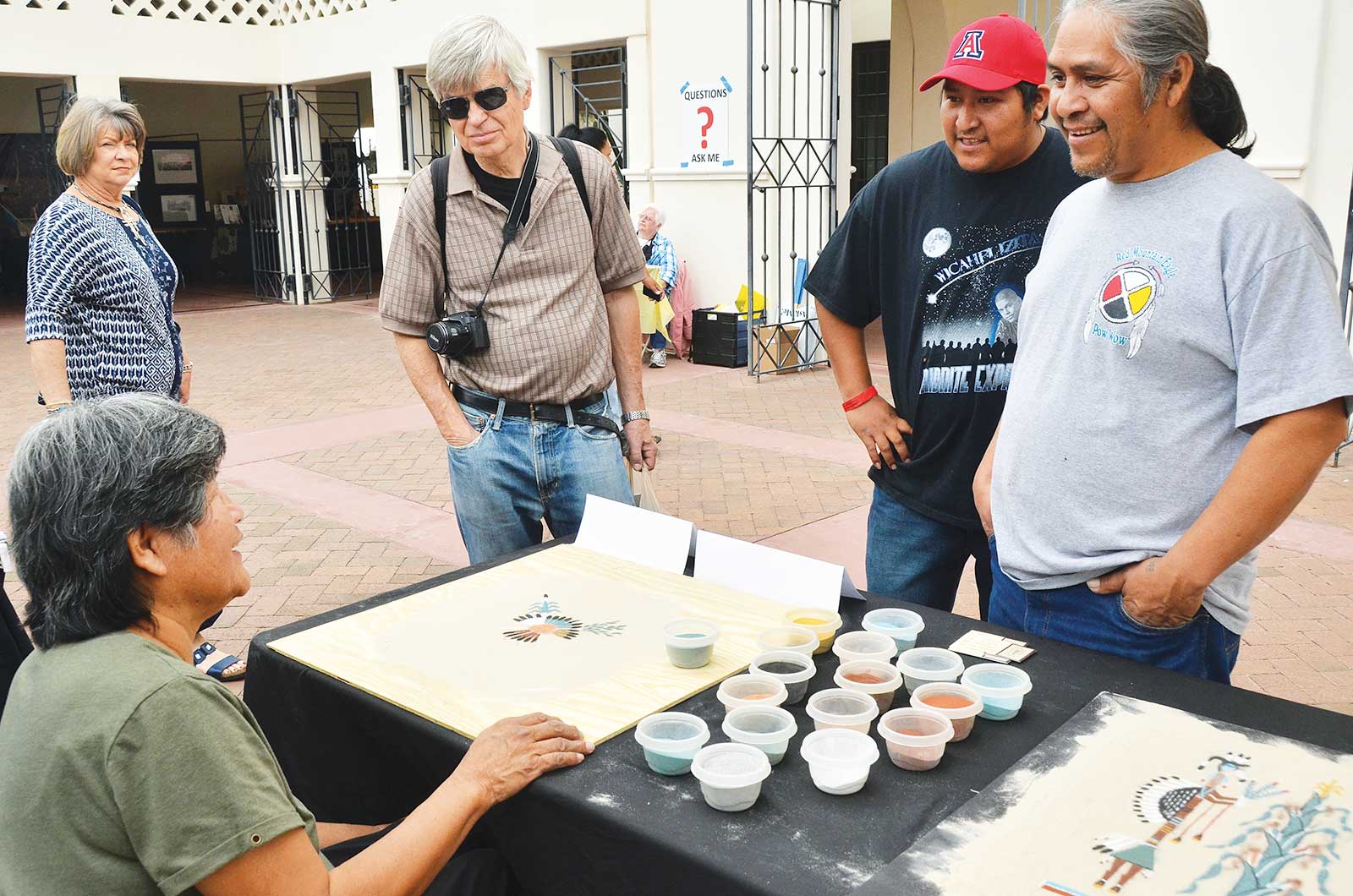 Navajo sand painter Rosie Yellowhair speaks during a past fair.
This year two artists who have won Best of Show at the fair will be participate, Johnston, who won in 2017, and textile artist Ephraim Anderson, whose rug received the prize last year. Along with those two, 20 other artists will exhibit in eight categories of artwork.
Two-Dimensional Art
In the two-dimensional category collectors can meet Laguna Pueblo artist Marla Allison, a contemporary painter who has been inspired by pottery designs and the art of past masters such as Pablo Picasso, M.C. Escher and Jean-Michel Basquiat. Navajo sand painter Rosie Yellowhair will also be on hand to teach how she harvest and grinds her own earth pigments for her works.
Yellowhair is eager to share her knowledge of sand painting, which is used in Diné ceremonies, as it is not an art form that many people recognize. “I tell everyone that comes to see me about where sand painting came from, how it is being used and the stories that goes with it,” she says.
“I show how I work with sand and the preparation before the actual painting.”
Her grandfather, uncles and father were all medicine men and were the ones to pass down the stories that she retells in her work. Yellowhair says that her pieces are considered story painting and she shares about that and compares it to the ceremonial painting. “I like telling the story and kind of enlightening people about sand painting,” adds the artist. “This keeps the memory alive and keeps me closer to family members who have gone to their final resting place.”
 Ryon Polequaptewa (Hopi) with his award-winning carvings.
Basketry
Johnston has been exhibiting at the Heard for three years—two of which have been demonstrating his techniques with baleen, a material similar to a human’s hair and fingernails that comes from a bowhead whale. At his booth he demonstrates “making the inside rods and shaves down threads to be able to weave these exquisite baleen baskets,” he says. “It is such a pleasure to talk to so many interested people, informing everyone that stops by the time and labor that goes into each one of these wonderful baskets.”
Also passing down their basket making traditions is Jennifer Sapiel Neptune, a Penobscot artist who makes Wabanaki baskets of softened wood cut from ash trees and sweetgrass collected in marshes. Neptune also taught herself to bead, which makes its way into her designs.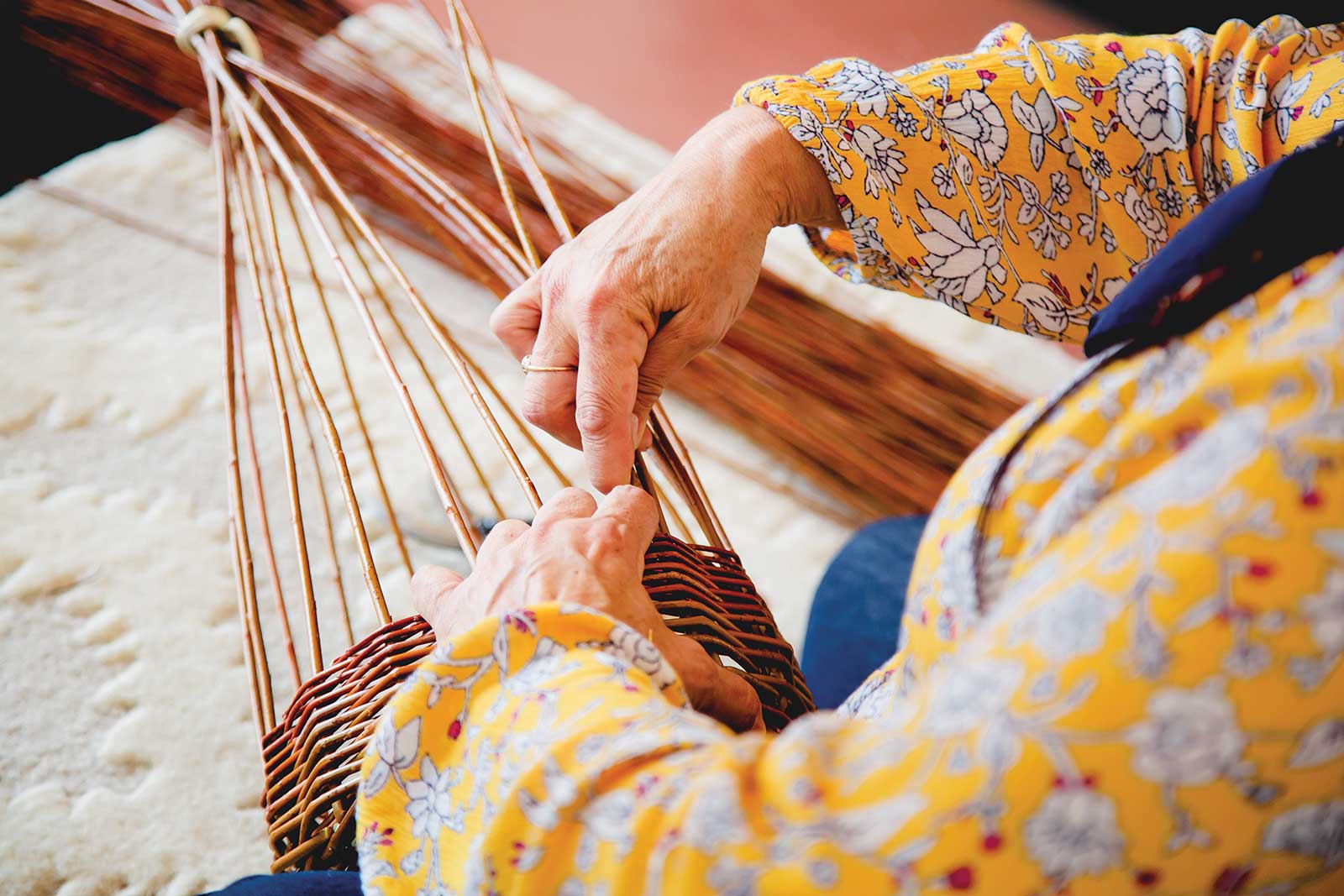 Jilli Oyenque (Ohkay Owingeh) weaving one of her Pueblo red willow baskets.
Jilli Oyenque (Ohkay Owingeh) is one of a handful of artists reviving the art form of Pueblo red willow basket making, while Royce Manuel (Akmierl Aw-Thum) has revived the Salt River Pima-Maricopa community’s kiaha, or burden basket. August Wood (Salt River Pima) focuses his baskets around traditional and historical Pima designs using willow, cattail and devil’s claw as his materials.
Terrol Dew Johnson (Tohono O’odham) of the Tohono O’oodham Community Action studied basketry with tribal elders before creating his own styles with unusual woods and fibers. He now collaborates on woven sculpture work with architects Aranda/Lasch.
Diverse Art Forms
There will be a handful of artists making up the diverse arts segment of the demonstrator area. Karen-Lyne Hill (Onondaga Nation/Iroquois) will present traditional Iroquois raised beadwork in both traditional and contemporary designs. Alex Maldonado (Pascua Yaqui Nation) carves masks used by Yaqui traditional dancers, flutes and drums in a variety of woods. The pieces are handcarved, painted and adorned with horse hair. Louis Valenzuela (Pascua Yaqui Nation), who attended the Chicago Art Institute, is another mask carver who will show off his designs.
A collective of three artists, Pee-Posh, will show a variety of items in the fair. Daisy Simms (Quechan) creates net-beaded collars; Yolanda Hart Stevens (Piipaash/Quechan) is a beadworker who studies Pee Posh ceramics and uses clay beads in her necklaces; and Tim Terry Jr. (Gila River Akimel O’odham) is a living master of the ancient shell etching technique of the Sonoran Desert peoples that uses cactus juice to etch designs in shell gorgets.
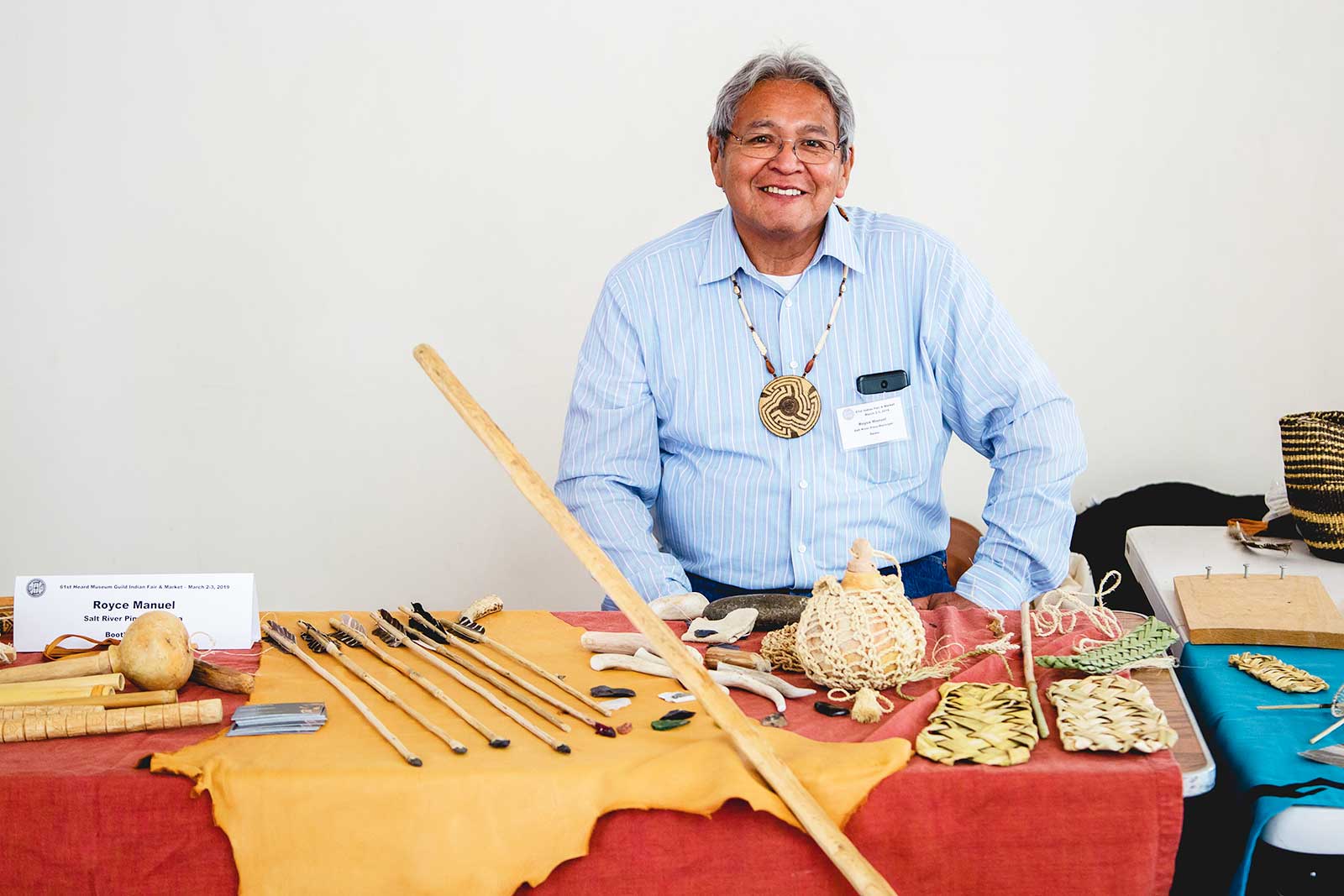 Royce Manuel (Akmierl Aw-Thum) weaves burden baskets from agave fibers.
Jewelry
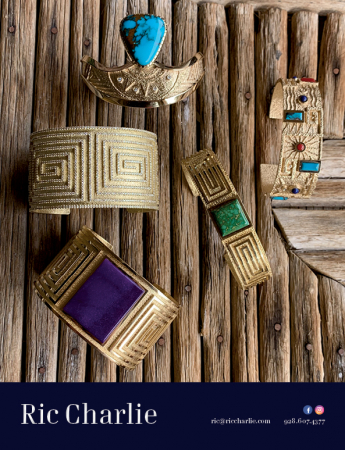
Two jewelers will be on hand in the demonstrator area showing how they create their complex artwork. Silversmith Norbert Peshlakai (Navajo) will show his signature stamp work, which is done from stamps that he makes from concrete nails in a variety of textures and overlays.
Charlene Sanchez Reano, of San Felipe Pueblo, is a mosaic inlay jeweler who specializes in two-sided necklaces that juxtapose natural materials such as seashells and turquoise with imported stones in a variety of colors. “We’ve been with the market for about 15 years,” says the artist. “People don’t realize how long the process is putting pieces together and how long it takes to finish a piece. I love talking about my work to people; it makes a difference.”
At her booth Reano discusses the materials—seashells and Kingman turquoise—in depth, explaining where she sources the turquoise from and where they go to look for the seashells.
Pottery
The pottery showcased has strong ties to tradition of the Pueblos and the Southwest. Ron Carlos (Salt River Pima-Maricopa) uses the pre-contact Hohokam “paddle and anvil” technique for his pots using hand-processed clay and natural pigments. Jemez Pueblo potters Chrislyn Fragua and Linda Fragua—a daughter and mother duo—specialize in storytellers and nativities, with the pieces having their trademark of large dots on the cheeks with small dots around the edges of those dots. Jicarilla Apache artist Sheldon Nuñez-Velarde works in the same way as his ancestors, gathering the clay and slip from Jicarilla clay sources and then hand-coiling to create functional and contemporary forms.
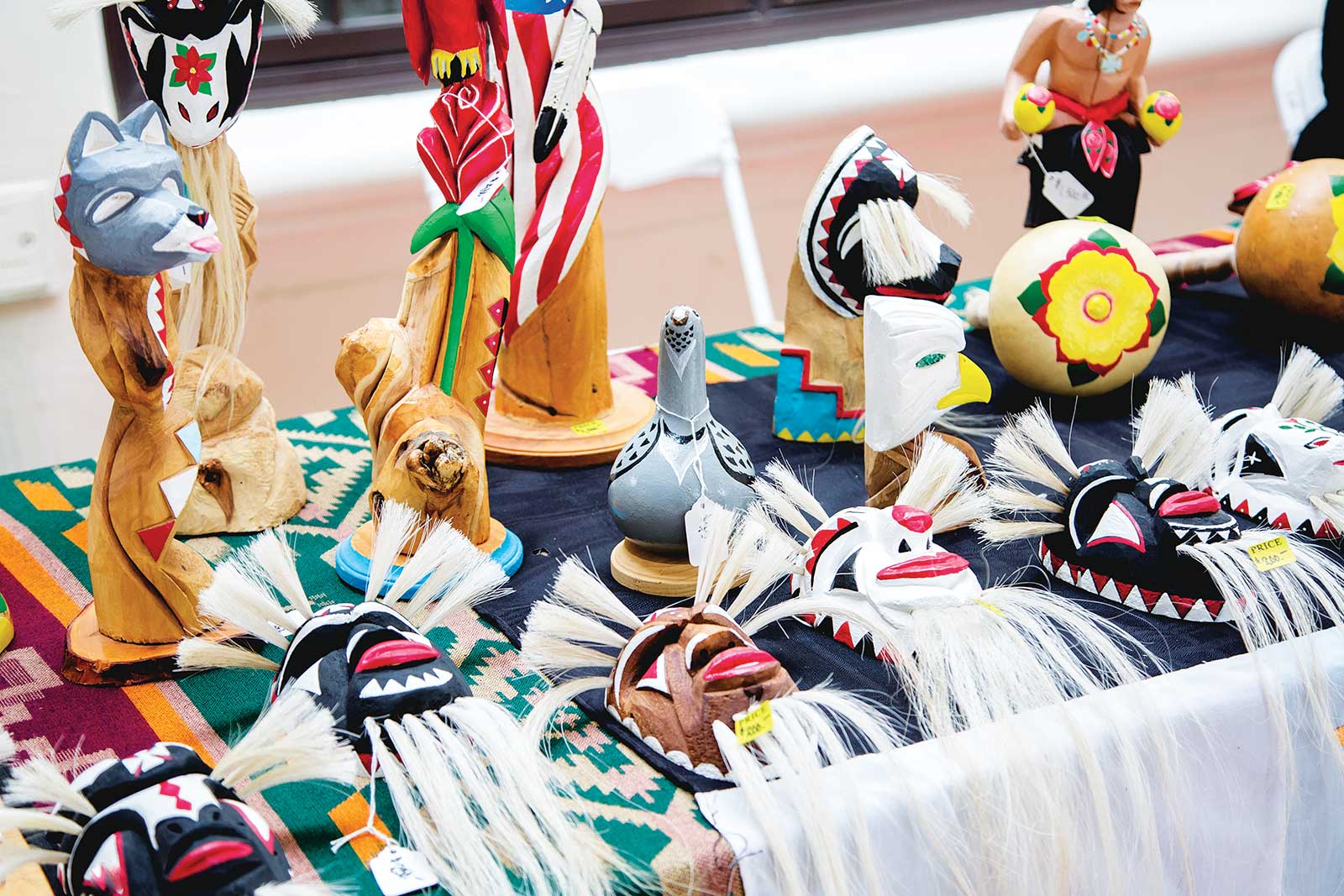 Masks and other carvings by Louis Valenzuela (Pascua Yaqui).
Pueblo Carvings
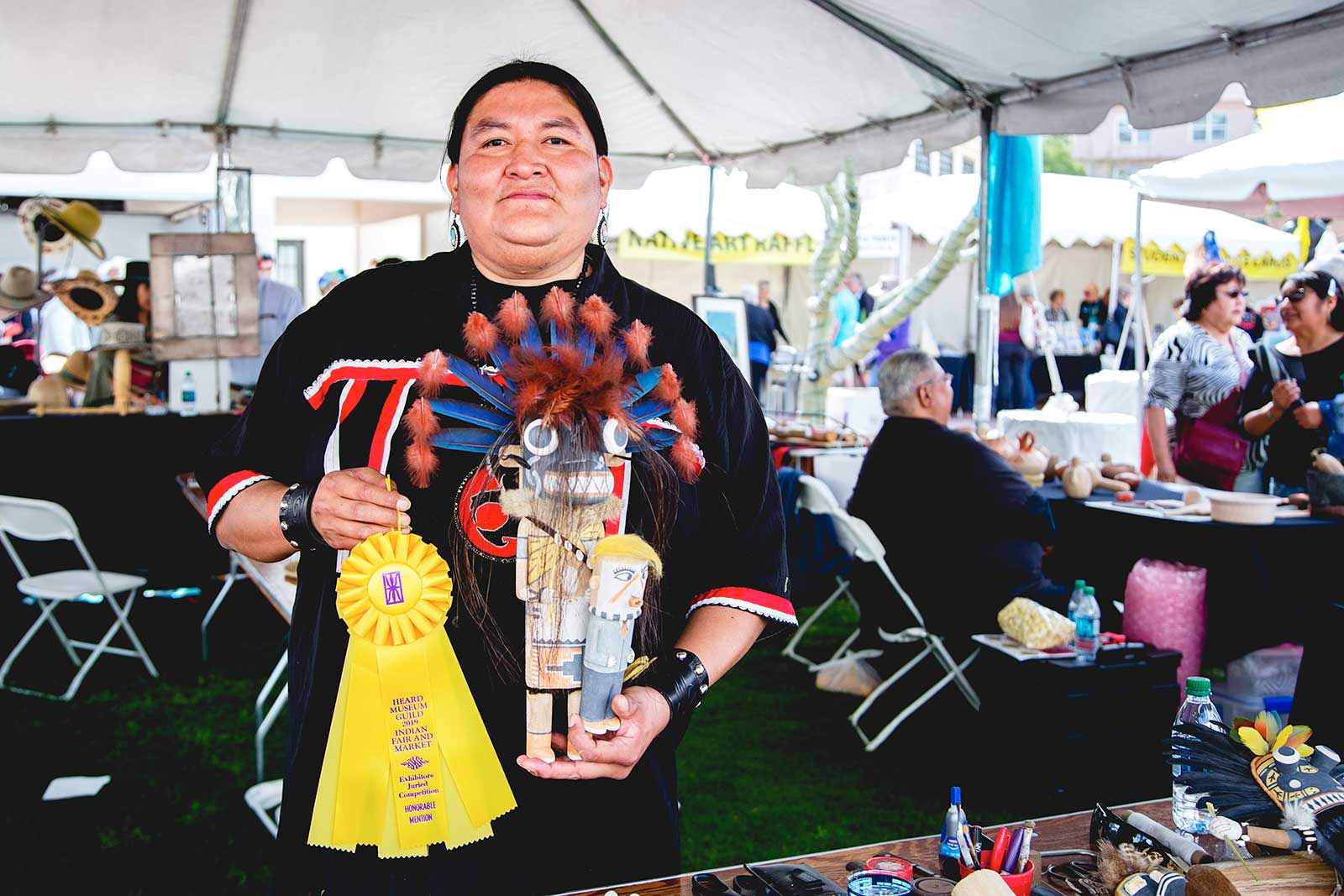
The sole Pueblo carver demonstrating his work is Ryan Polequaptewa (Hopi), whose dolls “contain a lot of characters, a dose of humor and reflect the great care that he takes in creating each one.” He is also reviving the carving of more traditional dolls.
Sculpture
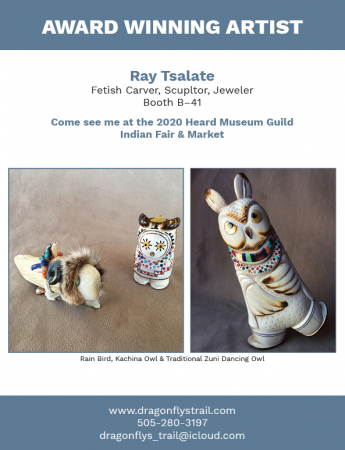
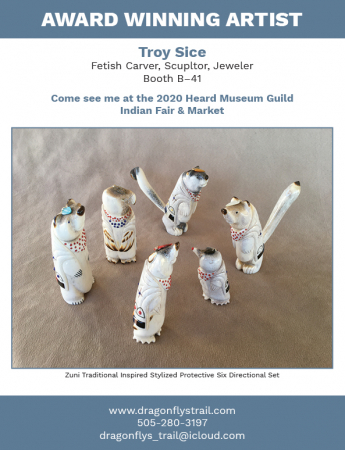
Zuni fetish carver Todd Westika taught himself his craft after a relative gave him a small bear fetish to use as a guide. Westika prides himself on his knowledge of rocks from classes he took while studying geological engineering. He uses materials such as water buffalo horns, gypsum, mother of pearl and more.
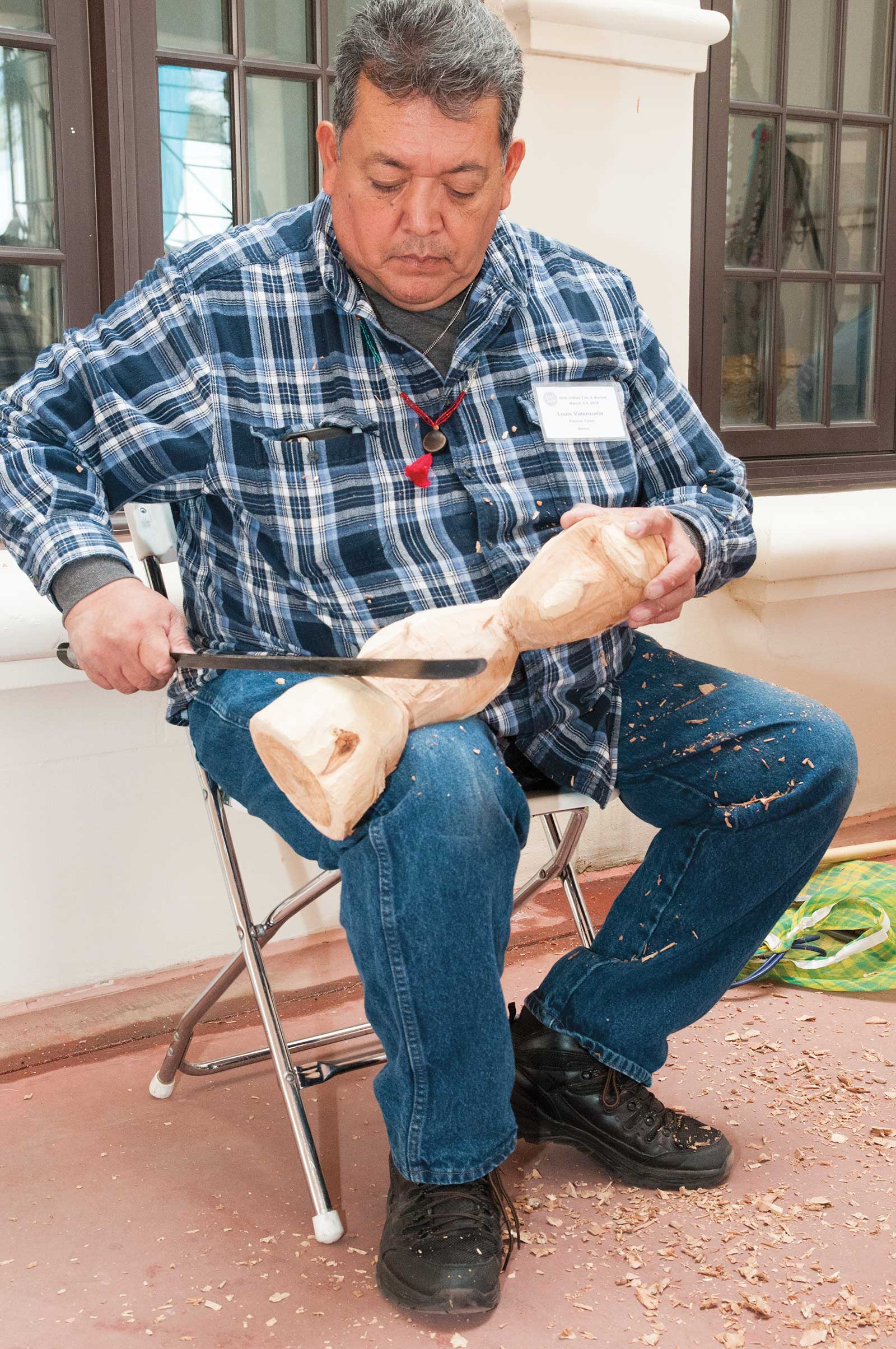 Alex Maldonado (Pascua Yaqui) carves from wood during a past Indian Fair & Market.
Weavings & Textiles
Navajo weaver Anderson has participated in the Indian Fair & Market for four years, and this will be his second time demonstrating. In the past Anderson, who re-creates patterns and techniques that are 2,700 years old, has taken his 12-foot blanket loom to demonstrate making full-sized horizontal woven striped blankets, gravity weighted diyogis and twill.
Anderson is a consummate researcher, having “read and studied archeological museum textile fragments of ancestral Puebloan and combined the stories passed down from his paternal grandparents to re-create the most portable methods and weaving of Pueblo I to Modern Navajo.
“It’s a good way to focus, as some of my new ideas for my weavings often get implemented as I’m weaving them,” he says. “So being there gives the public, collectors and museums an ability to influence a new piece.” —
Powered by Froala Editor