When Maie Bartlett Heard and her husband Dwight Heard moved to Phoenix in 1895 they developed a fascination for the region’s Indigenous artwork, and their collection eventually became the Heard Museum. The museum became a cultural centerpiece for the fledgling city, but Mrs. Heard’s efforts as the museum’s leader created a lasting legacy for women in the arts.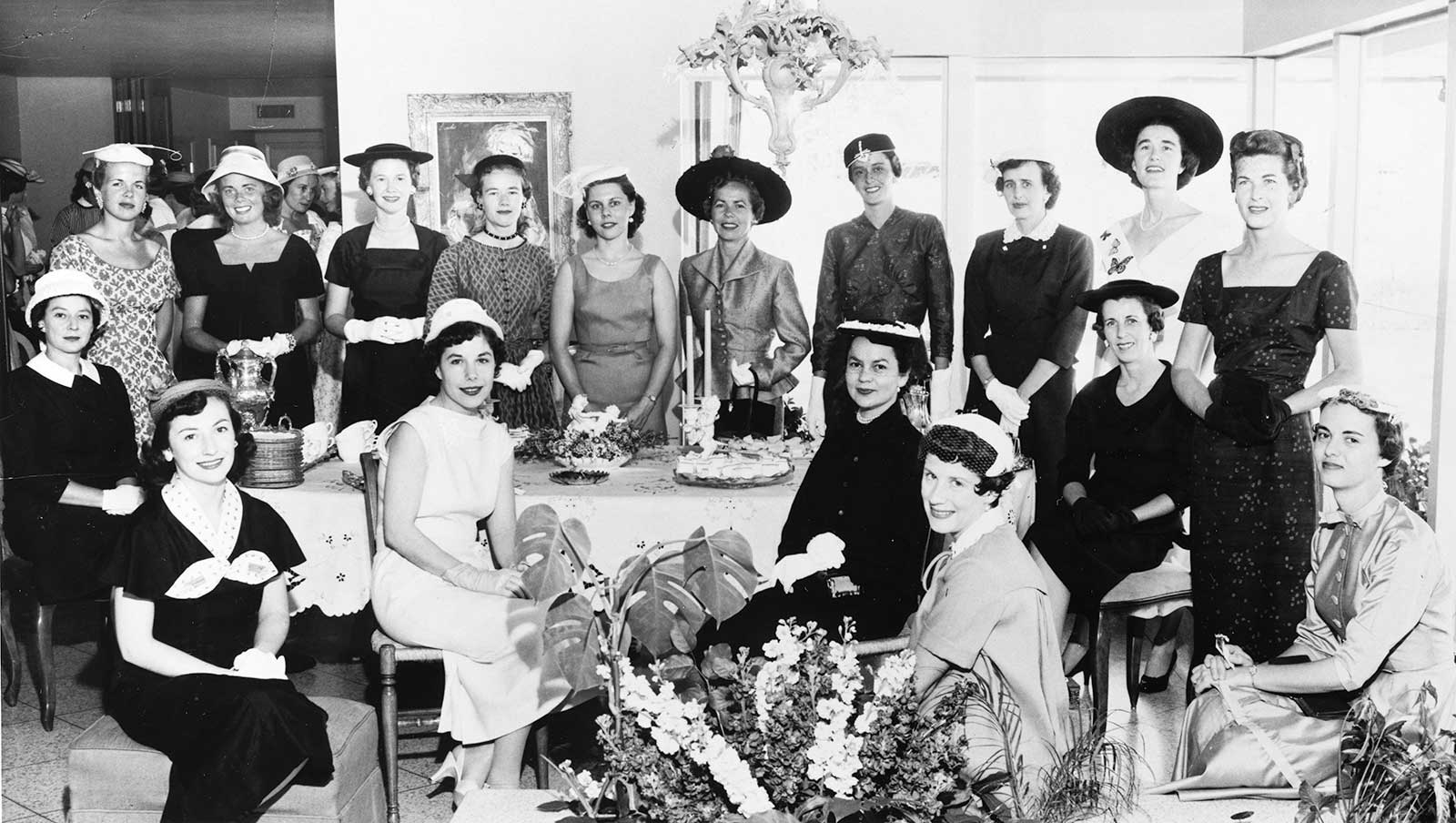 Heard Museum Guild organizational tea, January 16, 1957; photographer unknown; Billie Jane Baguley Library and Archives, Heard Museum; RC46(4):9.
The couple first began thinking about a museum in 1922 as their collection of Indigenous art began to outgrow their home. “Things were moving right along,” explains Ann Marshall, the Heard Museum’s director of research. “They had the building built in 1928, and they were in the process of installing the exhibits, when Dwight Heard had a fatal heart attack in March of 1929.”
It was just nine months before the museum was to open. Even as she was completely devastated by her husband’s death, Mrs. Heard found the strength to collect herself and go on with the plans for the museum.
During her tenure as the Heard’s first president, Mrs. Heard put in place a unique mandate—that women always be represented on the board of trustees. The move was forward thinking for the time, but it wasn’t out of character. “She was somebody who was very conscious of the importance of women in the family and community and society,” Marshall says.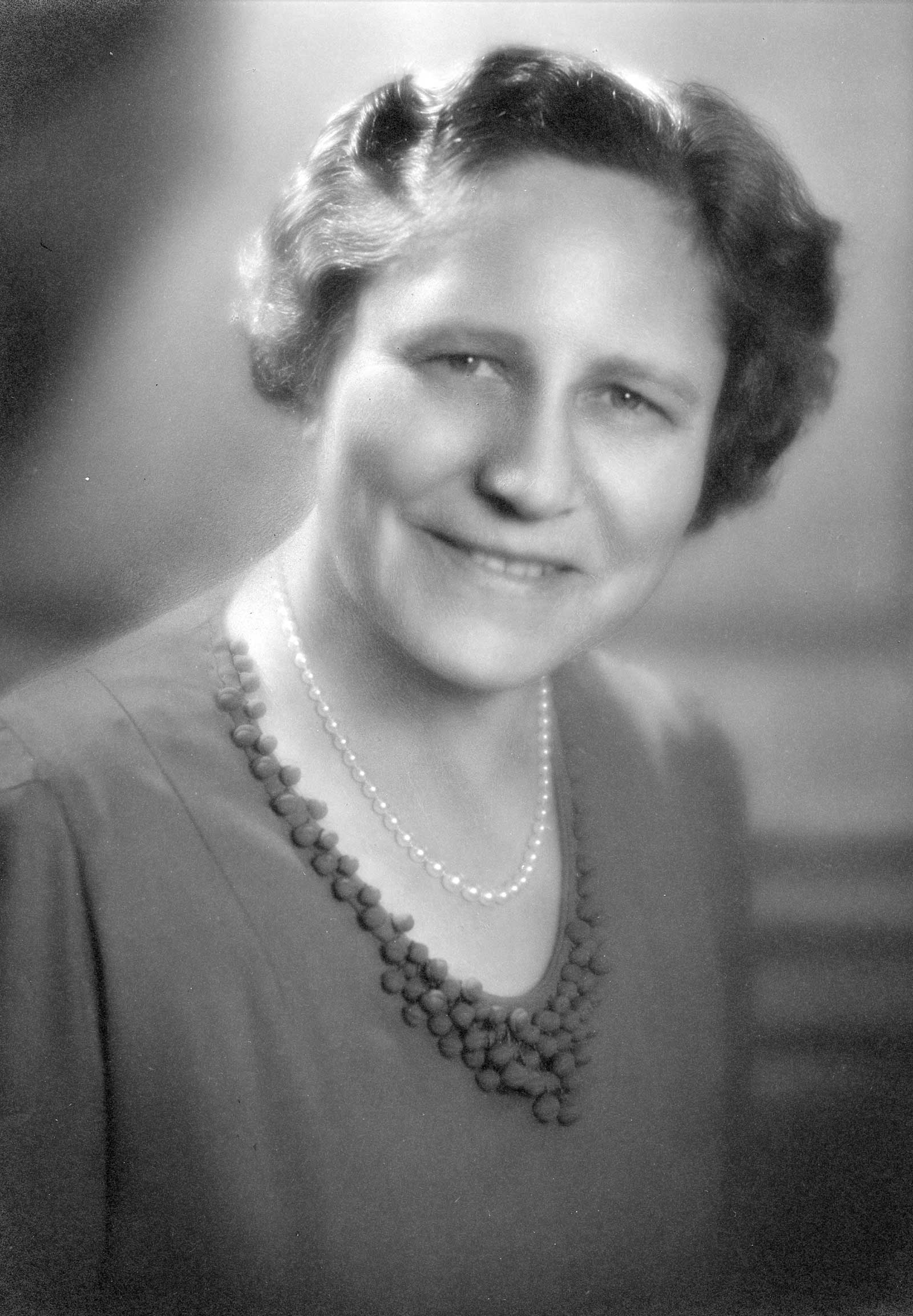 Florence D. Bartlett, undated studio portrait; photographer unknown; Heard Family Collection IL197:740; Billie Jane Baguley Library and Archives, Heard Museum.
Mrs. Heard was principled in supporting civic endeavors like Campfire Girls, the YWCA and the Women’s Club, creating a social network for women in the community. Marshall explains, “She’s an interesting person to try and nail down. She was a hard worker and would be the secretary for an organization, or would fund an organization, but she didn’t want to be the public spokesperson. That wasn’t really her style.”
Even though Mrs. Heard wasn’t one to bask in the spotlight, her quiet determination set many other women—like the Heard Museum’s first curator Allie Walling BraMé—up for success.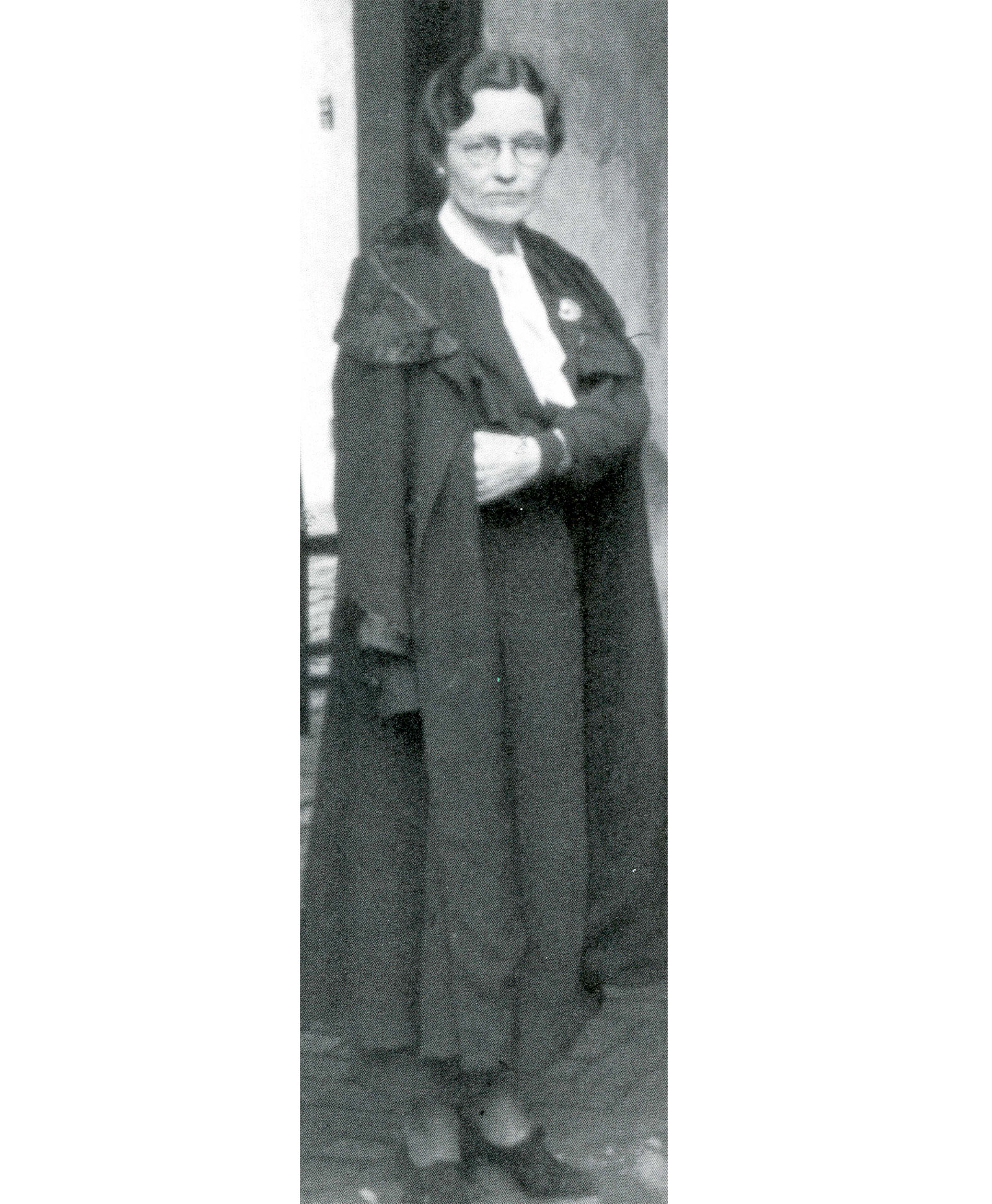 Allie BraMé at the entrance of the Heard Museum, 1930s; photographer unknown; Heard Museum Journal, Vol. 7, no. 1, June-October 2004, p. 24, Billie Jane Baguley Library and Archives, Heard Museum.
Mrs. Heard first met BraMé and her husband when the pair ran the Arizona Curio Company out of Prescott, Arizona. When the Heards decided to form a museum, they realized they would need to augment their personal collection, and the BraMés worked to source new pieces on commission.
BraMé and her husband later divorced, and she went to work directly for Mrs. Heard as the curator of the museum. Mrs. Heard found her expertise to be indispensable. Marshall says, “Once, somebody had written to Mrs. Heard wanting to show her some rugs they had to sell, and Mrs. Heard told them to bring them to the museum and have Mrs. BraMé look directly at them. It’s indicative of the regard that Mrs. Heard had for Allie Walling BraMé and her knowledge.”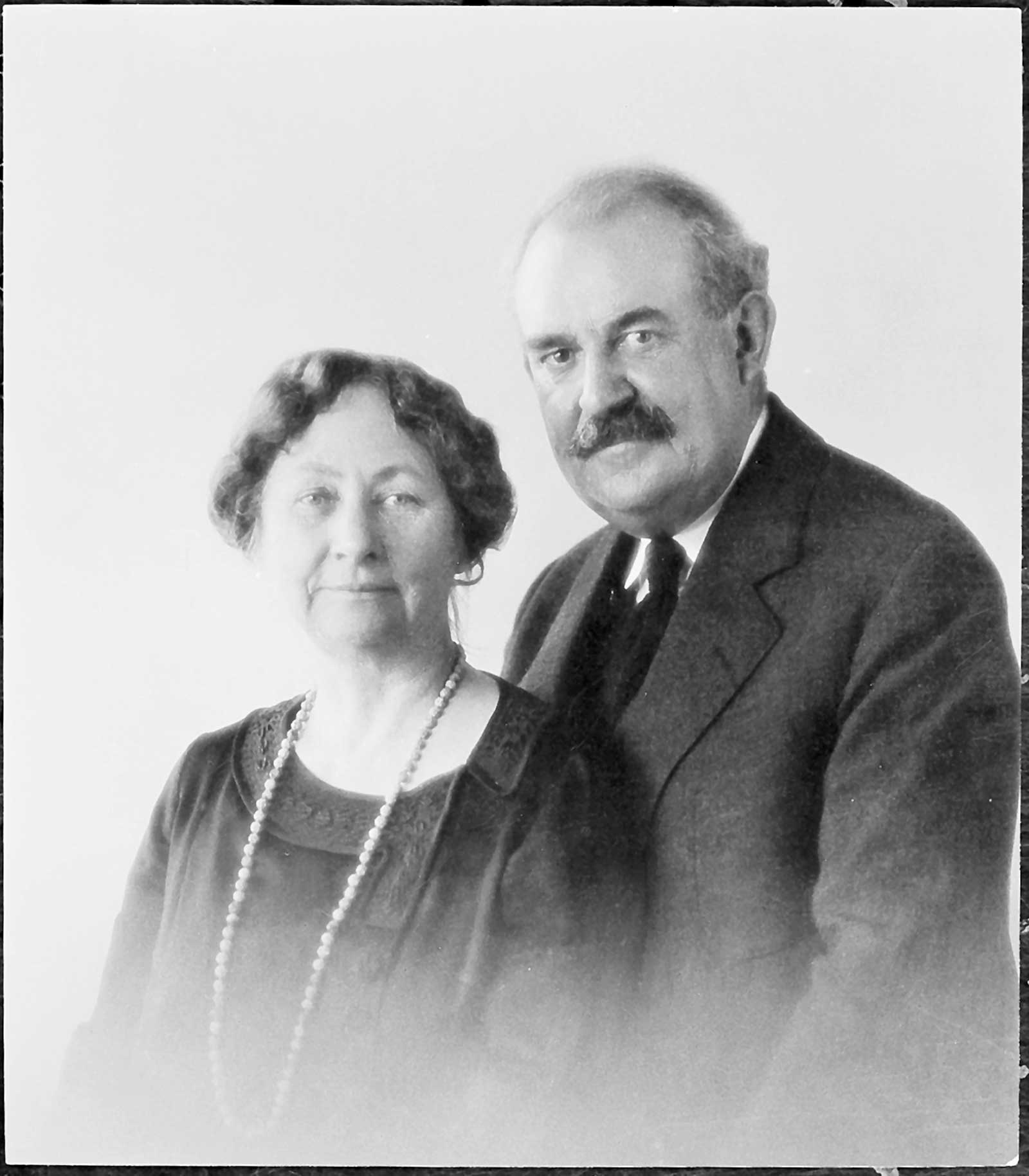 Maie Bartlett Heard and Dwight Bancroft Heard, ca. 1928; photographer unknown; Billie Jane Baguley Library and Archives, Heard Museum; RC46:3.
Before she became the first woman to serve on the U.S. Supreme Court, Sandra Day O’Connor left her mark on the Heard Museum as the president of the board of trustees. She also had a principal role in crafting a cutting edge collections management policy. “While the document has of course been revised and updated over the years, the bones and basic tenets of it remain the same,” Marshall explains. “That is the legacy Justice O’Connor left for us.”
Today, the Heard Museum has continued its commitment to women’s representation, both behind the scenes and in its exhibition halls. Women, of course, are still represented on the board of trustees, and its current curatorial staff is made up entirely of women. A newly established exhibition series will host solo shows for Native women artists, examining the impact they have made on the field of fine art.
“A statistic came out last year that said something like 78 percent of solo museum exhibitions still go to male artists,” says the Heard’s fine arts curator Erin Joyce. “If you do see shows from women artists, especially Indigenous women, it’s usually a group show and not a monographic exhibition.”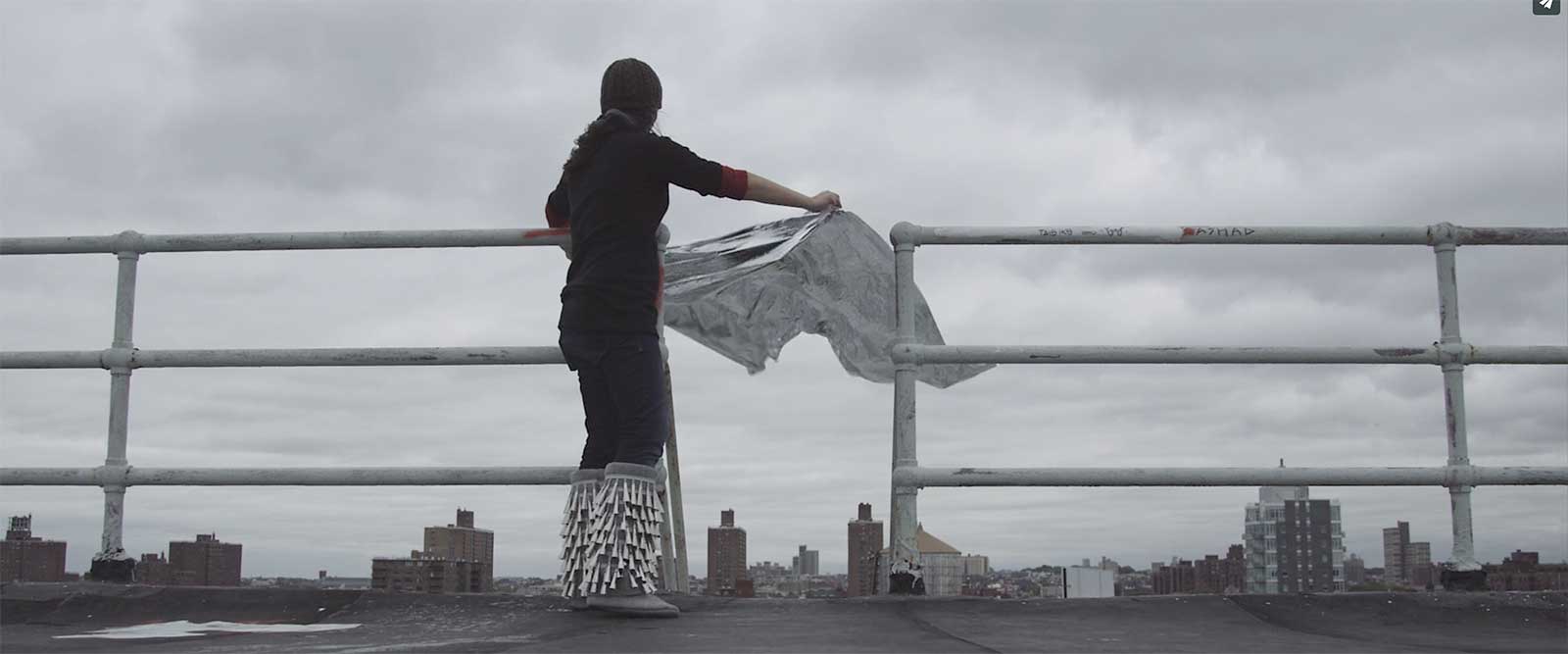 Maria Hupfield. Image courtesy Dylan McLaughlin.
Maria Hupfield is the first artist to be spotlighted as a part of this new effort. Her show Nine Years Towards the Sun showcases sculptures, textiles and video from her time living in Brooklyn, New York, and combines them with performance art.
“It’s a very dynamic exhibition,” Joyce says. “It touches on the formal qualities of art, the political aspects of her existence as an Indigenous woman, and adventures into reimagining of 20th-century art history through her own lens.”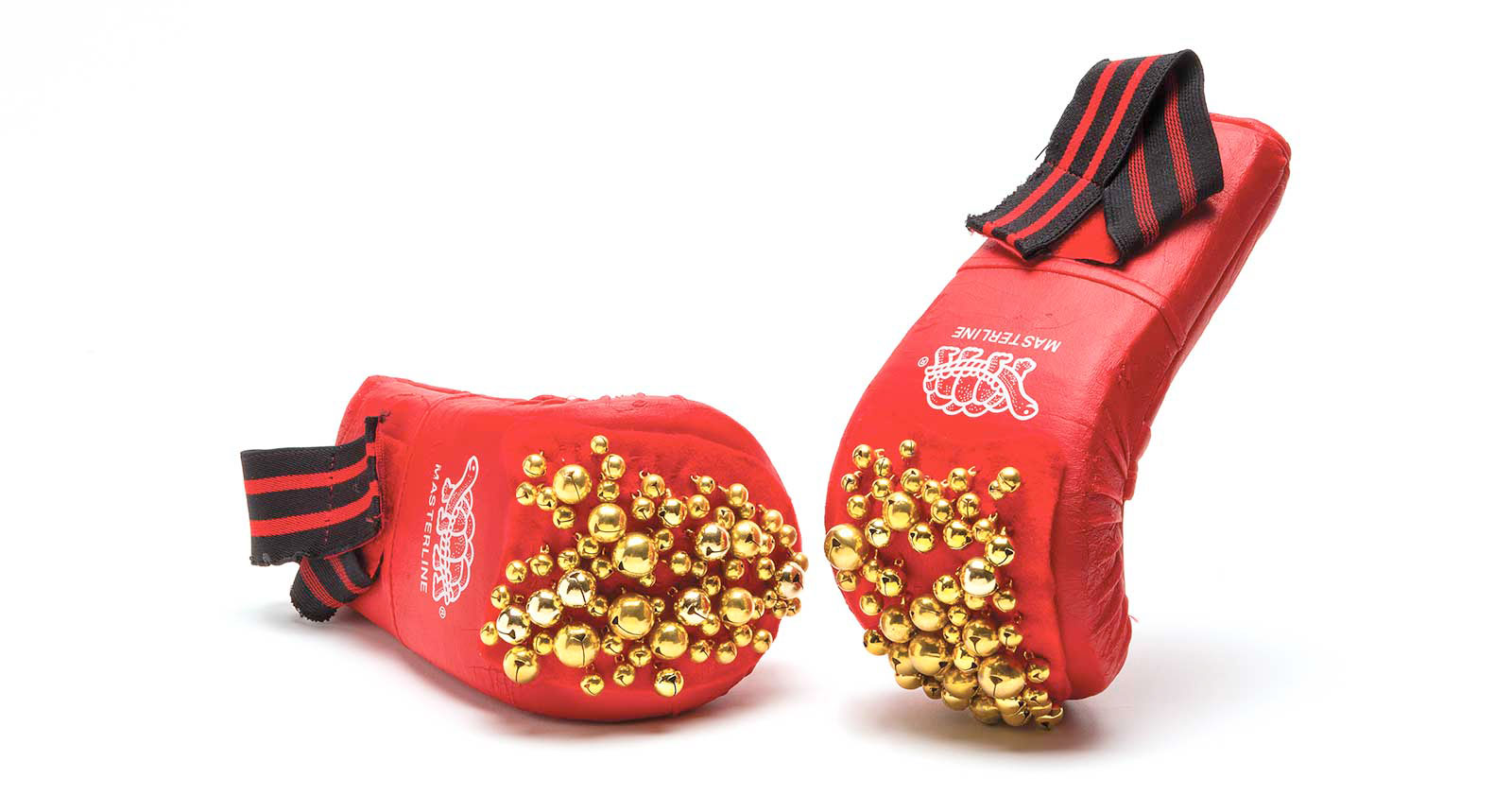 Maria Hupfield (Anishinaabe), Double Punch, 2011, found striking gloves and assorted gold-tone bells. Collection of the artist. Photo by Craig Smith, Heard Museum.
For the opening of the exhibition, Hupfield performed with collaborator DJ Miss Ginger. “We focused on bringing people into the space and having them think about the art objects so they became aware that they also move,” Hupfield says. “We think about the objects one way on display in a gallery, and then we think about them in another way when we see a body with them. Seeing two people who have to navigate the space together and work together shows a cooperative effort.”
Hupfield’s art objects encourage interactivity. Double Punch is a pair of boxing gloves with tin jingles on them so they make noise when worn. Another is a headpiece intended to be worn under a suit of armor decorated with 500 Sacagawea gold dollars. The artist explains, “I love that it shows a woman and her child, and the 500 coins create a kind of armor.”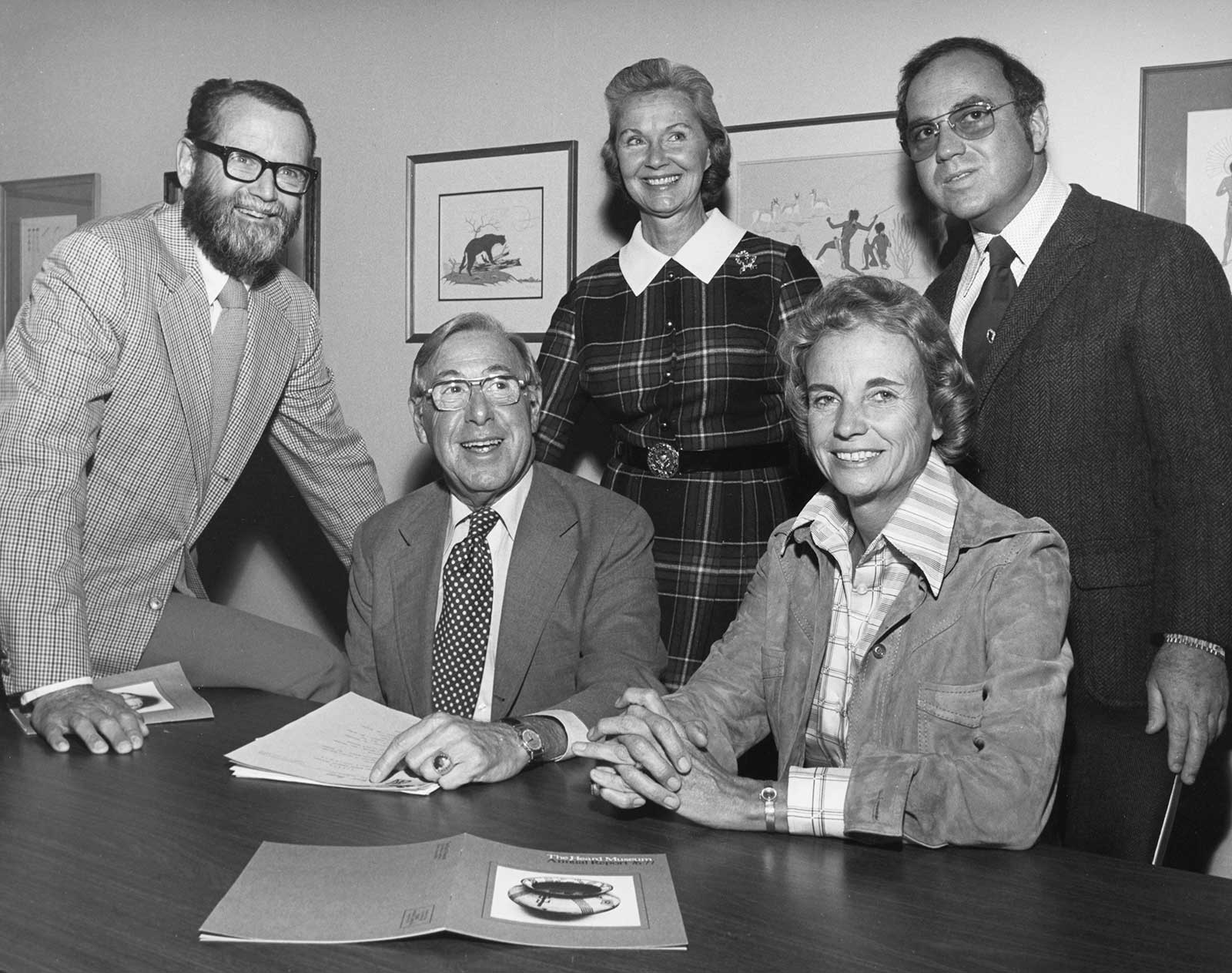 Heard Museum board members with Sandra Day O’Connor. RC240.452.
Nine Years Towards the Sun remains on view through May 3, and Hupfield says, “I hope when people see it, they’ll go back and realize that each object in the Heard Museum’s collection is made by an artist that put so much into it, just like my objects.”
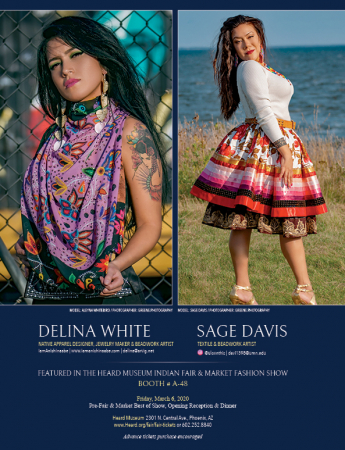
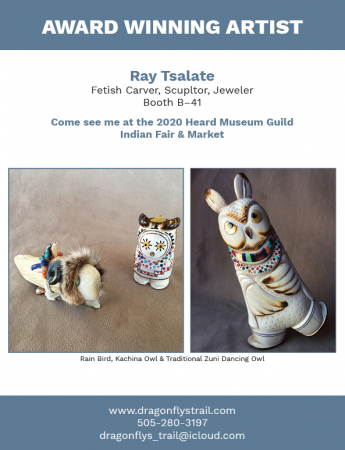
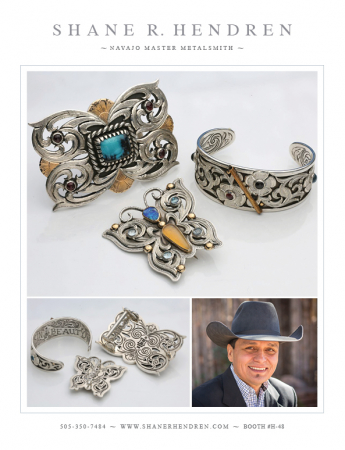
At the museum’s annual Indian Fair & Market, visitors will have the opportunity to closely examine works by women artists—this year, around 40 percent of the fair’s artists are women. “When you look at so many of the art categories like basketry and textiles and pottery, you have leading artists who are women,” Marshall says.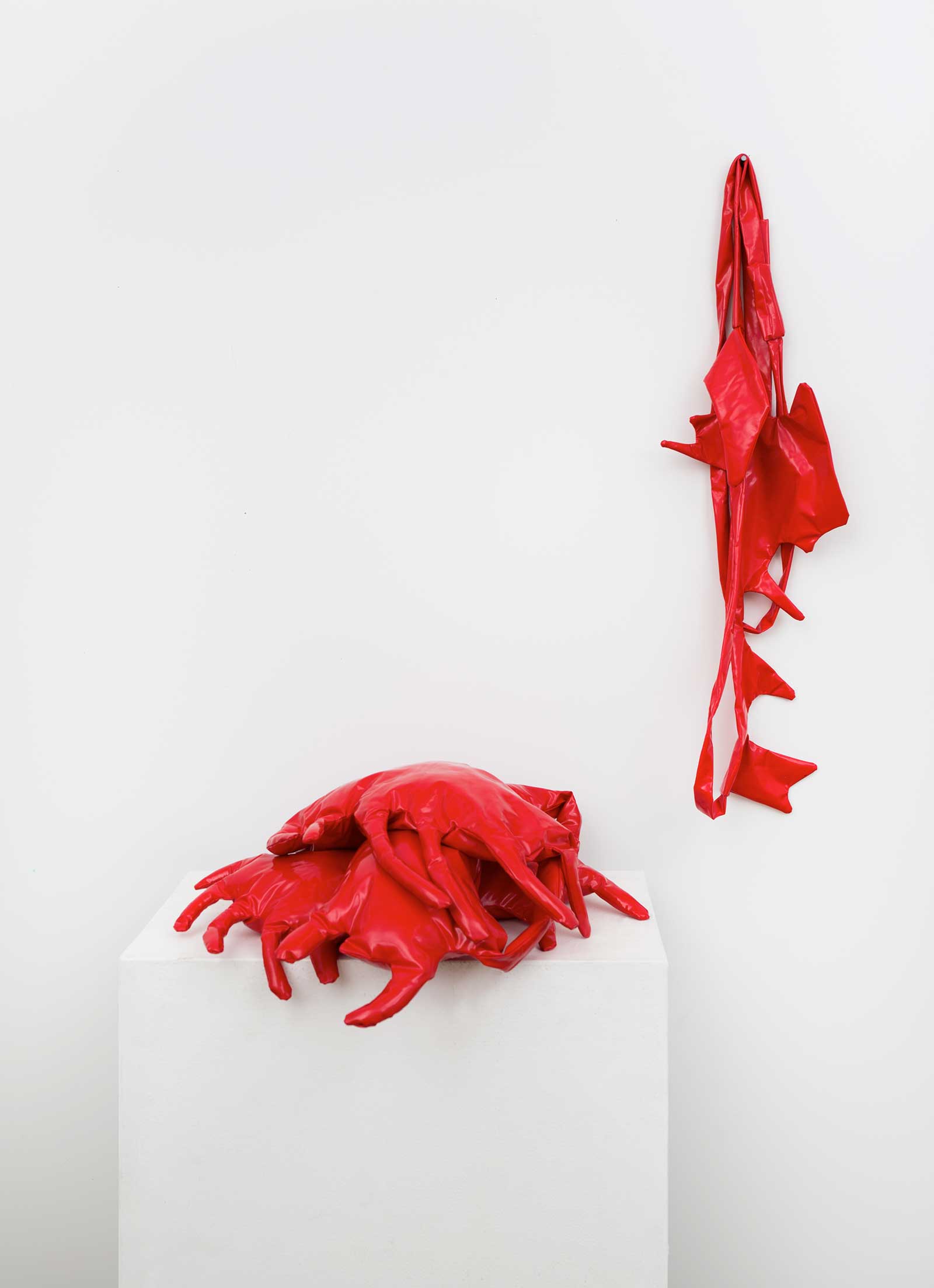 Maria Hupfield (Anishinaabe), Guts + Fringe, 2011-present, red vinyl and polyester fill. Collection of the artist.
Weaver Barbara Teller Ornelas has been showing at the fair since the 1980s and has been continually impressed by the support the museum lends artists. “They took me under their wings and guided me to the artist I am today,” she says. “I’m always grateful they took the time to show me what I could be doing to achieve my goal as an artist. I’m still in awe every time they call me to work on projects or to teach a weaving class.”
By advocating for women’s representation in the 1930s, Maie Bartlett Heard set the Heard Museum up to do justice for women artists in the 21st century. Marshall says, “She was an inspiration. There is a sense of her having set the museum on the right track.” —
Powered by Froala Editor