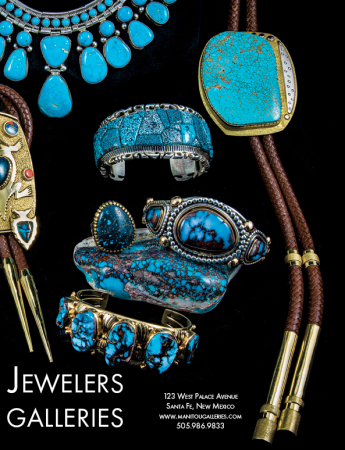
Long before the Southwest became known countrywide for its turquoise mines, the precious gem was part of daily life for Native Americans. Evidence of turquoise being used in North America by the Hohokam and Anasazi tribes dates back to as early as 200 B.C., who mined in what is now Los Cerillos, New Mexico, and the state’s Burro Mountains, as well as the Kingman and Morenci mines in Arizona.
In the Origin Myth of the Acoma Pueblo, turquoise was used to create powerful beads—bestowing adoration to those that wore the special beads. For other tribes, such as the Pima of Southern Arizona, turquoise is associated with having healing properties.
A multitude of turquoise varieties exist, each with its own unique color and characteristics. Take Cerrillos turquoise, for example. Formed at the base of a volcano, 75 different color variations of the gemstone have been identified.
No matter what type of turquoise you prefer, authenticity and quality are key, as imitation turquoise can be hard to spot if you’re not careful.
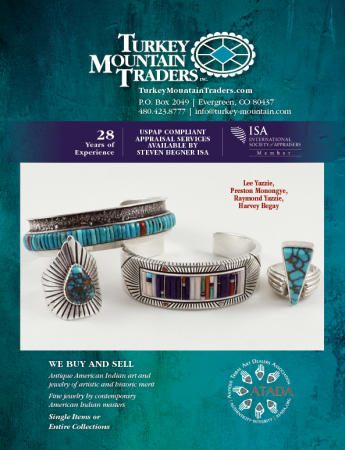
“Great items of artistic and historic merit can be found at every price point, if you are willing to learn about the art and be careful in your purchasing,” says Steve Begner, president of Turkey Mountain Traders. “Don’t chase bargains—chase quality.”
++++
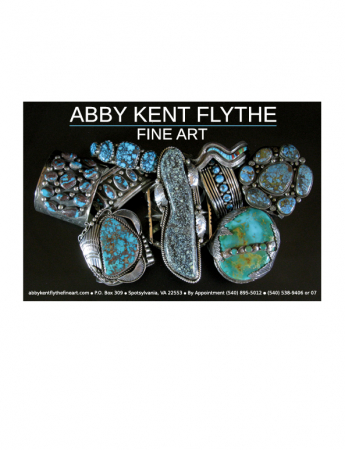
 Abby Kent Flythe Fine Art
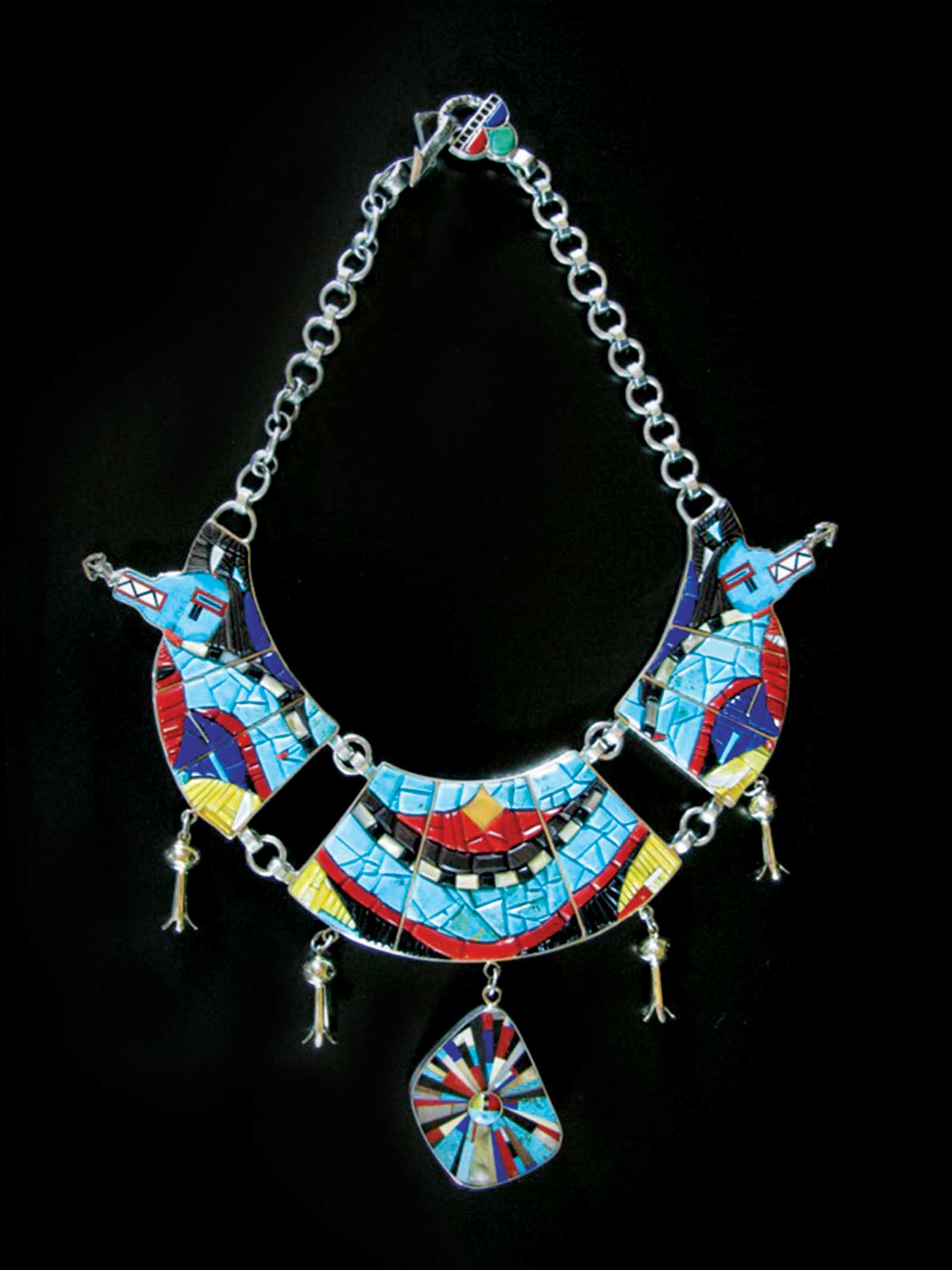
“Wearable art” is the perfect description for this colorful double-sided Avanyu (water serpent) necklace by an exciting, award-winning, young artist named Bryan Tom (San Felipe Pueblo/Navajo). This piece meets the criteria of any sophisticated collector—innovative design; skilled execution; and the use of quality natural turquoise, such as Morenci, Blue Ridge, Kingman and Pilot Mountain combined with lapis, coral, wood and shell set in sterling silver with 14k gold blossoms. The reverse side is all silver accented with a Pilot Mountain turquoise drop.
(540) 895-5012 » abbykentflythe@aol.com » www.abbykentflythefineart.com
++++
 Bischoff’s Gallery
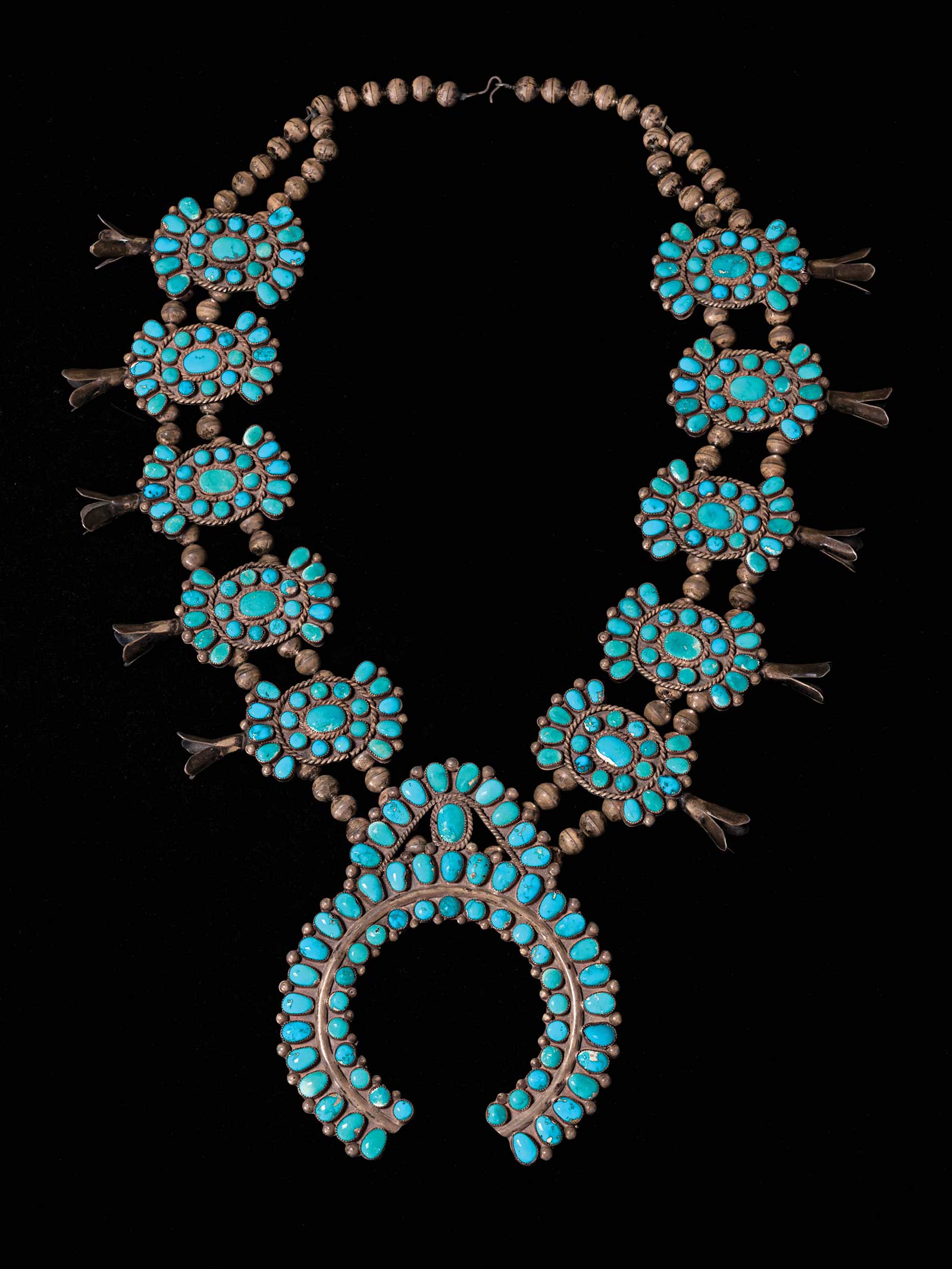
Whether it be a Native American pawn squash blossom necklace (as shown here) or an ultra-contemporary piece, turquoise, by just the color, takes your breath away. Due to the natural variations in the turquoise stone no two pieces of jewelry are alike, adding to the appeal. Turquoise is said to be one of the first minerals ever used by mankind for decoration so a piece purchased today would be a reminder and a tie to the thousands of years of lapidary work. This particular Zuni Squash Blossom Necklace is from around the 1940s.
3925 N. Brown Avenue » Scottsdale, AZ » (480) 946-6155 » www.bischoffsgallery.com
++++
 Chipeta Trading Company
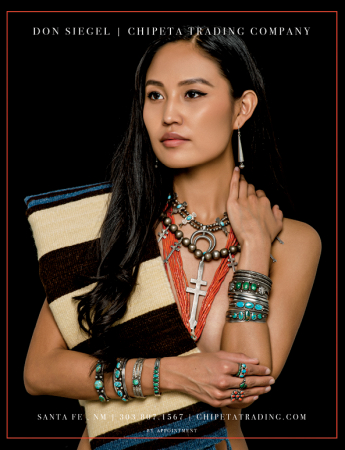
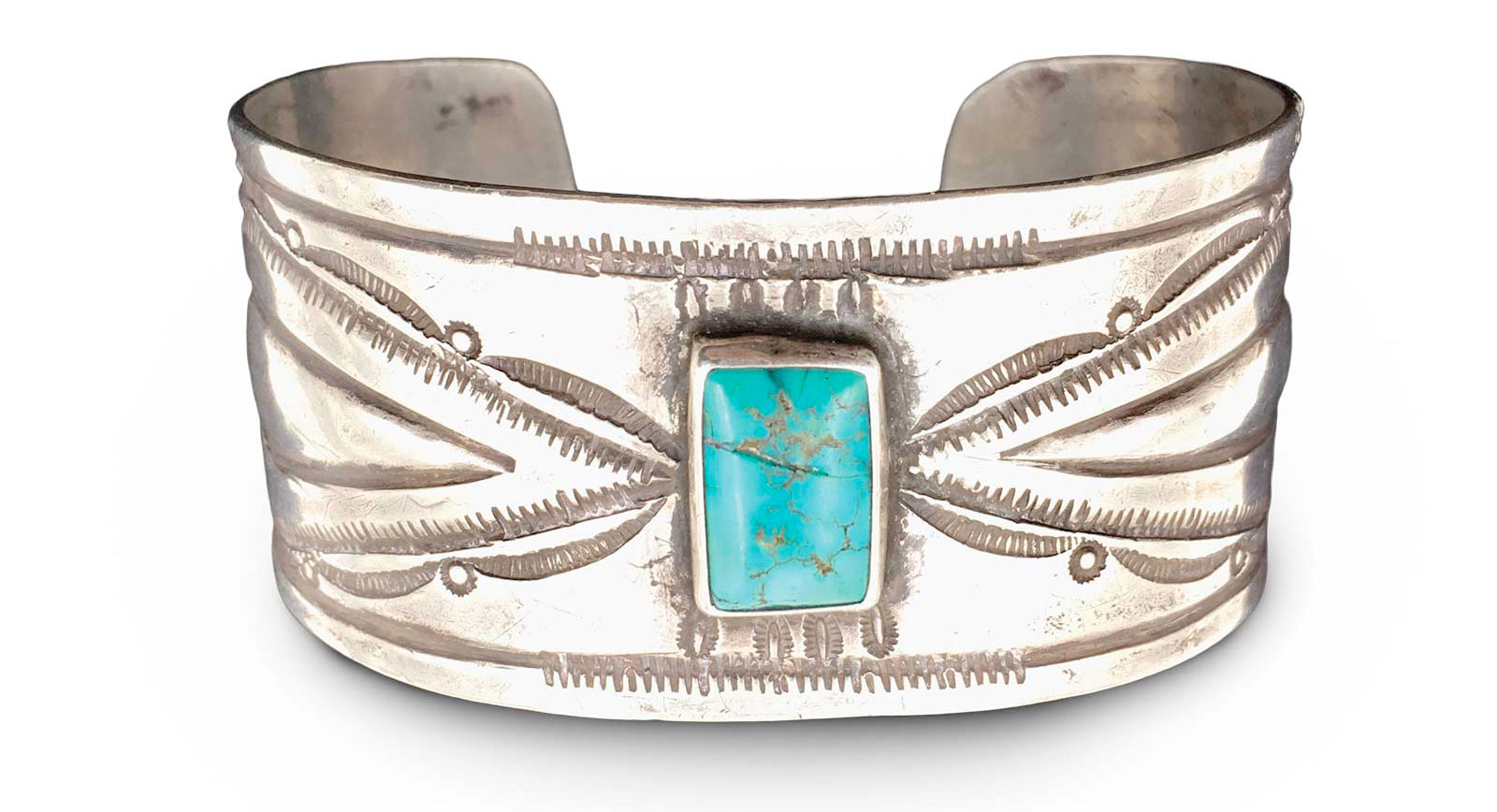
This Navajo ingot silver cuff (circa 1890-1900s) is an outstanding example of early silversmith work from the turn of the century. The repuse, bump out stamp work and file marks help date the bracelet to the earliest of times when raw turquoise stones began to appear in Southwestern silver jewelry.
(303) 807-1567 » www.chipetatrading.com
++++
 Sandbar Trading
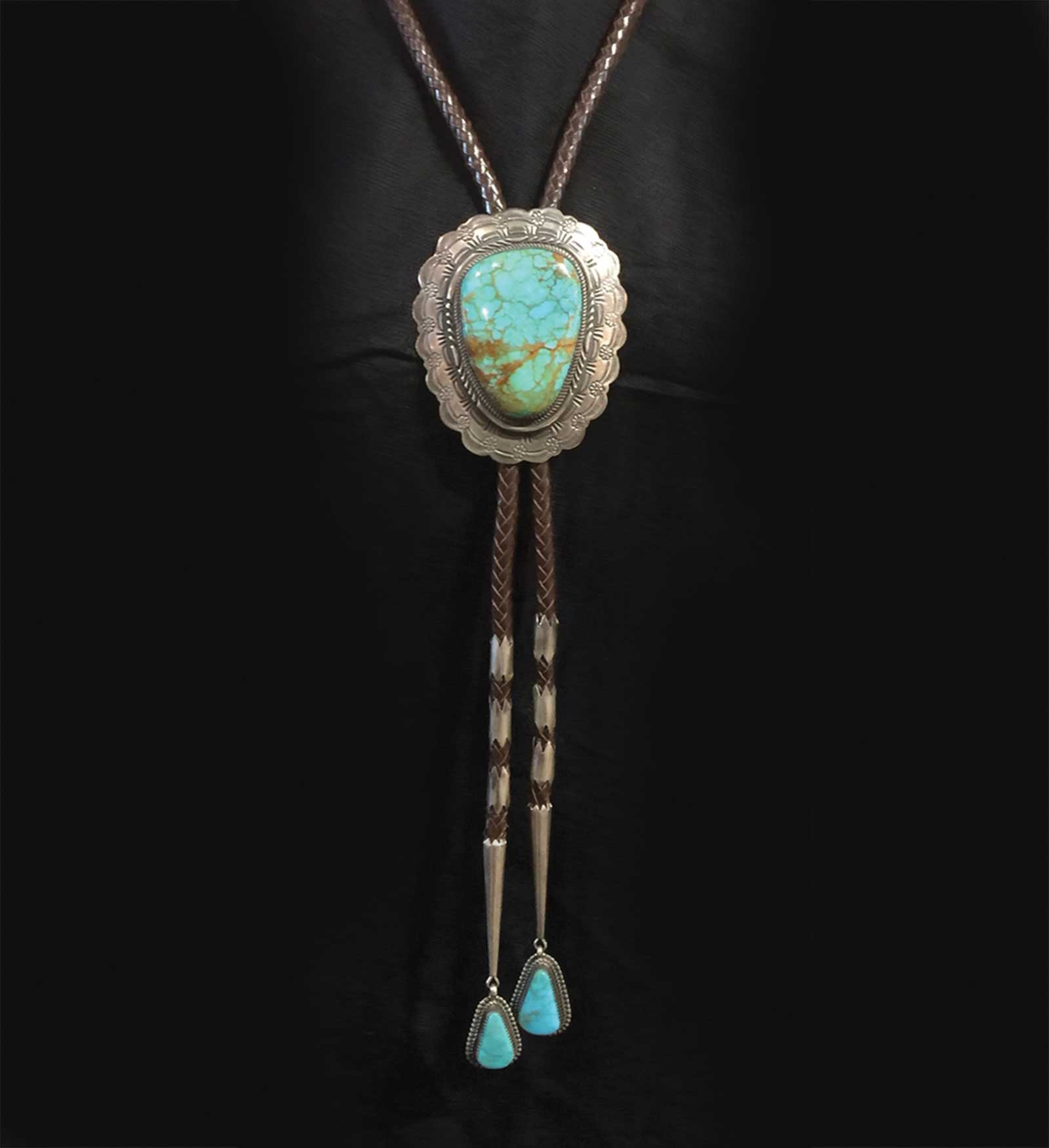
The bolo tie came onto the market in the late 1940s and is now the official tie of Arizona, New Mexico and Texas. While the bolo tie was once considered the “optional” tie for men, women have been seen wearing them as an alternative to necklaces and squash blossoms. The bolo tie shown was made by Navajo silversmith George Begay and features Royston turquoise and silver.
414 S. Commerce » Wichita, KS 67202 » (316) 250-2354 » www.sandbartrading.com
++++
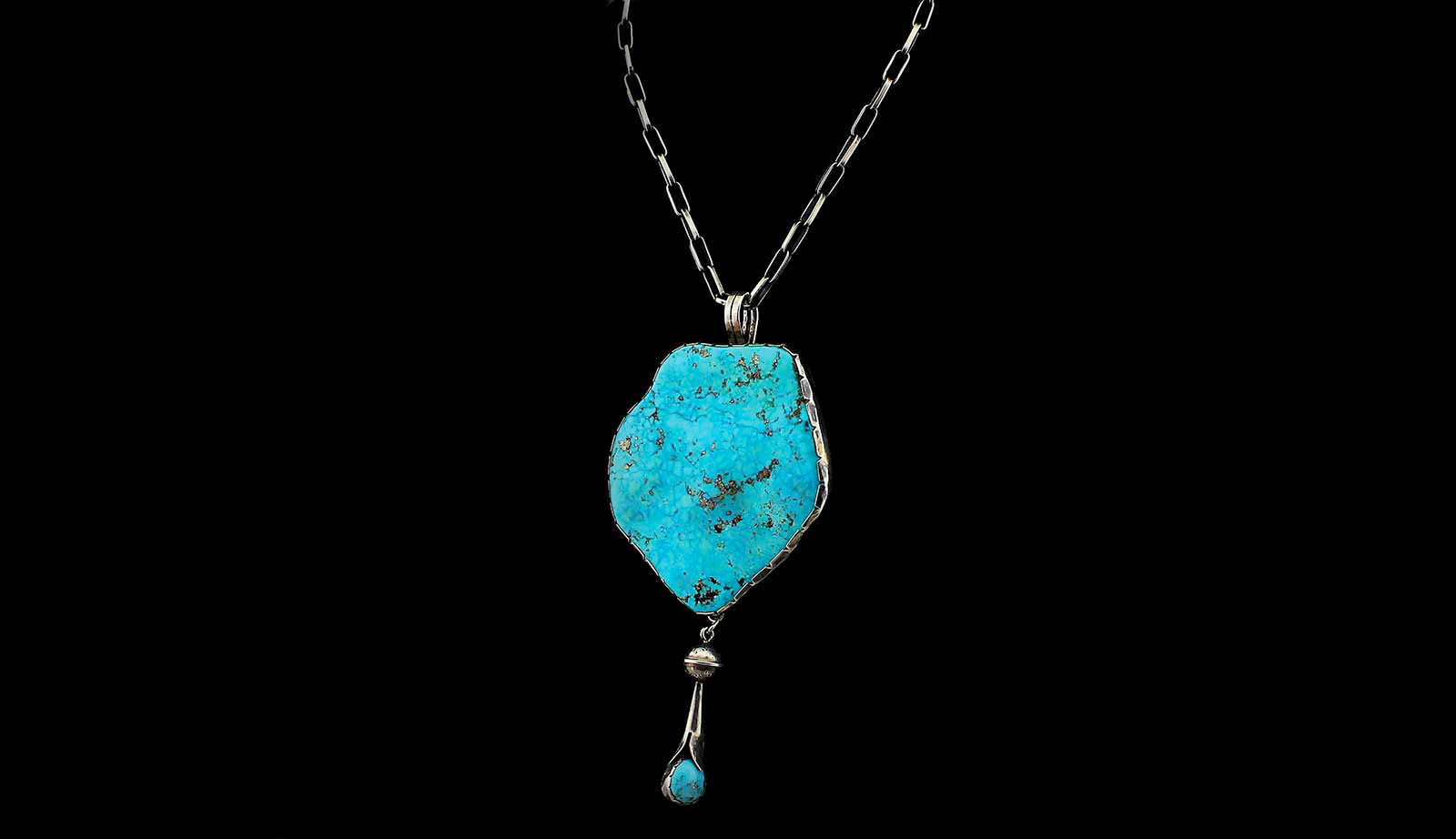 Image CaptionJack’s Antique
Pictured is a Navajo pendant (circa 1970s) consisting of a large central Morenci turquoise stone set in custom sterling silver bezel and accented with a smaller stone set in sterling silver squash blossom dangler. The pendant measures 31⁄4 by 3 inches and is stamped “JW.” The 13-inch long sterling silver chain is handmade by an unknown Zuni silversmith. This piece was acquired by Jack’s Antique from a long-time patroness of Native American arts and jewelry in Winslow, Arizona.
4650 North U.S. Highway 89, Suite G14 » Flagstaff, AZ 86004 » (928) 526-0696 » jack@jacksantique.com » www.jacksantique.com
++++
 Bonhams
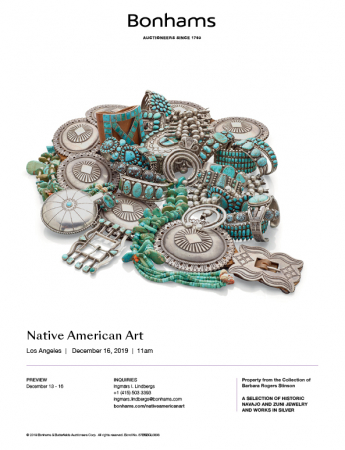
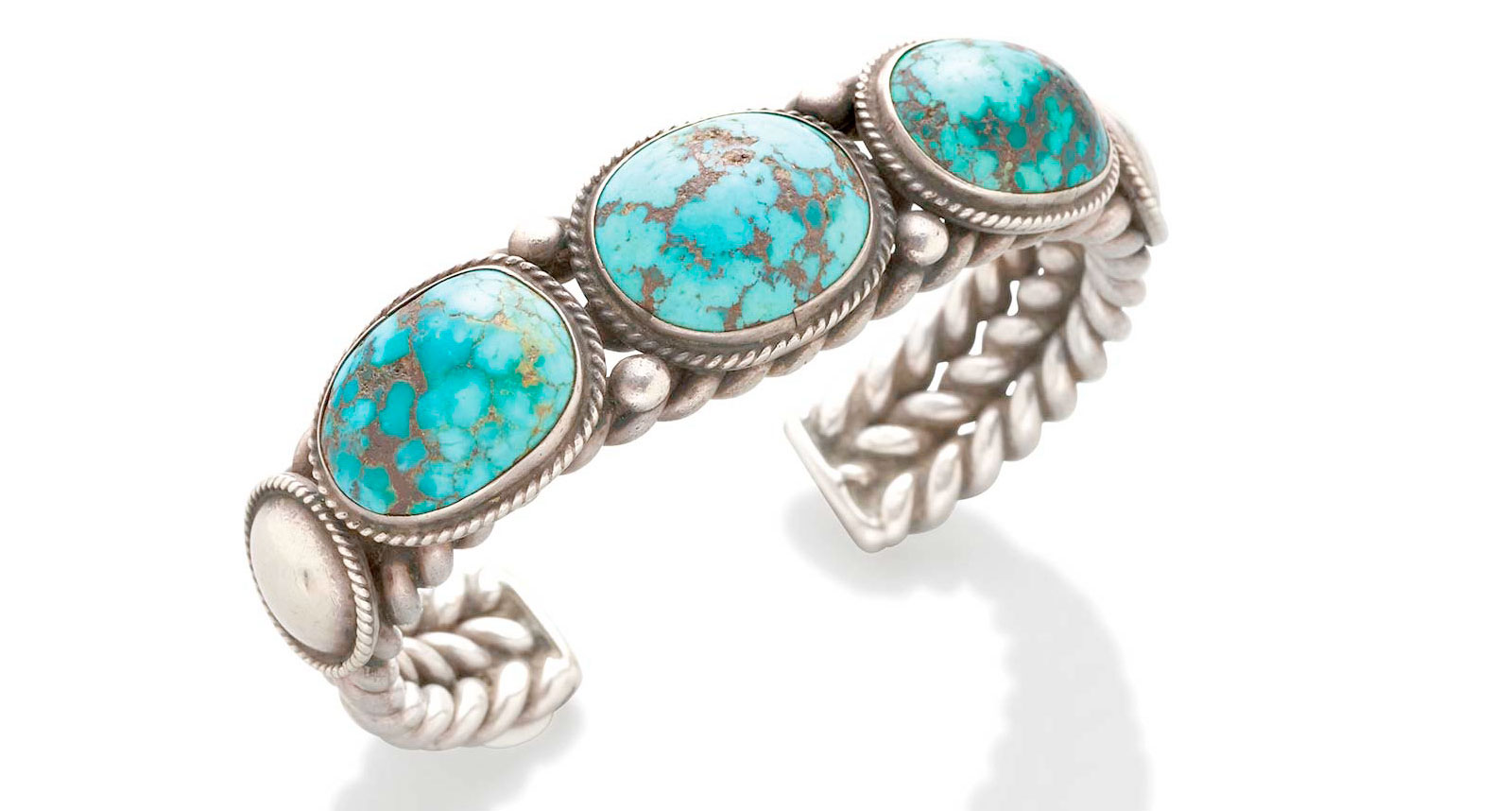
This heavy twisted wire bracelet showcases a trio of oval Morenci turquoise stones flanked by plain silver buttons. Made by Navajo silversmith Billy Goodluck in 1933, the bracelet was originally part of the legendary C.G. Wallace Collection, sold at auction over three consecutive days in November of 1975. Forty-four years later, it once again comes up for auction, part of the jewelry collection of Barbara Rogers Simpson, offered on December 16 at Bonhams in Los Angeles.
7601 W. Sunset Boulevard » Los Angeles, CA 90046 » (+1 323) 436-5430 » www.bonhams.com
++++
 Medicine Man Gallery
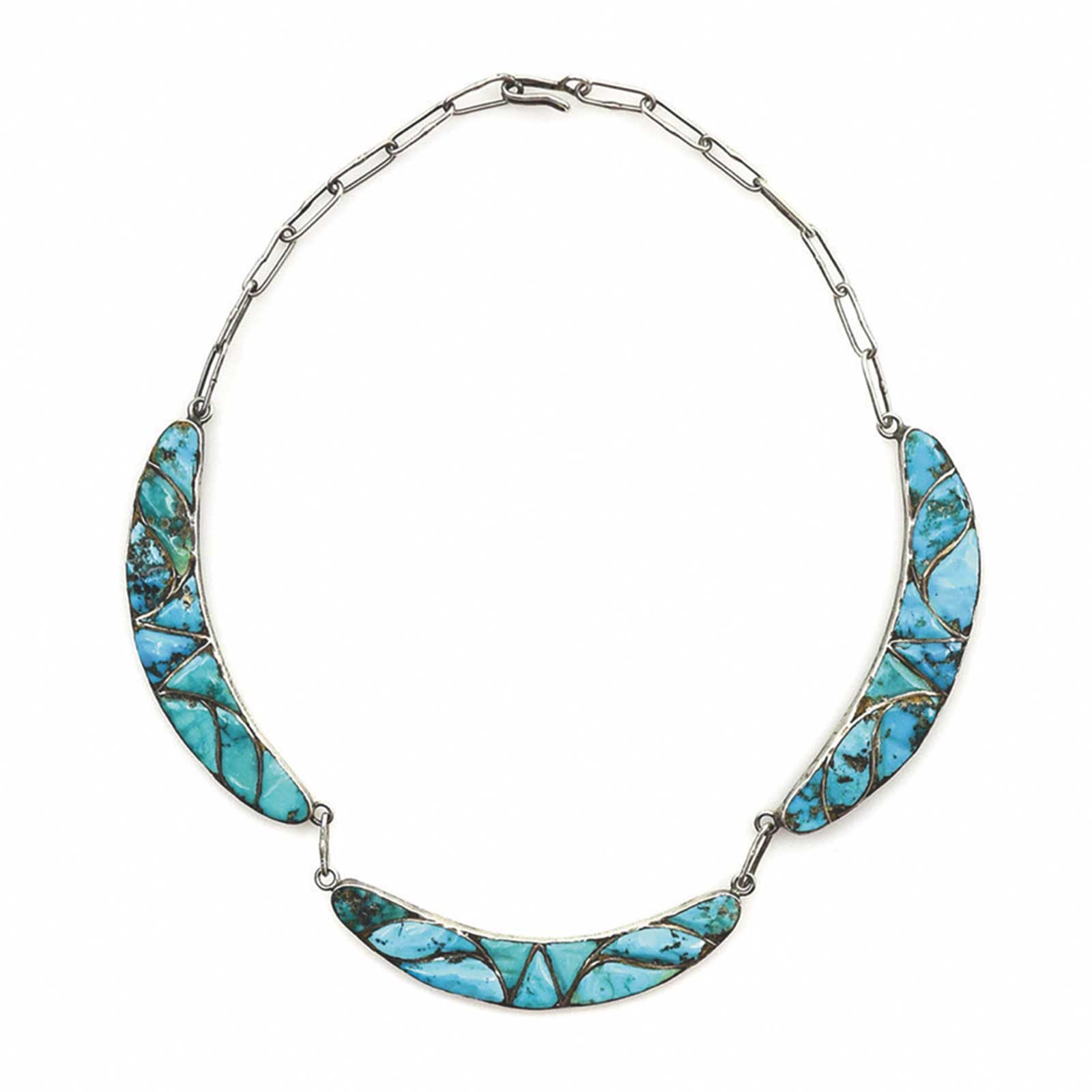
This elegant inlay Zuni necklace with accompanying handmade chain exemplifies the best work done in the 1940s by an unknown master silversmith. The natural turquoise stones are hand-cut in a variety of shapes to create a perfect puzzle mosaic; each turquoise segment showcased in its own compartment separated by sterling silver. The graceful three-part design allows the necklace to highlight the neckline, drawing the viewer’s eye to the central element. Pieces of this vintage and quality are uncommon finds as they are often passed down through families as heirlooms.
6872 E. Sunrise Drive, Suite 130 » Tucson, AZ 85750 » (520) 722-7798 » www.medicinemangallery.com
++++
 Adobe Gallery
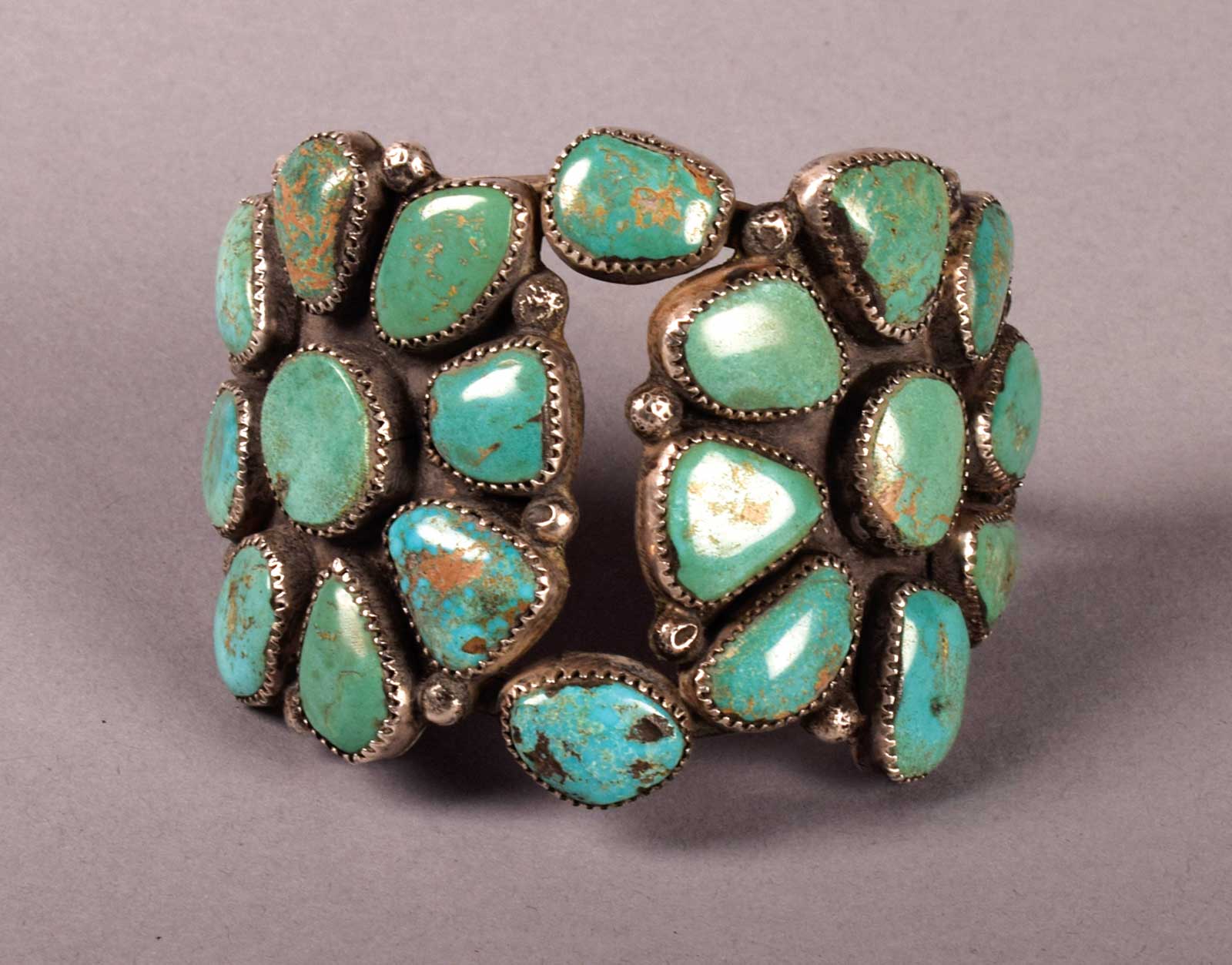
Pictured is a 20th-century, sterling silver bracelet hailing from the Navajo Nation reservation. It features a beautiful array of blue-green turquoise set in handmade sawtooth bezels in the shape of two flowers. Multiple silver drops are interspersed between the stones, accentuating the unique color of the stones. The design work here is exceptional—elegant, creative and strong but subtle.
221 Canyon Road » Santa Fe, NM 87501 » (505) 955-0550 » info@adobegallery.com » www.adobegallery.com
++++
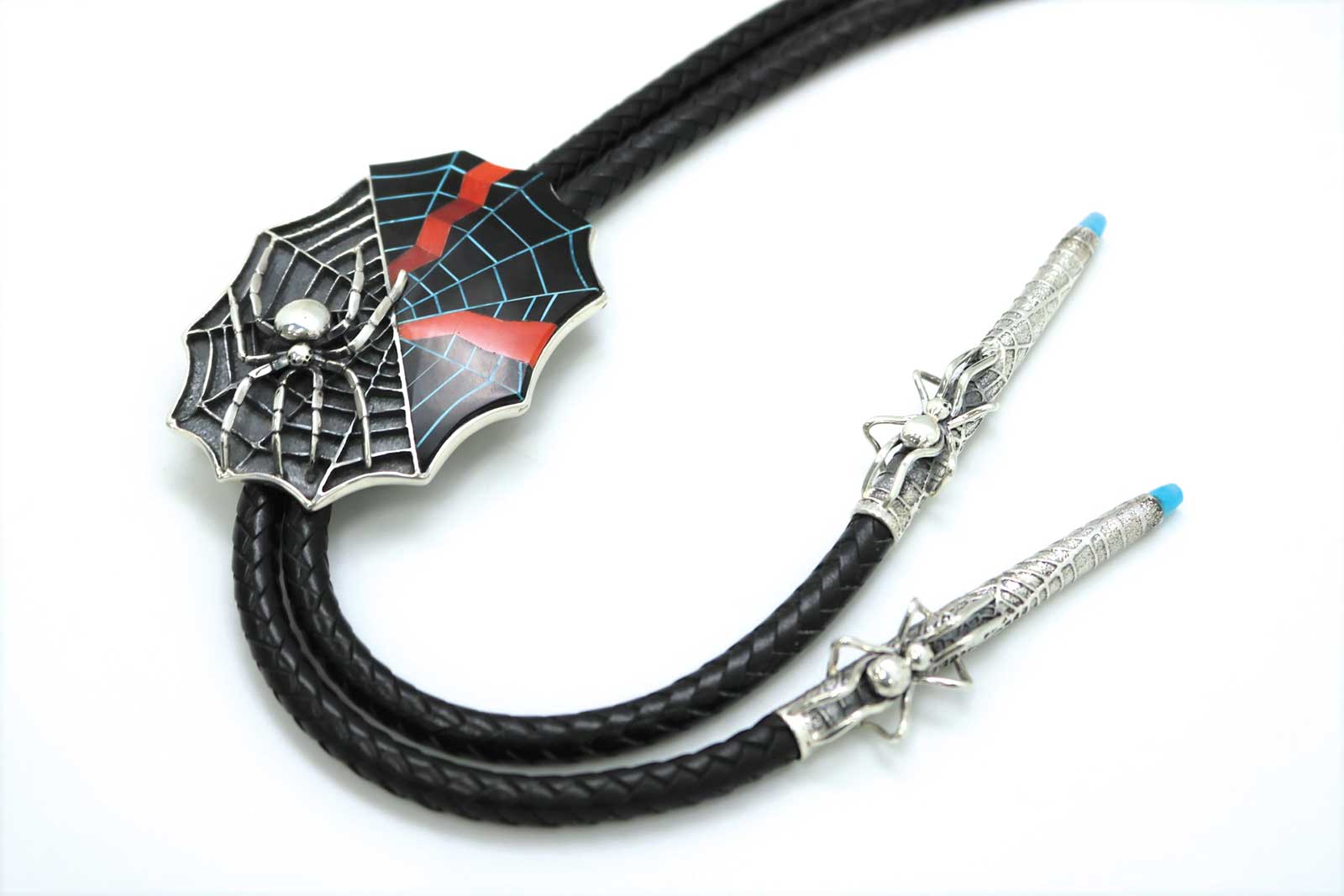 Sunwest Silver Co.
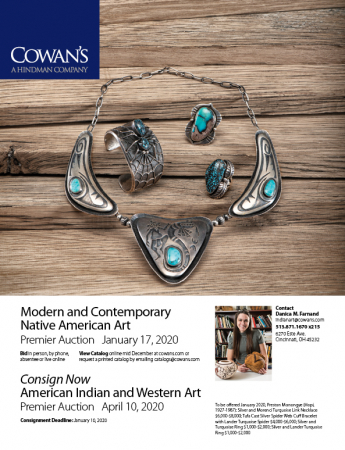
This unique piece by Navajo artist Philander Begay features Blue Ridge turquoise, coral and jet. It tells the story of Spider Woman who, in Native American tradition, represents the mother of weaving, and is the helper of humanity. A master of traditional tufa casting, Begay has developed his own unique style of jewelry that steps outside the box of traditional Native American jewelry. His aptitude for designing and skillful precision of tufa stone carving have made Begay’s jewelry a most sought after part of the Indian arts market.
324 Lomas Boulevard NW » Albuquerque, NM, 87102 » (505) 243-3781 » www.sunwestsilver.com
++++
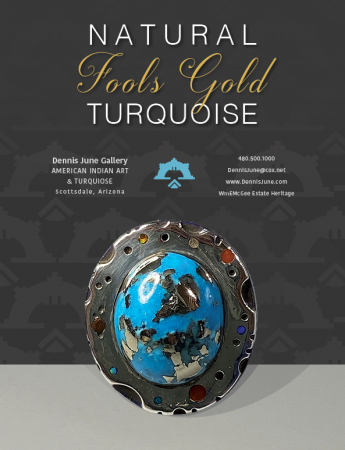
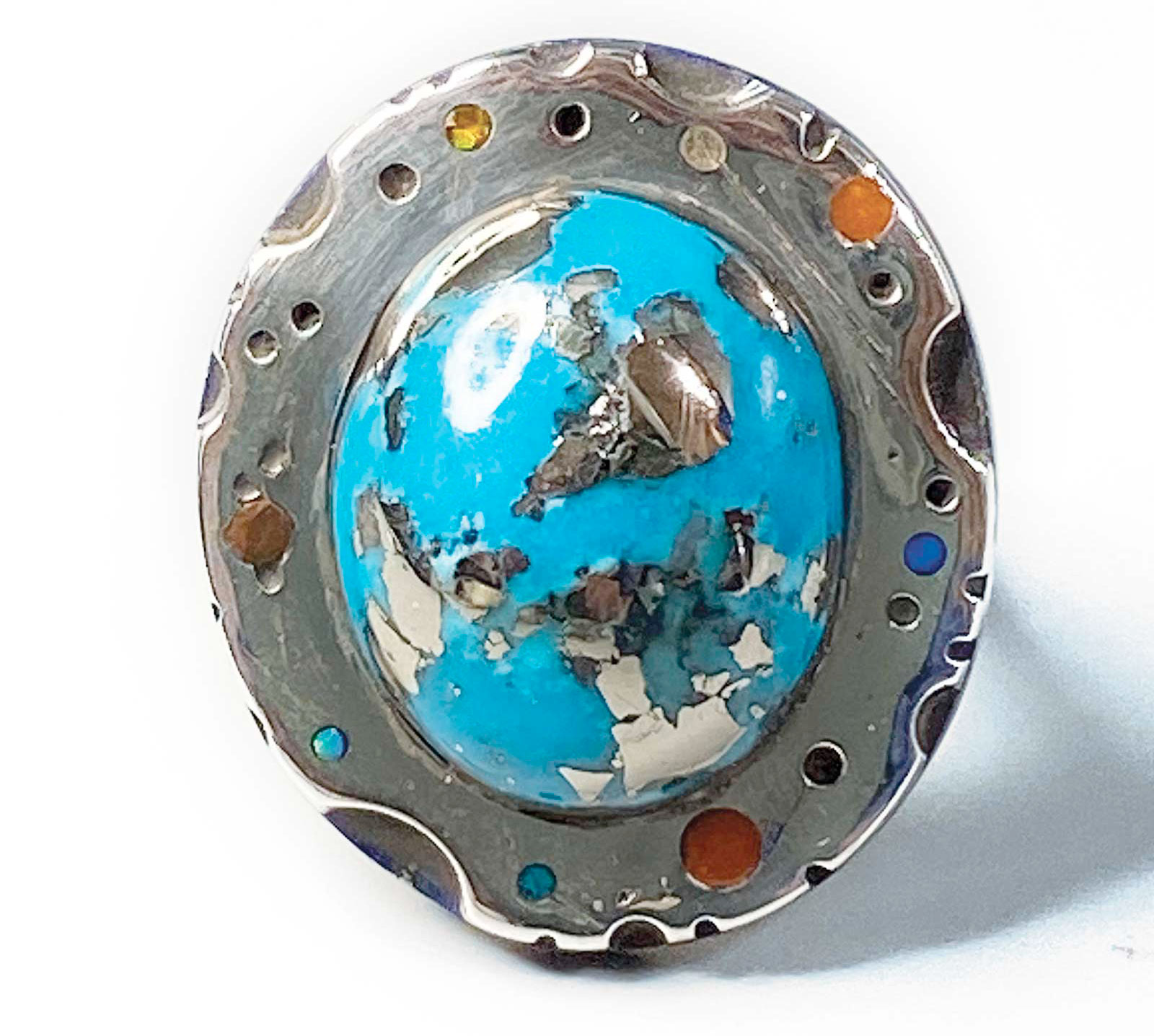 Dennis June Gallery
Pictured is a high-grade ring by Harold Stevens Jr. (Navajo) made from a mix of turquoise and iron pyrite crystals (fool’s gold) that resembles the continents floating in a rich blue ocean of turquoise.
7056 E Main Street, Suite 2 » Scottsdale, AZ 85251 » (480) 500-1000 » dennisjune@cox.net » www.dennisjune.com
++++
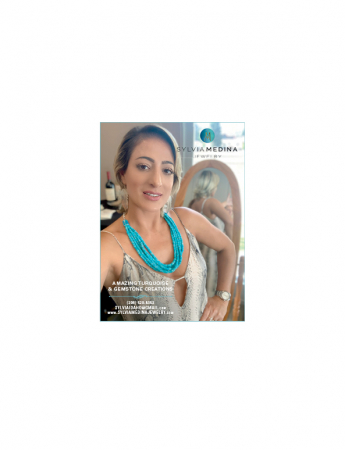
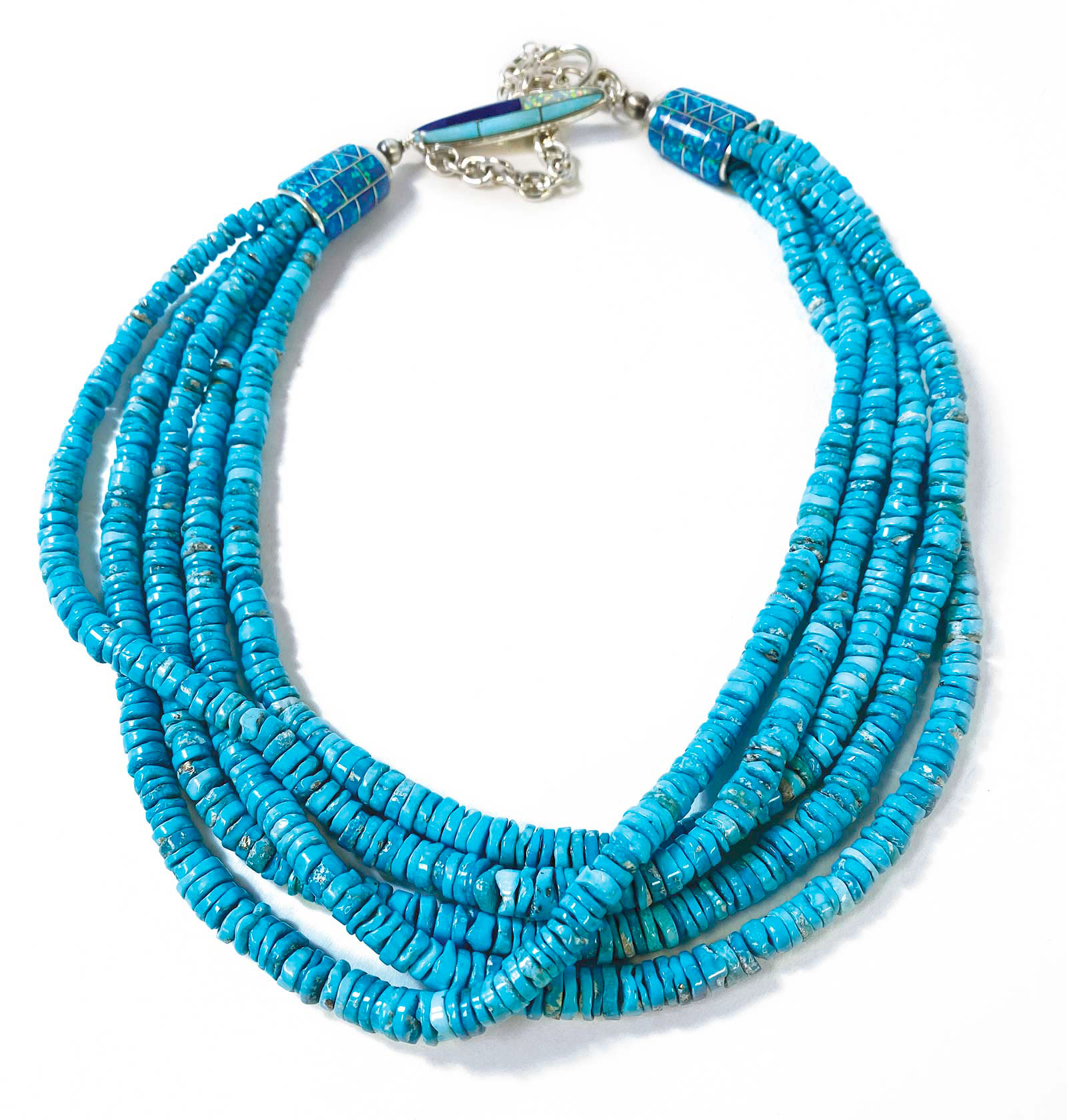 Sylvia Medina Jewelry
Measuring 22½ inches in length, this lovely multi-strand necklace is made with five strands of Heishi Kingman turquoise treated by the Zachery Process. The ends of the necklace include opal inlaid barrels with a sterling silver chain attached to an inlaid clasp with turquoise, opals and apatite.
(208) 520-8353 » smedina@cableone.net » www.sylviamedinajewelry.com
++++
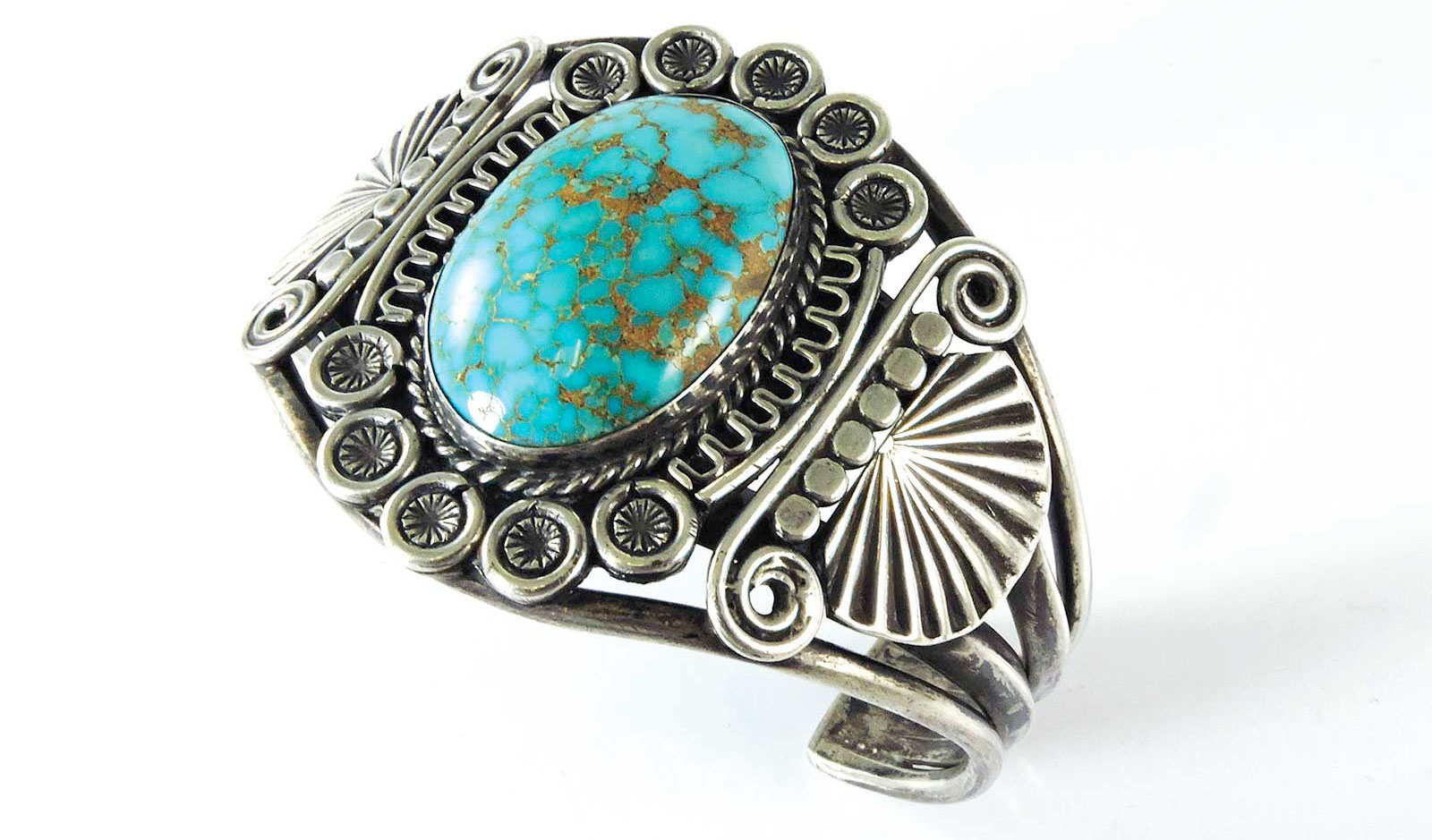 Territorial Indian Arts & Antiques
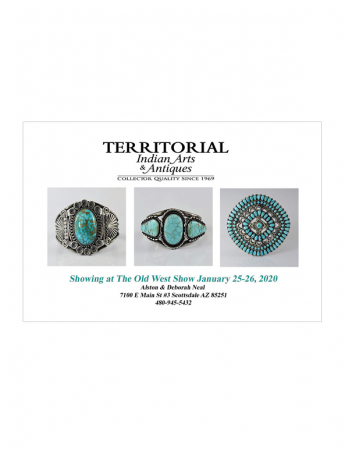
This pre-World War II Navajo bracelet is made from natural Nevada turquoise and comes from the Lynn Trusdell Collection. Decades were spent building the world-class jewelry collection, which is focused on the silver work of Navajo, Zuni, Hopi and Pueblo Indians. Trusdell has become known by collectors and dealers throughout the country for her impeccable taste and keen eye. Her collection of over 500 pieces was auctioned at Bonhams in June 2009 and quickly snapped up by those who followed her.
7100 E. Main Street » Scottsdale, AZ 85251 » (480) 945-5432 » www.territorialindianarts.com
++++
 Turkey Mountain Traders
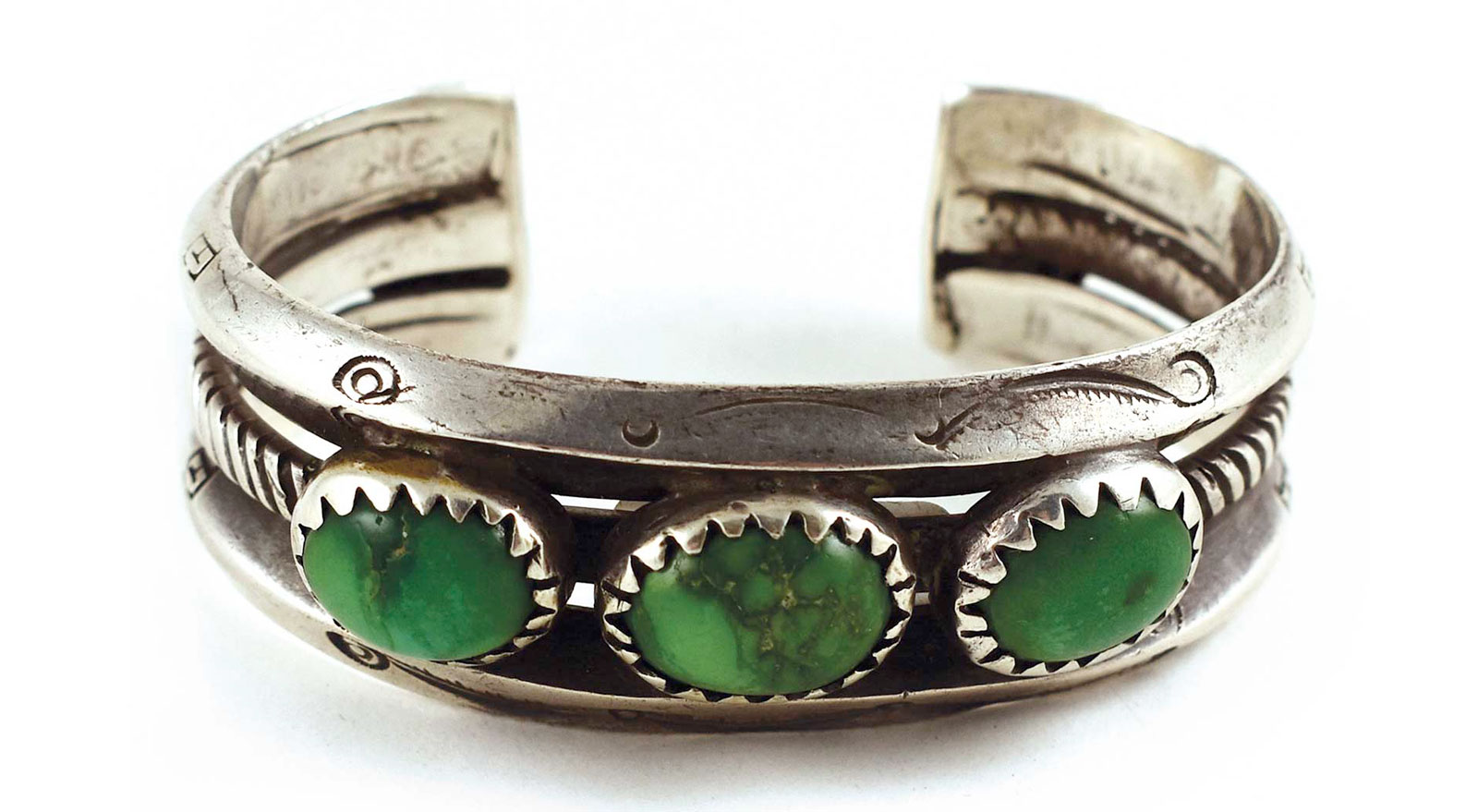
This Navajo bracelet dates to circa 1910 and is composed of two hand-wrought and stamped silver wires with a filed wire between and five domed green turquoise (two are on the terminals and not visible here). What is unique about this bracelet is the letter “E” stamped eight times on the wires—for what reason, we can only guess.
(480) 423-8777 » www.TurkeyMountainTraders.com
Powered by Froala Editor